Process of pre-construction
Phase Drawbacks
Glibson Roger
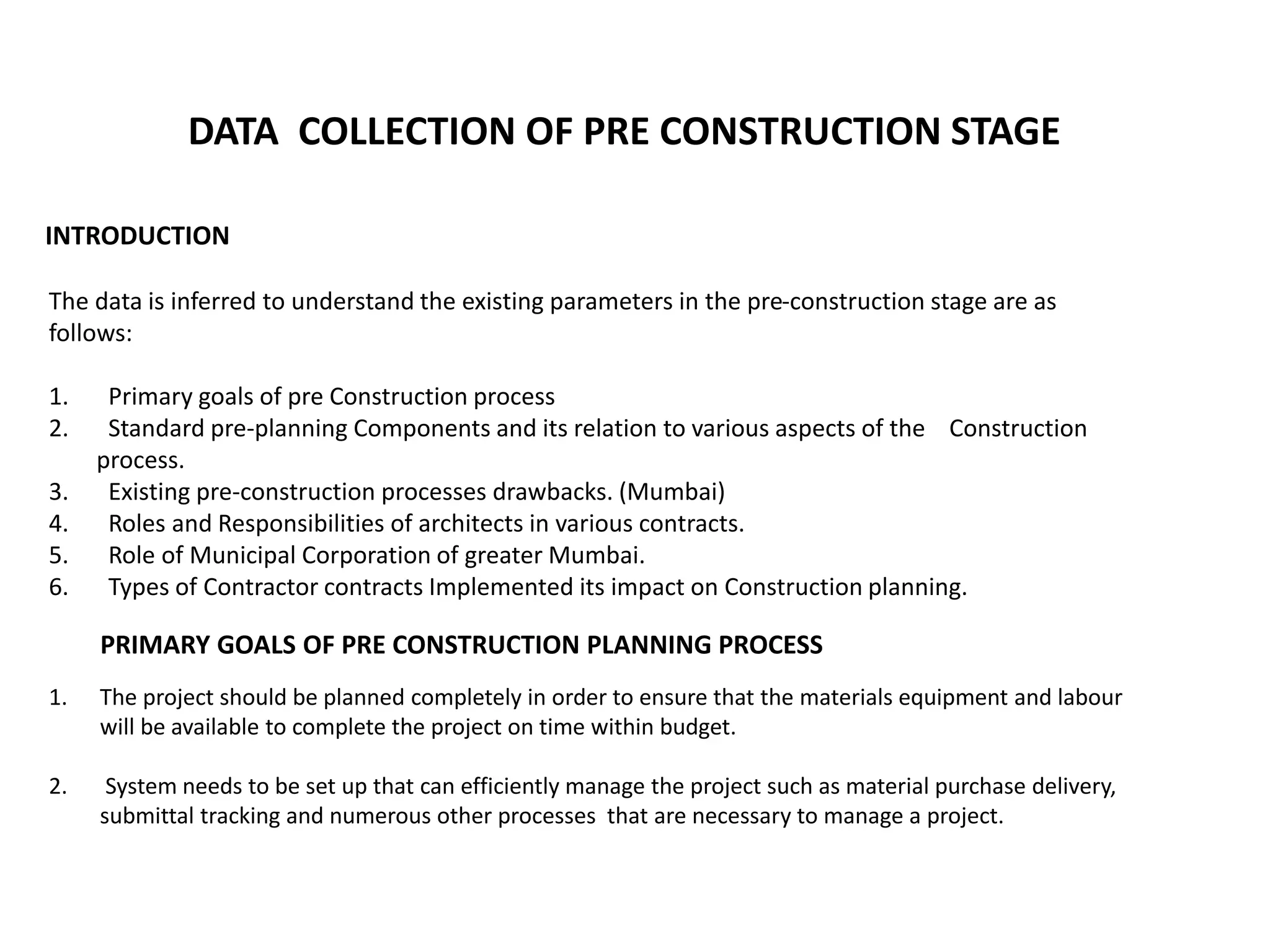
1. The project should be planned completely in order to ensure that the materials equipment and labour
will be available to complete the project on time within budget.
2. System needs to be set up that can efficiently manage the project such as material purchase delivery,
submittal tracking and numerous other processes that are necessary to manage a project.
INTRODUCTION
PRIMARY GOALS OF PRE CONSTRUCTION PLANNING PROCESS
DATA COLLECTION OF PRE CONSTRUCTION STAGE
The data is inferred to understand the existing parameters in the pre-construction stage are as
follows:
1. Primary goals of pre Construction process
2. Standard pre-planning Components and its relation to various aspects of the Construction
process.
3. Existing pre-construction processes drawbacks. (Mumbai)
4. Roles and Responsibilities of architects in various contracts.
5. Role of Municipal Corporation of greater Mumbai.
6. Types of Contractor contracts Implemented its impact on Construction planning.
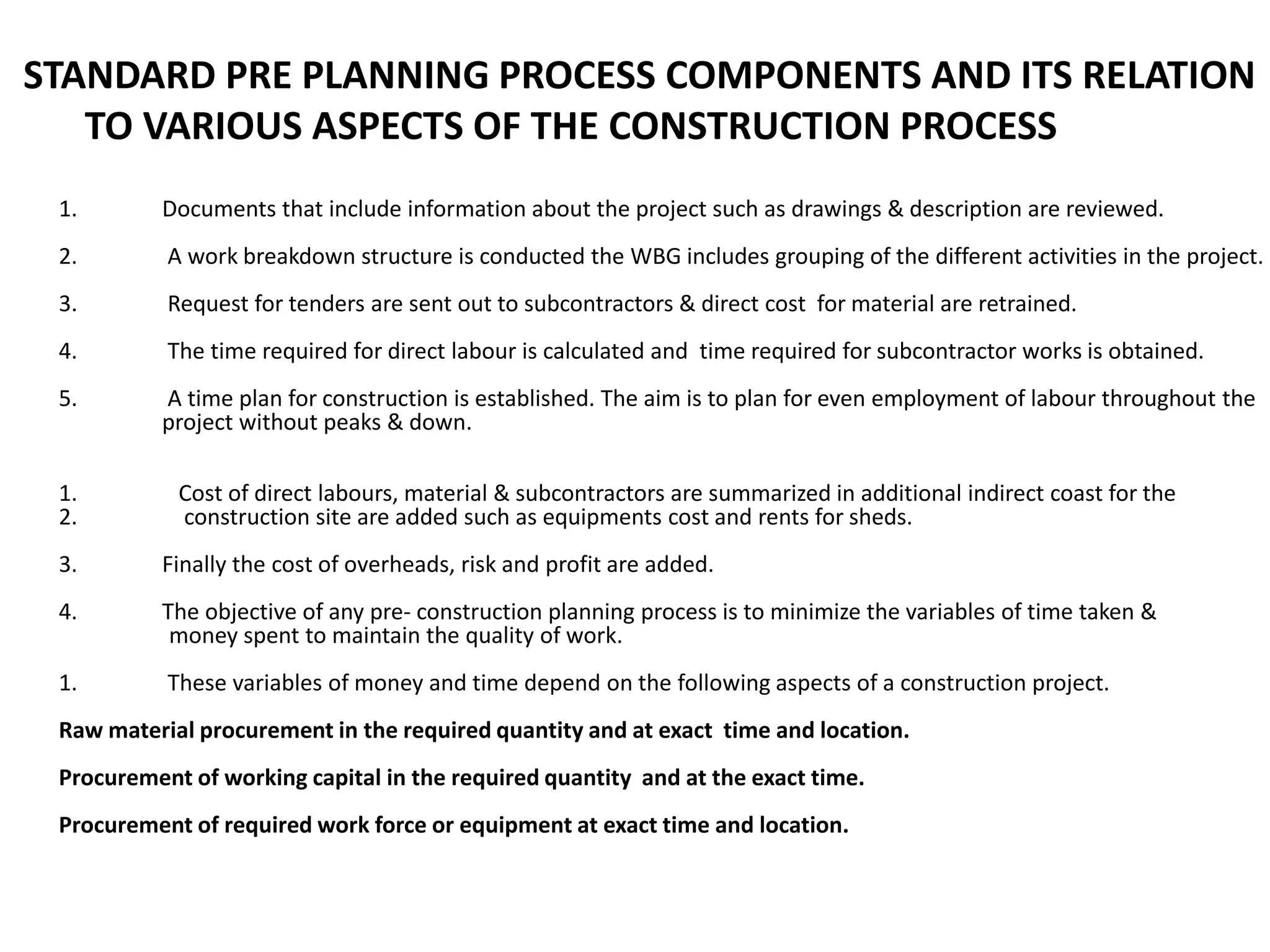
1. Documents that include information about the project such as drawings & description are reviewed.
2. A work breakdown structure is conducted the WBG includes grouping of the different activities in the project.
3. Request for tenders are sent out to subcontractors & direct cost for material are retrained.
4. The time required for direct labour is calculated and time required for subcontractor works is obtained.
5. A time plan for construction is established. The aim is to plan for even employment of labour throughout the
project without peaks & down.
1. Cost of direct labours, material & subcontractors are summarized in additional indirect coast for the
2. construction site are added such as equipments cost and rents for sheds.
3. Finally the cost of overheads, risk and profit are added.
4. The objective of any pre- construction planning process is to minimize the variables of time taken &
money spent to maintain the quality of work.
1. These variables of money and time depend on the following aspects of a construction project.
Raw material procurement in the required quantity and at exact time and location.
Procurement of working capital in the required quantity and at the exact time.
Procurement of required work force or equipment at exact time and location.
STANDARD PRE PLANNING PROCESS COMPONENTS AND ITS RELATION
TO VARIOUS ASPECTS OF THE CONSTRUCTION PROCESS
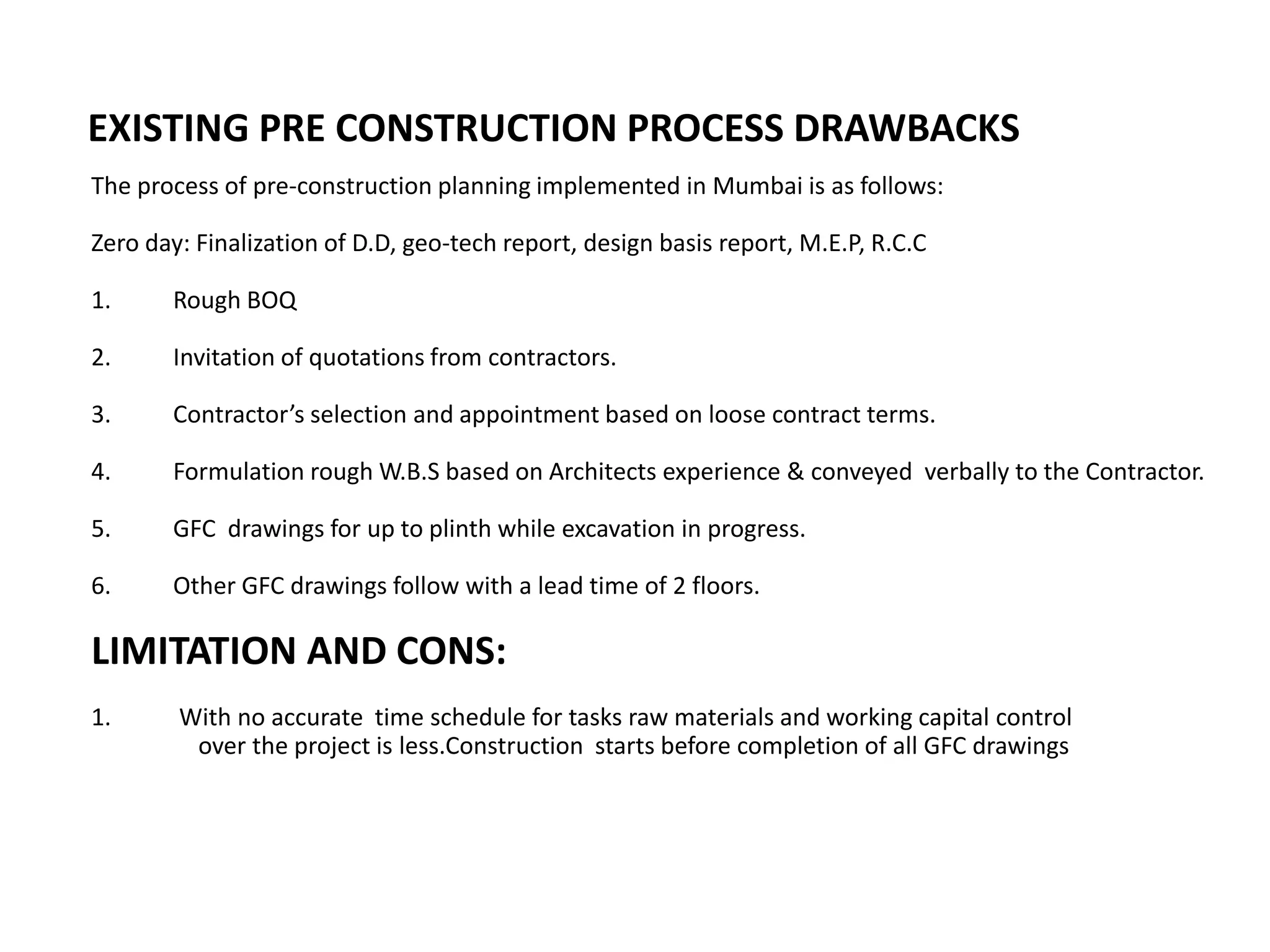
The process of pre-construction planning implemented in Mumbai is as follows:
Zero day: Finalization of D.D, geo-tech report, design basis report, M.E.P, R.C.C
1. Rough BOQ
2. Invitation of quotations from contractors.
3. Contractor’s selection and appointment based on loose contract terms.
4. Formulation rough W.B.S based on Architects experience & conveyed verbally to the Contractor.
5. GFC drawings for up to plinth while excavation in progress.
6. Other GFC drawings follow with a lead time of 2 floors.
LIMITATION AND CONS:
1. With no accurate time schedule for tasks raw materials and working capital control
over the project is less.Construction starts before completion of all GFC drawings
EXISTING PRE CONSTRUCTION PROCESS DRAWBACKS
The typical roles and responsibility of Architects are as follows:
1. Project design development and design approval from the client.
2. R.C.C,M.E.P,HVAC design and coordination with consultants.
3. Statutory approvals and follow up for the same.
4. GFC drawings, specifications, bill of quantities, estimate, contractor selection with tenders and contract
management.
5. Construction Monitoring
ROLES AND RESPONSIBILITIES OF AN ARCHITECT
TYPES OF CONTRACTS
CONTRACTS:
A voluntary, deliberate, and legally binding agreement between two or more competent parties.
A contractual relationship is evidenced by an offer, acceptance of the offer, and a valid (legal and valuable)
consideration. Each party to a contract acquires rights and duties relative to the rights and duties of the
other parties. However, while all parties may expect a fair benefit from the contract (otherwise courts may set it
aside as inequitable) it does not follow that each party will benefit to an equal extent.
Following are the different categories in which a contract may be differentiated:
• Lump-sum contract
• Measurement-item rate contract
• Measurement-Percentage rate contract
• Cost plus percentage contract
• Management Contract

Process of pre construction phase drawbacks

  • 1.
    Process of pre-construction PhaseDrawbacks Glibson Roger
  • 2.
    1. The projectshould be planned completely in order to ensure that the materials equipment and labour will be available to complete the project on time within budget. 2. System needs to be set up that can efficiently manage the project such as material purchase delivery, submittal tracking and numerous other processes that are necessary to manage a project. INTRODUCTION PRIMARY GOALS OF PRE CONSTRUCTION PLANNING PROCESS DATA COLLECTION OF PRE CONSTRUCTION STAGE The data is inferred to understand the existing parameters in the pre-construction stage are as follows: 1. Primary goals of pre Construction process 2. Standard pre-planning Components and its relation to various aspects of the Construction process. 3. Existing pre-construction processes drawbacks. (Mumbai) 4. Roles and Responsibilities of architects in various contracts. 5. Role of Municipal Corporation of greater Mumbai. 6. Types of Contractor contracts Implemented its impact on Construction planning.
  • 3.
    1. Documents thatinclude information about the project such as drawings & description are reviewed. 2. A work breakdown structure is conducted the WBG includes grouping of the different activities in the project. 3. Request for tenders are sent out to subcontractors & direct cost for material are retrained. 4. The time required for direct labour is calculated and time required for subcontractor works is obtained. 5. A time plan for construction is established. The aim is to plan for even employment of labour throughout the project without peaks & down. 1. Cost of direct labours, material & subcontractors are summarized in additional indirect coast for the 2. construction site are added such as equipments cost and rents for sheds. 3. Finally the cost of overheads, risk and profit are added. 4. The objective of any pre- construction planning process is to minimize the variables of time taken & money spent to maintain the quality of work. 1. These variables of money and time depend on the following aspects of a construction project. Raw material procurement in the required quantity and at exact time and location. Procurement of working capital in the required quantity and at the exact time. Procurement of required work force or equipment at exact time and location. STANDARD PRE PLANNING PROCESS COMPONENTS AND ITS RELATION TO VARIOUS ASPECTS OF THE CONSTRUCTION PROCESS
  • 4.
    The process ofpre-construction planning implemented in Mumbai is as follows: Zero day: Finalization of D.D, geo-tech report, design basis report, M.E.P, R.C.C 1. Rough BOQ 2. Invitation of quotations from contractors. 3. Contractor’s selection and appointment based on loose contract terms. 4. Formulation rough W.B.S based on Architects experience & conveyed verbally to the Contractor. 5. GFC drawings for up to plinth while excavation in progress. 6. Other GFC drawings follow with a lead time of 2 floors. LIMITATION AND CONS: 1. With no accurate time schedule for tasks raw materials and working capital control over the project is less.Construction starts before completion of all GFC drawings EXISTING PRE CONSTRUCTION PROCESS DRAWBACKS
  • 5.
    The typical rolesand responsibility of Architects are as follows: 1. Project design development and design approval from the client. 2. R.C.C,M.E.P,HVAC design and coordination with consultants. 3. Statutory approvals and follow up for the same. 4. GFC drawings, specifications, bill of quantities, estimate, contractor selection with tenders and contract management. 5. Construction Monitoring ROLES AND RESPONSIBILITIES OF AN ARCHITECT
  • 6.
    TYPES OF CONTRACTS CONTRACTS: Avoluntary, deliberate, and legally binding agreement between two or more competent parties. A contractual relationship is evidenced by an offer, acceptance of the offer, and a valid (legal and valuable) consideration. Each party to a contract acquires rights and duties relative to the rights and duties of the other parties. However, while all parties may expect a fair benefit from the contract (otherwise courts may set it aside as inequitable) it does not follow that each party will benefit to an equal extent. Following are the different categories in which a contract may be differentiated: • Lump-sum contract • Measurement-item rate contract • Measurement-Percentage rate contract • Cost plus percentage contract • Management Contract