Process For Requirement Identification &
Development In Software Industry
By A.R.W.M.M.D. Rohana Kumara
MBA (AIB – AUS), PMP, MBCS, BSc (CIS sp – SUSL)
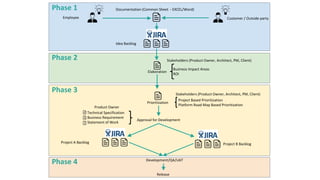
Employee Customer / Outside party
Documentation (Common Sheet - EXCEL/Word)
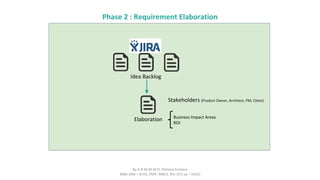
Idea Backlog
Elaboration
Business Impact Areas
ROI
Stakeholders (Product Owner, Architect, PM, Client)
Prioritization
Approval for Development
Product Owner
Technical Specification
Business Requirement
Statement of Work
Project A Backlog Project B Backlog
Project Based Prioritization
Platform Road Map Based Prioritization
Development/QA/UAT
Release
Stakeholders (Product Owner, Architect, PM, Client)
Phase 1
Phase 2
Phase 3
Phase 4
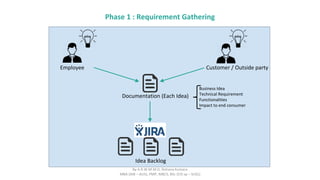
Phase 1 : Requirement Gathering
Employee Customer / Outside party
Documentation (Each Idea)
Idea Backlog
Business Idea
Technical Requirement
Functionalities
Impact to end consumer
By A.R.W.M.M.D. Rohana Kumara
MBA (AIB – AUS), PMP, MBCS, BSc (CIS sp – SUSL)
Phase 1 : Requirement Gathering
In requirement gathering phase, each new idea sent by employee or the client should properly documented
including following information and logged in to backlog which containing short descriptions of all comprises
features, bugs, technical work, knowledge acquisition.
● Business Idea
A business idea is a concept that can be used for future development to increase the business value and financial gain that is usually
centered on a product or service that can be offered for money. Business idea needs to contain
- Unique problem & solution
- Clear focus
● Technical Requirement
A technical requirement pertains to the technical aspects that new idea must fulfill, such as performance-related issues, reliability
issues, and availability issues.
● Functionalities
Business idea should explain the following under its functionalities.
- Product features
- Product Capabilities
● Impact to stakeholders
Business idea should explain how the final solution for the problem will impact to the stakeholders once it is implemented.
By A.R.W.M.M.D. Rohana Kumara
MBA (AIB – AUS), PMP, MBCS, BSc (CIS sp – SUSL)
Phase 2 : Requirement Elaboration
Idea Backlog
Elaboration Business Impact Areas
ROI
Stakeholders (Product Owner, Architect, PM, Client)
By A.R.W.M.M.D. Rohana Kumara
MBA (AIB – AUS), PMP, MBCS, BSc (CIS sp – SUSL)
Phase 2 : Requirement Elaboration
In phase 2, each new idea sent and documented by employee or the client should properly elaborated with
detail explanation of the each backlog item business idea, technical requirement, functionalities and impact
to stakeholders captured in the phase 1 including business impact, ROI, impact areas to the existing project,
functionality or platform.
● Business Impact Areas
New business solution for business idea may have different impacted areas in the platform or project both technically and financially.
Stakeholders need to identify those areas during the requirement elaboration phase to avoid any failures happen in the
development.
● ROI
Return On Investment measures the amount of return on an investment for the new idea relative to the investment’s cost for the
investment idea (Human/hardware resources and time).
Before business idea prioritization, all the stakeholders have to ensure that business idea has both finalized
Business Requirement Specification and Technical Specification updated, attached with JIRA task.
By A.R.W.M.M.D. Rohana Kumara
MBA (AIB – AUS), PMP, MBCS, BSc (CIS sp – SUSL)
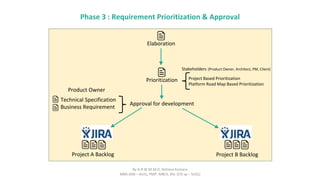
Phase 3 : Requirement Prioritization & Approval
Project A Backlog
Prioritization Project Based Prioritization
Platform Road Map Based Prioritization
Stakeholders (Product Owner, Architect, PM, Client)
Elaboration
Project B Backlog
Approval for development
Product Owner
Technical Specification
Business Requirement
By A.R.W.M.M.D. Rohana Kumara
MBA (AIB – AUS), PMP, MBCS, BSc (CIS sp – SUSL)
Phase 3 : Requirement Prioritization & Approval
Once business ideas are properly elaborated, then prioritization is the process of selecting high priority
items in the backlog to start the development in the closest sprint based on the product road map or
customer urgency.
Once business ideas are prioritized, product owner has to go through the technical specification & business
idea along with the JIRA task before approve. Only Approved JIRA tasks has to assign to the respective
backlog and sprint.
● Technical Specification
Technical specification is the detail elaboration of the technical background and technical requirement of the backlog item for the
development to meet the expectation.
● Business Requirement
Business Requirement is the detail elaboration of the business need of the backlog item for the development to meet the
expectation.
By A.R.W.M.M.D. Rohana Kumara MBA (AIB – AUS), PMP,
MBCS, BSc (CIS sp – SUSL)
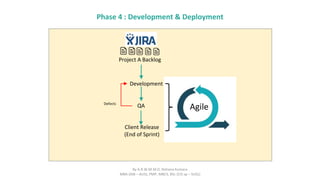
Phase 4 : Development & Deployment
Project A Backlog
Development
QADefects
Agile
Client Release
(End of Sprint)
By A.R.W.M.M.D. Rohana Kumara
MBA (AIB – AUS), PMP, MBCS, BSc (CIS sp – SUSL)

Process for requirement identification & development in software development

  • 1.
    Process For RequirementIdentification & Development In Software Industry By A.R.W.M.M.D. Rohana Kumara MBA (AIB – AUS), PMP, MBCS, BSc (CIS sp – SUSL)
  • 2.
    Employee Customer /Outside party Documentation (Common Sheet - EXCEL/Word) Idea Backlog Elaboration Business Impact Areas ROI Stakeholders (Product Owner, Architect, PM, Client) Prioritization Approval for Development Product Owner Technical Specification Business Requirement Statement of Work Project A Backlog Project B Backlog Project Based Prioritization Platform Road Map Based Prioritization Development/QA/UAT Release Stakeholders (Product Owner, Architect, PM, Client) Phase 1 Phase 2 Phase 3 Phase 4
  • 3.
    Phase 1 :Requirement Gathering Employee Customer / Outside party Documentation (Each Idea) Idea Backlog Business Idea Technical Requirement Functionalities Impact to end consumer By A.R.W.M.M.D. Rohana Kumara MBA (AIB – AUS), PMP, MBCS, BSc (CIS sp – SUSL)
  • 4.
    Phase 1 :Requirement Gathering In requirement gathering phase, each new idea sent by employee or the client should properly documented including following information and logged in to backlog which containing short descriptions of all comprises features, bugs, technical work, knowledge acquisition. ● Business Idea A business idea is a concept that can be used for future development to increase the business value and financial gain that is usually centered on a product or service that can be offered for money. Business idea needs to contain - Unique problem & solution - Clear focus ● Technical Requirement A technical requirement pertains to the technical aspects that new idea must fulfill, such as performance-related issues, reliability issues, and availability issues. ● Functionalities Business idea should explain the following under its functionalities. - Product features - Product Capabilities ● Impact to stakeholders Business idea should explain how the final solution for the problem will impact to the stakeholders once it is implemented. By A.R.W.M.M.D. Rohana Kumara MBA (AIB – AUS), PMP, MBCS, BSc (CIS sp – SUSL)
  • 5.
    Phase 2 :Requirement Elaboration Idea Backlog Elaboration Business Impact Areas ROI Stakeholders (Product Owner, Architect, PM, Client) By A.R.W.M.M.D. Rohana Kumara MBA (AIB – AUS), PMP, MBCS, BSc (CIS sp – SUSL)
  • 6.
    Phase 2 :Requirement Elaboration In phase 2, each new idea sent and documented by employee or the client should properly elaborated with detail explanation of the each backlog item business idea, technical requirement, functionalities and impact to stakeholders captured in the phase 1 including business impact, ROI, impact areas to the existing project, functionality or platform. ● Business Impact Areas New business solution for business idea may have different impacted areas in the platform or project both technically and financially. Stakeholders need to identify those areas during the requirement elaboration phase to avoid any failures happen in the development. ● ROI Return On Investment measures the amount of return on an investment for the new idea relative to the investment’s cost for the investment idea (Human/hardware resources and time). Before business idea prioritization, all the stakeholders have to ensure that business idea has both finalized Business Requirement Specification and Technical Specification updated, attached with JIRA task. By A.R.W.M.M.D. Rohana Kumara MBA (AIB – AUS), PMP, MBCS, BSc (CIS sp – SUSL)
  • 7.
    Phase 3 :Requirement Prioritization & Approval Project A Backlog Prioritization Project Based Prioritization Platform Road Map Based Prioritization Stakeholders (Product Owner, Architect, PM, Client) Elaboration Project B Backlog Approval for development Product Owner Technical Specification Business Requirement By A.R.W.M.M.D. Rohana Kumara MBA (AIB – AUS), PMP, MBCS, BSc (CIS sp – SUSL)
  • 8.
    Phase 3 :Requirement Prioritization & Approval Once business ideas are properly elaborated, then prioritization is the process of selecting high priority items in the backlog to start the development in the closest sprint based on the product road map or customer urgency. Once business ideas are prioritized, product owner has to go through the technical specification & business idea along with the JIRA task before approve. Only Approved JIRA tasks has to assign to the respective backlog and sprint. ● Technical Specification Technical specification is the detail elaboration of the technical background and technical requirement of the backlog item for the development to meet the expectation. ● Business Requirement Business Requirement is the detail elaboration of the business need of the backlog item for the development to meet the expectation. By A.R.W.M.M.D. Rohana Kumara MBA (AIB – AUS), PMP, MBCS, BSc (CIS sp – SUSL)
  • 9.
    Phase 4 :Development & Deployment Project A Backlog Development QADefects Agile Client Release (End of Sprint) By A.R.W.M.M.D. Rohana Kumara MBA (AIB – AUS), PMP, MBCS, BSc (CIS sp – SUSL)