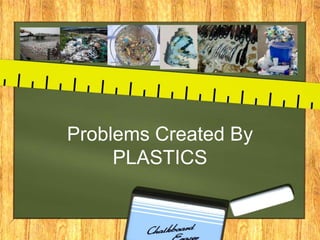
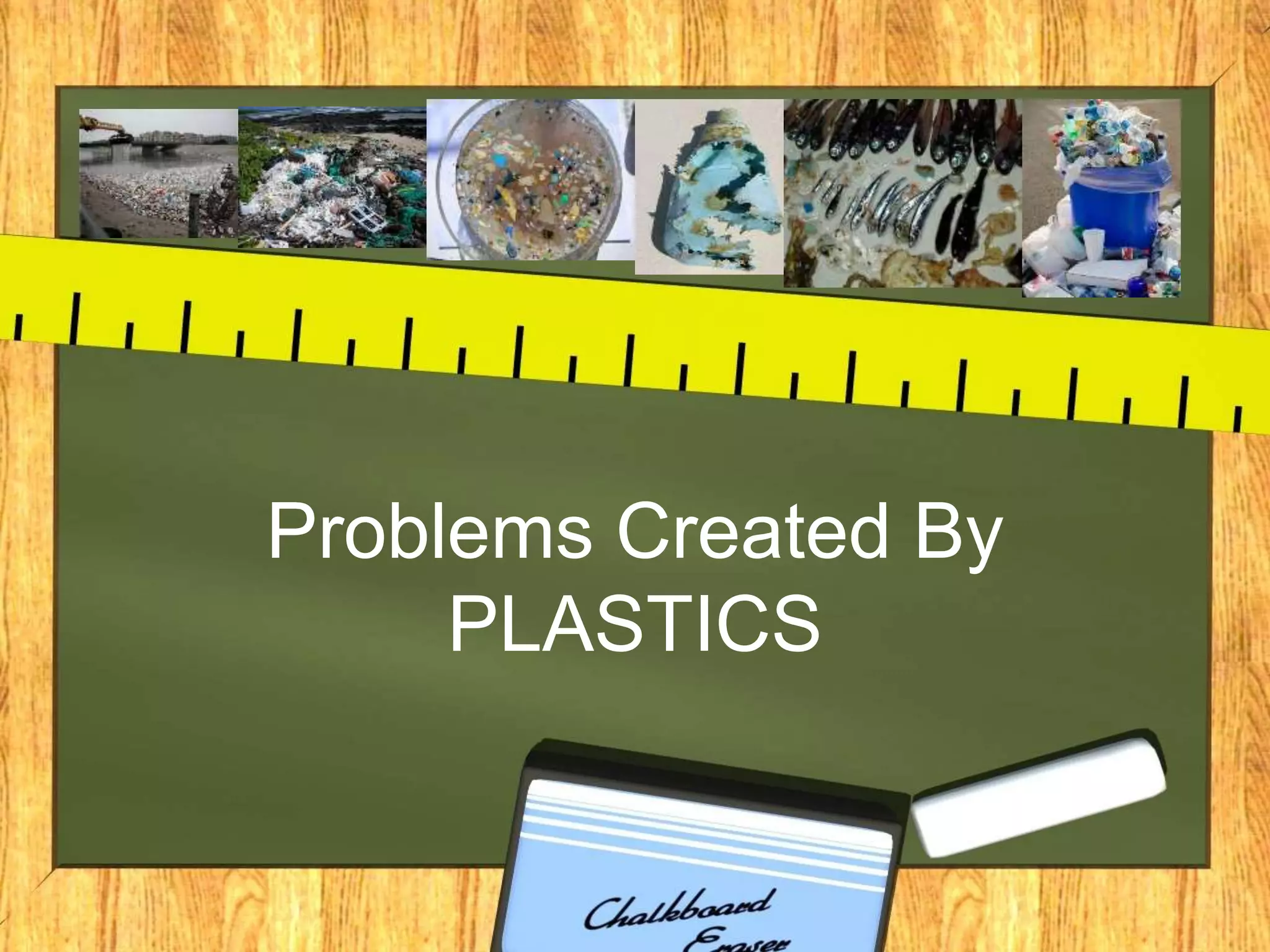
Problems Created By
PLASTICS
Content
Introduction
Plastic Pollution
Effects on The Environment
• Land
• Ocean
Circulation
Effects on Animals
• Entanglement
• Ingestion
Solution
Prevention
Introduction
Modern technology has created the plastics age.
Plastics do not easily decay and can thus be used for a
long time. Plastics bags have made human life easier.
However, they have also created problems especially
to the environment, because many users throw away
the used bags in any place.
Plastic Pollution
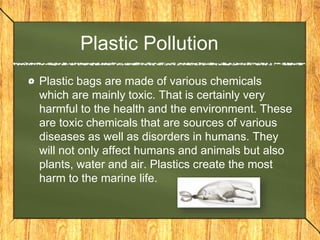
Plastic bags are made of various chemicals
which are mainly toxic. That is certainly very
harmful to the health and the environment. These
are toxic chemicals that are sources of various
diseases as well as disorders in humans. They
will not only affect humans and animals but also
plants, water and air. Plastics create the most
harm to the marine life.
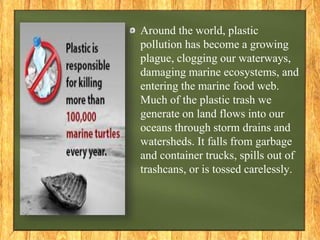
Around the world, plastic
pollution has become a growing
plague, clogging our waterways,
damaging marine ecosystems, and
entering the marine food web.
Much of the plastic trash we
generate on land flows into our
oceans through storm drains and
watersheds. It falls from garbage
and container trucks, spills out of
trashcans, or is tossed carelessly.
Effects on The Environment
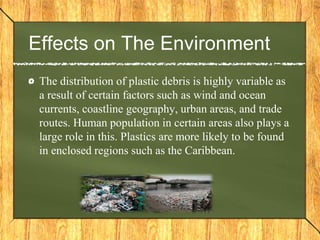
The distribution of plastic debris is highly variable as
a result of certain factors such as wind and ocean
currents, coastline geography, urban areas, and trade
routes. Human population in certain areas also plays a
large role in this. Plastics are more likely to be found
in enclosed regions such as the Caribbean.
Land
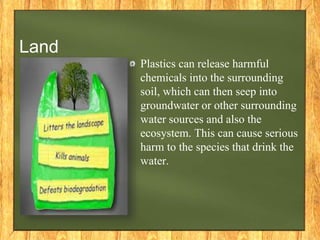
Plastics can release harmful
chemicals into the surrounding
soil, which can then seep into
groundwater or other surrounding
water sources and also the
ecosystem. This can cause serious
harm to the species that drink the
water.
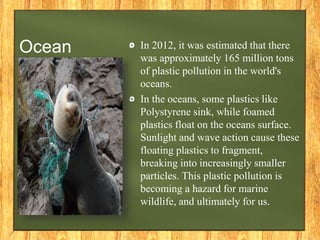
Ocean In 2012, it was estimated that there
was approximately 165 million tons
of plastic pollution in the world's
oceans.
In the oceans, some plastics like
Polystyrene sink, while foamed
plastics float on the oceans surface.
Sunlight and wave action cause these
floating plastics to fragment,
breaking into increasingly smaller
particles. This plastic pollution is
becoming a hazard for marine
wildlife, and ultimately for us.
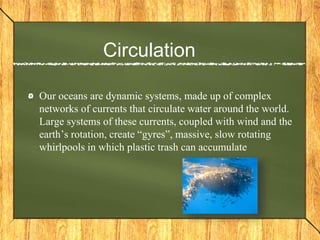
Circulation
Our oceans are dynamic systems, made up of complex
networks of currents that circulate water around the world.
Large systems of these currents, coupled with wind and the
earth’s rotation, create “gyres”, massive, slow rotating
whirlpools in which plastic trash can accumulate
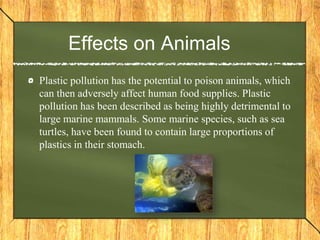
Effects on Animals
Plastic pollution has the potential to poison animals, which
can then adversely affect human food supplies. Plastic
pollution has been described as being highly detrimental to
large marine mammals. Some marine species, such as sea
turtles, have been found to contain large proportions of
plastics in their stomach.
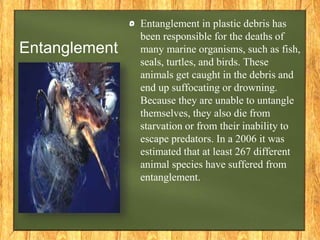
Entanglement
Entanglement in plastic debris has
been responsible for the deaths of
many marine organisms, such as fish,
seals, turtles, and birds. These
animals get caught in the debris and
end up suffocating or drowning.
Because they are unable to untangle
themselves, they also die from
starvation or from their inability to
escape predators. In a 2006 it was
estimated that at least 267 different
animal species have suffered from
entanglement.
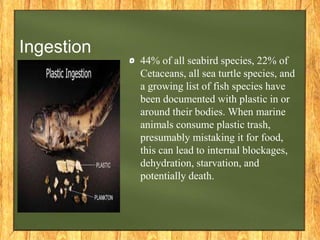
Ingestion
44% of all seabird species, 22% of
Cetaceans, all sea turtle species, and
a growing list of fish species have
been documented with plastic in or
around their bodies. When marine
animals consume plastic trash,
presumably mistaking it for food,
this can lead to internal blockages,
dehydration, starvation, and
potentially death.
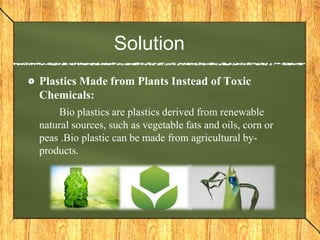
Solution
Plastics Made from Plants Instead of Toxic
Chemicals:
Bio plastics are plastics derived from renewable
natural sources, such as vegetable fats and oils, corn or
peas .Bio plastic can be made from agricultural by-
products.
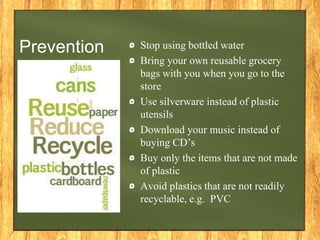
Prevention Stop using bottled water
Bring your own reusable grocery
bags with you when you go to the
store
Use silverware instead of plastic
utensils
Download your music instead of
buying CD’s
Buy only the items that are not made
of plastic
Avoid plastics that are not readily
recyclable, e.g. PVC
A ppt by
E.l Denis Leander

Problems created by plastics

  • 1.
  • 2.
    Content Introduction Plastic Pollution Effects onThe Environment • Land • Ocean Circulation Effects on Animals • Entanglement • Ingestion Solution Prevention
  • 3.
    Introduction Modern technology hascreated the plastics age. Plastics do not easily decay and can thus be used for a long time. Plastics bags have made human life easier. However, they have also created problems especially to the environment, because many users throw away the used bags in any place.
  • 4.
    Plastic Pollution Plastic bagsare made of various chemicals which are mainly toxic. That is certainly very harmful to the health and the environment. These are toxic chemicals that are sources of various diseases as well as disorders in humans. They will not only affect humans and animals but also plants, water and air. Plastics create the most harm to the marine life.
  • 5.
    Around the world,plastic pollution has become a growing plague, clogging our waterways, damaging marine ecosystems, and entering the marine food web. Much of the plastic trash we generate on land flows into our oceans through storm drains and watersheds. It falls from garbage and container trucks, spills out of trashcans, or is tossed carelessly.
  • 6.
    Effects on TheEnvironment The distribution of plastic debris is highly variable as a result of certain factors such as wind and ocean currents, coastline geography, urban areas, and trade routes. Human population in certain areas also plays a large role in this. Plastics are more likely to be found in enclosed regions such as the Caribbean.
  • 7.
    Land Plastics can releaseharmful chemicals into the surrounding soil, which can then seep into groundwater or other surrounding water sources and also the ecosystem. This can cause serious harm to the species that drink the water.
  • 8.
    Ocean In 2012,it was estimated that there was approximately 165 million tons of plastic pollution in the world's oceans. In the oceans, some plastics like Polystyrene sink, while foamed plastics float on the oceans surface. Sunlight and wave action cause these floating plastics to fragment, breaking into increasingly smaller particles. This plastic pollution is becoming a hazard for marine wildlife, and ultimately for us.
  • 9.
    Circulation Our oceans aredynamic systems, made up of complex networks of currents that circulate water around the world. Large systems of these currents, coupled with wind and the earth’s rotation, create “gyres”, massive, slow rotating whirlpools in which plastic trash can accumulate
  • 10.
    Effects on Animals Plasticpollution has the potential to poison animals, which can then adversely affect human food supplies. Plastic pollution has been described as being highly detrimental to large marine mammals. Some marine species, such as sea turtles, have been found to contain large proportions of plastics in their stomach.
  • 11.
    Entanglement Entanglement in plasticdebris has been responsible for the deaths of many marine organisms, such as fish, seals, turtles, and birds. These animals get caught in the debris and end up suffocating or drowning. Because they are unable to untangle themselves, they also die from starvation or from their inability to escape predators. In a 2006 it was estimated that at least 267 different animal species have suffered from entanglement.
  • 12.
    Ingestion 44% of allseabird species, 22% of Cetaceans, all sea turtle species, and a growing list of fish species have been documented with plastic in or around their bodies. When marine animals consume plastic trash, presumably mistaking it for food, this can lead to internal blockages, dehydration, starvation, and potentially death.
  • 13.
    Solution Plastics Made fromPlants Instead of Toxic Chemicals: Bio plastics are plastics derived from renewable natural sources, such as vegetable fats and oils, corn or peas .Bio plastic can be made from agricultural by- products.
  • 14.
    Prevention Stop usingbottled water Bring your own reusable grocery bags with you when you go to the store Use silverware instead of plastic utensils Download your music instead of buying CD’s Buy only the items that are not made of plastic Avoid plastics that are not readily recyclable, e.g. PVC
  • 15.
    A ppt by E.lDenis Leander