Yushan Shi April 26, 2011 Stop ❤ Plastic Pollution❤
 
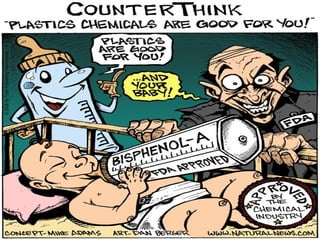
How have the governments resolved the plastic pollution? Are the plastic chemicals really  good for us and wildlife?
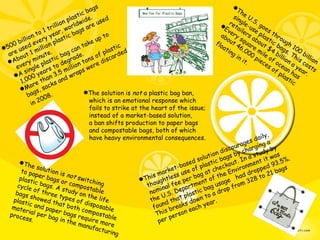
500 billion to 1 trillion plastic bags  are used every year, worldwide.  About 1 million plastic bags are used every minute.  A single plastic bag can take up to  1,000 years to degrade.  More than 3.5 million tons of plastic  bags, sacks and wraps were discarded in 2008.   The U.S. goes through 100 billion  single-use plastic bags. This costs retailers about $4 billion a year.  Every square mile of ocean has about 46,000 pieces of plastic  floating in it.   The solution is  not  a plastic bag ban, which is an emotional response which  fails to strike at the heart of the issue;  instead of a market-based solution,  a ban shifts production to paper bags and compostable bags, both of which  have heavy environmental consequences.   The solution is  not  switching  to paper bags or compostable  plastic bags. A study on the life cycle of three types of disposable bags showed that both compostable plastic and paper bags require more  material per bag in the manufacturing  process.  This market-based solution discourages daily, thoughtless use of plastic bags by charging a  nominal fee per bag at checkout. In a study by  the U.S. Department of the Environment it was found that plastic bag usage  had dropped 93.5%.  This breaks down to a drop from 328 to 21 bags per person each year.
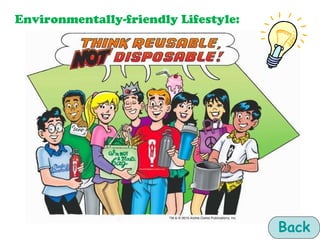
Back Environmentally-friendly Lifestyle:
The Great Plastic Tide “Washed Ashore”   Food Chain
 
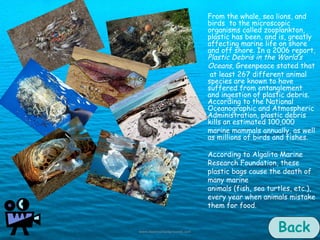
Back From the whale, sea lions, and birds  to the microscopic organisms called zooplankton, plastic has been, and is, greatly affecting marine life on shore and off shore. In a 2006 report,  Plastic Debris in the World’s  Oceans , Greenpeace stated that at least 267 different animal species are known to have suffered from entanglement and ingestion of plastic debris. According to the National Oceanographic and Atmospheric Administration, plastic debris kills an estimated 100,000  marine mammals annually, as well as millions of birds and fishes. According to Algalita Marine  Research Foundation, these plastic bags cause the death of many marine animals (fish, sea turtles, etc.), every year when animals mistake them for food.
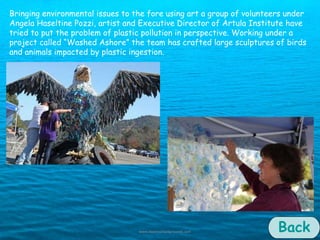
Back Bringing environmental issues to the fore using art a group of volunteers under  Angela Haseltine Pozzi, artist and Executive Director of Artula Institute have tried to put the problem of plastic pollution in perspective. Working under a  project called “Washed Ashore” the team has crafted large sculptures of birds  and animals impacted by plastic ingestion.
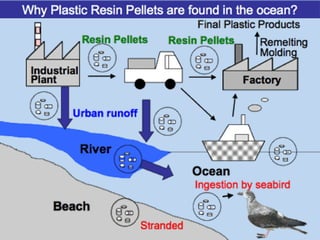
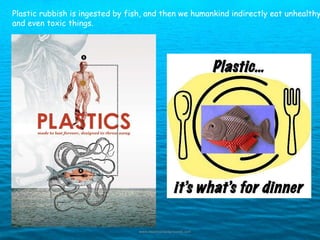
Plastic rubbish is ingested by fish, and then we humankind indirectly eat unhealthy,  and even toxic things.
Stop it!! Aha, so much  money
Work Cited Sources: “ Facts About the Plastic Bag Pandemic.” Reuseit. N.p. n.d. Web. 19 April 2011 Claire Le Guern Lytle. “When the Mermaids Cry: The Great Plastic Tide.” Coastalcare. N.p. n.d. Web.13 Apr 2011 Suknmani. “Bioneers 2010 highlights the impact of plastic pollution on wildlife.” Greendiary. N.p. 19 Oct 2010. Web. 16 Apr 2011  Video: http:// www.youtube.com/watch?v = GKAABayRuXs Pictures: http://paultoon.com/rich-cartoon-businessman-illustration-money-m http://www.shellen.com/2003/10/governor-rainier-mcbain-wolfcastle.asp http://coastalcare.org/2009/11/plastic-pollution/ http:// daniellarusso.org / http://onemoregeneration.org/2011/01/06/plastic-its-whats-for-dinner/ http://www.greendiary.com/entry/bioneers-2010-highlights-the-impact-of-plastic-pollution-on-wildlife http://www.sacredearthtrust.org/content/solutions/waste/Ban-Plastic-Bags-in-Bodh-Gaya.asp http://blog.epromos.com/hot-product/bagvertising-hot-bags-bag-news/ http://loveforlife.com.au/content/08/09/01/plastic-pollution-poisoning-environmental-damage-poisoned-milk-using- melamine-indus
Thank you!

Project 4 yushan shi

  • 1.
    Yushan Shi April26, 2011 Stop ❤ Plastic Pollution❤
  • 2.
  • 3.
    How have thegovernments resolved the plastic pollution? Are the plastic chemicals really good for us and wildlife?
  • 4.
    500 billion to1 trillion plastic bags are used every year, worldwide. About 1 million plastic bags are used every minute. A single plastic bag can take up to 1,000 years to degrade. More than 3.5 million tons of plastic bags, sacks and wraps were discarded in 2008. The U.S. goes through 100 billion single-use plastic bags. This costs retailers about $4 billion a year. Every square mile of ocean has about 46,000 pieces of plastic floating in it. The solution is not a plastic bag ban, which is an emotional response which fails to strike at the heart of the issue; instead of a market-based solution, a ban shifts production to paper bags and compostable bags, both of which have heavy environmental consequences. The solution is not switching to paper bags or compostable plastic bags. A study on the life cycle of three types of disposable bags showed that both compostable plastic and paper bags require more material per bag in the manufacturing process. This market-based solution discourages daily, thoughtless use of plastic bags by charging a nominal fee per bag at checkout. In a study by the U.S. Department of the Environment it was found that plastic bag usage had dropped 93.5%. This breaks down to a drop from 328 to 21 bags per person each year.
  • 5.
  • 6.
    The Great PlasticTide “Washed Ashore” Food Chain
  • 7.
  • 8.
    Back From thewhale, sea lions, and birds to the microscopic organisms called zooplankton, plastic has been, and is, greatly affecting marine life on shore and off shore. In a 2006 report, Plastic Debris in the World’s Oceans , Greenpeace stated that at least 267 different animal species are known to have suffered from entanglement and ingestion of plastic debris. According to the National Oceanographic and Atmospheric Administration, plastic debris kills an estimated 100,000 marine mammals annually, as well as millions of birds and fishes. According to Algalita Marine Research Foundation, these plastic bags cause the death of many marine animals (fish, sea turtles, etc.), every year when animals mistake them for food.
  • 9.
    Back Bringing environmentalissues to the fore using art a group of volunteers under Angela Haseltine Pozzi, artist and Executive Director of Artula Institute have tried to put the problem of plastic pollution in perspective. Working under a project called “Washed Ashore” the team has crafted large sculptures of birds and animals impacted by plastic ingestion.
  • 10.
    Plastic rubbish isingested by fish, and then we humankind indirectly eat unhealthy, and even toxic things.
  • 11.
    Stop it!! Aha,so much money
  • 12.
    Work Cited Sources:“ Facts About the Plastic Bag Pandemic.” Reuseit. N.p. n.d. Web. 19 April 2011 Claire Le Guern Lytle. “When the Mermaids Cry: The Great Plastic Tide.” Coastalcare. N.p. n.d. Web.13 Apr 2011 Suknmani. “Bioneers 2010 highlights the impact of plastic pollution on wildlife.” Greendiary. N.p. 19 Oct 2010. Web. 16 Apr 2011 Video: http:// www.youtube.com/watch?v = GKAABayRuXs Pictures: http://paultoon.com/rich-cartoon-businessman-illustration-money-m http://www.shellen.com/2003/10/governor-rainier-mcbain-wolfcastle.asp http://coastalcare.org/2009/11/plastic-pollution/ http:// daniellarusso.org / http://onemoregeneration.org/2011/01/06/plastic-its-whats-for-dinner/ http://www.greendiary.com/entry/bioneers-2010-highlights-the-impact-of-plastic-pollution-on-wildlife http://www.sacredearthtrust.org/content/solutions/waste/Ban-Plastic-Bags-in-Bodh-Gaya.asp http://blog.epromos.com/hot-product/bagvertising-hot-bags-bag-news/ http://loveforlife.com.au/content/08/09/01/plastic-pollution-poisoning-environmental-damage-poisoned-milk-using- melamine-indus
  • 13.