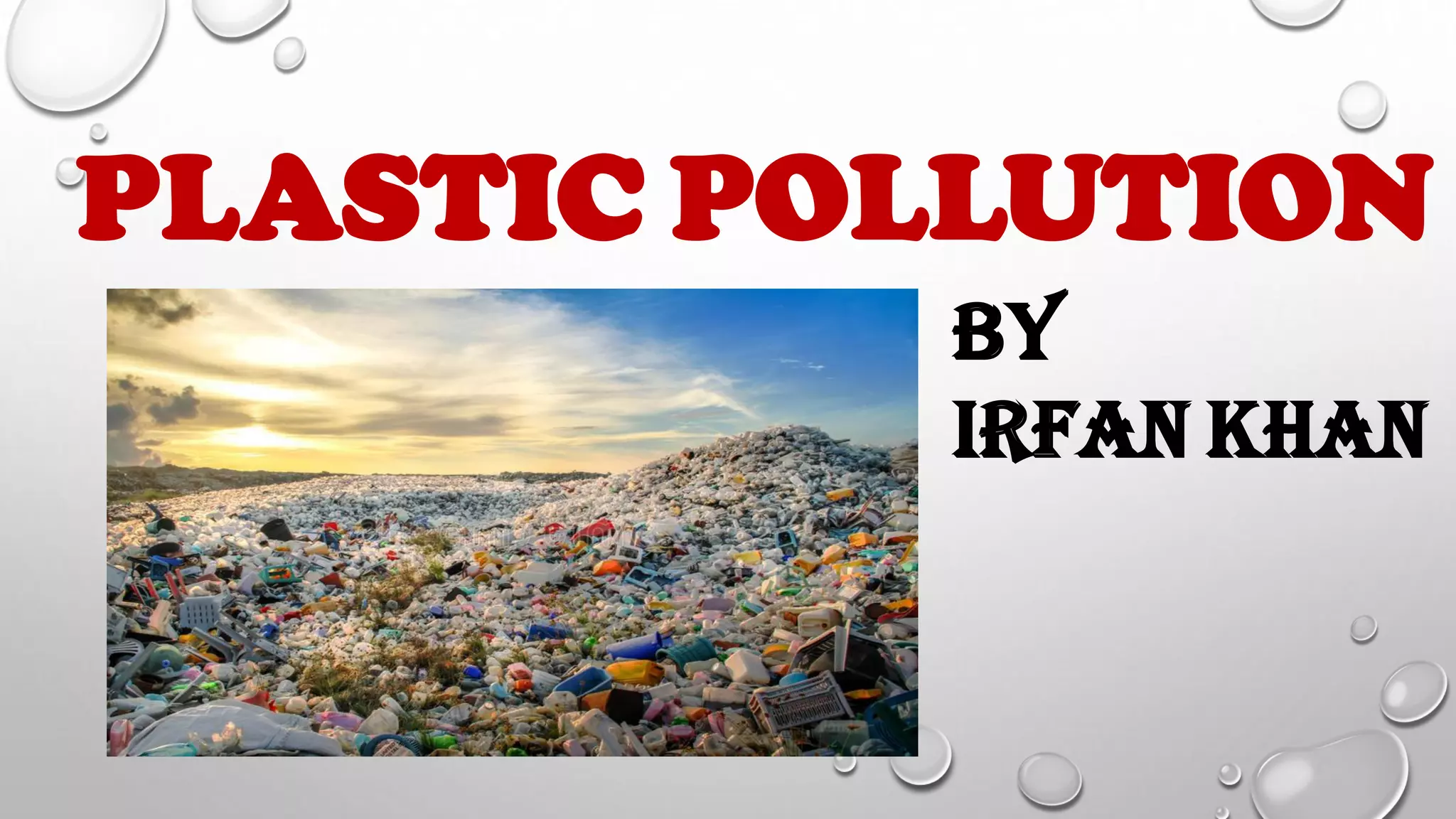
PLASTIC POLLUTION
By
IRFAN KHAN
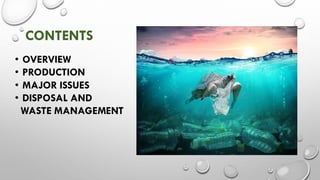
CONTENTS
• OVERVIEW
• PRODUCTION
• MAJOR ISSUES
• DISPOSAL AND
WASTE MANAGEMENT
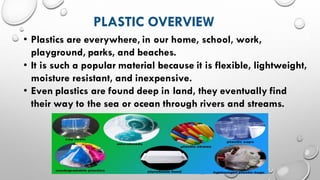
• Plastics are everywhere, in our home, school, work,
playground, parks, and beaches.
• It is such a popular material because it is flexible, lightweight,
moisture resistant, and inexpensive.
• Even plastics are found deep in land, they eventually find
their way to the sea or ocean through rivers and streams.
PLASTIC OVERVIEW
PLASTIC PRODUCTION
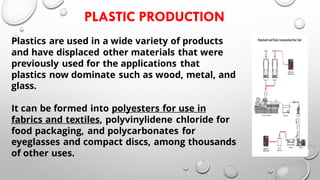
Plastics are used in a wide variety of products
and have displaced other materials that were
previously used for the applications that
plastics now dominate such as wood, metal, and
glass.
It can be formed into polyesters for use in
fabrics and textiles, polyvinylidene chloride for
food packaging, and polycarbonates for
eyeglasses and compact discs, among thousands
of other uses.
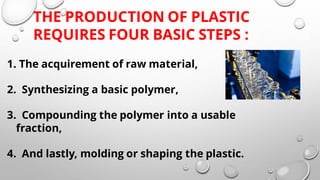
1. The acquirement of raw material,
2. Synthesizing a basic polymer,
3. Compounding the polymer into a usable
fraction,
4. And lastly, molding or shaping the plastic.
THE PRODUCTION OF PLASTIC
REQUIRES FOUR BASIC STEPS :
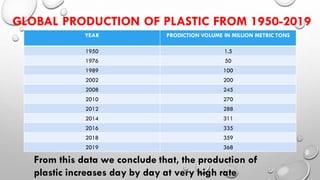
YEAR PRODICTION VOLUME IN MILLION METRIC TONS
1950 1.5
1976 50
1989 100
2002 200
2008 245
2010 270
2012 288
2014 311
2016 335
2018 359
2019 368
GLOBAL PRODUCTION OF PLASTIC FROM 1950-2019
From this data we conclude that, the production of
plastic increases day by day at very high rate
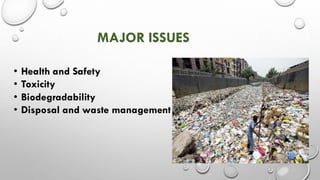
MAJOR ISSUES
• Health and Safety
• Toxicity
• Biodegradability
• Disposal and waste management
Health and Safety
Chemicals - In plastic manufacturing and recycling
companies a number of chemicals are used and produced
as a by-product of work processes. Some of these
chemicals can damage people’s health if they are exposed
to them.
Manual Handling – In plastics companies manual handling is
one of the biggest causes if injury. It is not only the weight of
the materials being handled but also the size and nature of
the products that can cause problems.
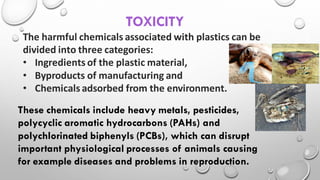
The harmful chemicals associated with plastics can be
divided into three categories:
• Ingredients of the plastic material,
• Byproducts of manufacturing and
• Chemicals adsorbed from the environment.
TOXICITY
These chemicals include heavy metals, pesticides,
polycyclic aromatic hydrocarbons (PAHs) and
polychlorinated biphenyls (PCBs), which can disrupt
important physiological processes of animals causing
for example diseases and problems in reproduction.
• For example, dead plants and animals eventually
decay.
• Plastic does not bio-degrade.
• Nature does not know how to break down plastic
because of what plastic is made of.
Bio-degradation is the natural break-down of organic
substances.
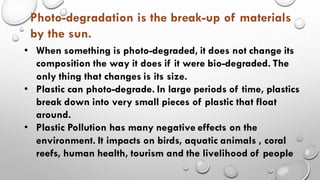
• When something is photo-degraded, it does not change its
composition the way it does if it were bio-degraded. The
only thing that changes is its size.
• Plastic can photo-degrade. In large periods of time, plastics
break down into very small pieces of plastic that float
around.
• Plastic Pollution has many negative effects on the
environment. It impacts on birds, aquatic animals , coral
reefs, human health, tourism and the livelihood of people
Photo-degradation is the break-up of materials
by the sun.
DISPOSAL
• For effective waste disposal, segregation is the key.
• Segregating at the source is one of the best ways to manage
waste in a better way.
Every individual can contribute by making small changes in their
consumption and dumping patterns. To begin with, let’s follow
these simple, basic rules:
1. After using any plastic product, wash it with clear water
2. Crush the bottle or container
3. Store them separately from the wet waste
4. Handover plastic waste to the plastic agents (Kabadiwalas)
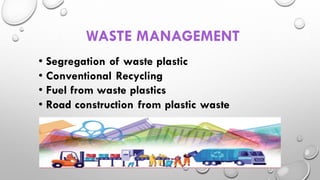
WASTE MANAGEMENT
• Segregation of waste plastic
• Conventional Recycling
• Fuel from waste plastics
• Road construction from plastic waste
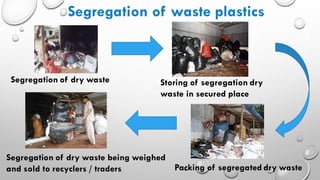
Segregation of waste plastics
Segregation of dry waste Storing of segregation dry
waste in secured place
Packing of segregated dry waste
Segregation of dry waste being weighed
and sold to recyclers / traders
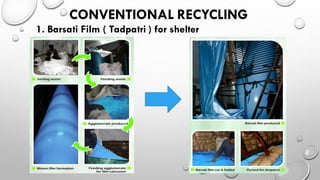
CONVENTIONAL RECYCLING
1. Barsati Film ( Tadpatri ) for shelter
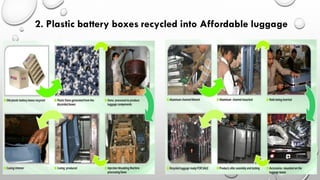
2. Plastic battery boxes recycled into Affordable luggage
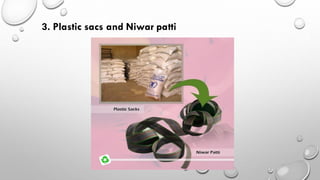
3. Plastic sacs and Niwar patti
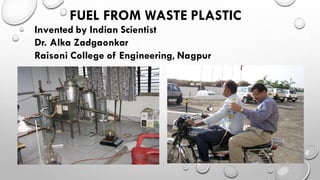
FUEL FROM WASTE PLASTIC
Invented by Indian Scientist
Dr. Alka Zadgaonkar
Raisoni College of Engineering, Nagpur
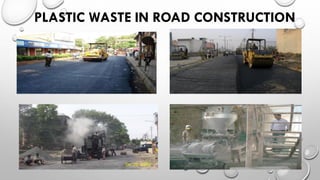
PLASTIC WASTE IN ROAD CONSTRUCTION
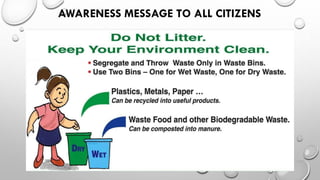
AWARENESS MESSAGE TO ALL CITIZENS
THANK YOU !

Plastic pollution

  • 1.
  • 2.
    CONTENTS • OVERVIEW • PRODUCTION •MAJOR ISSUES • DISPOSAL AND WASTE MANAGEMENT
  • 3.
    • Plastics areeverywhere, in our home, school, work, playground, parks, and beaches. • It is such a popular material because it is flexible, lightweight, moisture resistant, and inexpensive. • Even plastics are found deep in land, they eventually find their way to the sea or ocean through rivers and streams. PLASTIC OVERVIEW
  • 4.
    PLASTIC PRODUCTION Plastics areused in a wide variety of products and have displaced other materials that were previously used for the applications that plastics now dominate such as wood, metal, and glass. It can be formed into polyesters for use in fabrics and textiles, polyvinylidene chloride for food packaging, and polycarbonates for eyeglasses and compact discs, among thousands of other uses.
  • 5.
    1. The acquirementof raw material, 2. Synthesizing a basic polymer, 3. Compounding the polymer into a usable fraction, 4. And lastly, molding or shaping the plastic. THE PRODUCTION OF PLASTIC REQUIRES FOUR BASIC STEPS :
  • 6.
    YEAR PRODICTION VOLUMEIN MILLION METRIC TONS 1950 1.5 1976 50 1989 100 2002 200 2008 245 2010 270 2012 288 2014 311 2016 335 2018 359 2019 368 GLOBAL PRODUCTION OF PLASTIC FROM 1950-2019 From this data we conclude that, the production of plastic increases day by day at very high rate
  • 7.
    MAJOR ISSUES • Healthand Safety • Toxicity • Biodegradability • Disposal and waste management
  • 8.
    Health and Safety Chemicals- In plastic manufacturing and recycling companies a number of chemicals are used and produced as a by-product of work processes. Some of these chemicals can damage people’s health if they are exposed to them. Manual Handling – In plastics companies manual handling is one of the biggest causes if injury. It is not only the weight of the materials being handled but also the size and nature of the products that can cause problems.
  • 9.
    The harmful chemicalsassociated with plastics can be divided into three categories: • Ingredients of the plastic material, • Byproducts of manufacturing and • Chemicals adsorbed from the environment. TOXICITY These chemicals include heavy metals, pesticides, polycyclic aromatic hydrocarbons (PAHs) and polychlorinated biphenyls (PCBs), which can disrupt important physiological processes of animals causing for example diseases and problems in reproduction.
  • 10.
    • For example,dead plants and animals eventually decay. • Plastic does not bio-degrade. • Nature does not know how to break down plastic because of what plastic is made of. Bio-degradation is the natural break-down of organic substances.
  • 11.
    • When somethingis photo-degraded, it does not change its composition the way it does if it were bio-degraded. The only thing that changes is its size. • Plastic can photo-degrade. In large periods of time, plastics break down into very small pieces of plastic that float around. • Plastic Pollution has many negative effects on the environment. It impacts on birds, aquatic animals , coral reefs, human health, tourism and the livelihood of people Photo-degradation is the break-up of materials by the sun.
  • 12.
    DISPOSAL • For effectivewaste disposal, segregation is the key. • Segregating at the source is one of the best ways to manage waste in a better way. Every individual can contribute by making small changes in their consumption and dumping patterns. To begin with, let’s follow these simple, basic rules: 1. After using any plastic product, wash it with clear water 2. Crush the bottle or container 3. Store them separately from the wet waste 4. Handover plastic waste to the plastic agents (Kabadiwalas)
  • 13.
    WASTE MANAGEMENT • Segregationof waste plastic • Conventional Recycling • Fuel from waste plastics • Road construction from plastic waste
  • 14.
    Segregation of wasteplastics Segregation of dry waste Storing of segregation dry waste in secured place Packing of segregated dry waste Segregation of dry waste being weighed and sold to recyclers / traders
  • 15.
    CONVENTIONAL RECYCLING 1. BarsatiFilm ( Tadpatri ) for shelter
  • 16.
    2. Plastic batteryboxes recycled into Affordable luggage
  • 17.
    3. Plastic sacsand Niwar patti
  • 18.
    FUEL FROM WASTEPLASTIC Invented by Indian Scientist Dr. Alka Zadgaonkar Raisoni College of Engineering, Nagpur
  • 19.
    PLASTIC WASTE INROAD CONSTRUCTION
  • 20.
  • 21.