
Problem Solving
9S Methodology
Michael Venner
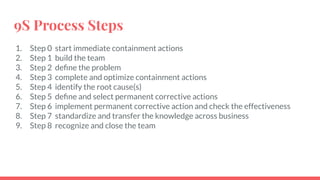
9S Process Steps
1. Step 0 start immediate containment actions
2. Step 1 build the team
3. Step 2 define the problem
4. Step 3 complete and optimize containment actions
5. Step 4 identify the root cause(s)
6. Step 5 define and select permanent corrective actions
7. Step 6 implement permanent corrective action and check the effectiveness
8. Step 7 standardize and transfer the knowledge across business
9. Step 8 recognize and close the team
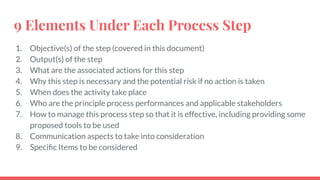
9 Elements Under Each Process Step
1. Objective(s) of the step (covered in this document)
2. Output(s) of the step
3. What are the associated actions for this step
4. Why this step is necessary and the potential risk if no action is taken
5. When does the activity take place
6. Who are the principle process performances and applicable stakeholders
7. How to manage this process step so that it is effective, including providing some
proposed tools to be used
8. Communication aspects to take into consideration
9. Specific Items to be considered
Step 0 Immediate Containment
Objective:
To mitigate the impact of the problem, to protect customer operations and the
organisation (i.e., stop the problem from getting worse), and verify that the situation
does not deteriorate until the root cause and contributing causes are known
Step 1 Build the Team
Objective:
To ensure that all process performers and applicable stakeholders and functions
(e.g., organisations, department, suppliers, customers) that may have an influence on
the corrective action process and associated investigation are on the team.
Step 2 Define Problem
Objective:
To understand the significance, impact, and size of the problem (i.e., depth and
breadth of current conditions) and ensure the situation (i.e., problem) is accurately
defined and thoroughly understood by the team and applicable stakeholders.
Step 3 Complete and Optimise Containment
Actions
Objective:
To ensure containment actions suitably address the problem statement and to verify
that immediate corrective action is commensurate with the problem, implemented,
and effective.
Step 4 Identify root cause(s)
Objective:
To identify, through structured root cause analysis, the root cause for the
undesirable condition, situation, nonconformity, or failure, including the reason it
was not detected.
Step 5 Define and Select Permanent
Corrective Actions
Objective:
To define, prioritise, and select corrective actions that should be implemented to
address the causes (root causes and contributing causes) and permanently prevent
the undesirable condition, situation, nonconformity, or failure from recurring.
Step 6 Implement Permanent Corrective
Action and Check Effectiveness
Objective:
To ensure all selected corrective actions are implemented (as defined), and to assess
their effectiveness in preventing the undesirable condition from recurring and/or in
detecting it sufficiently upstream in the process.
Step 7 Standardise and Transfer knowledge
across the business
Objective:
To document analysis, results, and changes to capture and share learning with
applicable stakeholders to prevent the similar undesirable conditions, situation,
nonconformity, or failure occurring on other products, production lines, factories, or
suppliers.
Step 8 Recognise and Close the Team
Objective:
To ensure all team members and stakeholders are aware of the successful
implementation of all corrective action, to confirm that the activity is closed, and to
recognise and reward their work and accomplishment.
Step 8 Recognise and Close the Team
Objective:
To ensure all team members and stakeholders are aware of the successful
implementation of all corrective action, to confirm that the activity is closed, and to
recognise and reward their work and accomplishment.

Problem Solving:9S Methodology

  • 1.
  • 2.
    9S Process Steps 1.Step 0 start immediate containment actions 2. Step 1 build the team 3. Step 2 define the problem 4. Step 3 complete and optimize containment actions 5. Step 4 identify the root cause(s) 6. Step 5 define and select permanent corrective actions 7. Step 6 implement permanent corrective action and check the effectiveness 8. Step 7 standardize and transfer the knowledge across business 9. Step 8 recognize and close the team
  • 3.
    9 Elements UnderEach Process Step 1. Objective(s) of the step (covered in this document) 2. Output(s) of the step 3. What are the associated actions for this step 4. Why this step is necessary and the potential risk if no action is taken 5. When does the activity take place 6. Who are the principle process performances and applicable stakeholders 7. How to manage this process step so that it is effective, including providing some proposed tools to be used 8. Communication aspects to take into consideration 9. Specific Items to be considered
  • 4.
    Step 0 ImmediateContainment Objective: To mitigate the impact of the problem, to protect customer operations and the organisation (i.e., stop the problem from getting worse), and verify that the situation does not deteriorate until the root cause and contributing causes are known
  • 5.
    Step 1 Buildthe Team Objective: To ensure that all process performers and applicable stakeholders and functions (e.g., organisations, department, suppliers, customers) that may have an influence on the corrective action process and associated investigation are on the team.
  • 6.
    Step 2 DefineProblem Objective: To understand the significance, impact, and size of the problem (i.e., depth and breadth of current conditions) and ensure the situation (i.e., problem) is accurately defined and thoroughly understood by the team and applicable stakeholders.
  • 7.
    Step 3 Completeand Optimise Containment Actions Objective: To ensure containment actions suitably address the problem statement and to verify that immediate corrective action is commensurate with the problem, implemented, and effective.
  • 8.
    Step 4 Identifyroot cause(s) Objective: To identify, through structured root cause analysis, the root cause for the undesirable condition, situation, nonconformity, or failure, including the reason it was not detected.
  • 9.
    Step 5 Defineand Select Permanent Corrective Actions Objective: To define, prioritise, and select corrective actions that should be implemented to address the causes (root causes and contributing causes) and permanently prevent the undesirable condition, situation, nonconformity, or failure from recurring.
  • 10.
    Step 6 ImplementPermanent Corrective Action and Check Effectiveness Objective: To ensure all selected corrective actions are implemented (as defined), and to assess their effectiveness in preventing the undesirable condition from recurring and/or in detecting it sufficiently upstream in the process.
  • 11.
    Step 7 Standardiseand Transfer knowledge across the business Objective: To document analysis, results, and changes to capture and share learning with applicable stakeholders to prevent the similar undesirable conditions, situation, nonconformity, or failure occurring on other products, production lines, factories, or suppliers.
  • 12.
    Step 8 Recogniseand Close the Team Objective: To ensure all team members and stakeholders are aware of the successful implementation of all corrective action, to confirm that the activity is closed, and to recognise and reward their work and accomplishment.
  • 13.
    Step 8 Recogniseand Close the Team Objective: To ensure all team members and stakeholders are aware of the successful implementation of all corrective action, to confirm that the activity is closed, and to recognise and reward their work and accomplishment.