Strategy
implementatio
n
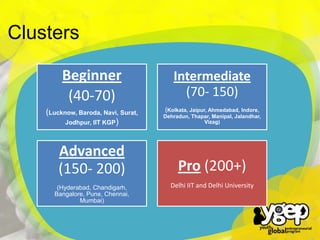
Clusters

`

Beginner
(40-70)

Intermediate
(70- 150)

(Lucknow, Baroda, Navi, Surat,
Jodhpur, IIT KGP)

(Kolkata, Jaipur, Ahmedabad, Indore,

Advanced
(150- 200)
(Hyderabad, Chandigarh,
Bangalore, Pune, Chennai,
Mumbai)

Dehradun, Thapar, Manipal, Jalandhar,
Vizag)

Pro (200+)
Delhi IIT and Delhi University
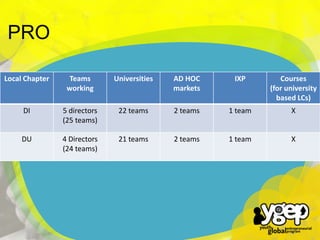
PRO

`

Local Chapter

Teams
working

Universities

AD HOC
markets

IXP

Courses
(for university
based LCs)

DI

5 directors
(25 teams)

22 teams

2 teams

1 team

X

DU

4 Directors
(24 teams)

21 teams

2 teams

1 team

X
GROWTH STRATEGIES FOR
PRO
Recommended LCs:
Delhi IIT and Delhi University
These strategies and structure
should enable your entity to do
more than 200 + exchanges
while delivering good quality
standards.

`

Strategy for Pro
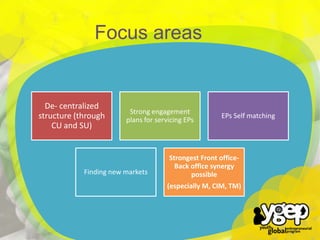
Focus areas

Strong engagement
plans for servicing EPs

Finding new markets

`

De- centralized
structure (through
CU and SU)

EPs Self matching

Strongest Front officeBack office synergy
possible
(especially M, CIM, TM)
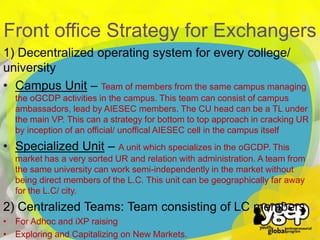
Front office Strategy for Exchangers
`

1) Decentralized operating system for every college/
university
• Campus Unit – Team of members from the same campus managing
the oGCDP activities in the campus. This team can consist of campus
ambassadors, lead by AIESEC members. The CU head can be a TL under
the main VP. This can a strategy for bottom to top approach in cracking UR
by inception of an official/ unoffical AIESEC cell in the campus itself

• Specialized Unit – A unit which specializes in the oGCDP. This
market has a very sorted UR and relation with administration. A team from
the same university can work semi-independently in the market without
being direct members of the L.C. This unit can be geographically far away
for the L.C/ city.

2) Centralized Teams: Team consisting of LC members
• For Adhoc and iXP raising
• Exploring and Capitalizing on New Markets.
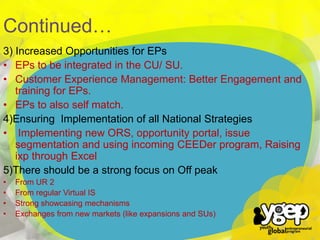
3) Increased Opportunities for EPs
• EPs to be integrated in the CU/ SU.
• Customer Experience Management: Better Engagement and
training for EPs.
• EPs to also self match.
4)Ensuring Implementation of all National Strategies
• Implementing new ORS, opportunity portal, issue
segmentation and using incoming CEEDer program, Raising
ixp through Excel
5)There should be a strong focus on Off peak
•
•
•
•

From UR 2
From regular Virtual IS
Strong showcasing mechanisms
Exchanges from new markets (like expansions and SUs)

`

Continued…
Back office strategy for Exchange
Support:

`

•

•
•

•

•
•

Extremely specific recruitments in decentralized CUs and SUs from their own
campuses. Specialized recruitments for core departments from independent markets
for Ad hoc and IXP.
Marketing activities defined very specifically for CU and SU colleges/ universities.
An overall focus on PR and community management (virtual presence in social
media, websites, blogs, etc) through marketing for increasing the visibility of the
programme and getting higher registrations and conversions. Promoting opportunity
portal.
NGO partnerships based on new issue segmentation to promote GCDP to the
volunteers of the NGO and getting the NGO to promote GCDP programme
specifically for that issue.
Investment (both Financial and human resource) in finding new markets (new
expansions, news SUs, new CUs) and developing them further.
CIM for the following things:

-Creating structures for managing communication flow between CUs and SUs.
- Helping in Engaging and creating communication channel for the EPs and hence

Pro LCs

  • 1.
  • 2.
    Clusters ` Beginner (40-70) Intermediate (70- 150) (Lucknow, Baroda,Navi, Surat, Jodhpur, IIT KGP) (Kolkata, Jaipur, Ahmedabad, Indore, Advanced (150- 200) (Hyderabad, Chandigarh, Bangalore, Pune, Chennai, Mumbai) Dehradun, Thapar, Manipal, Jalandhar, Vizag) Pro (200+) Delhi IIT and Delhi University
  • 3.
    PRO ` Local Chapter Teams working Universities AD HOC markets IXP Courses (foruniversity based LCs) DI 5 directors (25 teams) 22 teams 2 teams 1 team X DU 4 Directors (24 teams) 21 teams 2 teams 1 team X
  • 4.
    GROWTH STRATEGIES FOR PRO RecommendedLCs: Delhi IIT and Delhi University
  • 5.
    These strategies andstructure should enable your entity to do more than 200 + exchanges while delivering good quality standards. ` Strategy for Pro
  • 6.
    Focus areas Strong engagement plansfor servicing EPs Finding new markets ` De- centralized structure (through CU and SU) EPs Self matching Strongest Front officeBack office synergy possible (especially M, CIM, TM)
  • 7.
    Front office Strategyfor Exchangers ` 1) Decentralized operating system for every college/ university • Campus Unit – Team of members from the same campus managing the oGCDP activities in the campus. This team can consist of campus ambassadors, lead by AIESEC members. The CU head can be a TL under the main VP. This can a strategy for bottom to top approach in cracking UR by inception of an official/ unoffical AIESEC cell in the campus itself • Specialized Unit – A unit which specializes in the oGCDP. This market has a very sorted UR and relation with administration. A team from the same university can work semi-independently in the market without being direct members of the L.C. This unit can be geographically far away for the L.C/ city. 2) Centralized Teams: Team consisting of LC members • For Adhoc and iXP raising • Exploring and Capitalizing on New Markets.
  • 8.
    3) Increased Opportunitiesfor EPs • EPs to be integrated in the CU/ SU. • Customer Experience Management: Better Engagement and training for EPs. • EPs to also self match. 4)Ensuring Implementation of all National Strategies • Implementing new ORS, opportunity portal, issue segmentation and using incoming CEEDer program, Raising ixp through Excel 5)There should be a strong focus on Off peak • • • • From UR 2 From regular Virtual IS Strong showcasing mechanisms Exchanges from new markets (like expansions and SUs) ` Continued…
  • 9.
    Back office strategyfor Exchange Support: ` • • • • • • Extremely specific recruitments in decentralized CUs and SUs from their own campuses. Specialized recruitments for core departments from independent markets for Ad hoc and IXP. Marketing activities defined very specifically for CU and SU colleges/ universities. An overall focus on PR and community management (virtual presence in social media, websites, blogs, etc) through marketing for increasing the visibility of the programme and getting higher registrations and conversions. Promoting opportunity portal. NGO partnerships based on new issue segmentation to promote GCDP to the volunteers of the NGO and getting the NGO to promote GCDP programme specifically for that issue. Investment (both Financial and human resource) in finding new markets (new expansions, news SUs, new CUs) and developing them further. CIM for the following things: -Creating structures for managing communication flow between CUs and SUs. - Helping in Engaging and creating communication channel for the EPs and hence