PRINCIPLES
of the Constitution
Tyranny
No One Wants This.
A Constitution
LIMITS
Government
PREVENTS
Tyranny
Photo by Chrishna
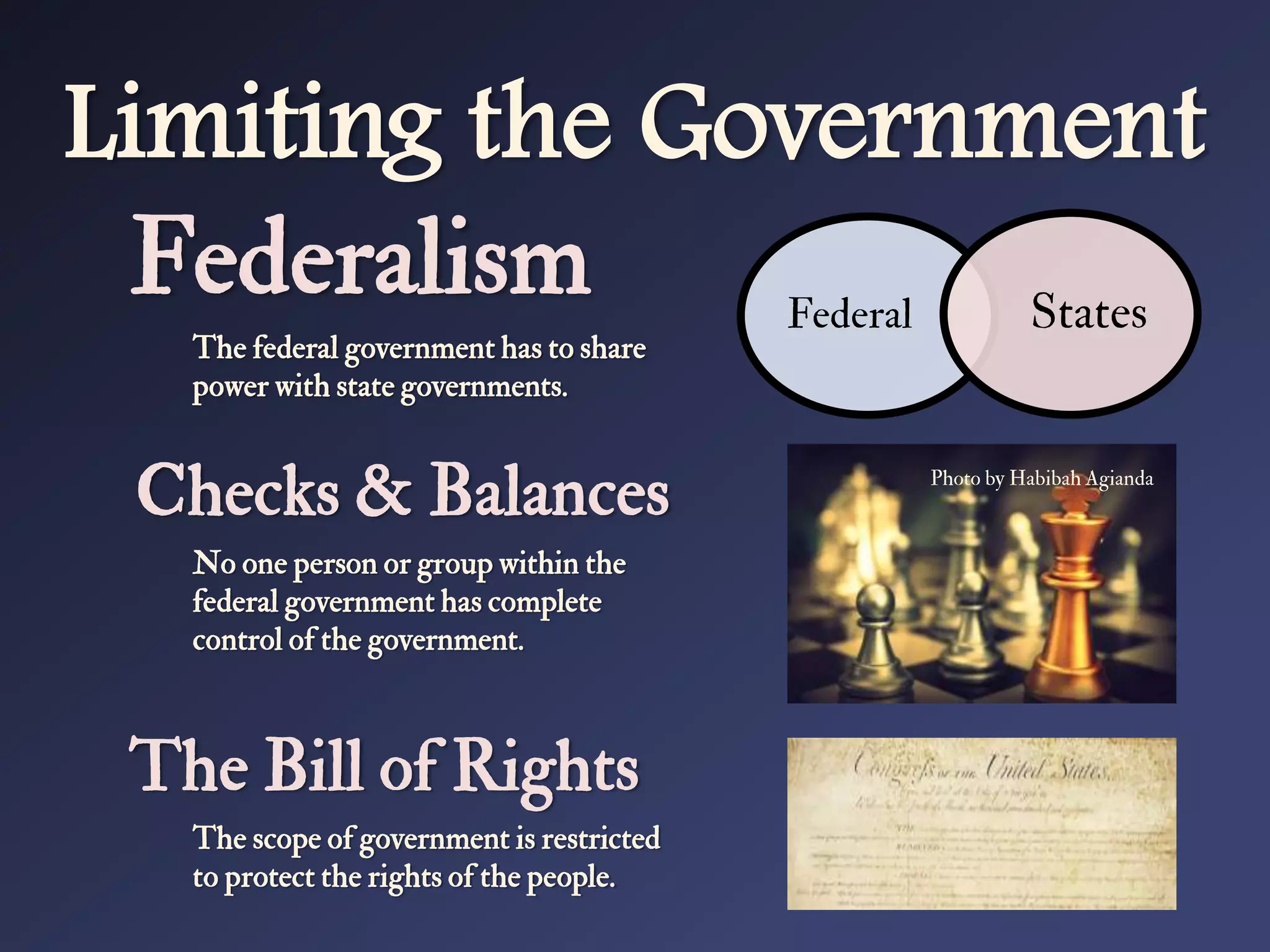
Limiting the Government
Federal States
Photo by Habibah Agianda
Federalism
Checks & Balances
The Bill of Rights
The federal government has to share
power with state governments.
No one person or group within the
federal government has complete
control of the government.
The scope of government is restricted
to protect the rights of the people.
Federal
Government
State
Governments
Two Levels of
Government that
share power
Federal States
Map by Lokal_Profil
What do all federal
states have in common?
Federal States
Map by Lokal_Profil
Every federal government’s power is limited.
“The powers delegated by
the proposed Constitution
to the federal government,
are few and defined. Those
which are to remain in the
State governments are
numerous and indefinite.”
-- James Madison
Federalist No. 45
Source: http://www.constitution.org/fed/federa45.htm
FEDERALISM Federal State
Sovereignty is constitutionally divided
between a central authority and states.
DELEGATED
Powers
CONCURRENT
Powers
RESERVED
Powers
Powers given to
the Federal
Government
Powers kept by
the states and
people
Powers shared by
both levels of
Government
Delegated Reserved
Federalism
Concurrent
Admit New States
Coin Money Collect Tariffs
Declare War
Education
Establish
CourtsWeights and
Measures
Foreign Policy
Establish Local Governments
Army and
Navy
Marriage Laws
National Defense
Immigration and Naturalization
Organize and
Maintain Militia
Propose
Constitutional
Amendments
Ratify
Constitutional
Amendments
Punish
Treason
Regulate
Foreign Trade
Regulate
Interstate Commerce
Regulate
Intrastate Commerce
Taxation
& Everything Else
Federalist No. 39
(Madison)
“The Conformity of the Plan
to Republican Principles”
Is the government created by
the Constitution a national
government or a federal
government?
Source: http://www.constitution.org/fed/federa45.htm
Federalist 39 NATIONAL FEDERAL
Ratification
Congress
Electoral College
Powers
of the government
Operation
of the government
Amendments
X
X
X
X
X
SenateHouse
MADISON’S POINT:
Although the government
created by the Constitution
is national in some respects,
it remains federal in most
respects.
Source: http://www.constitution.org/fed/federa45.htm
Montesquieu
–French Philosopher
–The Spirit of the Laws (1748)
Separation of
Powers
LEGISLATIVE EXECUTIVE JUDICIAL
(Congress) (President) (Supreme Court)
MAKES
Laws
ENFORCES
Laws
JUDGES
Laws
Three Branches
of Government
and Balances
Checks
and
Balances
Each branch
has “checks”
that help it to
“balance” its
power with the
other branches.Photo by UpstateNYer
Photo by Martin Falbisoner Photo by 350z33
#REKT
This keeps any branch
from becoming dominant
over the others.
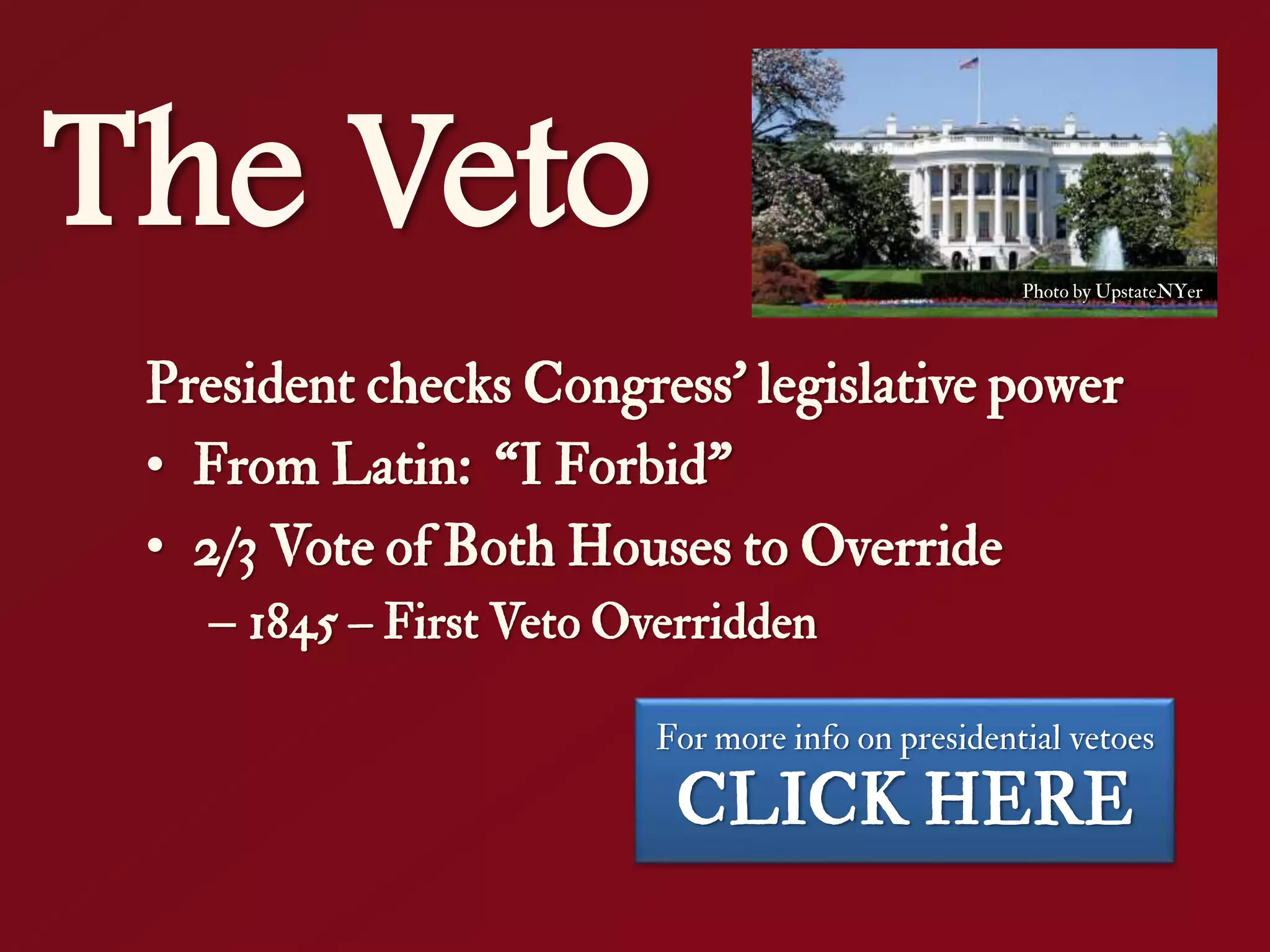
The Veto
President checks Congress’ legislative power
• From Latin: “I Forbid”
• 2/3 Vote of Both Houses to Override
– 1845 – First Veto Overridden
For more info on presidential vetoes
CLICK HERE
Photo by UpstateNYer
Confirmation Hearings
The Senate must confirm all
presidential appointments of cabinet
members, federal judges, foreign
ambassadors, and other high officials.
LIFERS
With the power to decide what the Constitution says.
Powers of the
Government
Which Branch Has
The Power?
Branch(es) Checked
(Could be more than one)
Create and pass legislation.
Veto bills.
Ratify treaties.
Appoint Federal judges.
Impeachment of federal officials.
Confirm presidential appointments.
Declare laws unconstitutional.
Override Presidential Vetoes.
Judges are appointed for life.
Appropriate Money.
Legislative
Legislative
Legislative
Legislative
Legislative
Legislative
Judicial
Judicial
Executive
Executive
Executive / Judicial
Executive / Legislative
Executive
Executive
Judicial
Legislative
Executive
Legislative
The Bill of Rights
The Bill of Rights was
intended to protect the
rights of the PEOPLE
and the STATES from
being violated by the
federal government.
Amendments
The original
constitution
DID NOT
include a Bill
of Rights.
Amendment I
Congress shall make no law respecting an
establishment of religion, or prohibiting
the free exercise thereof; or abridging the
freedom of speech, or of the press; or the
right of the people peaceably to assemble,
and to petition the Government for a
redress of grievances.
The Right to Free Expression
Praying icon designed by Cristiano Zoucas from the Noun Project
Speaker icon designed by Magicon from the Noun Project
Amendment I
RELIGION
SPEECH
PRESS
ASSEMBLY
PETITION
icon designed byfrom the Noun Project
The Right to Free Expression
Amendment II
A well regulated Militia, being
necessary to the security of a free
State, the right of the people to
keep and bear Arms, shall not be
infringed.
Pistol icon designed by Misha Petrishchev from the Noun Project
The Right to Keep & Bear Arms
Amendment IV
The right of the people to be
secure in their persons, houses,
papers, and effects, against
unreasonable searches and
seizures, shall not be violated…
Lock icon designed by Alexander Smith from the Noun Project
Protection of Private Property
The powers not delegated to
the United States by the
Constitution, nor prohibited
by it to the States, are reserved
to the States respectively, or to
the people.
Amendment X
State icons designed by Ted Grajeda from the Noun Project
The Rights of the States
Limiting the Government
Federal States
Photo by Habibah Agianda
What are the three
ways in which the
Constitution limits
government?
Limiting the Government
Federal States
Photo by Habibah Agianda
Federalism
Checks & Balances
The Bill of Rights
The federal government has to share
power with state governments.
No one person or group within the
federal government has complete
control of the government.
The scope of government is restricted
to protect the rights of the people.
Principles of the Constitution

Principles of the Constitution

  • 1.
  • 2.
  • 3.
  • 4.
    Limiting the Government FederalStates Photo by Habibah Agianda Federalism Checks & Balances The Bill of Rights The federal government has to share power with state governments. No one person or group within the federal government has complete control of the government. The scope of government is restricted to protect the rights of the people.
  • 5.
  • 6.
    Federal States Map byLokal_Profil What do all federal states have in common?
  • 7.
    Federal States Map byLokal_Profil Every federal government’s power is limited.
  • 8.
    “The powers delegatedby the proposed Constitution to the federal government, are few and defined. Those which are to remain in the State governments are numerous and indefinite.” -- James Madison Federalist No. 45 Source: http://www.constitution.org/fed/federa45.htm
  • 9.
    FEDERALISM Federal State Sovereigntyis constitutionally divided between a central authority and states. DELEGATED Powers CONCURRENT Powers RESERVED Powers Powers given to the Federal Government Powers kept by the states and people Powers shared by both levels of Government
  • 10.
    Delegated Reserved Federalism Concurrent Admit NewStates Coin Money Collect Tariffs Declare War Education Establish CourtsWeights and Measures Foreign Policy Establish Local Governments Army and Navy Marriage Laws National Defense Immigration and Naturalization Organize and Maintain Militia Propose Constitutional Amendments Ratify Constitutional Amendments Punish Treason Regulate Foreign Trade Regulate Interstate Commerce Regulate Intrastate Commerce Taxation & Everything Else
  • 11.
    Federalist No. 39 (Madison) “TheConformity of the Plan to Republican Principles” Is the government created by the Constitution a national government or a federal government? Source: http://www.constitution.org/fed/federa45.htm
  • 12.
    Federalist 39 NATIONALFEDERAL Ratification Congress Electoral College Powers of the government Operation of the government Amendments X X X X X SenateHouse
  • 13.
    MADISON’S POINT: Although thegovernment created by the Constitution is national in some respects, it remains federal in most respects. Source: http://www.constitution.org/fed/federa45.htm
  • 14.
    Montesquieu –French Philosopher –The Spiritof the Laws (1748) Separation of Powers
  • 15.
    LEGISLATIVE EXECUTIVE JUDICIAL (Congress)(President) (Supreme Court) MAKES Laws ENFORCES Laws JUDGES Laws Three Branches of Government
  • 16.
  • 17.
    Checks and Balances Each branch has “checks” thathelp it to “balance” its power with the other branches.Photo by UpstateNYer Photo by Martin Falbisoner Photo by 350z33 #REKT This keeps any branch from becoming dominant over the others.
  • 18.
    The Veto President checksCongress’ legislative power • From Latin: “I Forbid” • 2/3 Vote of Both Houses to Override – 1845 – First Veto Overridden For more info on presidential vetoes CLICK HERE Photo by UpstateNYer
  • 19.
    Confirmation Hearings The Senatemust confirm all presidential appointments of cabinet members, federal judges, foreign ambassadors, and other high officials.
  • 20.
    LIFERS With the powerto decide what the Constitution says.
  • 21.
    Powers of the Government WhichBranch Has The Power? Branch(es) Checked (Could be more than one) Create and pass legislation. Veto bills. Ratify treaties. Appoint Federal judges. Impeachment of federal officials. Confirm presidential appointments. Declare laws unconstitutional. Override Presidential Vetoes. Judges are appointed for life. Appropriate Money. Legislative Legislative Legislative Legislative Legislative Legislative Judicial Judicial Executive Executive Executive / Judicial Executive / Judicial Executive / Judicial Executive / Legislative Executive Executive Judicial Legislative Executive Legislative
  • 22.
    The Bill ofRights The Bill of Rights was intended to protect the rights of the PEOPLE and the STATES from being violated by the federal government.
  • 23.
  • 24.
    Amendment I Congress shallmake no law respecting an establishment of religion, or prohibiting the free exercise thereof; or abridging the freedom of speech, or of the press; or the right of the people peaceably to assemble, and to petition the Government for a redress of grievances. The Right to Free Expression Praying icon designed by Cristiano Zoucas from the Noun Project Speaker icon designed by Magicon from the Noun Project
  • 25.
    Amendment I RELIGION SPEECH PRESS ASSEMBLY PETITION icon designedbyfrom the Noun Project The Right to Free Expression
  • 26.
    Amendment II A wellregulated Militia, being necessary to the security of a free State, the right of the people to keep and bear Arms, shall not be infringed. Pistol icon designed by Misha Petrishchev from the Noun Project The Right to Keep & Bear Arms
  • 27.
    Amendment IV The rightof the people to be secure in their persons, houses, papers, and effects, against unreasonable searches and seizures, shall not be violated… Lock icon designed by Alexander Smith from the Noun Project Protection of Private Property
  • 28.
    The powers notdelegated to the United States by the Constitution, nor prohibited by it to the States, are reserved to the States respectively, or to the people. Amendment X State icons designed by Ted Grajeda from the Noun Project The Rights of the States
  • 29.
    Limiting the Government FederalStates Photo by Habibah Agianda What are the three ways in which the Constitution limits government?
  • 30.
    Limiting the Government FederalStates Photo by Habibah Agianda Federalism Checks & Balances The Bill of Rights The federal government has to share power with state governments. No one person or group within the federal government has complete control of the government. The scope of government is restricted to protect the rights of the people.