PRINCIPLE OF 
CONTEXT 
Presented by: Zharina Agwilang (BSED)
CONTEXT 
The situation or circumstances that 
forms the setting for an event, 
statement, or idea in terms of which it 
can fully understood and assessed.
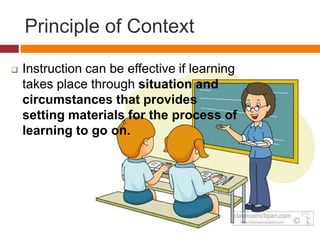
Principle of Context 
 Instruction can be effective if learning 
takes place through situation and 
circumstances that provides 
setting materials for the process of 
learning to go on.
Levels in the Principle of 
Context (Leus, 2005)
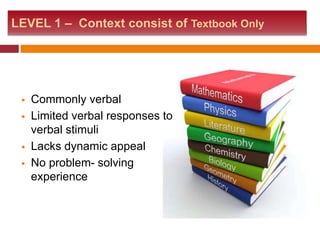
LEVEL 1 – Context consist of Textbook Only 
 Commonly verbal 
 Limited verbal responses to 
verbal stimuli 
 Lacks dynamic appeal 
 No problem- solving 
experience
LEVEL 2 – Textbook together with supplemental materials 
 Wider in context 
 More readings of expository 
 Advocates more extensive 
readings
LEVEL 3 – Non-academic and Current materials 
 Concrete, specific, actual, 
and immediate 
 Reality vs. Theories 
 Leads to extensive 
discussions
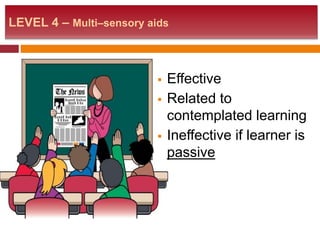
LEVEL 4 – Multi–sensory aids 
 Effective 
 Related to 
contemplated learning 
 Ineffective if learner is 
passive
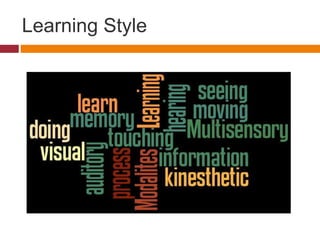
Learning Style
LEVEL 5 – Demonstration and Presentation by Experts 
 Concrete setting 
 Learning beyond classroom 
setting
LEVEL 6– Field experiences, personal, social, 
community understanding 
 Concrete, abundant, dynamic 
readily apprehended setting for 
learning 
 Goes beyond verbalization 
 Concrete and firsthand 
experiences
Educational Tour
 The use of context in teaching 
can motivate learners to gain 
more interest and provide clear 
understanding and illustrate 
ideas.

Principle of context

  • 1.
    PRINCIPLE OF CONTEXT Presented by: Zharina Agwilang (BSED)
  • 2.
    CONTEXT The situationor circumstances that forms the setting for an event, statement, or idea in terms of which it can fully understood and assessed.
  • 3.
    Principle of Context  Instruction can be effective if learning takes place through situation and circumstances that provides setting materials for the process of learning to go on.
  • 4.
    Levels in thePrinciple of Context (Leus, 2005)
  • 5.
    LEVEL 1 –Context consist of Textbook Only  Commonly verbal  Limited verbal responses to verbal stimuli  Lacks dynamic appeal  No problem- solving experience
  • 6.
    LEVEL 2 –Textbook together with supplemental materials  Wider in context  More readings of expository  Advocates more extensive readings
  • 7.
    LEVEL 3 –Non-academic and Current materials  Concrete, specific, actual, and immediate  Reality vs. Theories  Leads to extensive discussions
  • 8.
    LEVEL 4 –Multi–sensory aids  Effective  Related to contemplated learning  Ineffective if learner is passive
  • 9.
  • 11.
    LEVEL 5 –Demonstration and Presentation by Experts  Concrete setting  Learning beyond classroom setting
  • 12.
    LEVEL 6– Fieldexperiences, personal, social, community understanding  Concrete, abundant, dynamic readily apprehended setting for learning  Goes beyond verbalization  Concrete and firsthand experiences
  • 14.
  • 16.
     The useof context in teaching can motivate learners to gain more interest and provide clear understanding and illustrate ideas.