Interpersonal Communication
Dr. Marquita L. Byrd
Marquita.byrd@sjsu.edu
Primary Relationships
 Dying
 Traditional
 Americans like to marry
 50% get divorced
 50% of those get
remarried
 People who can support
families and more
educated continue to get
married
 Changing
 Contemporary or post-
modern
 Creating structures that
fit the needs of the
people involved
 Marriage is evolving to fit
new stresses and life
styles
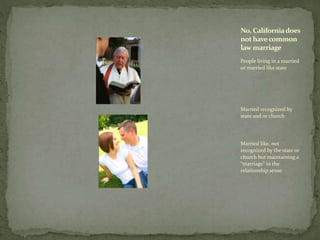
People living in a married
or married like state
Married recognized by
state and or church
Married like, not
recognized by the state or
church but maintaining a
“marriage” in the
relationship sense
No, Californiadoes
not havecommon
law marriage
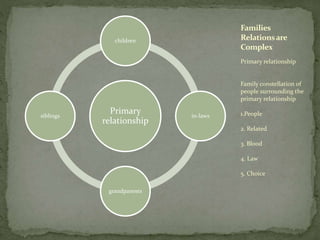
Primary
relationship
children
in-laws
grandparents
siblings
Primary relationship
Family constellation of
people surrounding the
primary relationship
1.People
2. Related
3. Blood
4. Law
5. Choice
Families
Relationsare
Complex
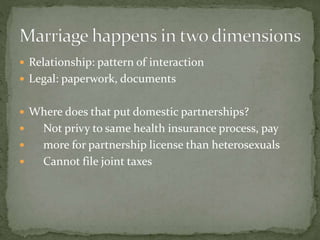
 Relationship: pattern of interaction
 Legal: paperwork, documents
 Where does that put domestic partnerships?
 Not privy to same health insurance process, pay
 more for partnership license than heterosexuals
 Cannot file joint taxes
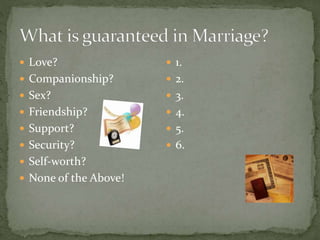
 Love?
 Companionship?
 Sex?
 Friendship?
 Support?
 Security?
 Self-worth?
 None of the Above!
 1.
 2.
 3.
 4.
 5.
 6.
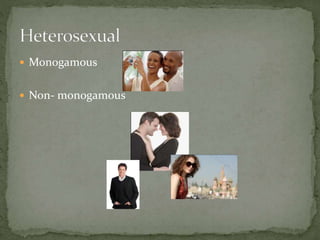
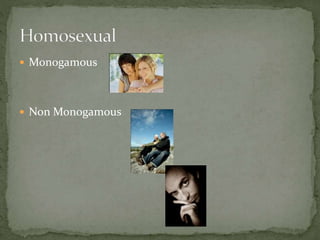
Described by gender, number, sexual fidelity
 Monogamous
 Non- monogamous
 Monogamous
 Non Monogamous
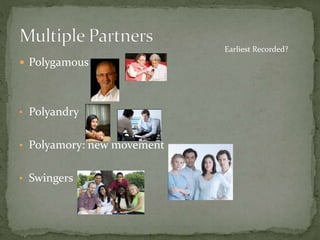
 Polygamous
• Polyandry
• Polyamory: new movement
• Swingers
Earliest Recorded?
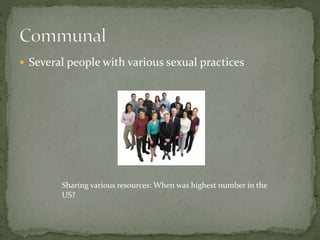
 Several people with various sexual practices
Sharing various resources: When was highest number in the
US?
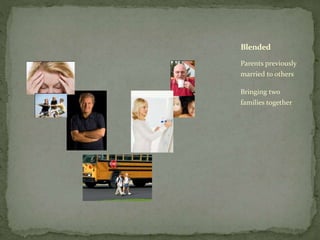
Parents previously
married to others
Bringing two
families together
Blended
Legitimate Style
SingleParent
Family
 Marriage across any cultural, religious, racial
boundaries
 Racial
 Ethnic
 Religion
 Transgender
 National
Every Style You Can Imagine. Family structure based on social
norms and indigenous needs.

Primary relationships