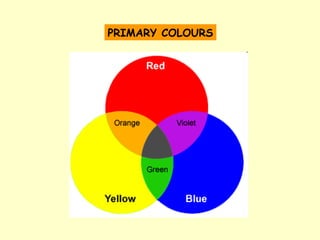
PRIMARY COLOURS
            By Ropergo
Title: Primary colours
Art contents: Primary and secondary colours, Mondrian
English contents: Primary and secondary colours, shapes,
materials ( brush, felt-tip pen, cup, plate…)
Objectives:
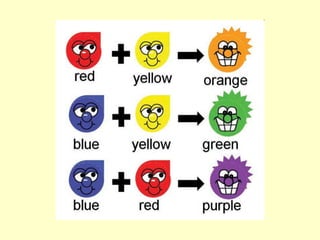
        - To differentiate primary and secondary colours
        - To know Mondrian and the abstract painting.
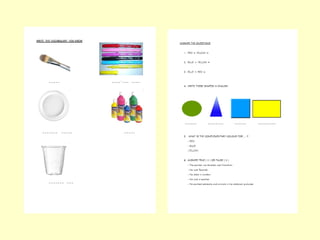
MATERIALS
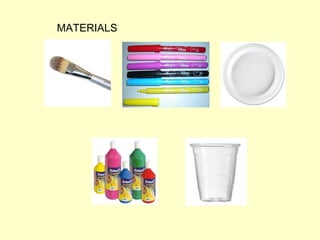
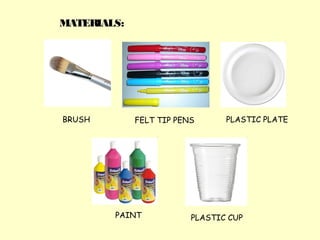
MATERIALS:


BRUSH        FELT TIP PENS      PLASTIC PLATE


        PAINT            PLASTIC CUP
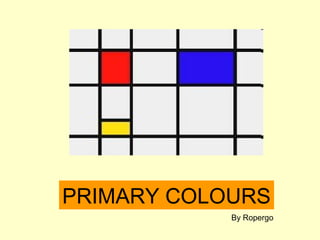
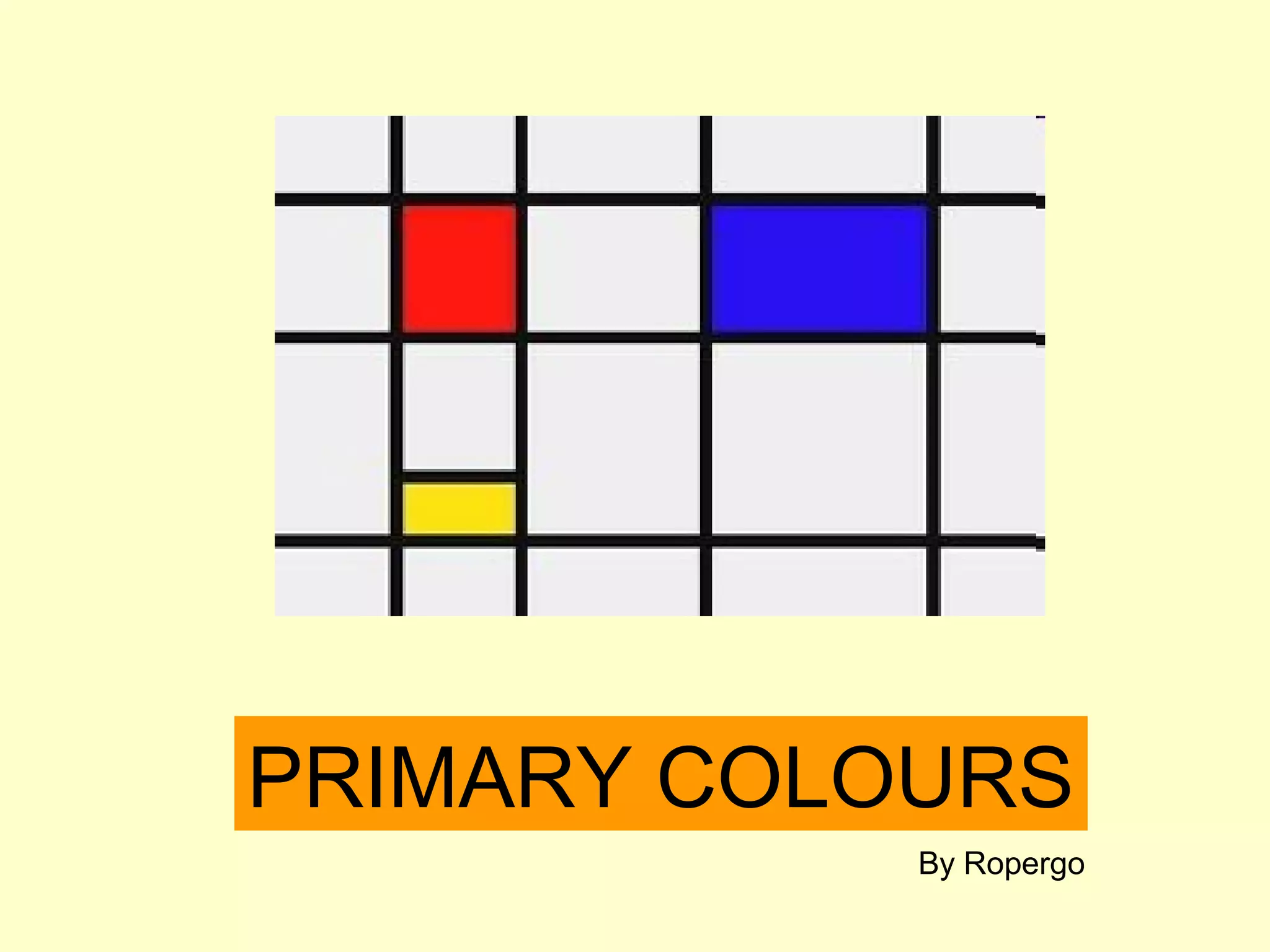
PRIMARY COLOURS
Some links to work with:
 - Presentation on colours:


 http://www.childrensuniversity.manchester.ac.uk/media/services/thechildrensuniversityofmanchester/flash/colourwheel.swf


 -Review on primary, secondary, tertiary
 - or complementary colours:


 http://resources.education.tas.gov.au/item/edres/e09d5cf8-d645-3ee2-4ab5-a49cf8a03811/2/ColourPoetry.zip/cwheel.swf


 -Getting to know the meaning of colours:


 -http://www.mariaclaudiacortes.com/colors/Colors.swf


 See them in http://outroblogmais.blogspot.com/
LITTLE BLUE AND LITTLE YELLOW
   Watch this video on mixing colours
   for 1st cycle
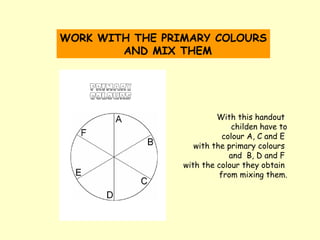
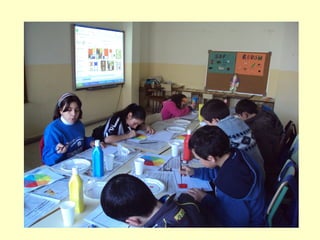
WORK WITH THE PRIMARY COLOURS
        AND MIX THEM


                          With this handout
                               childen have to
                            colour A, C and E
                    with the primary colours
                              and B, D and F
                 with the colour they obtain
                           from mixing them.
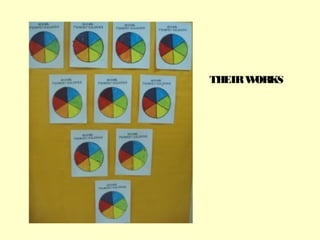
THEIR W KS
       OR
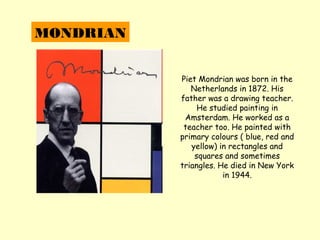
MONDRIAN


           Piet Mondrian was born in the
              Netherlands in 1872. His
           father was a drawing teacher.
                He studied painting in
            Amsterdam. He worked as a
            teacher too. He painted with
           primary colours ( blue, red and
              yellow) in rectangles and
               squares and sometimes
           triangles. He died in New York
                       in 1944.
EVOLUTION IN MONDRIAN´S ART

Have a look at this video on Mondrian´s evolution
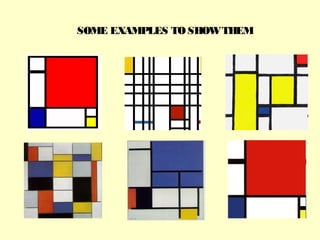
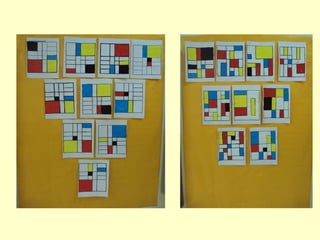
SOME EXAMPLES TO SHOW THEM
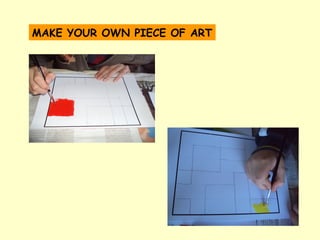
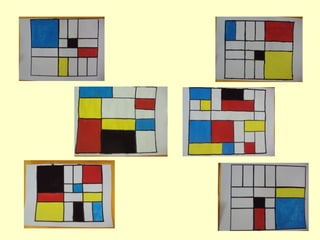
MAKE YOUR OWN PIECE OF ART
Primary colours -Mondrian

Primary colours -Mondrian

  • 1.
    PRIMARY COLOURS By Ropergo
  • 2.
    Title: Primary colours Artcontents: Primary and secondary colours, Mondrian English contents: Primary and secondary colours, shapes, materials ( brush, felt-tip pen, cup, plate…) Objectives: - To differentiate primary and secondary colours - To know Mondrian and the abstract painting.
  • 3.
  • 4.
    MATERIALS: BRUSH FELT TIP PENS PLASTIC PLATE PAINT PLASTIC CUP
  • 5.
  • 7.
    Some links towork with: - Presentation on colours: http://www.childrensuniversity.manchester.ac.uk/media/services/thechildrensuniversityofmanchester/flash/colourwheel.swf -Review on primary, secondary, tertiary - or complementary colours: http://resources.education.tas.gov.au/item/edres/e09d5cf8-d645-3ee2-4ab5-a49cf8a03811/2/ColourPoetry.zip/cwheel.swf -Getting to know the meaning of colours: -http://www.mariaclaudiacortes.com/colors/Colors.swf See them in http://outroblogmais.blogspot.com/
  • 8.
    LITTLE BLUE ANDLITTLE YELLOW Watch this video on mixing colours for 1st cycle
  • 9.
    WORK WITH THEPRIMARY COLOURS AND MIX THEM With this handout childen have to colour A, C and E with the primary colours and B, D and F with the colour they obtain from mixing them.
  • 11.
  • 12.
    MONDRIAN Piet Mondrian was born in the Netherlands in 1872. His father was a drawing teacher. He studied painting in Amsterdam. He worked as a teacher too. He painted with primary colours ( blue, red and yellow) in rectangles and squares and sometimes triangles. He died in New York in 1944.
  • 13.
    EVOLUTION IN MONDRIAN´SART Have a look at this video on Mondrian´s evolution
  • 14.
  • 15.
    MAKE YOUR OWNPIECE OF ART