Success Criteria
Aim
• To learn about the work of Wassily Kandinsky and create a circles
painting, using the colours I have mixed myself.
• I can mix colours, tints and shades.
• I can use my colours to paint a circles painting.
• I can tell you an interesting fact about Wassily Kandinsky.
• I can tell you about one of Kandinsky’s paintings.
Colour Mixing
We have been learning about colour mixing.
Colour Mixing
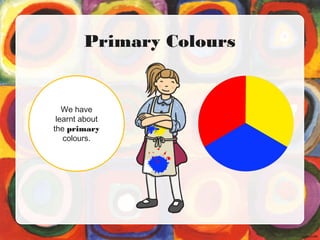
Primary Colours
We have
learnt about
the primary
colours.
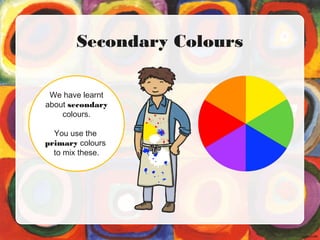
Secondary Colours
We have learnt
about secondary
colours.
You use the
primary colours
to mix these.
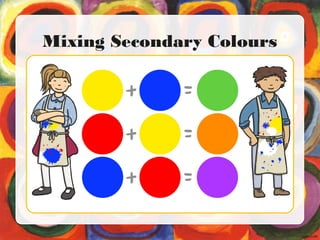
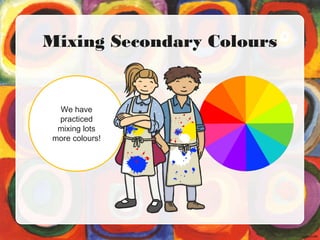
Mixing Secondary Colours
We have
practiced
mixing lots
more colours!
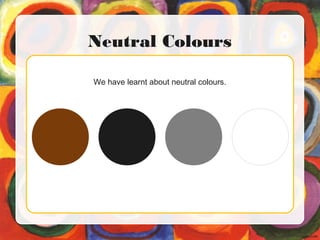
We have learnt about neutral colours.
Neutral Colours
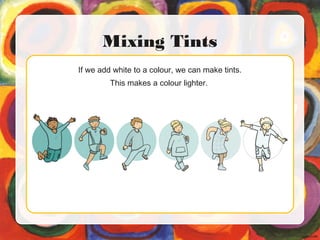
If we add white to a colour, we can make tints.
This makes a colour lighter.
Mixing Tints
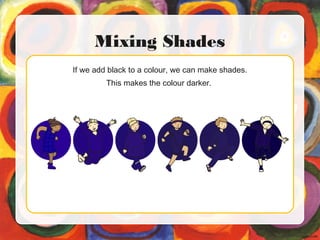
If we add black to a colour, we can make shades.
This makes the colour darker.
Mixing Shades
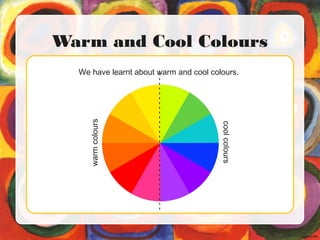
Warm and Cool Colours
We have learnt about warm and cool colours.
-----------------------------
warmcolours
coolcolours
Warm
Colours
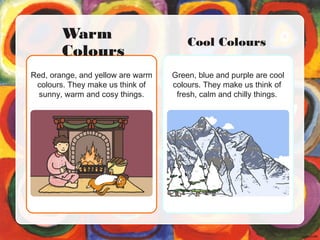
Red, orange, and yellow are warm
colours. They make us think of
sunny, warm and cosy things.
Cool Colours
Green, blue and purple are cool
colours. They make us think of
fresh, calm and chilly things.
Using Every Colour
Today we are going to use all the colours!
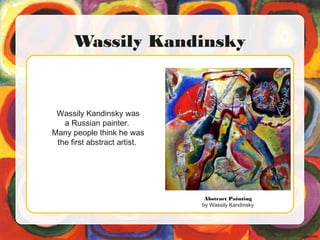
Wassily Kandinsky was
a Russian painter.
Many people think he was
the first abstract artist.
Phot o cour t esy of Pl ayi ng Fut ur es: Appl i ed Nomadol ogy ( @f l i ckr . com) - gr ant ed under cr eat i ve commons l i cence – at t r i but i on
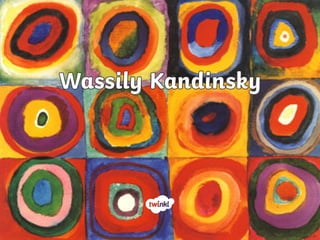
Wassily Kandinsky
Abstract Painting
by Wassily Kandinsky
All about Wassily Kandinsky
(1866 - 1944)
Russian
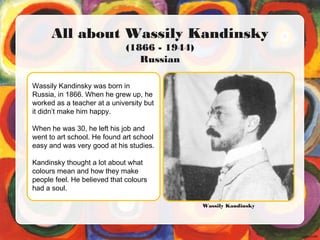
Wassily Kandinsky was born in
Russia, in 1866. When he grew up, he
worked as a teacher at a university but
it didn’t make him happy.
When he was 30, he left his job and
went to art school. He found art school
easy and was very good at his studies.
Kandinsky thought a lot about what
colours mean and how they make
people feel. He believed that colours
had a soul.
Wassily Kandinsky
He was the first painter to stop
painting pictures of things and
instead paint just using colours
and shapes. He believed that this
let him paint honestly about his
feelings.
Often Kandinsky would listen to
music while he painted and try to
paint what he heard.
All the other painters we have
found out about learned a lot from
Kandinsky’s ideas.
All about Wassily Kandinsky
(1866 - 1944)
Russian
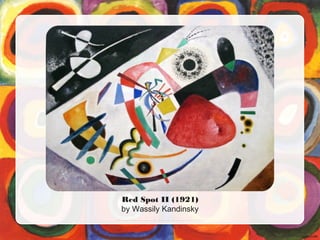
Red Spot II (1921)
by Wassily Kandinsky
Phot o cour t esy of Shar on Mol l er us ( @f l i ckr . com) - gr ant ed under cr eat i ve commons l i cence – at t r i but i on
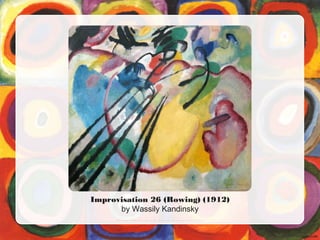
Improvisation 26 (Rowing) (1912)
by Wassily Kandinsky
Phot o cour t esy of Shar on Mol l er us ( @f l i ckr . com) - gr ant ed under cr eat i ve commons l i cence – at t r i but i on
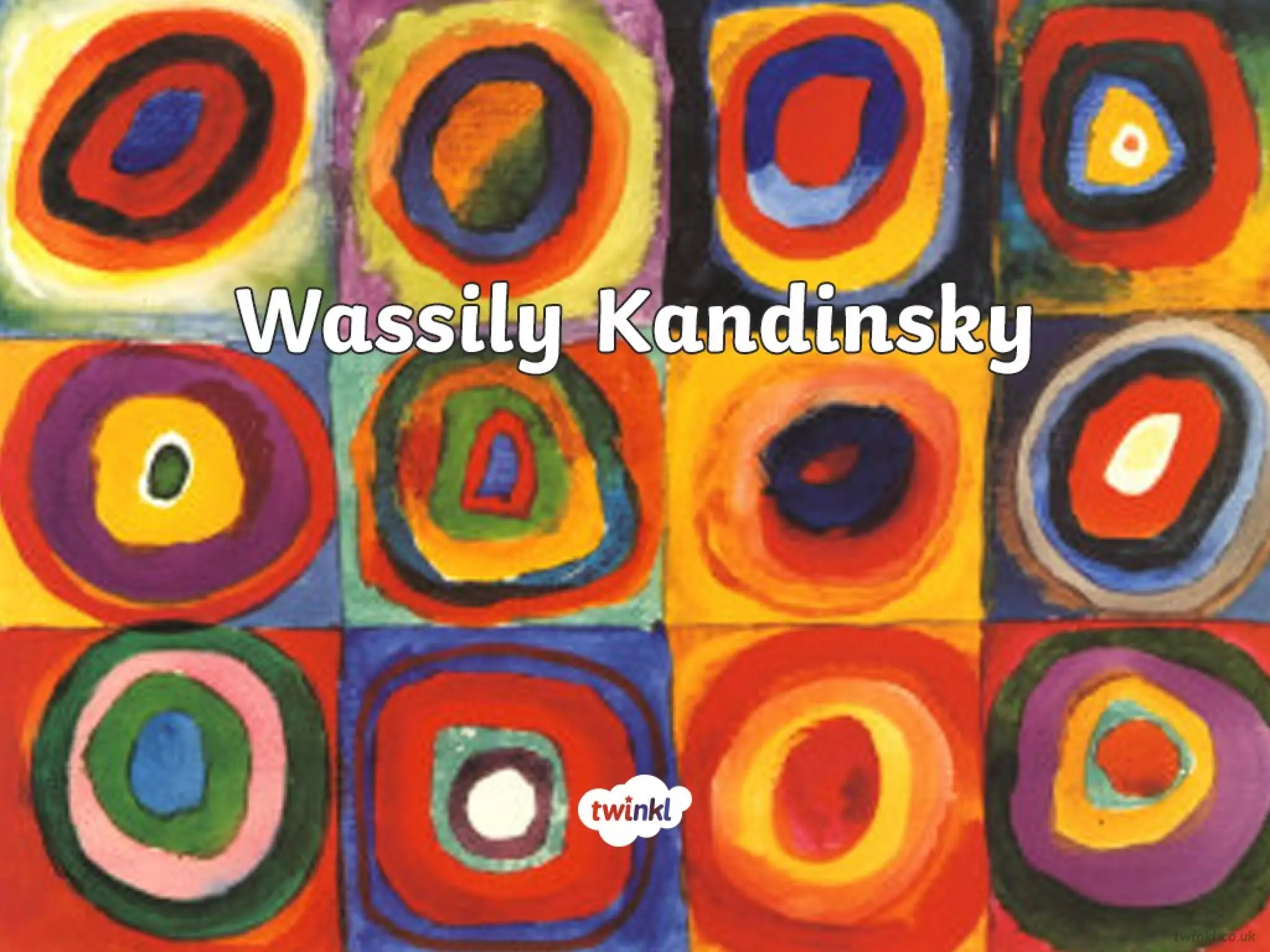
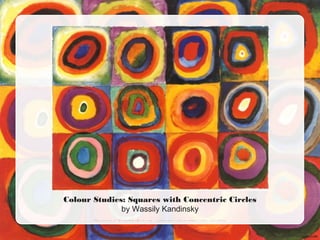
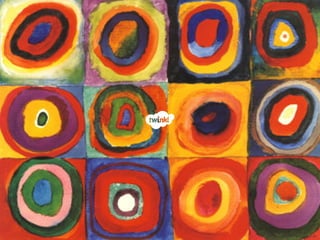
Colour Studies: Squares with Concentric Circles
by Wassily Kandinsky
Phot o cour t esy of Nai l sandNoms ( @f l i ckr . com) - gr ant ed under cr eat i ve commons l i cence – at t r i but i on
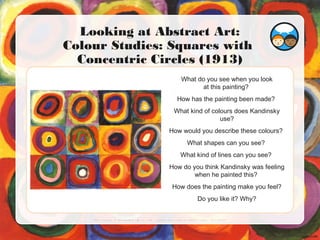
What do you see when you look
at this painting?
How has the painting been made?
What kind of colours does Kandinsky
use?
How would you describe these colours?
What shapes can you see?
What kind of lines can you see?
How do you think Kandinsky was feeling
when he painted this?
How does the painting make you feel?
Do you like it? Why?
Looking at Abstract Art:
Colour Studies: Squares with
Concentric Circles (1913)
Phot o cour t esy of Nai l sandNoms ( @f l i ckr . com) - gr ant ed under cr eat i ve commons l i cence – at t r i but i on
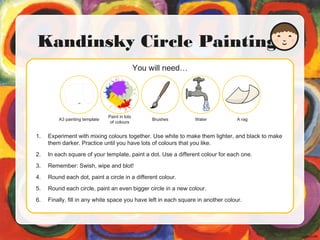
You will need…
Kandinsky Circle Painting
1. Experiment with mixing colours together. Use white to make them lighter, and black to make
them darker. Practice until you have lots of colours that you like.
2. In each square of your template, paint a dot. Use a different colour for each one.
3. Remember: Swish, wipe and blot!
4. Round each dot, paint a circle in a different colour.
5. Round each circle, paint an even bigger circle in a new colour.
6. Finally, fill in any white space you have left in each square in another colour.
A3 painting template
Paint in lots
of colours
Brushes Water A rag
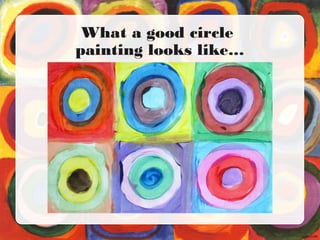
What a good circle
painting looks like…
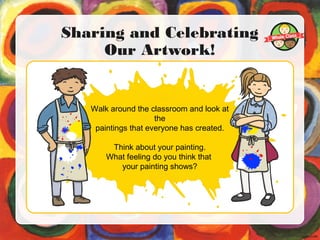
Sharing and Celebrating
Our Artwork!
Walk around the classroom and look at
the
paintings that everyone has created.
Think about your painting.
What feeling do you think that
your painting shows?
Kandinsky and colours

Kandinsky and colours

  • 2.
    Success Criteria Aim • Tolearn about the work of Wassily Kandinsky and create a circles painting, using the colours I have mixed myself. • I can mix colours, tints and shades. • I can use my colours to paint a circles painting. • I can tell you an interesting fact about Wassily Kandinsky. • I can tell you about one of Kandinsky’s paintings.
  • 3.
  • 4.
    We have beenlearning about colour mixing. Colour Mixing
  • 5.
    Primary Colours We have learntabout the primary colours.
  • 6.
    Secondary Colours We havelearnt about secondary colours. You use the primary colours to mix these.
  • 7.
  • 8.
    Mixing Secondary Colours Wehave practiced mixing lots more colours!
  • 9.
    We have learntabout neutral colours. Neutral Colours
  • 10.
    If we addwhite to a colour, we can make tints. This makes a colour lighter. Mixing Tints
  • 11.
    If we addblack to a colour, we can make shades. This makes the colour darker. Mixing Shades
  • 12.
    Warm and CoolColours We have learnt about warm and cool colours. ----------------------------- warmcolours coolcolours
  • 13.
    Warm Colours Red, orange, andyellow are warm colours. They make us think of sunny, warm and cosy things. Cool Colours Green, blue and purple are cool colours. They make us think of fresh, calm and chilly things.
  • 14.
    Using Every Colour Todaywe are going to use all the colours!
  • 15.
    Wassily Kandinsky was aRussian painter. Many people think he was the first abstract artist. Phot o cour t esy of Pl ayi ng Fut ur es: Appl i ed Nomadol ogy ( @f l i ckr . com) - gr ant ed under cr eat i ve commons l i cence – at t r i but i on Wassily Kandinsky Abstract Painting by Wassily Kandinsky
  • 16.
    All about WassilyKandinsky (1866 - 1944) Russian Wassily Kandinsky was born in Russia, in 1866. When he grew up, he worked as a teacher at a university but it didn’t make him happy. When he was 30, he left his job and went to art school. He found art school easy and was very good at his studies. Kandinsky thought a lot about what colours mean and how they make people feel. He believed that colours had a soul. Wassily Kandinsky
  • 17.
    He was thefirst painter to stop painting pictures of things and instead paint just using colours and shapes. He believed that this let him paint honestly about his feelings. Often Kandinsky would listen to music while he painted and try to paint what he heard. All the other painters we have found out about learned a lot from Kandinsky’s ideas. All about Wassily Kandinsky (1866 - 1944) Russian
  • 18.
    Red Spot II(1921) by Wassily Kandinsky Phot o cour t esy of Shar on Mol l er us ( @f l i ckr . com) - gr ant ed under cr eat i ve commons l i cence – at t r i but i on
  • 19.
    Improvisation 26 (Rowing)(1912) by Wassily Kandinsky Phot o cour t esy of Shar on Mol l er us ( @f l i ckr . com) - gr ant ed under cr eat i ve commons l i cence – at t r i but i on
  • 20.
    Colour Studies: Squareswith Concentric Circles by Wassily Kandinsky Phot o cour t esy of Nai l sandNoms ( @f l i ckr . com) - gr ant ed under cr eat i ve commons l i cence – at t r i but i on
  • 21.
    What do yousee when you look at this painting? How has the painting been made? What kind of colours does Kandinsky use? How would you describe these colours? What shapes can you see? What kind of lines can you see? How do you think Kandinsky was feeling when he painted this? How does the painting make you feel? Do you like it? Why? Looking at Abstract Art: Colour Studies: Squares with Concentric Circles (1913) Phot o cour t esy of Nai l sandNoms ( @f l i ckr . com) - gr ant ed under cr eat i ve commons l i cence – at t r i but i on
  • 22.
    You will need… KandinskyCircle Painting 1. Experiment with mixing colours together. Use white to make them lighter, and black to make them darker. Practice until you have lots of colours that you like. 2. In each square of your template, paint a dot. Use a different colour for each one. 3. Remember: Swish, wipe and blot! 4. Round each dot, paint a circle in a different colour. 5. Round each circle, paint an even bigger circle in a new colour. 6. Finally, fill in any white space you have left in each square in another colour. A3 painting template Paint in lots of colours Brushes Water A rag
  • 23.
    What a goodcircle painting looks like…
  • 24.
    Sharing and Celebrating OurArtwork! Walk around the classroom and look at the paintings that everyone has created. Think about your painting. What feeling do you think that your painting shows?