 
Dr. Luis N. García Rosario
2016
“An ounce of prevention is worth a pound of cure”
 Medical Director of Molina Healthcare PR
 Recognize the leading causes of death among the adult and
geriatric population and the factors responsible for them.
 Understand and emphasize the importance of early
interventions of preventive care among adult and geriatric
population to decrease mortality rates.
 Know the current recommended screening tests for early
detection of the principal diseases leading to death.
 ASES: Government Health Plan
 HEDIS (Healthcare Effectiveness Data and Information Set):
NCQA tool used by more than 90% of America's health
plans to measure performance on important dimensions of
care and service and improve quality of care.
 USPSTF (US Preventive Services Task Force): is an
independent, volunteer panel of national experts in
prevention and evidence-based medicine created in 1984.
The Task Force works to improve the health of all Americans
by making evidence-based recommendations about clinical
preventive services such as screenings, counseling
services, and preventive medications.
Fuente: Estimaciones Anuales de Población, 1950, 2000 y 2012, al 1 de julio.
Negociado del Censo de los Estados Unidos.
Fuente: Estimaciones Anuales de Población, 1950, 2000 y 2012, al 1 de julio.
Negociado del Censo de los Estados Unidos.
Fuente: Estimaciones Anuales de Población, 1950, 2000 y 2012, al 1 de julio.
Negociado del Censo de los Estados Unidos.
 PR population is decreasing
o 2004: 3,826,878
o 2012: 3,667,084 (-159,794)
 Median of age:
o 2004: 33.8 years
o 2012: 37.9 years (increased 10.8%)
• Men: 32.1 to 36 years (12.1%)
• Women: 35.5 to 39.7 years (11.8%)
Source: US Census Bureau
Nota: Datos de 2010 al 2012 son preliminares
Fuente: Departamento de Salud, Secretaría Auxiliar de Planificación y Desarrollo, División de Análisis
Estadístico, San Juan, Puerto Rico
Nota: Datos de 2010 al 2012 son preliminares
Fuente: Departamento de Salud, Secretaría Auxiliar de Planificación y Desarrollo, División de Análisis
Estadístico, San Juan, Puerto Rico
2004
CAUSA DE MUERTE TASA AJUSTADA
Corazón 171.4
Cáncer 131.1
Diabetes 74.1
Cerebrovasculares 46.1
Alzheimer 34.2
Accidentes 32.2
Enf. Respiratorias 32.0
Pulmonía/Influenza 30.0
Nefritis 25.1
Septicemia 22.7
2012
CAUSA DE MUERTE TASA AJUSTADA
Cáncer 124.4
Corazón 117.7
Diabetes 71.0
Alzheimer 47.0
Cerebrovasculares 31.6
Homicidios 26.8
Accidentes 25.8
Enf. Respiratorias 23.3
Nefritis 23.3
Septicemia 18.7
Datos de 2010 al 2012 son preliminares
Tasa ajustada por cada 100,000 habitantes en Puerto Rico.
Fuente: Departamento de Salud, Secretaría Auxiliar de Planificación y Desarrollo, División de Análisis Estadístico, San Juan, Puerto Rico
 High blood pressure (HBP) affects approximately 30% of the
adult population. It is the most commonly diagnosed
condition at outpatient office visits.
 HBP is a major contributing risk factor to heart failure, heart
attack, stroke, and chronic kidney disease.
 Measure the blood pressure in the office every 3 to 5 years:
o The USPSTF recommends screening for HBP in adults aged ≥18 y.
o Annual screening if ≥40 y and if increased risk:
• High normal blood pressure (130-139/85-89)
• Overweight or obese
• African americans
 The prevalence in the US exceeds 30% in adult men
and women.
 Obesity is associated with an increased risk for CAD,
type 2 DM, various types of cancer, gallstones, and
disability.
 Body Mass Index (BMI) is a person's weight in
kilograms divided by the square of height in meters.
 Obesity Screening:
o The USPSTF recommends screening all adults for obesity.
o HEDIS requires it for all beneficiaries age 18 to 74 y/o
 Document weight and the specific BMI value, not a
range
 Offer or refer patients with a BMI ≥ 30 kg/m2 to
intensive, multicomponent behavioral interventions.
“Let’s calculate your BMI”
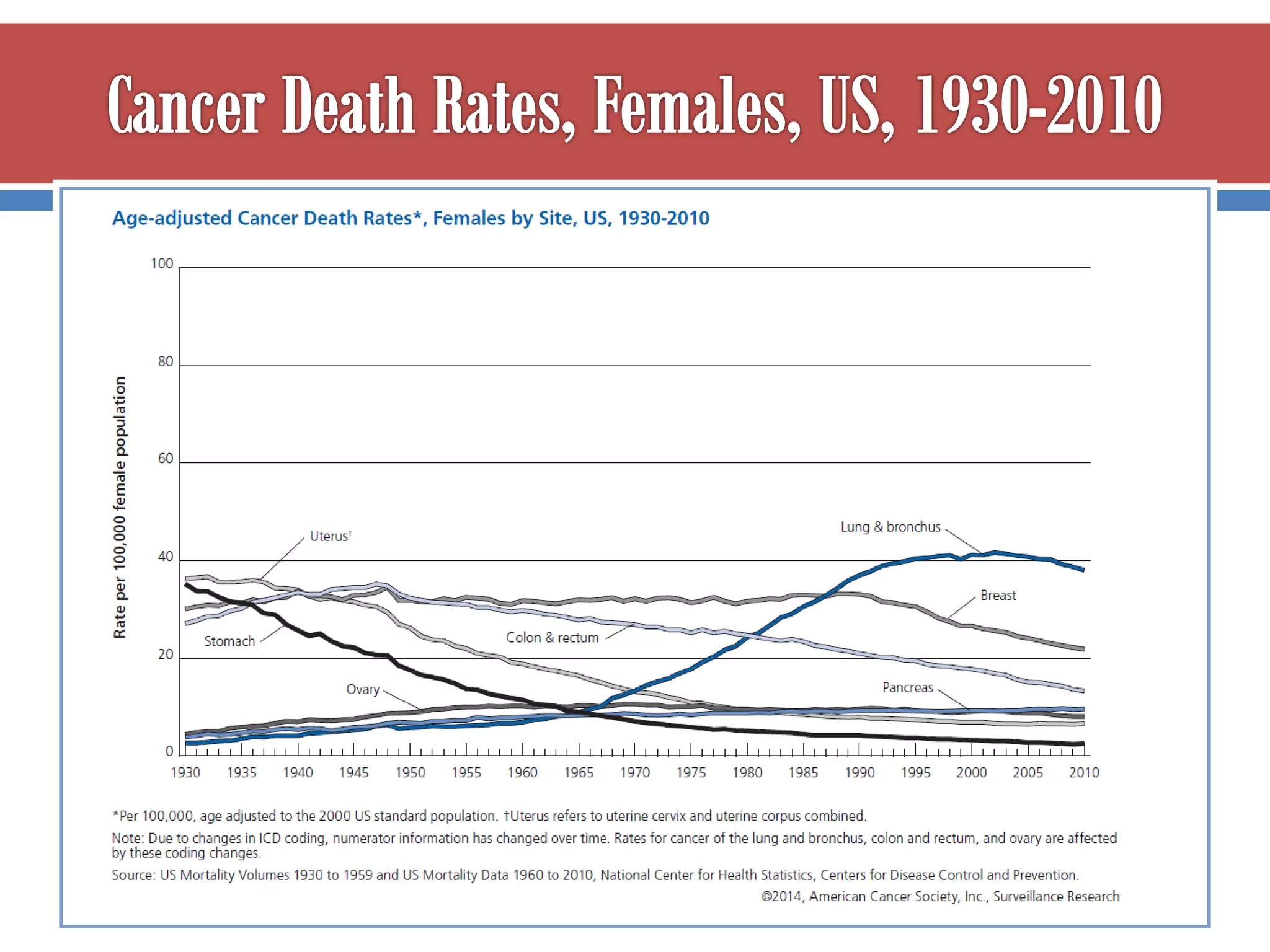
 Breast cancer is the second-leading cause of cancer death
among women in the United States.
 In 2015, an estimated 232,000 women were diagnosed
with the disease and 40,000 women died of it.
 It is most frequently diagnosed among women aged 55 to
64 years, and the median age of death is 68 years.
 Screening required for women 50 to 74 y/o
 Mammogram every 2 years
 Ultrasound, MRI or biopsy are not considered appropriate
screening tools for primary breast cancer
 Exclusion: bilateral mastectomy
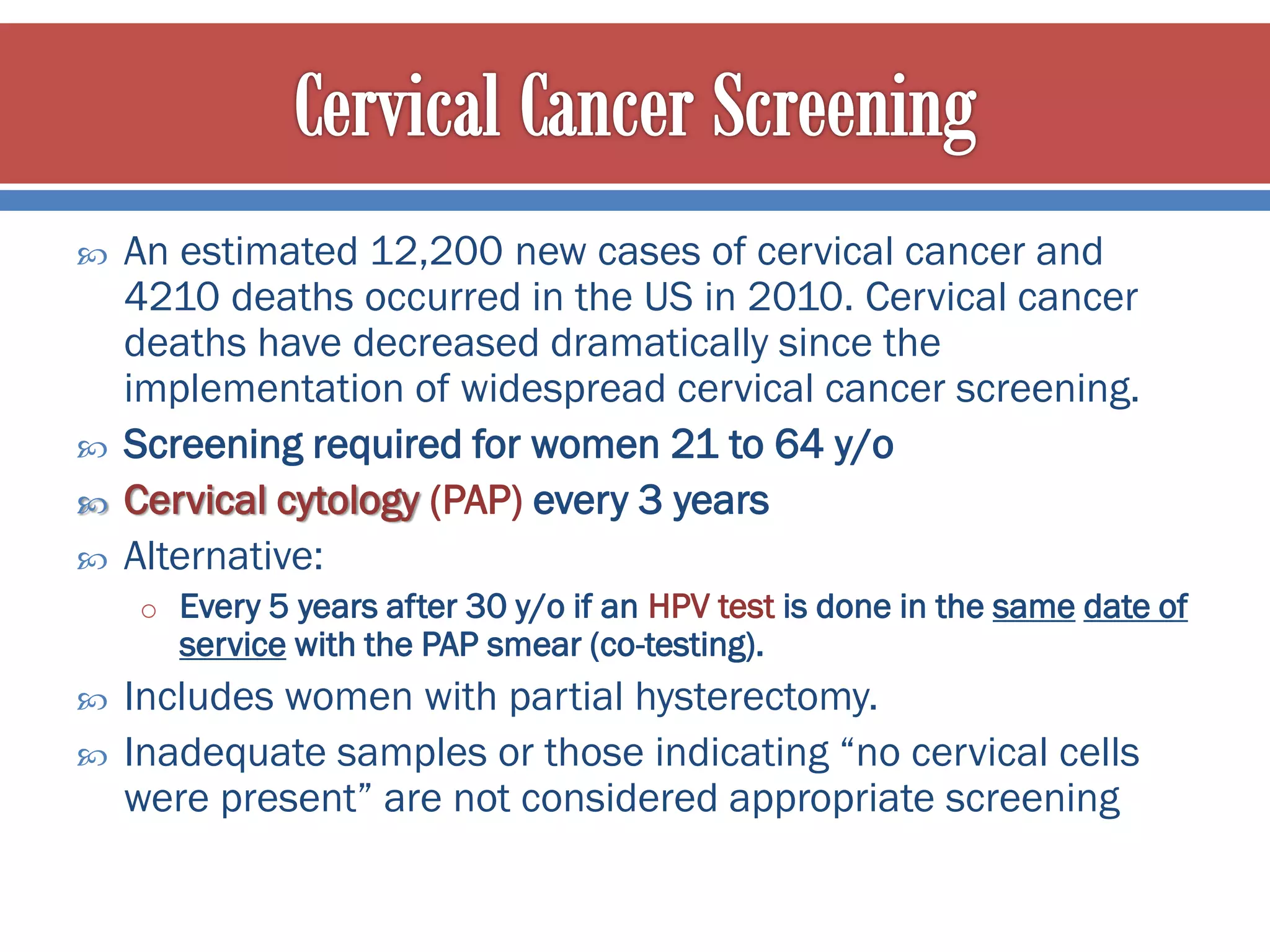
 An estimated 12,200 new cases of cervical cancer and
4210 deaths occurred in the US in 2010. Cervical cancer
deaths have decreased dramatically since the
implementation of widespread cervical cancer screening.
 Screening required for women 21 to 64 y/o
 Cervical cytology (PAP) every 3 years
 Alternative:
o Every 5 years after 30 y/o if an HPV test is done in the same date of
service with the PAP smear (co-testing).
 Includes women with partial hysterectomy.
 Inadequate samples or those indicating “no cervical cells
were present” are not considered appropriate screening
 Chlamydia trachomatis and Neisseria gonorrhoeae
are the most commonly reported STIs in the United
States.
o Chlamydia: more than 1.4 million cases (2012, CDC)
o Gonorrhea: more than 330,000 cases (2012, CDC)
 Chlamydial infections are 10X more prevalent than
gonococcal infections (4.7% vs. 0.4%) in women aged
18 to 26 years.
 The incidence of chlamydia and gonorrhea is difficult
to estimate because most infections are
asymptomatic and are therefore never diagnosed. The
CDC estimates that more than 800,000 persons are
infected with gonorrhea in the US each year.
COMPLICATIONS:
 WOMEN: Even asymptomatic infection may lead to pelvic
inflammatory disease (PID) and its associated complications,
such as ectopic pregnancy, infertility, and chronic pelvic pain in
women.
 NEWBORNS of women with untreated infection may develop
neonatal chlamydial pneumonia or gonococcal or chlamydial
ophthalmia.
 MEN: Infection may lead to symptomatic urethritis and
epididymitis in men.
 Both types of infection may facilitate HIV transmission.
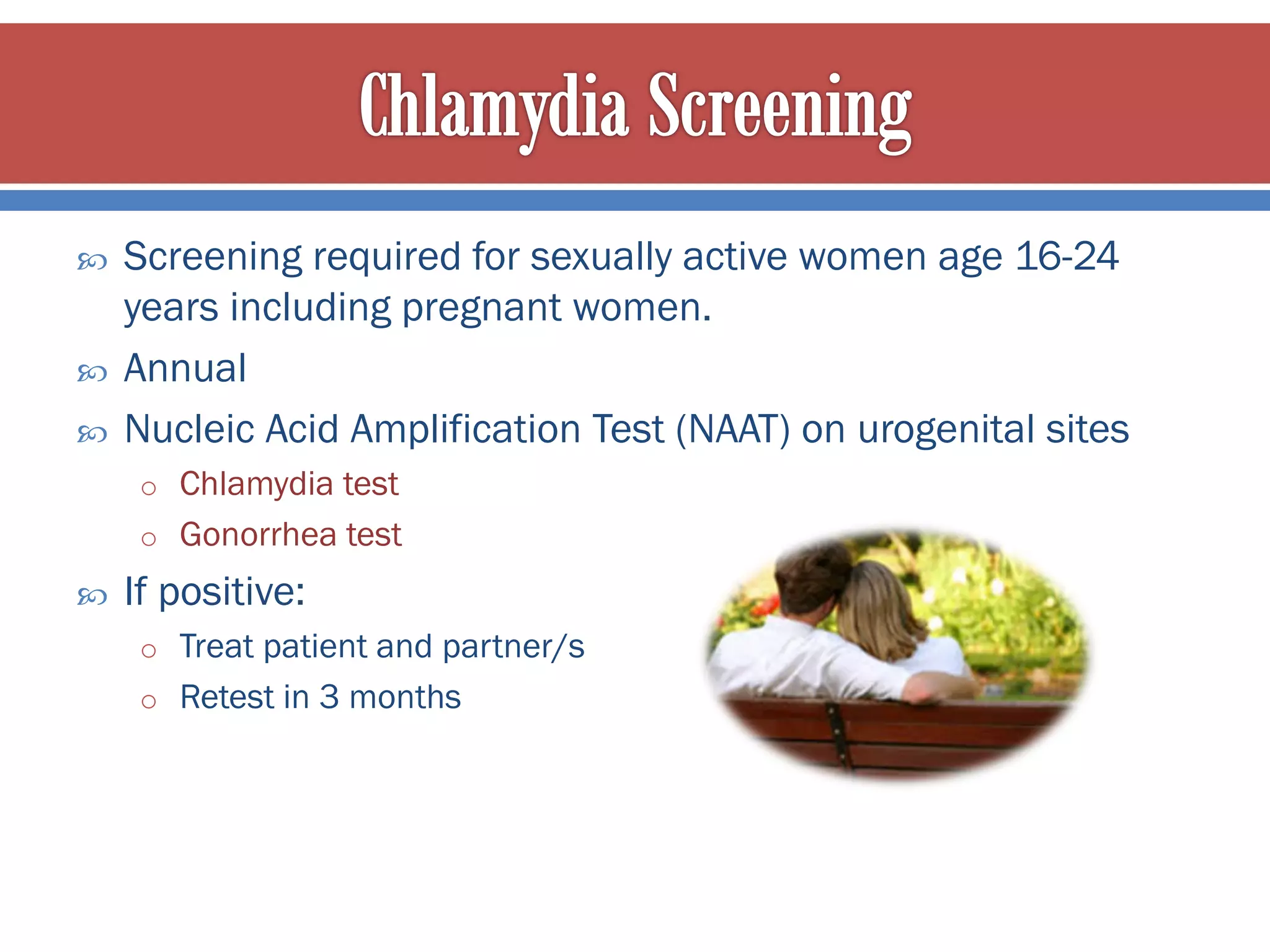
 Screening required for sexually active women age 16-24
years including pregnant women.
 Annual
 Nucleic Acid Amplification Test (NAAT) on urogenital sites
o Chlamydia test
o Gonorrhea test
 If positive:
o Treat patient and partner/s
o Retest in 3 months
 Hepatitis C virus (HCV) is the most common chronic blood-
borne pathogen in the US and a leading cause of
complications from chronic liver disease.
 The USPSTF recommends screening for HCV infection in
persons at high risk for infection.
 The USPSTF also recommends offering 1-time screening for
HCV infection to adults born between 1945 and 1965.
 Anti–HCV antibody testing followed by polymerase chain
reaction testing for viremia is accurate for identifying
patients with chronic HCV infection.
 Colorectal cancer (CRC) is the 2nd leading cause of cancer death in the US.
 In 2015, an estimated 133,000 persons will be diagnosed with the disease
and about 50,000 will die from it.
 It is most frequently diagnosed among adults ages 65 to 74 years; the
median age of death from CRC is 73 years.
 Screening required for patients 50 to 75 y/o (3 options).
o FOBT every year, or
o Flexible sigmoidoscopy every 5 years, or
o Diagnostic colonoscopy every 10 years
 Exclusions:
o Colorectal cancer
o Total colectomy
 Not accepted for screening:
o digital rectal exams (DRE)
o FOBT tests performed in an office setting
o FOBT performed on a sample collected via DRE.
 Approx. 1/3 of eligible adults in the US have never been screened for CRC.
 Types of FOBT tests:
o Guaiac (gFOBT)
o Immunochemical (iFOBT): more sensitive
 HEDIS compliance (according to what is indicated in the medical
record):
o Type of test not indicated + no indication of # samples returned: assume the
required number was returned.
o Type of test not indicated + # samples is specified: the member meets the
screening criteria only if the # samples specified is ≥3.
o iFOBT tests may require <3 samples. If an iFOBT was done, the member meets
the screening criteria, regardless of how many samples were returned.
o If the medical record indicates that a gFOBT was done, follow the scenarios
below.
• If # returned samples not indicated, assume the required number was returned.
• If ≥3 samples were returned, the member meets the screening criteria for inclusion.
• If <3 samples were returned, the member does not meet the screening criteria.
 Total cholesterol, LDL-C, and HDL-C are independent
predictors of CHD risk, and ratios of total cholesterol to
HDL-C (total cholesterol/HDL-C) or LDL-C to HDL-C (LDL-
C/HDL-C) classify risk better than total cholesterol alone.
 The preferred screening tests for dyslipidemia are total
cholesterol and HDL-C on non-fasting or fasting samples.
calculated LDL = total cholesterol minus HDL minus TG/5
 US PREVENTIVE SERVICES TASK FORCE [under revision]
o MEN:
• Strongly recommends screening men aged ≥35 years for lipid
disorders.
• Recommends screening men aged 20-35 for lipid disorders if they are
at increased risk for CHD.
o WOMEN:
• Strongly recommends screening women aged ≥45 years for lipid
disorders if they are at increased risk for CHD.
• Recommends screening women aged 20-45 for lipid disorders if they
are at increased risk for CHD.
 HEDIS
o Required for 18 to 75 y/o discharged after AMI or CABG or any
percutaneous coronary intervention during the last two (2) years.
o LDL-C yearly (<100 mg/dL) [last value on record within the last year]
Draft recommendation for 2016:
 The USPSTF recommends that adults without a history of
cardiovascular disease (CVD) (i.e., symptomatic coronary
artery disease or thrombotic stroke) use a low- to moderate-
dose statin for the prevention of CVD events when all of the
following criteria are met:
o They are ages 40 to 75 years
o They have one or more CVD risk factors (i.e., dyslipidemia, diabetes,
hypertension, or smoking)
o They have a calculated 10-year risk of a cardiovascular event of
10% or greater
 The USPSTF recommends using the
American College of
Cardiology/American Heart Association
(ACC/AHA) pooled cohort equations to
calculate 10-year risk of CVD events
 Available at: my.americanheart.org
 New recommendations rationale:
o Reframe the clinical question of “whom to screen for elevated lipid
levels” to “whom to prescribe statin therapy”.
o Testing for elevated lipid levels is a necessary (but not sufficient)
step in the overall assessment of CVD risk to help identify those
individuals who may benefit from statin therapy.
o This recommendation statement focuses on the assessment of
overall CVD risk to identify adults ages 40 to 75 years without a
history of CVD who can benefit most from statin use to reduce their
risk of experiencing a CVD event.
o The research plan developed for the systematic evidence review
that served as the foundation of this draft recommendation
statement did not consider reduction in LDL cholesterol to be a
sufficient surrogate for health outcomes.
 FBS every three (3) years (USPSTF)
o 40-70 y/o overweight or obese
 PSA for men 55-69 y/o (required by ASES)
 HIV (15-65 y/o and pregnant women)
 Patient Health Questionnaire (PHQ9) for depression to all
beneficiaries >21 y/o
 Nutrition
 Oral care
 Medications
 Physical activity
 Habits: alcohol, tobacco and drugs
 Vaccines (Influenza, Tetanus, Pneumonia)
 Sexually transmitted diseases
 Applies to patients 66 y/o and older (HEDIS)
 Includes:
o Advance Care Planning (one time): is a discussion about
preferences for resuscitation, life-sustaining treatment
and end of life care.
o Medication Review (once a year): a review of all a
member’s medications, including prescription
medications, OTC medications and herbal or
supplemental therapies.
o Functional Status Evaluation (once a year): must be
comprehensive
o Pain Evaluation: once a year
 Examples of an advance care plan
o Advance directive: Directive about treatment preferences and the
designation of a surrogate who can make medical decisions for a
patient who is unable to make them (e.g., living will, power of
attorney, health care proxy).
o Actionable medical orders: Written instructions regarding initiating,
continuing, withholding or withdrawing specific forms of life-
sustaining treatment (e.g., Physician Orders for Life Sustaining
Treatment [POLST]).
o Living will: Legal document denoting preferences for life-sustaining
treatment and end-of-life care.
o Surrogate decision maker: A written document designating
someone other than the member to make future medical treatment
choices.
 Signed by a physician or a clinical pharmacist
 Dated medication list required
 Notation that the member is not taking any medication and
the date when it was noted is required when it applies.
 Documentation in the medical record must include evidence of a complete
functional status assessment and the date when it was performed.
 Notations for a complete functional status assessment must include one of
the following:
o Notation that Activities of Daily Living (ADL) were assessed or that at least five of the
following were assessed: bathing, dressing, eating, transferring [e.g., getting in and
out of chairs], using toilet, walking.
o Notation that Instrumental Activities of Daily Living (IADL) were assessed or at least
four of the following were assessed: shopping for groceries, driving or using public
transportation, using the telephone, meal preparation, housework, home repair,
laundry, taking medications, handling finances.
o Result of assessment using a standardized functional status assessment tool.
o Notation that at least three of the following four components were assessed:
• Cognitive status.
• Ambulation status.
• Hearing, vision and speech (i.e., sensory ability).
• Other functional independence (e.g., exercise, ability to perform job).
 Standardized functional status assessment tools,
not limited to:
o SF-36®.
o Assessment of Living Skills and Resources (ALSAR).
o Barthel ADL Index Physical Self-Maintenance (ADLS)
Scale.
o Bayer ADL (B-ADL) Scale.
o Barthel Index.
o Extended ADL (EADL) Scale.
o Independent Living Scale (ILS).
o Katz Index of Independence in ADL.
o Kenny Self-Care Evaluation.
o Klein-Bell ADL Scale.
o Kohlman Evaluation of Living Skills (KELS).
o Lawton & Brody’s IADL scales.
o Patient Reported Outcome Measurement Information
System (PROMIS) Global or Physical Function Scales.
 Notations for a pain assessment must include one of the following:
o Documentation that the patient was assessed for pain (which may include positive or
negative findings for pain).
o Result of assessment using a standardized pain assessment tool, not limited to:
• Numeric rating scales (verbal or written).
• Face, Legs, Activity, Cry Consolability (FLACC) scale.
• Verbal descriptor scales (5–7 Word Scales, Present Pain Inventory).
• Pain Thermometer.
• Pictorial Pain Scales (Faces Pain Scale, Wong-Baker Pain Scale).
• Visual analogue scale.
• Brief Pain Inventory.
• Chronic Pain Grade.
• PROMIS Pain Intensity Scale.
• Pain Assessment in Advanced Dementia (PAINAD) Scale.
 Notes:
o Notation of a pain management plan alone does not meet criteria.
o Notation of a pain treatment plan alone does not meet criteria.
o Notation of screening for chest pain alone or documentation of chest pain alone does
not meet criteria.
 50% of all postmenopausal women will
have an osteoporosis-related fracture
during their lifetime
o 25% will develop a vertebral deformity,
o 15% will experience a hip fracture.
 Osteoporotic fractures, particularly hip
fractures, are associated with:
o chronic pain and disability,
o loss of independence,
o decreased quality of life,
o increased mortality.
 The USPSTF recommends screening for osteoporosis in women aged
≥65 years and in younger women whose fracture risk ≥ than that of a
65-y/o white women who has no additional risk factors.
o Based on the U.S. FRAX tool a 65-year-old white woman with no other risk
factors has a 9.3% 10-year risk for any osteoporotic fracture.
o Examples of white women between the ages of 50 and 64 years with
equivalent or greater 10-year fracture risks based on specific risk factors:
• A 50 y/o current smoker with a BMI ≤21 kg/m2, daily alcohol use, and parental fx hx;
• A 55 y/o woman with a parental fx hx;
• A 60 y/o woman with a BMI ≤21 kg/m2 and daily alcohol use; and
• A 60 y/o current smoker with daily alcohol use.
 Screening tools:
o Dual-energy x-ray absorptiometry (DXA) of the hip and lumbar spine
o Quantitative ultrasonography of the calcaneus.
 Abdominal aortic aneurysms (AAA) are defined by an aortic diameter of
3.0 cm or larger.
 Prevalence of AAA in adults older than 50 years is 3.9% to 7.2% in men
and 1.0% to 1.3% in women.
 Most AAAs are asymptomatic until they rupture. Although the risk for
rupture varies greatly by aneurysm size, the associated risk for death is
as high as 75% to 90%.
 The USPSTF recommends one-time screening for AAA with
ultrasonography in men ages 65 to 75 years who have ever smoked.
 Treatment:
o Immediate referral for open surgery in patients with large AAAs (≥5.5 cm)
o Conservative management via repeated ultrasonography every 3 to 12 months
for smaller AAAs (3.0 to 5.4 cm).
o Surgical referral of smaller AAAs was reserved for AAAs that grew rapidly (>1.0
cm per year) or reached a threshold of 5.5 cm or larger on repeated US.
 30% - 40% of community-dwelling adults aged ≥65 years fall at least 1/y.
 No evidence-based instrument exists that can accurately identify older
adults at increased risk for falling. The factor used most often to identify
high-risk persons is a history of falls.
 The American Geriatric Society (AGS) recommends that clinicians ask their
patients yearly about falls and balance or gait problems.
 The USPSTF recommends exercise or PT and vitamin D supplementation to
prevent falls in community-dwelling adults aged 65 years or older who are
at increased risk for falls.
o The U.S. Department of Health and Human Services recommends that older adults
get at least 150 min/wk of moderate-intensity or 75 min/wk of vigorous-intensity
aerobic physical activity, as well as muscle-strengthening activities twice per week
o The AGS recommends 800 IU of vit. D per day for persons at increased risk for falls.
 The following interventions lack sufficient evidence for or against use in
prevention of falls in older adults: vision correction, medication
discontinuation, protein supplementation, education or counseling, and
home hazard modification.
Primary care screening tests in adults  geriatrics

Primary care screening tests in adults geriatrics

  • 1.
      Dr. LuisN. García Rosario 2016 “An ounce of prevention is worth a pound of cure”
  • 2.
     Medical Directorof Molina Healthcare PR
  • 3.
     Recognize theleading causes of death among the adult and geriatric population and the factors responsible for them.  Understand and emphasize the importance of early interventions of preventive care among adult and geriatric population to decrease mortality rates.  Know the current recommended screening tests for early detection of the principal diseases leading to death.
  • 4.
     ASES: GovernmentHealth Plan  HEDIS (Healthcare Effectiveness Data and Information Set): NCQA tool used by more than 90% of America's health plans to measure performance on important dimensions of care and service and improve quality of care.  USPSTF (US Preventive Services Task Force): is an independent, volunteer panel of national experts in prevention and evidence-based medicine created in 1984. The Task Force works to improve the health of all Americans by making evidence-based recommendations about clinical preventive services such as screenings, counseling services, and preventive medications.
  • 5.
    Fuente: Estimaciones Anualesde Población, 1950, 2000 y 2012, al 1 de julio. Negociado del Censo de los Estados Unidos.
  • 6.
    Fuente: Estimaciones Anualesde Población, 1950, 2000 y 2012, al 1 de julio. Negociado del Censo de los Estados Unidos.
  • 7.
    Fuente: Estimaciones Anualesde Población, 1950, 2000 y 2012, al 1 de julio. Negociado del Censo de los Estados Unidos.
  • 9.
     PR populationis decreasing o 2004: 3,826,878 o 2012: 3,667,084 (-159,794)  Median of age: o 2004: 33.8 years o 2012: 37.9 years (increased 10.8%) • Men: 32.1 to 36 years (12.1%) • Women: 35.5 to 39.7 years (11.8%) Source: US Census Bureau
  • 10.
    Nota: Datos de2010 al 2012 son preliminares Fuente: Departamento de Salud, Secretaría Auxiliar de Planificación y Desarrollo, División de Análisis Estadístico, San Juan, Puerto Rico
  • 11.
    Nota: Datos de2010 al 2012 son preliminares Fuente: Departamento de Salud, Secretaría Auxiliar de Planificación y Desarrollo, División de Análisis Estadístico, San Juan, Puerto Rico
  • 12.
    2004 CAUSA DE MUERTETASA AJUSTADA Corazón 171.4 Cáncer 131.1 Diabetes 74.1 Cerebrovasculares 46.1 Alzheimer 34.2 Accidentes 32.2 Enf. Respiratorias 32.0 Pulmonía/Influenza 30.0 Nefritis 25.1 Septicemia 22.7 2012 CAUSA DE MUERTE TASA AJUSTADA Cáncer 124.4 Corazón 117.7 Diabetes 71.0 Alzheimer 47.0 Cerebrovasculares 31.6 Homicidios 26.8 Accidentes 25.8 Enf. Respiratorias 23.3 Nefritis 23.3 Septicemia 18.7 Datos de 2010 al 2012 son preliminares Tasa ajustada por cada 100,000 habitantes en Puerto Rico. Fuente: Departamento de Salud, Secretaría Auxiliar de Planificación y Desarrollo, División de Análisis Estadístico, San Juan, Puerto Rico
  • 16.
     High bloodpressure (HBP) affects approximately 30% of the adult population. It is the most commonly diagnosed condition at outpatient office visits.  HBP is a major contributing risk factor to heart failure, heart attack, stroke, and chronic kidney disease.  Measure the blood pressure in the office every 3 to 5 years: o The USPSTF recommends screening for HBP in adults aged ≥18 y. o Annual screening if ≥40 y and if increased risk: • High normal blood pressure (130-139/85-89) • Overweight or obese • African americans
  • 17.
     The prevalencein the US exceeds 30% in adult men and women.  Obesity is associated with an increased risk for CAD, type 2 DM, various types of cancer, gallstones, and disability.  Body Mass Index (BMI) is a person's weight in kilograms divided by the square of height in meters.  Obesity Screening: o The USPSTF recommends screening all adults for obesity. o HEDIS requires it for all beneficiaries age 18 to 74 y/o  Document weight and the specific BMI value, not a range  Offer or refer patients with a BMI ≥ 30 kg/m2 to intensive, multicomponent behavioral interventions.
  • 18.
  • 19.
     Breast canceris the second-leading cause of cancer death among women in the United States.  In 2015, an estimated 232,000 women were diagnosed with the disease and 40,000 women died of it.  It is most frequently diagnosed among women aged 55 to 64 years, and the median age of death is 68 years.  Screening required for women 50 to 74 y/o  Mammogram every 2 years  Ultrasound, MRI or biopsy are not considered appropriate screening tools for primary breast cancer  Exclusion: bilateral mastectomy
  • 20.
     An estimated12,200 new cases of cervical cancer and 4210 deaths occurred in the US in 2010. Cervical cancer deaths have decreased dramatically since the implementation of widespread cervical cancer screening.  Screening required for women 21 to 64 y/o  Cervical cytology (PAP) every 3 years  Alternative: o Every 5 years after 30 y/o if an HPV test is done in the same date of service with the PAP smear (co-testing).  Includes women with partial hysterectomy.  Inadequate samples or those indicating “no cervical cells were present” are not considered appropriate screening
  • 21.
     Chlamydia trachomatisand Neisseria gonorrhoeae are the most commonly reported STIs in the United States. o Chlamydia: more than 1.4 million cases (2012, CDC) o Gonorrhea: more than 330,000 cases (2012, CDC)  Chlamydial infections are 10X more prevalent than gonococcal infections (4.7% vs. 0.4%) in women aged 18 to 26 years.  The incidence of chlamydia and gonorrhea is difficult to estimate because most infections are asymptomatic and are therefore never diagnosed. The CDC estimates that more than 800,000 persons are infected with gonorrhea in the US each year.
  • 22.
    COMPLICATIONS:  WOMEN: Evenasymptomatic infection may lead to pelvic inflammatory disease (PID) and its associated complications, such as ectopic pregnancy, infertility, and chronic pelvic pain in women.  NEWBORNS of women with untreated infection may develop neonatal chlamydial pneumonia or gonococcal or chlamydial ophthalmia.  MEN: Infection may lead to symptomatic urethritis and epididymitis in men.  Both types of infection may facilitate HIV transmission.
  • 23.
     Screening requiredfor sexually active women age 16-24 years including pregnant women.  Annual  Nucleic Acid Amplification Test (NAAT) on urogenital sites o Chlamydia test o Gonorrhea test  If positive: o Treat patient and partner/s o Retest in 3 months
  • 24.
     Hepatitis Cvirus (HCV) is the most common chronic blood- borne pathogen in the US and a leading cause of complications from chronic liver disease.  The USPSTF recommends screening for HCV infection in persons at high risk for infection.  The USPSTF also recommends offering 1-time screening for HCV infection to adults born between 1945 and 1965.  Anti–HCV antibody testing followed by polymerase chain reaction testing for viremia is accurate for identifying patients with chronic HCV infection.
  • 25.
     Colorectal cancer(CRC) is the 2nd leading cause of cancer death in the US.  In 2015, an estimated 133,000 persons will be diagnosed with the disease and about 50,000 will die from it.  It is most frequently diagnosed among adults ages 65 to 74 years; the median age of death from CRC is 73 years.  Screening required for patients 50 to 75 y/o (3 options). o FOBT every year, or o Flexible sigmoidoscopy every 5 years, or o Diagnostic colonoscopy every 10 years  Exclusions: o Colorectal cancer o Total colectomy  Not accepted for screening: o digital rectal exams (DRE) o FOBT tests performed in an office setting o FOBT performed on a sample collected via DRE.  Approx. 1/3 of eligible adults in the US have never been screened for CRC.
  • 26.
     Types ofFOBT tests: o Guaiac (gFOBT) o Immunochemical (iFOBT): more sensitive  HEDIS compliance (according to what is indicated in the medical record): o Type of test not indicated + no indication of # samples returned: assume the required number was returned. o Type of test not indicated + # samples is specified: the member meets the screening criteria only if the # samples specified is ≥3. o iFOBT tests may require <3 samples. If an iFOBT was done, the member meets the screening criteria, regardless of how many samples were returned. o If the medical record indicates that a gFOBT was done, follow the scenarios below. • If # returned samples not indicated, assume the required number was returned. • If ≥3 samples were returned, the member meets the screening criteria for inclusion. • If <3 samples were returned, the member does not meet the screening criteria.
  • 27.
     Total cholesterol,LDL-C, and HDL-C are independent predictors of CHD risk, and ratios of total cholesterol to HDL-C (total cholesterol/HDL-C) or LDL-C to HDL-C (LDL- C/HDL-C) classify risk better than total cholesterol alone.  The preferred screening tests for dyslipidemia are total cholesterol and HDL-C on non-fasting or fasting samples. calculated LDL = total cholesterol minus HDL minus TG/5
  • 28.
     US PREVENTIVESERVICES TASK FORCE [under revision] o MEN: • Strongly recommends screening men aged ≥35 years for lipid disorders. • Recommends screening men aged 20-35 for lipid disorders if they are at increased risk for CHD. o WOMEN: • Strongly recommends screening women aged ≥45 years for lipid disorders if they are at increased risk for CHD. • Recommends screening women aged 20-45 for lipid disorders if they are at increased risk for CHD.  HEDIS o Required for 18 to 75 y/o discharged after AMI or CABG or any percutaneous coronary intervention during the last two (2) years. o LDL-C yearly (<100 mg/dL) [last value on record within the last year]
  • 29.
    Draft recommendation for2016:  The USPSTF recommends that adults without a history of cardiovascular disease (CVD) (i.e., symptomatic coronary artery disease or thrombotic stroke) use a low- to moderate- dose statin for the prevention of CVD events when all of the following criteria are met: o They are ages 40 to 75 years o They have one or more CVD risk factors (i.e., dyslipidemia, diabetes, hypertension, or smoking) o They have a calculated 10-year risk of a cardiovascular event of 10% or greater
  • 30.
     The USPSTFrecommends using the American College of Cardiology/American Heart Association (ACC/AHA) pooled cohort equations to calculate 10-year risk of CVD events  Available at: my.americanheart.org
  • 31.
     New recommendationsrationale: o Reframe the clinical question of “whom to screen for elevated lipid levels” to “whom to prescribe statin therapy”. o Testing for elevated lipid levels is a necessary (but not sufficient) step in the overall assessment of CVD risk to help identify those individuals who may benefit from statin therapy. o This recommendation statement focuses on the assessment of overall CVD risk to identify adults ages 40 to 75 years without a history of CVD who can benefit most from statin use to reduce their risk of experiencing a CVD event. o The research plan developed for the systematic evidence review that served as the foundation of this draft recommendation statement did not consider reduction in LDL cholesterol to be a sufficient surrogate for health outcomes.
  • 32.
     FBS everythree (3) years (USPSTF) o 40-70 y/o overweight or obese  PSA for men 55-69 y/o (required by ASES)  HIV (15-65 y/o and pregnant women)  Patient Health Questionnaire (PHQ9) for depression to all beneficiaries >21 y/o
  • 33.
     Nutrition  Oralcare  Medications  Physical activity  Habits: alcohol, tobacco and drugs  Vaccines (Influenza, Tetanus, Pneumonia)  Sexually transmitted diseases
  • 35.
     Applies topatients 66 y/o and older (HEDIS)  Includes: o Advance Care Planning (one time): is a discussion about preferences for resuscitation, life-sustaining treatment and end of life care. o Medication Review (once a year): a review of all a member’s medications, including prescription medications, OTC medications and herbal or supplemental therapies. o Functional Status Evaluation (once a year): must be comprehensive o Pain Evaluation: once a year
  • 36.
     Examples ofan advance care plan o Advance directive: Directive about treatment preferences and the designation of a surrogate who can make medical decisions for a patient who is unable to make them (e.g., living will, power of attorney, health care proxy). o Actionable medical orders: Written instructions regarding initiating, continuing, withholding or withdrawing specific forms of life- sustaining treatment (e.g., Physician Orders for Life Sustaining Treatment [POLST]). o Living will: Legal document denoting preferences for life-sustaining treatment and end-of-life care. o Surrogate decision maker: A written document designating someone other than the member to make future medical treatment choices.
  • 37.
     Signed bya physician or a clinical pharmacist  Dated medication list required  Notation that the member is not taking any medication and the date when it was noted is required when it applies.
  • 38.
     Documentation inthe medical record must include evidence of a complete functional status assessment and the date when it was performed.  Notations for a complete functional status assessment must include one of the following: o Notation that Activities of Daily Living (ADL) were assessed or that at least five of the following were assessed: bathing, dressing, eating, transferring [e.g., getting in and out of chairs], using toilet, walking. o Notation that Instrumental Activities of Daily Living (IADL) were assessed or at least four of the following were assessed: shopping for groceries, driving or using public transportation, using the telephone, meal preparation, housework, home repair, laundry, taking medications, handling finances. o Result of assessment using a standardized functional status assessment tool. o Notation that at least three of the following four components were assessed: • Cognitive status. • Ambulation status. • Hearing, vision and speech (i.e., sensory ability). • Other functional independence (e.g., exercise, ability to perform job).
  • 39.
     Standardized functionalstatus assessment tools, not limited to: o SF-36®. o Assessment of Living Skills and Resources (ALSAR). o Barthel ADL Index Physical Self-Maintenance (ADLS) Scale. o Bayer ADL (B-ADL) Scale. o Barthel Index. o Extended ADL (EADL) Scale. o Independent Living Scale (ILS). o Katz Index of Independence in ADL. o Kenny Self-Care Evaluation. o Klein-Bell ADL Scale. o Kohlman Evaluation of Living Skills (KELS). o Lawton & Brody’s IADL scales. o Patient Reported Outcome Measurement Information System (PROMIS) Global or Physical Function Scales.
  • 40.
     Notations fora pain assessment must include one of the following: o Documentation that the patient was assessed for pain (which may include positive or negative findings for pain). o Result of assessment using a standardized pain assessment tool, not limited to: • Numeric rating scales (verbal or written). • Face, Legs, Activity, Cry Consolability (FLACC) scale. • Verbal descriptor scales (5–7 Word Scales, Present Pain Inventory). • Pain Thermometer. • Pictorial Pain Scales (Faces Pain Scale, Wong-Baker Pain Scale). • Visual analogue scale. • Brief Pain Inventory. • Chronic Pain Grade. • PROMIS Pain Intensity Scale. • Pain Assessment in Advanced Dementia (PAINAD) Scale.  Notes: o Notation of a pain management plan alone does not meet criteria. o Notation of a pain treatment plan alone does not meet criteria. o Notation of screening for chest pain alone or documentation of chest pain alone does not meet criteria.
  • 41.
     50% ofall postmenopausal women will have an osteoporosis-related fracture during their lifetime o 25% will develop a vertebral deformity, o 15% will experience a hip fracture.  Osteoporotic fractures, particularly hip fractures, are associated with: o chronic pain and disability, o loss of independence, o decreased quality of life, o increased mortality.
  • 42.
     The USPSTFrecommends screening for osteoporosis in women aged ≥65 years and in younger women whose fracture risk ≥ than that of a 65-y/o white women who has no additional risk factors. o Based on the U.S. FRAX tool a 65-year-old white woman with no other risk factors has a 9.3% 10-year risk for any osteoporotic fracture. o Examples of white women between the ages of 50 and 64 years with equivalent or greater 10-year fracture risks based on specific risk factors: • A 50 y/o current smoker with a BMI ≤21 kg/m2, daily alcohol use, and parental fx hx; • A 55 y/o woman with a parental fx hx; • A 60 y/o woman with a BMI ≤21 kg/m2 and daily alcohol use; and • A 60 y/o current smoker with daily alcohol use.  Screening tools: o Dual-energy x-ray absorptiometry (DXA) of the hip and lumbar spine o Quantitative ultrasonography of the calcaneus.
  • 43.
     Abdominal aorticaneurysms (AAA) are defined by an aortic diameter of 3.0 cm or larger.  Prevalence of AAA in adults older than 50 years is 3.9% to 7.2% in men and 1.0% to 1.3% in women.  Most AAAs are asymptomatic until they rupture. Although the risk for rupture varies greatly by aneurysm size, the associated risk for death is as high as 75% to 90%.  The USPSTF recommends one-time screening for AAA with ultrasonography in men ages 65 to 75 years who have ever smoked.  Treatment: o Immediate referral for open surgery in patients with large AAAs (≥5.5 cm) o Conservative management via repeated ultrasonography every 3 to 12 months for smaller AAAs (3.0 to 5.4 cm). o Surgical referral of smaller AAAs was reserved for AAAs that grew rapidly (>1.0 cm per year) or reached a threshold of 5.5 cm or larger on repeated US.
  • 44.
     30% -40% of community-dwelling adults aged ≥65 years fall at least 1/y.  No evidence-based instrument exists that can accurately identify older adults at increased risk for falling. The factor used most often to identify high-risk persons is a history of falls.  The American Geriatric Society (AGS) recommends that clinicians ask their patients yearly about falls and balance or gait problems.  The USPSTF recommends exercise or PT and vitamin D supplementation to prevent falls in community-dwelling adults aged 65 years or older who are at increased risk for falls. o The U.S. Department of Health and Human Services recommends that older adults get at least 150 min/wk of moderate-intensity or 75 min/wk of vigorous-intensity aerobic physical activity, as well as muscle-strengthening activities twice per week o The AGS recommends 800 IU of vit. D per day for persons at increased risk for falls.  The following interventions lack sufficient evidence for or against use in prevention of falls in older adults: vision correction, medication discontinuation, protein supplementation, education or counseling, and home hazard modification.