
Pricing Strategies for iOS
       Applications


                  By: Shailendra Sinhasane
                        Twitter: @sunshail
                      Mobisoft Infotech LLC
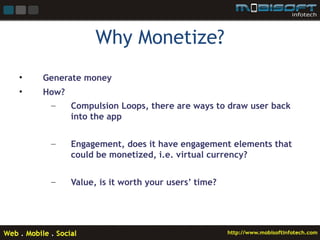
Why Monetize?
•   Generate money
•   How?
     –   Compulsion Loops, there are ways to draw user back
         into the app


     –    Engagement, does it have engagement elements that
          could be monetized, i.e. virtual currency?


     –    Value, is it worth your users’ time?
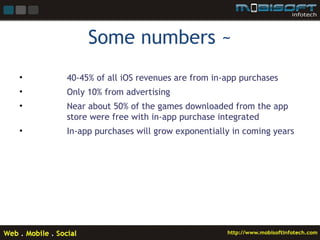
Some numbers ~
•   40-45% of all iOS revenues are from in-app purchases
•   Only 10% from advertising
•   Near about 50% of the games downloaded from the app
    store were free with in-app purchase integrated
•   In-app purchases will grow exponentially in coming years
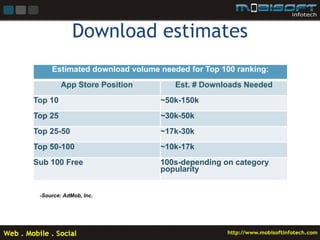
Download estimates
     Estimated download volume needed for Top 100 ranking:
         App Store Position        Est. # Downloads Needed
Top 10                         ~50k-150k
Top 25                         ~30k-50k
Top 25-50                      ~17k-30k
Top 50-100                     ~10k-17k
Sub 100 Free                   100s-depending on category
                               popularity


 -Source: AdMob, Inc.
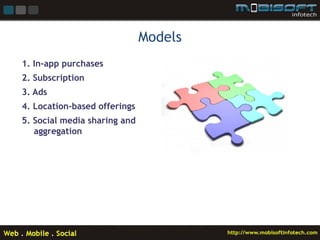
Models
1. In-app purchases
2. Subscription
3. Ads
4. Location-based offerings
5. Social media sharing and
   aggregation
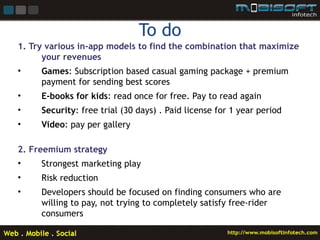
To do
1. Try various in-app models to find the combination that maximize
      your revenues
•    Games: Subscription based casual gaming package + premium
     payment for sending best scores
•    E-books for kids: read once for free. Pay to read again
•    Security: free trial (30 days) . Paid license for 1 year period
•    Video: pay per gallery

2. Freemium strategy
•    Strongest marketing play
•    Risk reduction
•    Developers should be focused on finding consumers who are
     willing to pay, not trying to completely satisfy free-rider
     consumers
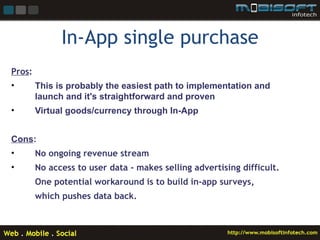
In-App single purchase
Pros:
•       This is probably the easiest path to implementation and
        launch and it's straightforward and proven
•       Virtual goods/currency through In-App


Cons:
•       No ongoing revenue stream
•       No access to user data - makes selling advertising difficult.
        One potential workaround is to build in-app surveys,
        which pushes data back.
Subscription - I
Pros:
•       Revenue is sustainable
•       Renew just as other web based subscriptions
•       Easy extendable as an add-on
Cons:
•       Requires user management solution
•       Requires users to leave the app and visit the publisher's
        website to subscribe
•       Conversion rate lower than in-app purchases
•       Success :
lifetime value of a subscriber > revenue lost from lower conversion
Subscription - II
Apple's subscription policy for publishers:


•    Apple still gets a 30% cut of any subscription a reader signs
     up for inside the App Store.
•    Publishers can now offer an app subscription for a different
     price than what they might sell their app for in the App Store.
•    Publishers can't link to an external-to-Apple location that sells
     a subscription within the app.
Advertising
Apple: iAd platform – Adv as an app
Third party : adMob, Medialets etc


Pros: Easier to command advertising premiums and less pressure to
     live up to metrics


Cons:
•    Mobile budgets just aren't well-defined
•    Apple changes strategic decision with third party ad integration
Location Based Offerings
Pros: Awesome mobile offerings into a high-fidelity advertising
      environment


Cons:
•    Complexity in integrating these systems
•    Requires the device be connected to the internet
Social, Sharing & Aggregation
Pros:
•       Cost-effective
•       Viral marketing
•       Better user engagement


Cons: Getting advertiser support on a product as nebulous as this is
     challenging
Other payment integrations

•   Paypal API integrations
•   Carrier billing option – Very easy for users to pay
•   Virtual credits
•   Google Checkout
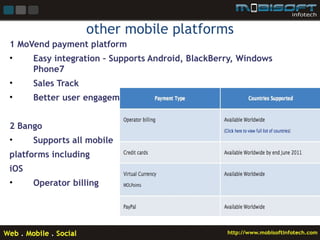
other mobile platforms
1 MoVend payment platform
•     Easy integration – Supports Android, BlackBerry, Windows
      Phone7
•     Sales Track
•     Better user engagement


2 Bango
•     Supports all mobile
platforms including
iOS
•     Operator billing
Thank You!

Connect:
Email: shail@mobisoftinfotech.com
Twitter: @mobisoftinfo
Blog: mobisoftinfotech.com/blog

Pricing strategies for iOS applications

  • 1.
    Pricing Strategies foriOS Applications By: Shailendra Sinhasane Twitter: @sunshail Mobisoft Infotech LLC
  • 2.
    Why Monetize? • Generate money • How? – Compulsion Loops, there are ways to draw user back into the app – Engagement, does it have engagement elements that could be monetized, i.e. virtual currency? – Value, is it worth your users’ time?
  • 3.
    Some numbers ~ • 40-45% of all iOS revenues are from in-app purchases • Only 10% from advertising • Near about 50% of the games downloaded from the app store were free with in-app purchase integrated • In-app purchases will grow exponentially in coming years
  • 4.
    Download estimates Estimated download volume needed for Top 100 ranking: App Store Position Est. # Downloads Needed Top 10 ~50k-150k Top 25 ~30k-50k Top 25-50 ~17k-30k Top 50-100 ~10k-17k Sub 100 Free 100s-depending on category popularity -Source: AdMob, Inc.
  • 5.
    Models 1. In-app purchases 2.Subscription 3. Ads 4. Location-based offerings 5. Social media sharing and aggregation
  • 6.
    To do 1. Tryvarious in-app models to find the combination that maximize your revenues • Games: Subscription based casual gaming package + premium payment for sending best scores • E-books for kids: read once for free. Pay to read again • Security: free trial (30 days) . Paid license for 1 year period • Video: pay per gallery 2. Freemium strategy • Strongest marketing play • Risk reduction • Developers should be focused on finding consumers who are willing to pay, not trying to completely satisfy free-rider consumers
  • 7.
    In-App single purchase Pros: • This is probably the easiest path to implementation and launch and it's straightforward and proven • Virtual goods/currency through In-App Cons: • No ongoing revenue stream • No access to user data - makes selling advertising difficult. One potential workaround is to build in-app surveys, which pushes data back.
  • 8.
    Subscription - I Pros: • Revenue is sustainable • Renew just as other web based subscriptions • Easy extendable as an add-on Cons: • Requires user management solution • Requires users to leave the app and visit the publisher's website to subscribe • Conversion rate lower than in-app purchases • Success : lifetime value of a subscriber > revenue lost from lower conversion
  • 9.
    Subscription - II Apple'ssubscription policy for publishers: • Apple still gets a 30% cut of any subscription a reader signs up for inside the App Store. • Publishers can now offer an app subscription for a different price than what they might sell their app for in the App Store. • Publishers can't link to an external-to-Apple location that sells a subscription within the app.
  • 10.
    Advertising Apple: iAd platform– Adv as an app Third party : adMob, Medialets etc Pros: Easier to command advertising premiums and less pressure to live up to metrics Cons: • Mobile budgets just aren't well-defined • Apple changes strategic decision with third party ad integration
  • 11.
    Location Based Offerings Pros:Awesome mobile offerings into a high-fidelity advertising environment Cons: • Complexity in integrating these systems • Requires the device be connected to the internet
  • 12.
    Social, Sharing &Aggregation Pros: • Cost-effective • Viral marketing • Better user engagement Cons: Getting advertiser support on a product as nebulous as this is challenging
  • 13.
    Other payment integrations • Paypal API integrations • Carrier billing option – Very easy for users to pay • Virtual credits • Google Checkout
  • 14.
    other mobile platforms 1MoVend payment platform • Easy integration – Supports Android, BlackBerry, Windows Phone7 • Sales Track • Better user engagement 2 Bango • Supports all mobile platforms including iOS • Operator billing
  • 15.
    Thank You! Connect: Email: shail@mobisoftinfotech.com Twitter:@mobisoftinfo Blog: mobisoftinfotech.com/blog