Pricing Strategies
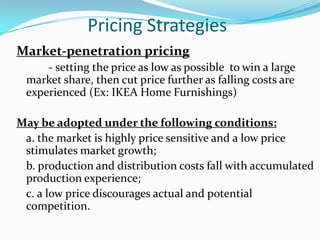
Market-penetration pricing
     - setting the price as low as possible to win a large
 market share, then cut price further as falling costs are
 experienced (Ex: IKEA Home Furnishings)

May be adopted under the following conditions:
 a. the market is highly price sensitive and a low price
 stimulates market growth;
 b. production and distribution costs fall with accumulated
 production experience;
 c. a low price discourages actual and potential
 competition.
Pricing Strategies
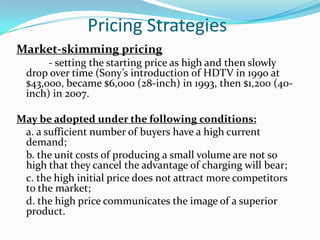
Market-skimming pricing
       - setting the starting price as high and then slowly
  drop over time (Sony’s introduction of HDTV in 1990 at
  $43,000, became $6,000 (28-inch) in 1993, then $1,200 (40-
  inch) in 2007.

May be adopted under the following conditions:
 a. a sufficient number of buyers have a high current
 demand;
 b. the unit costs of producing a small volume are not so
 high that they cancel the advantage of charging will bear;
 c. the high initial price does not attract more competitors
 to the market;
 d. the high price communicates the image of a superior
 product.
Pricing Strategies
Mark-up pricing
     - the most elementary pricing method which adds a
 standard mark-up to the product’s cost
     - the most popular pricing strategy

Advantages of mark-up pricing:
 a. sellers can determine costs much more easily than
 they can estimate demand
 b. where all firms in the industry use this pricing
 method, prices tend to be similar and price competition
 is minimized
 c. many people feel that cost-plus pricing is fairer to
 both buyers and sellers
Pricing Strategies
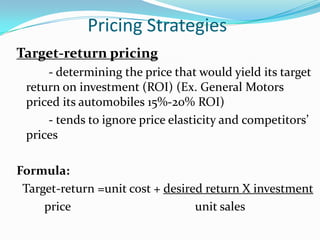
Target-return pricing
     - determining the price that would yield its target
 return on investment (ROI) (Ex. General Motors
 priced its automobiles 15%-20% ROI)
     - tends to ignore price elasticity and competitors’
 prices

Formula:
 Target-return =unit cost + desired return X investment
     price                        unit sales
Pricing Strategies
Perceived-value pricing
 - made up of several elements, such as the buyers’
 image of the product performance, the warranty
 quality, customer support, and softer attributes
 such as the suppliers’ reputation, trustworthiness,
 and esteem.
 - firms use the other marketing mix elements,
 such as advertising and sales force, to
 communicate and enhance perceived value in
 buyers’ minds.
Pricing Strategies
Value pricing
 - charging a fairly low price for a high-quality
 offering
 - reengineering the company’s operations to
 become a low-cost producer without sacrificing
 quality, to attract a large number of value-
 conscious customers

Practitioners of value pricing: IKEA Home
 Furnishings, Procter & Gamble
Pricing Strategies
Going-rate pricing
 - the firm bases its price largely on competitors’
 prices, charging the same, more or less than
 major competitors
 - smaller firms “follow the leader” when the
 market leader’s prices change rather than when
 their own demand or costs change
 - where costs are difficult to measure or
 competitive response is uncertain, firms feel the
 going price is a good solution because it is
 thought to reflect the industry’s collective
 wisdom
Pricing Strategies
Auction-type pricing
 - usually done using the Internet (Ex. Ebay) to
 dispose of excess inventories or used goods.

3 major types of auctions:
1. English auctions (ascending bids) where there is
   one seller and many buyers
2. Dutch auctions (descending bids) where there is
   one buyer and many sellers. The buyer announces
   what he/she wants to buy and potential sellers
   compete by offering the lowest price
Pricing Strategies
Auction-type pricing
 - usually done using the Internet (Ex. Ebay) to
 dispose of excess inventories or used goods.

3 major types of auctions:

3. Sealed-bid auctions – would-be suppliers can
  submit only one bid and cannot know the other
  bids
Pricing Strategies
Geographical pricing
 - the company decides how to price its products
 to different customers in different locations and
 countries
 - company may charge higher prices to distant
 customers to cover the higher shipping costs

Pricing options for geographical pricing:
Barter – the buyer and seller directly exchange
 goods, with no money and no third party
 involved
Pricing Strategies
Geographical pricing
 Pricing options for geographical pricing:
Compensation deal– the seller receives some
 percentage of the payment in cash and the rest in
 products
Buyback arrangement – the seller sells a plant,
 equipment, or technology to another country and
 agrees to accept as partial payment products
 manufactured with the supplied equipment
Offset – the seller receives full payment in cash but
 agrees to spend a substantial amount of the money
 in that country within a stated time period
Pricing Strategies
Promotional pricing
 - companies use several pricing techniques to
 stimulate early purchase

Techniques:
 Loss-leader pricing
 Special-event pricing
 Cash rebates
 Low-interest financing
 Longer payment terms
 Warranties and service contracts
 Psychological discounting
Pricing Strategies
Differentiated pricing
 - companies often adjust their basic price to
 accommodate differences in customers, products,
 locations, and so on

 Customer-segment pricing
 Product-form pricing
 Image pricing
 Channel pricing
 Location pricing
 Time pricing

Pricing strategies

  • 2.
    Pricing Strategies Market-penetration pricing - setting the price as low as possible to win a large market share, then cut price further as falling costs are experienced (Ex: IKEA Home Furnishings) May be adopted under the following conditions: a. the market is highly price sensitive and a low price stimulates market growth; b. production and distribution costs fall with accumulated production experience; c. a low price discourages actual and potential competition.
  • 3.
    Pricing Strategies Market-skimming pricing - setting the starting price as high and then slowly drop over time (Sony’s introduction of HDTV in 1990 at $43,000, became $6,000 (28-inch) in 1993, then $1,200 (40- inch) in 2007. May be adopted under the following conditions: a. a sufficient number of buyers have a high current demand; b. the unit costs of producing a small volume are not so high that they cancel the advantage of charging will bear; c. the high initial price does not attract more competitors to the market; d. the high price communicates the image of a superior product.
  • 4.
    Pricing Strategies Mark-up pricing - the most elementary pricing method which adds a standard mark-up to the product’s cost - the most popular pricing strategy Advantages of mark-up pricing: a. sellers can determine costs much more easily than they can estimate demand b. where all firms in the industry use this pricing method, prices tend to be similar and price competition is minimized c. many people feel that cost-plus pricing is fairer to both buyers and sellers
  • 5.
    Pricing Strategies Target-return pricing - determining the price that would yield its target return on investment (ROI) (Ex. General Motors priced its automobiles 15%-20% ROI) - tends to ignore price elasticity and competitors’ prices Formula: Target-return =unit cost + desired return X investment price unit sales
  • 6.
    Pricing Strategies Perceived-value pricing - made up of several elements, such as the buyers’ image of the product performance, the warranty quality, customer support, and softer attributes such as the suppliers’ reputation, trustworthiness, and esteem. - firms use the other marketing mix elements, such as advertising and sales force, to communicate and enhance perceived value in buyers’ minds.
  • 7.
    Pricing Strategies Value pricing - charging a fairly low price for a high-quality offering - reengineering the company’s operations to become a low-cost producer without sacrificing quality, to attract a large number of value- conscious customers Practitioners of value pricing: IKEA Home Furnishings, Procter & Gamble
  • 8.
    Pricing Strategies Going-rate pricing - the firm bases its price largely on competitors’ prices, charging the same, more or less than major competitors - smaller firms “follow the leader” when the market leader’s prices change rather than when their own demand or costs change - where costs are difficult to measure or competitive response is uncertain, firms feel the going price is a good solution because it is thought to reflect the industry’s collective wisdom
  • 9.
    Pricing Strategies Auction-type pricing - usually done using the Internet (Ex. Ebay) to dispose of excess inventories or used goods. 3 major types of auctions: 1. English auctions (ascending bids) where there is one seller and many buyers 2. Dutch auctions (descending bids) where there is one buyer and many sellers. The buyer announces what he/she wants to buy and potential sellers compete by offering the lowest price
  • 10.
    Pricing Strategies Auction-type pricing - usually done using the Internet (Ex. Ebay) to dispose of excess inventories or used goods. 3 major types of auctions: 3. Sealed-bid auctions – would-be suppliers can submit only one bid and cannot know the other bids
  • 11.
    Pricing Strategies Geographical pricing - the company decides how to price its products to different customers in different locations and countries - company may charge higher prices to distant customers to cover the higher shipping costs Pricing options for geographical pricing: Barter – the buyer and seller directly exchange goods, with no money and no third party involved
  • 12.
    Pricing Strategies Geographical pricing Pricing options for geographical pricing: Compensation deal– the seller receives some percentage of the payment in cash and the rest in products Buyback arrangement – the seller sells a plant, equipment, or technology to another country and agrees to accept as partial payment products manufactured with the supplied equipment Offset – the seller receives full payment in cash but agrees to spend a substantial amount of the money in that country within a stated time period
  • 13.
    Pricing Strategies Promotional pricing - companies use several pricing techniques to stimulate early purchase Techniques:  Loss-leader pricing  Special-event pricing  Cash rebates  Low-interest financing  Longer payment terms  Warranties and service contracts  Psychological discounting
  • 14.
    Pricing Strategies Differentiated pricing - companies often adjust their basic price to accommodate differences in customers, products, locations, and so on  Customer-segment pricing  Product-form pricing  Image pricing  Channel pricing  Location pricing  Time pricing