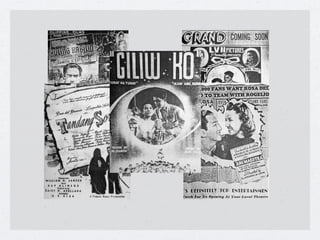
PINOY PRE-WAR CINEMA
  Filipinizing Cinema and the Rise of the Studios (1919-1941)
Report Outline


Historical context

Filmmaking during the era

Pre-war film aesthetics and themes

Distribution and audience reception
1919-1941:
 HOW WAS THE COUNTRY
DURING THIS TIME PERIOD?
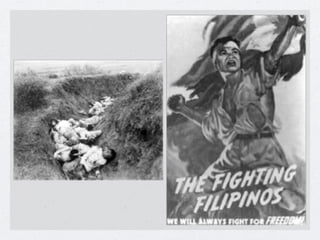
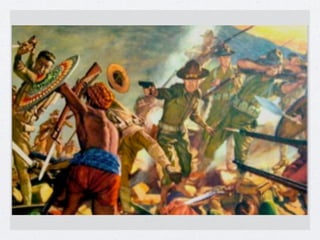
After the Filipinos lost the war to
 the Americans in 1901, we did
not really stop fighting for their
          independence.
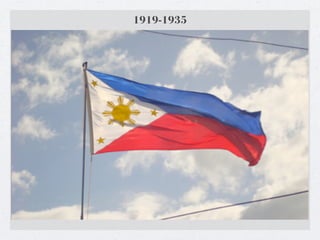
1919-1935
Hare-Hawes Cutting Law: 1932
 Tydings McDuffie Law: 1935
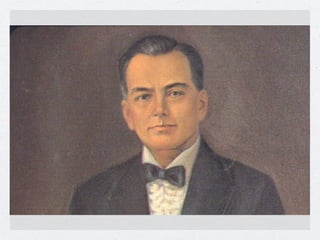
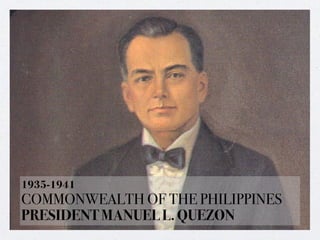
1935-1941
COMMONWEALTH OF THE PHILIPPINES
PRESIDENT MANUEL L. QUEZON
FILMMAKING DURING
     THE ERA
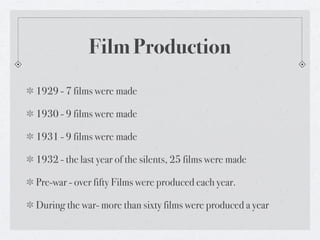
Film Production
1929 - 7 films were made

1930 - 9 films were made

1931 - 9 films were made

1932 - the last year of the silents, 25 films were made

Pre-war - over fifty Films were produced each year.

During the war- more than sixty films were produced a year
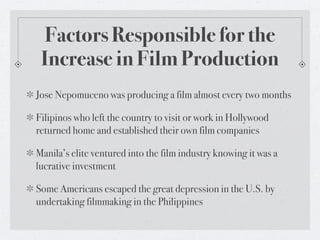
Factors Responsible for the
 Increase in Film Production
Jose Nepomuceno was producing a film almost every two months

Filipinos who left the country to visit or work in Hollywood
returned home and established their own film companies

Manila’s elite ventured into the film industry knowing it was a
lucrative investment

Some Americans escaped the great depression in the U.S. by
undertaking filmmaking in the Philippines
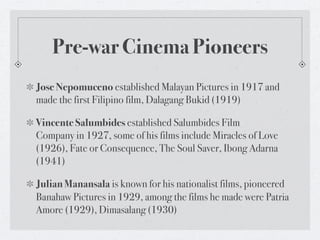
Pre-war Cinema Pioneers
Jose Nepomuceno established Malayan Pictures in 1917 and
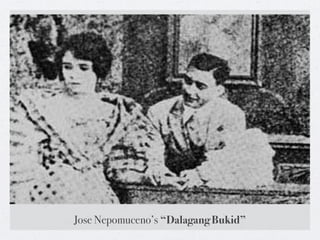
made the first Filipino film, Dalagang Bukid (1919)

Vincente Salumbides established Salumbides Film ! ! !
Company in 1927, some of his films include Miracles of Love
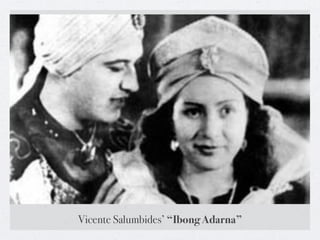
(1926), Fate or Consequence, The Soul Saver, Ibong Adarna
(1941)

Julian Manansala is known for his nationalist films, pioneered
Banahaw Pictures in 1929, among the films he made were Patria
Amore (1929), Dimasalang (1930)
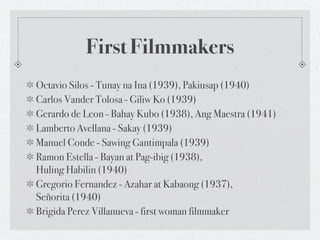
First Filmmakers
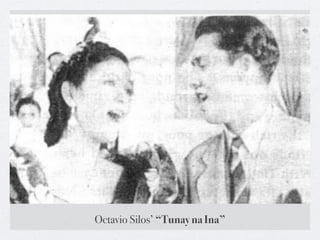
Octavio Silos - Tunay na Ina (1939), Pakiusap (1940)
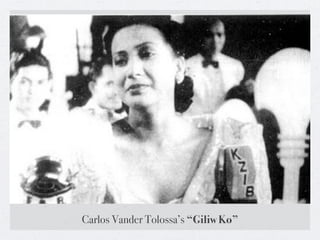
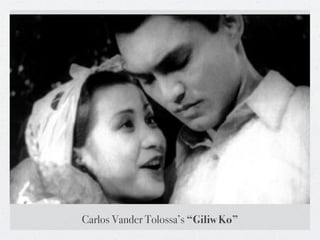
Carlos Vander Tolosa - Giliw Ko (1939)
Gerardo de Leon - Bahay Kubo (1938), Ang Maestra (1941)
Lamberto Avellana - Sakay (1939)
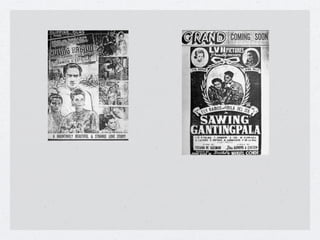
Manuel Conde - Sawing Gantimpala (1939)
Ramon Estella - Bayan at Pag-ibig (1938),
Huling Habilin (1940)
Gregorio Fernandez - Azahar at Kabaong (1937),
Señorita (1940)
Brigida Perez Villanueva - first woman filmmaker
The Studio System

paved the way for discovery and development of filmmakers and
actors

studios patterned its mode of production after Hollywood

  the system was departmentalized

  contract stars were signed up

  each studio had a distinct quality on its movies
First Philippine Film Studios
Filippine Films, 1933

    established by Eddie Tait & George Harris
    Ang mga Ulila (1933), Mag-inang Mahirap (1934)

Parlatone Hispano-Filipino, 1934

    Jose Nepomuceno reorganized Malayan Pictures into
    Parlatone Hispano- Filipino
    its first film was Diwata ng Karagatan
First Philippine Film Studios
Excelsior Pictures, 1937
    founded by Don Ramon Araneta
    considered the most modern studio at the time
    Ang Maya was its first film
Sampaguita Pictures, 1937
    established by Jose O. Vera; his children took positions in the family
    company including matriarch Dolores Honorado Vera, or famously
    known as “Mommy Vera”
    known for having melodramatic movies and films that centered on
    family values
    its first film, Bituing Marikit was a huge success 
First Philippine Film Studios
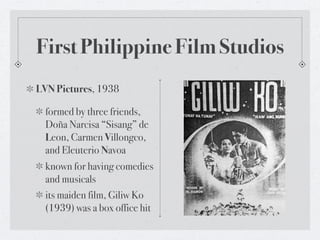
LVN Pictures, 1938

  formed by three friends,
  Doña Narcisa “Sisang” de
  Leon, Carmen Villongco,
  and Eleuterio Navoa
  known for having comedies
  and musicals
  its maiden film, Giliw Ko
  (1939) was a box office hit
First Philippine Film Studios
X’Otic Films, 1941
    Jose Nepomuceno, after having been ousted from Parlatone in
    1936, resurfaced with X’Otic films in 1939 with co- founders Jesus
    Cacho and Julian Salgado
    its first production was Punit na Bandila
    the company would later be reorganized into Movietec after the war
Other studios:
    Cervantina Filipina Corporation
    Del Monte Pictures
    Waling-Waling Pictures
    Acuña-Zaldarriaga Productions
    …and many others
Advent of Sound in Film

The Talkies

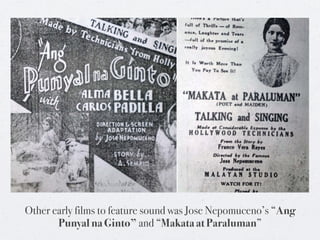
Newspaper advertisements heralded the “talking and singing”
features which signaled the advent of sound technology

The first picture with sound reached Manila in 1910, using the
Chronophone.
Advent of Sound in Film

By 1930, the talking pictures was already one year old in the
country with the showing of Syncopation, this was achieved by
synchronizing phonograph records with the film.

Jose Domingo’s Collegian Love (1930) was considered the first
Filipino sound production

The first film made in the Philippines to feature optically
recorded sound was George Musser’s Ang Aswang (1933)
Other early films to feature sound was Jose Nepomuceno’s “Ang
       Punyal na Ginto” and “Makata at Paraluman”
PRE-WAR CINEMA THEMES
    AND AESTHETICS
Content and Themes

Sarswela and Komedya

Philippine Literature and History

Socio-political issues

Exotic Philippines

Hollywood Genres
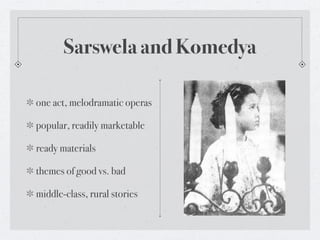
Sarswela and Komedya

one act, melodramatic operas

popular, readily marketable

ready materials

themes of good vs. bad

middle-class, rural stories
Octavio Silos’ “Tunay na Ina”
Carlos Vander Tolossa’s “Giliw Ko”
Jose Nepomuceno’s “Dalagang Bukid”
Philippine Literature and
            History

Jose Rizal’s life and works

author’s novels, short stories,
poems

historical events, revolution

Lamberto Avellana’s “Sakay”
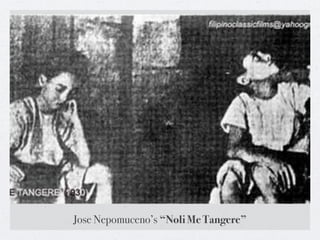
Jose Nepomuceno’s “Noli Me Tangere”
Vicente Salumbides’ “Ibong Adarna”
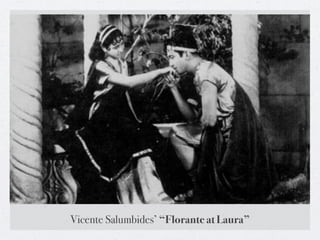
Vicente Salumbides’ “Florante at Laura”
Socio-Political Issues


nationalistic themes

anti-Spanish, anti-establishment

very few films, almost censored

Julian Manansala’s “Patria Amore”
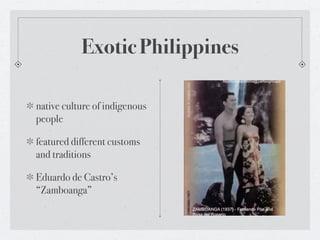
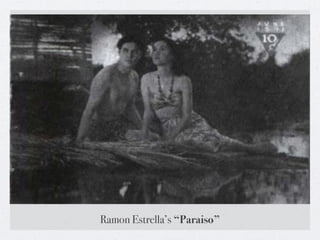
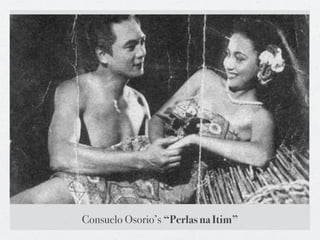
Exotic Philippines

native culture of indigenous
people

featured different customs
and traditions

Eduardo de Castro’s
“Zamboanga”
Ramon Estrella’s “Paraiso”
Consuelo Osorio’s “Perlas na Itim”
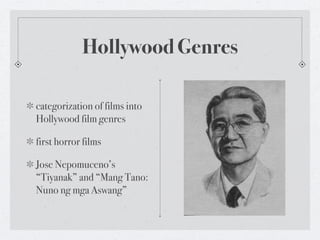
Hollywood Genres

categorization of films into
Hollywood film genres

first horror films

Jose Nepomuceno’s
“Tiyanak” and “Mang Tano:
Nuno ng mga Aswang”
Aesthetics and Styles

Cinema heavily borrowed from the
 traditions of drama and theater.
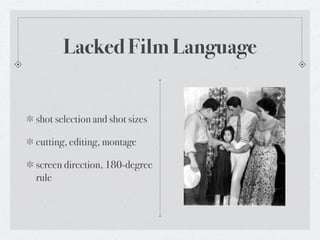
Lacked Film Language


shot selection and shot sizes

cutting, editing, montage

screen direction, 180-degree
rule
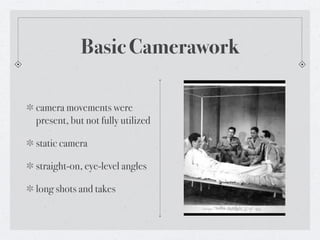
Basic Camerawork

camera movements were
present, but not fully utilized

static camera

straight-on, eye-level angles

long shots and takes
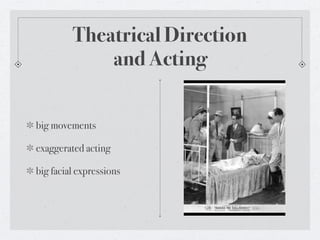
Theatrical Direction
             and Acting

big movements

exaggerated acting

big facial expressions
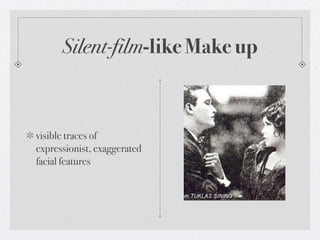
Silent-film-like Make up


visible traces of
expressionist, exaggerated
facial features
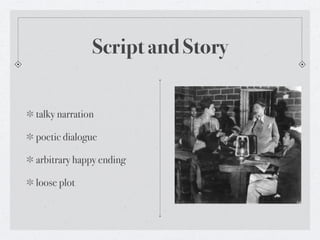
Script and Story


talky narration

poetic dialogue

arbitrary happy ending

loose plot
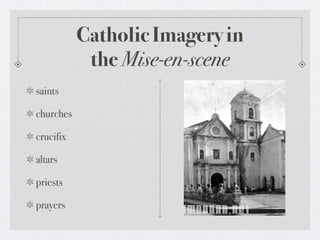
Catholic Imagery in
            the Mise-en-scene
saints

churches

crucifix

altars

priests

prayers
DISTRIBUTION AND
AUDIENCE RECEPTION
Language
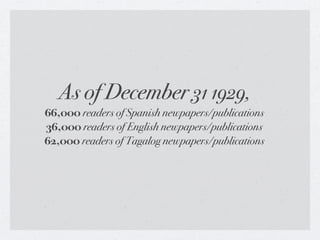
As of December 31 1929,
66,000 readers of Spanish newpapers/publications
36,000 readers of English newpapers/publications
62,000 readers of Tagalog newpapers/publications
!                            !
Lobo del monte (Mountain Wolf) / Gratitude de un joven (Young Man’s Gratitude)
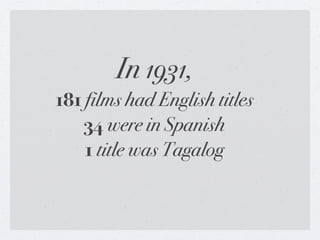
In 1931,
181 films had English titles
    34 were in Spanish
    1 title was Tagalog
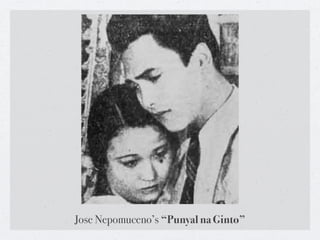
Jose Nepomuceno’s “Punyal na Ginto”
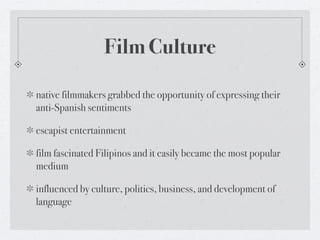
Film Culture

native filmmakers grabbed the opportunity of expressing their
anti-Spanish sentiments

escapist entertainment

film fascinated Filipinos and it easily became the most popular
medium

influenced by culture, politics, business, and development of
language
Market Competition
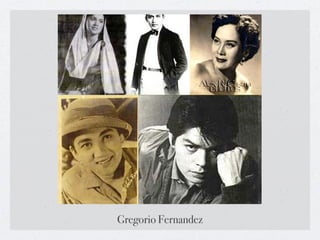
1933: Star System became
    more apparent
!
Mary Walter
!
Gregorio Fernandez
Nick Deocampo. Cine: Spanish Influences on Early Cinema in the
Philippines. Manila: National Commission for Culture and the Arts. 2003
Sotto, Agustin L. Pelikula II. Philippine Film 1897-1960. Manila:
Cultural Center of the Philippines, 1992.
Del Mundo, Clodualdo Jr., 1998. Notes on the Approaches to Teaching
Film. In Humanities: Art & Society. Quezon City: Commission on
Higher Education.
Flores, Patrick D. 1998. Philippine Cinema and Society. In Humanities:
Art & Society. Quezon City: Commission on Higher Education
Arsenio "Boots" Bautista, "History of Philippine Cinema"
http://www.ncca.gov.ph/about-culture-and-arts/articles-on-c-n-a/
article.php?i=115&igm=1. Accessed December 5, 2010.

Prewar report

  • 1.
    PINOY PRE-WAR CINEMA Filipinizing Cinema and the Rise of the Studios (1919-1941)
  • 2.
    Report Outline Historical context Filmmakingduring the era Pre-war film aesthetics and themes Distribution and audience reception
  • 3.
    1919-1941: HOW WASTHE COUNTRY DURING THIS TIME PERIOD?
  • 4.
    After the Filipinoslost the war to the Americans in 1901, we did not really stop fighting for their independence.
  • 9.
  • 10.
    Hare-Hawes Cutting Law:1932 Tydings McDuffie Law: 1935
  • 11.
    1935-1941 COMMONWEALTH OF THEPHILIPPINES PRESIDENT MANUEL L. QUEZON
  • 12.
  • 13.
    Film Production 1929 -7 films were made 1930 - 9 films were made 1931 - 9 films were made 1932 - the last year of the silents, 25 films were made Pre-war - over fifty Films were produced each year. During the war- more than sixty films were produced a year
  • 14.
    Factors Responsible forthe Increase in Film Production Jose Nepomuceno was producing a film almost every two months Filipinos who left the country to visit or work in Hollywood returned home and established their own film companies Manila’s elite ventured into the film industry knowing it was a lucrative investment Some Americans escaped the great depression in the U.S. by undertaking filmmaking in the Philippines
  • 15.
    Pre-war Cinema Pioneers JoseNepomuceno established Malayan Pictures in 1917 and made the first Filipino film, Dalagang Bukid (1919) Vincente Salumbides established Salumbides Film ! ! ! Company in 1927, some of his films include Miracles of Love (1926), Fate or Consequence, The Soul Saver, Ibong Adarna (1941) Julian Manansala is known for his nationalist films, pioneered Banahaw Pictures in 1929, among the films he made were Patria Amore (1929), Dimasalang (1930)
  • 16.
    First Filmmakers Octavio Silos- Tunay na Ina (1939), Pakiusap (1940) Carlos Vander Tolosa - Giliw Ko (1939) Gerardo de Leon - Bahay Kubo (1938), Ang Maestra (1941) Lamberto Avellana - Sakay (1939) Manuel Conde - Sawing Gantimpala (1939) Ramon Estella - Bayan at Pag-ibig (1938), Huling Habilin (1940) Gregorio Fernandez - Azahar at Kabaong (1937), Señorita (1940) Brigida Perez Villanueva - first woman filmmaker
  • 23.
    The Studio System pavedthe way for discovery and development of filmmakers and actors studios patterned its mode of production after Hollywood the system was departmentalized contract stars were signed up each studio had a distinct quality on its movies
  • 24.
    First Philippine FilmStudios Filippine Films, 1933 established by Eddie Tait & George Harris Ang mga Ulila (1933), Mag-inang Mahirap (1934) Parlatone Hispano-Filipino, 1934 Jose Nepomuceno reorganized Malayan Pictures into Parlatone Hispano- Filipino its first film was Diwata ng Karagatan
  • 25.
    First Philippine FilmStudios Excelsior Pictures, 1937 founded by Don Ramon Araneta considered the most modern studio at the time Ang Maya was its first film Sampaguita Pictures, 1937 established by Jose O. Vera; his children took positions in the family company including matriarch Dolores Honorado Vera, or famously known as “Mommy Vera” known for having melodramatic movies and films that centered on family values its first film, Bituing Marikit was a huge success 
  • 26.
    First Philippine FilmStudios LVN Pictures, 1938 formed by three friends, Doña Narcisa “Sisang” de Leon, Carmen Villongco, and Eleuterio Navoa known for having comedies and musicals its maiden film, Giliw Ko (1939) was a box office hit
  • 27.
    First Philippine FilmStudios X’Otic Films, 1941 Jose Nepomuceno, after having been ousted from Parlatone in 1936, resurfaced with X’Otic films in 1939 with co- founders Jesus Cacho and Julian Salgado its first production was Punit na Bandila the company would later be reorganized into Movietec after the war Other studios: Cervantina Filipina Corporation Del Monte Pictures Waling-Waling Pictures Acuña-Zaldarriaga Productions …and many others
  • 28.
    Advent of Soundin Film The Talkies Newspaper advertisements heralded the “talking and singing” features which signaled the advent of sound technology The first picture with sound reached Manila in 1910, using the Chronophone.
  • 29.
    Advent of Soundin Film By 1930, the talking pictures was already one year old in the country with the showing of Syncopation, this was achieved by synchronizing phonograph records with the film. Jose Domingo’s Collegian Love (1930) was considered the first Filipino sound production The first film made in the Philippines to feature optically recorded sound was George Musser’s Ang Aswang (1933)
  • 30.
    Other early filmsto feature sound was Jose Nepomuceno’s “Ang Punyal na Ginto” and “Makata at Paraluman”
  • 31.
    PRE-WAR CINEMA THEMES AND AESTHETICS
  • 32.
    Content and Themes Sarswelaand Komedya Philippine Literature and History Socio-political issues Exotic Philippines Hollywood Genres
  • 33.
    Sarswela and Komedya oneact, melodramatic operas popular, readily marketable ready materials themes of good vs. bad middle-class, rural stories
  • 34.
  • 35.
  • 36.
  • 37.
  • 38.
    Philippine Literature and History Jose Rizal’s life and works author’s novels, short stories, poems historical events, revolution Lamberto Avellana’s “Sakay”
  • 39.
  • 40.
  • 41.
  • 43.
    Socio-Political Issues nationalistic themes anti-Spanish,anti-establishment very few films, almost censored Julian Manansala’s “Patria Amore”
  • 44.
    Exotic Philippines native cultureof indigenous people featured different customs and traditions Eduardo de Castro’s “Zamboanga”
  • 45.
  • 46.
  • 48.
    Hollywood Genres categorization offilms into Hollywood film genres first horror films Jose Nepomuceno’s “Tiyanak” and “Mang Tano: Nuno ng mga Aswang”
  • 49.
    Aesthetics and Styles Cinemaheavily borrowed from the traditions of drama and theater.
  • 50.
    Lacked Film Language shotselection and shot sizes cutting, editing, montage screen direction, 180-degree rule
  • 51.
    Basic Camerawork camera movementswere present, but not fully utilized static camera straight-on, eye-level angles long shots and takes
  • 52.
    Theatrical Direction and Acting big movements exaggerated acting big facial expressions
  • 53.
    Silent-film-like Make up visibletraces of expressionist, exaggerated facial features
  • 54.
    Script and Story talkynarration poetic dialogue arbitrary happy ending loose plot
  • 55.
    Catholic Imagery in the Mise-en-scene saints churches crucifix altars priests prayers
  • 57.
  • 58.
  • 59.
    As of December31 1929, 66,000 readers of Spanish newpapers/publications 36,000 readers of English newpapers/publications 62,000 readers of Tagalog newpapers/publications
  • 60.
    ! ! Lobo del monte (Mountain Wolf) / Gratitude de un joven (Young Man’s Gratitude)
  • 61.
    In 1931, 181 filmshad English titles 34 were in Spanish 1 title was Tagalog
  • 62.
  • 63.
    Film Culture native filmmakersgrabbed the opportunity of expressing their anti-Spanish sentiments escapist entertainment film fascinated Filipinos and it easily became the most popular medium influenced by culture, politics, business, and development of language
  • 64.
  • 65.
    1933: Star Systembecame more apparent
  • 66.
  • 67.
  • 68.
    Nick Deocampo. Cine:Spanish Influences on Early Cinema in the Philippines. Manila: National Commission for Culture and the Arts. 2003 Sotto, Agustin L. Pelikula II. Philippine Film 1897-1960. Manila: Cultural Center of the Philippines, 1992. Del Mundo, Clodualdo Jr., 1998. Notes on the Approaches to Teaching Film. In Humanities: Art & Society. Quezon City: Commission on Higher Education. Flores, Patrick D. 1998. Philippine Cinema and Society. In Humanities: Art & Society. Quezon City: Commission on Higher Education Arsenio "Boots" Bautista, "History of Philippine Cinema" http://www.ncca.gov.ph/about-culture-and-arts/articles-on-c-n-a/ article.php?i=115&igm=1. Accessed December 5, 2010.