Downloaded 608 times
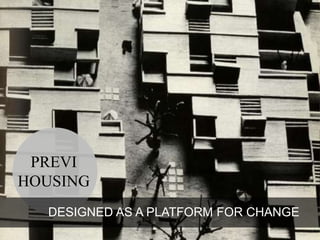
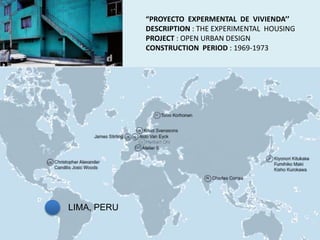
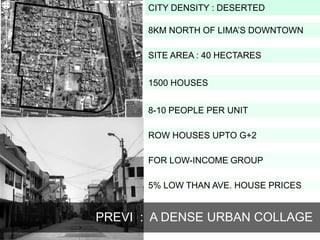

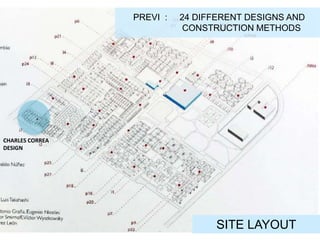

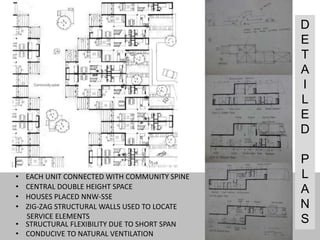
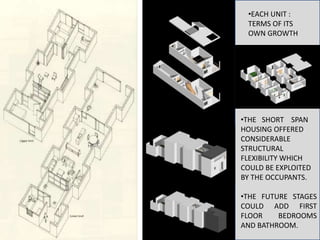
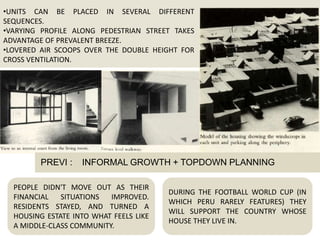
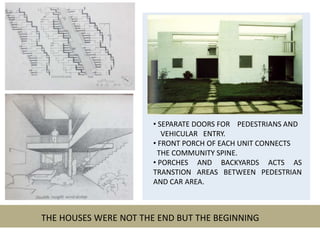
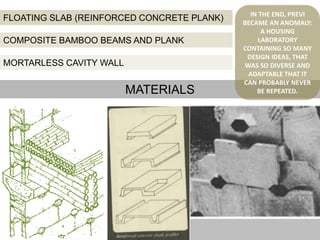
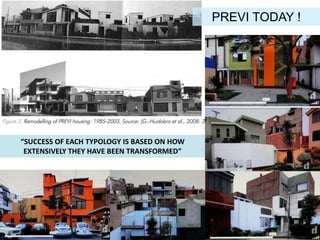


This document summarizes the Experimental Housing Project (PREVI) built in Lima, Peru between 1969-1973. The project comprised 1500 row houses on 40 hectares of land for low-income families. It used an open design approach with 24 different house designs and construction methods. The goal was to regulate the uncontrolled urban growth. The flexible and adaptable housing units allowed residents to modify and expand their homes over time. PREVI became a dense but diverse community where residents from different social classes chose to stay. It served as a model for integrating top-down planning with informal growth.


