1. Treat others with respect.
2. Take care of yourself.
3. Take care of classroom/school
properties.
4. Raise your hand to speak or to get
someone’s attention.
5. Refrain from using gadgets during class
unless needed for academic purposes.
1. Memorize contact details.
2. Never wander outside school premises.
3. Be wary of strangers.
4. Know the school’s emergency response
protocols.
5. Don’t tolerate bullying.
6. Follow basic rules of safety.
7. Seek medical help if required.
CONTENT STANDARDS:
The learners demonstrate understanding of:
1. quantitative research design;
2. description of sample;
3. instrument development;
4. description of intervention (if applicable);
5. data collection and analysis procedure such as survey, interview
and observation; and
6. guidelines in writing research methodology
PERFORMANCE STANDARDS:
The learners should be able to:
 describe adequately quantitative research designs, sample,
instrument used, intervention (if applicable), data collection,
and analysis procedures.
(CS_RS12-IIa-c-7)
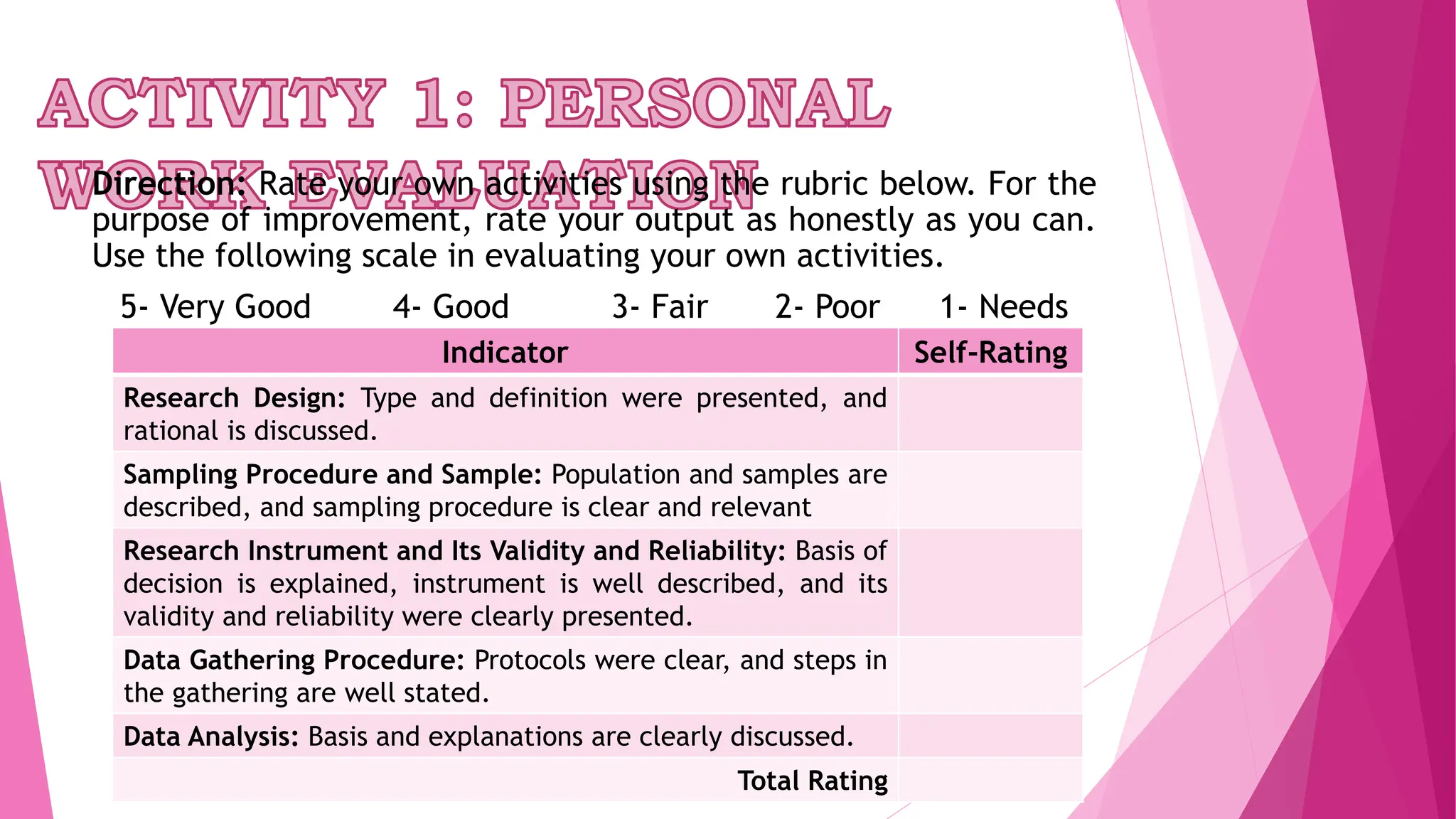
Direction: Rate your own activities using the rubric below. For the
purpose of improvement, rate your output as honestly as you can.
Use the following scale in evaluating your own activities.
5- Very Good 4- Good 3- Fair 2- Poor 1- Needs
Improvement
Indicator Self-Rating
Research Design: Type and definition were presented, and
rational is discussed.
Sampling Procedure and Sample: Population and samples are
described, and sampling procedure is clear and relevant
Research Instrument and Its Validity and Reliability: Basis of
decision is explained, instrument is well described, and its
validity and reliability were clearly presented.
Data Gathering Procedure: Protocols were clear, and steps in
the gathering are well stated.
Data Analysis: Basis and explanations are clearly discussed.
Total Rating
It is a description of how
exactly you will conduct your
research.
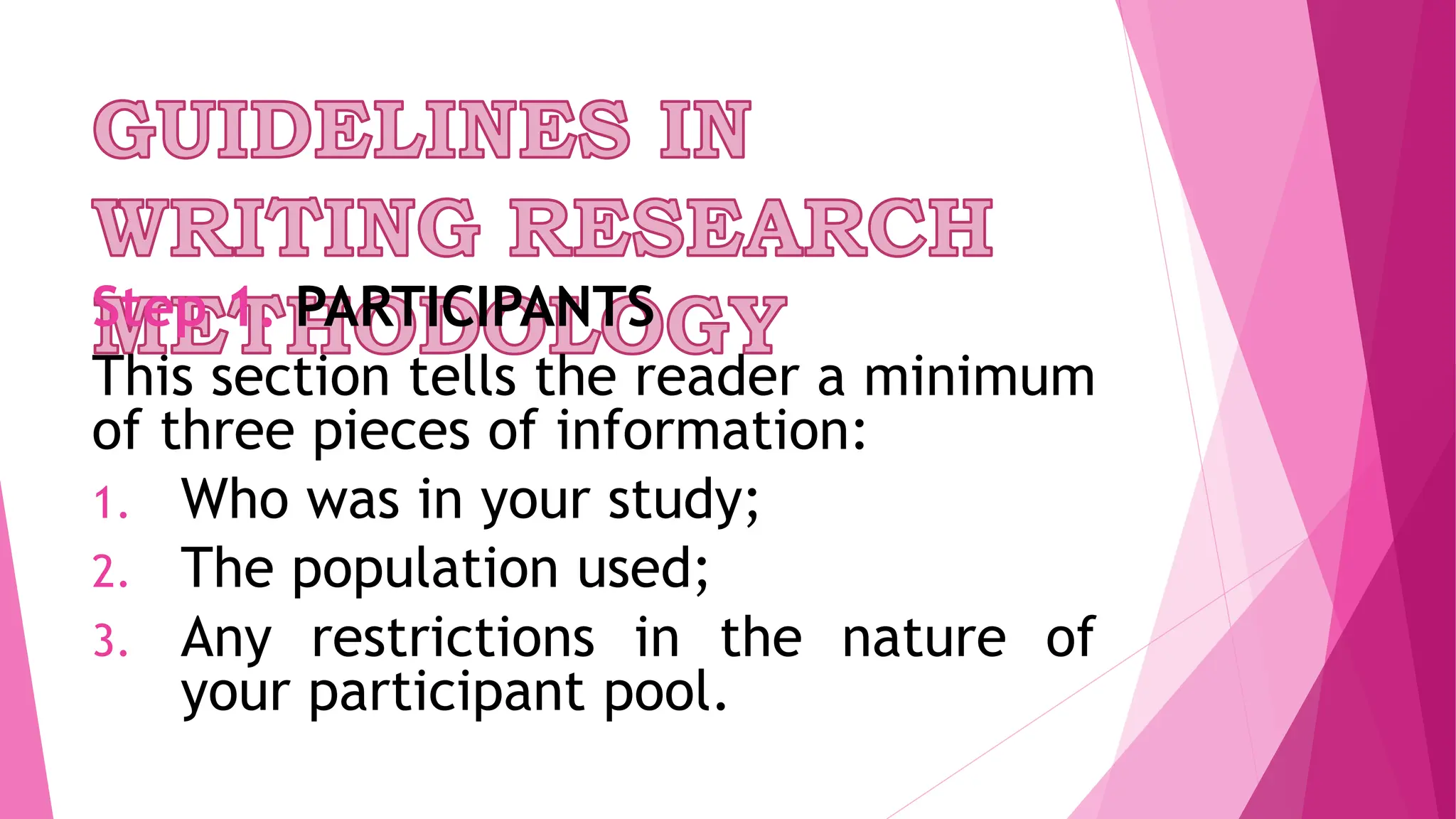
Step 1. PARTICIPANTS
This section tells the reader a minimum
of three pieces of information:
1. Who was in your study;
2. The population used;
3. Any restrictions in the nature of
your participant pool.
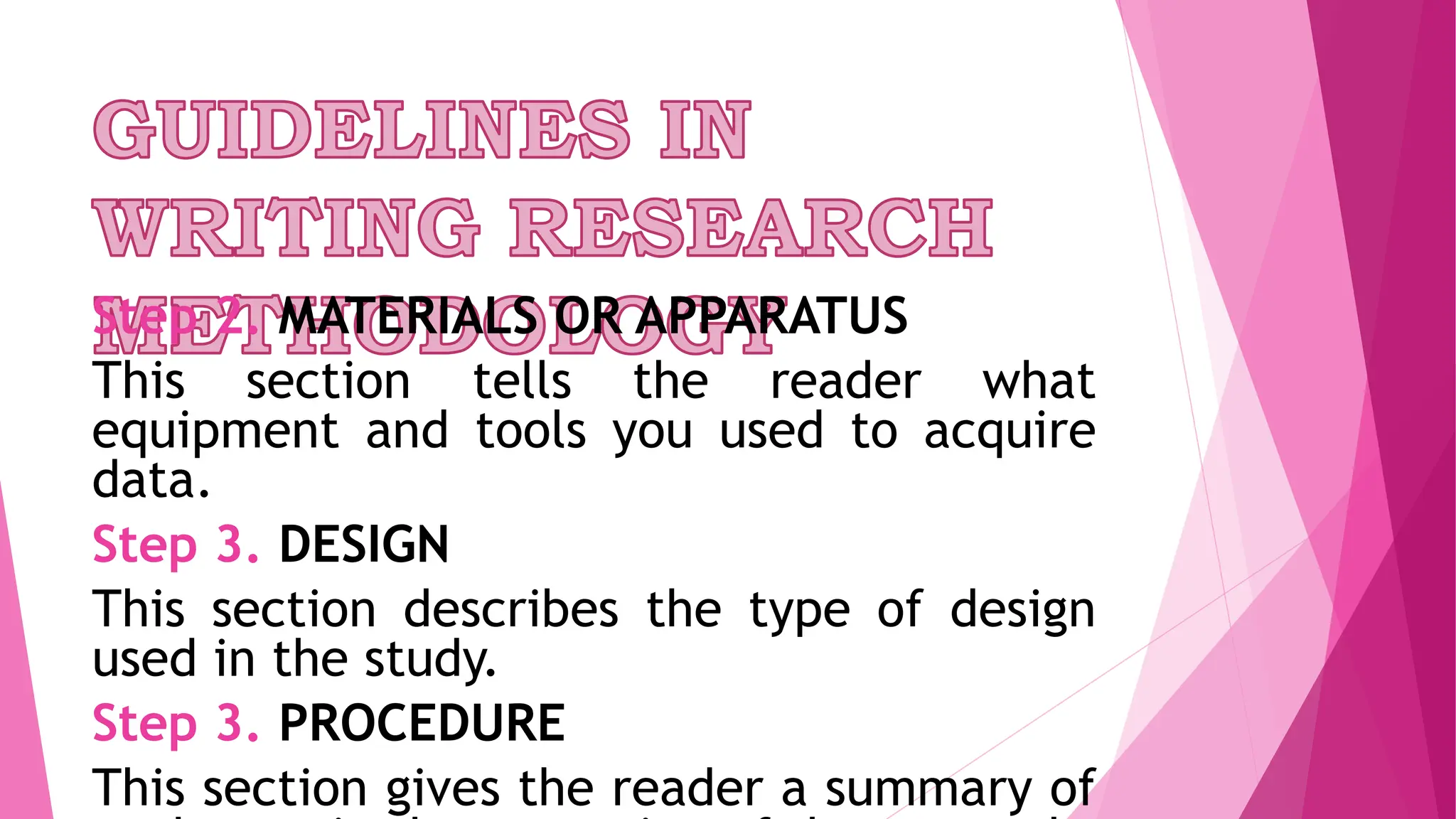
Step 2. MATERIALS OR APPARATUS
This section tells the reader what
equipment and tools you used to acquire
data.
Step 3. DESIGN
This section describes the type of design
used in the study.
Step 3. PROCEDURE
This section gives the reader a summary of
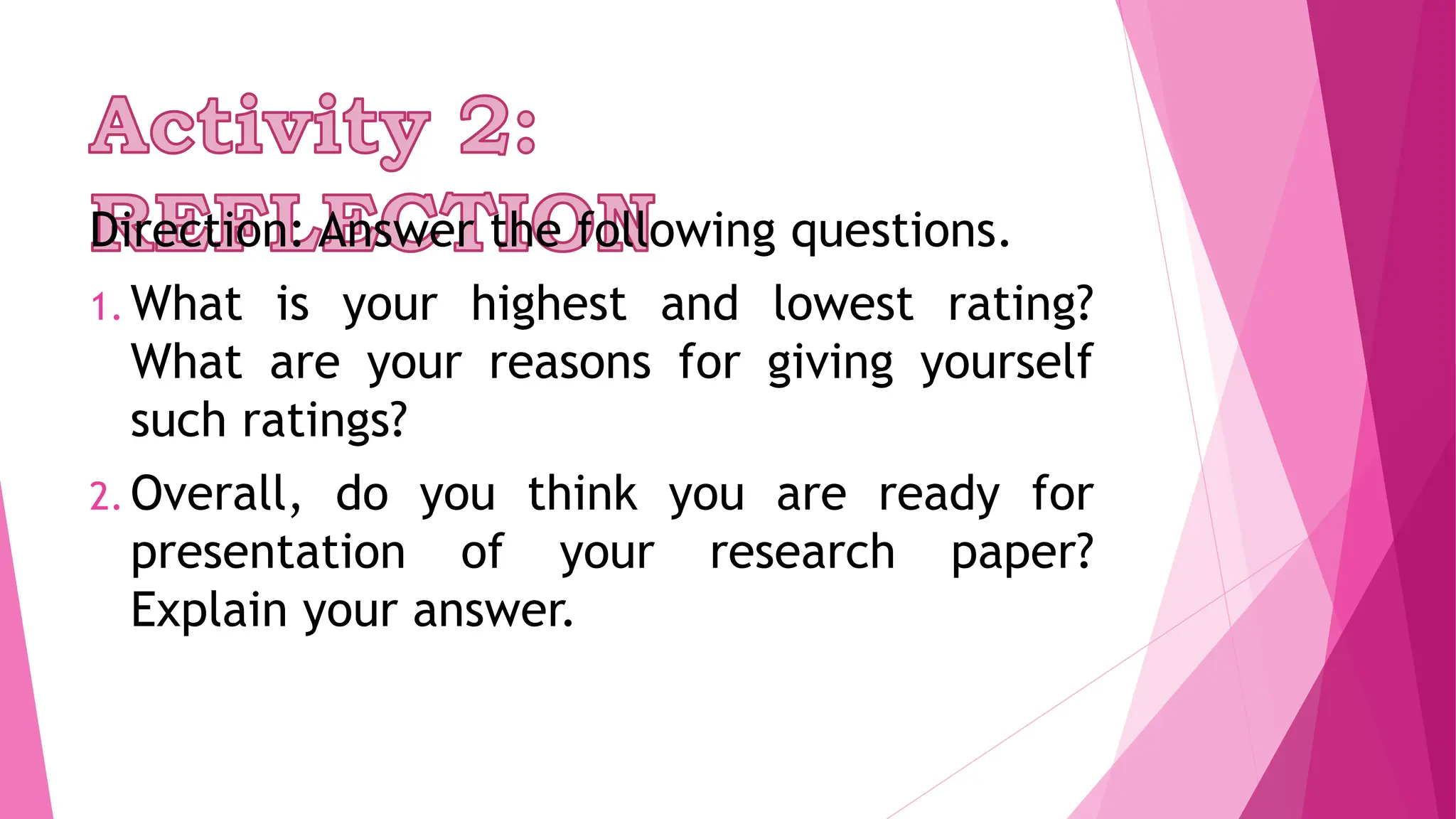
Direction: Answer the following questions.
1. What is your highest and lowest rating?
What are your reasons for giving yourself
such ratings?
2. Overall, do you think you are ready for
presentation of your research paper?
Explain your answer.
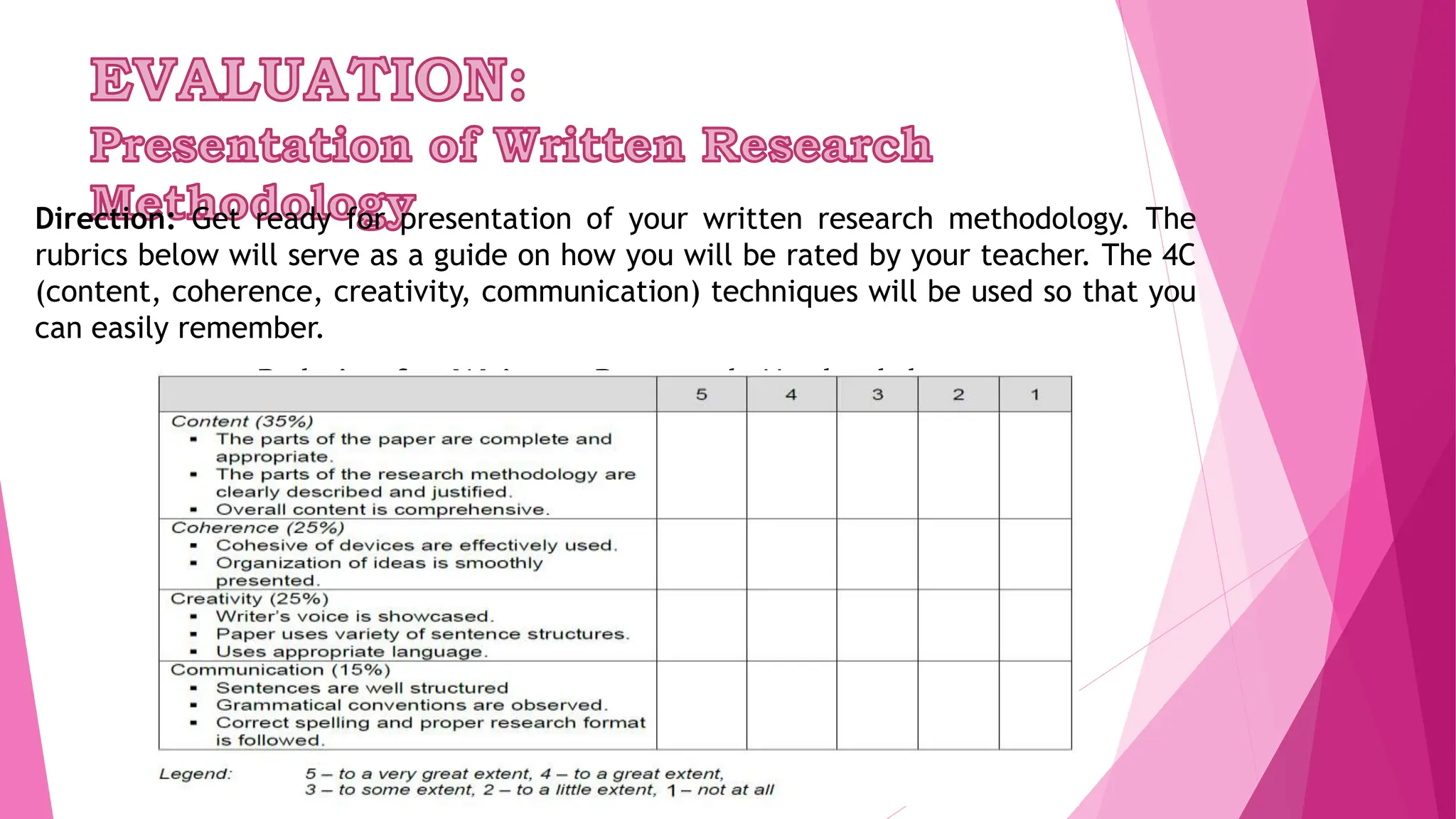
Direction: Get ready for presentation of your written research methodology. The
rubrics below will serve as a guide on how you will be rated by your teacher. The 4C
(content, coherence, creativity, communication) techniques will be used so that you
can easily remember.
Rubrics for Written Research Methodology
Rewrite your research methodology if
needed once corrected in accordance
with the guidelines given.
THANK YOU!

PRESENTING RESEARCH METHODOLOGY POWERPOINT PRESENTATION

  • 1.
    1. Treat otherswith respect. 2. Take care of yourself. 3. Take care of classroom/school properties. 4. Raise your hand to speak or to get someone’s attention. 5. Refrain from using gadgets during class unless needed for academic purposes.
  • 2.
    1. Memorize contactdetails. 2. Never wander outside school premises. 3. Be wary of strangers. 4. Know the school’s emergency response protocols. 5. Don’t tolerate bullying. 6. Follow basic rules of safety. 7. Seek medical help if required.
  • 3.
    CONTENT STANDARDS: The learnersdemonstrate understanding of: 1. quantitative research design; 2. description of sample; 3. instrument development; 4. description of intervention (if applicable); 5. data collection and analysis procedure such as survey, interview and observation; and 6. guidelines in writing research methodology PERFORMANCE STANDARDS: The learners should be able to:  describe adequately quantitative research designs, sample, instrument used, intervention (if applicable), data collection, and analysis procedures.
  • 4.
  • 5.
    Direction: Rate yourown activities using the rubric below. For the purpose of improvement, rate your output as honestly as you can. Use the following scale in evaluating your own activities. 5- Very Good 4- Good 3- Fair 2- Poor 1- Needs Improvement Indicator Self-Rating Research Design: Type and definition were presented, and rational is discussed. Sampling Procedure and Sample: Population and samples are described, and sampling procedure is clear and relevant Research Instrument and Its Validity and Reliability: Basis of decision is explained, instrument is well described, and its validity and reliability were clearly presented. Data Gathering Procedure: Protocols were clear, and steps in the gathering are well stated. Data Analysis: Basis and explanations are clearly discussed. Total Rating
  • 6.
    It is adescription of how exactly you will conduct your research.
  • 7.
    Step 1. PARTICIPANTS Thissection tells the reader a minimum of three pieces of information: 1. Who was in your study; 2. The population used; 3. Any restrictions in the nature of your participant pool.
  • 8.
    Step 2. MATERIALSOR APPARATUS This section tells the reader what equipment and tools you used to acquire data. Step 3. DESIGN This section describes the type of design used in the study. Step 3. PROCEDURE This section gives the reader a summary of
  • 9.
    Direction: Answer thefollowing questions. 1. What is your highest and lowest rating? What are your reasons for giving yourself such ratings? 2. Overall, do you think you are ready for presentation of your research paper? Explain your answer.
  • 10.
    Direction: Get readyfor presentation of your written research methodology. The rubrics below will serve as a guide on how you will be rated by your teacher. The 4C (content, coherence, creativity, communication) techniques will be used so that you can easily remember. Rubrics for Written Research Methodology
  • 11.
    Rewrite your researchmethodology if needed once corrected in accordance with the guidelines given.
  • 12.