Presenting ICU Patients
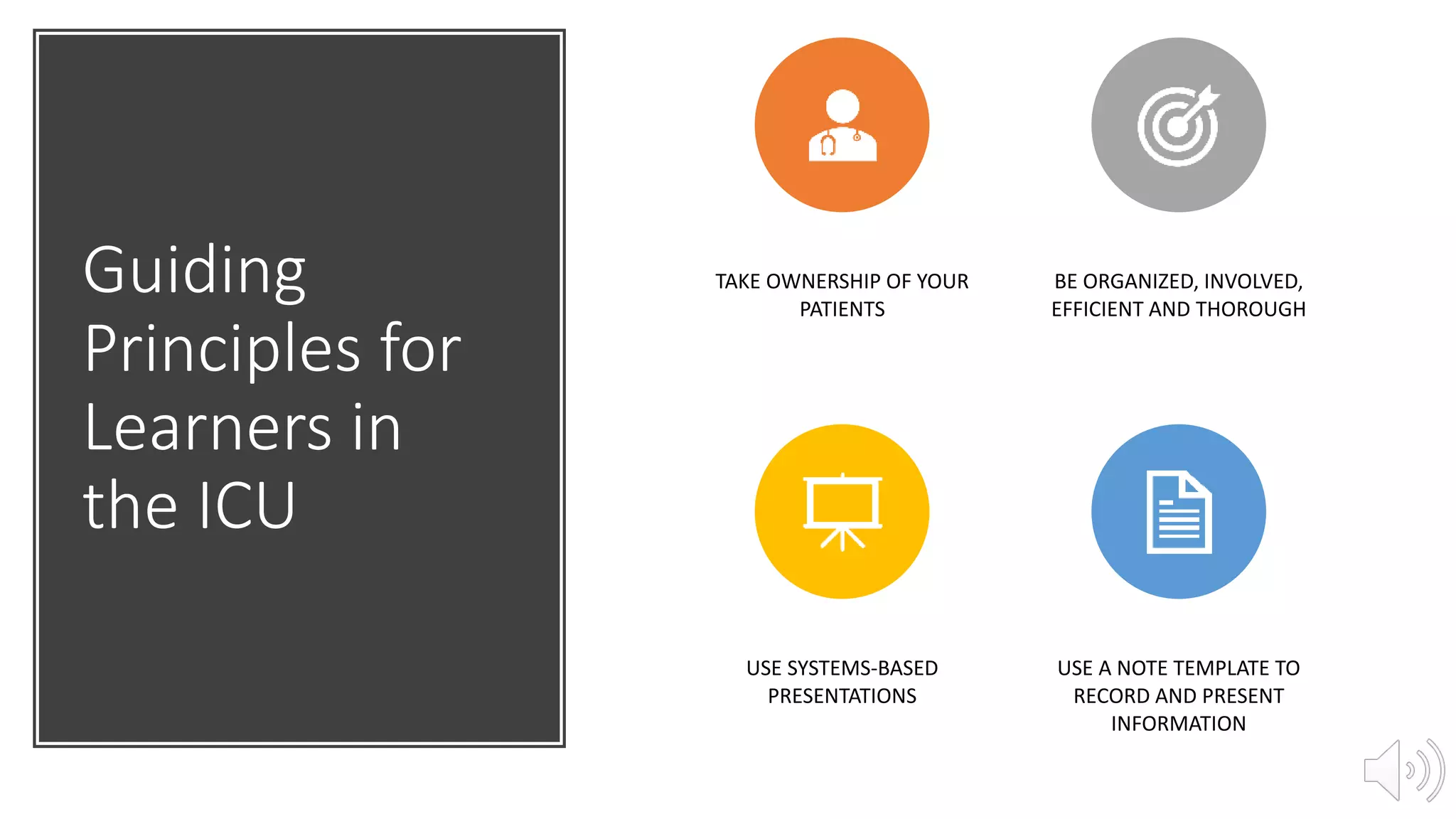
Guiding
Principles for
Learners in
the ICU
TAKE OWNERSHIP OF YOUR
PATIENTS
BE ORGANIZED, INVOLVED,
EFFICIENT AND THOROUGH
USE SYSTEMS-BASED
PRESENTATIONS
USE A NOTE TEMPLATE TO
RECORD AND PRESENT
INFORMATION
Note Template
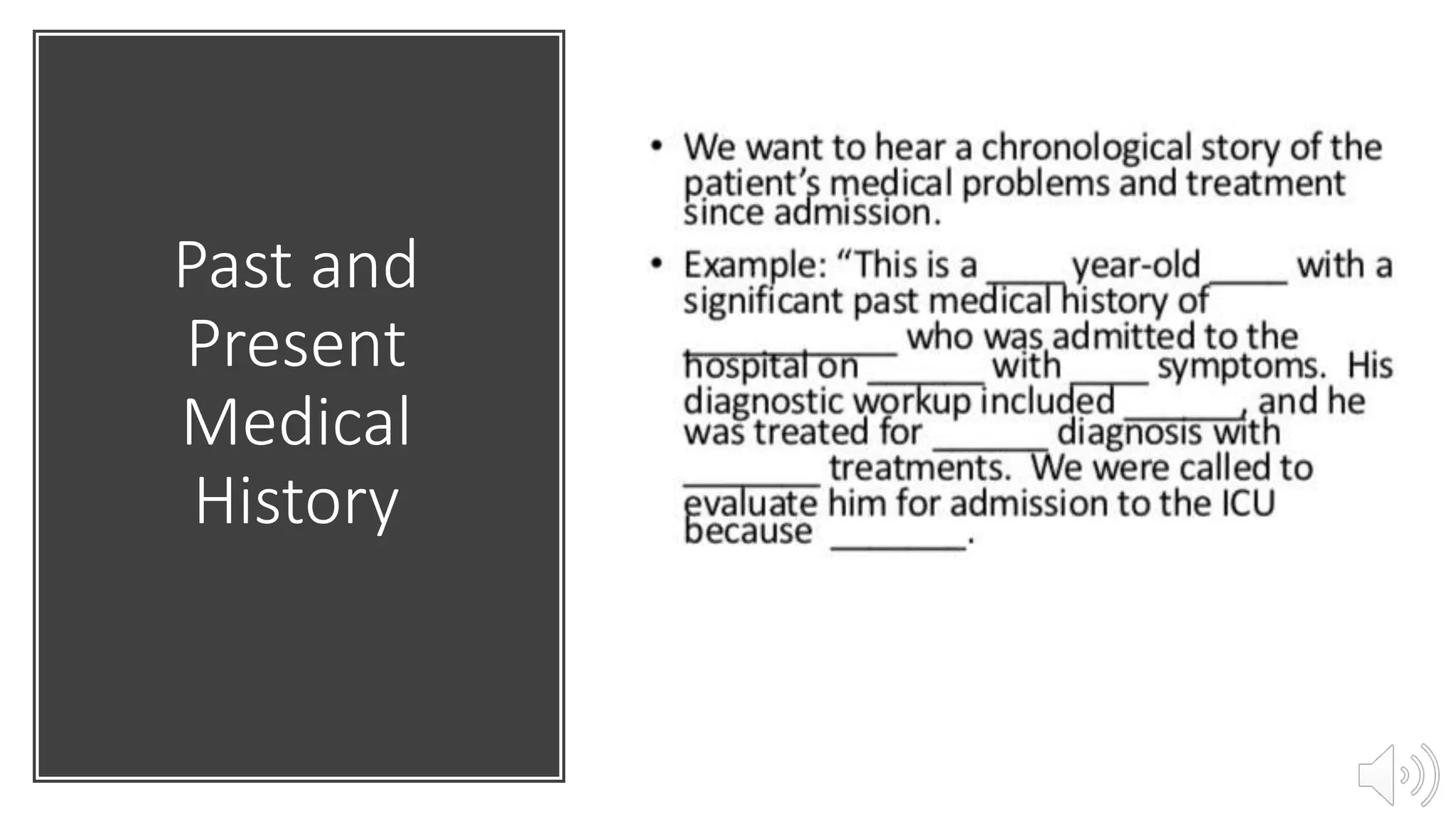
Past and
Present
Medical
History
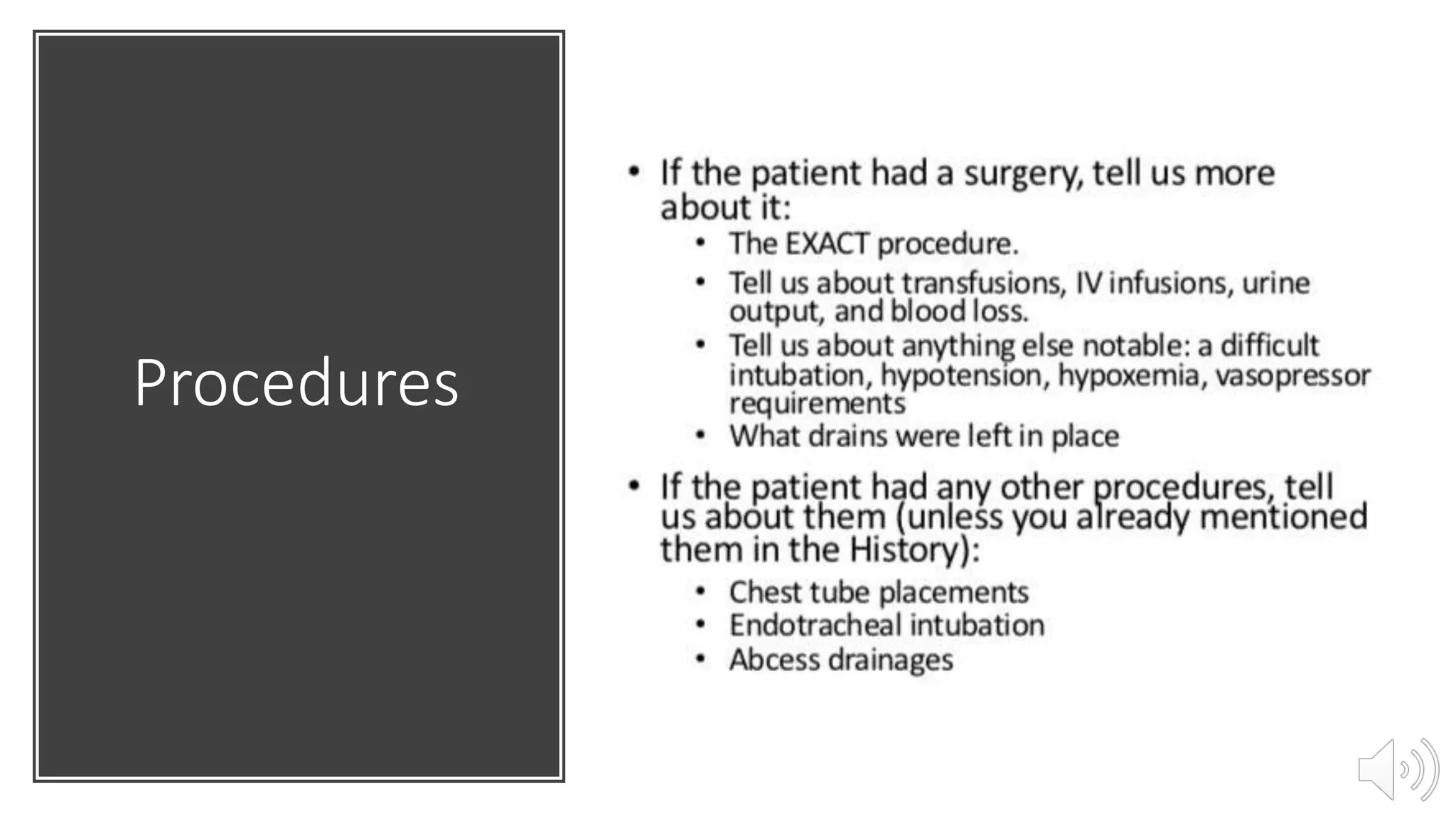
Procedures
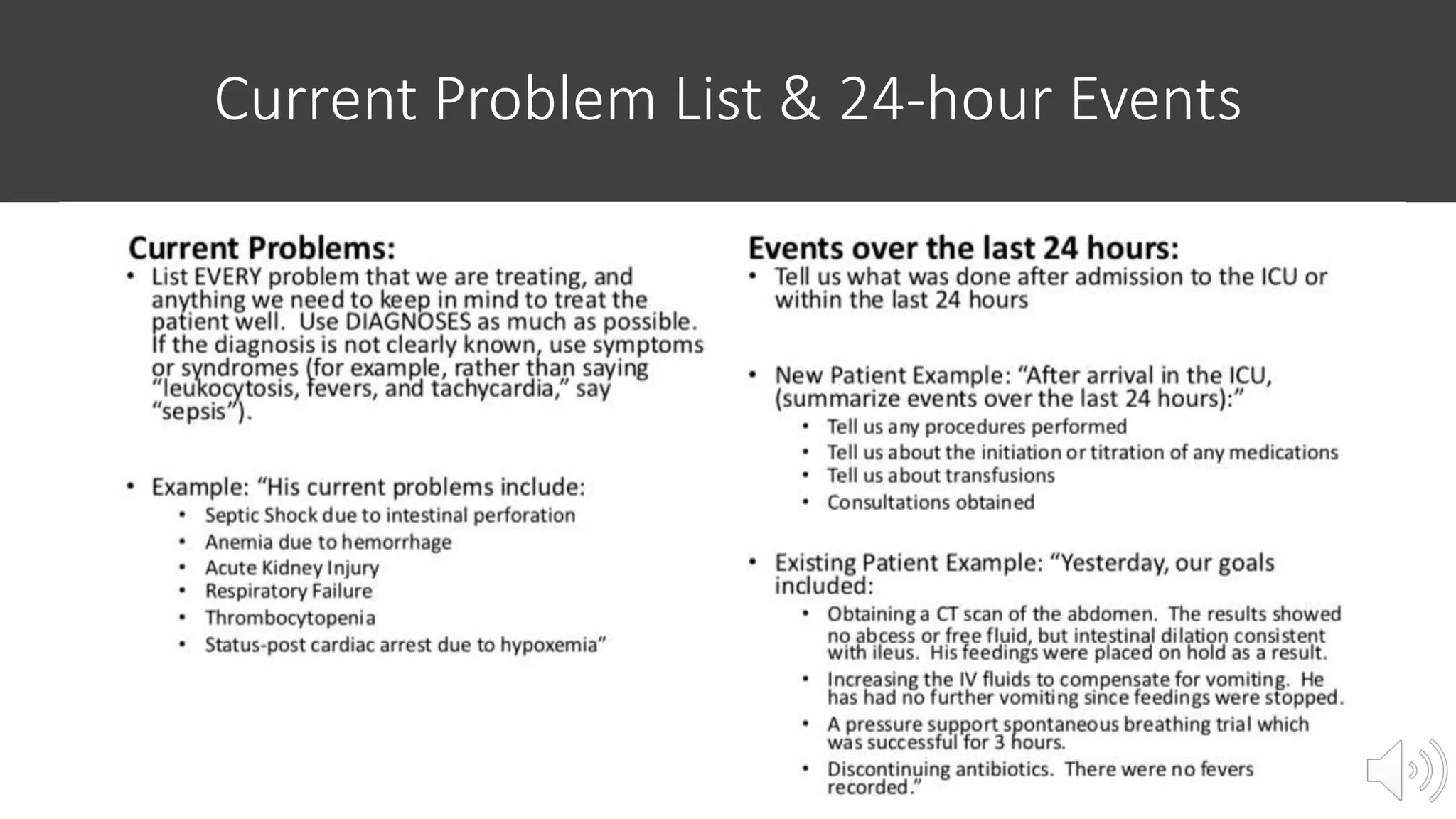
Current Problem List & 24-hour Events
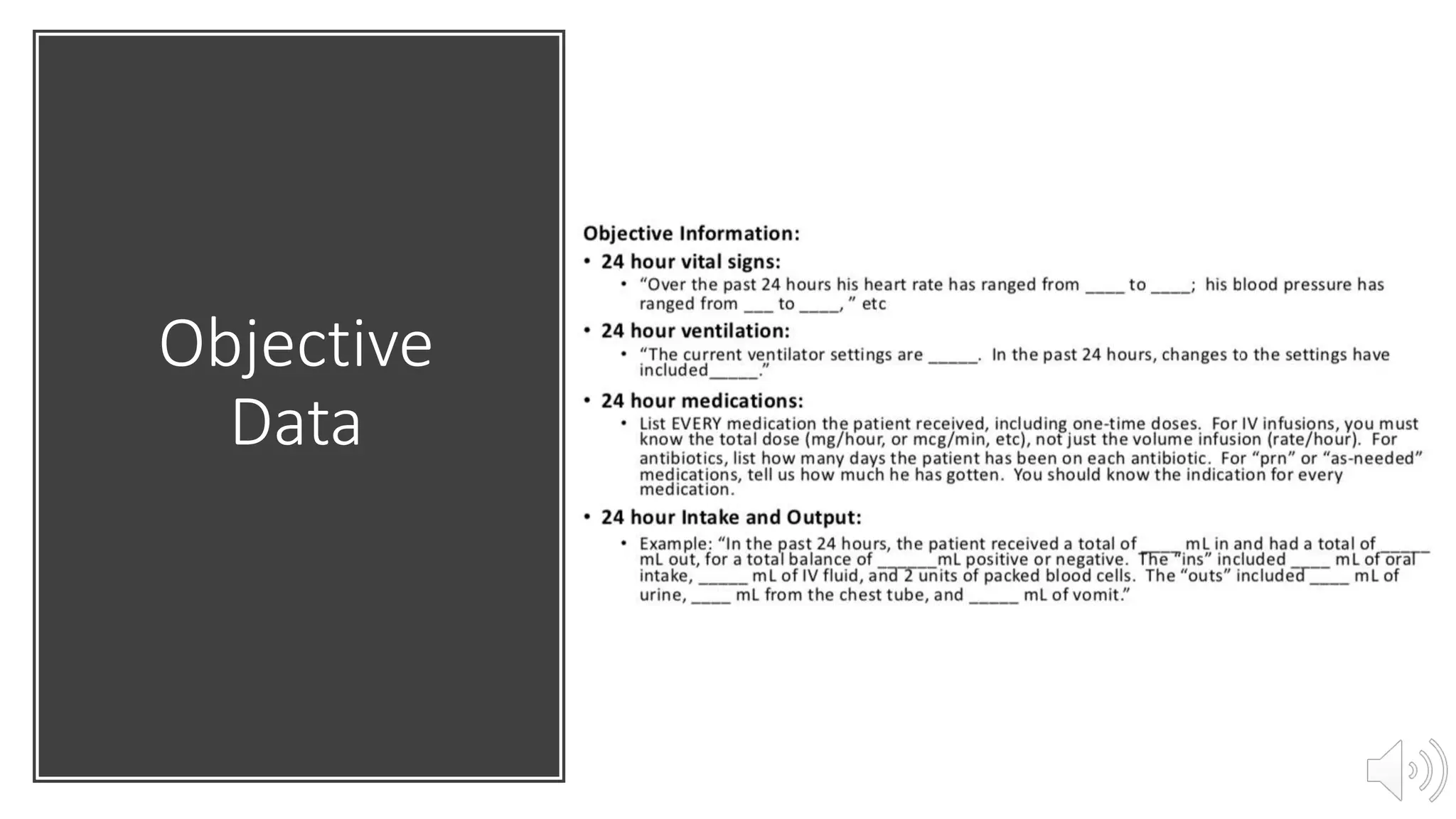
Objective
Data
Physical Exam
&
Investigations
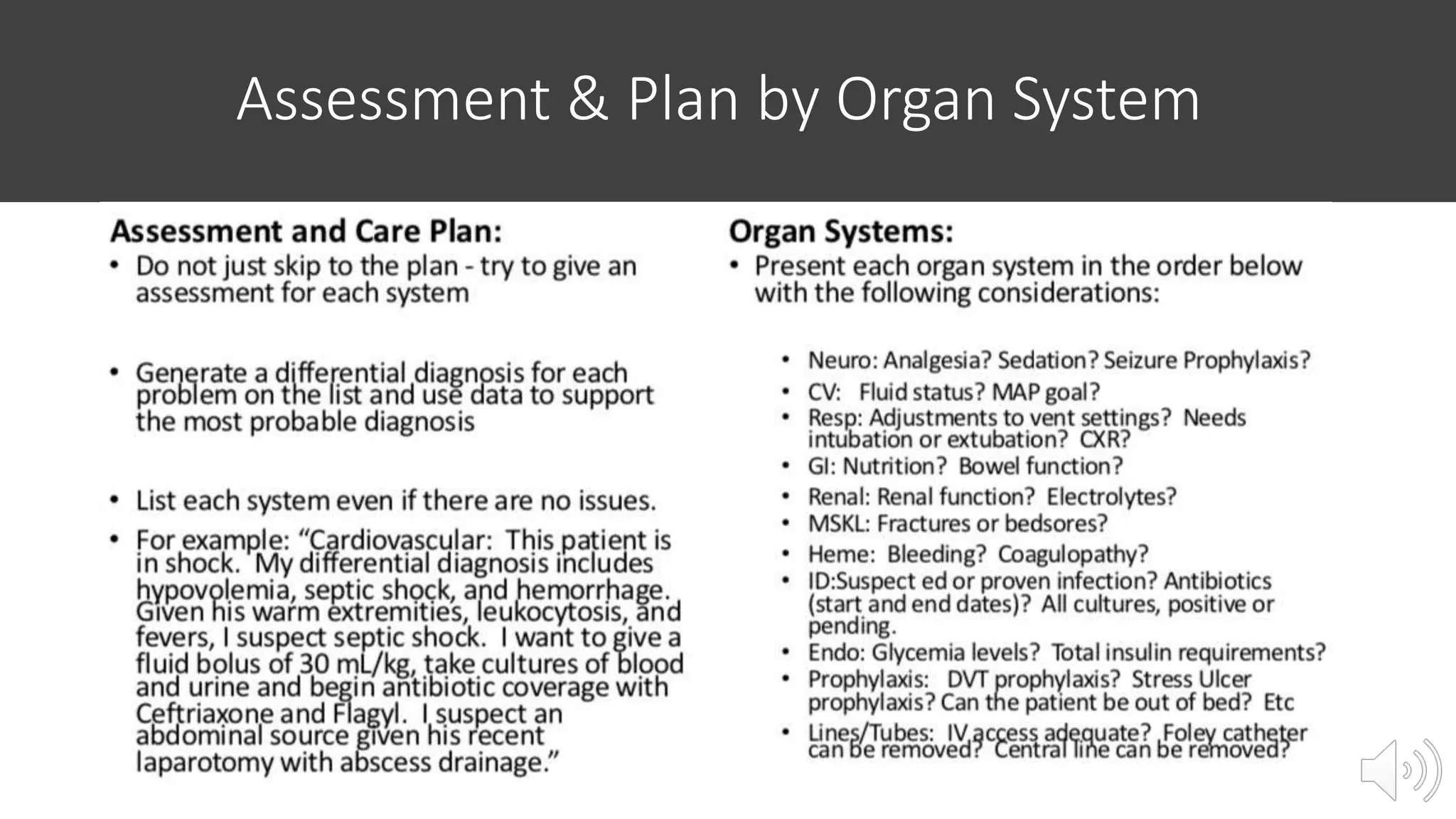
Assessment & Plan by Organ System

Presenting ICU Patients on Rounds

Editor's Notes

  • #2 Critically ill patients are complicated. Organized and systematic presentations of patients are crucial for good communication, safety, and efficient care for complex patients.
  • #3 Learners in the ICU must understand how to be both thorough and efficient when presenting their patients. This come through taking ownership of the patients’ hospital course and engagement with the patients’ care plans. ICU patient presentations, whether on rounds, during sign out, or when transferring a patient to another medical service, are usually organized using an organ system-based format. Using a note template can assist learners in both gathering and presenting relevant information.
  • #4 This is one example of a note template that learners can use to gather patient information and to organize data for presentation. Note a few important items: Date of hospital admission and date of ICU admission may not be the same and can tell the audience an important part of the patient’s story. Similarly, knowing the patients past medical history sets a backdrop to the current problems the patient is experiencing The events over the last 24 hours gives the team important understanding on how the patient is progressing – Is the patient getting better or worse? Where previous plans for the patient accomplished? Are there any new events or complications of concern? Current medications must be reported paying special attention to prophylaxis for DVT/PE and stress ulcers as well as good antibiotic stewardship. If the patient requires vasoactive drips, knowing whether the doses are increasing or decreasing is also key to understand for the patient’s progress and recovery Reporting mechanical ventilation settings also helps the team understand whether the patient is improving and requiring less support or worsening and requiring more support. Reporting the mode of ventilation, the FiO2, the PEEP, peak inspiratory pressures, and the patient’s work of breathing on physical exam are all important pieces of information. If the patient underwent a spontaneous breathing trial, then knowing the results of the rapid shallow breathing index is important for determining success of liberation from the mechanical ventilator Fluid status or balance on intake versus output should be reported daily as it is valuable information for understanding good perfusion, urine output, and hemodynamic status. Noting any invasive lines, tubes, or drains and whether they are still necessary is important for preventing iatrogenic infections.
  • #5 36-year old male w/ a hh/o DM who was admitted to the hospital on 12/25 with N/V symptoms. His diagnostic workup included cbc, metabolic profile, and ct of A/P, and he was treated for DKA with fluids and insulin infusion. We were called to evaluate him for admission to the ICU because of AMS and AG Met Acidosis.
  • #10 Finally, the assessment and plan must be presented by organ system. Assessments should include differential diagnoses for each problem and include supporting data. Developing broad differential diagnoses, listed by most probable, is the goal for early learners. As your understanding of critical care increases, your focus will shift to the most likely disease process etiologies and developing sound critical care plans. Senior learners, experienced ICU nurses and ICU trained physicians are your mentors and teachers, but you control how much you learn while engaging on rounds and through independent studying