F. Tuna Burgut, M.D. 
Assoc. Professor of Psychiatry 
tunaburgut@gmail.com
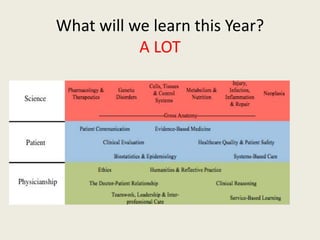
What will we learn this Year? 
A LOT
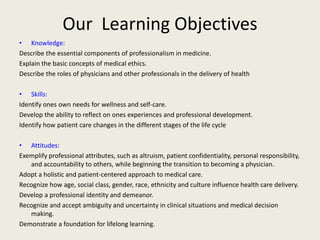
Our Learning Objectives 
• Knowledge: 
Describe the essential components of professionalism in medicine. 
Explain the basic concepts of medical ethics. 
Describe the roles of physicians and other professionals in the delivery of health 
• Skills: 
Identify ones own needs for wellness and self-care. 
Develop the ability to reflect on ones experiences and professional development. 
Identify how patient care changes in the different stages of the life cycle 
• Attitudes: 
Exemplify professional attributes, such as altruism, patient confidentiality, personal responsibility, 
and accountability to others, while beginning the transition to becoming a physician. 
Adopt a holistic and patient-centered approach to medical care. 
Recognize how age, social class, gender, race, ethnicity and culture influence health care delivery. 
Develop a professional identity and demeanor. 
Recognize and accept ambiguity and uncertainty in clinical situations and medical decision 
making. 
Demonstrate a foundation for lifelong learning.
“Physicianship” is the special skill 
set needed by physicians, such as 
communication, medical ethics, 
and professionalism.
Physicianship 
• Communication 
• Patient-Physician Relationship 
• Professionalism 
• Medical Interviewing 
• Reflection 
• Life Cycles 
• Chronic Illness 
• Cultural Competence 
• Difficult Socio-Medical Issues
• This course is an introduction to clinical medicine 
and thus, the foundation for building competence 
in patient care, medical knowledge, 
professionalism, practice-based learning, 
communication skills and systems-based practice. 
Skills in medical interviewing and reflective 
practice are developed and related to the 
following content areas: the patient-physician 
relationship, the life-cycle, chronic illness, 
nutrition, cultural competence and socio-medical 
issues.
TOPICS RELATED TO EVERY ORGAN SYSTEM 
• Gender, ethnic, and behavioral considerations affecting disease treatment 
and prevention, including psychosocial, cultural, occupational, and 
environmental factors 
• emotional and behavioral factors 
• influence on person, family, and society 
• occupational and other environmental risk factors 
• gender and ethnic factors 
In the Reproductive system items discussed will include: 
• family planning and pregnancy 
• gender identity, sexual orientation, sexuality, libido 
• effects of traumatic stress syndrome, violence, rape, child abuse
Introduction to Behavioral Sciences 
• Historical models of the mind 
• Temperament and Personality 
• Introductory Affective neuroscience 
• How to become more Resilient?
How will we do this? 
• Lectures 
• Role Play 
• Interviews with patients 
• Video clips
Communication Skills 
• The ability to communicate is recognized to be 
one of the key components of effective medical 
practice. 
• Evidence-based studies show that effective 
interpersonal and communication skills are 
associated with improved health outcomes 
(Stewart, 1995; Stewart et al., 1999). 
• Ineffective communication skills are associated 
with malpractice claims and suits (Levinson et al., 
1997) and medication errors.
Communication skills in medicine are learnt slowly and 
often only by experience. 
 Graduates should be able to: ‘Communicate effectively 
with patients and colleagues in a medical context’. 
 This should include skills such as; clear, sensitive and 
effective communication. 
 The efficacy of communication should not depend on 
the age, social, cultural or ethnic backgrounds, 
disabilities of an individual. 
 The communication occurring should be effective 
within any healthcare context, including with 
vulnerable patients and not depend on the role an 
individual is fulfilling.
 Good communication between patients and doctors 
has positive effects on health and the patients' quality 
of life. Communication skills can be trained. In many 
countries communication skills training is an important 
part of medical education and continuing medical 
education. 
 During their clinical education students should be 
especially trained for difficult situations in the patient-doctor 
encounter. 
 Communication training or experiences in 'real life' 
settings are provided every year of the medical 
curriculum. The training starts with simple basic skills 
but gradually slips into medical communication or 
consultation training and results in communication in 
different contextual situations or with special groups of 
patients. Rehearsal is important and seen as inevitable. 
 Skills are trained in small groups (10-15 students), with 
focus on role-playing
Our focus here is on the physician-patient 
relationship. We will explore such topics as 
communication 
-professionalism 
-clinical reasoning 
-forming a rapport with the patient 
-understanding the patient's perspective, 
medicine and culture 
-the social history 
-patient education and adherence. 
In your Skills Groups, you will practice portions of 
the medical interview, and you will begin talking 
to patients in your office preceptor sessions.
• Non-Verbal Communication…very important 
• Verbal Communication
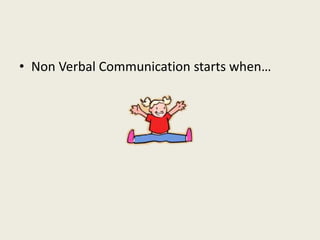
• Non Verbal Communication starts when…
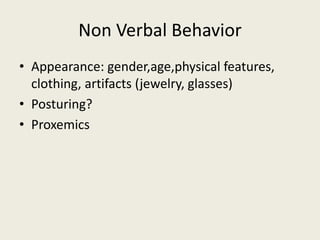
Non Verbal Behavior 
• Appearance: gender,age,physical features, 
clothing, artifacts (jewelry, glasses) 
• Posturing? 
• Proxemics
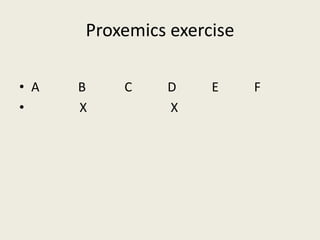
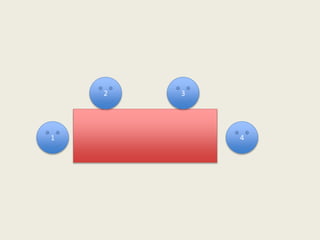
Proxemics exercise 
• A B C D E F 
• X X
2 3 
1 4
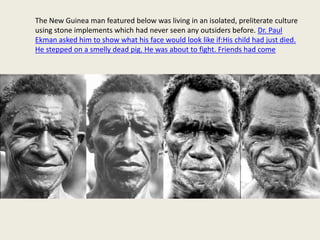
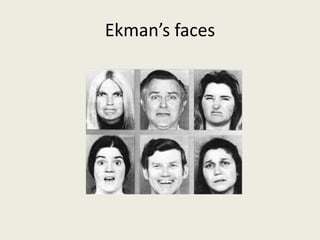
The New Guinea man featured below was living in an isolated, preliterate culture 
using stone implements which had never seen any outsiders before. Dr. Paul 
Ekman asked him to show what his face would look like if:His child had just died. 
He stepped on a smelly dead pig. He was about to fight. Friends had come
Ekman’s faces
Presentation.sept 17

Presentation.sept 17

  • 1.
    F. Tuna Burgut,M.D. Assoc. Professor of Psychiatry tunaburgut@gmail.com
  • 2.
    What will welearn this Year? A LOT
  • 3.
    Our Learning Objectives • Knowledge: Describe the essential components of professionalism in medicine. Explain the basic concepts of medical ethics. Describe the roles of physicians and other professionals in the delivery of health • Skills: Identify ones own needs for wellness and self-care. Develop the ability to reflect on ones experiences and professional development. Identify how patient care changes in the different stages of the life cycle • Attitudes: Exemplify professional attributes, such as altruism, patient confidentiality, personal responsibility, and accountability to others, while beginning the transition to becoming a physician. Adopt a holistic and patient-centered approach to medical care. Recognize how age, social class, gender, race, ethnicity and culture influence health care delivery. Develop a professional identity and demeanor. Recognize and accept ambiguity and uncertainty in clinical situations and medical decision making. Demonstrate a foundation for lifelong learning.
  • 4.
    “Physicianship” is thespecial skill set needed by physicians, such as communication, medical ethics, and professionalism.
  • 5.
    Physicianship • Communication • Patient-Physician Relationship • Professionalism • Medical Interviewing • Reflection • Life Cycles • Chronic Illness • Cultural Competence • Difficult Socio-Medical Issues
  • 6.
    • This courseis an introduction to clinical medicine and thus, the foundation for building competence in patient care, medical knowledge, professionalism, practice-based learning, communication skills and systems-based practice. Skills in medical interviewing and reflective practice are developed and related to the following content areas: the patient-physician relationship, the life-cycle, chronic illness, nutrition, cultural competence and socio-medical issues.
  • 7.
    TOPICS RELATED TOEVERY ORGAN SYSTEM • Gender, ethnic, and behavioral considerations affecting disease treatment and prevention, including psychosocial, cultural, occupational, and environmental factors • emotional and behavioral factors • influence on person, family, and society • occupational and other environmental risk factors • gender and ethnic factors In the Reproductive system items discussed will include: • family planning and pregnancy • gender identity, sexual orientation, sexuality, libido • effects of traumatic stress syndrome, violence, rape, child abuse
  • 8.
    Introduction to BehavioralSciences • Historical models of the mind • Temperament and Personality • Introductory Affective neuroscience • How to become more Resilient?
  • 9.
    How will wedo this? • Lectures • Role Play • Interviews with patients • Video clips
  • 10.
    Communication Skills •The ability to communicate is recognized to be one of the key components of effective medical practice. • Evidence-based studies show that effective interpersonal and communication skills are associated with improved health outcomes (Stewart, 1995; Stewart et al., 1999). • Ineffective communication skills are associated with malpractice claims and suits (Levinson et al., 1997) and medication errors.
  • 11.
    Communication skills inmedicine are learnt slowly and often only by experience.  Graduates should be able to: ‘Communicate effectively with patients and colleagues in a medical context’.  This should include skills such as; clear, sensitive and effective communication.  The efficacy of communication should not depend on the age, social, cultural or ethnic backgrounds, disabilities of an individual.  The communication occurring should be effective within any healthcare context, including with vulnerable patients and not depend on the role an individual is fulfilling.
  • 12.
     Good communicationbetween patients and doctors has positive effects on health and the patients' quality of life. Communication skills can be trained. In many countries communication skills training is an important part of medical education and continuing medical education.  During their clinical education students should be especially trained for difficult situations in the patient-doctor encounter.  Communication training or experiences in 'real life' settings are provided every year of the medical curriculum. The training starts with simple basic skills but gradually slips into medical communication or consultation training and results in communication in different contextual situations or with special groups of patients. Rehearsal is important and seen as inevitable.  Skills are trained in small groups (10-15 students), with focus on role-playing
  • 13.
    Our focus hereis on the physician-patient relationship. We will explore such topics as communication -professionalism -clinical reasoning -forming a rapport with the patient -understanding the patient's perspective, medicine and culture -the social history -patient education and adherence. In your Skills Groups, you will practice portions of the medical interview, and you will begin talking to patients in your office preceptor sessions.
  • 14.
    • Non-Verbal Communication…veryimportant • Verbal Communication
  • 15.
    • Non VerbalCommunication starts when…
  • 16.
    Non Verbal Behavior • Appearance: gender,age,physical features, clothing, artifacts (jewelry, glasses) • Posturing? • Proxemics
  • 17.
    Proxemics exercise •A B C D E F • X X
  • 18.
  • 19.
    The New Guineaman featured below was living in an isolated, preliterate culture using stone implements which had never seen any outsiders before. Dr. Paul Ekman asked him to show what his face would look like if:His child had just died. He stepped on a smelly dead pig. He was about to fight. Friends had come
  • 20.