BEHAVIORAL SCIENCE
Dr. Dalia El-Shafei
Assistant professor, Community Medicine Department, Zagazig University
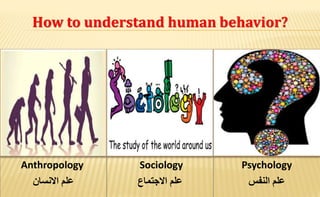
How to understand human behavior?
Anthropology
‫االنسان‬ ‫علم‬
Sociology
‫االجتماع‬ ‫علم‬
Psychology
‫النفس‬ ‫علم‬
Aim
Health
Promotion
Understand social
context of health
& disease
Improving
doctor-patient
interaction
HEALTH PROBLEM
Risk factor
• Before disease
actually occurs
Screening
• After occurrence
of disease but
before symptoms
appear
C/P
• Symptom &
Signs of a
disease
Complication
• Consequence of
the disease
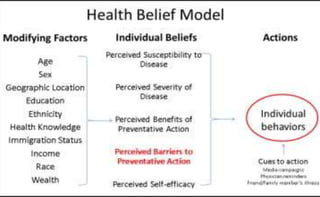
HEALTH BELIEF MODEL
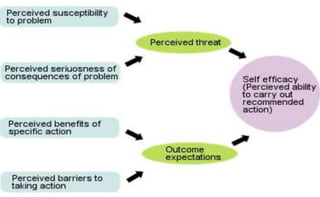
HBM can explain:
• People's perception.
• Behavior towards it [susceptible].
Illness
• Severity.
• Seriousness.
Realize
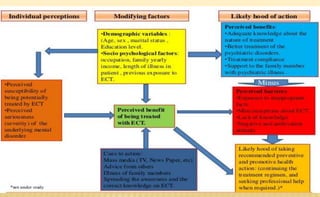
• Demographic & psychological V.
• Perception of benefits & barriers.
Health Motivation
BACKGROUND
Theorists:
 (1950’s) Group of social psychologists
 Trying to explain why people were not participating in
disease detection programs. (TB Screening)
HBM
Perceived
Susceptibilit
y
Perceived
Severity
Perceived
Benefits
Perceived
Barriers
Cues to
action
Self-efficacy
PERCEIVED SUSCEPTIBILITY
Subjective belief that a person may acquire a disease
or enter a harmful state as a result of a particular
disease.
PERCEIVED SEVERITY
Belief in the extent of harm that can result from the
acquired disease or harmful state of a particular
behavior.
SEVERE
(death)
PERCEIVED BENEFITS
Belief in the advantages of the methods suggested for
reducing the risk or seriousness of the disease of
harmful state from a particular behavior.
PERCEIVED BARRIERS
 Concern that the new behavior will take too much
time.
 Their belief could be actual or imagined.
SELF-EFFICACY
Confidence in a persons
ability to purse a
behavior
CUES TO ACTION
To cause a force that would make a person
feel the need to take action.
 Advice from a doctor, or friends or propaganda
1ry Prevention example for HBM
Should I get the H1N1
vaccination?
CONSTRUCTS & APPLICATIONS
 Perceived
susceptibility
 How likely is it I will get
swine flu?
Perceived
severity
Perceived
benefits
How bad would it be if I
did?
What do I gain by
getting the shot?
CONSTRUCTS & APPLICATIONS
 Perceived
Barriers
 Is it available-
what’s the cost?
Cues to
Action
Self Efficacy
Posters, Emails,
commercials
I am confident I can
be healthy
HBM IN HEART CONDITION
Chest pain sometimes affect performance
(Perception) of risk & its seriousness
Middle aged male with stressful life
Changing risky behavior
Demographic & social variables
Motivating health behavior
Perception of benefits
Realize they adopt a healthy behavior (enjoy life, carry work & not get ill)
Perception of barriers
A friend or a doctor warned him that he is at increasing risk to become
ill
Cues for Action
Work commitments reduce time for sports social events &
fast food eating
STAGES OF CHANGING HEALTH BEHAVIOR
Action
Maintenance
Relapse
Contemplation
Commitment
Exit
Maintain safe
life
Pre-contemplation
PRE CONTEMPLATION STAGE
Person has no awareness or
no motivation for the need
to change habits or lifestyle
CONTEMPLATION STAGE
People enter this stage when
they are thinking about
change or have enough
motivation to enter the cycle.
COMMITMENT “PREPARATION” STAGE
Willing to make serious
decision to change.
ACTION STAGE
Actively begin to
change.
MAINTENANCE STAGE
People struggle to
maintain change.
RELAPSE STAGE
Early exit from the cycle due to false belief of
satisfaction.
EXIT STAGE
People are settled into changed
behavior & can exit the cycle
from the revolving door
ILLNESS BEHAVIOR
ILLNESS BEHAVIOR
DEFINITION:
How the patient
Think ... Feel & React
when he develop any symptom
React
Doing nothing Self treatment Consulting
Feel
Worried or angry Blaming himself Blaming others
Think
Is it self-limiting? Is it serious? Is it very serious?
Patient has symptom
(Pain … Disfigurement …malfunction )
Only Minorityof the
patients visit their physicians
Majorityof the
patients are in the
community
The Tip of The Iceberg
• I am a patient
• I am weak
• I need help
It is not easy to show your weakness
Why patients may deny their Illness?
PRESENTATION OF SYMPTOMS
Evaluation of symptoms that require further action (illness behavior).
Explore seriousness through
Severity Familiarity of symptoms Duration of frequency
Interpretation of ill health symptom.
Perceiving any change or deviation of body functions.
VARIABLES INFLUENCE ILLNESS BEHAVIOR
Visibility of
symptoms & signs.
Extent to perceive
as serious.
Extent to disrupt
normal life.
Persistence &
frequency.
Personal tolerance.
Available
knowledge &
cultural
assumptions
towards symptoms.
Needs to denial or
compete with
illness.
Interpretation of
symptoms (stigma).
Understanding of
health providers.
Availability of
suitable health
service.
PATIENT
COMPLIANCE
A CHRONIC PROBLEM!!
Hippocrates once wrote that
patients often lied about taking
their medicine.
Adherence to medication was a big
problem then, and still is today.
Hippocrates of Cos
(ca. 460 BC – ca. 370 BC) Greek:
Ἱπποκράτης
PATIENT COMPLIANCE
(ADHERENCE OR CAPACITANCE)
 Patient compliance describes the degree to which a patient
correctly follows medical advice.
 Most commonly, it refers to medication or drug compliance,
but it can also apply to other situations such as medical device
use, self care, self-directed exercises, or therapy sessions
PATIENT’S COMPLIANCE
Adherence to the advice of health care professionals
Preventive health
behavior
Keeping medical
appointments
Self care actions Taking
medications as
directed
PATIENT’S INCOMPLIANCE
 Almost 50% of prescribed medications have health
impacts.
 Doctors may be effective with only with 55-60% of pts.
 Pts may become ill due to non adherence.
10-25% of hospital admission due to non
adherence
CATEGORIES OF MEDICATION NON-ADHERENCE
NO PRESCRIPTION
PRIMARY
• INTENTIONAL
• UNINTENTIONAL
SECONDARY
FACTORS ASSOCIATED WITH ADHERENCE
1st
• Pts has to understand what they are really asked
to do.
2nd
• Pts must remember what they are told.
3rd
• Pts must be satisfied with the doctor &
consultation.
COMPLIANCE AIDS
Behavioral science

Behavioral science

  • 1.
    BEHAVIORAL SCIENCE Dr. DaliaEl-Shafei Assistant professor, Community Medicine Department, Zagazig University
  • 2.
    How to understandhuman behavior? Anthropology ‫االنسان‬ ‫علم‬ Sociology ‫االجتماع‬ ‫علم‬ Psychology ‫النفس‬ ‫علم‬
  • 3.
    Aim Health Promotion Understand social context ofhealth & disease Improving doctor-patient interaction
  • 4.
    HEALTH PROBLEM Risk factor •Before disease actually occurs Screening • After occurrence of disease but before symptoms appear C/P • Symptom & Signs of a disease Complication • Consequence of the disease
  • 5.
  • 6.
    HBM can explain: •People's perception. • Behavior towards it [susceptible]. Illness • Severity. • Seriousness. Realize • Demographic & psychological V. • Perception of benefits & barriers. Health Motivation
  • 7.
    BACKGROUND Theorists:  (1950’s) Groupof social psychologists  Trying to explain why people were not participating in disease detection programs. (TB Screening)
  • 8.
  • 10.
    PERCEIVED SUSCEPTIBILITY Subjective beliefthat a person may acquire a disease or enter a harmful state as a result of a particular disease.
  • 11.
    PERCEIVED SEVERITY Belief inthe extent of harm that can result from the acquired disease or harmful state of a particular behavior. SEVERE (death)
  • 12.
    PERCEIVED BENEFITS Belief inthe advantages of the methods suggested for reducing the risk or seriousness of the disease of harmful state from a particular behavior.
  • 13.
    PERCEIVED BARRIERS  Concernthat the new behavior will take too much time.  Their belief could be actual or imagined.
  • 14.
    SELF-EFFICACY Confidence in apersons ability to purse a behavior
  • 15.
    CUES TO ACTION Tocause a force that would make a person feel the need to take action.  Advice from a doctor, or friends or propaganda
  • 19.
    1ry Prevention examplefor HBM Should I get the H1N1 vaccination?
  • 20.
    CONSTRUCTS & APPLICATIONS Perceived susceptibility  How likely is it I will get swine flu? Perceived severity Perceived benefits How bad would it be if I did? What do I gain by getting the shot?
  • 21.
    CONSTRUCTS & APPLICATIONS Perceived Barriers  Is it available- what’s the cost? Cues to Action Self Efficacy Posters, Emails, commercials I am confident I can be healthy
  • 22.
    HBM IN HEARTCONDITION Chest pain sometimes affect performance (Perception) of risk & its seriousness Middle aged male with stressful life Changing risky behavior Demographic & social variables Motivating health behavior
  • 23.
    Perception of benefits Realizethey adopt a healthy behavior (enjoy life, carry work & not get ill) Perception of barriers A friend or a doctor warned him that he is at increasing risk to become ill Cues for Action Work commitments reduce time for sports social events & fast food eating
  • 24.
    STAGES OF CHANGINGHEALTH BEHAVIOR Action Maintenance Relapse Contemplation Commitment Exit Maintain safe life Pre-contemplation
  • 27.
    PRE CONTEMPLATION STAGE Personhas no awareness or no motivation for the need to change habits or lifestyle
  • 28.
    CONTEMPLATION STAGE People enterthis stage when they are thinking about change or have enough motivation to enter the cycle.
  • 29.
    COMMITMENT “PREPARATION” STAGE Willingto make serious decision to change.
  • 30.
  • 31.
  • 32.
    RELAPSE STAGE Early exitfrom the cycle due to false belief of satisfaction.
  • 33.
    EXIT STAGE People aresettled into changed behavior & can exit the cycle from the revolving door
  • 35.
  • 36.
    ILLNESS BEHAVIOR DEFINITION: How thepatient Think ... Feel & React when he develop any symptom
  • 38.
    React Doing nothing Selftreatment Consulting Feel Worried or angry Blaming himself Blaming others Think Is it self-limiting? Is it serious? Is it very serious? Patient has symptom (Pain … Disfigurement …malfunction )
  • 39.
    Only Minorityof the patientsvisit their physicians Majorityof the patients are in the community The Tip of The Iceberg
  • 41.
    • I ama patient • I am weak • I need help It is not easy to show your weakness Why patients may deny their Illness?
  • 42.
    PRESENTATION OF SYMPTOMS Evaluationof symptoms that require further action (illness behavior). Explore seriousness through Severity Familiarity of symptoms Duration of frequency Interpretation of ill health symptom. Perceiving any change or deviation of body functions.
  • 43.
    VARIABLES INFLUENCE ILLNESSBEHAVIOR Visibility of symptoms & signs. Extent to perceive as serious. Extent to disrupt normal life. Persistence & frequency. Personal tolerance. Available knowledge & cultural assumptions towards symptoms. Needs to denial or compete with illness. Interpretation of symptoms (stigma). Understanding of health providers. Availability of suitable health service.
  • 44.
  • 45.
    A CHRONIC PROBLEM!! Hippocratesonce wrote that patients often lied about taking their medicine. Adherence to medication was a big problem then, and still is today. Hippocrates of Cos (ca. 460 BC – ca. 370 BC) Greek: Ἱπποκράτης
  • 46.
    PATIENT COMPLIANCE (ADHERENCE ORCAPACITANCE)  Patient compliance describes the degree to which a patient correctly follows medical advice.  Most commonly, it refers to medication or drug compliance, but it can also apply to other situations such as medical device use, self care, self-directed exercises, or therapy sessions
  • 47.
    PATIENT’S COMPLIANCE Adherence tothe advice of health care professionals Preventive health behavior Keeping medical appointments Self care actions Taking medications as directed
  • 48.
    PATIENT’S INCOMPLIANCE  Almost50% of prescribed medications have health impacts.  Doctors may be effective with only with 55-60% of pts.  Pts may become ill due to non adherence. 10-25% of hospital admission due to non adherence
  • 49.
    CATEGORIES OF MEDICATIONNON-ADHERENCE NO PRESCRIPTION PRIMARY • INTENTIONAL • UNINTENTIONAL SECONDARY
  • 50.
    FACTORS ASSOCIATED WITHADHERENCE 1st • Pts has to understand what they are really asked to do. 2nd • Pts must remember what they are told. 3rd • Pts must be satisfied with the doctor & consultation.
  • 51.