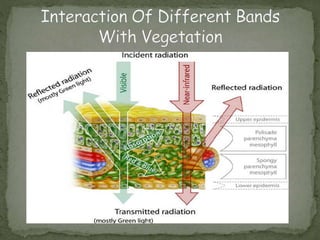
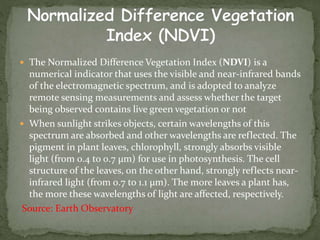
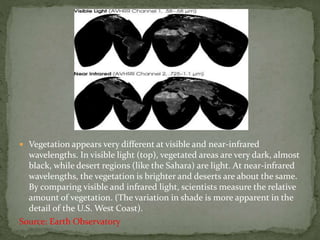
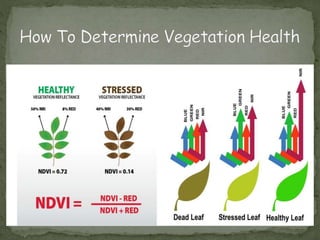
The document discusses the Normalized Difference Vegetation Index (NDVI), which uses visible and near-infrared light to analyze remote sensing data and determine the presence of live green vegetation. NDVI values increase with more vegetation, as leaves strongly absorb visible light and reflect near-infrared light. However, at very high vegetation levels, small NDVI changes may represent large changes in plants. NDVI values can also be influenced by soil, particularly in areas with 45-70% plant coverage, leading to soil-adjusted vegetation indices being developed.




![[DSC Europe 22] Crop type clustering using NDVI - Bright Aboh](https://cdn.slidesharecdn.com/ss_thumbnails/brightabohcroptypeclusteringusingndvi-221129232348-1e881098-thumbnail.jpg?width=640&height=640&fit=bounds)
