Revision of National Vegetation Mapping in Wales using eCognition Professor Richard Lucas University of Wales, Aberystwyth In collaboration with Environment Systems Countryside Council of Wales Definiens
Overview Habitat Mapping in Wales The Phase 1 Survey The Berwyn Mountains:  A pilot for satellite-based mapping Mapping habitats in Wales using Definiens Developer Pre-processing Segmentation and integration of GI Classification (sub-habitats) Transferring to Phase 1  Map production The Concept of a Rolling Program
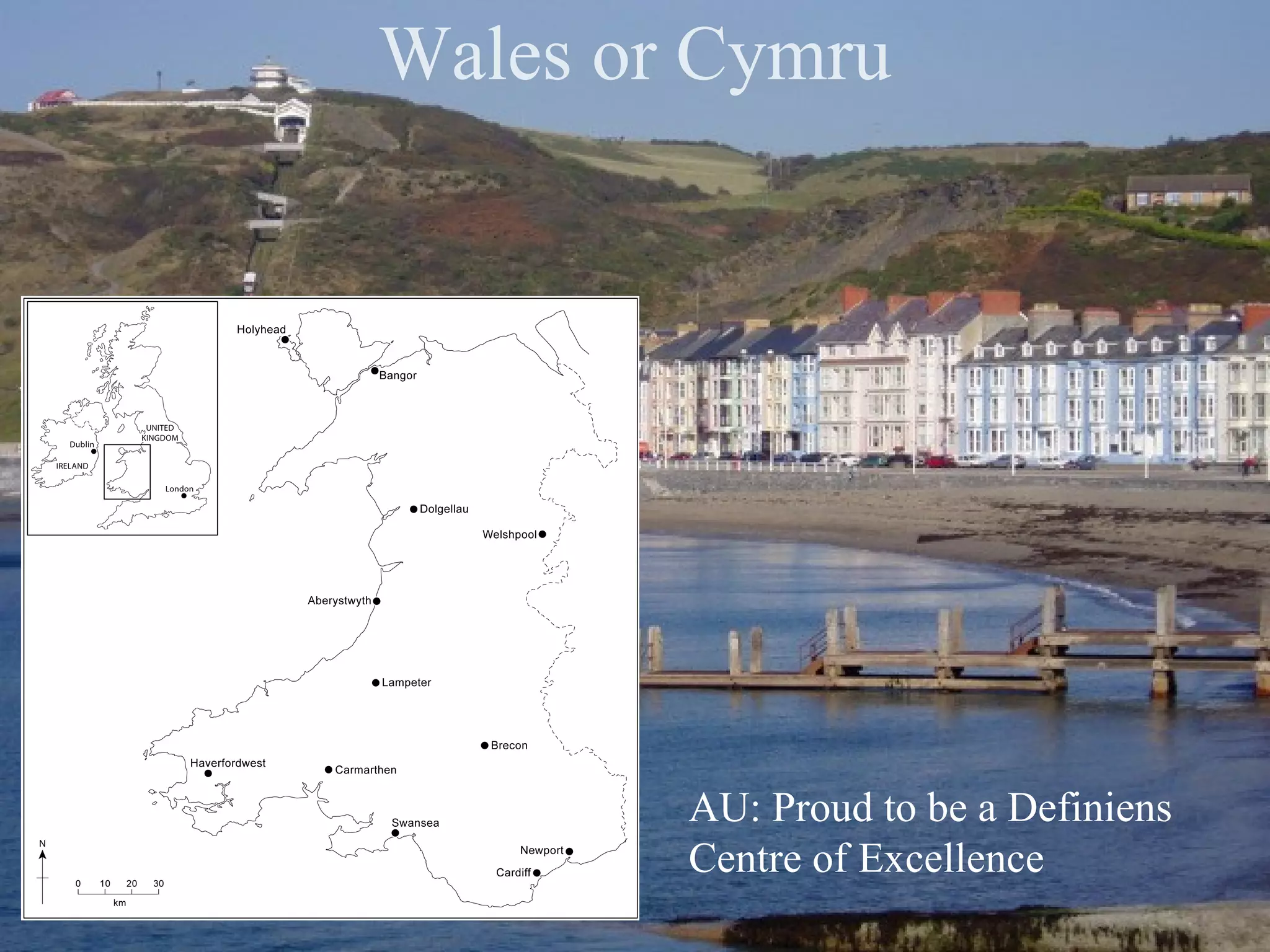
Wales or Cymru AU: Proud to be a Definiens  Centre of Excellence
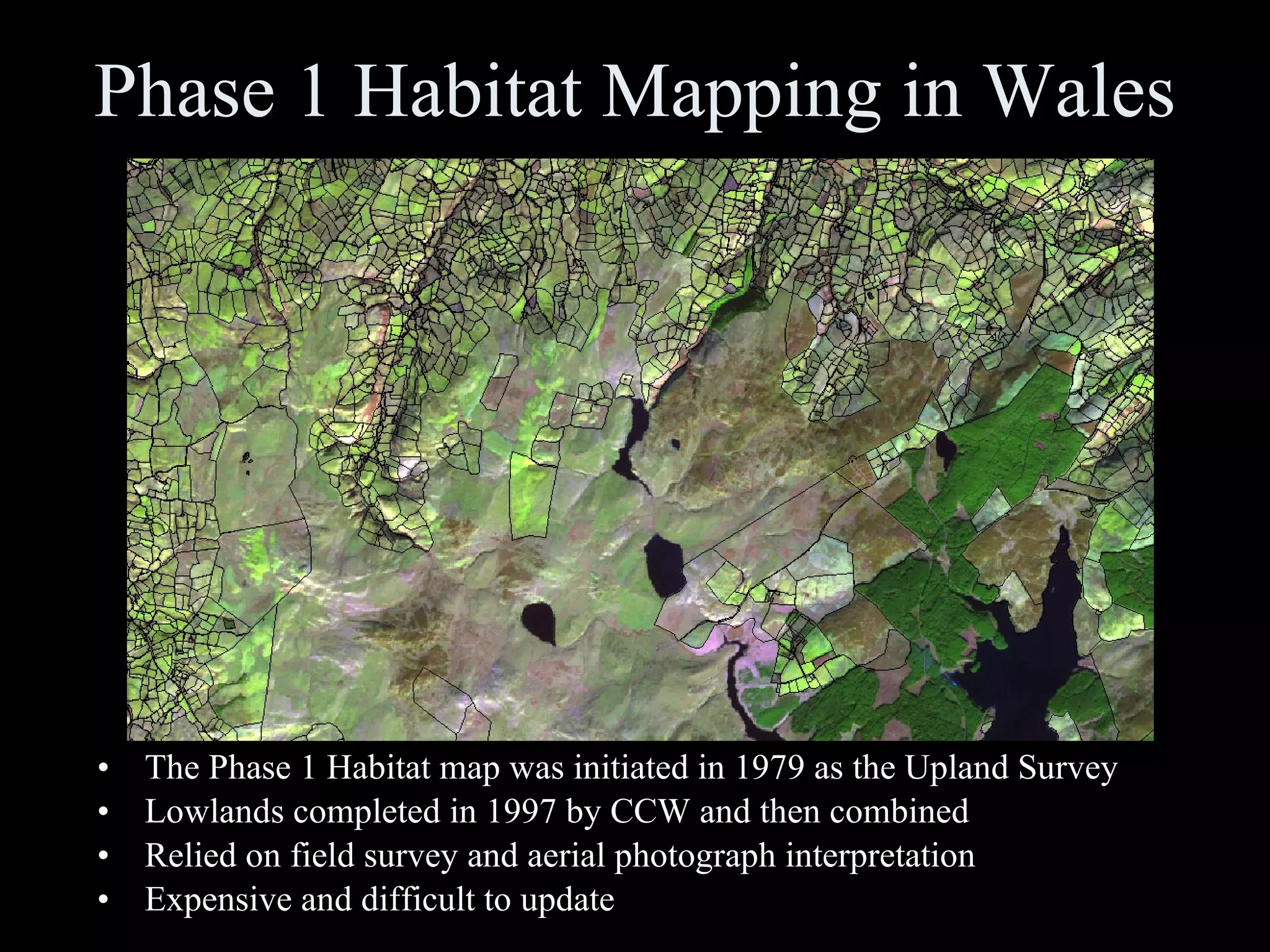
Phase 1 Habitat Mapping in Wales The Phase 1 Habitat map was initiated in 1979 as the Upland Survey Lowlands completed in 1997 by CCW and then combined  Relied on field survey and aerial photograph interpretation Expensive and difficult to update
What do ecologists observe? Vegetation changes with season Temporal variations in leafing and leaf fall, flowering and land management practices. Vegetation variations with terrain Differences in vegetation type and environmental response with elevation, slope, aspect, morphology Relative degrees of variation in: Moisture content Surface roughness (manifested as shade) Productivity Proportions of live and dead material Amount of woody material (i.e., biomass) Plants of different species are visually different to the human eye
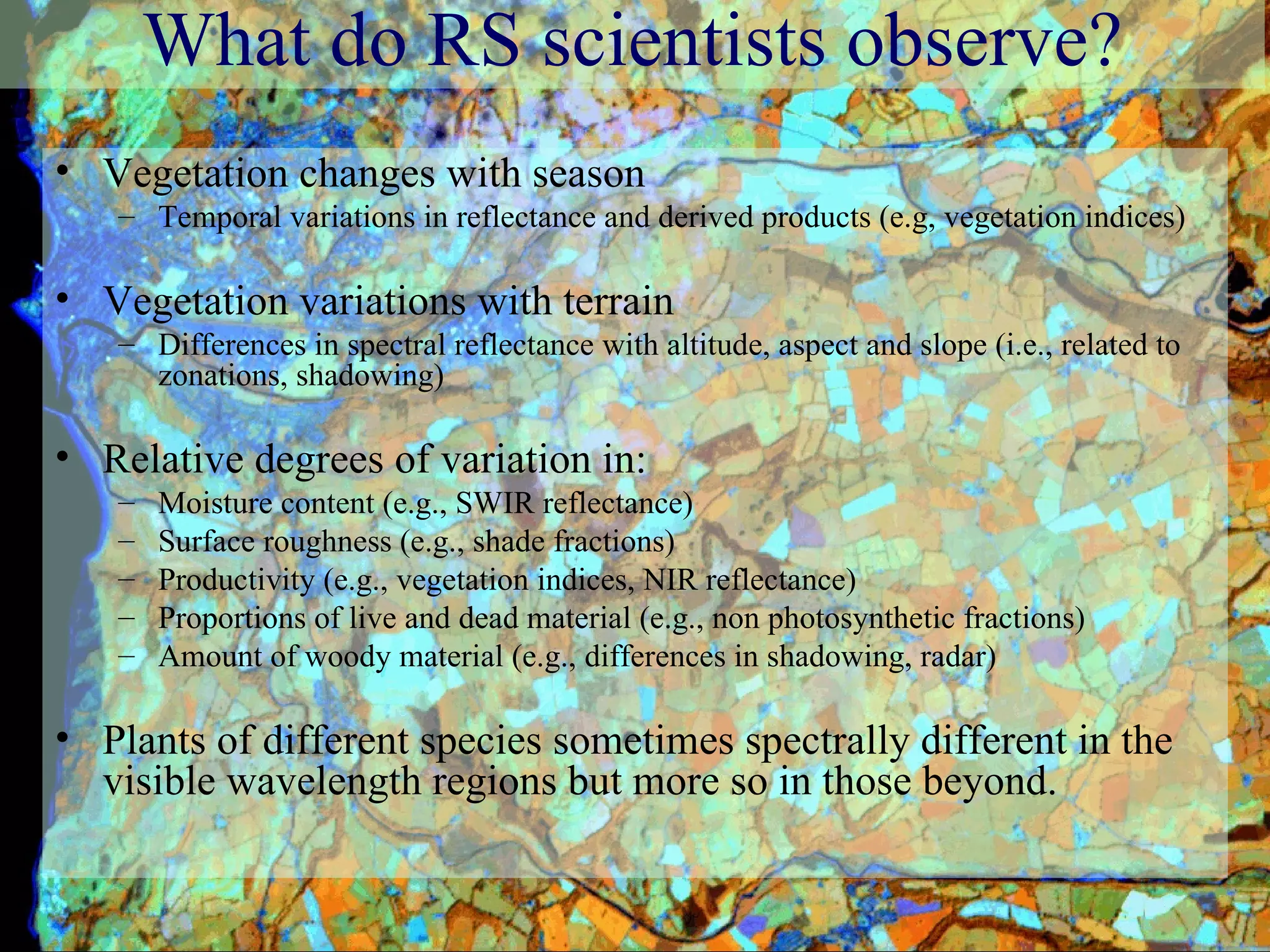
What do RS scientists observe? Vegetation changes with season Temporal variations in reflectance and derived products (e.g, vegetation indices) Vegetation variations with terrain Differences in spectral reflectance with altitude, aspect and slope (i.e., related to zonations, shadowing) Relative degrees of variation in:  Moisture content (e.g., SWIR reflectance) Surface roughness (e.g., shade fractions) Productivity (e.g., vegetation indices, NIR reflectance) Proportions of live and dead material (e.g., non photosynthetic fractions) Amount of woody material (e.g., differences in shadowing, radar) Plants of different species sometimes spectrally different in the visible wavelength regions but more so in those beyond.
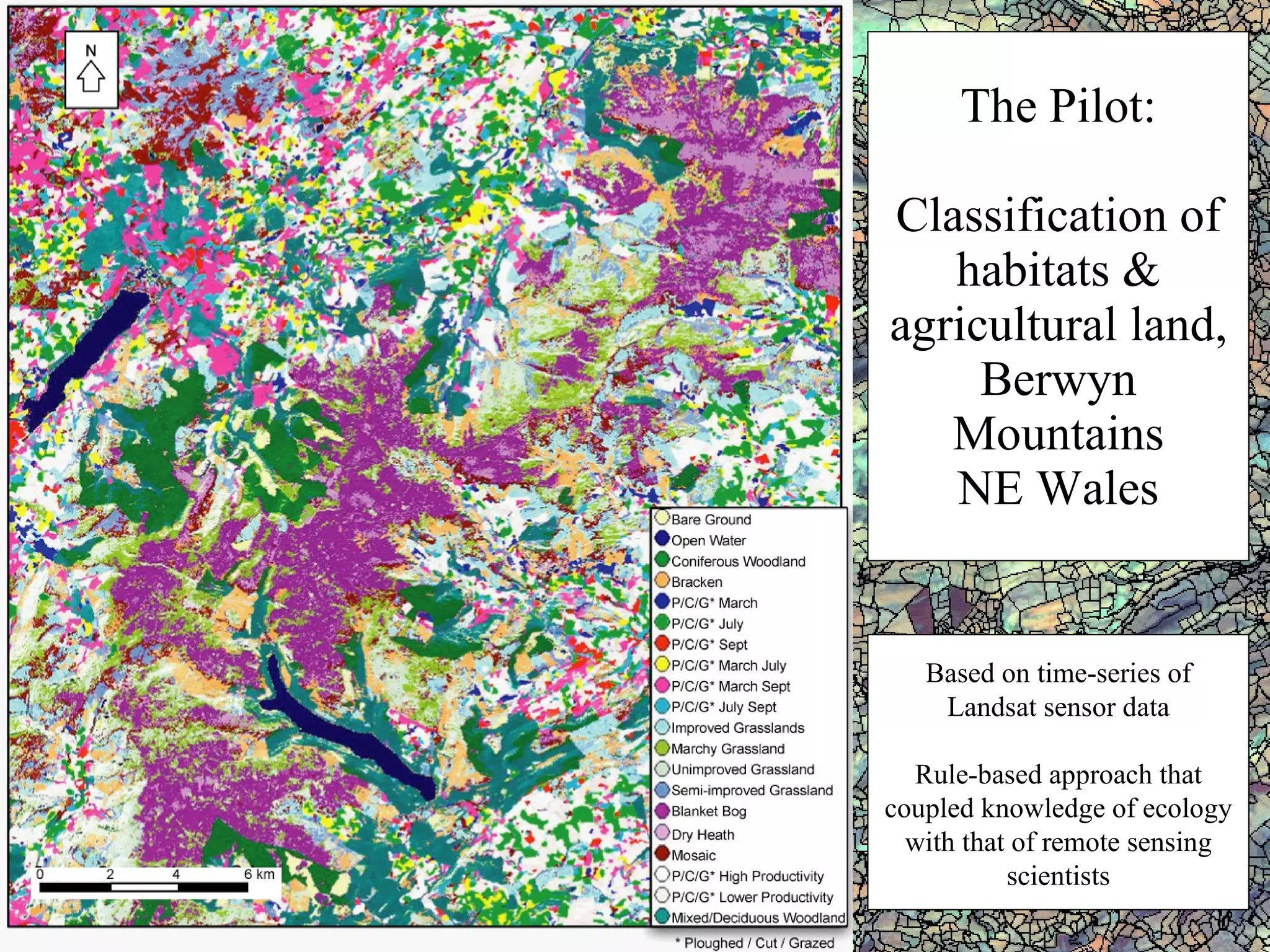
The Pilot: Classification of habitats & agricultural land, Berwyn Mountains NE Wales Based on time-series of Landsat sensor data Rule-based approach that coupled knowledge of ecology with that of remote sensing scientists
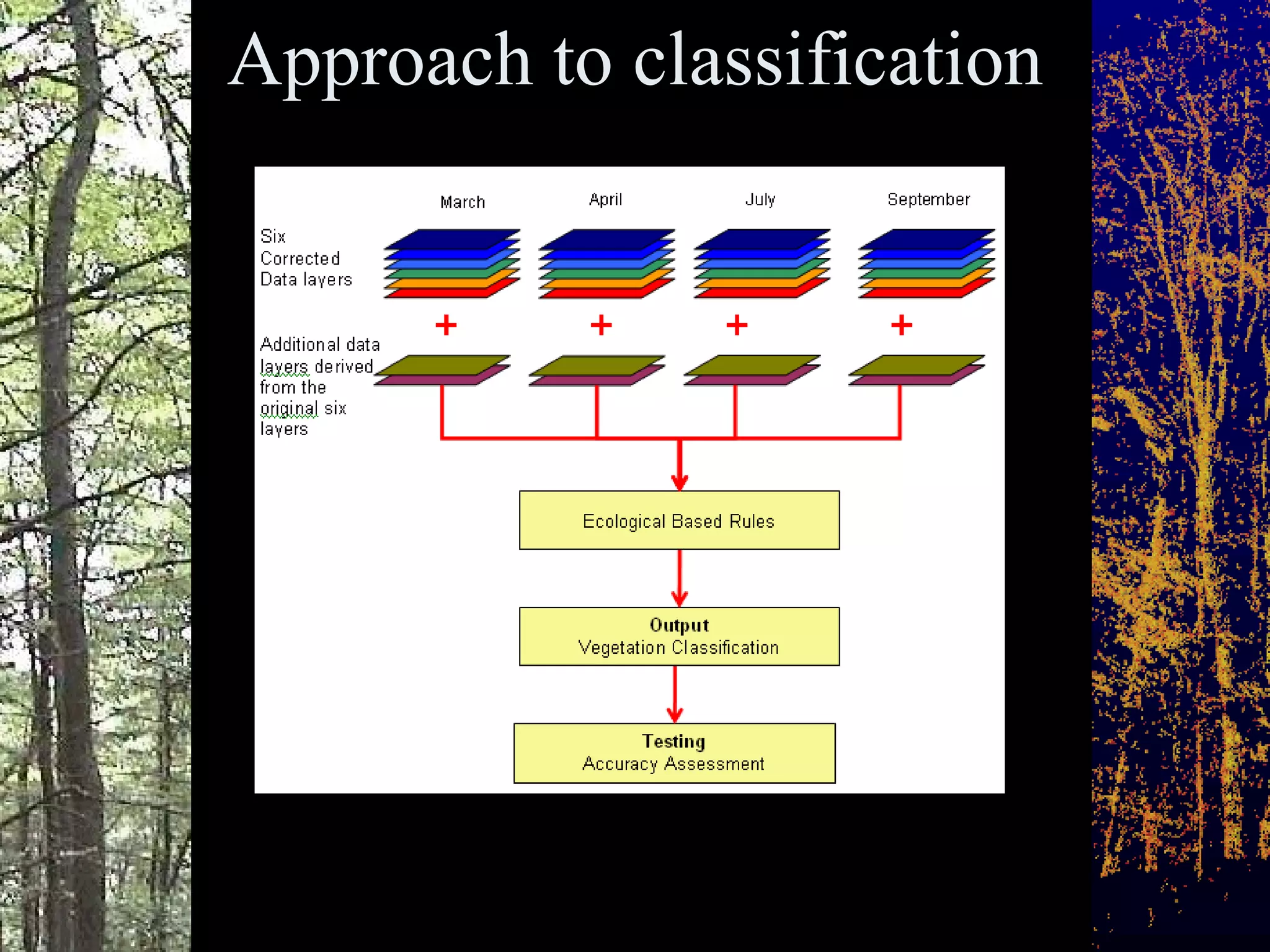
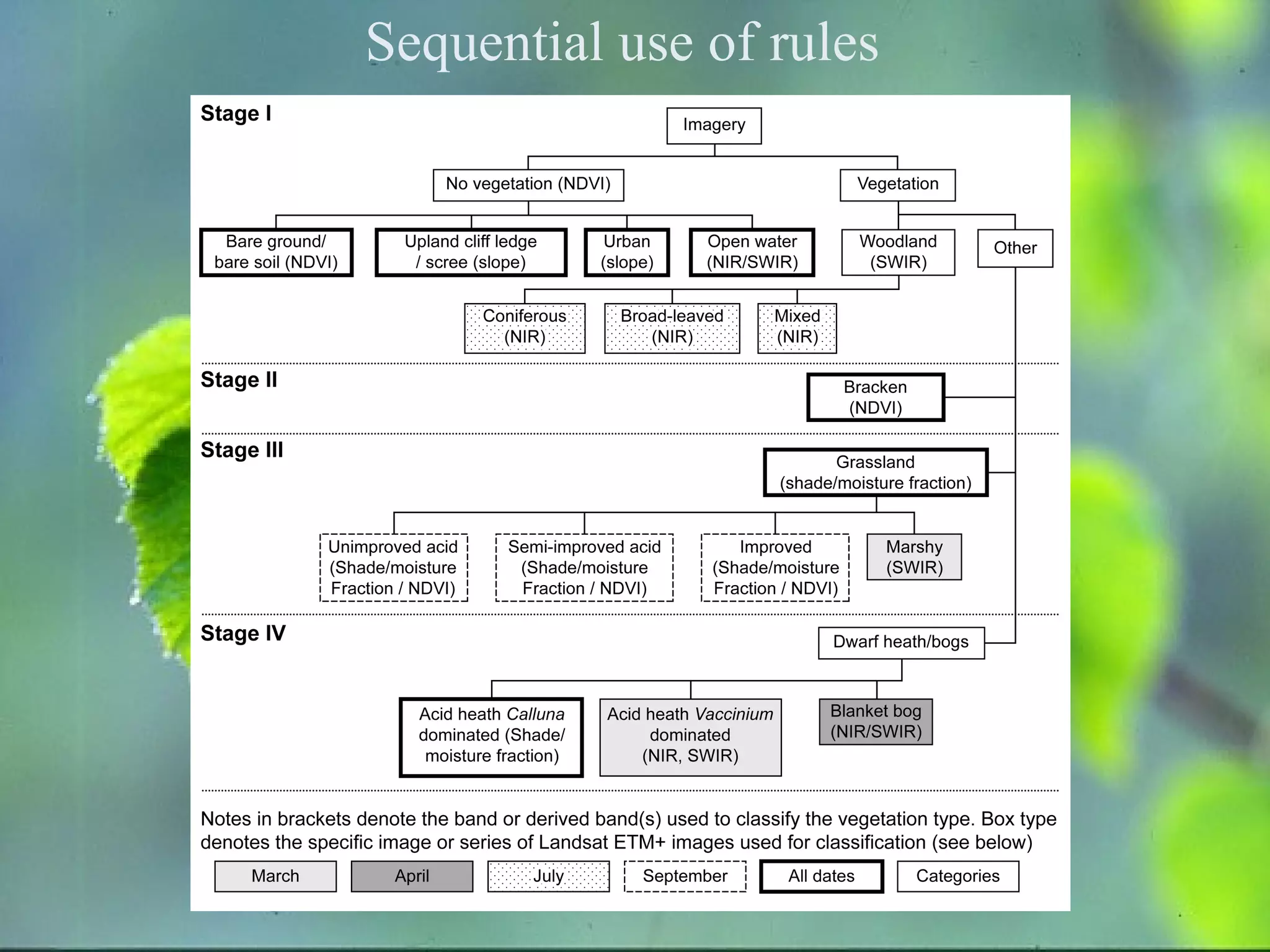
Approach to classification
Sequential use of rules
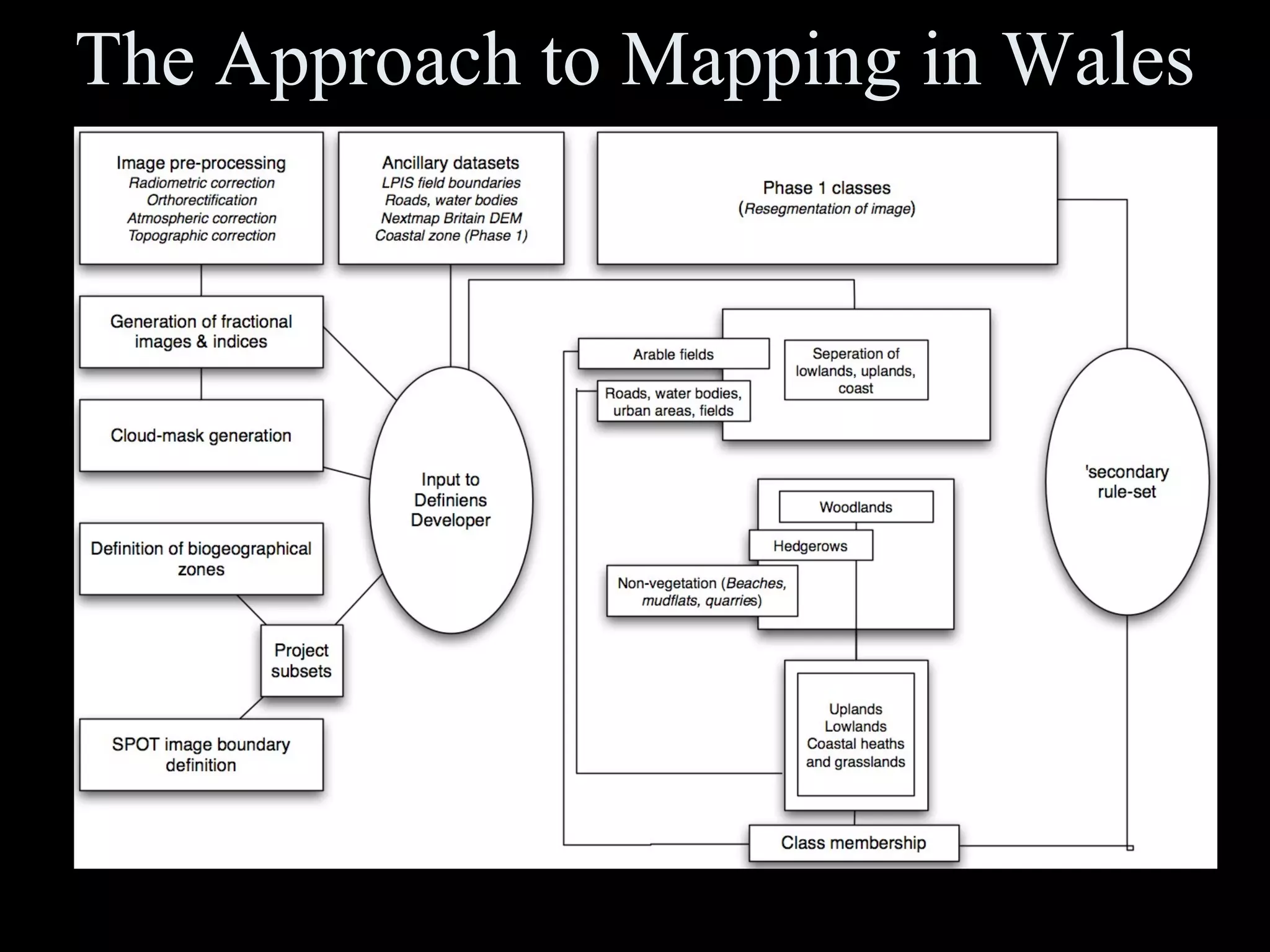
The Approach to Mapping in Wales
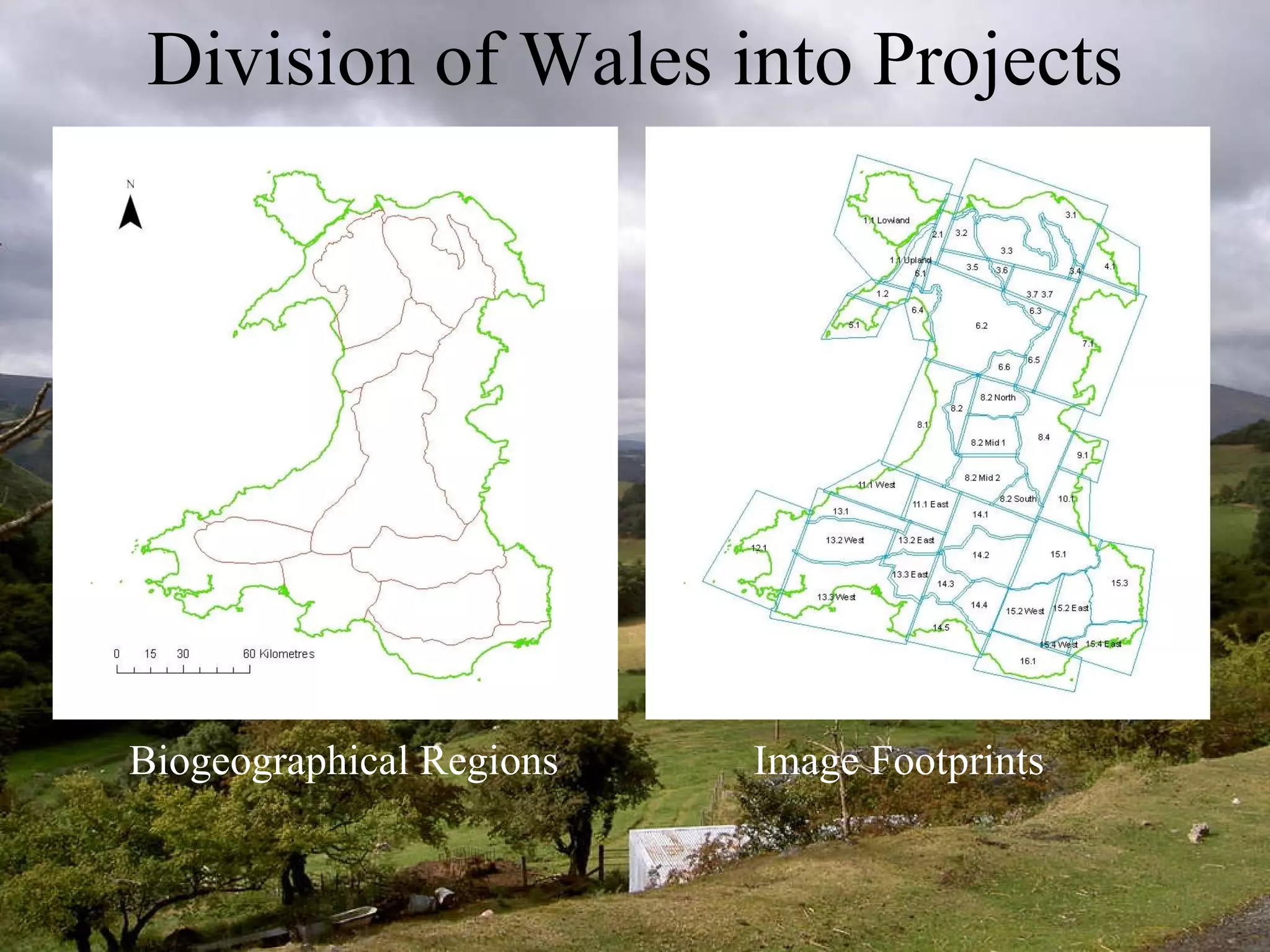
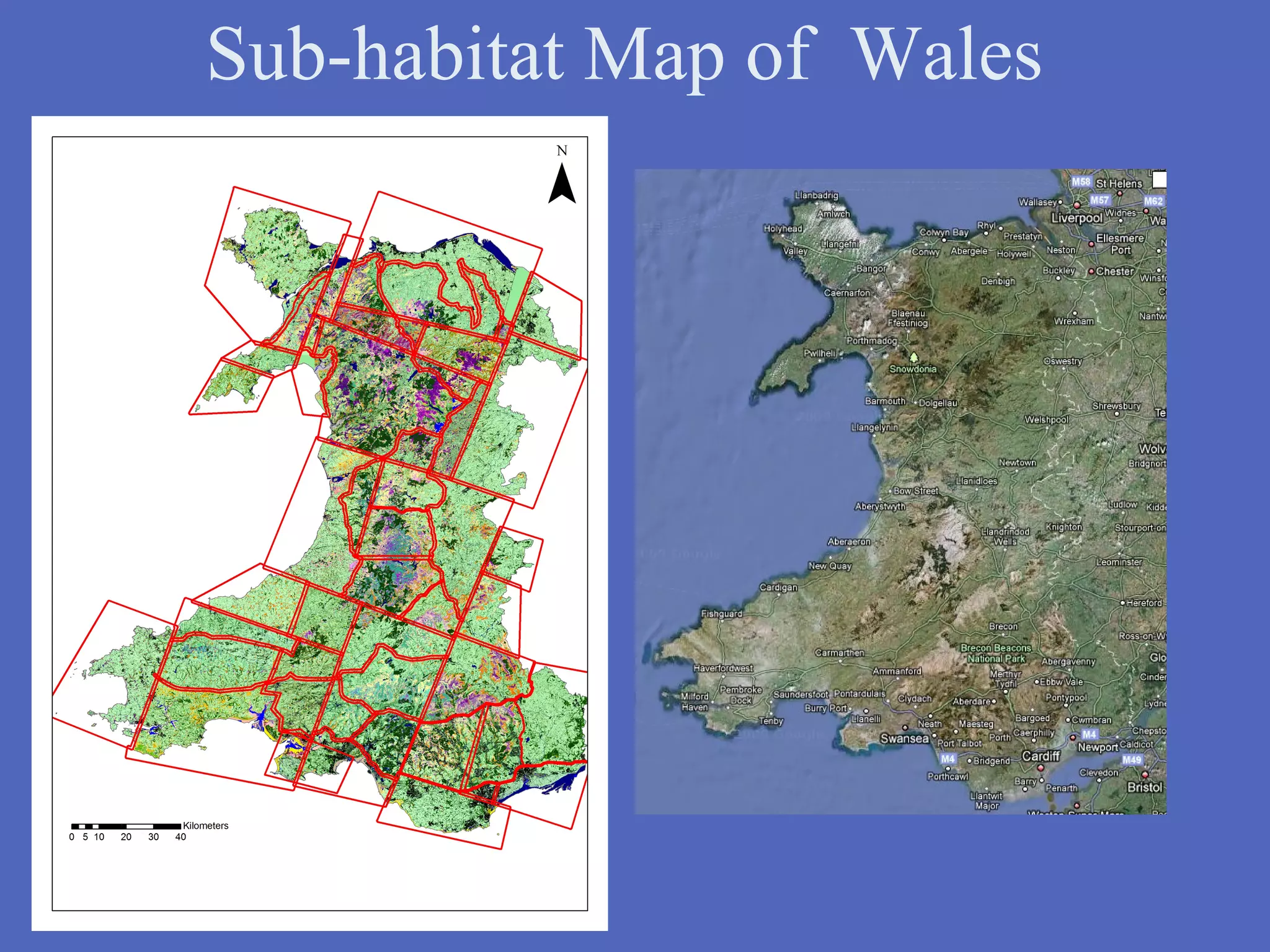
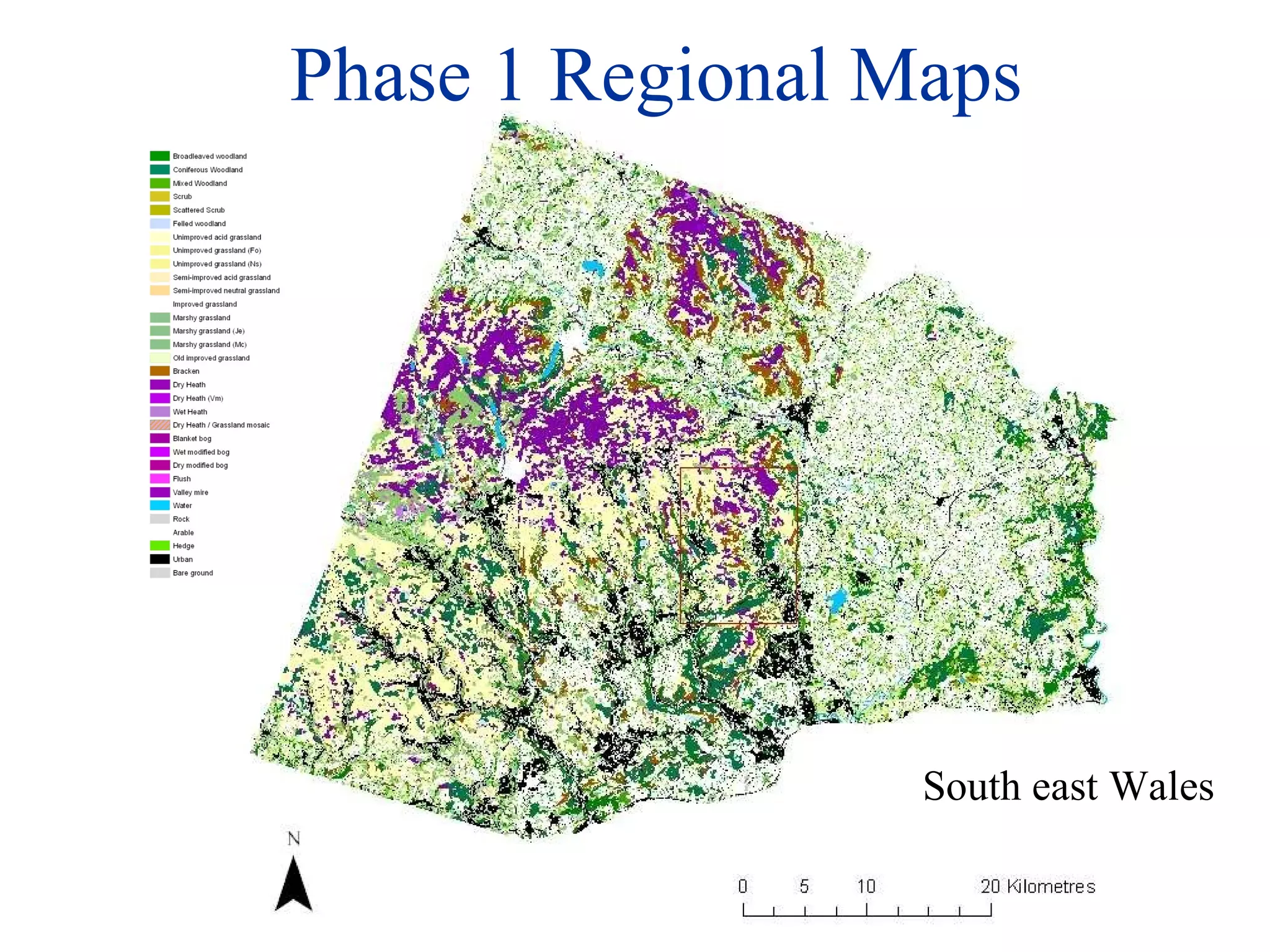
Division of Wales into Projects Biogeographical Regions Image Footprints
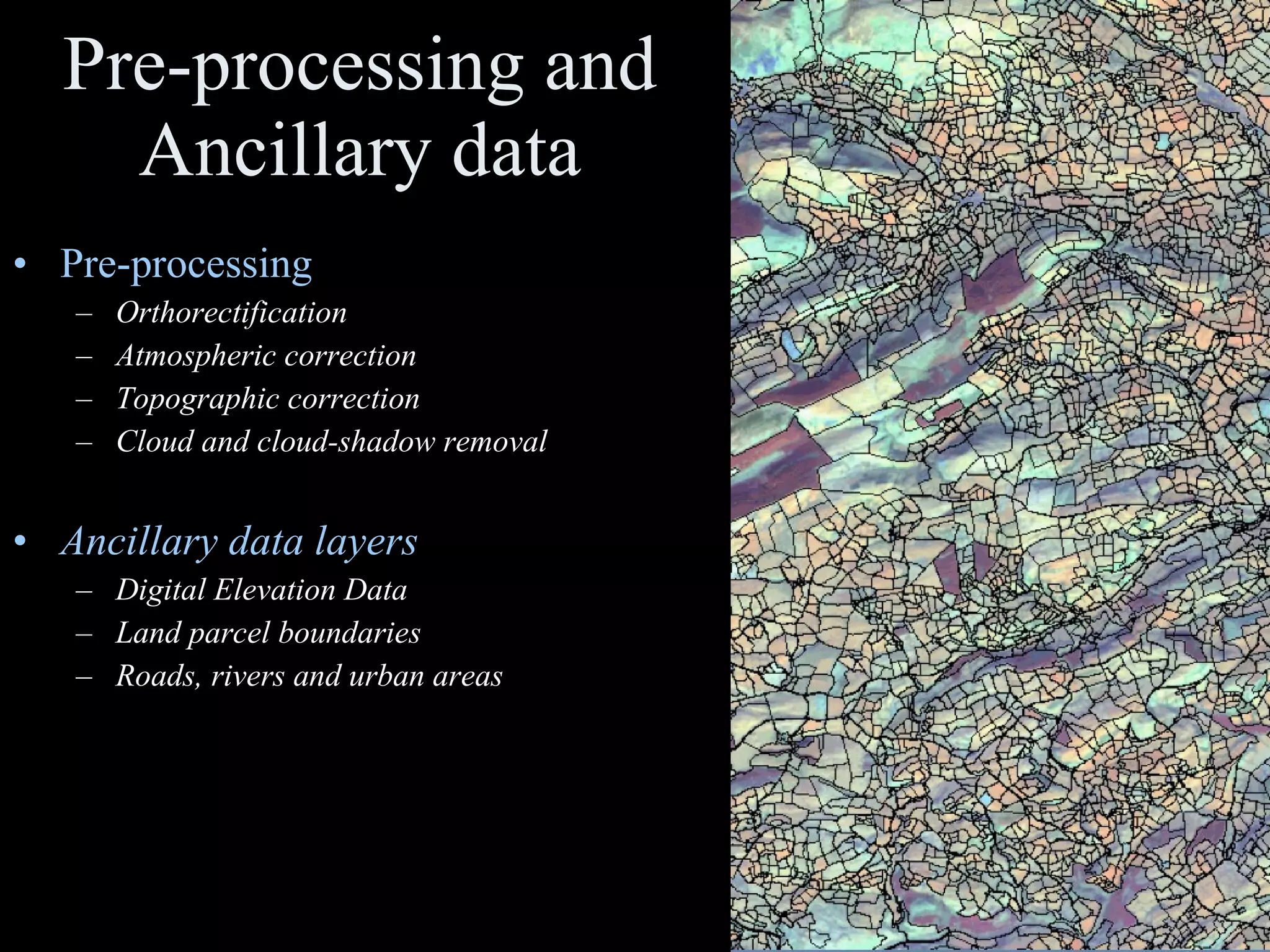
Pre-processing and Ancillary data Pre-processing Orthorectification Atmospheric correction Topographic correction Cloud and cloud-shadow removal Ancillary data layers Digital Elevation Data Land parcel boundaries Roads, rivers and urban areas
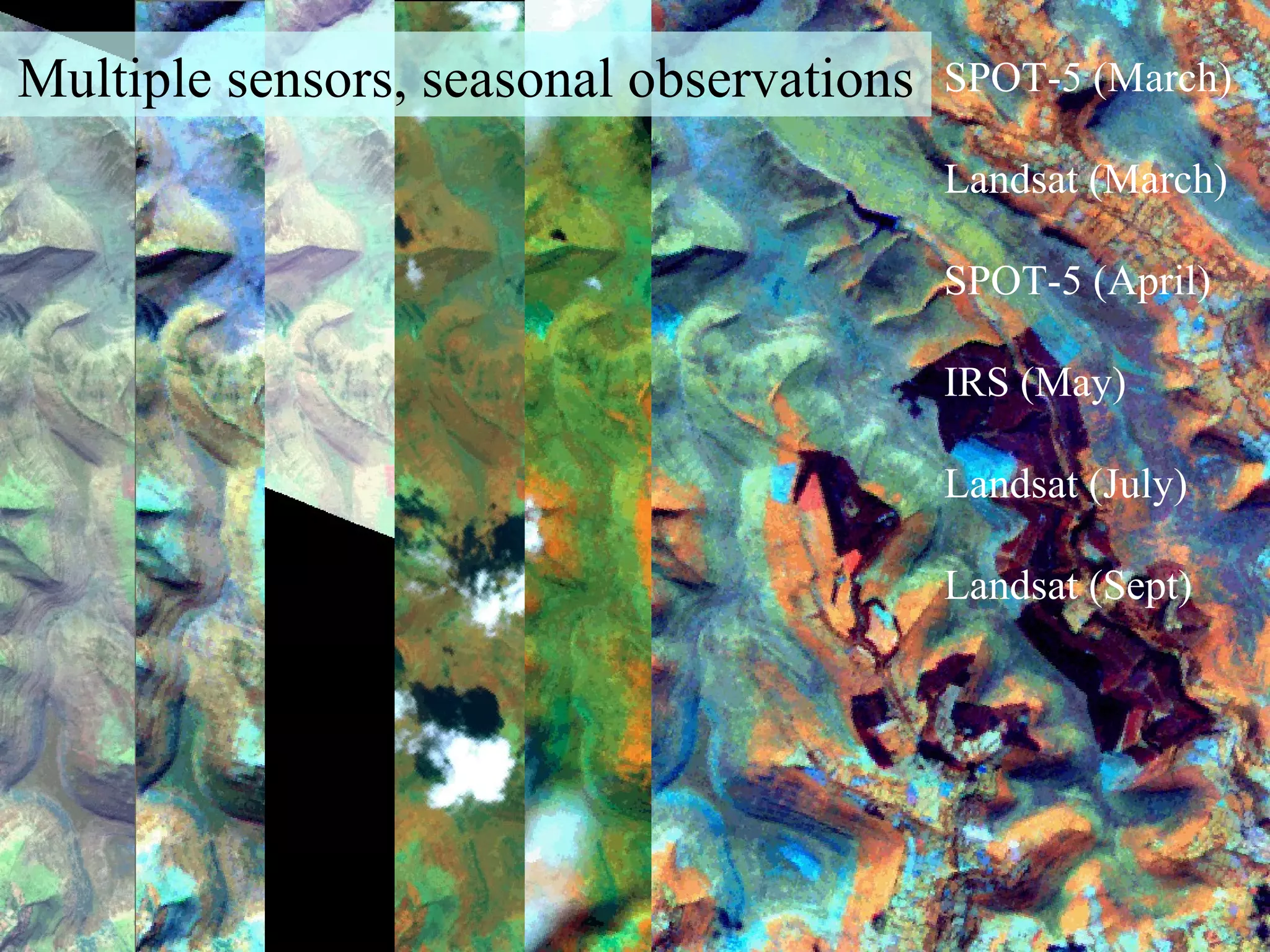
SPOT-5 (March) Landsat (March) SPOT-5 (April) IRS (May) Landsat (July) Landsat (Sept) Multiple sensors, seasonal observations
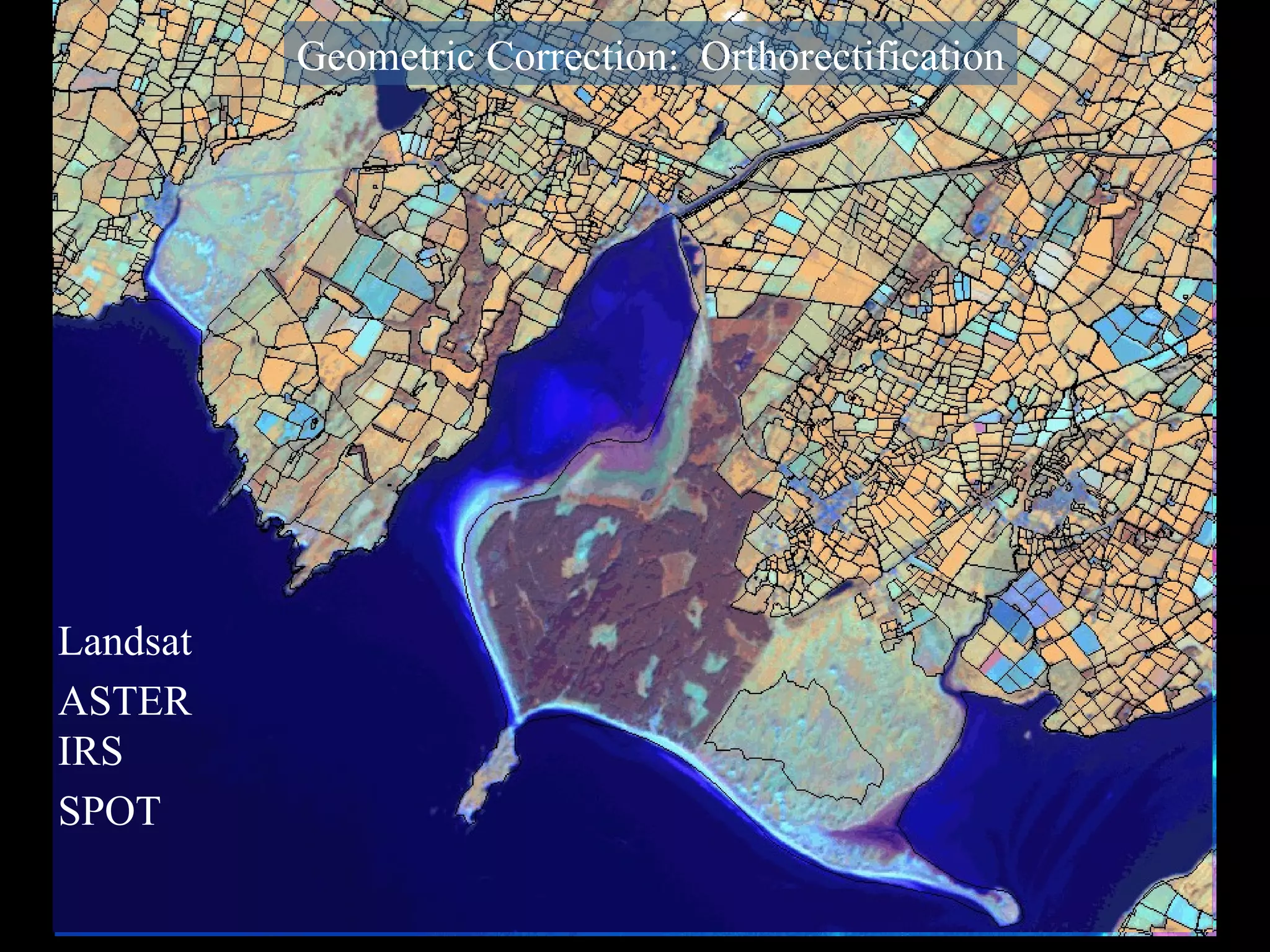
Landsat ASTER IRS SPOT Geometric Correction:  Orthorectification
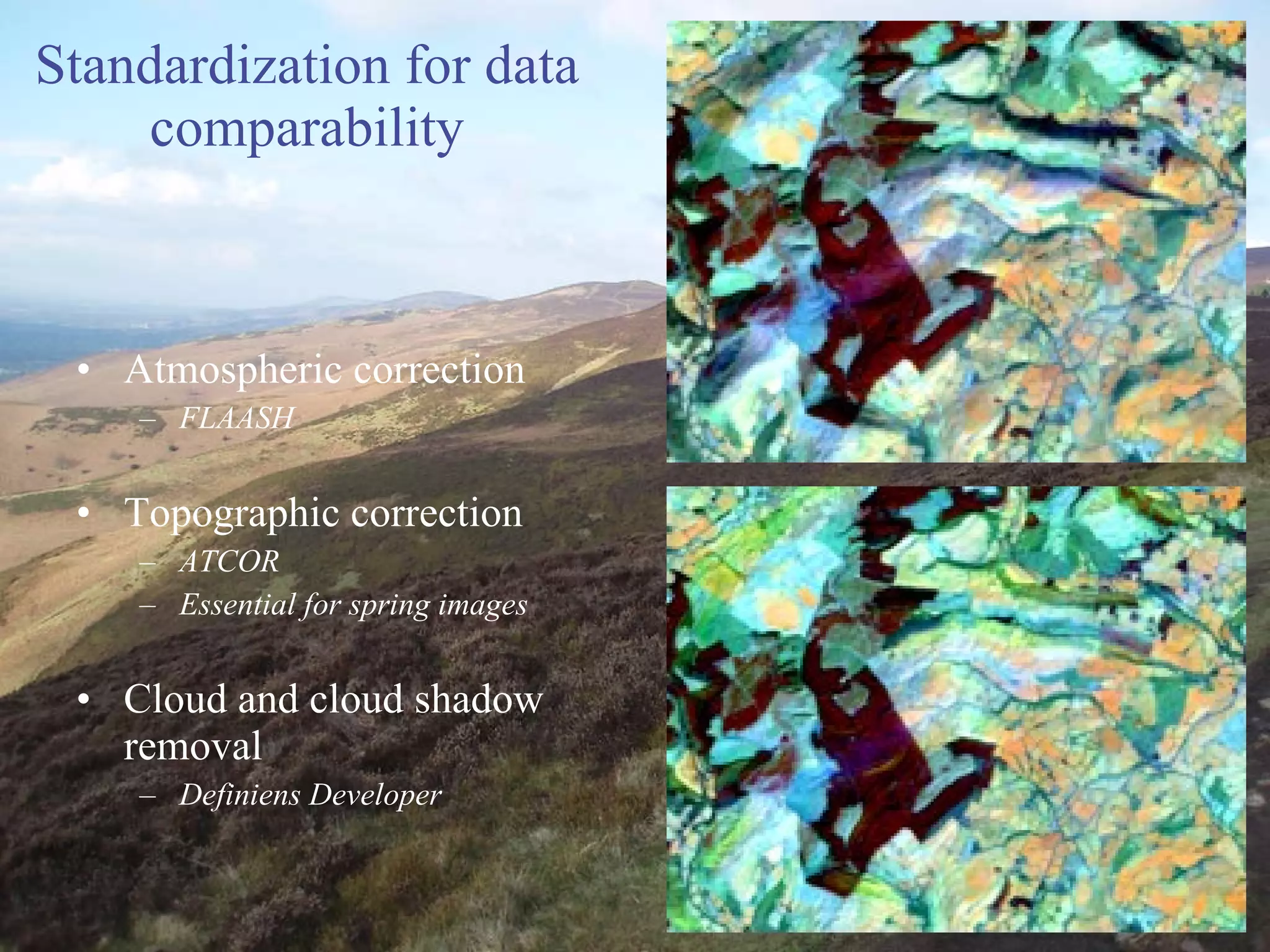
Standardization for data comparability Atmospheric correction FLAASH Topographic correction ATCOR Essential for spring images Cloud and cloud shadow removal Definiens Developer
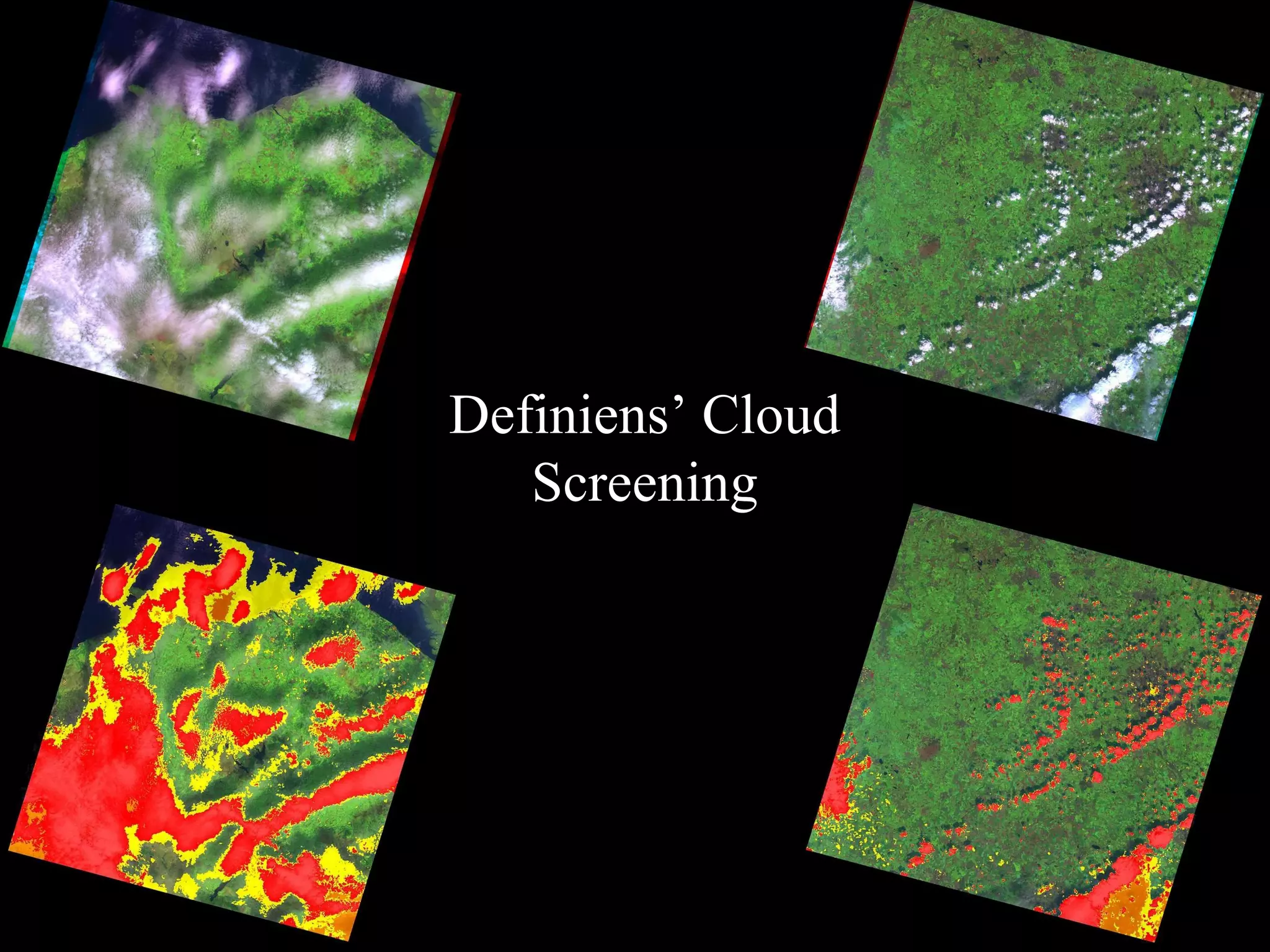
Definiens’ Cloud Screening
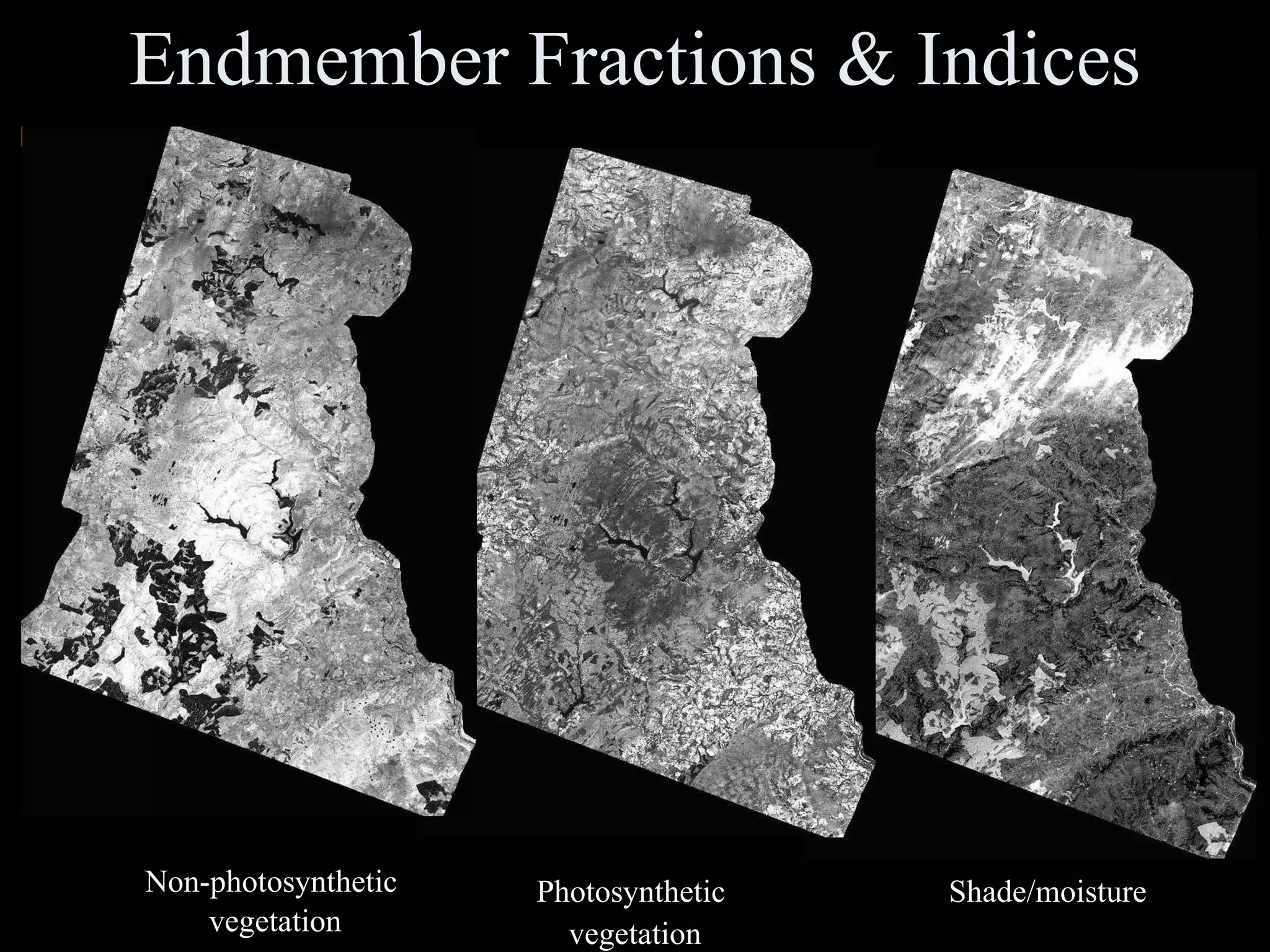
Endmember Fractions & Indices Non-photosynthetic  vegetation PV Shade Photosynthetic  vegetation Shade/moisture
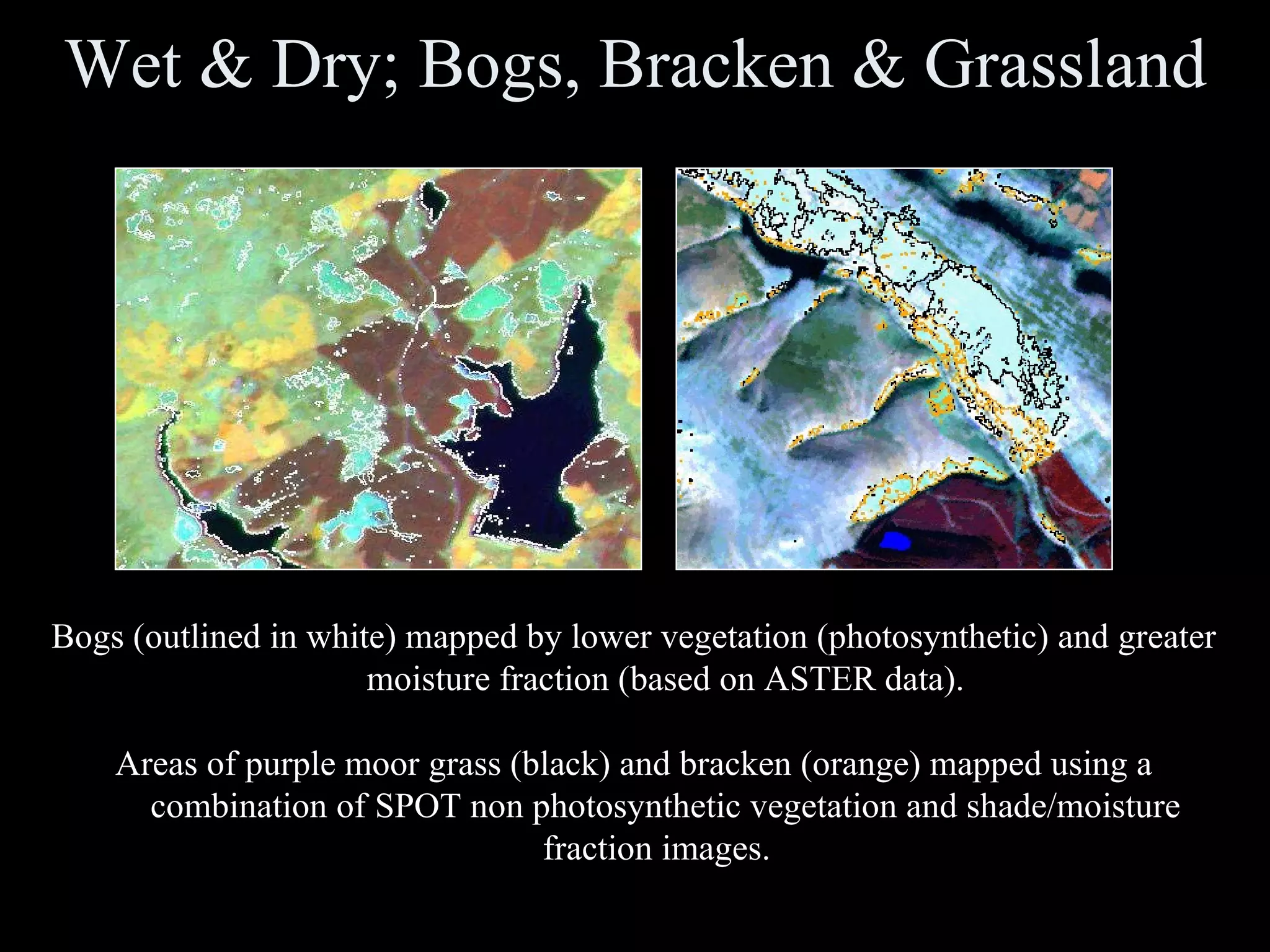
Wet & Dry; Bogs, Bracken & Grassland Bogs (outlined in white) mapped by lower vegetation (photosynthetic) and greater moisture fraction (based on ASTER data). Areas of purple moor grass (black) and bracken (orange) mapped using a combination of SPOT non photosynthetic vegetation and shade/moisture fraction images.
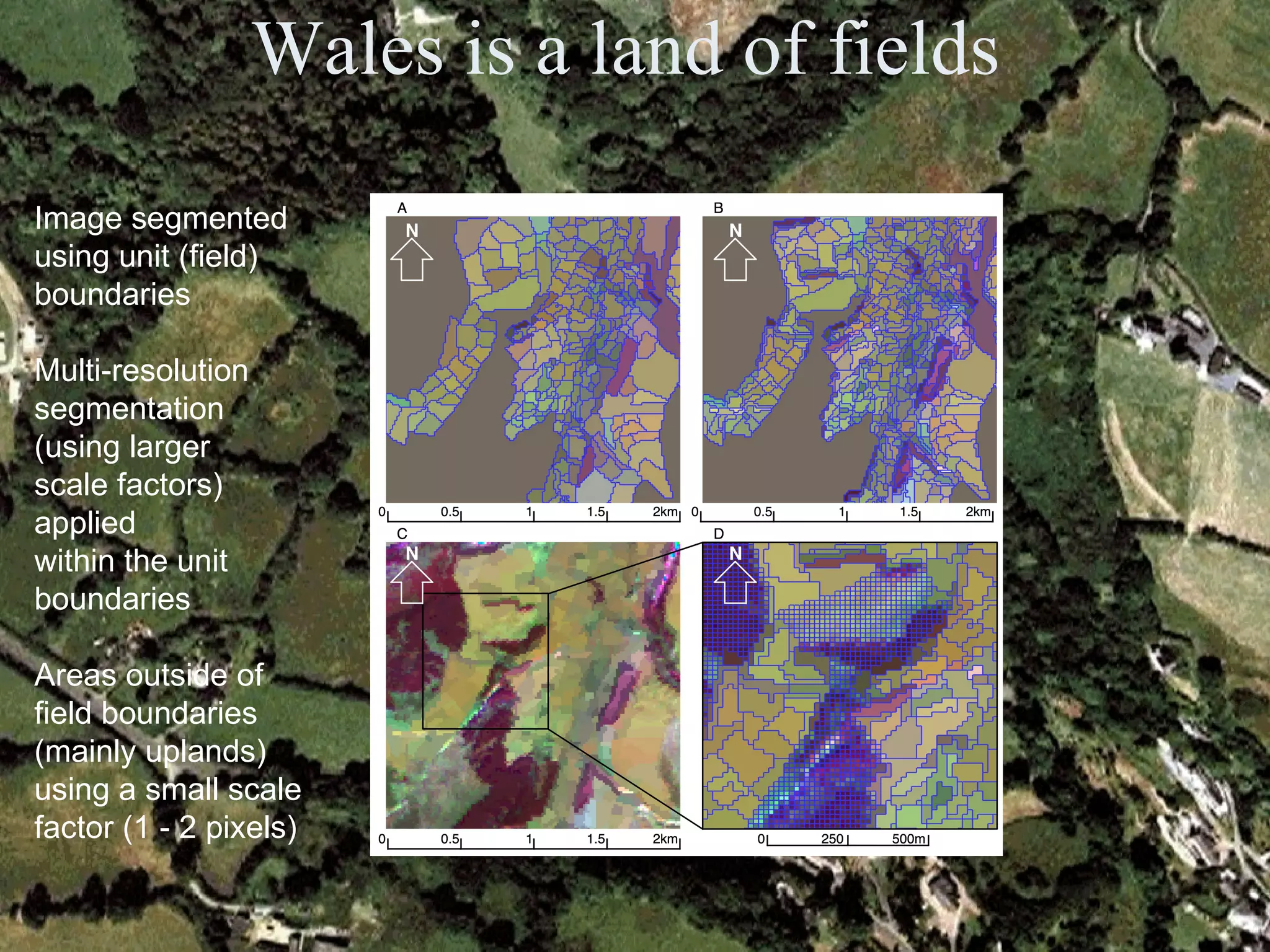
Wales is a land of fields  Image segmented  using unit (field)  boundaries Multi-resolution  segmentation  (using larger scale factors) applied within the unit  boundaries Areas outside of  field boundaries  (mainly uplands) using a small scale  factor (1 - 2 pixels)
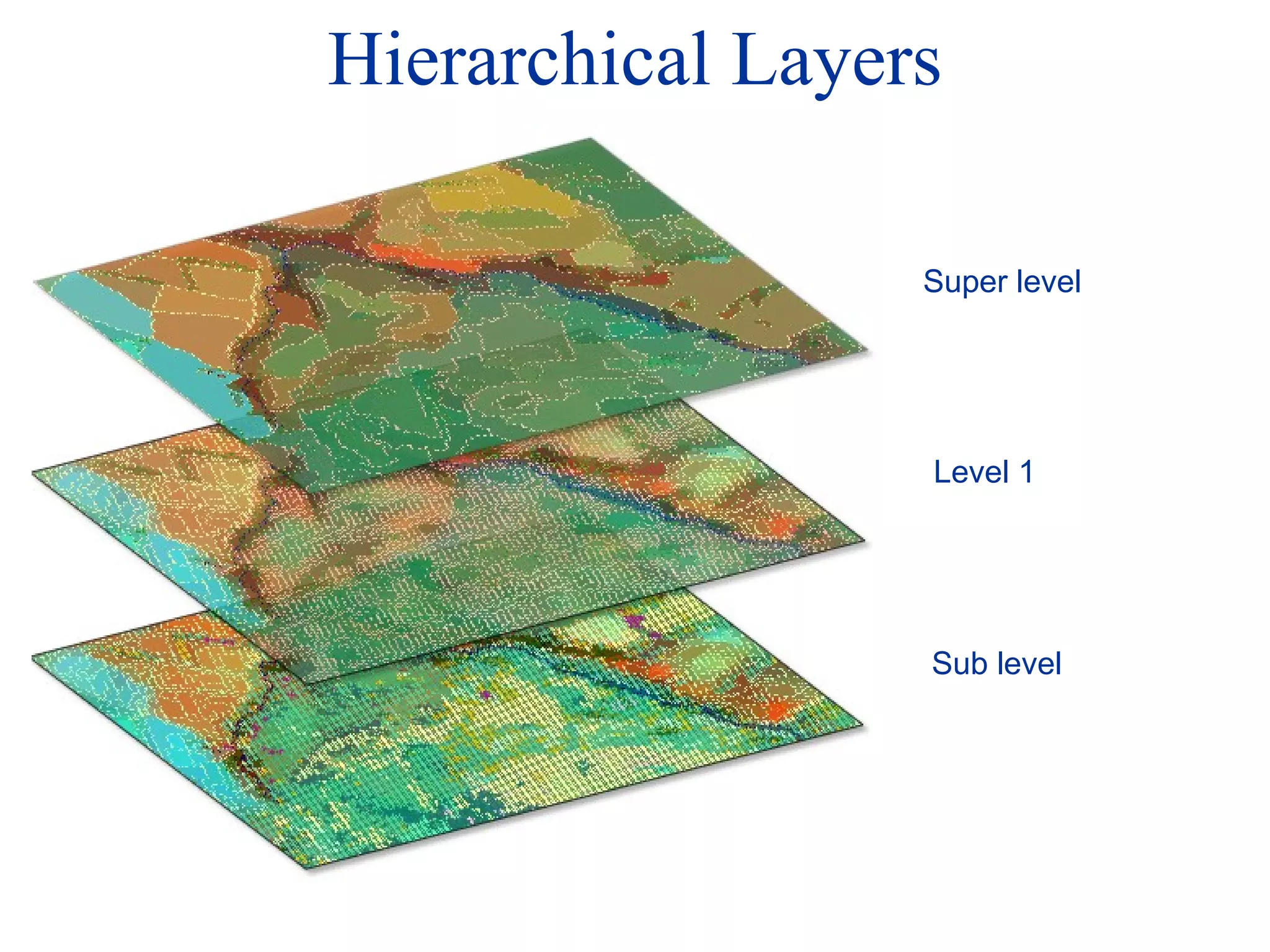
Hierarchical Layers Super level Level 1 Sub level
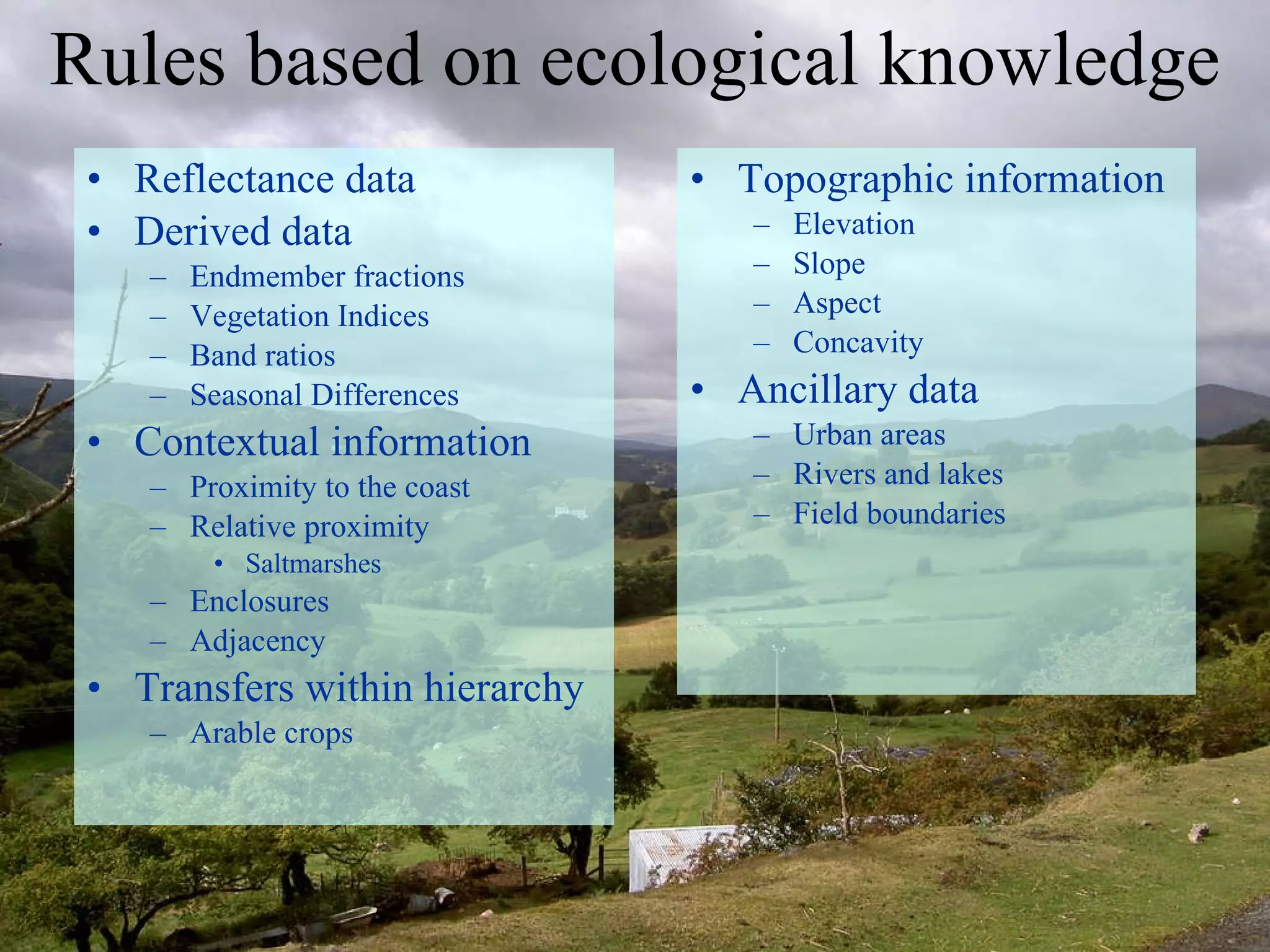
Rules based on ecological knowledge Reflectance data Derived data Endmember fractions Vegetation Indices Band ratios Seasonal Differences Contextual information Proximity to the coast Relative proximity  Saltmarshes Enclosures Adjacency Transfers within hierarchy Arable crops Topographic information Elevation Slope Aspect Concavity Ancillary data Urban areas Rivers and lakes Field boundaries
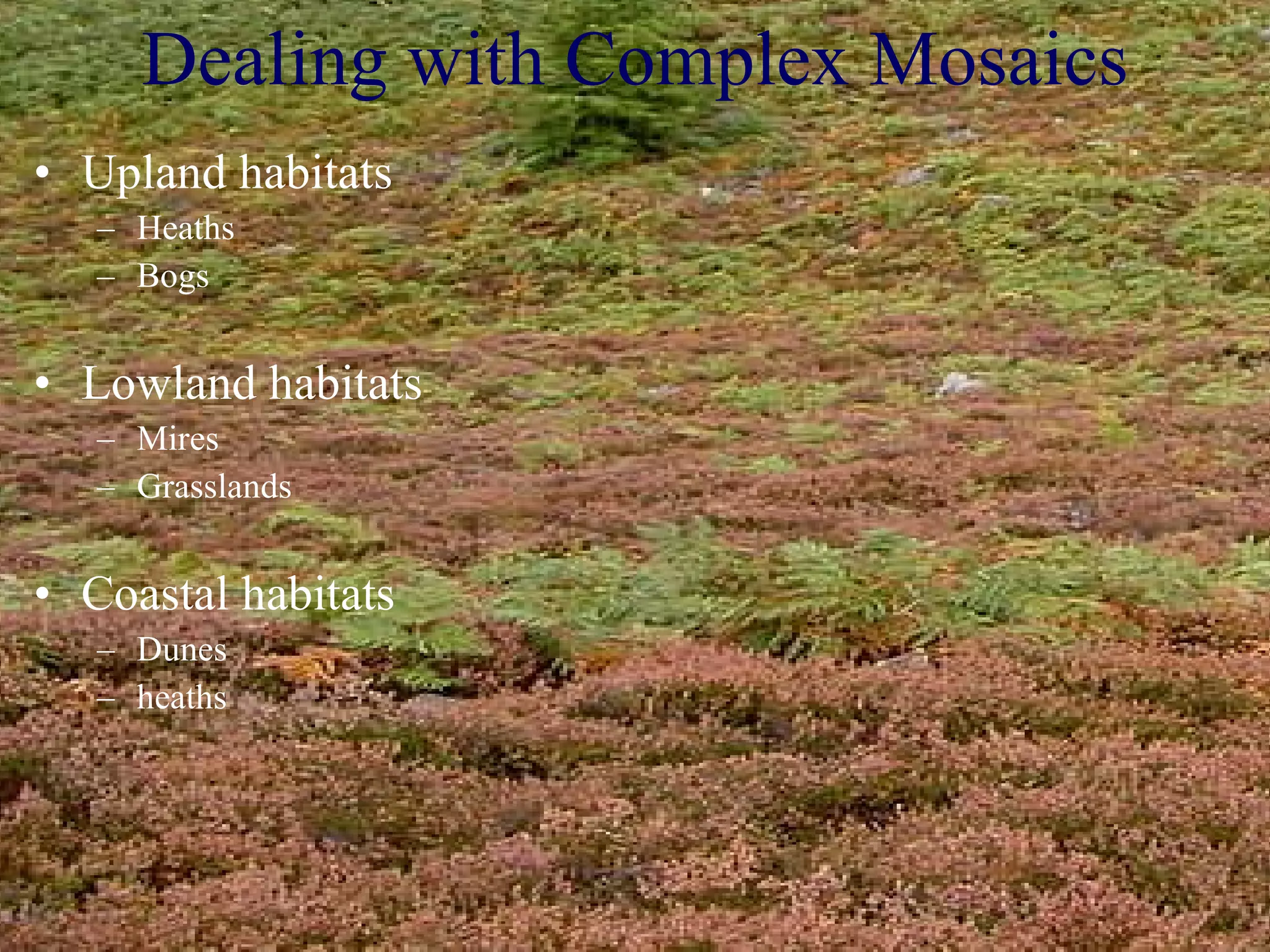
Dealing with Complex Mosaics Upland habitats Heaths Bogs Lowland habitats Mires Grasslands Coastal habitats Dunes heaths
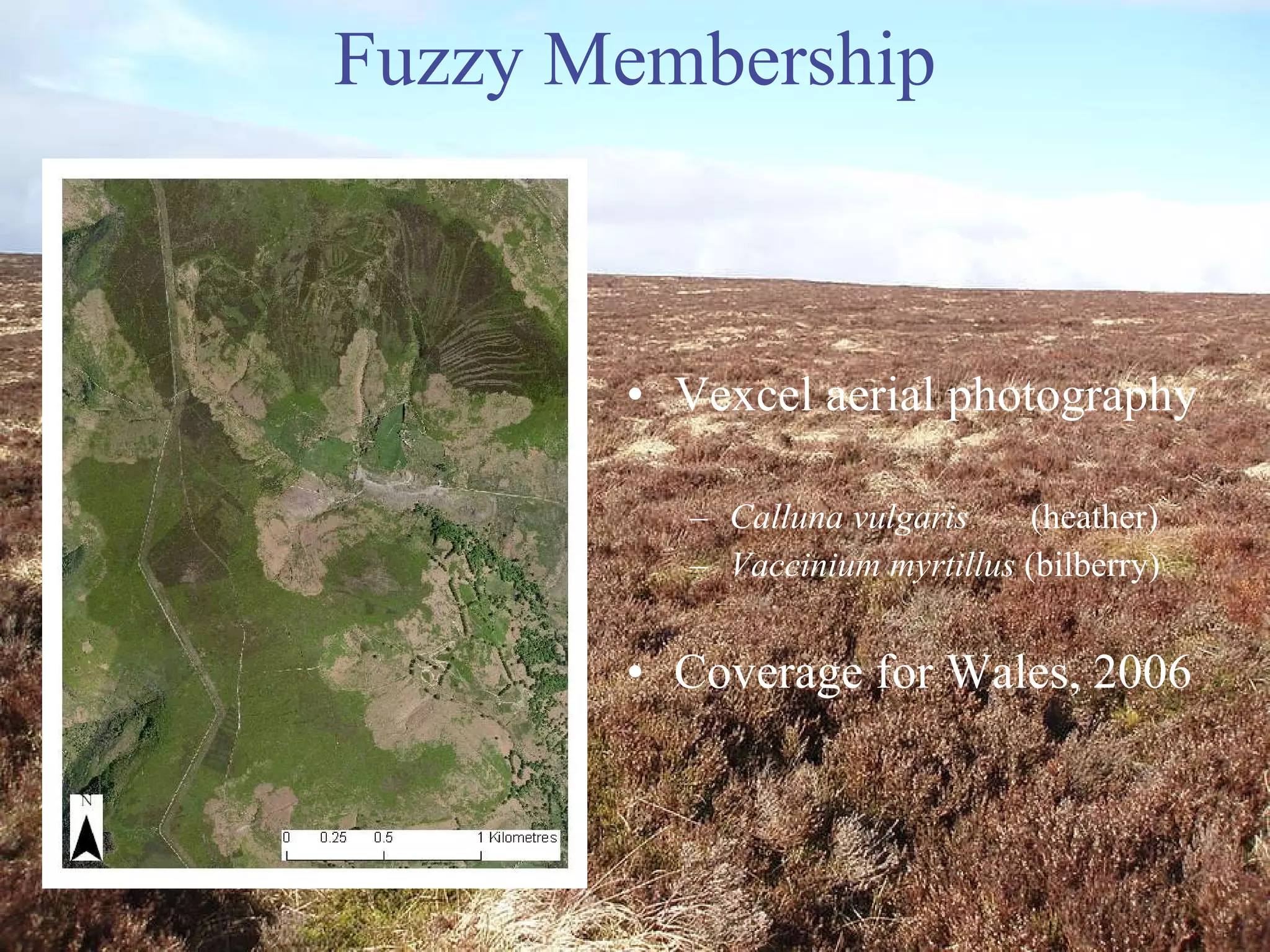
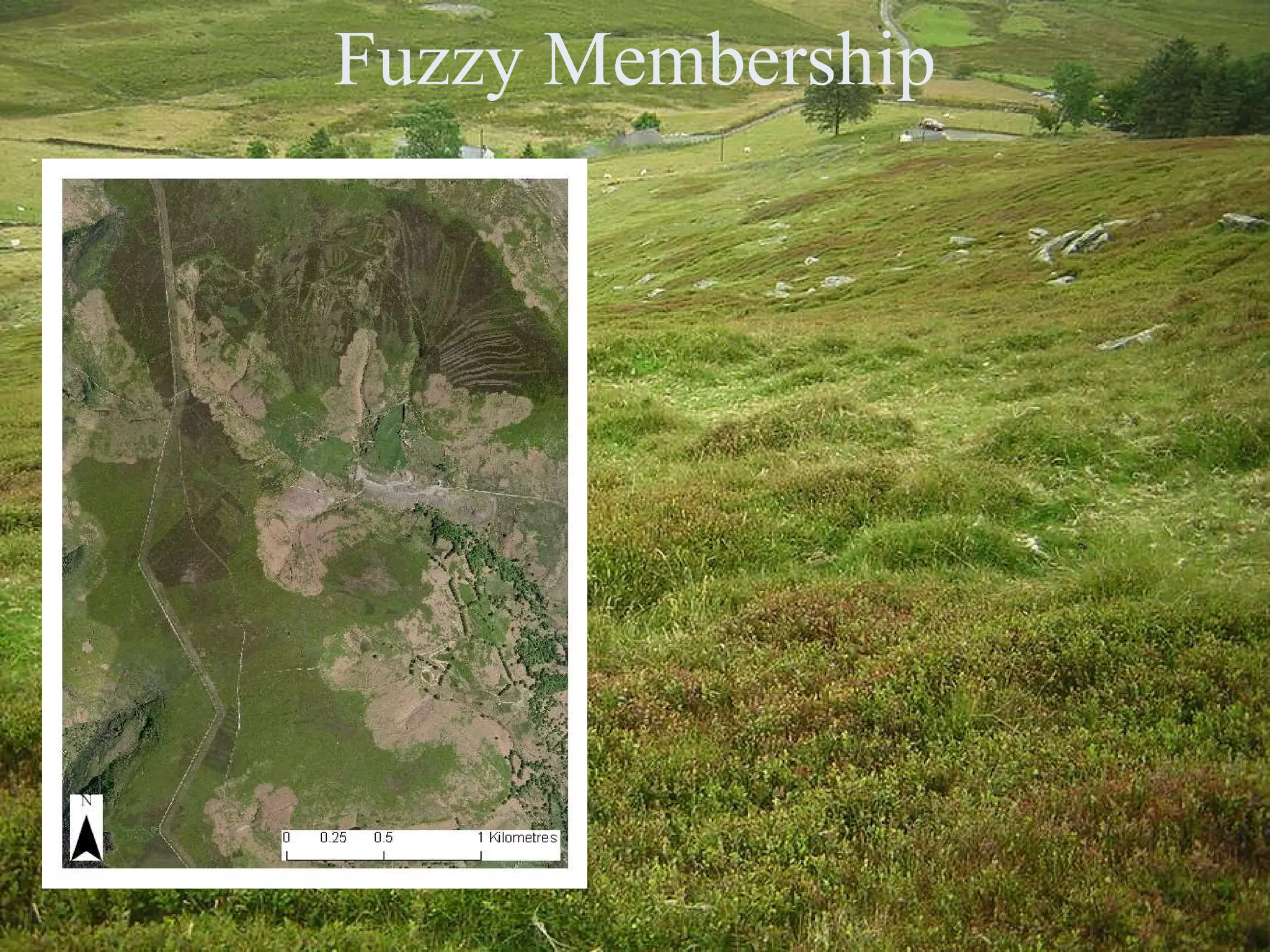
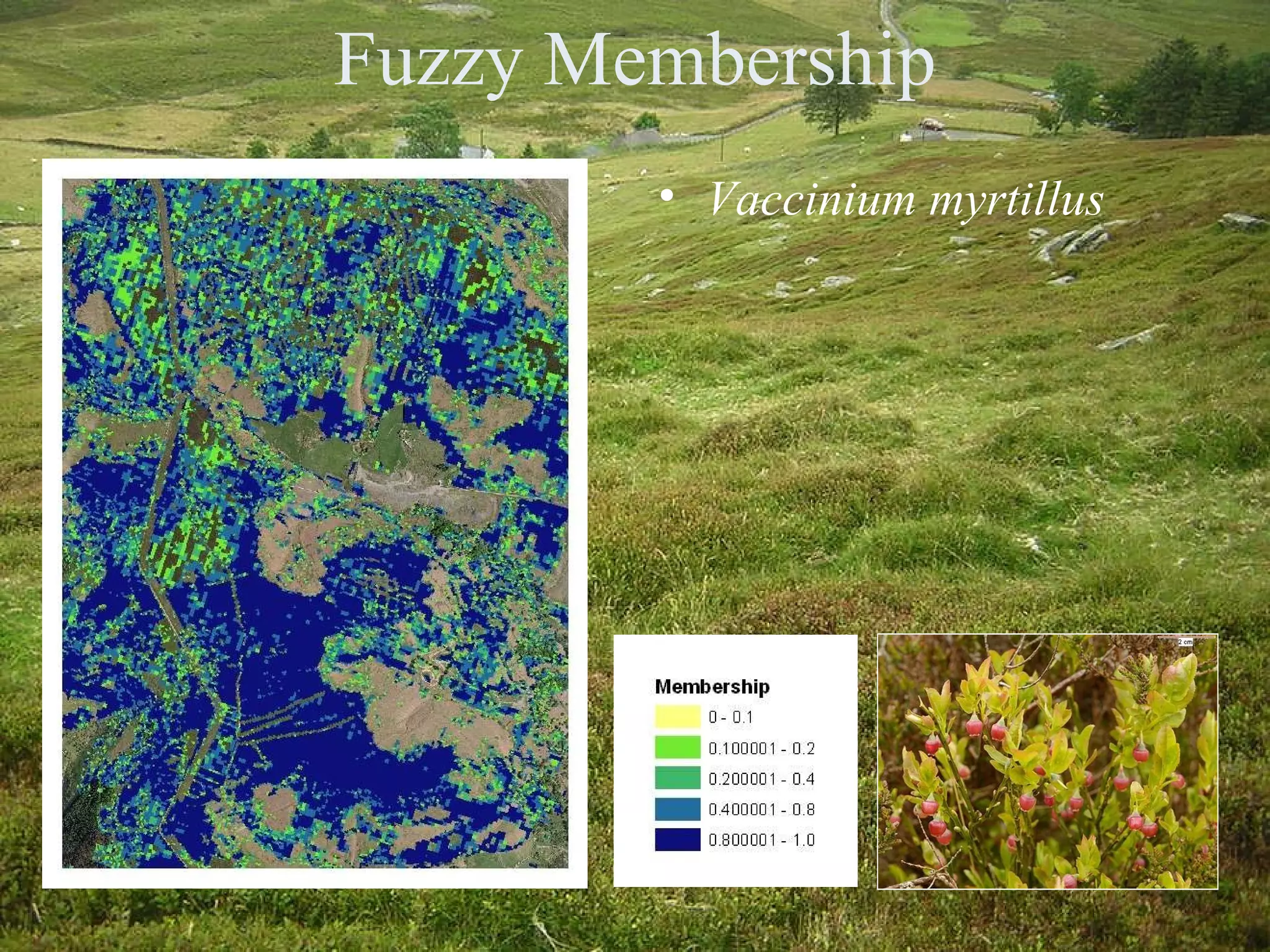
Fuzzy Membership Vexcel aerial photography Calluna vulgaris   (heather) Vaccinium myrtillus  (bilberry) Coverage for Wales, 2006
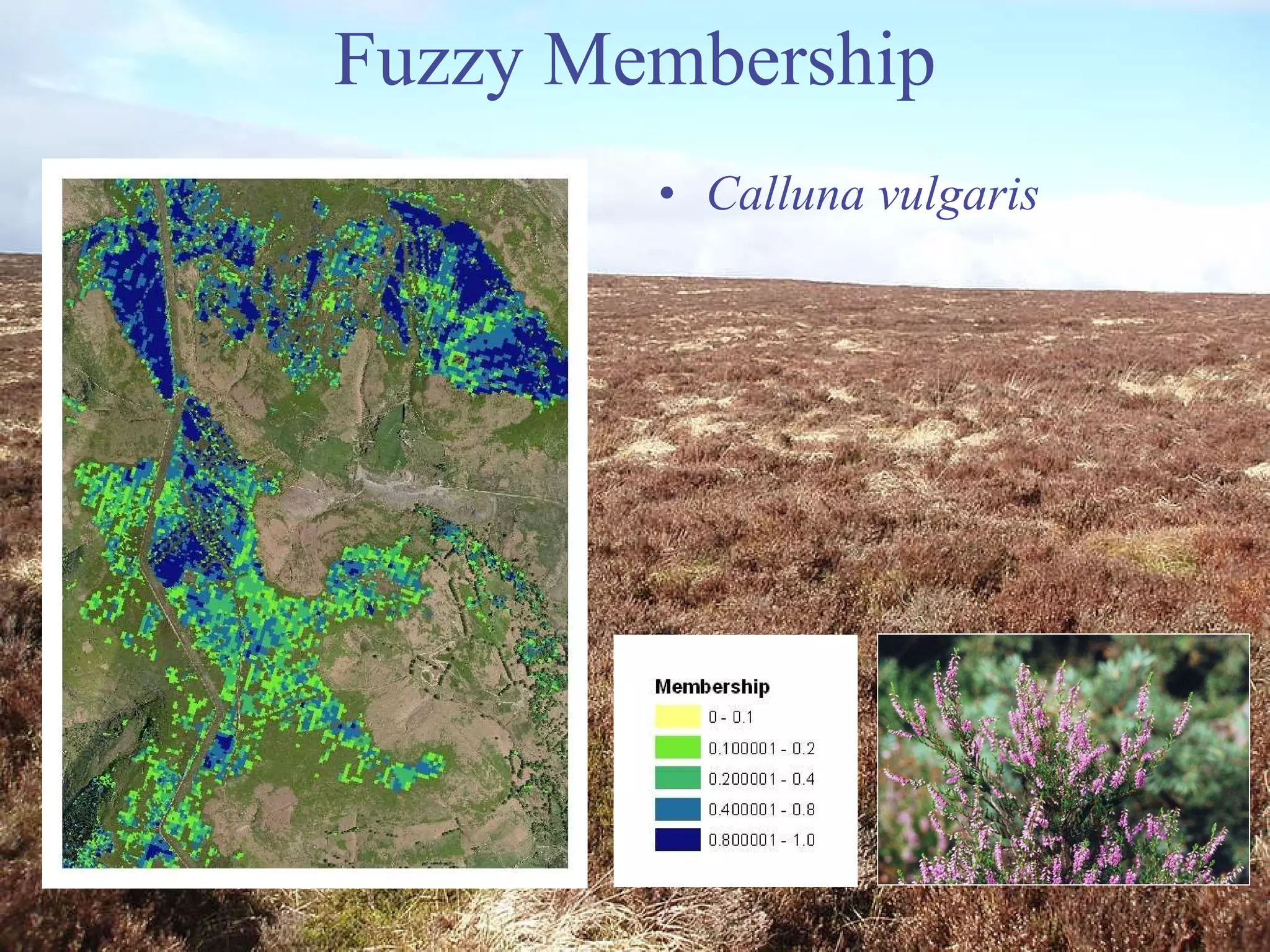
Fuzzy Membership Calluna vulgaris
Fuzzy Membership
Fuzzy Membership Vaccinium myrtillus
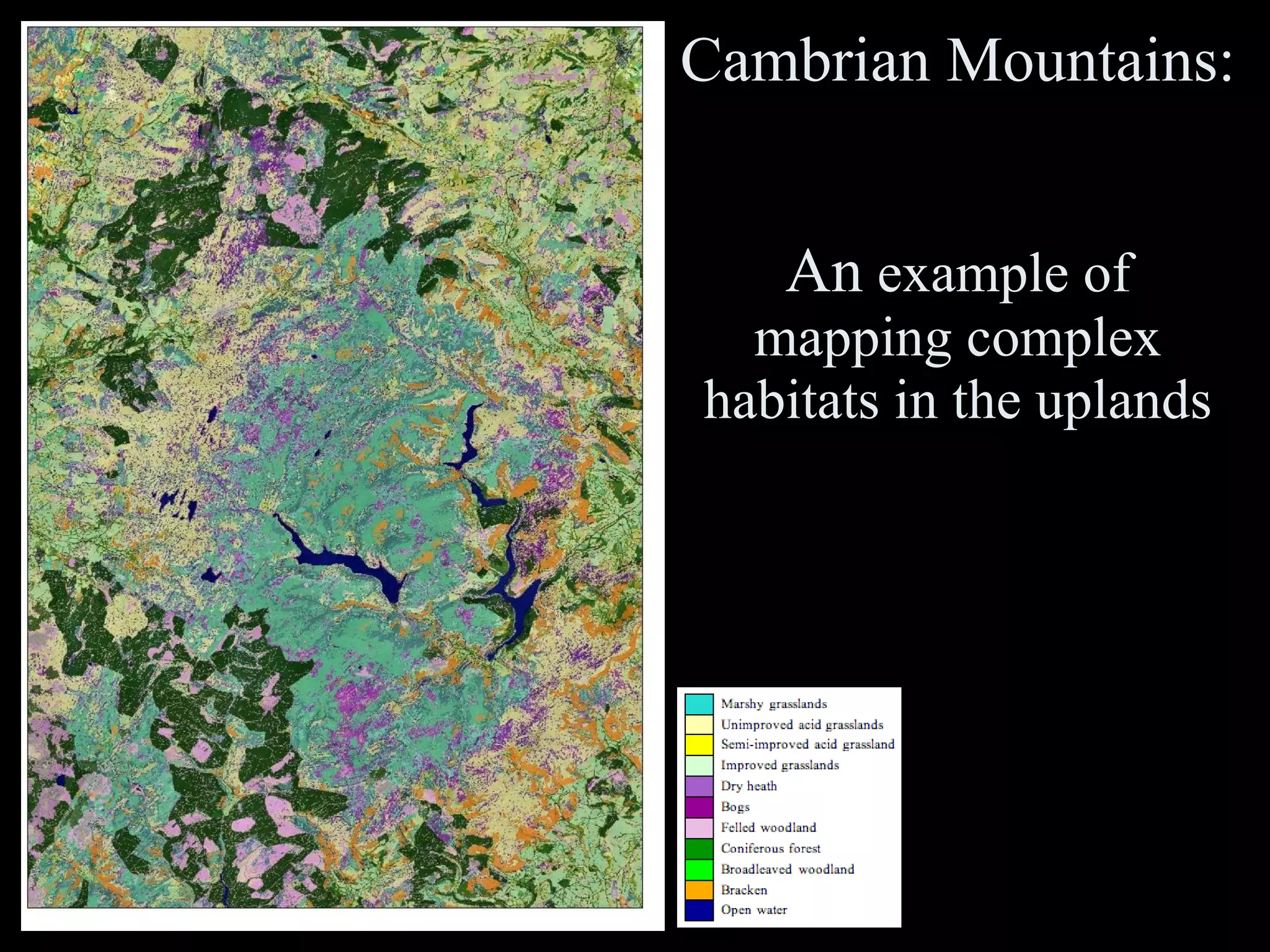
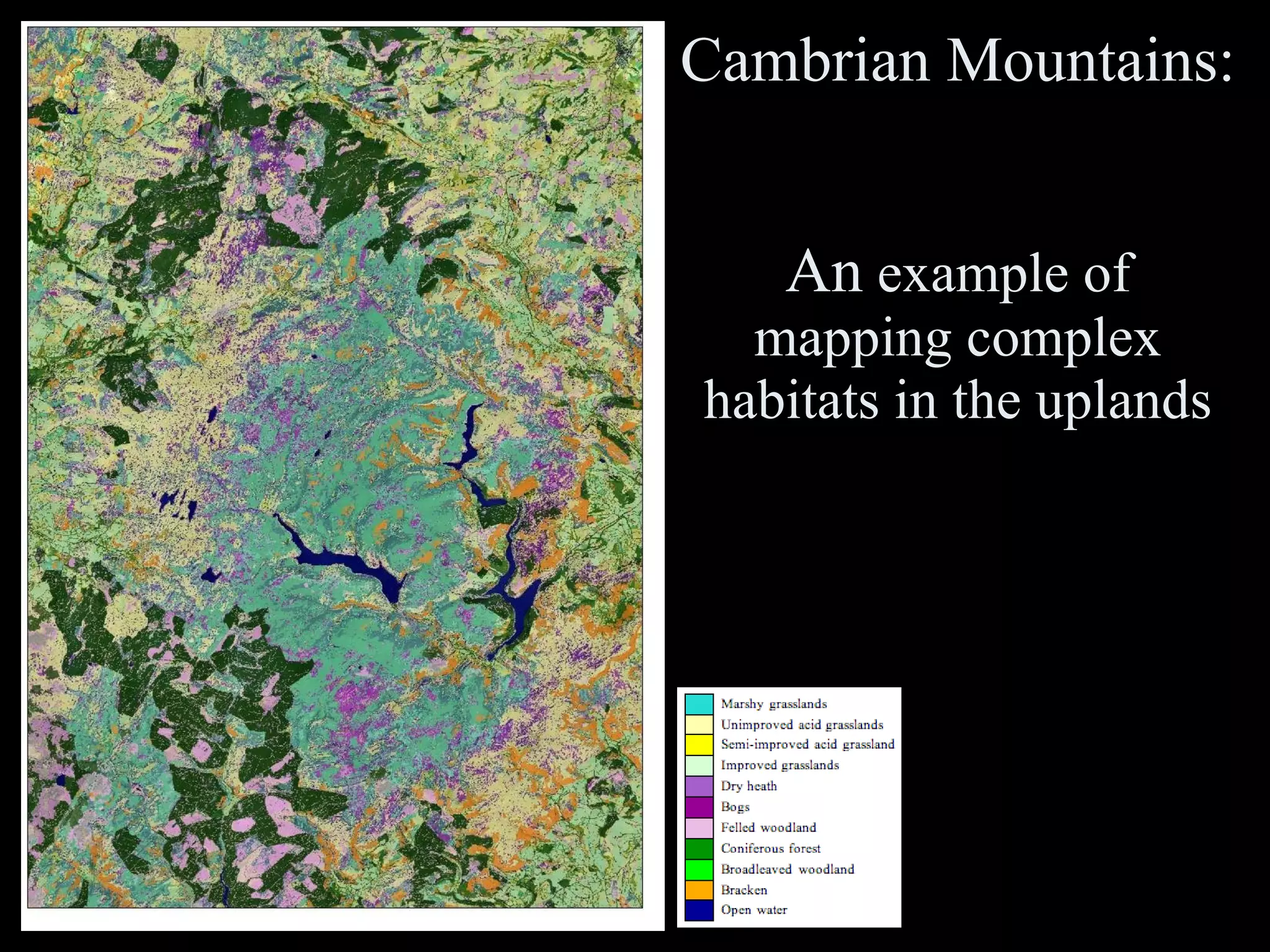
Cambrian Mountains:  An  example of mapping complex habitats in the uplands
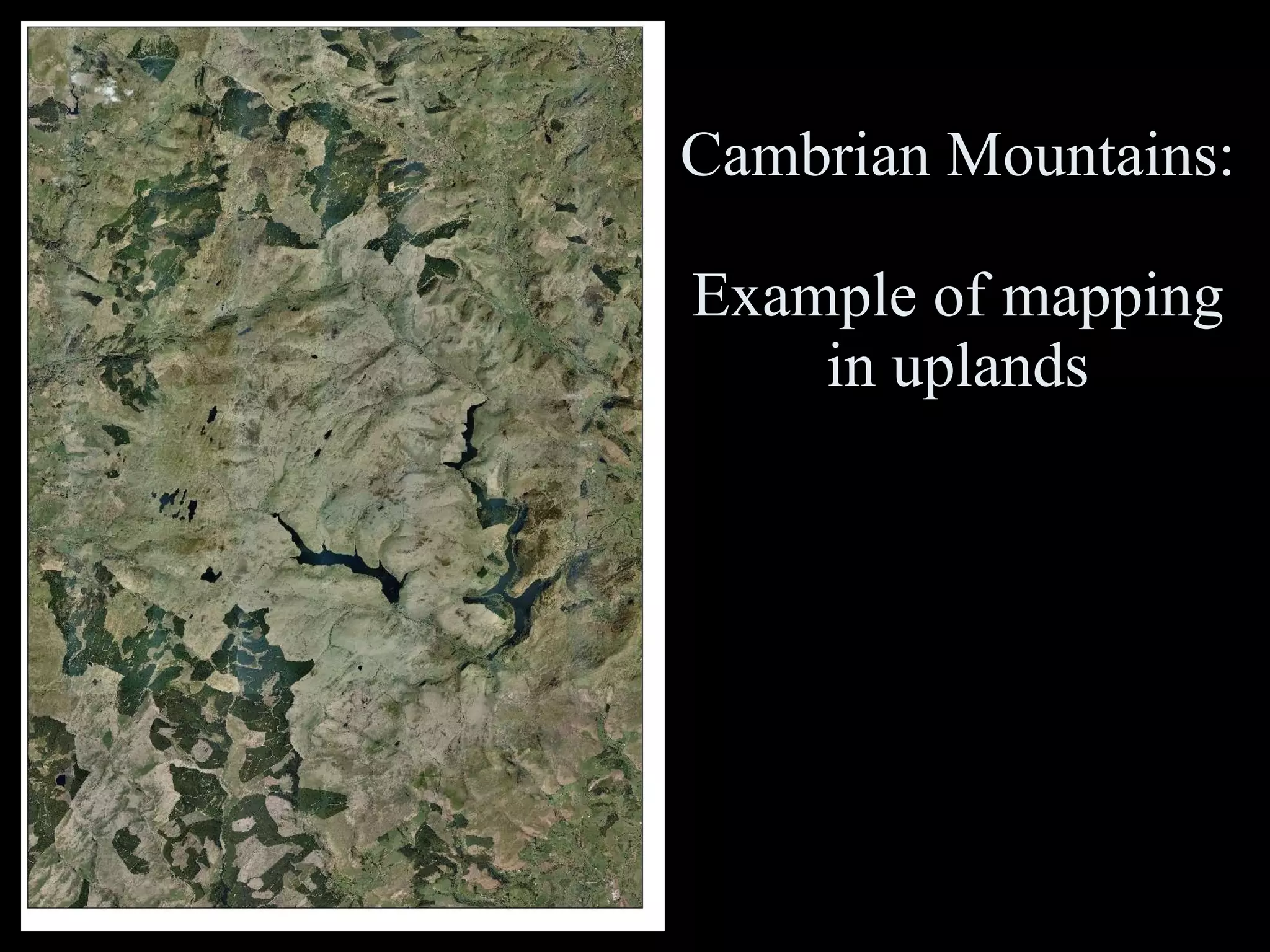
Cambrian Mountains:  Example of mapping in uplands
Cambrian Mountains:  An  example of mapping complex habitats in the uplands
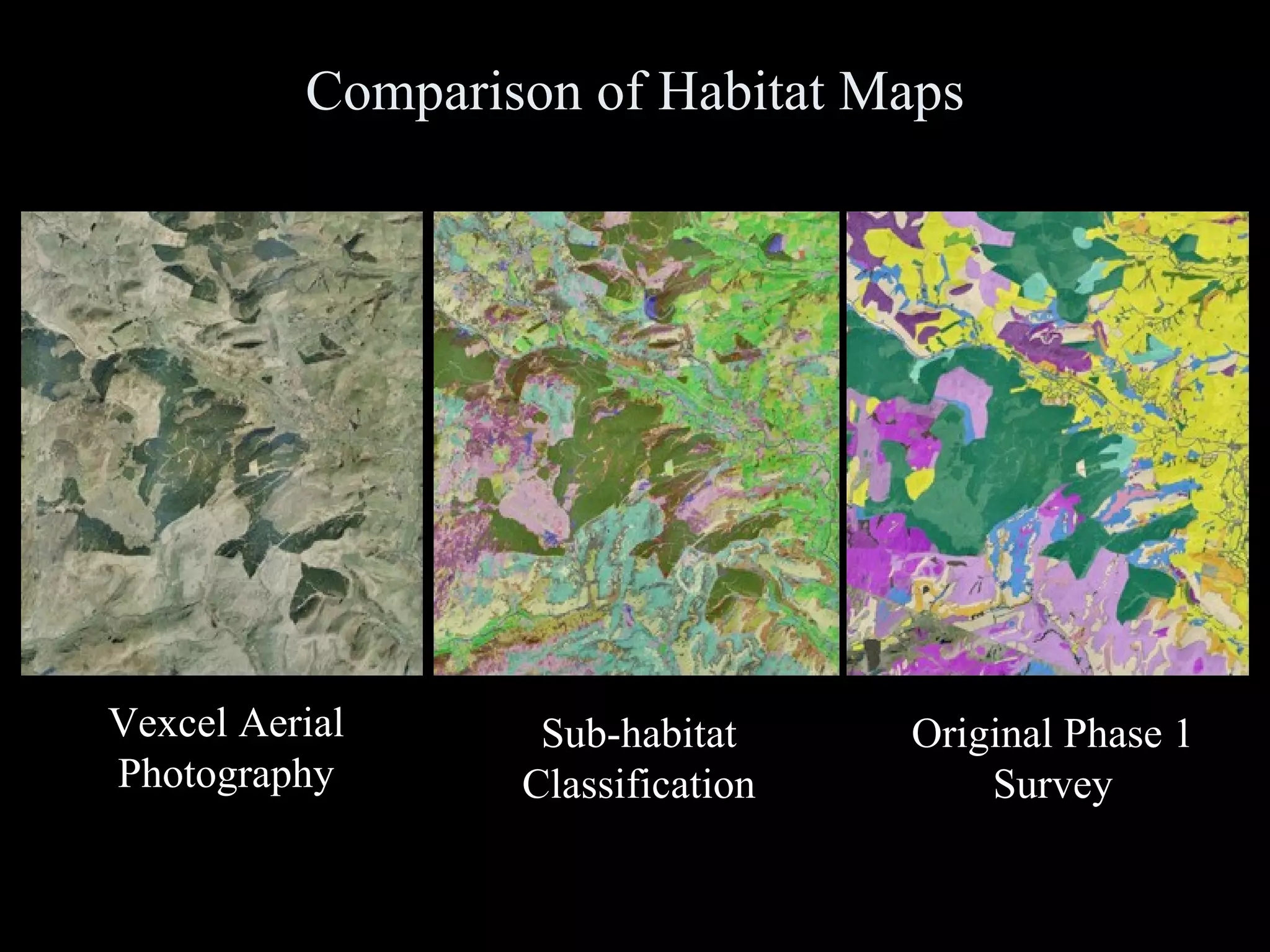
Comparison of Habitat Maps Vexcel Aerial Photography Sub-habitat Classification Original Phase 1 Survey
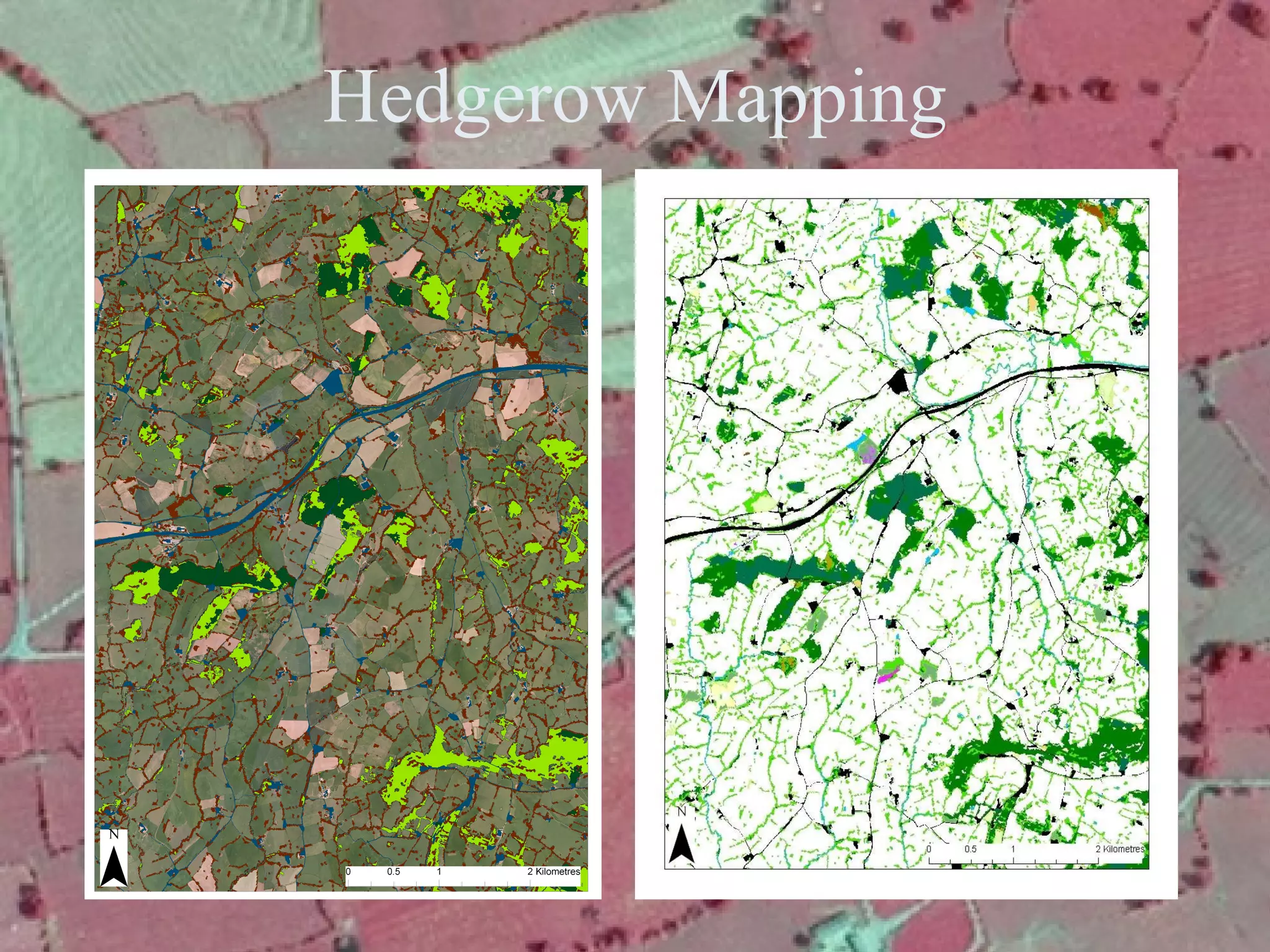
Hedgerow Mapping
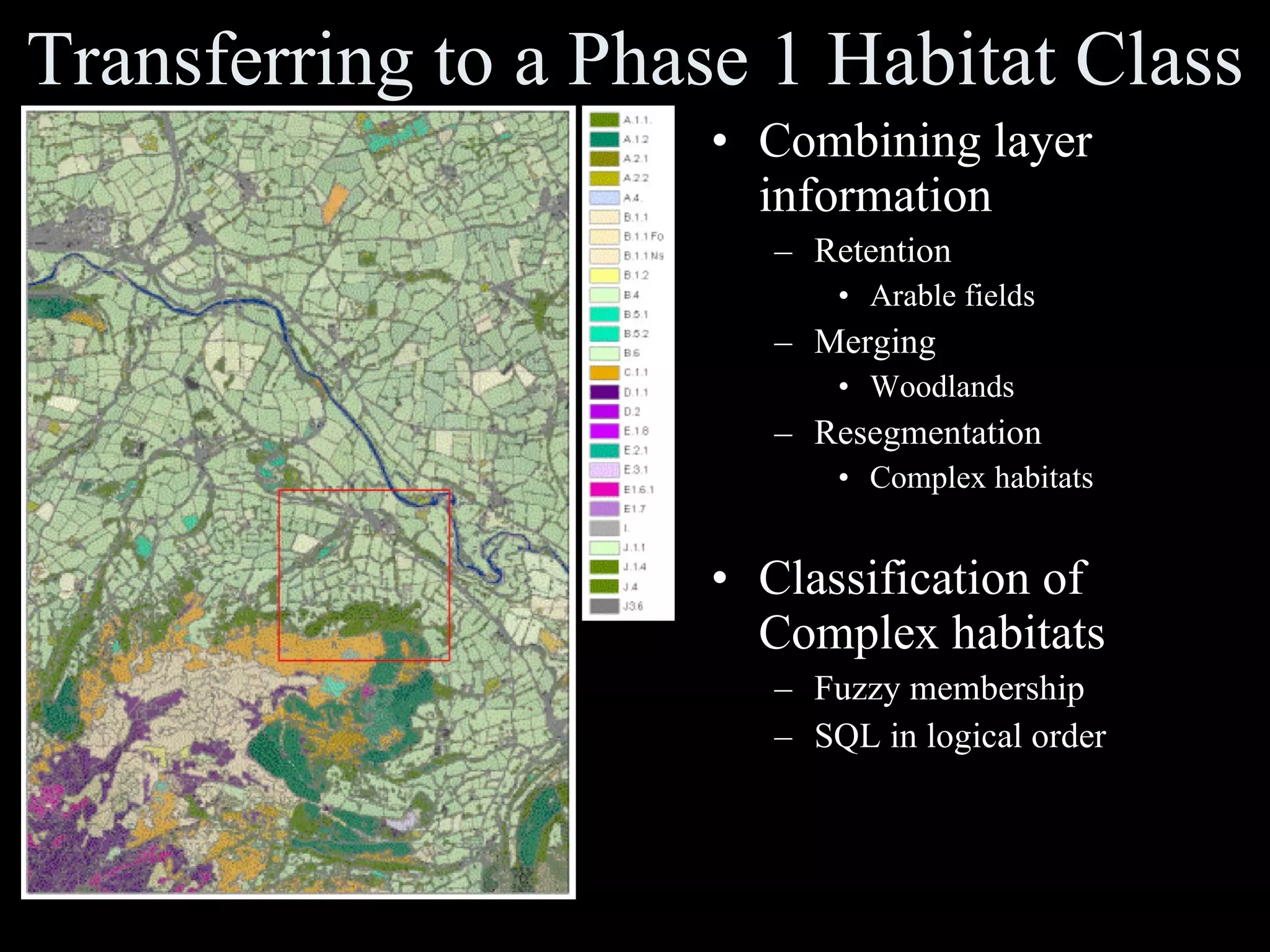
Transferring to a Phase 1 Habitat Class Combining layer information Retention Arable fields Merging Woodlands Resegmentation Complex habitats Classification of Complex habitats Fuzzy membership SQL in logical order Habitat classification Revised Phase 1 Classification
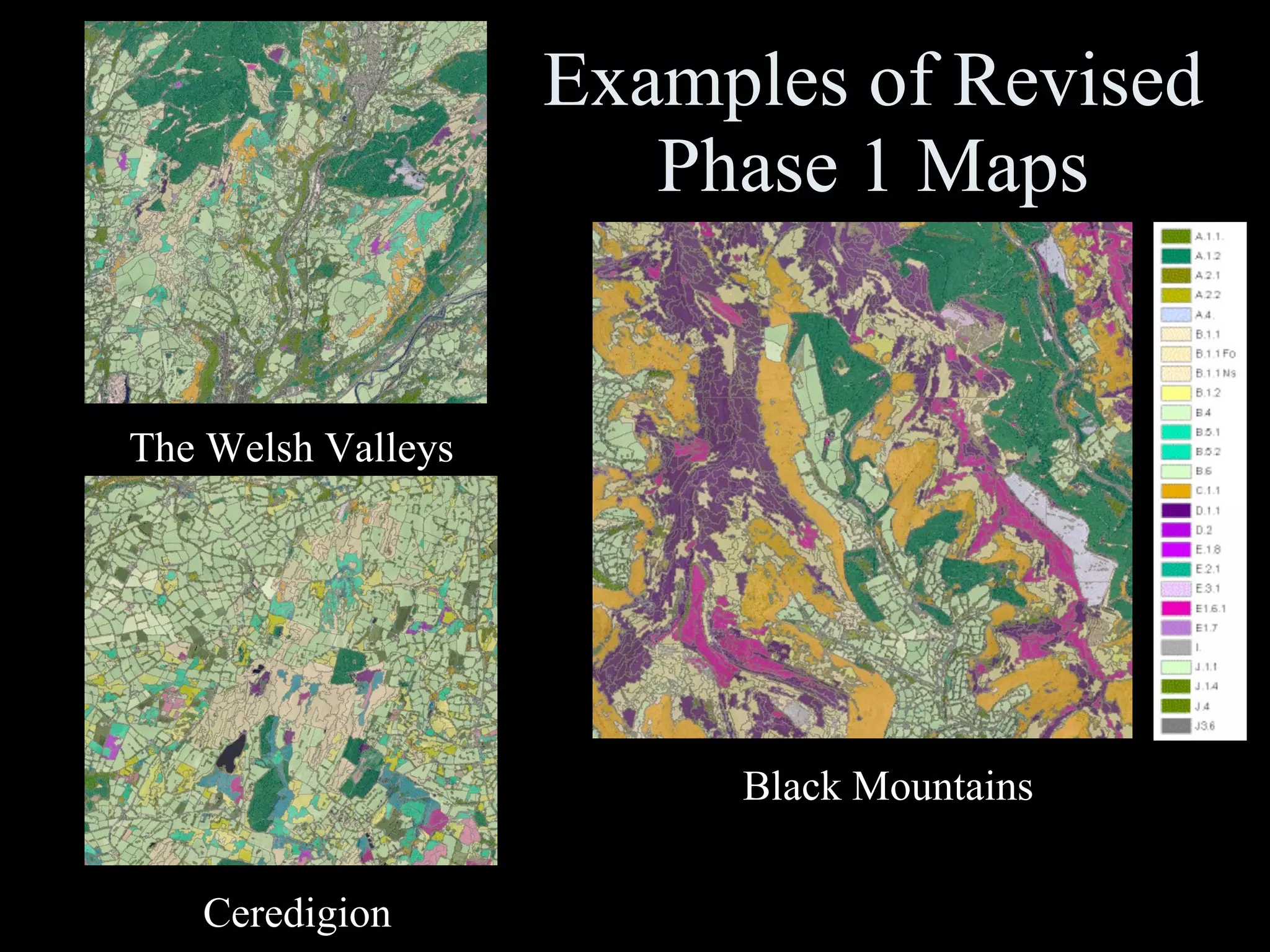
Examples of Revised Phase 1 Maps Black Mountains The Welsh Valleys Ceredigion
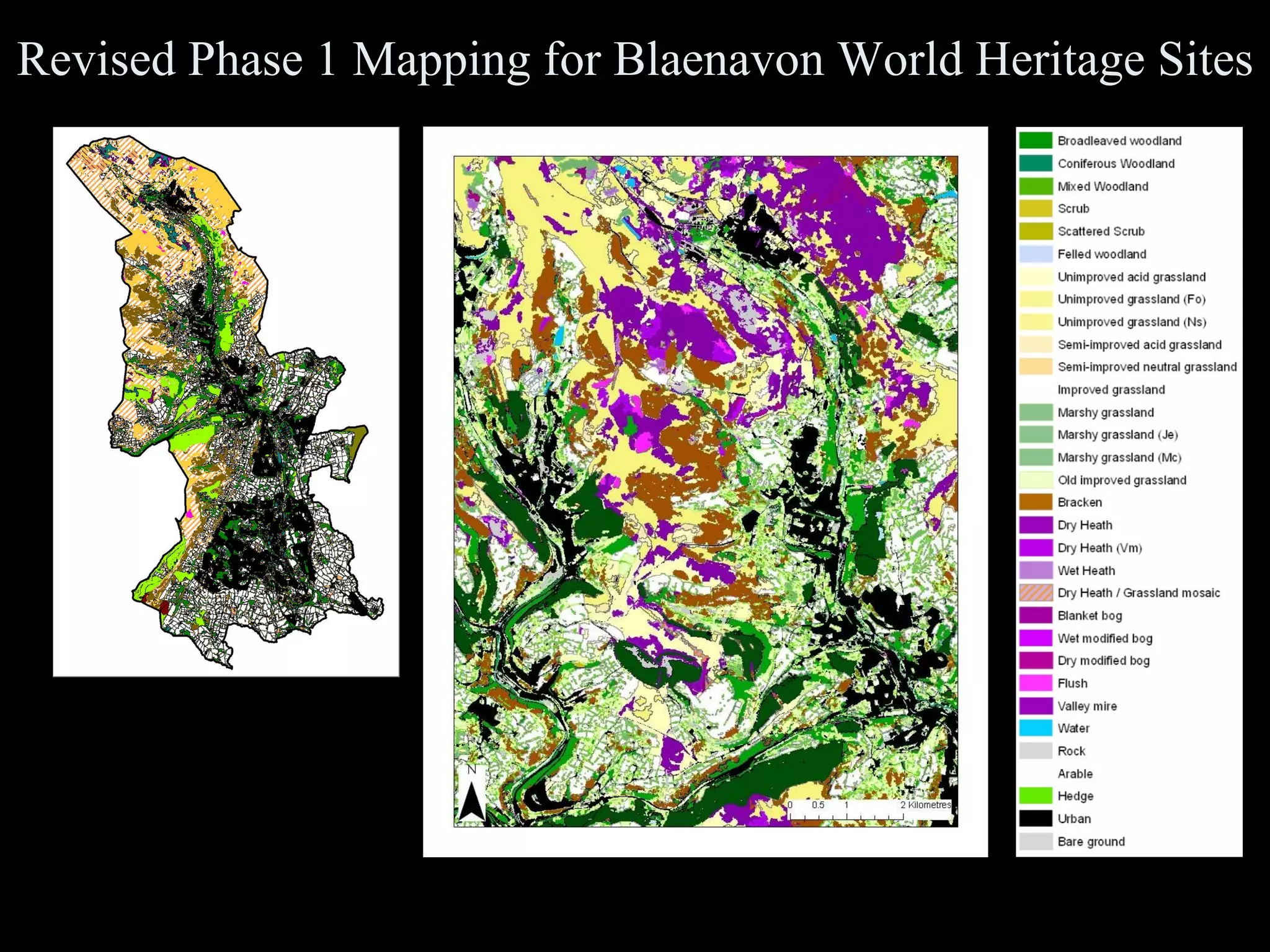
Revised Phase 1 Mapping for Blaenavon World Heritage Sites
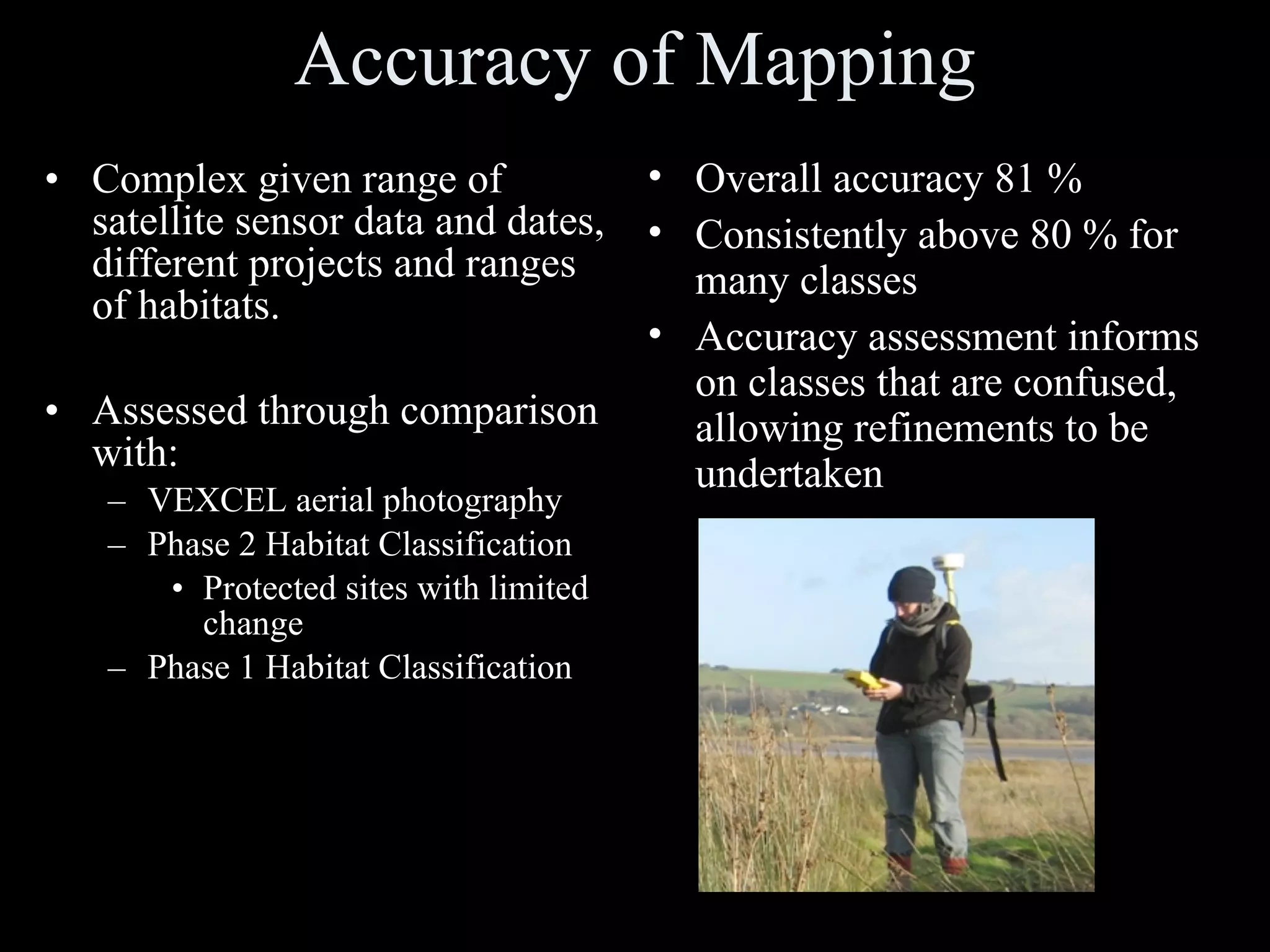
Accuracy of Mapping Complex given range of satellite sensor data and dates, different projects and ranges of habitats. Assessed through comparison with: VEXCEL aerial photography Phase 2 Habitat Classification  Protected sites with limited change Phase 1 Habitat Classification Overall accuracy 81 % Consistently above 80 % for many classes Accuracy assessment informs on classes that are confused, allowing refinements to be undertaken
Habitat Mapping and Monitoring in Wales First implementation of an object-based classification at a national level Utilises data from any optical sensor  A single adjustable ruleset that progressively classifies habitats from the coast to the highest mountains Three levels of information Fuzzy membership Sub-habitat classification Phase 1 habitat classification Accuracies typically exceeding 80 % Capacity to refine and update New rules or variations in those existing
The Concept of a Rolling Program Requirement to establish an existing baseline Refine existing Definiens-based mapping for nominal year of 2006 Based on assessments of accuracy  Modifications of rule set Develop rulebase based on imagery acquired up to 2010 Cross compare to further refine the 2006 and 2010 baselines and produce definitive version (accounting for areas of change) Development of a rule-set for change detection Establish changes between 2006 and 2010 and implement rule-set for change detection Use knowledge to develop a satellite-based monitoring system for Wales Enhancements Tasking of satellite sensor data Integration of finer spatial resolution datasets Applications Conservation and sustainable use of habitats (to protect biodiversity) Forestry Agricultural monitoring Climate change assessments
Use of Definiens Software Ecological and remote sensing knowledge coupled to give an intelligent, intuitive and easily understood classification Characterisation of vegetation and landscapes at multiple scales and levels of detail Variable and hierarchical segmentation of the landscape Inclusion of information from a wide variety of sources Consideration of context Semi-automated cloud screening
Acknowledgements Definiens for their superb software and support throughout. Martin Ehrhardt, Gregor Willhauck, Juan Jose Caliz, Ralph Humberg and Caroline Rogg Ursula Benz Countryside Council for Wales Alan Brown Environment Systems Katie Medcalf, Steve Keyworth, Philippa Batty, Johanna Breyer IGES, Aberystwyth University Peter Bunting, Dan Clewley University of Leicester Lex Comber BNSC Dr. Ian Thomas Dr. Ian Downing For further information email:  [email_address] ,  [email_address] ,  [email_address]

E Cognition User Summit2009 R Lucas University Wales National Vegetation Mapping

  • 1.
    Revision of NationalVegetation Mapping in Wales using eCognition Professor Richard Lucas University of Wales, Aberystwyth In collaboration with Environment Systems Countryside Council of Wales Definiens
  • 2.
    Overview Habitat Mappingin Wales The Phase 1 Survey The Berwyn Mountains: A pilot for satellite-based mapping Mapping habitats in Wales using Definiens Developer Pre-processing Segmentation and integration of GI Classification (sub-habitats) Transferring to Phase 1 Map production The Concept of a Rolling Program
  • 3.
    Wales or CymruAU: Proud to be a Definiens Centre of Excellence
  • 4.
    Phase 1 HabitatMapping in Wales The Phase 1 Habitat map was initiated in 1979 as the Upland Survey Lowlands completed in 1997 by CCW and then combined Relied on field survey and aerial photograph interpretation Expensive and difficult to update
  • 5.
    What do ecologistsobserve? Vegetation changes with season Temporal variations in leafing and leaf fall, flowering and land management practices. Vegetation variations with terrain Differences in vegetation type and environmental response with elevation, slope, aspect, morphology Relative degrees of variation in: Moisture content Surface roughness (manifested as shade) Productivity Proportions of live and dead material Amount of woody material (i.e., biomass) Plants of different species are visually different to the human eye
  • 6.
    What do RSscientists observe? Vegetation changes with season Temporal variations in reflectance and derived products (e.g, vegetation indices) Vegetation variations with terrain Differences in spectral reflectance with altitude, aspect and slope (i.e., related to zonations, shadowing) Relative degrees of variation in: Moisture content (e.g., SWIR reflectance) Surface roughness (e.g., shade fractions) Productivity (e.g., vegetation indices, NIR reflectance) Proportions of live and dead material (e.g., non photosynthetic fractions) Amount of woody material (e.g., differences in shadowing, radar) Plants of different species sometimes spectrally different in the visible wavelength regions but more so in those beyond.
  • 7.
    The Pilot: Classificationof habitats & agricultural land, Berwyn Mountains NE Wales Based on time-series of Landsat sensor data Rule-based approach that coupled knowledge of ecology with that of remote sensing scientists
  • 8.
  • 9.
  • 10.
    The Approach toMapping in Wales
  • 11.
    Division of Walesinto Projects Biogeographical Regions Image Footprints
  • 12.
    Pre-processing and Ancillarydata Pre-processing Orthorectification Atmospheric correction Topographic correction Cloud and cloud-shadow removal Ancillary data layers Digital Elevation Data Land parcel boundaries Roads, rivers and urban areas
  • 13.
    SPOT-5 (March) Landsat(March) SPOT-5 (April) IRS (May) Landsat (July) Landsat (Sept) Multiple sensors, seasonal observations
  • 14.
    Landsat ASTER IRSSPOT Geometric Correction: Orthorectification
  • 15.
    Standardization for datacomparability Atmospheric correction FLAASH Topographic correction ATCOR Essential for spring images Cloud and cloud shadow removal Definiens Developer
  • 16.
  • 17.
    Endmember Fractions &Indices Non-photosynthetic vegetation PV Shade Photosynthetic vegetation Shade/moisture
  • 18.
    Wet & Dry;Bogs, Bracken & Grassland Bogs (outlined in white) mapped by lower vegetation (photosynthetic) and greater moisture fraction (based on ASTER data). Areas of purple moor grass (black) and bracken (orange) mapped using a combination of SPOT non photosynthetic vegetation and shade/moisture fraction images.
  • 19.
    Wales is aland of fields Image segmented using unit (field) boundaries Multi-resolution segmentation (using larger scale factors) applied within the unit boundaries Areas outside of field boundaries (mainly uplands) using a small scale factor (1 - 2 pixels)
  • 20.
    Hierarchical Layers Superlevel Level 1 Sub level
  • 21.
    Rules based onecological knowledge Reflectance data Derived data Endmember fractions Vegetation Indices Band ratios Seasonal Differences Contextual information Proximity to the coast Relative proximity Saltmarshes Enclosures Adjacency Transfers within hierarchy Arable crops Topographic information Elevation Slope Aspect Concavity Ancillary data Urban areas Rivers and lakes Field boundaries
  • 22.
    Dealing with ComplexMosaics Upland habitats Heaths Bogs Lowland habitats Mires Grasslands Coastal habitats Dunes heaths
  • 23.
    Fuzzy Membership Vexcelaerial photography Calluna vulgaris (heather) Vaccinium myrtillus (bilberry) Coverage for Wales, 2006
  • 24.
  • 25.
  • 26.
  • 27.
    Cambrian Mountains: An example of mapping complex habitats in the uplands
  • 28.
    Cambrian Mountains: Example of mapping in uplands
  • 29.
    Cambrian Mountains: An example of mapping complex habitats in the uplands
  • 30.
    Comparison of HabitatMaps Vexcel Aerial Photography Sub-habitat Classification Original Phase 1 Survey
  • 31.
  • 32.
    Transferring to aPhase 1 Habitat Class Combining layer information Retention Arable fields Merging Woodlands Resegmentation Complex habitats Classification of Complex habitats Fuzzy membership SQL in logical order Habitat classification Revised Phase 1 Classification
  • 33.
    Examples of RevisedPhase 1 Maps Black Mountains The Welsh Valleys Ceredigion
  • 34.
    Revised Phase 1Mapping for Blaenavon World Heritage Sites
  • 35.
    Accuracy of MappingComplex given range of satellite sensor data and dates, different projects and ranges of habitats. Assessed through comparison with: VEXCEL aerial photography Phase 2 Habitat Classification Protected sites with limited change Phase 1 Habitat Classification Overall accuracy 81 % Consistently above 80 % for many classes Accuracy assessment informs on classes that are confused, allowing refinements to be undertaken
  • 36.
    Habitat Mapping andMonitoring in Wales First implementation of an object-based classification at a national level Utilises data from any optical sensor A single adjustable ruleset that progressively classifies habitats from the coast to the highest mountains Three levels of information Fuzzy membership Sub-habitat classification Phase 1 habitat classification Accuracies typically exceeding 80 % Capacity to refine and update New rules or variations in those existing
  • 37.
    The Concept ofa Rolling Program Requirement to establish an existing baseline Refine existing Definiens-based mapping for nominal year of 2006 Based on assessments of accuracy Modifications of rule set Develop rulebase based on imagery acquired up to 2010 Cross compare to further refine the 2006 and 2010 baselines and produce definitive version (accounting for areas of change) Development of a rule-set for change detection Establish changes between 2006 and 2010 and implement rule-set for change detection Use knowledge to develop a satellite-based monitoring system for Wales Enhancements Tasking of satellite sensor data Integration of finer spatial resolution datasets Applications Conservation and sustainable use of habitats (to protect biodiversity) Forestry Agricultural monitoring Climate change assessments
  • 38.
    Use of DefiniensSoftware Ecological and remote sensing knowledge coupled to give an intelligent, intuitive and easily understood classification Characterisation of vegetation and landscapes at multiple scales and levels of detail Variable and hierarchical segmentation of the landscape Inclusion of information from a wide variety of sources Consideration of context Semi-automated cloud screening
  • 39.
    Acknowledgements Definiens fortheir superb software and support throughout. Martin Ehrhardt, Gregor Willhauck, Juan Jose Caliz, Ralph Humberg and Caroline Rogg Ursula Benz Countryside Council for Wales Alan Brown Environment Systems Katie Medcalf, Steve Keyworth, Philippa Batty, Johanna Breyer IGES, Aberystwyth University Peter Bunting, Dan Clewley University of Leicester Lex Comber BNSC Dr. Ian Thomas Dr. Ian Downing For further information email: [email_address] , [email_address] , [email_address]