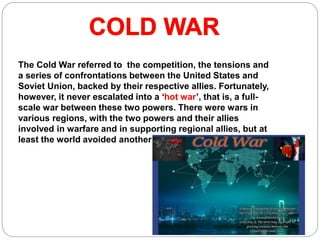
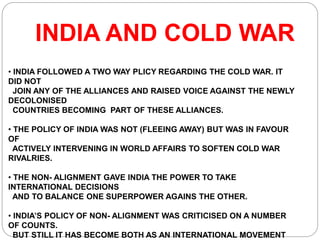
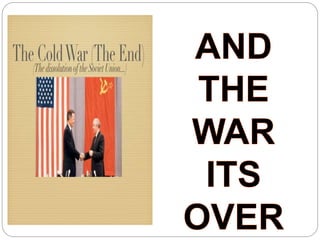
The Cold War referred to the competition, the tensions and
a series of confrontations between the United States and
Soviet Union, backed by their respective allies. Fortunately,
however, it never escalated into a ‘hot war’, that is, a full-
scale war between these two powers. There were wars in
various regions, with the two powers and their allies
involved in warfare and in supporting regional allies, but at
least the world avoided another global war.
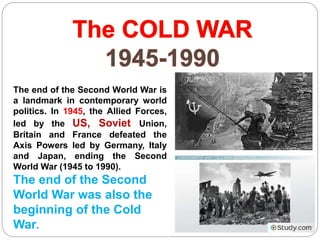
The end of the Second World War is
a landmark in contemporary world
politics. In 1945, the Allied Forces,
led by the US, Soviet Union,
Britain and France defeated the
Axis Powers led by Germany, Italy
and Japan, ending the Second
World War (1945 to 1990).
The end of the Second
World War was also the
beginning of the Cold
War.
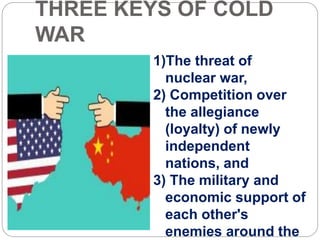
THREE KEYS OF COLD
WAR
1)The threat of
nuclear war,
2) Competition over
the allegiance
(loyalty) of newly
independent
nations, and
3) The military and
economic support of
each other's
enemies around the
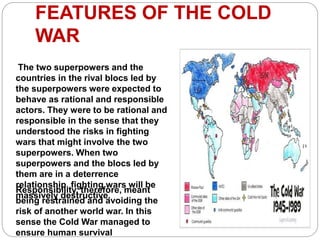
FEATURES OF THE COLD
WAR
The two superpowers and the
countries in the rival blocs led by
the superpowers were expected to
behave as rational and responsible
actors. They were to be rational and
responsible in the sense that they
understood the risks in fighting
wars that might involve the two
superpowers. When two
superpowers and the blocs led by
them are in a deterrence
relationship, fighting wars will be
massively destructive.
Responsibility, therefore, meant
being restrained and avoiding the
risk of another world war. In this
sense the Cold War managed to
ensure human survival
DEVELOPMENT OF THE COLD
WAR
-US. SAW SOVIET UNION AS THREAT TO
THEIR WAY OF LIFE.
- USSR THOUGHT THEY HAD WON WWII
- LOST MOST LIVES
- WANTED TO GAIN LAND
- SAW U.S. AAS THREAT
CAUSES OF COLD
WAR
• RUSSIA’S FEAR OF THE AMERICA’S ATOMIC BOM
• RUSSIA’S DISLIKE OF CAPITALISM
•AMERICAN FEAR OF COMMUNIST ATTACK
•RUSSIA’S ACTIONS IN THESOVIET ZONE OF GERM
•AMERICAN’S REFUSAL TO SHARE NUCLEAR SEC
•RUSSIA’S FEAR OF AMERICAN ATTACK.
•RUSSIA’S AIM OF SPREADING WORLD COMMUNIS
•RUSSIA’S NEEDS FOR A SECURE WESTERN BOR
•TRUMAN’S DISLIKE OF STALIN
COLD WAR DOCTRIAN OF
DETERRENCE
During the Cold War, the
United States and the Soviet
Union each built a stockpile
of nuclear weapons. Soviet
policy rested on the
conviction that a
nuclear war could be fought
and won. The United States
adopted nuclear deterrence,
the credible threat of
retaliation to forestall enemy
attack.
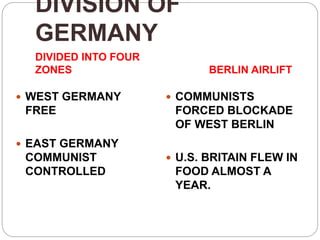
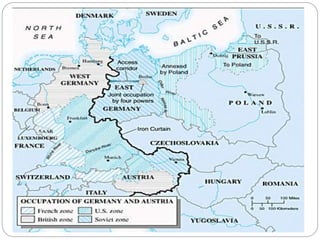
DIVISION OF
GERMANY
DIVIDED INTO FOUR
ZONES BERLIN AIRLIFT
 WEST GERMANY
FREE
 EAST GERMANY
COMMUNIST
CONTROLLED
 COMMUNISTS
FORCED BLOCKADE
OF WEST BERLIN
 U.S. BRITAIN FLEW IN
FOOD ALMOST A
YEAR.
1. The Cold War world was shaped and
divided by political and military alliances.
The best known of these alliances
were NATO and the Warsaw Pact, formed
in Europe after World War II.
2. The North Atlantic Treaty
Organization or NATO was formed in 1949,
an expansion of the Treaty of Brussels.
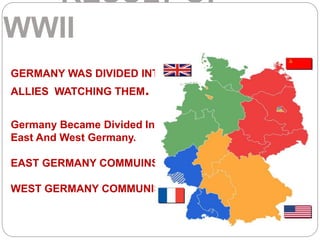
RESULT OF
WWII
GERMANY WAS DIVIDED INTO 4 ZONES WITH
ALLIES WATCHING THEM.
Germany Became Divided Into
East And West Germany.
EAST GERMANY COMMUINST -
WEST GERMANY COMMUNIST -
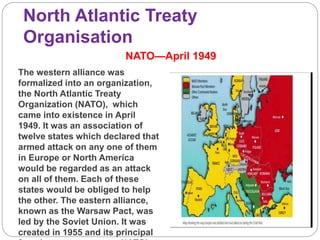
North Atlantic Treaty
Organisation
NATO—April 1949
The western alliance was
formalized into an organization,
the North Atlantic Treaty
Organization (NATO), which
came into existence in April
1949. It was an association of
twelve states which declared that
armed attack on any one of them
in Europe or North America
would be regarded as an attack
on all of them. Each of these
states would be obliged to help
the other. The eastern alliance,
known as the Warsaw Pact, was
led by the Soviet Union. It was
created in 1955 and its principal
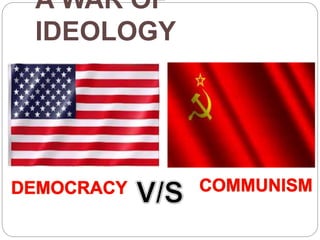
A WAR OF
IDEOLOGY
FOR
SUPERPOWERS
(i) Vital resources, such as oil and minerals,
(ii) Territory, from where the superpowers could launch their
weapons and troops,
(iii) Locations from where they could spy on each other, and
(iv) Economic support, in that many small allies together could
help pay for military expenses.
They were also important for ideological reasons. The loyalty of
allies suggested that the superpowers were winning the war of
ideas as well, that liberal democracy and capitalism were better
than socialism and communism, or vice versa.
ARENAS OF THE COLD
WAR
• THE ARENS OF THE COLD WAR REFER TO AREAS WHERE CRISIS AND WAR OCCURRED
OR THREATENED TO OCCUR BETWEEN THE ALLIANCE SYSTEM BUT DID NOT
CROSS CERTAIN LIMITS.
• THE COLD WAR ALSO RESPONSIBLE FOR SEVERAL SHOOTING WARS.
• THE TWO SUPERPOWERS WERE POISED FOR DIRECT ENCOUTER IN KOREA (1950-53),
BERLIN
(1958-62), THE CONGO AND IN SEVERAL OTHERS PLCES.
• JAWAHARLAL NEHRU, ONE OF THE KEY LEADER OF NAM PLAYED A KEY ROLE IN
MEDIATING BETWEEN THE TWO KOREAS. IN THE CONGO CRISIS, THE UN SECRETARY
GENERAL
PLAYED A KEY MEDIATORY ROLE.
• THE US AND USSR DECIDED TO COLLABORATE IN LIMITING OR ELIMINATING CERTAIN
KINDS
OF NUCEAR AND NON NUCLEAR WEAPONS.
• THE TWO SIDES SIGNED THREE SIGNIFICANT AGREEMENTS WITH IN A DECADE THESE
WERE
LIMITED TEST BAN TREATY(LTBT)
NUCLEAR NON- PROLIFERATION TREATY(NPT)
INDIA AND COLD WAR
• INDIA FOLLOWED A TWO WAY PLICY REGARDING THE COLD WAR. IT
DID NOT
JOIN ANY OF THE ALLIANCES AND RAISED VOICE AGAINST THE NEWLY
DECOLONISED
COUNTRIES BECOMING PART OF THESE ALLIANCES.
• THE POLICY OF INDIA WAS NOT (FLEEING AWAY) BUT WAS IN FAVOUR
OF
ACTIVELY INTERVENING IN WORLD AFFAIRS TO SOFTEN COLD WAR
RIVALRIES.
• THE NON- ALIGNMENT GAVE INDIA THE POWER TO TAKE
INTERNATIONAL DECISIONS
AND TO BALANCE ONE SUPERPOWER AGAINS THE OTHER.
• INDIA’S POLICY OF NON- ALIGNMENT WAS CRITICISED ON A NUMBER
OF COUNTS.
BUT STILL IT HAS BECOME BOTH AS AN INTERNATIONAL MOVEMENT
Presentation1

Presentation1

  • 2.
    The Cold Warreferred to the competition, the tensions and a series of confrontations between the United States and Soviet Union, backed by their respective allies. Fortunately, however, it never escalated into a ‘hot war’, that is, a full- scale war between these two powers. There were wars in various regions, with the two powers and their allies involved in warfare and in supporting regional allies, but at least the world avoided another global war.
  • 3.
    The end ofthe Second World War is a landmark in contemporary world politics. In 1945, the Allied Forces, led by the US, Soviet Union, Britain and France defeated the Axis Powers led by Germany, Italy and Japan, ending the Second World War (1945 to 1990). The end of the Second World War was also the beginning of the Cold War.
  • 4.
    THREE KEYS OFCOLD WAR 1)The threat of nuclear war, 2) Competition over the allegiance (loyalty) of newly independent nations, and 3) The military and economic support of each other's enemies around the
  • 5.
    FEATURES OF THECOLD WAR The two superpowers and the countries in the rival blocs led by the superpowers were expected to behave as rational and responsible actors. They were to be rational and responsible in the sense that they understood the risks in fighting wars that might involve the two superpowers. When two superpowers and the blocs led by them are in a deterrence relationship, fighting wars will be massively destructive. Responsibility, therefore, meant being restrained and avoiding the risk of another world war. In this sense the Cold War managed to ensure human survival
  • 6.
    DEVELOPMENT OF THECOLD WAR -US. SAW SOVIET UNION AS THREAT TO THEIR WAY OF LIFE. - USSR THOUGHT THEY HAD WON WWII - LOST MOST LIVES - WANTED TO GAIN LAND - SAW U.S. AAS THREAT
  • 7.
    CAUSES OF COLD WAR •RUSSIA’S FEAR OF THE AMERICA’S ATOMIC BOM • RUSSIA’S DISLIKE OF CAPITALISM •AMERICAN FEAR OF COMMUNIST ATTACK •RUSSIA’S ACTIONS IN THESOVIET ZONE OF GERM •AMERICAN’S REFUSAL TO SHARE NUCLEAR SEC •RUSSIA’S FEAR OF AMERICAN ATTACK. •RUSSIA’S AIM OF SPREADING WORLD COMMUNIS •RUSSIA’S NEEDS FOR A SECURE WESTERN BOR •TRUMAN’S DISLIKE OF STALIN
  • 8.
    COLD WAR DOCTRIANOF DETERRENCE During the Cold War, the United States and the Soviet Union each built a stockpile of nuclear weapons. Soviet policy rested on the conviction that a nuclear war could be fought and won. The United States adopted nuclear deterrence, the credible threat of retaliation to forestall enemy attack.
  • 9.
    DIVISION OF GERMANY DIVIDED INTOFOUR ZONES BERLIN AIRLIFT  WEST GERMANY FREE  EAST GERMANY COMMUNIST CONTROLLED  COMMUNISTS FORCED BLOCKADE OF WEST BERLIN  U.S. BRITAIN FLEW IN FOOD ALMOST A YEAR.
  • 11.
    1. The ColdWar world was shaped and divided by political and military alliances. The best known of these alliances were NATO and the Warsaw Pact, formed in Europe after World War II. 2. The North Atlantic Treaty Organization or NATO was formed in 1949, an expansion of the Treaty of Brussels.
  • 12.
    RESULT OF WWII GERMANY WASDIVIDED INTO 4 ZONES WITH ALLIES WATCHING THEM. Germany Became Divided Into East And West Germany. EAST GERMANY COMMUINST - WEST GERMANY COMMUNIST -
  • 13.
    North Atlantic Treaty Organisation NATO—April1949 The western alliance was formalized into an organization, the North Atlantic Treaty Organization (NATO), which came into existence in April 1949. It was an association of twelve states which declared that armed attack on any one of them in Europe or North America would be regarded as an attack on all of them. Each of these states would be obliged to help the other. The eastern alliance, known as the Warsaw Pact, was led by the Soviet Union. It was created in 1955 and its principal
  • 14.
  • 15.
    FOR SUPERPOWERS (i) Vital resources,such as oil and minerals, (ii) Territory, from where the superpowers could launch their weapons and troops, (iii) Locations from where they could spy on each other, and (iv) Economic support, in that many small allies together could help pay for military expenses. They were also important for ideological reasons. The loyalty of allies suggested that the superpowers were winning the war of ideas as well, that liberal democracy and capitalism were better than socialism and communism, or vice versa.
  • 16.
    ARENAS OF THECOLD WAR • THE ARENS OF THE COLD WAR REFER TO AREAS WHERE CRISIS AND WAR OCCURRED OR THREATENED TO OCCUR BETWEEN THE ALLIANCE SYSTEM BUT DID NOT CROSS CERTAIN LIMITS. • THE COLD WAR ALSO RESPONSIBLE FOR SEVERAL SHOOTING WARS. • THE TWO SUPERPOWERS WERE POISED FOR DIRECT ENCOUTER IN KOREA (1950-53), BERLIN (1958-62), THE CONGO AND IN SEVERAL OTHERS PLCES. • JAWAHARLAL NEHRU, ONE OF THE KEY LEADER OF NAM PLAYED A KEY ROLE IN MEDIATING BETWEEN THE TWO KOREAS. IN THE CONGO CRISIS, THE UN SECRETARY GENERAL PLAYED A KEY MEDIATORY ROLE. • THE US AND USSR DECIDED TO COLLABORATE IN LIMITING OR ELIMINATING CERTAIN KINDS OF NUCEAR AND NON NUCLEAR WEAPONS. • THE TWO SIDES SIGNED THREE SIGNIFICANT AGREEMENTS WITH IN A DECADE THESE WERE LIMITED TEST BAN TREATY(LTBT) NUCLEAR NON- PROLIFERATION TREATY(NPT)
  • 17.
    INDIA AND COLDWAR • INDIA FOLLOWED A TWO WAY PLICY REGARDING THE COLD WAR. IT DID NOT JOIN ANY OF THE ALLIANCES AND RAISED VOICE AGAINST THE NEWLY DECOLONISED COUNTRIES BECOMING PART OF THESE ALLIANCES. • THE POLICY OF INDIA WAS NOT (FLEEING AWAY) BUT WAS IN FAVOUR OF ACTIVELY INTERVENING IN WORLD AFFAIRS TO SOFTEN COLD WAR RIVALRIES. • THE NON- ALIGNMENT GAVE INDIA THE POWER TO TAKE INTERNATIONAL DECISIONS AND TO BALANCE ONE SUPERPOWER AGAINS THE OTHER. • INDIA’S POLICY OF NON- ALIGNMENT WAS CRITICISED ON A NUMBER OF COUNTS. BUT STILL IT HAS BECOME BOTH AS AN INTERNATIONAL MOVEMENT