Professionalism at Workplace
Etiquettes, Ethics, Teamwork, Meetings.
Presented To : Sir Asad Presented By: Group 3
Group Members:
Rubab Khalid, Amaal Amir, Amna Khalil, Farwa Khalid, Hanzala
Azam, Haseeb, Azam, Muqeet, Muddasir Rashid, Tayyab, Ali Tarar.
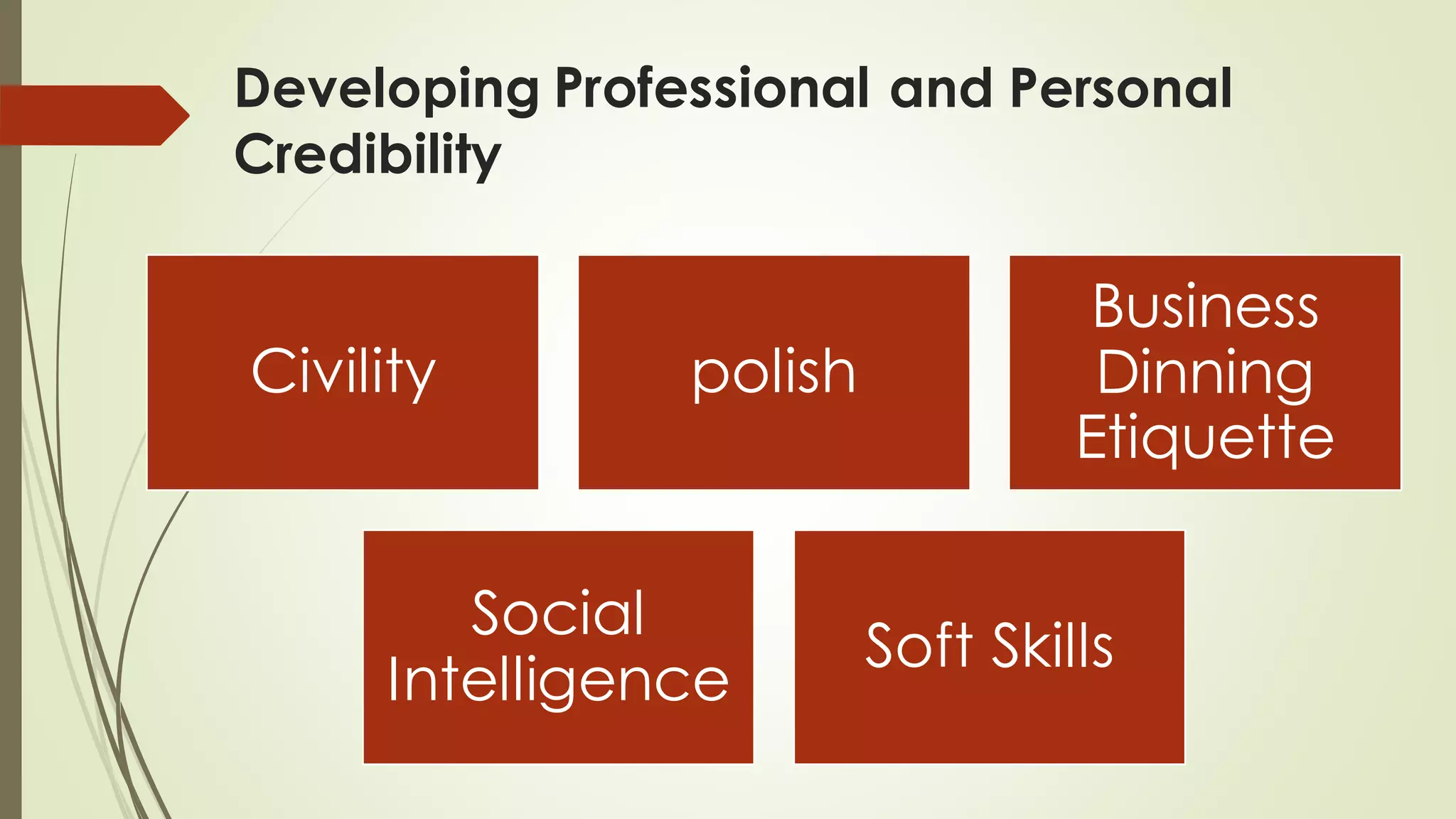
Developing Professional and Personal
Credibility
Civility polish
Business
Dinning
Etiquette
Social
Intelligence
Soft Skills
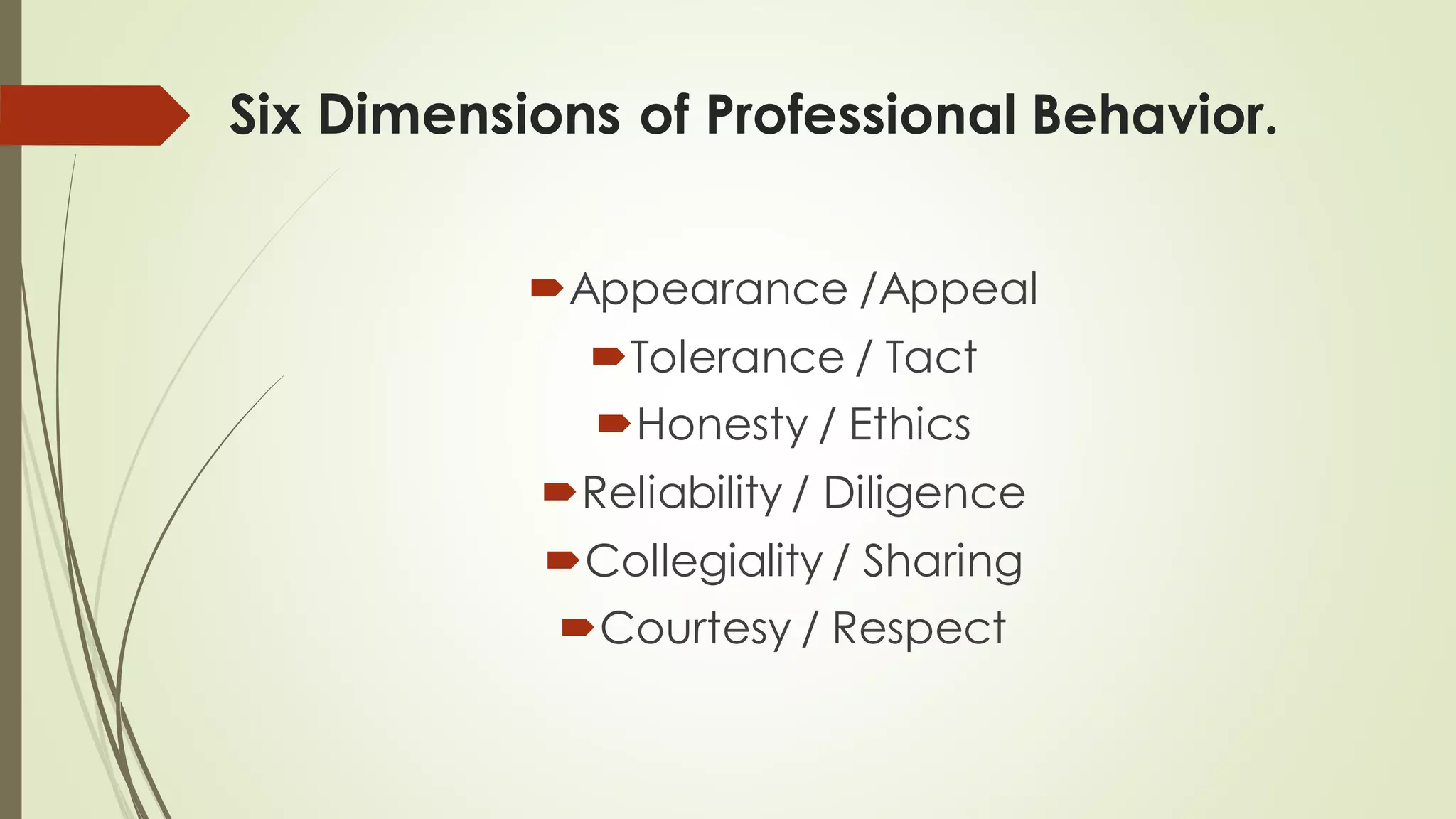
Six Dimensions of Professional Behavior.
Appearance /Appeal
Tolerance / Tact
Honesty / Ethics
Reliability / Diligence
Collegiality / Sharing
Courtesy / Respect
Gaining an Etiquette Edge in a Networked
World.
• Expressing sincere appreciation and praise.
• Use polite words.
• Respect coworkers space.
• Be selective in sharing personal information.
• Don't put people down.
Media Richness & Communication
Effectiveness.
Using your voice as communication tool.
Making Workplace conversation matter.
Receiving Workspace criticism gracefully.
Providing Constructive Criticism on the Job.
Make and Receive telephone calls
professionally.
Observe Smartphone Etiquette.
Make most of the voice-mail.
Why form Teams??
Better Decision
Faster Responses
Improved Employee Morale
Increased Productivity
Less Resistance to Change
Greater Buy-in
Reduced risks
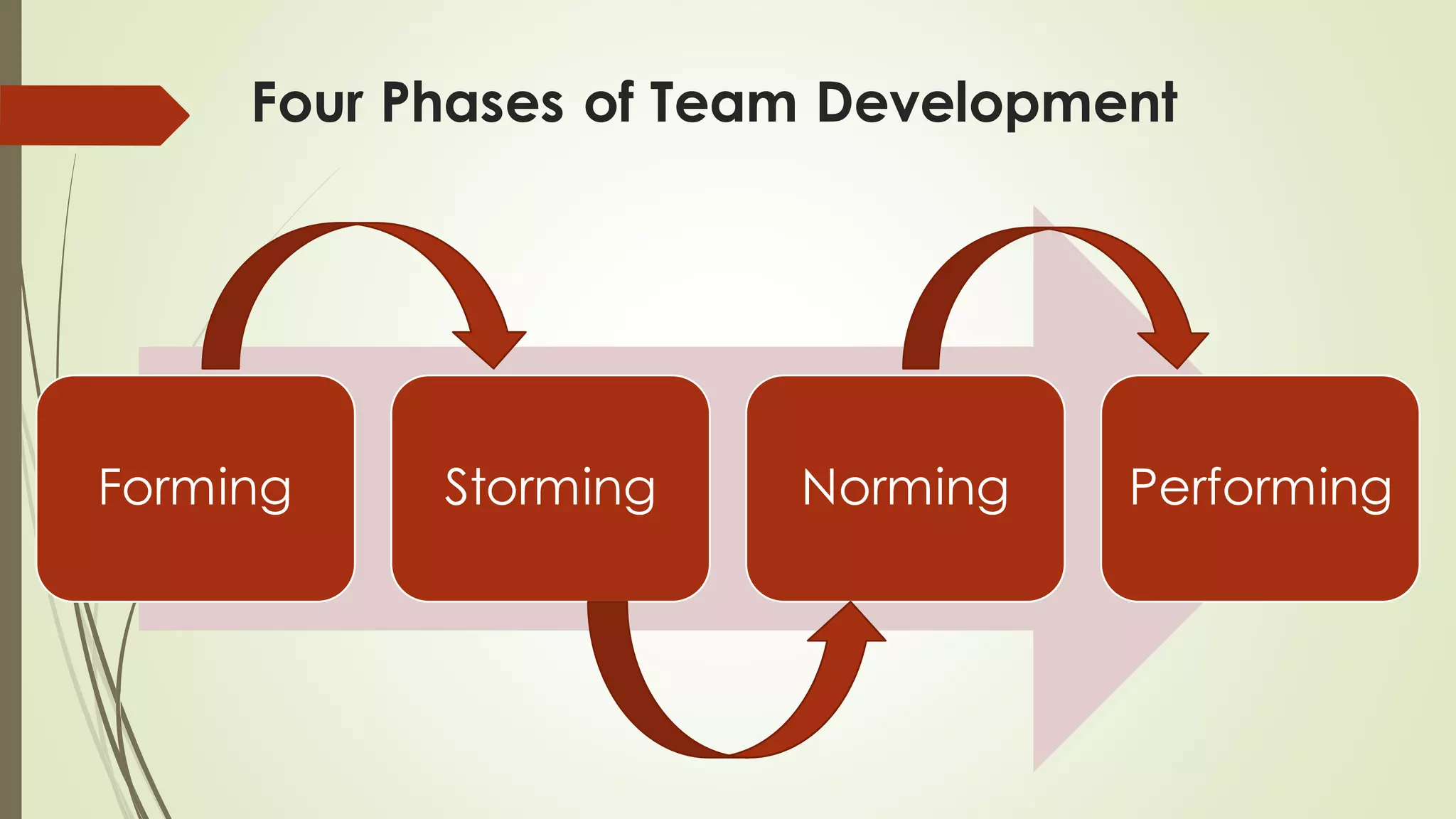
Four Phases of Team Development
Forming Storming Norming Performing
Collaborating in Virtual Teams
Collaborate with Co-workers in other cities & countries.
Coordinate tasks across time & geographical zones.
Accomplish shared tasks without face-to-face contact.
Pool expertise from various, diverse contributors.
Participate and collaborate locally.
Positive and Negative Team Behavior.
Positive Behavior
• Setting rules and abiding
by them.
• Analyzing tasks and
defining problems.
• Contributing information &
ideas.
• Showing interest & listening
actively.
• Encouraging members to
participating.
Negative Behavior
• Blocking the ideas of
others.
• Insulting & criticizing others.
• Wasting others time.
• Making improper jokes &
comments.
• Failing to stay on task.
• Withdrawing and failing to
participate.
Defining Successful Teams
Stay small and Embrace Diversity
Agree on Purpose
Agree on Procedures
Confront conflict
Communicate Effectively
Collaborate rather than Compete
Accept Ethical Responsibilities
Share Leadership
Planning and Participating in face-to-face
Meetings
Preparing
( Determine the purpose, Decide how & where to
meet, Selecting participants, Schedule meetings ).
Managing
( Getting started and establishing ground rules, Moving
along the meeting, Handling conflict ).
Concluding and Following Up.
Planning and Participating in Virtual Meetings
Preparing for Virtual Meetings
( Dealing with technology, Respecting the
need of Dispersed People ).
Interacting professionally in Virtual Meeting
( Establish Ground rules, Anticipating the
limitations, Managing turn-taking and other
meeting procedures, Humanizing
Virtual meetings
THANK YOU

Presentation (professionalism in the workplace).pdf

  • 1.
    Professionalism at Workplace Etiquettes,Ethics, Teamwork, Meetings. Presented To : Sir Asad Presented By: Group 3 Group Members: Rubab Khalid, Amaal Amir, Amna Khalil, Farwa Khalid, Hanzala Azam, Haseeb, Azam, Muqeet, Muddasir Rashid, Tayyab, Ali Tarar.
  • 2.
    Developing Professional andPersonal Credibility Civility polish Business Dinning Etiquette Social Intelligence Soft Skills
  • 3.
    Six Dimensions ofProfessional Behavior. Appearance /Appeal Tolerance / Tact Honesty / Ethics Reliability / Diligence Collegiality / Sharing Courtesy / Respect
  • 4.
    Gaining an EtiquetteEdge in a Networked World. • Expressing sincere appreciation and praise. • Use polite words. • Respect coworkers space. • Be selective in sharing personal information. • Don't put people down.
  • 5.
    Media Richness &Communication Effectiveness. Using your voice as communication tool. Making Workplace conversation matter. Receiving Workspace criticism gracefully. Providing Constructive Criticism on the Job. Make and Receive telephone calls professionally. Observe Smartphone Etiquette. Make most of the voice-mail.
  • 6.
    Why form Teams?? BetterDecision Faster Responses Improved Employee Morale Increased Productivity Less Resistance to Change Greater Buy-in Reduced risks
  • 7.
    Four Phases ofTeam Development Forming Storming Norming Performing
  • 8.
    Collaborating in VirtualTeams Collaborate with Co-workers in other cities & countries. Coordinate tasks across time & geographical zones. Accomplish shared tasks without face-to-face contact. Pool expertise from various, diverse contributors. Participate and collaborate locally.
  • 9.
    Positive and NegativeTeam Behavior. Positive Behavior • Setting rules and abiding by them. • Analyzing tasks and defining problems. • Contributing information & ideas. • Showing interest & listening actively. • Encouraging members to participating. Negative Behavior • Blocking the ideas of others. • Insulting & criticizing others. • Wasting others time. • Making improper jokes & comments. • Failing to stay on task. • Withdrawing and failing to participate.
  • 10.
    Defining Successful Teams Staysmall and Embrace Diversity Agree on Purpose Agree on Procedures Confront conflict Communicate Effectively Collaborate rather than Compete Accept Ethical Responsibilities Share Leadership
  • 11.
    Planning and Participatingin face-to-face Meetings Preparing ( Determine the purpose, Decide how & where to meet, Selecting participants, Schedule meetings ). Managing ( Getting started and establishing ground rules, Moving along the meeting, Handling conflict ). Concluding and Following Up.
  • 12.
    Planning and Participatingin Virtual Meetings Preparing for Virtual Meetings ( Dealing with technology, Respecting the need of Dispersed People ). Interacting professionally in Virtual Meeting ( Establish Ground rules, Anticipating the limitations, Managing turn-taking and other meeting procedures, Humanizing Virtual meetings
  • 13.