of
Time ,Team, Change &Conflict
S. Padma Rani,
Sr. Faculty
• What is Efficiency?
• What is Effectiveness?
• Efficiency is ‘Doing the thing right’
• Effectiveness is ‘Doing the right thing’
Effectiveness is bringing about the
conditions you desire
By beginning with the end in mind
“None of us is as smart as all of
us”, simple words with a lot of weight.
• What is a TEAM?
• a group of people working
• together to achieve
• a common goal
• What is TEAMWORK?
• the ability to cooperate and
• communicate effectively with others
• to achieve a common goal
Stages of Team
Development
Forming (assemble team; deal with ambiguity)
Storming (deal with criticism; develop ideas)
Norming (procedures, cohesion)
Performing (cooperation)
TEAMWORK
o
o
o
o
o
o
Agree on goals / milestones
Establish tasks to be completed
Communicate / monitor progress
Solve problems
Interpret results
Agree completion of project
INDIVIDUAL
WORK
o Work on tasks
o Work on new / revised tasks
o Research / development
o Networking
Multi-
Tasking
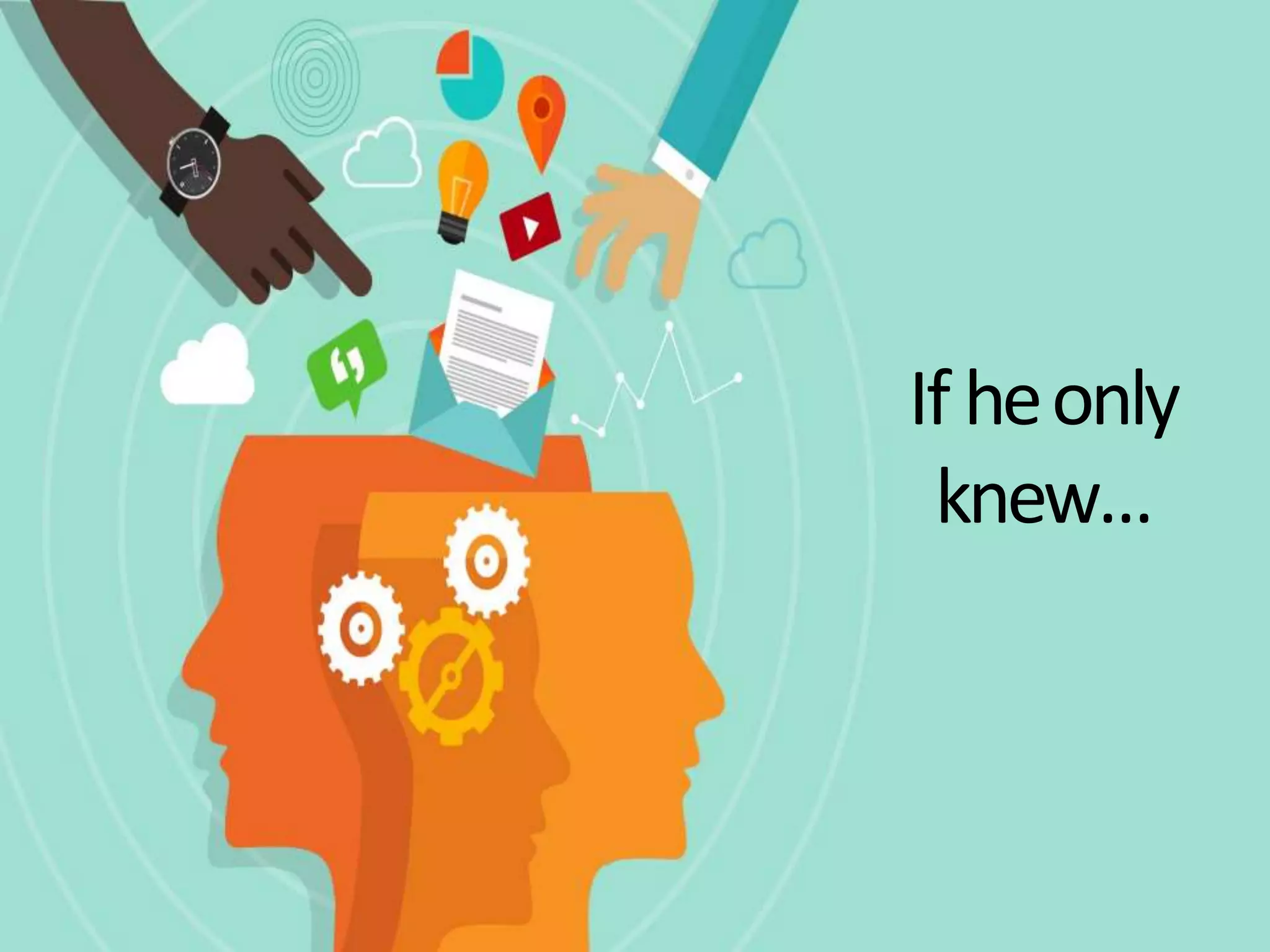
If heonly
knew…
Change Management
How To Use time Effectively
• Effective planning.
• Setting goals and objectives.
• Setting deadlines.
• Delegation of responsibilities.
• Prioritizing activities as per
their importance.
• Spending the right time
on the right activity.
Taking Initiative
Stand Out at work
7 habits of Highly effective People by Steven Covey
1)Be Proactive
2)Begin with the end in mind
3)Put first thing first
4)Think win – win
5)Seek first to understand, than to be understood
6)Synergize
7)Sharpen the saw
Set of Behaviors
Technological Assistance
• Think You can (and will) succeed
• People have confidence in us when we have confidence in ourselves,
• We gain confidence when Skill & knowledge grow
What To think, or Not
• a
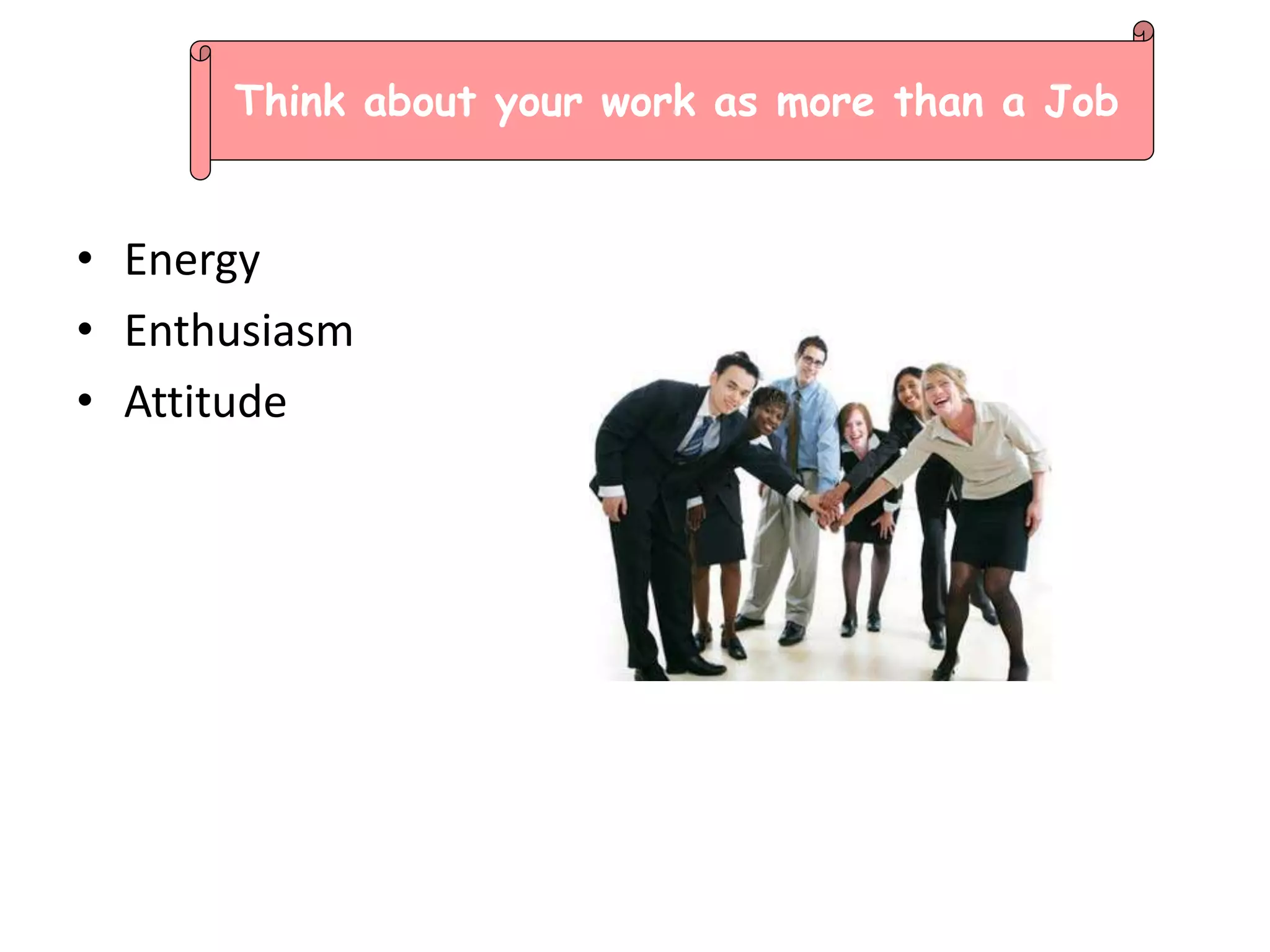
• Energy
• Enthusiasm
• Attitude
Think about your work as more than a Job
DevelopSelf
Awareness
What motivates me?Why?
What does not motivateme?
Why?
What doI need personally and
professionally
now?
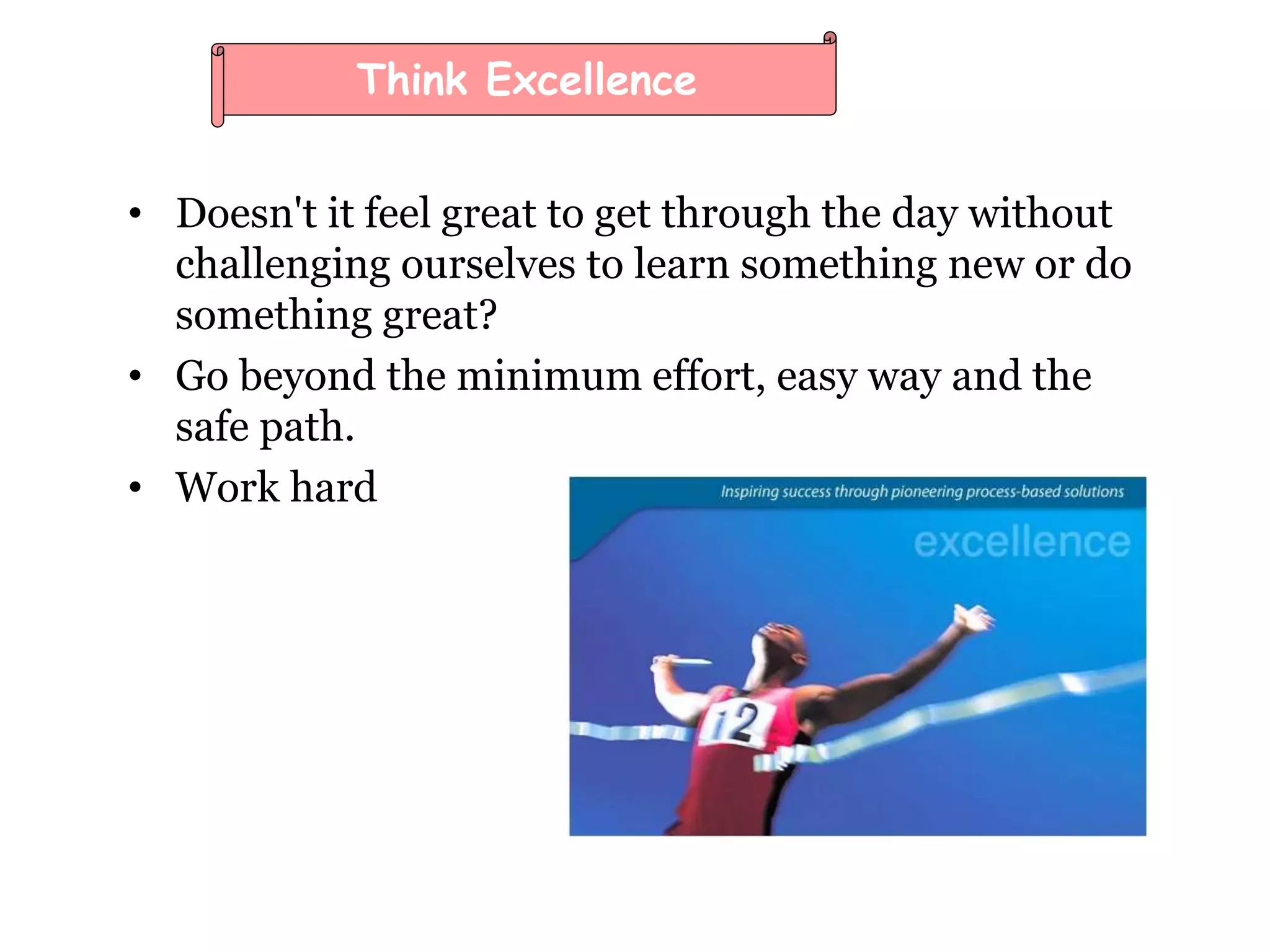
• Doesn't it feel great to get through the day without
challenging ourselves to learn something new or do
something great?
• Go beyond the minimum effort, easy way and the
safe path.
• Work hard
Think Excellence
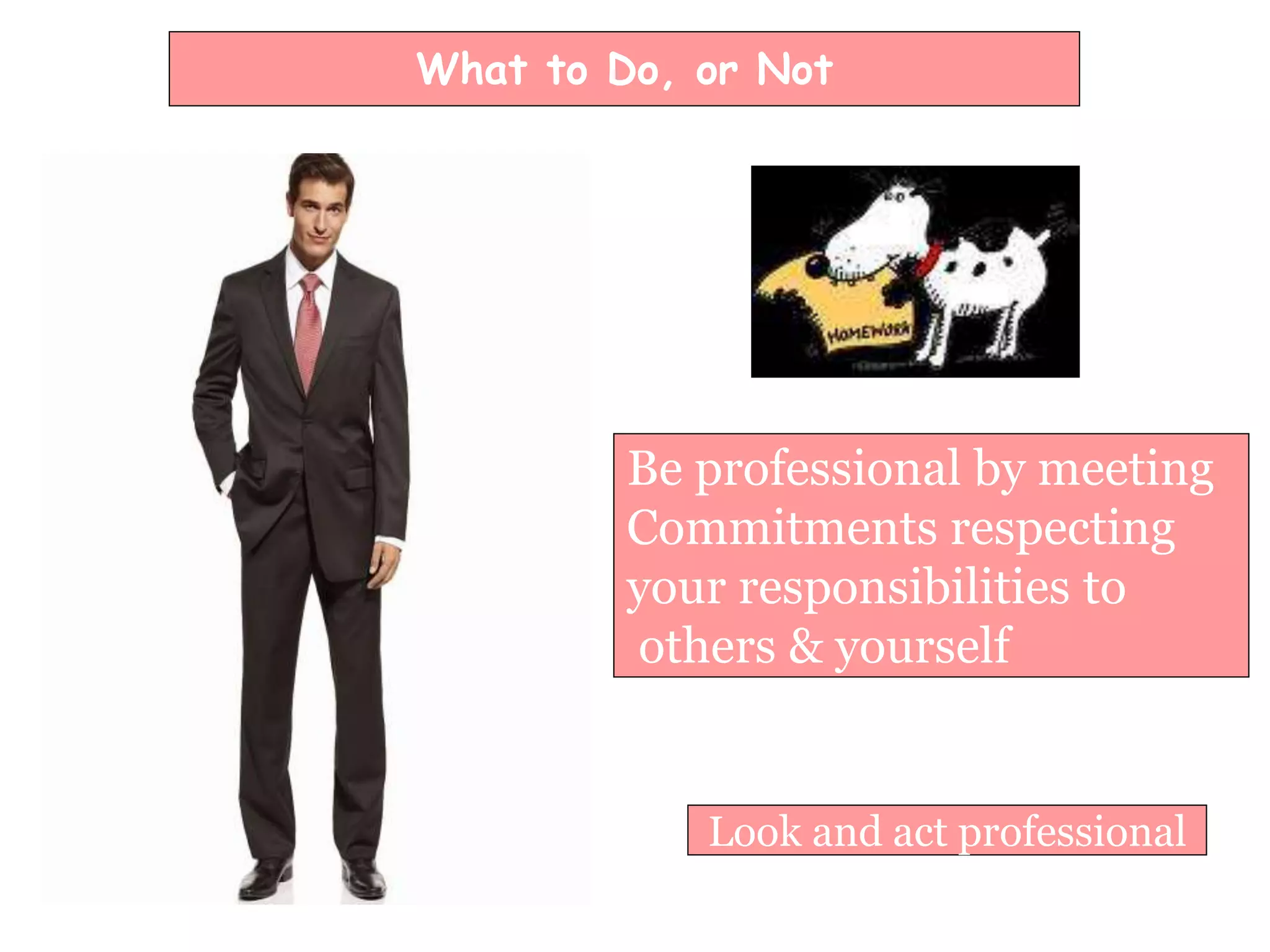
What to Do, or Not
Look and act professional
Be professional by meeting
Commitments respecting
your responsibilities to
others & yourself
• Build Relationships
• Learn From your mistakes
• Be flexible - "That's not my job." "I don't want to do that
Create growth opportunities for yourself
• S = Specific
• M = Measurable
• A = Attainable
• R = Realistic
• T = Timely
4.Setting Goals
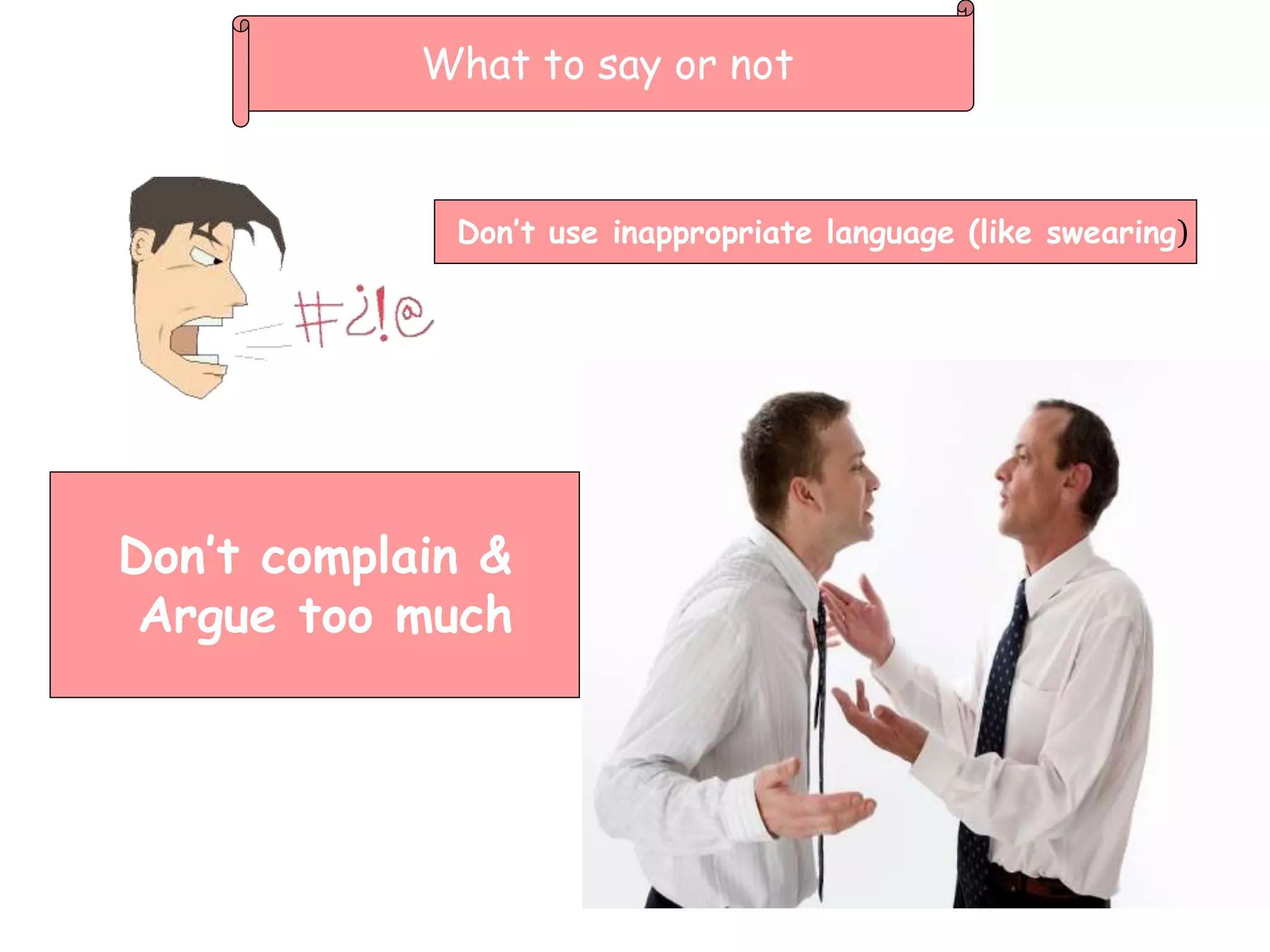
Don’t complain &
Argue too much
Don’t use inappropriate language (like swearing)
What to say or not
Don't talk about
personal problems
Don’t talk Politics & Religion
Make sure that good
relationships are the
first priority
Use active listening skills to ensure that
you hear and understand other’s positions
and perceptions.
When you talk use an assertive approach rather than
a submissive or aggressive style
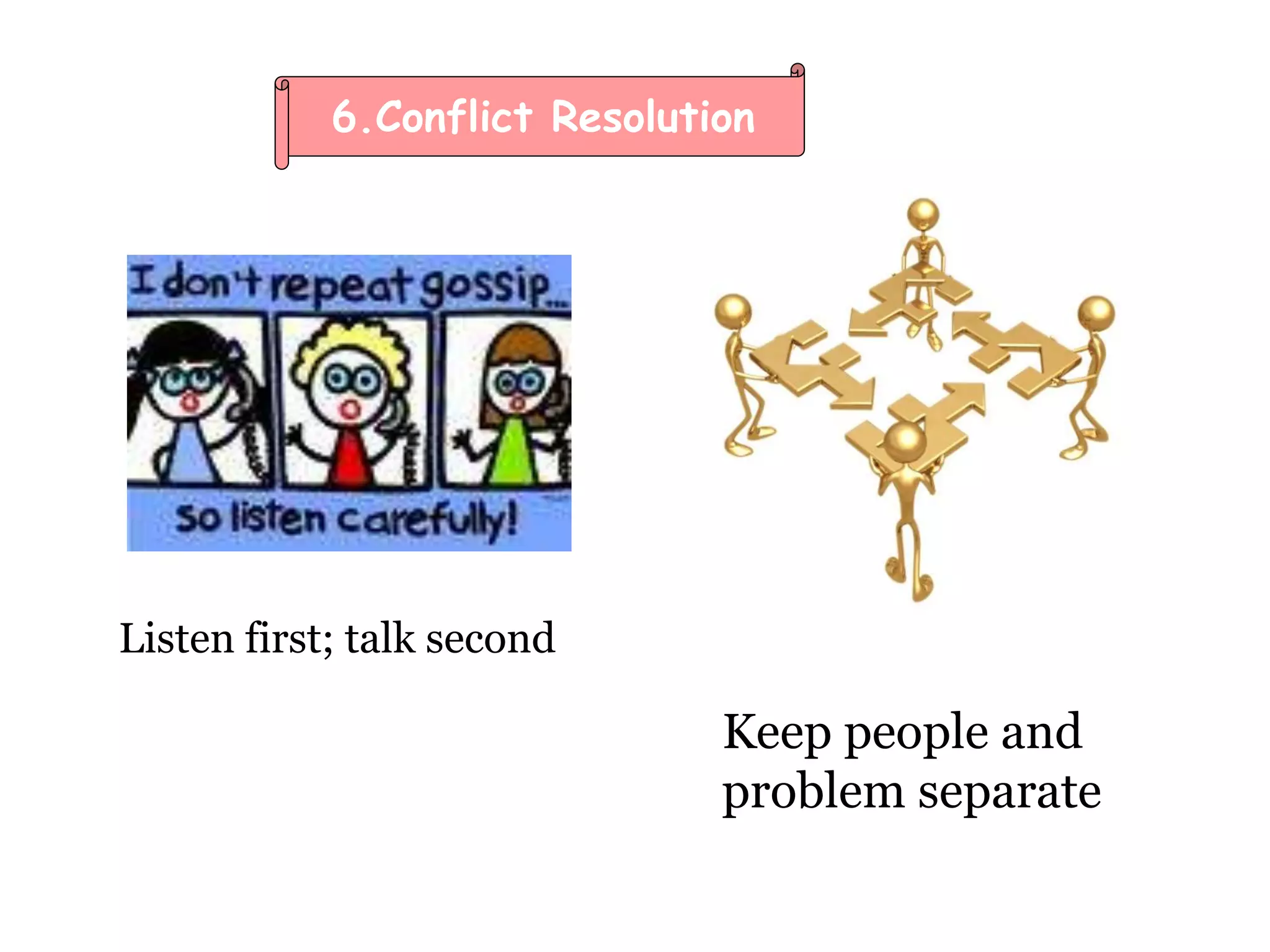
Listen first; talk second
Keep people and
problem separate
6.Conflict Resolution
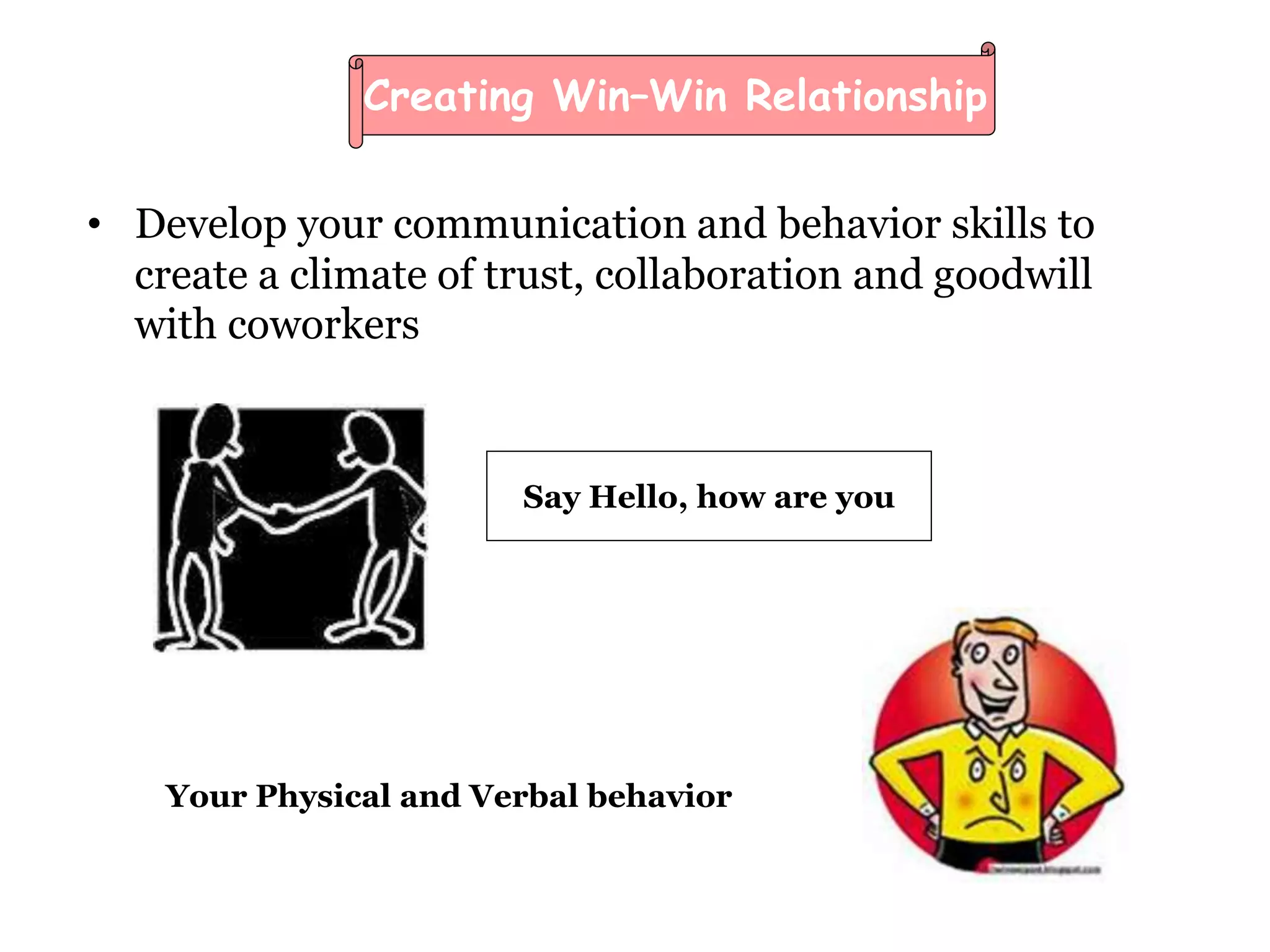
• Develop your communication and behavior skills to
create a climate of trust, collaboration and goodwill
with coworkers
Creating Win–Win Relationship
Your Physical and Verbal behavior
Say Hello, how are you
8.Stress Management
•Avoid people who stress you out
•Avoid hot-button topics
•Prepare down your to-do list
Addressing Emotions At Work
Kick habits that hurt you. Habits such as procrastinating,
overeating, being disorganized, avoiding conflict…etc
Learn how to stay calm and clearheaded when you start to lose your temper
Eliminate over-reactive behaviors and replace them with reasonable behaviors
Learn behavior modification skills that people will notice—and will likely
want to copy themselves
Take ownership of your emotions and your reactions
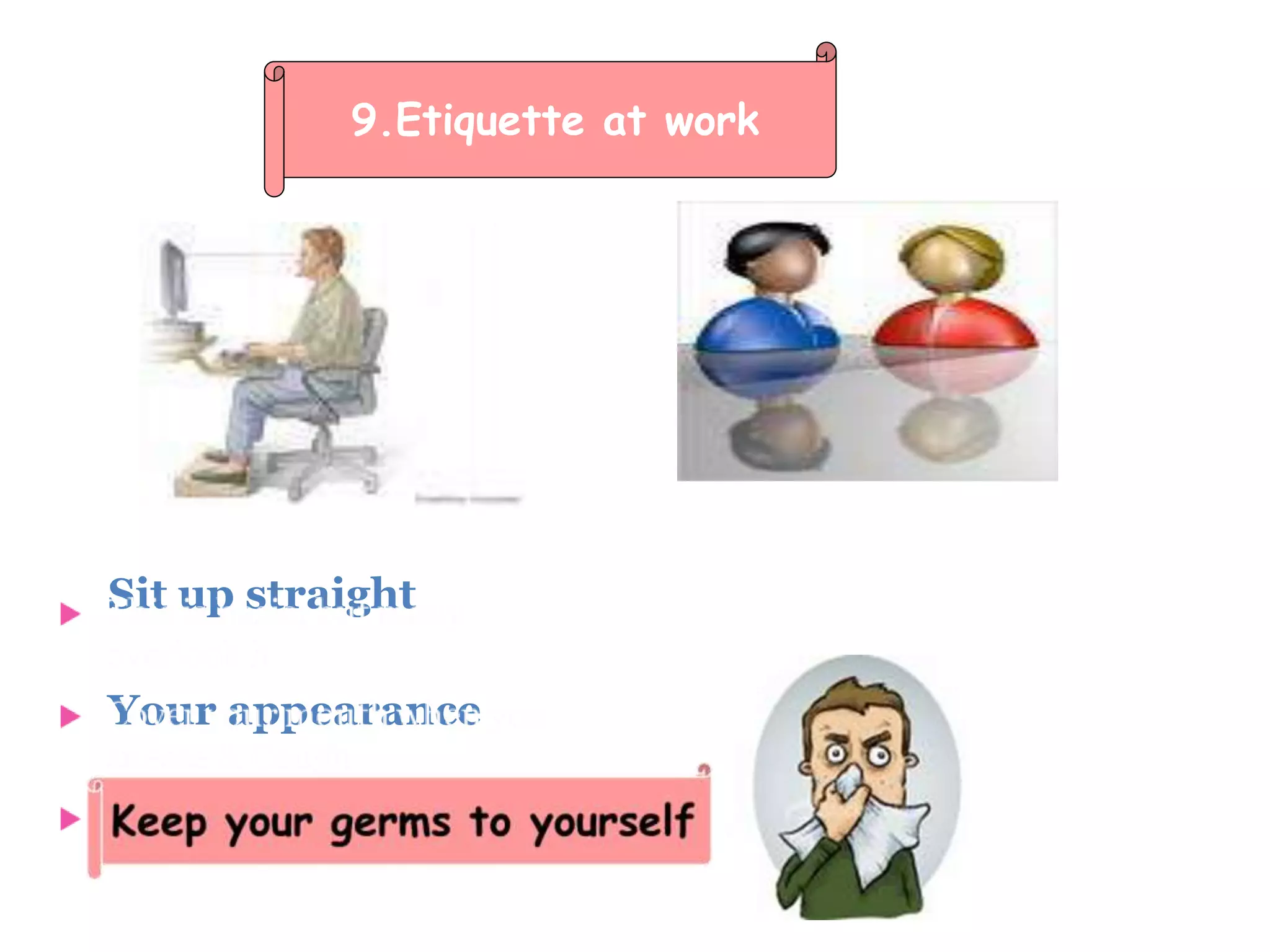
Sit up straight
Your appearance
9.Etiquette at work
Don’t talk loudly across partitions
Keep cell phone ringers low
Answers phone promptly, don’t let it ring several times
Use speakerphone only for conference calls
Keep Your noise to yourself
• Always keep a positive attitude
• Talk nicely and be nice
10.Attitude
That’s it….
Thank You for your time and attention!!
• Thereis no timemanagement, onlychoice
management.
• KevinEikenberry
Objective
Time Management
Could
Should
Must
Time Management Matrix
Listen first; talk second
Keep people and
problem separate
6.Conflict Resolution
Communication
Strategies
1. Understand
communication
preferences
2. Usethe right channel
based on priority
3. Be conscientious ofthe
audience
4. Know who needs and
wants
to know

Management of Team

  • 1.
    of Time ,Team, Change&Conflict S. Padma Rani, Sr. Faculty
  • 2.
    • What isEfficiency? • What is Effectiveness? • Efficiency is ‘Doing the thing right’ • Effectiveness is ‘Doing the right thing’ Effectiveness is bringing about the conditions you desire By beginning with the end in mind
  • 3.
    “None of usis as smart as all of us”, simple words with a lot of weight. • What is a TEAM? • a group of people working • together to achieve • a common goal
  • 4.
    • What isTEAMWORK? • the ability to cooperate and • communicate effectively with others • to achieve a common goal
  • 5.
    Stages of Team Development Forming(assemble team; deal with ambiguity) Storming (deal with criticism; develop ideas) Norming (procedures, cohesion) Performing (cooperation)
  • 6.
    TEAMWORK o o o o o o Agree on goals/ milestones Establish tasks to be completed Communicate / monitor progress Solve problems Interpret results Agree completion of project INDIVIDUAL WORK o Work on tasks o Work on new / revised tasks o Research / development o Networking
  • 7.
  • 8.
  • 11.
  • 14.
    How To Usetime Effectively • Effective planning. • Setting goals and objectives. • Setting deadlines. • Delegation of responsibilities. • Prioritizing activities as per their importance. • Spending the right time on the right activity.
  • 15.
    Taking Initiative Stand Outat work 7 habits of Highly effective People by Steven Covey 1)Be Proactive 2)Begin with the end in mind 3)Put first thing first 4)Think win – win 5)Seek first to understand, than to be understood 6)Synergize 7)Sharpen the saw Set of Behaviors
  • 16.
  • 17.
    • Think Youcan (and will) succeed • People have confidence in us when we have confidence in ourselves, • We gain confidence when Skill & knowledge grow What To think, or Not • a
  • 18.
    • Energy • Enthusiasm •Attitude Think about your work as more than a Job
  • 19.
    DevelopSelf Awareness What motivates me?Why? Whatdoes not motivateme? Why? What doI need personally and professionally now?
  • 20.
    • Doesn't itfeel great to get through the day without challenging ourselves to learn something new or do something great? • Go beyond the minimum effort, easy way and the safe path. • Work hard Think Excellence
  • 21.
    What to Do,or Not Look and act professional Be professional by meeting Commitments respecting your responsibilities to others & yourself
  • 22.
    • Build Relationships •Learn From your mistakes • Be flexible - "That's not my job." "I don't want to do that Create growth opportunities for yourself
  • 23.
    • S =Specific • M = Measurable • A = Attainable • R = Realistic • T = Timely 4.Setting Goals
  • 24.
    Don’t complain & Arguetoo much Don’t use inappropriate language (like swearing) What to say or not
  • 25.
    Don't talk about personalproblems Don’t talk Politics & Religion
  • 26.
    Make sure thatgood relationships are the first priority Use active listening skills to ensure that you hear and understand other’s positions and perceptions. When you talk use an assertive approach rather than a submissive or aggressive style
  • 27.
    Listen first; talksecond Keep people and problem separate 6.Conflict Resolution
  • 28.
    • Develop yourcommunication and behavior skills to create a climate of trust, collaboration and goodwill with coworkers Creating Win–Win Relationship Your Physical and Verbal behavior Say Hello, how are you
  • 29.
    8.Stress Management •Avoid peoplewho stress you out •Avoid hot-button topics •Prepare down your to-do list
  • 30.
    Addressing Emotions AtWork Kick habits that hurt you. Habits such as procrastinating, overeating, being disorganized, avoiding conflict…etc Learn how to stay calm and clearheaded when you start to lose your temper Eliminate over-reactive behaviors and replace them with reasonable behaviors Learn behavior modification skills that people will notice—and will likely want to copy themselves Take ownership of your emotions and your reactions
  • 31.
    Sit up straight Yourappearance 9.Etiquette at work
  • 32.
    Don’t talk loudlyacross partitions Keep cell phone ringers low Answers phone promptly, don’t let it ring several times Use speakerphone only for conference calls Keep Your noise to yourself
  • 33.
    • Always keepa positive attitude • Talk nicely and be nice 10.Attitude
  • 34.
    That’s it…. Thank Youfor your time and attention!!
  • 35.
    • Thereis notimemanagement, onlychoice management. • KevinEikenberry
  • 36.
  • 37.
  • 38.
    Listen first; talksecond Keep people and problem separate 6.Conflict Resolution
  • 39.
    Communication Strategies 1. Understand communication preferences 2. Usetheright channel based on priority 3. Be conscientious ofthe audience 4. Know who needs and wants to know