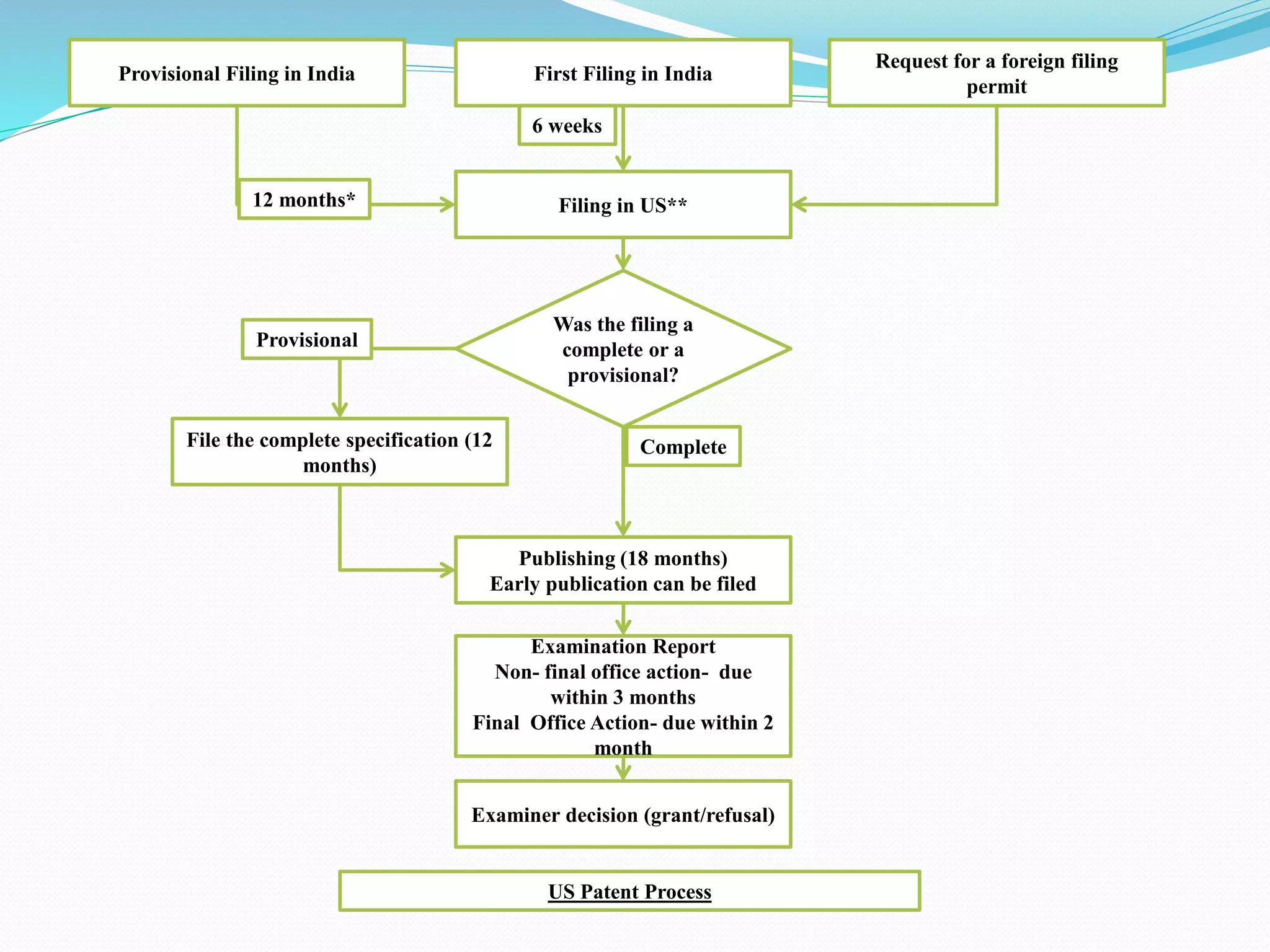
Provisional Filing in India First Filing in India 
Request for a foreign filing 
permit 
6 weeks 
12 months* Filing in US** 
Was the filing a 
complete or a 
provisional? 
Publishing (18 months) 
Early publication can be filed 
Examination Report 
Non- final office action- due 
within 3 months 
Final Office Action- due within 2 
month 
Examiner decision (grant/refusal) 
US Patent Process 
Provisional 
File the complete specification (12 
months) 
Complete
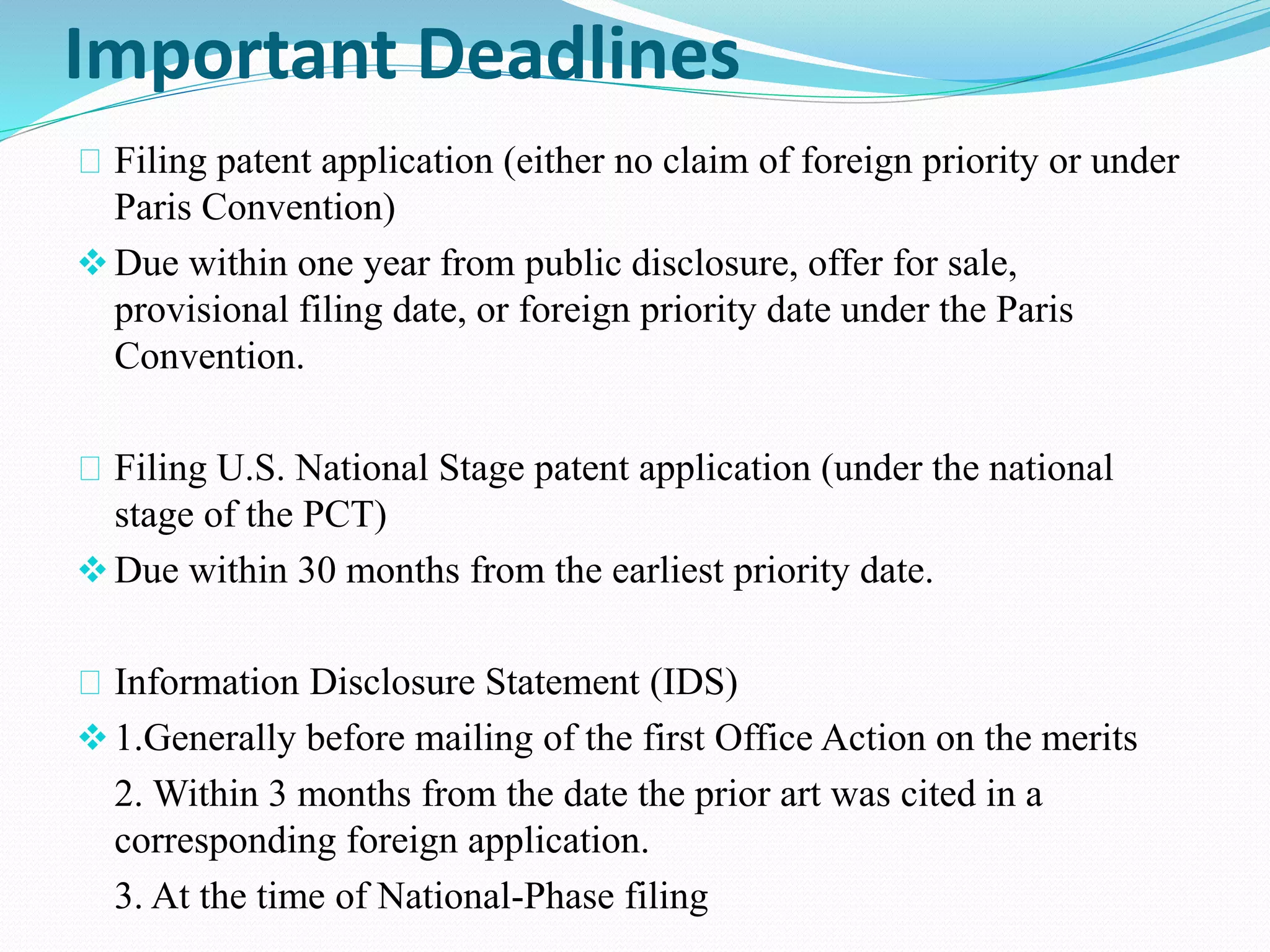
Important Deadlines 
Filing patent application (either no claim of foreign priority or under 
Paris Convention) 
 Due within one year from public disclosure, offer for sale, 
provisional filing date, or foreign priority date under the Paris 
Convention. 
Filing U.S. National Stage patent application (under the national 
stage of the PCT) 
 Due within 30 months from the earliest priority date. 
Information Disclosure Statement (IDS) 
 1.Generally before mailing of the first Office Action on the merits 
2. Within 3 months from the date the prior art was cited in a 
corresponding foreign application. 
3. At the time of National-Phase filing
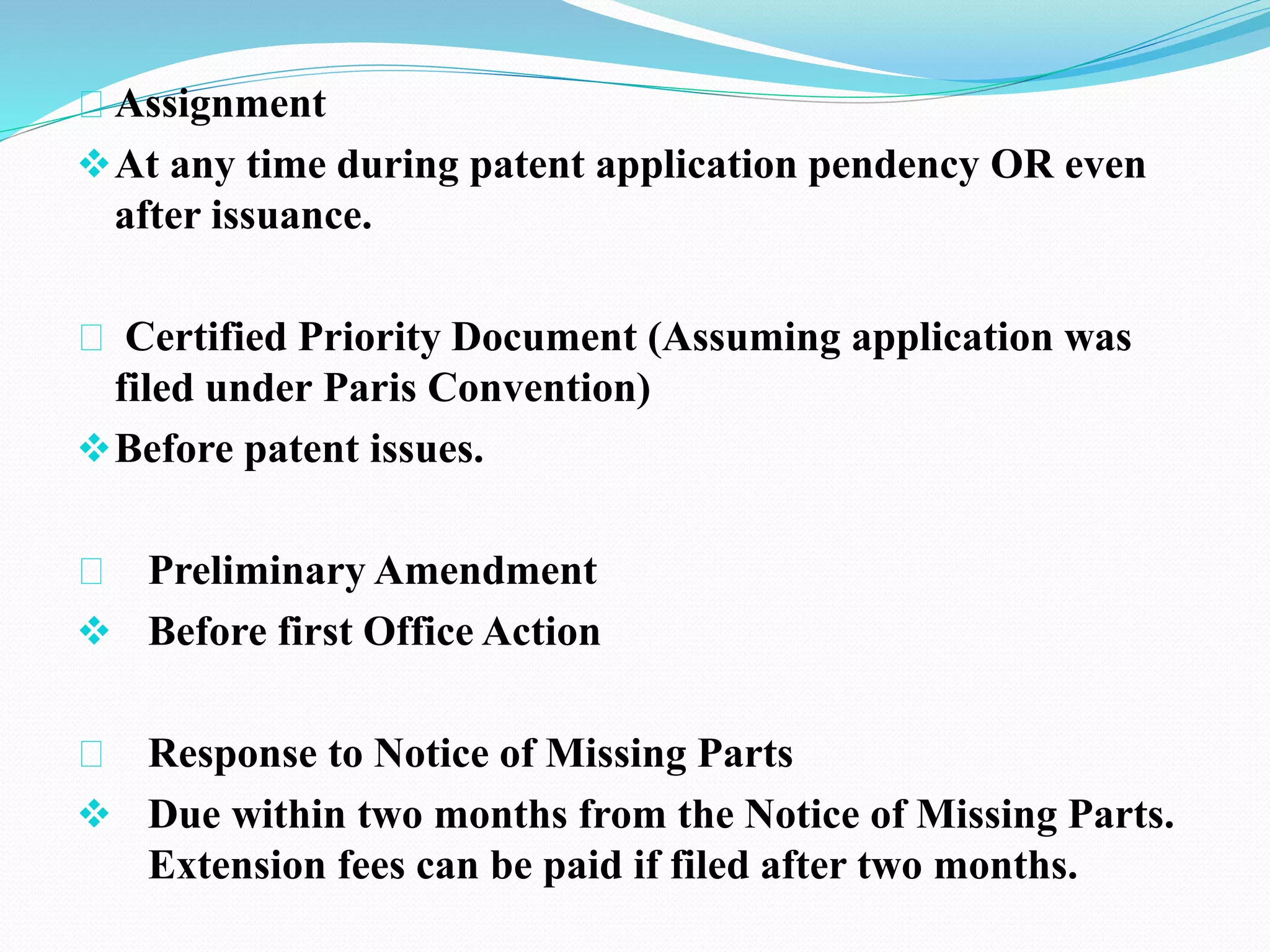
Assignment 
At any time during patent application pendency OR even 
after issuance. 
Certified Priority Document (Assuming application was 
filed under Paris Convention) 
Before patent issues. 
Preliminary Amendment 
 Before first Office Action 
Response to Notice of Missing Parts 
 Due within two months from the Notice of Missing Parts. 
Extension fees can be paid if filed after two months.
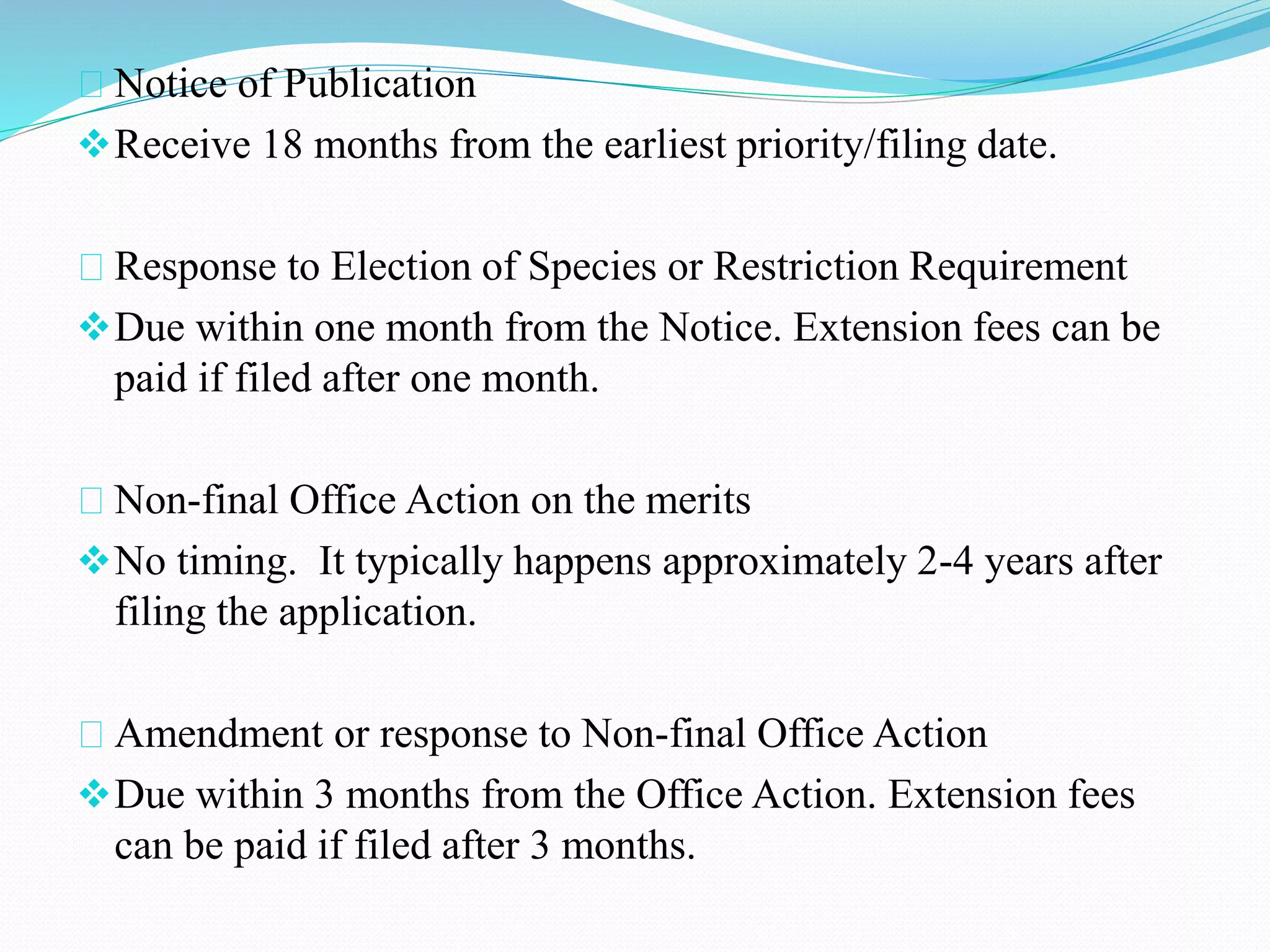
Notice of Publication 
Receive 18 months from the earliest priority/filing date. 
Response to Election of Species or Restriction Requirement 
Due within one month from the Notice. Extension fees can be 
paid if filed after one month. 
Non-final Office Action on the merits 
No timing. It typically happens approximately 2-4 years after 
filing the application. 
Amendment or response to Non-final Office Action 
Due within 3 months from the Office Action. Extension fees 
can be paid if filed after 3 months.
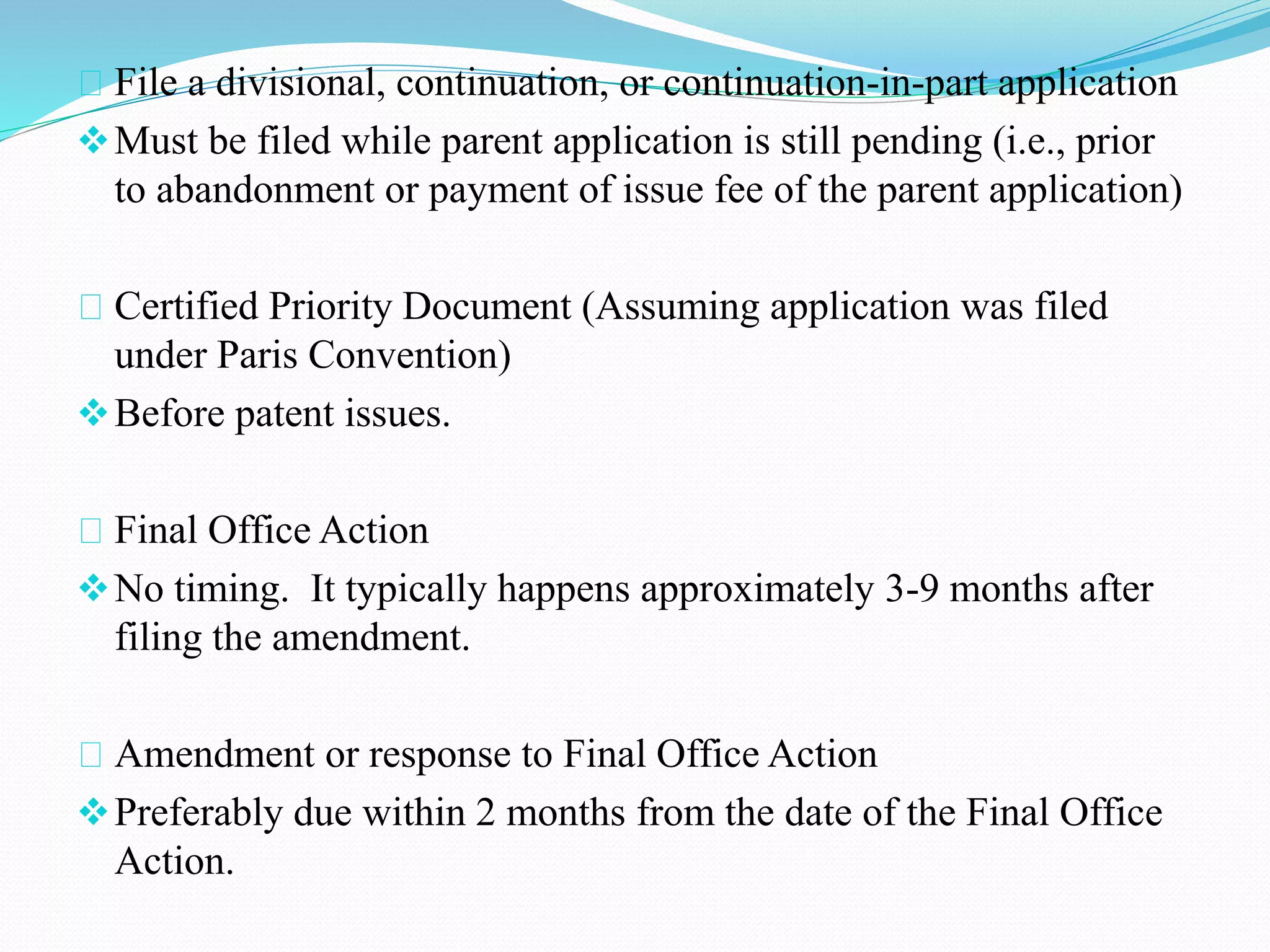
File a divisional, continuation, or continuation-in-part application 
Must be filed while parent application is still pending (i.e., prior 
to abandonment or payment of issue fee of the parent application) 
Certified Priority Document (Assuming application was filed 
under Paris Convention) 
Before patent issues. 
Final Office Action 
No timing. It typically happens approximately 3-9 months after 
filing the amendment. 
Amendment or response to Final Office Action 
Preferably due within 2 months from the date of the Final Office 
Action.
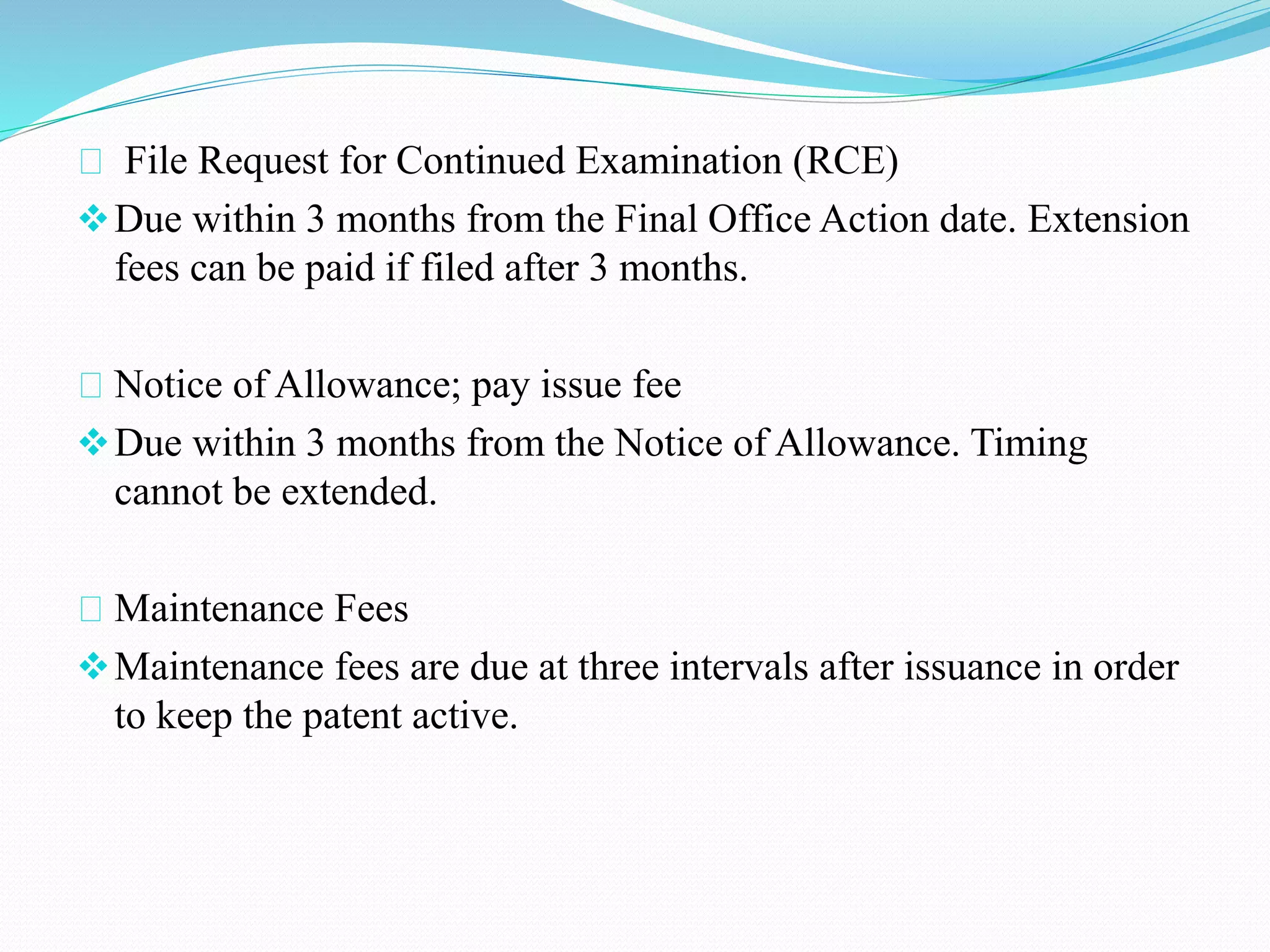
File Request for Continued Examination (RCE) 
Due within 3 months from the Final Office Action date. Extension 
fees can be paid if filed after 3 months. 
Notice of Allowance; pay issue fee 
Due within 3 months from the Notice of Allowance. Timing 
cannot be extended. 
Maintenance Fees 
Maintenance fees are due at three intervals after issuance in order 
to keep the patent active.
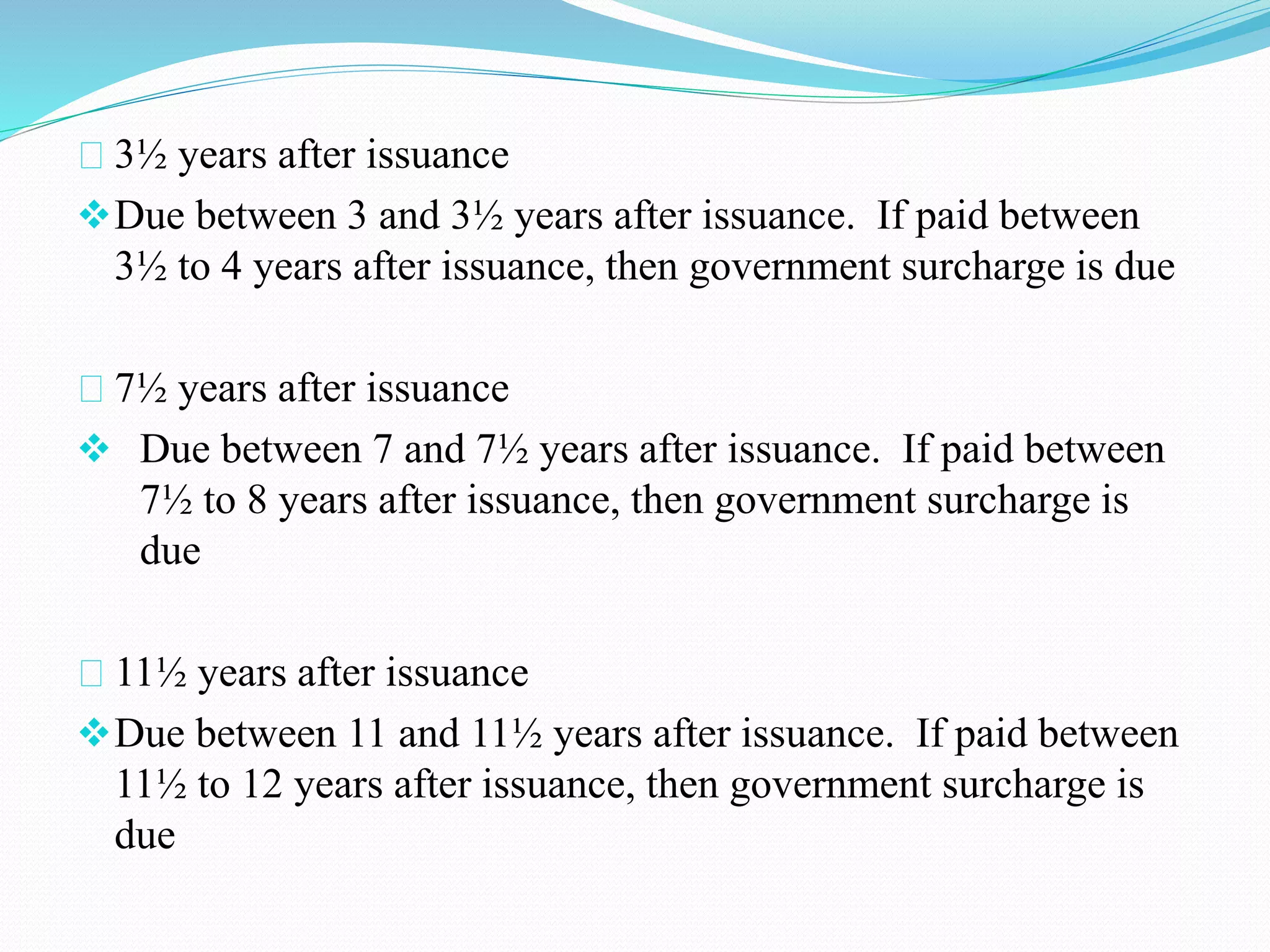
3½ years after issuance 
Due between 3 and 3½ years after issuance. If paid between 
3½ to 4 years after issuance, then government surcharge is due 
7½ years after issuance 
 Due between 7 and 7½ years after issuance. If paid between 
7½ to 8 years after issuance, then government surcharge is 
due 
11½ years after issuance 
Due between 11 and 11½ years after issuance. If paid between 
11½ to 12 years after issuance, then government surcharge is 
due
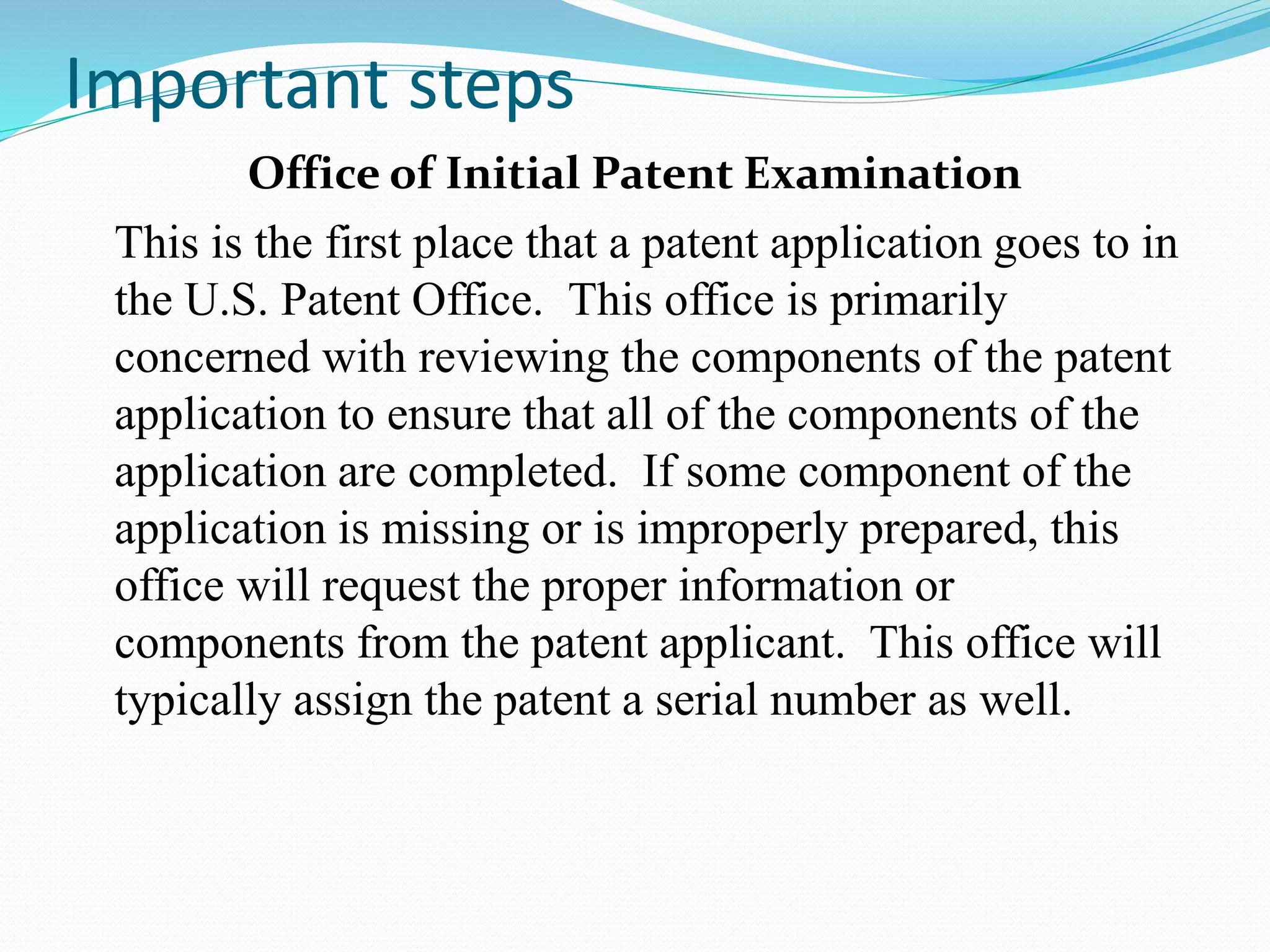
Important steps 
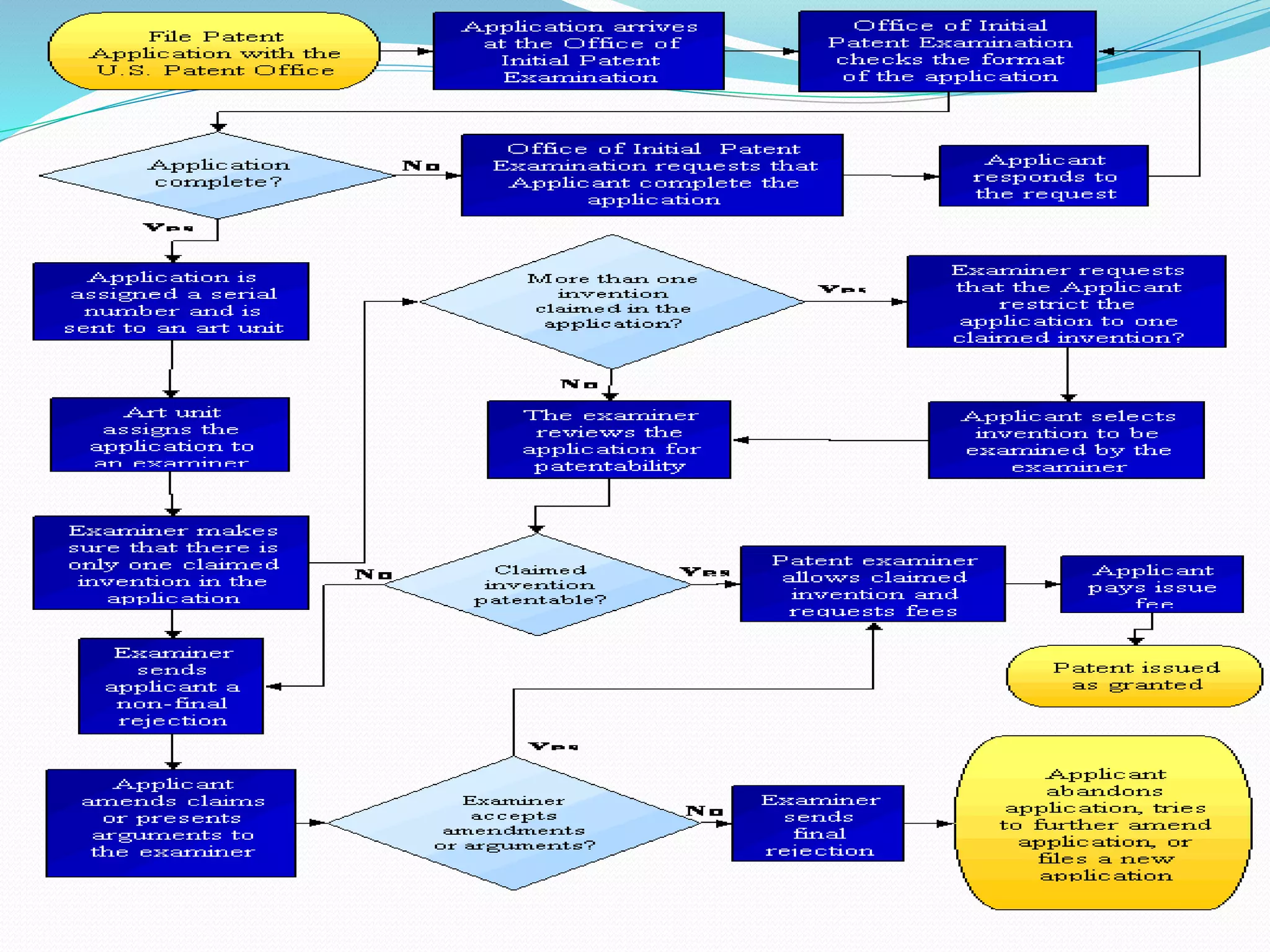
Office of Initial Patent Examination 
This is the first place that a patent application goes to in 
the U.S. Patent Office. This office is primarily 
concerned with reviewing the components of the patent 
application to ensure that all of the components of the 
application are completed. If some component of the 
application is missing or is improperly prepared, this 
office will request the proper information or 
components from the patent applicant. This office will 
typically assign the patent a serial number as well.
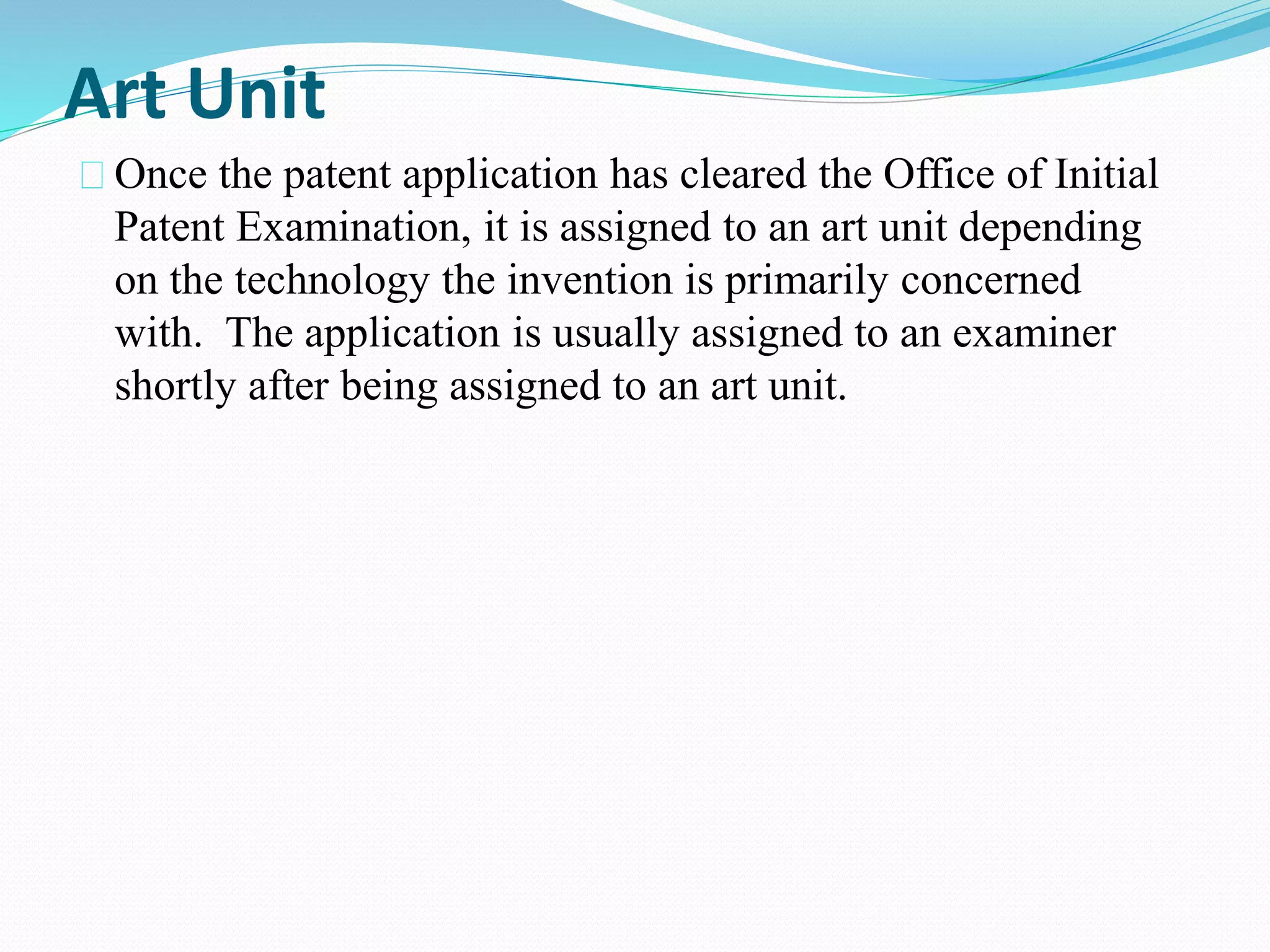
Art Unit 
Once the patent application has cleared the Office of Initial 
Patent Examination, it is assigned to an art unit depending 
on the technology the invention is primarily concerned 
with. The application is usually assigned to an examiner 
shortly after being assigned to an art unit.
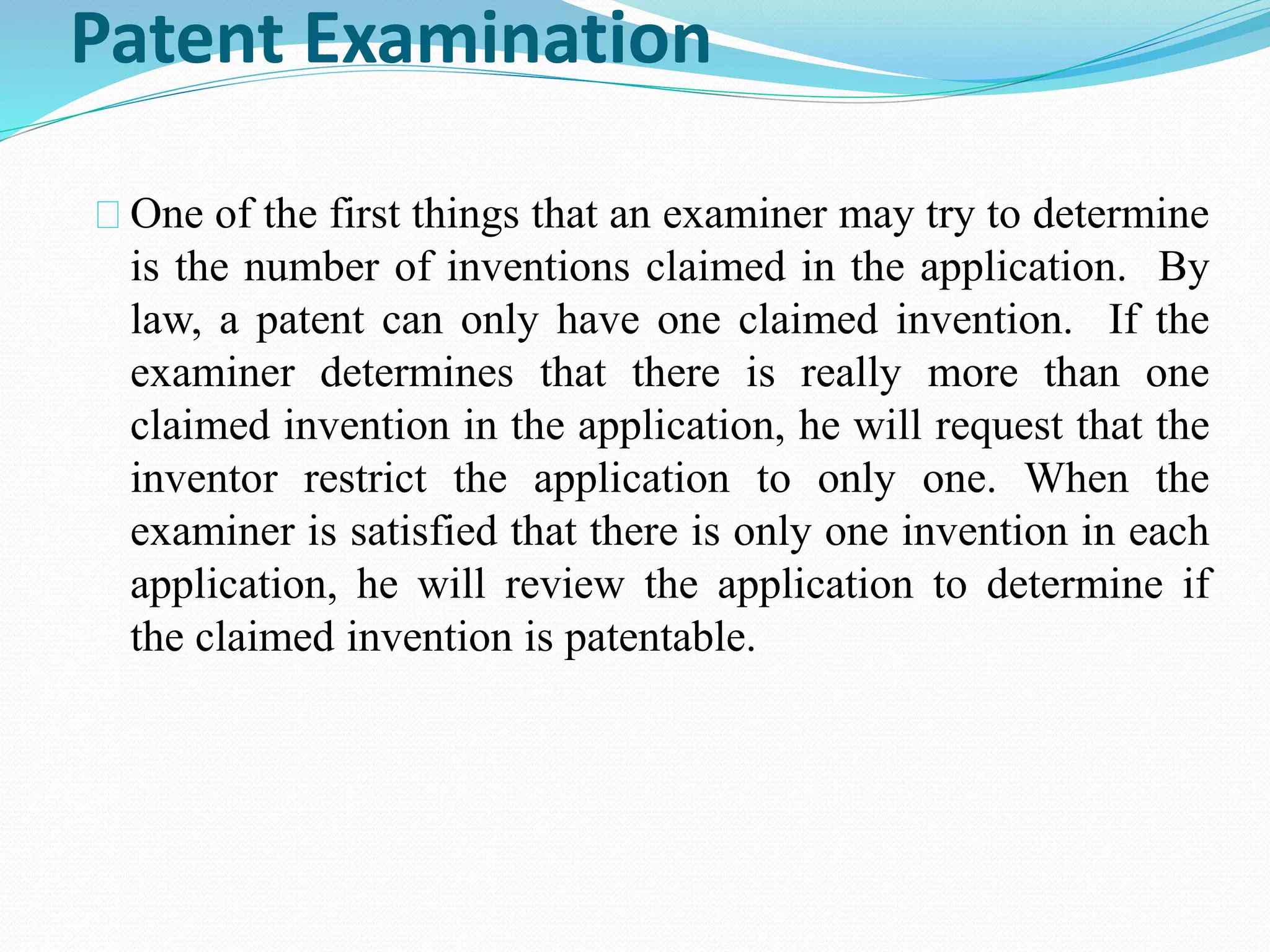
Patent Examination 
One of the first things that an examiner may try to determine 
is the number of inventions claimed in the application. By 
law, a patent can only have one claimed invention. If the 
examiner determines that there is really more than one 
claimed invention in the application, he will request that the 
inventor restrict the application to only one. When the 
examiner is satisfied that there is only one invention in each 
application, he will review the application to determine if 
the claimed invention is patentable.
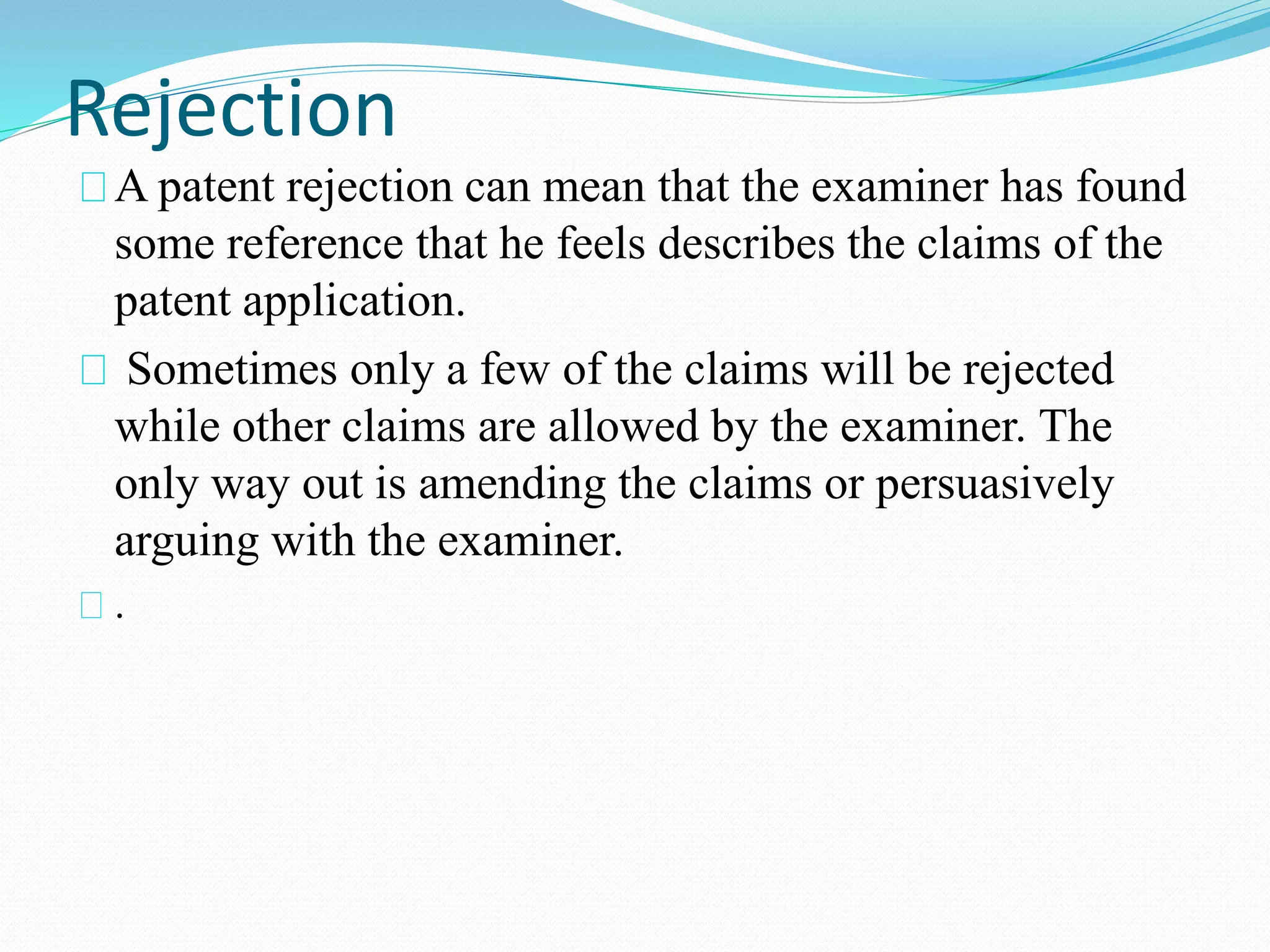
Rejection 
A patent rejection can mean that the examiner has found 
some reference that he feels describes the claims of the 
patent application. 
Sometimes only a few of the claims will be rejected 
while other claims are allowed by the examiner. The 
only way out is amending the claims or persuasively 
arguing with the examiner. 
.
If the examiner does not accept the amendments or 
arguments, he may issue a final rejection on the case. The 
inventor still has several options : 
1) file another application depending from (meaning linked 
to) the old application and try to present the invention in 
such a way that the examiner will allow the application; 
2) amend the claims or argue with the examiner again, but if 
the examiner still doesn’t accept the inventor’s position the 
application will become abandoned; 
3) agree with the examiner and give up on the patent 
application or 
4) file a request and a fee to keep the examination going.
Notice of allowance 
Patents give inventors the exclusive right to make, use 
or sell their invention for 20 years after the patent is 
approved. When the U.S. Patent Office issues a notice 
of allowance for a patent, it means that the 
government has decided your patent is a genuinely 
new invention and intends to grants you a patent.Issue 
fees are drew generally within three months of the 
Notice of Allowance.
Information disclosure statement 
An information disclosure statement (often abbreviated as IDS) 
refers to a submission of relevant background art or information 
to the United States Patent and Trademark Office (USPTO) by an 
applicant for a patent during the patent prosecution process. There 
is a duty on all patent applicants to disclose prior art or 
background information that may be relevant to the patentability 
of the applicant's invention
Advisory Action 
After filing a response to a final office action, the examiner 
may issue an advisory action that either continues the rejection 
or hopefully indicates agreement to allow some or all of the 
claims (if all the claims will be allowed, a notice of 
allowability will issue instead).
Request for Continued 
Examination (RCE) 
A request for continued examination (RCE) is a request by an 
inventor for continued prosecution after the patent office has 
issued a "final" rejection. An RCE is not considered a continuing 
patent application - rather, prosecution of the pending application 
is reopened. The inventor pays an additional filing fee and 
continues to argue his case with the patent examiner. 
Apply to utility or plant applications filed (a) on or after June 8, 
1995, or international applications filed. The request for continued 
examination provisions do not apply to: (1) a provisional 
application; (2) an application for a utility or plant patent (a) 
before June 8, 1995; (3) an international application (4) an 
application for a design patent; or (5) a patent under re-examination.
An applicant may obtain continued examination of an 
application by filing a submission and the fee set forth in 37 
CFR 1.17(e) prior to the earliest of: 
(1) the date a patent is granted (but after payment of the issue 
fee only if a petition under 37 CFR 1.313 is granted); 
(2) abandonment of the application; or 
(3) the date applicant seeks court review of a decision by the 
Board of Patent Appeals and Interferences (unless the court 
action is terminated). 
An applicant cannot request continued examination of an 
application until after the prosecution in the application is 
closed.
Notice of allowance 
If, on examination, it appears that the applicant is entitled to a 
patent under the law, a notice of allowance will be sent to the 
applicant. The notice of allowance shall specify a sum 
constituting the issue fee which must be paid within three 
months from the date of mailing of the notice of allowance to 
avoid abandonment of the application. The sum specified in the 
notice of allowance may also include the publication fee, in 
which case the issue fee and publication fee must both be paid 
within three months from the date of mailing of the notice of 
allowance to avoid abandonment of the application. This three-month 
period is not extendable.
Thank You 
Web: www.bananaip.com 
Blog: www.sinapseblog.com

Presentation on the Patent Process in US

  • 2.
    Provisional Filing inIndia First Filing in India Request for a foreign filing permit 6 weeks 12 months* Filing in US** Was the filing a complete or a provisional? Publishing (18 months) Early publication can be filed Examination Report Non- final office action- due within 3 months Final Office Action- due within 2 month Examiner decision (grant/refusal) US Patent Process Provisional File the complete specification (12 months) Complete
  • 3.
    Important Deadlines Filingpatent application (either no claim of foreign priority or under Paris Convention)  Due within one year from public disclosure, offer for sale, provisional filing date, or foreign priority date under the Paris Convention. Filing U.S. National Stage patent application (under the national stage of the PCT)  Due within 30 months from the earliest priority date. Information Disclosure Statement (IDS)  1.Generally before mailing of the first Office Action on the merits 2. Within 3 months from the date the prior art was cited in a corresponding foreign application. 3. At the time of National-Phase filing
  • 4.
    Assignment At anytime during patent application pendency OR even after issuance. Certified Priority Document (Assuming application was filed under Paris Convention) Before patent issues. Preliminary Amendment  Before first Office Action Response to Notice of Missing Parts  Due within two months from the Notice of Missing Parts. Extension fees can be paid if filed after two months.
  • 5.
    Notice of Publication Receive 18 months from the earliest priority/filing date. Response to Election of Species or Restriction Requirement Due within one month from the Notice. Extension fees can be paid if filed after one month. Non-final Office Action on the merits No timing. It typically happens approximately 2-4 years after filing the application. Amendment or response to Non-final Office Action Due within 3 months from the Office Action. Extension fees can be paid if filed after 3 months.
  • 6.
    File a divisional,continuation, or continuation-in-part application Must be filed while parent application is still pending (i.e., prior to abandonment or payment of issue fee of the parent application) Certified Priority Document (Assuming application was filed under Paris Convention) Before patent issues. Final Office Action No timing. It typically happens approximately 3-9 months after filing the amendment. Amendment or response to Final Office Action Preferably due within 2 months from the date of the Final Office Action.
  • 7.
    File Request forContinued Examination (RCE) Due within 3 months from the Final Office Action date. Extension fees can be paid if filed after 3 months. Notice of Allowance; pay issue fee Due within 3 months from the Notice of Allowance. Timing cannot be extended. Maintenance Fees Maintenance fees are due at three intervals after issuance in order to keep the patent active.
  • 8.
    3½ years afterissuance Due between 3 and 3½ years after issuance. If paid between 3½ to 4 years after issuance, then government surcharge is due 7½ years after issuance  Due between 7 and 7½ years after issuance. If paid between 7½ to 8 years after issuance, then government surcharge is due 11½ years after issuance Due between 11 and 11½ years after issuance. If paid between 11½ to 12 years after issuance, then government surcharge is due
  • 9.
    Important steps Officeof Initial Patent Examination This is the first place that a patent application goes to in the U.S. Patent Office. This office is primarily concerned with reviewing the components of the patent application to ensure that all of the components of the application are completed. If some component of the application is missing or is improperly prepared, this office will request the proper information or components from the patent applicant. This office will typically assign the patent a serial number as well.
  • 10.
    Art Unit Oncethe patent application has cleared the Office of Initial Patent Examination, it is assigned to an art unit depending on the technology the invention is primarily concerned with. The application is usually assigned to an examiner shortly after being assigned to an art unit.
  • 11.
    Patent Examination Oneof the first things that an examiner may try to determine is the number of inventions claimed in the application. By law, a patent can only have one claimed invention. If the examiner determines that there is really more than one claimed invention in the application, he will request that the inventor restrict the application to only one. When the examiner is satisfied that there is only one invention in each application, he will review the application to determine if the claimed invention is patentable.
  • 12.
    Rejection A patentrejection can mean that the examiner has found some reference that he feels describes the claims of the patent application. Sometimes only a few of the claims will be rejected while other claims are allowed by the examiner. The only way out is amending the claims or persuasively arguing with the examiner. .
  • 13.
    If the examinerdoes not accept the amendments or arguments, he may issue a final rejection on the case. The inventor still has several options : 1) file another application depending from (meaning linked to) the old application and try to present the invention in such a way that the examiner will allow the application; 2) amend the claims or argue with the examiner again, but if the examiner still doesn’t accept the inventor’s position the application will become abandoned; 3) agree with the examiner and give up on the patent application or 4) file a request and a fee to keep the examination going.
  • 15.
    Notice of allowance Patents give inventors the exclusive right to make, use or sell their invention for 20 years after the patent is approved. When the U.S. Patent Office issues a notice of allowance for a patent, it means that the government has decided your patent is a genuinely new invention and intends to grants you a patent.Issue fees are drew generally within three months of the Notice of Allowance.
  • 16.
    Information disclosure statement An information disclosure statement (often abbreviated as IDS) refers to a submission of relevant background art or information to the United States Patent and Trademark Office (USPTO) by an applicant for a patent during the patent prosecution process. There is a duty on all patent applicants to disclose prior art or background information that may be relevant to the patentability of the applicant's invention
  • 17.
    Advisory Action Afterfiling a response to a final office action, the examiner may issue an advisory action that either continues the rejection or hopefully indicates agreement to allow some or all of the claims (if all the claims will be allowed, a notice of allowability will issue instead).
  • 18.
    Request for Continued Examination (RCE) A request for continued examination (RCE) is a request by an inventor for continued prosecution after the patent office has issued a "final" rejection. An RCE is not considered a continuing patent application - rather, prosecution of the pending application is reopened. The inventor pays an additional filing fee and continues to argue his case with the patent examiner. Apply to utility or plant applications filed (a) on or after June 8, 1995, or international applications filed. The request for continued examination provisions do not apply to: (1) a provisional application; (2) an application for a utility or plant patent (a) before June 8, 1995; (3) an international application (4) an application for a design patent; or (5) a patent under re-examination.
  • 19.
    An applicant mayobtain continued examination of an application by filing a submission and the fee set forth in 37 CFR 1.17(e) prior to the earliest of: (1) the date a patent is granted (but after payment of the issue fee only if a petition under 37 CFR 1.313 is granted); (2) abandonment of the application; or (3) the date applicant seeks court review of a decision by the Board of Patent Appeals and Interferences (unless the court action is terminated). An applicant cannot request continued examination of an application until after the prosecution in the application is closed.
  • 20.
    Notice of allowance If, on examination, it appears that the applicant is entitled to a patent under the law, a notice of allowance will be sent to the applicant. The notice of allowance shall specify a sum constituting the issue fee which must be paid within three months from the date of mailing of the notice of allowance to avoid abandonment of the application. The sum specified in the notice of allowance may also include the publication fee, in which case the issue fee and publication fee must both be paid within three months from the date of mailing of the notice of allowance to avoid abandonment of the application. This three-month period is not extendable.
  • 21.
    Thank You Web:www.bananaip.com Blog: www.sinapseblog.com