Downloaded 11 times

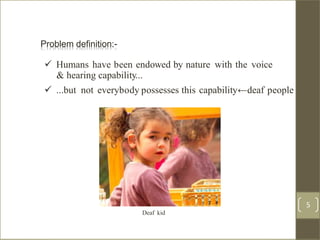
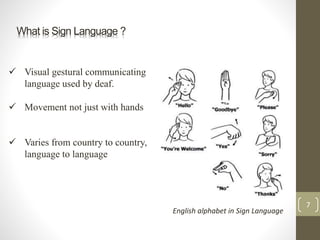
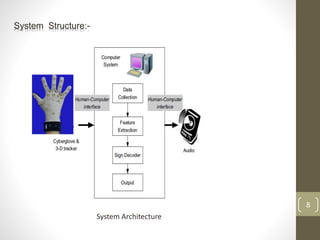
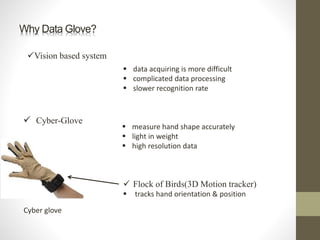
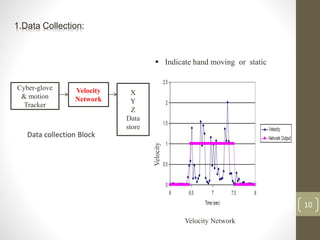
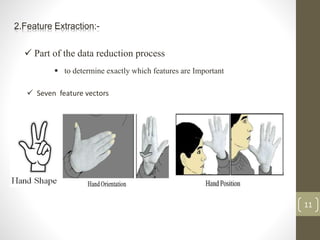
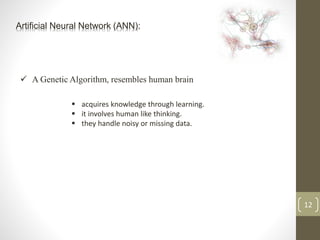
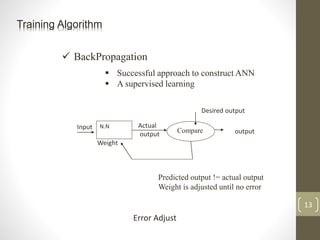
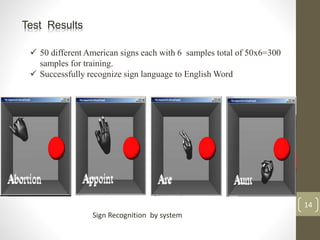
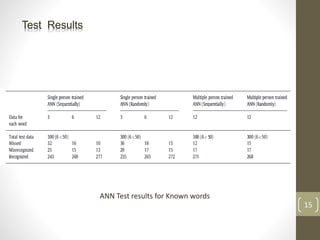
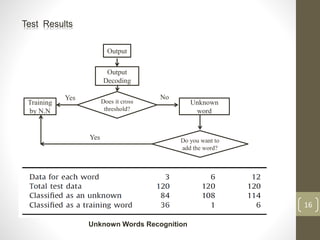
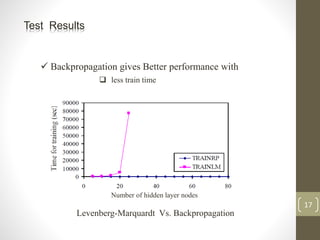
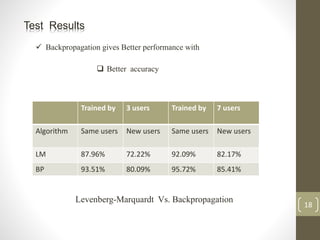
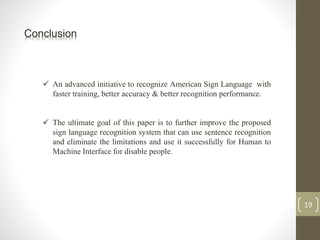


This document summarizes a research paper on using artificial neural networks and a sensory glove for American Sign Language word recognition. It outlines the problem of communication barriers for deaf people, describes sign language and why a data glove was used for input. The system structure and components are explained, including data collection from the glove, feature extraction, and an artificial neural network for training and recognition. Test results showed the system could successfully recognize signed words and unknown words. Backpropagation training performed better than Levenberg-Marquardt, with faster training time, higher accuracy, and better performance. The goal is to further improve sentence recognition capabilities to help human-machine interaction for disabled users.


![BrainQube - Work organization [XOHW17]](https://cdn.slidesharecdn.com/ss_thumbnails/workorganization-170506151529-thumbnail.jpg?width=640&height=640&fit=bounds)


