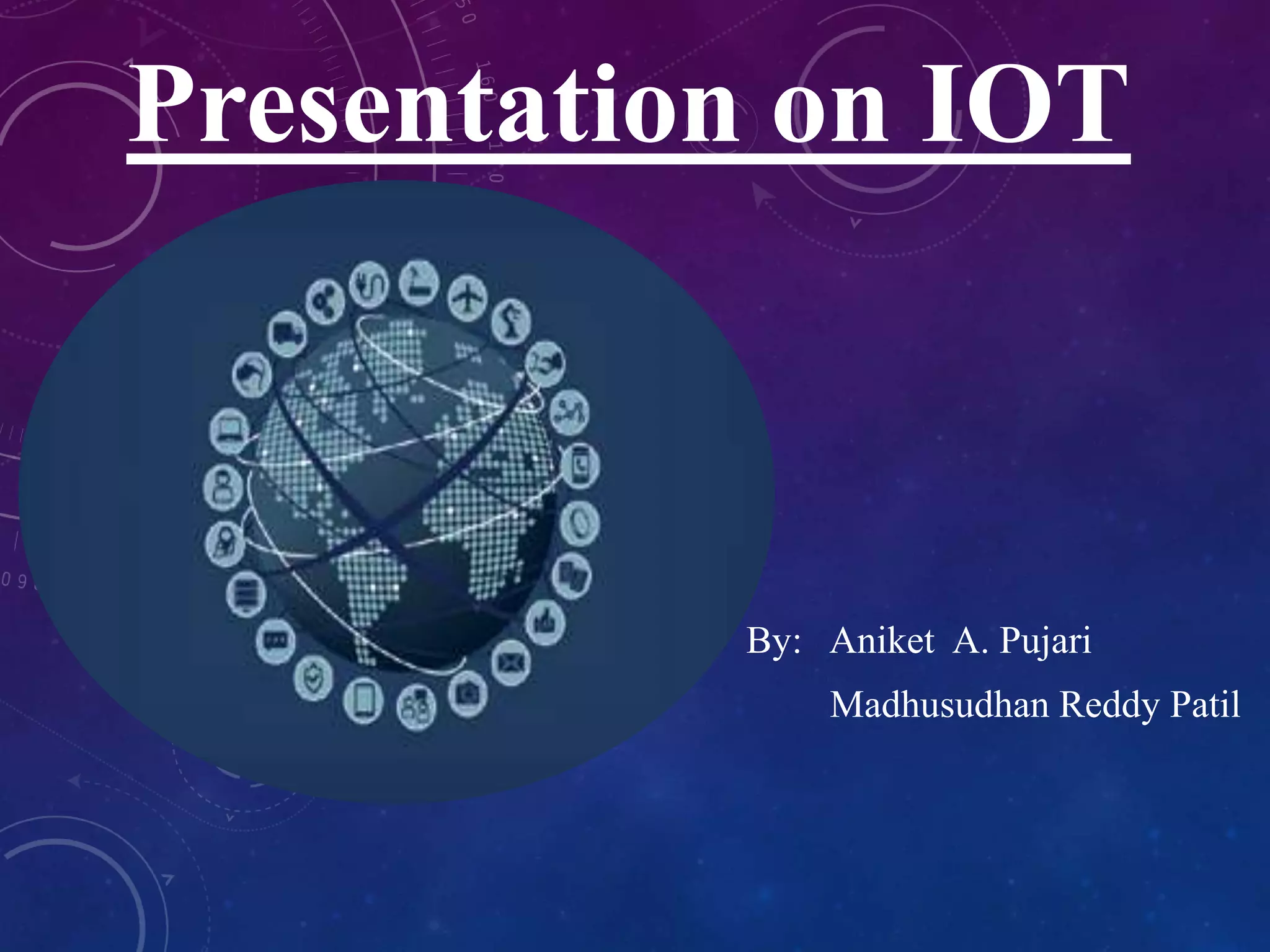
Presentation on IOT
By: Aniket A. Pujari
Madhusudhan Reddy Patil
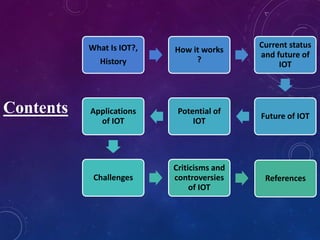
Contents
What Is IOT?,
History
How it works
?
Current status
and future of
IOT
Future of IOT
Potential of
IOT
Applications
of IOT
Challenges
Criticisms and
controversies
of IOT
References
What is IOT ?
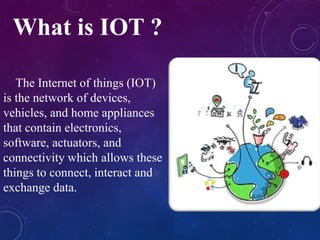
The Internet of things (IOT)
is the network of devices,
vehicles, and home appliances
that contain electronics,
software, actuators, and
connectivity which allows these
things to connect, interact and
exchange data.
History
Internet with specific devise – 1960
Multiple Network Device – 1970
Smart coca cola machine - 1980
Network to Network – 1983
Internet for Computers (www) – 1990
Mobile Devices - 2000
Wireless Systems, GPS Control – 2013
Present development – Bluetooth, Portable hotspot
How IOT works ?
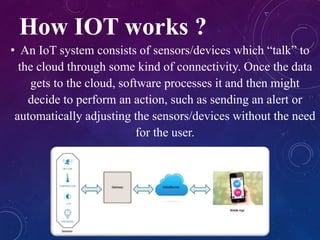
• An IoT system consists of sensors/devices which “talk” to
the cloud through some kind of connectivity. Once the data
gets to the cloud, software processes it and then might
decide to perform an action, such as sending an alert or
automatically adjusting the sensors/devices without the need
for the user.
Structure of IOT
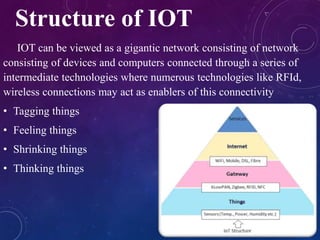
IOT can be viewed as a gigantic network consisting of network
consisting of devices and computers connected through a series of
intermediate technologies where numerous technologies like RFId,
wireless connections may act as enablers of this connectivity
• Tagging things
• Feeling things
• Shrinking things
• Thinking things
Current and Future Prospect of IOT
Future of IOT
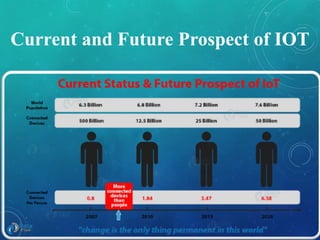
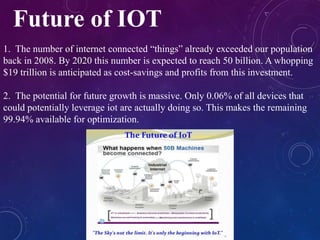
1. The number of internet connected “things” already exceeded our population
back in 2008. By 2020 this number is expected to reach 50 billion. A whopping
$19 trillion is anticipated as cost-savings and profits from this investment.
2. The potential for future growth is massive. Only 0.06% of all devices that
could potentially leverage iot are actually doing so. This makes the remaining
99.94% available for optimization.
Applications of IOT
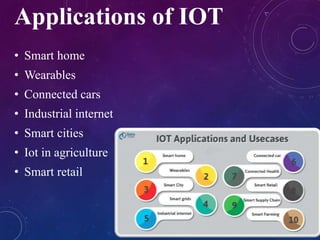
• Smart home
• Wearables
• Connected cars
• Industrial internet
• Smart cities
• Iot in agriculture
• Smart retail
Challenges of IOT
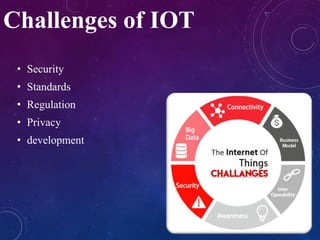
• Security
• Standards
• Regulation
• Privacy
• development
REFERENCES
• https://www.techworld.net
• https://en.wikipedia.org/wiki/Internet_of_things
Presentation on IOT

Presentation on IOT

  • 1.
    Presentation on IOT By:Aniket A. Pujari Madhusudhan Reddy Patil
  • 2.
    Contents What Is IOT?, History Howit works ? Current status and future of IOT Future of IOT Potential of IOT Applications of IOT Challenges Criticisms and controversies of IOT References
  • 3.
    What is IOT? The Internet of things (IOT) is the network of devices, vehicles, and home appliances that contain electronics, software, actuators, and connectivity which allows these things to connect, interact and exchange data.
  • 4.
    History Internet with specificdevise – 1960 Multiple Network Device – 1970 Smart coca cola machine - 1980 Network to Network – 1983 Internet for Computers (www) – 1990 Mobile Devices - 2000 Wireless Systems, GPS Control – 2013 Present development – Bluetooth, Portable hotspot
  • 5.
    How IOT works? • An IoT system consists of sensors/devices which “talk” to the cloud through some kind of connectivity. Once the data gets to the cloud, software processes it and then might decide to perform an action, such as sending an alert or automatically adjusting the sensors/devices without the need for the user.
  • 6.
    Structure of IOT IOTcan be viewed as a gigantic network consisting of network consisting of devices and computers connected through a series of intermediate technologies where numerous technologies like RFId, wireless connections may act as enablers of this connectivity • Tagging things • Feeling things • Shrinking things • Thinking things
  • 7.
    Current and FutureProspect of IOT
  • 8.
    Future of IOT 1.The number of internet connected “things” already exceeded our population back in 2008. By 2020 this number is expected to reach 50 billion. A whopping $19 trillion is anticipated as cost-savings and profits from this investment. 2. The potential for future growth is massive. Only 0.06% of all devices that could potentially leverage iot are actually doing so. This makes the remaining 99.94% available for optimization.
  • 9.
    Applications of IOT •Smart home • Wearables • Connected cars • Industrial internet • Smart cities • Iot in agriculture • Smart retail
  • 10.
    Challenges of IOT •Security • Standards • Regulation • Privacy • development
  • 11.