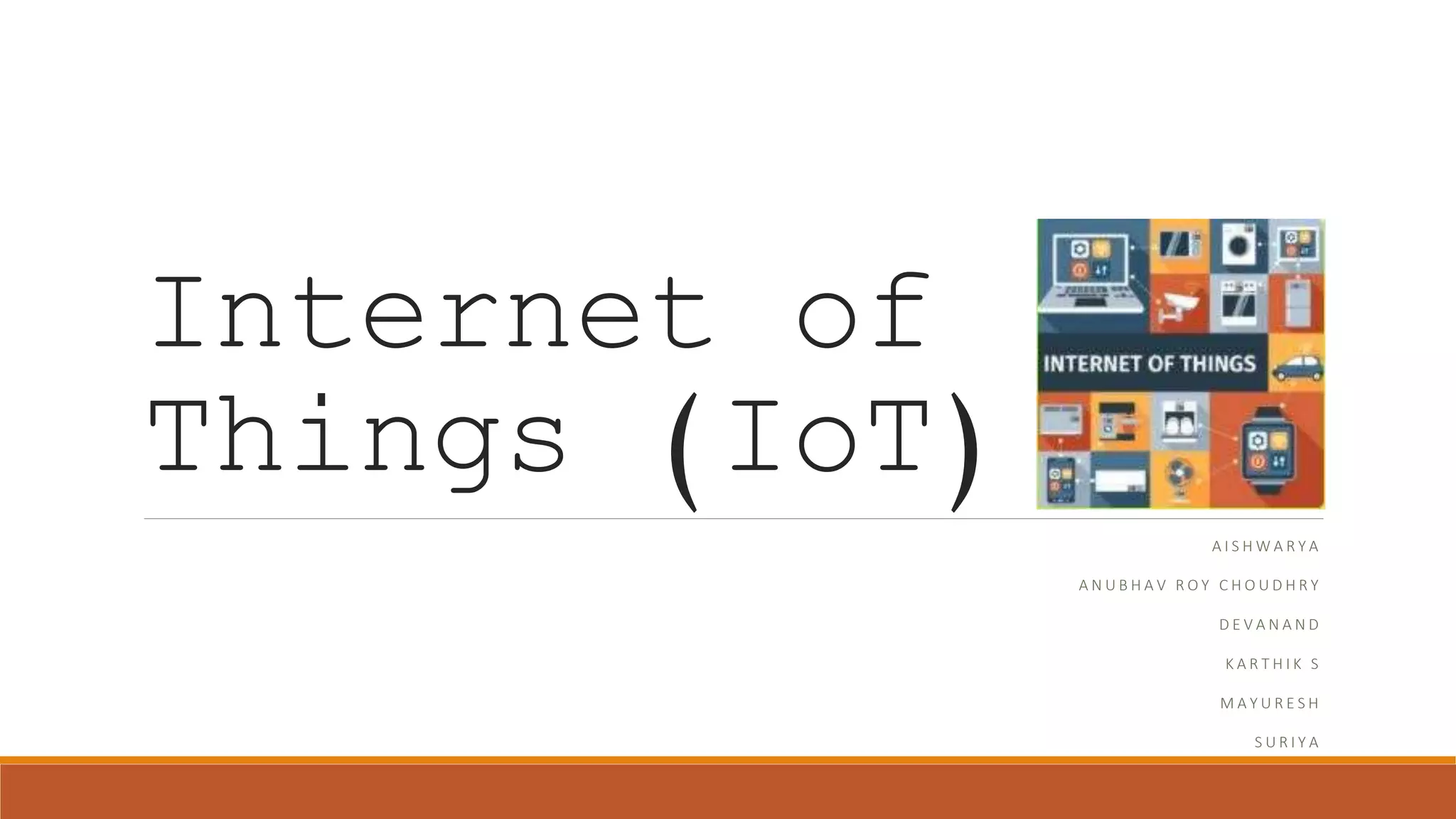
Internet of
Things (IoT)
A I S H W A R Y A
A N U B H A V R O Y C H O U D H R Y
D E V A N A N D
K A R T H I K S
M A Y U R E S H
S U R I Y A
INTRODUCTION
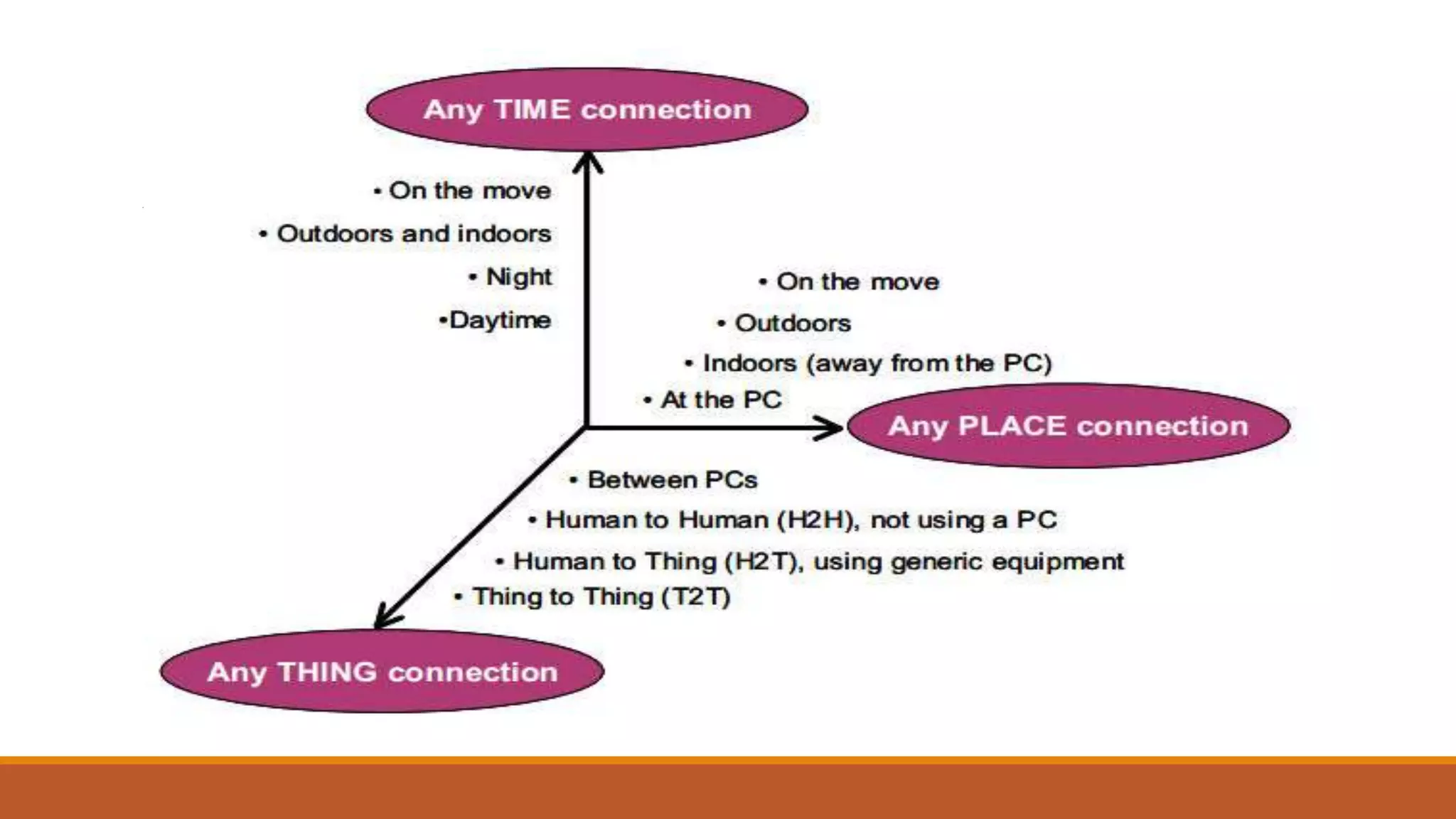
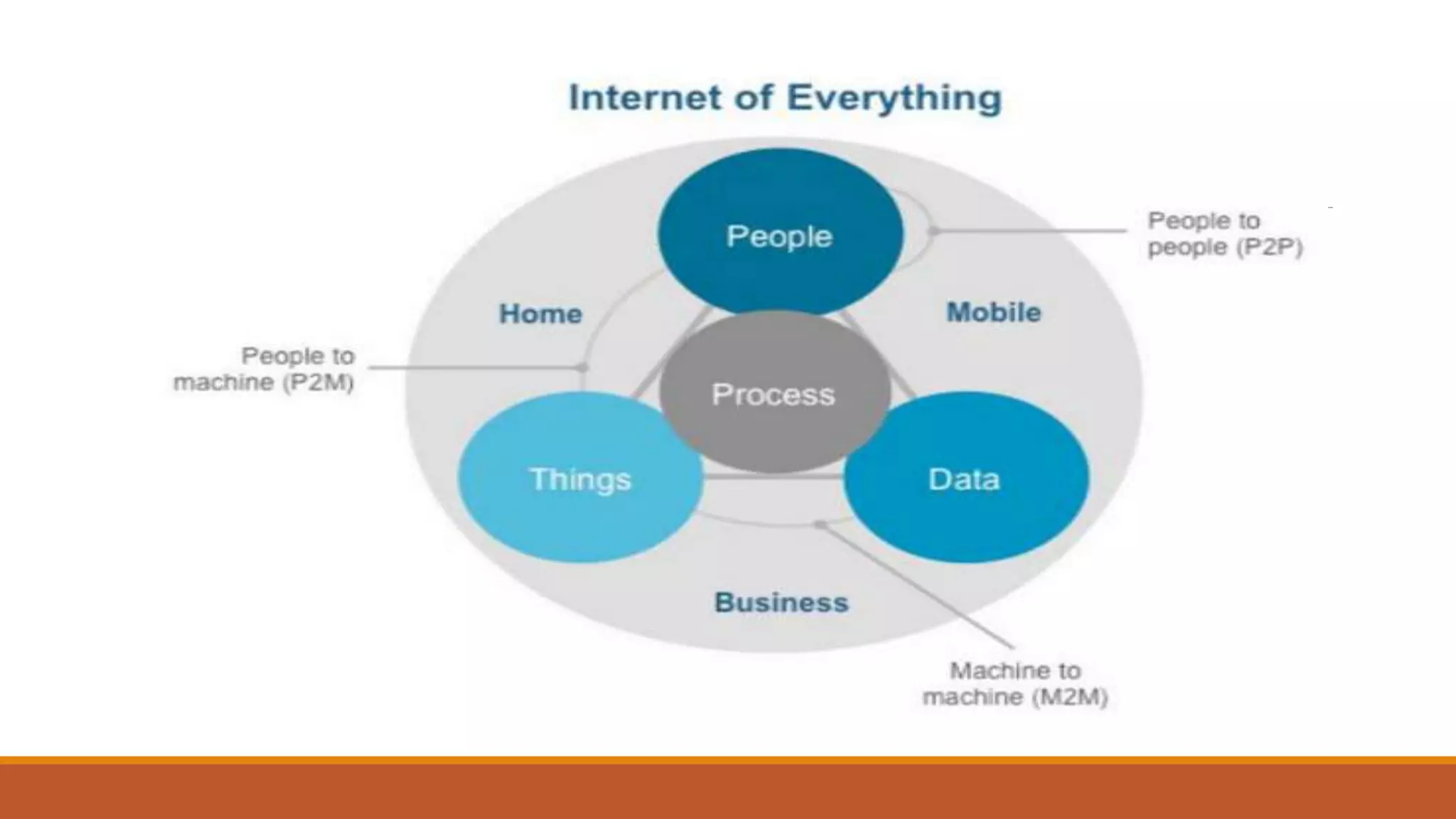
The Internet of Things (IoT) is the network of
physical objects—devices, vehicles, buildings
and other items embedded
with electronics, software, sensors
and network connectivity that enables these
objects to collect and exchange data.
Allows objects to be sensed and controlled
remotely across existing network
infrastructure
The data can be transferred over a network
without requiring human-to-human or human-to-
INTRODUCTION
Practical applications of IoT technology can
be found in many industries today,
including precision agriculture, building
management, healthcare, energy and
transportation.
Experts estimate that the IoT will consist of
almost 50 billion objects by 2020
Features of IOT
Central controller management
Powerful triggers
Work faster and smarter
TECHNOLOGIES
RFID
WiFi
Barcode
ZigBee
Sensors and smartphones
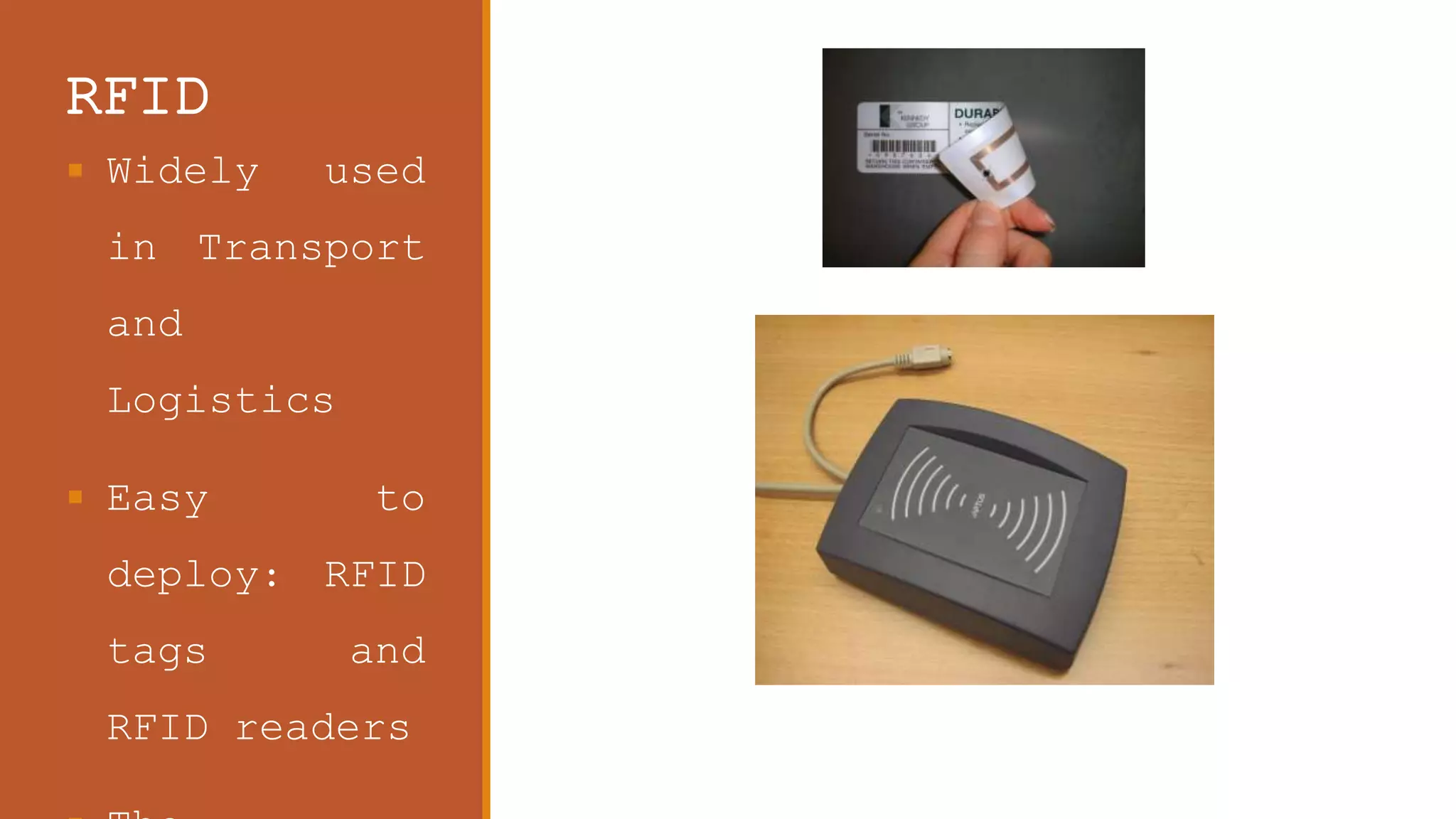
RFID
 Widely used
in Transport
and
Logistics
 Easy to
deploy: RFID
tags and
RFID readers
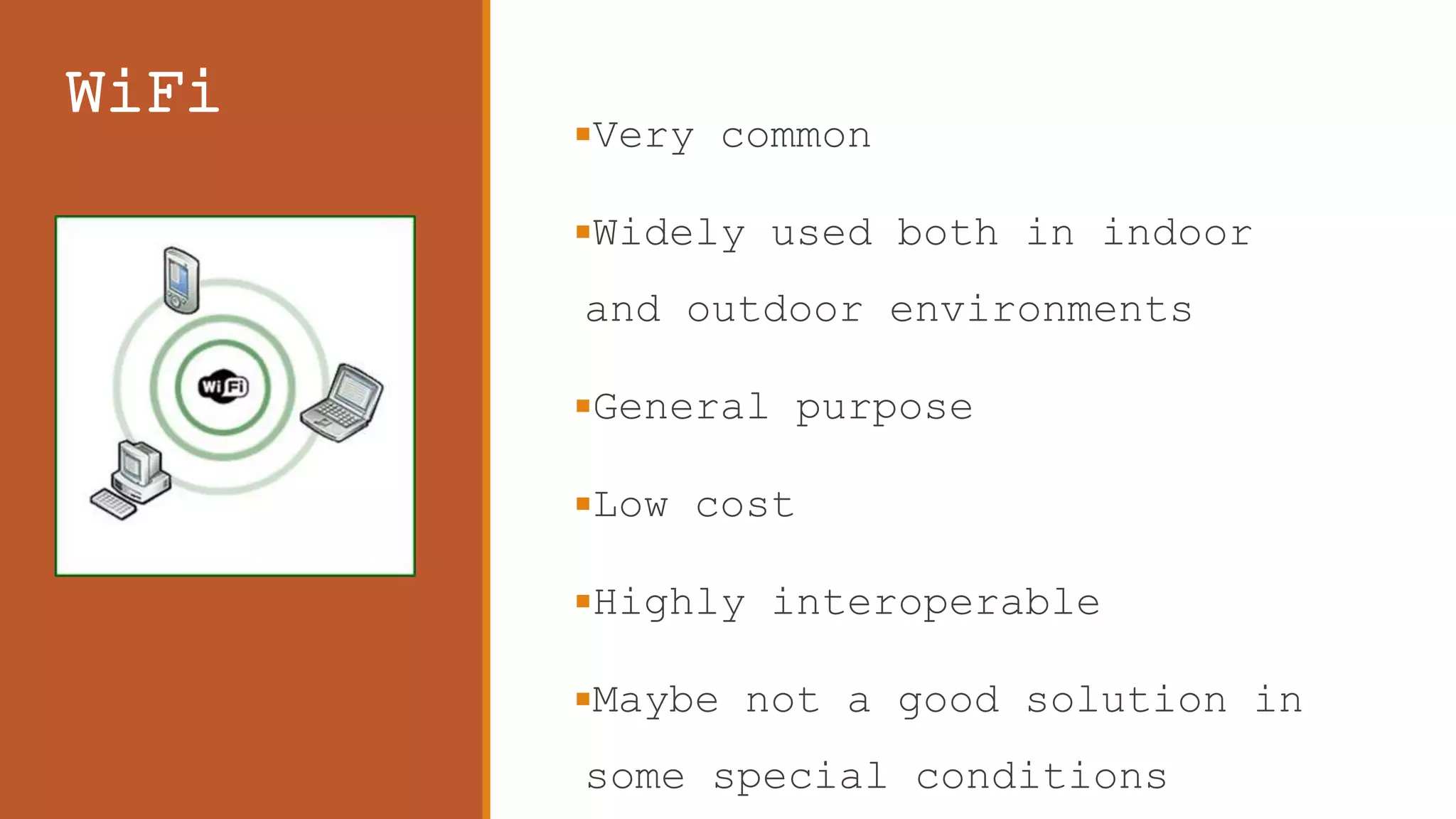
WiFi
Very common
Widely used both in indoor
and outdoor environments
General purpose
Low cost
Highly interoperable
Maybe not a good solution in
some special conditions
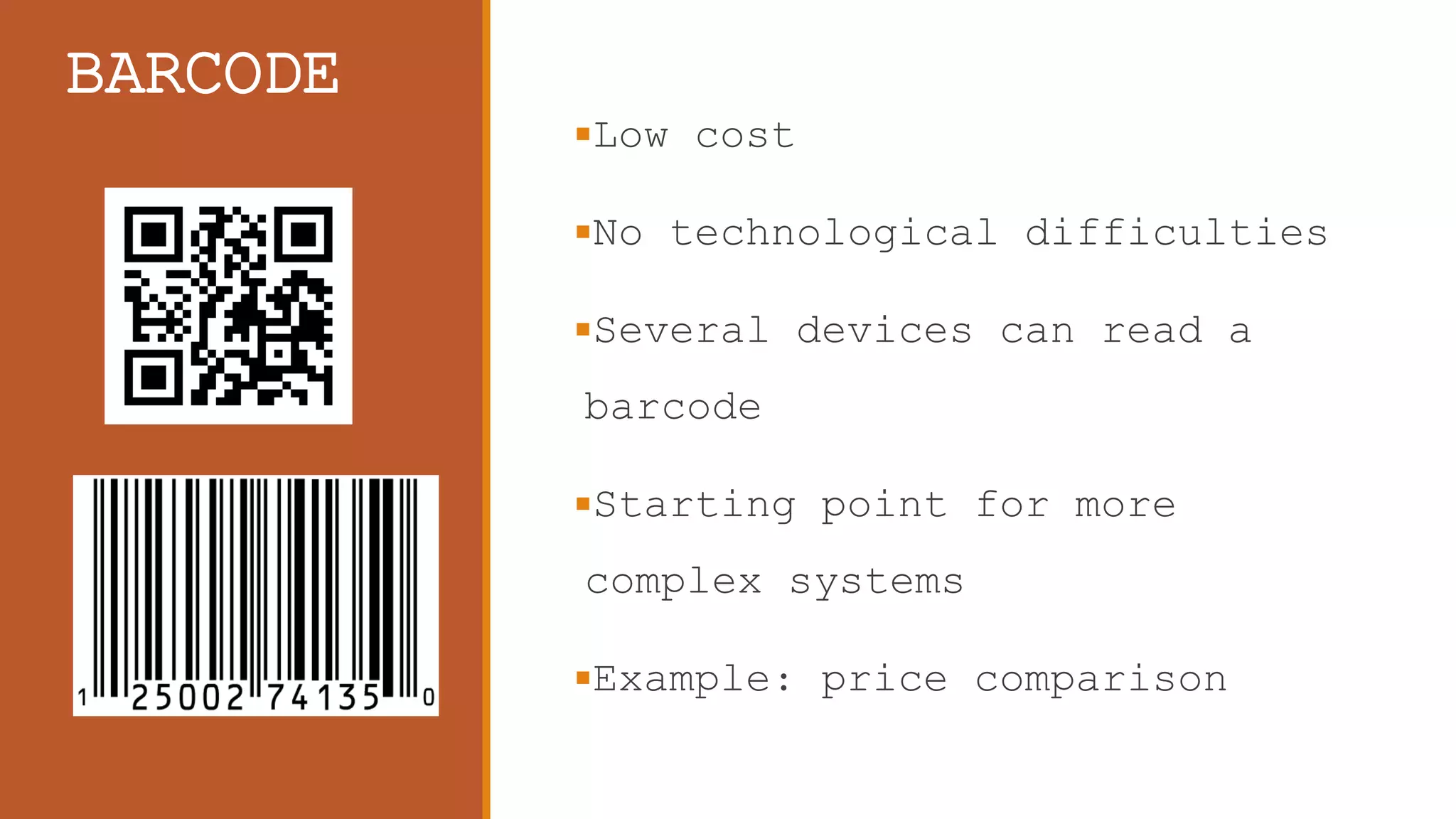
BARCODE
Low cost
No technological difficulties
Several devices can read a
barcode
Starting point for more
complex systems
Example: price comparison
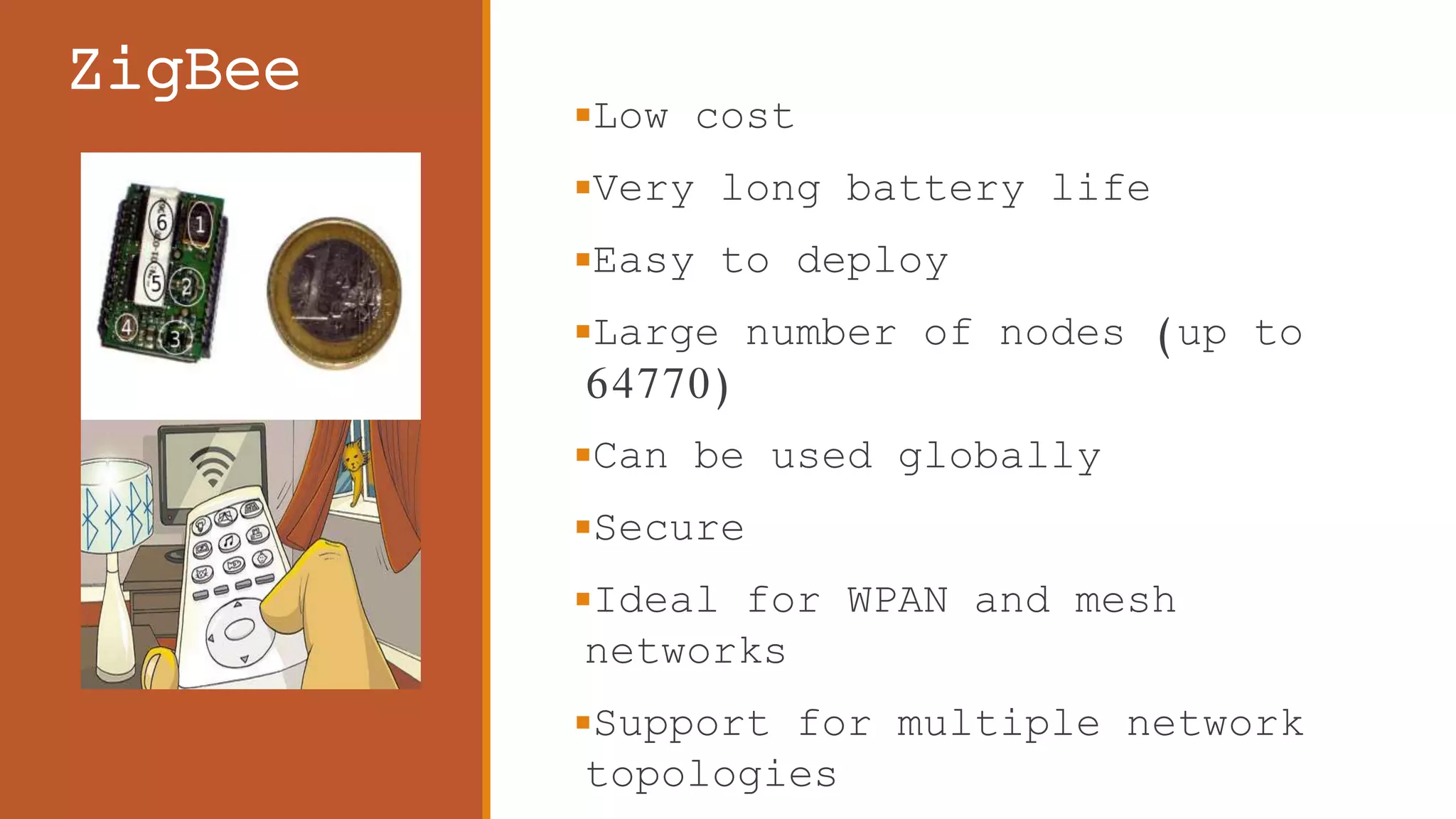
ZigBee
Low cost
Very long battery life
Easy to deploy
Large number of nodes (up to
64770)
Can be used globally
Secure
Ideal for WPAN and mesh
networks
Support for multiple network
topologies
smartphon
es  In the near future almost
everybody will probably have
a smartphone
 A smartphone isn't just a
mobile phone that has access
to the Internet
 The iPhone has a lot of
different types of sensors
Segmenting IoT
Category A
TCC&R Apps
Diverse “smart” and interconnected gadgets
with unique IDs.
The integrated solutions
Increase M2M automation, machine-to-
infrastructure (M2I), and machine-to-nature
(M2N) communications.
Caters to controlling, routing, maintaining,
metering, provisioning, diagnosing, etc.
Segmenting IoT
Category B
Focused on data sensors for marketing
purposes.
The data mining is used to identify trends
and behaviors.
Retailers, banks and credit card companies
that persistently study human behavior to
influence sales.
Healthcare/wellness, entertainment,
insurance, electronics/home automation,
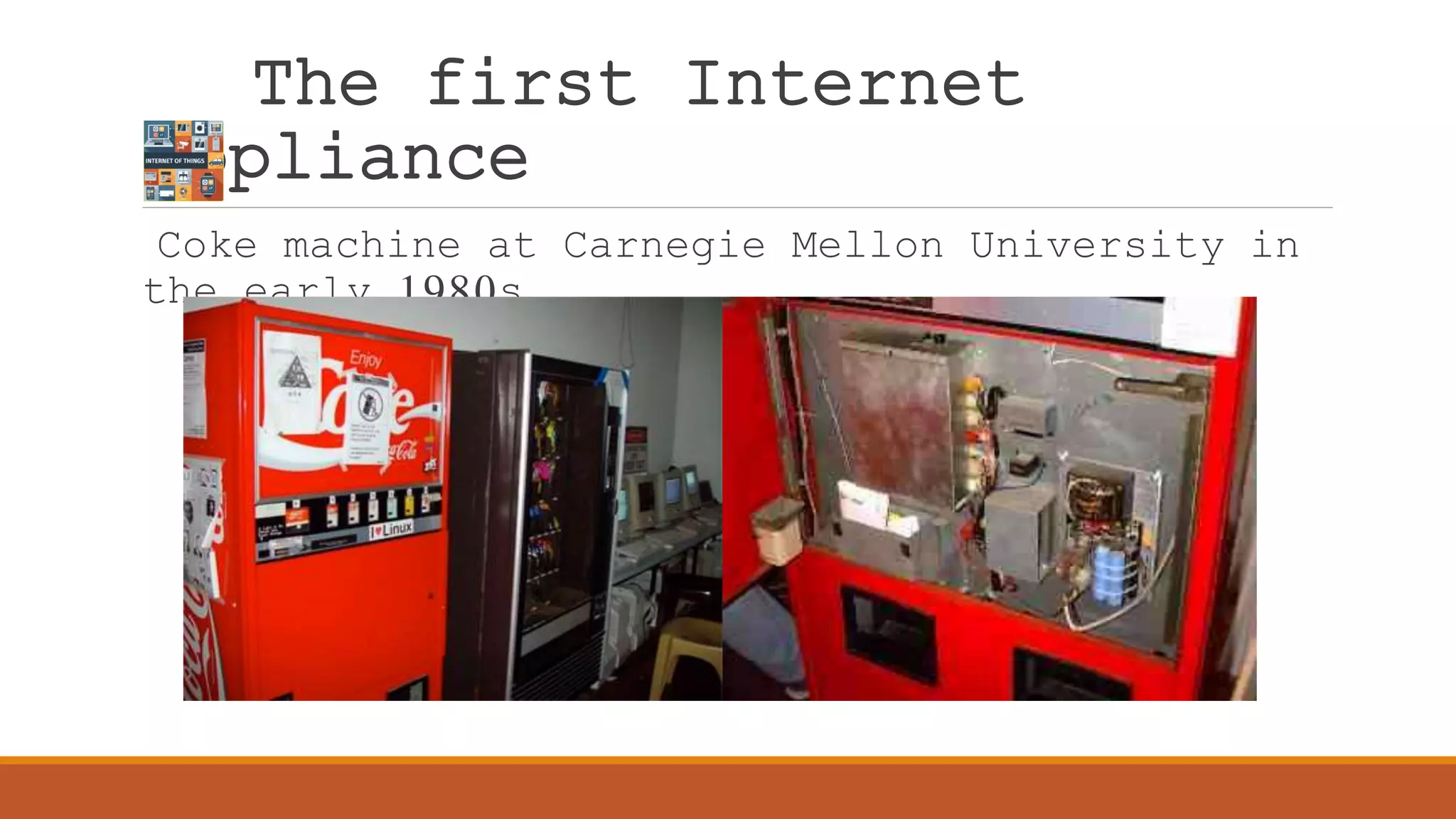
The first Internet
appliance
Coke machine at Carnegie Mellon University in
the early 1980s.
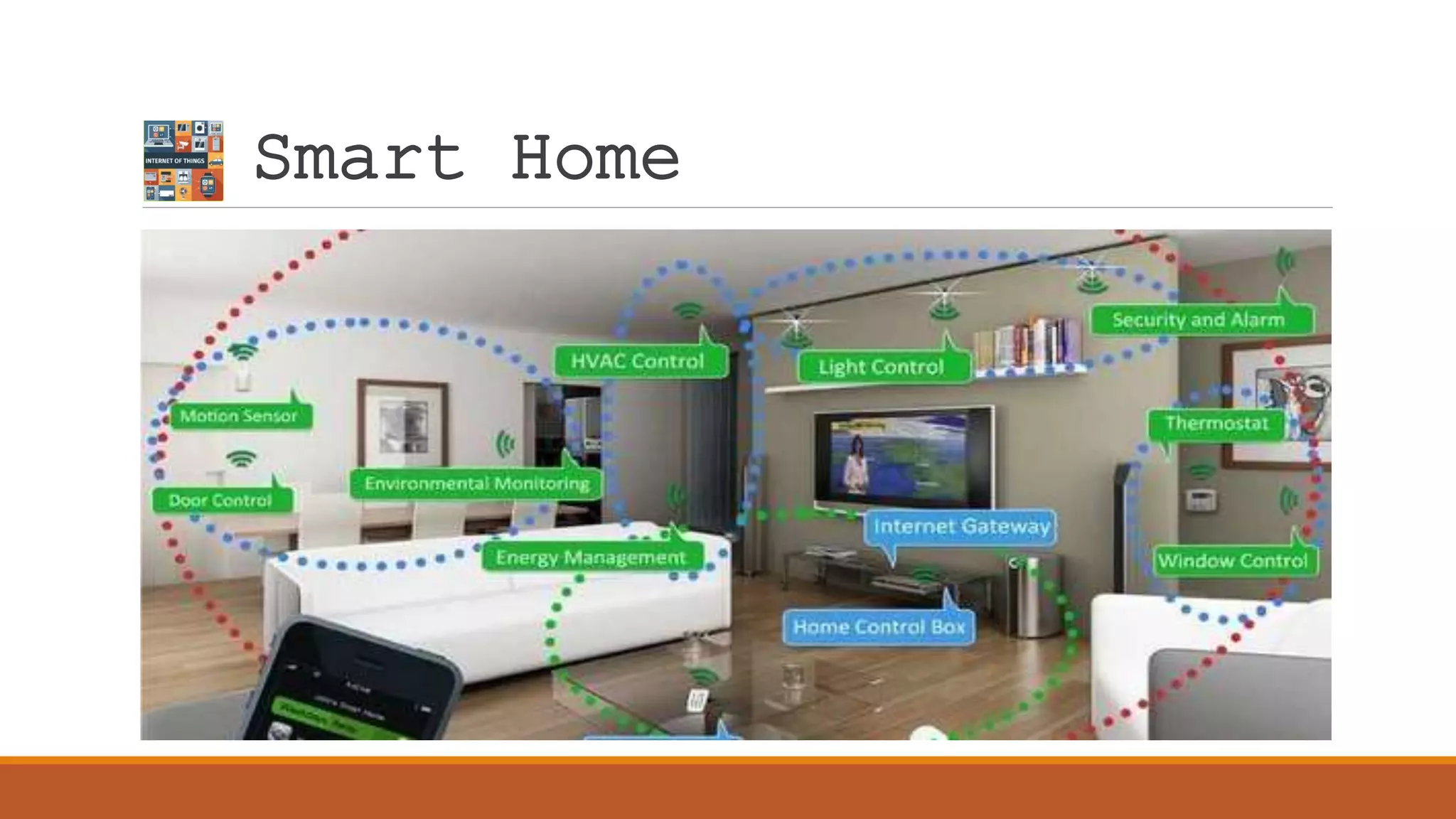
Smart Home
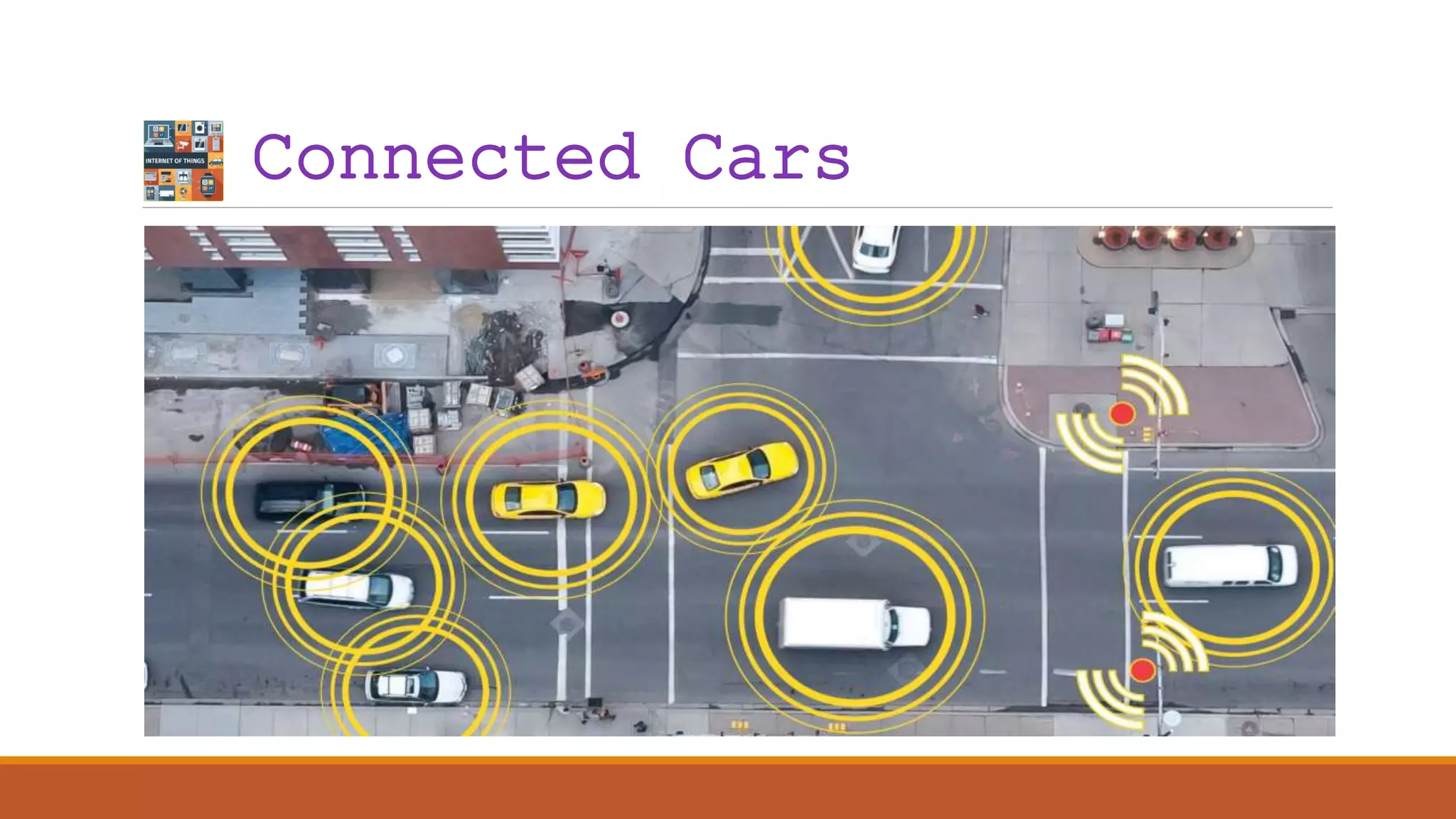
Connected Cars
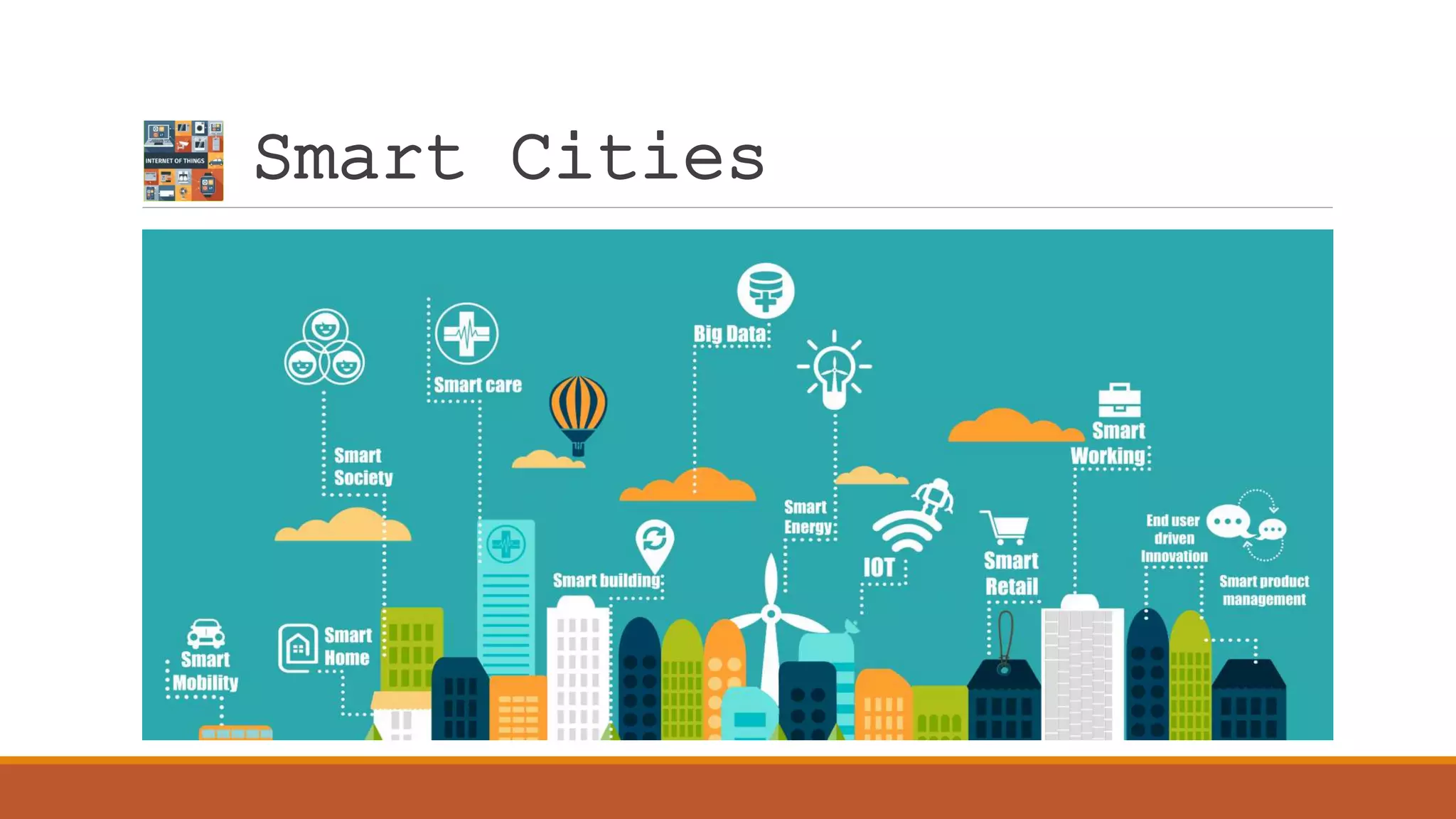
Smart Cities
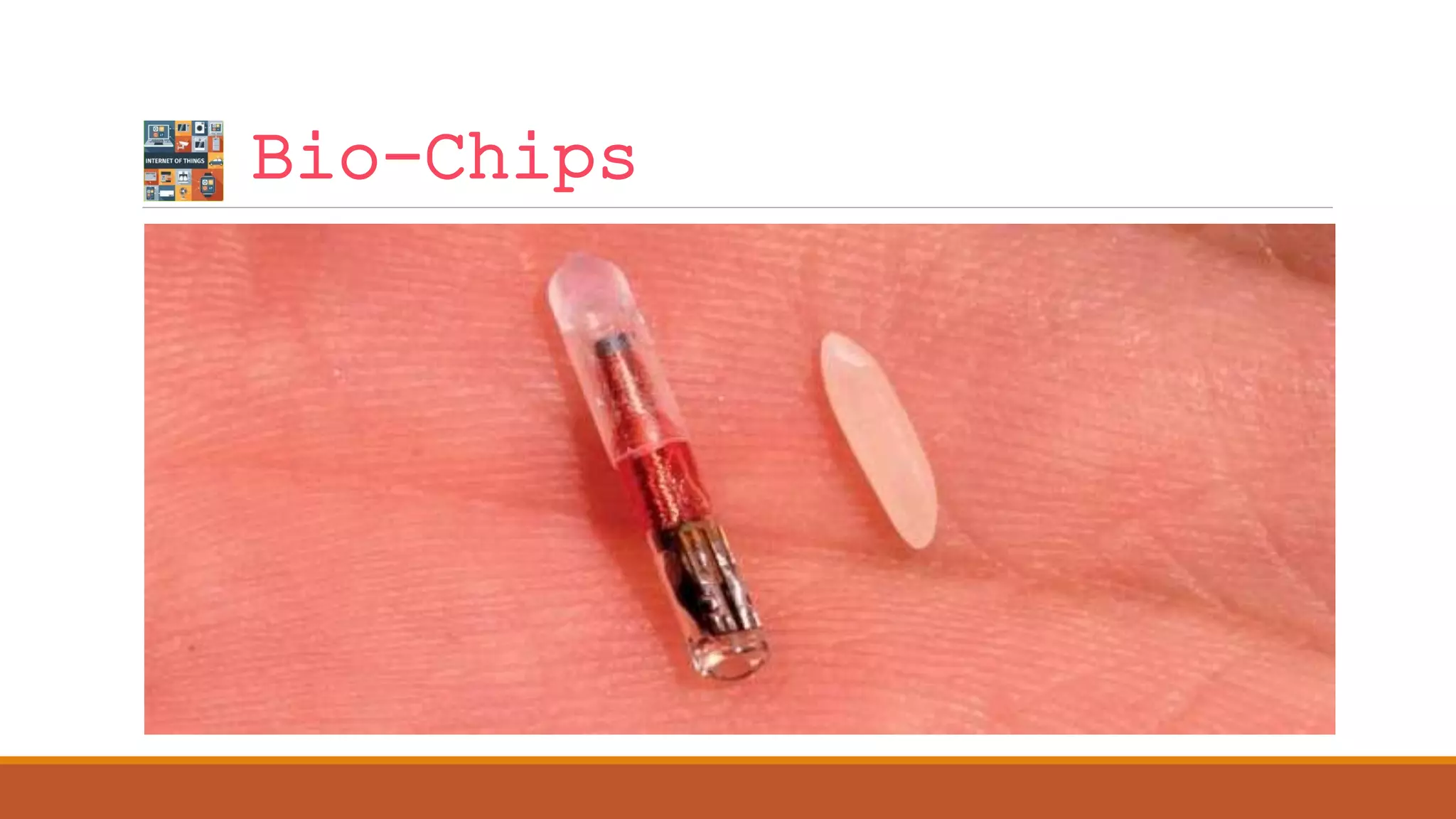
Bio-Chips
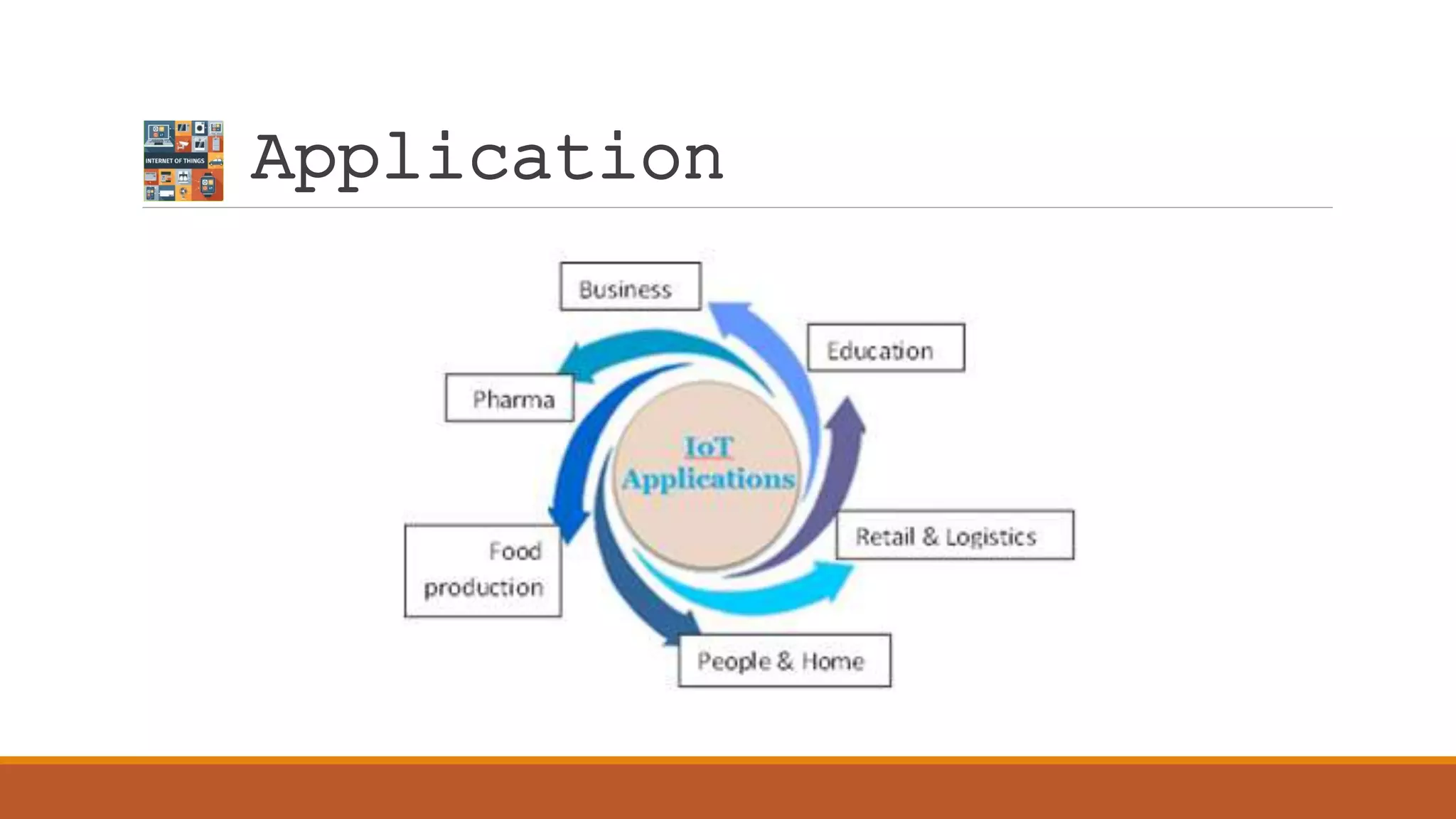
Application
Building & home automation
From enhancing security to reducing energy and
maintenance costs, it offers a wide range of
innovative IoT technologies for monitor and
control of intelligent buildings and smart
homes.
Access control
Light & temperature control
Energy optimization
Predictive maintenance
Connected appliances
Smart cities
Reduce cost and resource consumption with IoT
products for lighting, surveillance,
centralized & integrated system control and
more.
Residential E-meters
Smart street lights
Pipeline leak detection
Traffic control
Surveillance cameras
Centralized and integrated system control
Health care
Shaping technology to improve the quality and
accessibility of digital products that are
revolutionizing the health and fitness
industries.
Remote monitoring
Ambulance telemetry
Drug tracking
Hospital asset tracking
Access control
Predictive maintenance
Wearables
With the broadest portfolio in the industry,
TI provides highly efficient ultra-low power
solutions for the wearable's market.
Entertainment
Fitness
Smart watch
Location and tracking
Smart manufacturing
The benefits of IoT products include tools,
software and hardware that ease and accelerate
design time for your next smart manufacturing
application.
Flow optimization
Real time inventory
Asset tracking
Employee safety
Predictive maintenance
Firmware updates
Issues and Challenges of
IOT
Difficulty building customer demand in the
absence of a single “killer application”
Lack of consistent standards
the proliferation of niche products, resulting
in a fragmented market and an unprofitable
environment for creating application-specific
chips
The need to extract more value from each
application by providing comprehensive
solutions, rather than focusing solely on
silicon
Contd..
SETTLING ON DEVICE CAPABILITIES
SUPPLY CHAIN CONCERNS
SECURITY
BRIDGING THE GAPS THAT DIVIDE US
SAFETY

Internet of things (IOT) | Future Trends

  • 1.
    Internet of Things (IoT) AI S H W A R Y A A N U B H A V R O Y C H O U D H R Y D E V A N A N D K A R T H I K S M A Y U R E S H S U R I Y A
  • 2.
    INTRODUCTION The Internet ofThings (IoT) is the network of physical objects—devices, vehicles, buildings and other items embedded with electronics, software, sensors and network connectivity that enables these objects to collect and exchange data. Allows objects to be sensed and controlled remotely across existing network infrastructure The data can be transferred over a network without requiring human-to-human or human-to-
  • 3.
    INTRODUCTION Practical applications ofIoT technology can be found in many industries today, including precision agriculture, building management, healthcare, energy and transportation. Experts estimate that the IoT will consist of almost 50 billion objects by 2020
  • 4.
    Features of IOT Centralcontroller management Powerful triggers Work faster and smarter
  • 7.
  • 8.
    RFID  Widely used inTransport and Logistics  Easy to deploy: RFID tags and RFID readers
  • 9.
    WiFi Very common Widely usedboth in indoor and outdoor environments General purpose Low cost Highly interoperable Maybe not a good solution in some special conditions
  • 10.
    BARCODE Low cost No technologicaldifficulties Several devices can read a barcode Starting point for more complex systems Example: price comparison
  • 11.
    ZigBee Low cost Very longbattery life Easy to deploy Large number of nodes (up to 64770) Can be used globally Secure Ideal for WPAN and mesh networks Support for multiple network topologies
  • 12.
    smartphon es  Inthe near future almost everybody will probably have a smartphone  A smartphone isn't just a mobile phone that has access to the Internet  The iPhone has a lot of different types of sensors
  • 13.
    Segmenting IoT Category A TCC&RApps Diverse “smart” and interconnected gadgets with unique IDs. The integrated solutions Increase M2M automation, machine-to- infrastructure (M2I), and machine-to-nature (M2N) communications. Caters to controlling, routing, maintaining, metering, provisioning, diagnosing, etc.
  • 14.
    Segmenting IoT Category B Focusedon data sensors for marketing purposes. The data mining is used to identify trends and behaviors. Retailers, banks and credit card companies that persistently study human behavior to influence sales. Healthcare/wellness, entertainment, insurance, electronics/home automation,
  • 15.
    The first Internet appliance Cokemachine at Carnegie Mellon University in the early 1980s.
  • 16.
  • 17.
  • 18.
  • 19.
  • 20.
  • 21.
    Building & homeautomation From enhancing security to reducing energy and maintenance costs, it offers a wide range of innovative IoT technologies for monitor and control of intelligent buildings and smart homes. Access control Light & temperature control Energy optimization Predictive maintenance Connected appliances
  • 22.
    Smart cities Reduce costand resource consumption with IoT products for lighting, surveillance, centralized & integrated system control and more. Residential E-meters Smart street lights Pipeline leak detection Traffic control Surveillance cameras Centralized and integrated system control
  • 23.
    Health care Shaping technologyto improve the quality and accessibility of digital products that are revolutionizing the health and fitness industries. Remote monitoring Ambulance telemetry Drug tracking Hospital asset tracking Access control Predictive maintenance
  • 24.
    Wearables With the broadestportfolio in the industry, TI provides highly efficient ultra-low power solutions for the wearable's market. Entertainment Fitness Smart watch Location and tracking
  • 25.
    Smart manufacturing The benefitsof IoT products include tools, software and hardware that ease and accelerate design time for your next smart manufacturing application. Flow optimization Real time inventory Asset tracking Employee safety Predictive maintenance Firmware updates
  • 26.
    Issues and Challengesof IOT Difficulty building customer demand in the absence of a single “killer application” Lack of consistent standards the proliferation of niche products, resulting in a fragmented market and an unprofitable environment for creating application-specific chips The need to extract more value from each application by providing comprehensive solutions, rather than focusing solely on silicon
  • 27.
    Contd.. SETTLING ON DEVICECAPABILITIES SUPPLY CHAIN CONCERNS SECURITY BRIDGING THE GAPS THAT DIVIDE US SAFETY

Editor's Notes

  • #14 that interact with other devices, infrastructure, as well as the physical environment. in this category facilitate remote tracking, command, control and routing (TCC&R) functions. These apps mine and manipulate data to ; with the goal of increased operational efficiency. of electronics and other types of machinery
  • #15 to create richer, more intimate customer experiences for the connected consumer. to generate predictive analytics and aid in the evolutionary and innovation roadmaps. The industries that use IoT for understanding consumers are often are
  • #16 The programmers could connect to the machine over the Internet, check the status of the machine and determine whether or not there would be a cold drink awaiting them, should they decide to make the trip down to the machine.