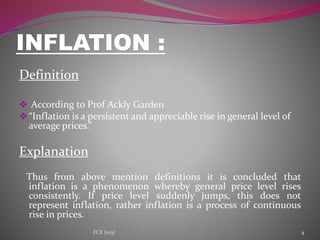
This document defines inflation as a persistent and appreciable rise in the general level of average prices. It notes that inflation is a continuous rise in prices, not a sudden price jump. The document discusses some effects of inflation like hoarding, increased risk for fixed income recipients, and lowering national savings. It provides examples of inflation seen in increased prices of items like wheat, oil, rice, and CNG. In conclusion, it states inflation poses a threat and has been caused by rapid growth, but falling oil prices and higher interest rates may help reduce inflation. Key challenges for the Indian economy include controlling inflation and spreading growth benefits more equitably.