Chronic Pulmonary
Aspergillosis
By: Dr. Noshirwan P. Gazder
• Chronic Pulmonary Aspergillosis (CPA) is a long-
term Aspergillus infection of the lung, usually but not exclusively
caused by Aspergillus fumigatus.
• Unlike acute forms of aspergillosis, CPA affects
immunocompetent people for reasons that are not yet fully
understood, and fungal growth is consequently slow.
• All patients with CPA have a history of structural lung disease, often
with residual cavities, bullae, or scarring. Specific risk factors include
the following:
• Pulmonary TB – Worldwide, previously treated pulmonary TB is the
most important risk factor. Approximately 20 to 35 percent of
patients with resolved TB have residual pulmonary cavities that
predispose to CPA, and the overall risk of developing an
aspergilloma in a pulmonary cavity of over 2 cm in diameter has
been estimated at 15 to 20 percent.
• Chronic obstructive pulmonary disease (COPD), especially bullous
disease.
• Allergic bronchopulmonary aspergillosis (ABPA)
• History of thoracic surgery, especially for lung cancer.
• Sarcoidosis.
• Mild to moderate immunocompromise (eg, low-dose corticosteroids [eg, <
equivalent of prednisone 0.3 mg/kg/day for >3 weeks]) predisposes to a specific
form of CPA called subacute invasive aspergillosis (SAIA).
• Other conditions, including bronchiectasis, prior pneumothorax, COVID-19
infection, prior severe pneumonia, pneumoconiosis, silicosis, rheumatoid arthritis,
ankylosing spondylitis, granulomatosis with polyangiitis, previous pulmonary
embolism, and hydatid disease.
• Aspergillus fumigatus (A. fumigatus) is the most common cause of CPA,
although A. flavus, A. niger, A. terreus, and A. nidulans have also been implicated.
• Current knowledge of the pathology of CPA comes from case series
of surgically resected or post-mortem lesions, usually well-formed
aspergillomas.
• The primary driver of disease in patients with CPA is the local
immune response to Aspergillus colonization of previously damaged
lung tissue. Invasion of tissue by the fungus itself is not a major
contributor to CPA in immunocompetent individuals.
• In patients with CPA, the interplay between the fungal organisms and
the patient's immune response determines the clinical and
pathological presentation. Variable presentations have led to
categorization of CPA into different syndromes.
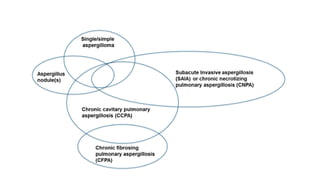
• Two CPA syndromes (aspergillomas and Aspergillus nodules) are
due to localized noninvasive proliferation of Aspergillus that do
not elicit an extensive inflammatory response:
1. Aspergillomas
2. Aspergillus nodules
• Two additional forms of CPA are due to extensive tissue
inflammation in response to Aspergillus colonization of
previously damaged lungs. Actual fungal organisms are
uncommonly found in affected lung tissue:
1. Chronic cavitary pulmonary aspergillosis (CCPA) [Most
common type]
2. Chronic fibrosing pulmonary aspergillosis (CFPA)
• Subacute invasive aspergillosis (SAIA)
Aspergilloma
• This is the morphological appearance of a fungal ball,
consisting almost entirely of fungal hyphae and extracellular
matrix.
• It is the most characteristic imaging feature of CPA and usually
visualized on computed tomography (CT) scanning of the
thorax, in a pulmonary or pleural cavity or an ectatic bronchus.
• It may be found in all forms of CPA except Aspergillus nodule.
• Aspergillomas are formed when colonizing fungal organisms lining
the inner surface of a pre-existing lung cavity spread into the cavity
itself; the fungi proliferate in the form of a fungus ball inside the
cavity. Microscopically, aspergillomas are composed of fungal
hyphae, mucus, and cellular debris. Inflammation, if present, typically
does not extend beyond the cavity wall. They are late manifestations
of pre-existing persistent cavitary lung lesions.
• It is exceptionally unusual for a fungal ball to be caused by any other
fungus.
• The term “air crescent” has also been noted in invasive pulmonary
aspergillosis (IPA), when the material seen in the cavity is infarcted
lung containing Aspergillus (or another fungus). This latter entity is
best referred to as a “mycotic lung sequestrum”, and is seen in
immunocompromised patients.
• An aspergilloma sometimes has air pockets or calcification
inside it, and it may be surrounded by air, have pockets or a
crescent of air between them and the cavity wall, or have no
surrounding air.
• An aspergilloma may be gravity dependent (ie, moves as the
patient changes position) or immobile with strands connecting it
to the wall of the cavity.
• Images obtained weeks to months prior to the discovery of an
aspergilloma may reveal intracavitary fronds attached to the
wall and extending into the cavity; subsequent imaging typically
reveals that the fronds have coalesced and detached to form an
aspergilloma.
Single (simple) pulmonary aspergilloma
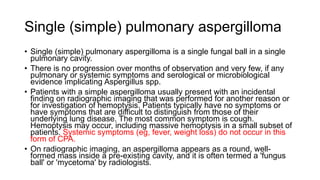
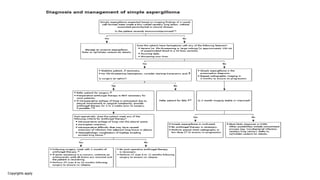
• Single (simple) pulmonary aspergilloma is a single fungal ball in a single
pulmonary cavity.
• There is no progression over months of observation and very few, if any
pulmonary or systemic symptoms and serological or microbiological
evidence implicating Aspergillus spp.
• Patients with a simple aspergilloma usually present with an incidental
finding on radiographic imaging that was performed for another reason or
for investigation of hemoptysis. Patients typically have no symptoms or
have symptoms that are difficult to distinguish from those of their
underlying lung disease. The most common symptom is cough.
Hemoptysis may occur, including massive hemoptysis in a small subset of
patients. Systemic symptoms (eg, fever, weight loss) do not occur in this
form of CPA.
• On radiographic imaging, an aspergilloma appears as a round, well-
formed mass inside a pre-existing cavity, and it is often termed a 'fungus
ball' or 'mycetoma' by radiologists.
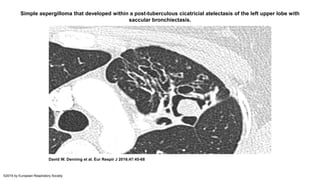
Simple aspergilloma that developed within a post-tuberculous cicatricial atelectasis of the left upper lobe with
saccular bronchiectasis.
David W. Denning et al. Eur Respir J 2016;47:45-68
©2016 by European Respiratory Society
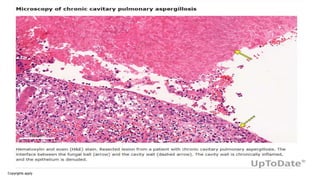
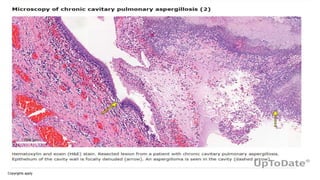
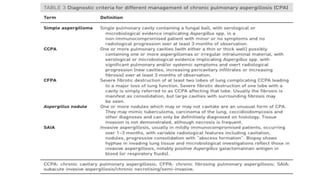
Chronic cavitary pulmonary aspergillosis
• CCPA, formerly called complex aspergilloma, usually shows
multiple cavities, which may or may not contain an
aspergilloma, in association with pulmonary and systemic
symptoms and raised inflammatory markers, over at least 3
months of observation.
• A principal feature of this syndrome is slow progression of both
symptoms and radiographic findings over months to years.
• Untreated, over years, these cavities enlarge and coalesce,
developing pericavitary infiltrates or perforating into the pleura,
and an aspergilloma may appear or disappear. Thus serological
or microbiological evidence implicating Aspergillus is required
for diagnosis.
• Patients with CCPA present with symptoms of varying severity;
some patients report minimal symptoms if identified early.
• However, symptoms eventually manifest as the disease
progresses.
• Common symptoms include productive cough, hemoptysis,
shortness of breath, chest pain, sweats, anorexia, weight loss,
and fatigue; without treatment, weight loss and fatigue may be
pronounced . Fever is uncommon, except during concurrent
bacterial or viral infection. Hemoptysis can range from blood-
streaked sputum to massive fatal hemoptysis.
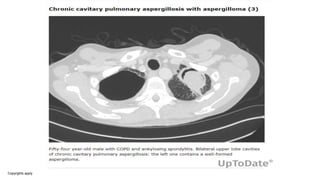
• Radiographic imaging reveals one or more thick- or thin-walled cavities
that often have irregular walls and intracavitary material; aspergillomas
may develop within the cavities as the disease progresses. The upper
lobes are most commonly affected. As the disease progresses, new
cavities develop or existing cavities expand, and they may coalesce or
perforate into the pleural space.
• Infiltrates are common surrounding the cavities. The thickness of cavity
walls represents the inflammatory activity of the disease as well as
possible adjacent fibrosis. For lesions close to the pleura, pleural
thickening is very common. Concomitant findings include bronchiectasis,
nodules, ground glass changes, tree-in-bud changes, and organizing
pneumonia.
• Pre-existing cavitary lung lesions are not necessary for the development of
CCPA, but when present, these cavities can be the initial site of CCPA.
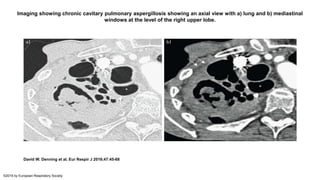
Imaging showing chronic cavitary pulmonary aspergillosis showing an axial view with a) lung and b) mediastinal
windows at the level of the right upper lobe.
David W. Denning et al. Eur Respir J 2016;47:45-68
©2016 by European Respiratory Society
Copyrights apply
Copyrights apply
Copyrights apply
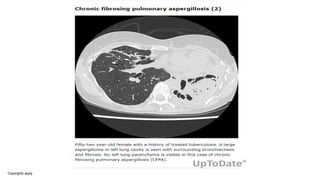
Chronic fibrosing pulmonary aspergillosis
• CFPA is often an end result from untreated CCPA. Extensive fibrosis with
fibrotic destruction of at least two lobes of lung complicating CCPA, leading
to a major loss of lung function.
• Usually the fibrosis is solid in appearance, but large or small cavities with
surrounding fibrosis may be seen. Serological or microbiological evidence
implicating Aspergillus spp. is required for diagnosis. One or more
aspergillomas may be present
• The onset of CFPA is heralded by complaints of worsening shortness of
breath, chest tightness, weight loss, and malnutrition.
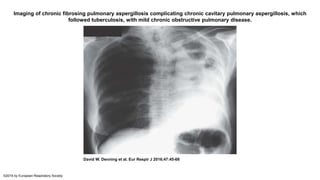
• Radiographic imaging typically reveals extensive pulmonary fibrosis in one
or both upper lobes near the sites of known cavities and aspergillomas. In
many cases, the fibrosis progresses to involve an entire lung, which can
result in a 'white-out' of an entire lung or a 'destroyed lung' appearance
Imaging of chronic fibrosing pulmonary aspergillosis complicating chronic cavitary pulmonary aspergillosis, which
followed tuberculosis, with mild chronic obstructive pulmonary disease.
David W. Denning et al. Eur Respir J 2016;47:45-68
©2016 by European Respiratory Society
Copyrights apply
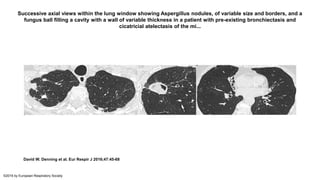
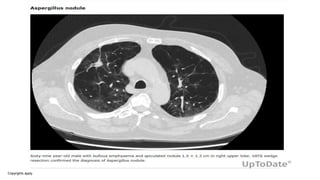
Aspergillus nodule
• One or more nodules (<3 cm), which do not usually cavitate, an
unusual form of CPA. It may mimic carcinoma of the lung,
metastases, cryptococcal nodule, coccidioidomycosis or other rare
pathogens and can only be definitively diagnosed on histology.
• Nodules in patients with rheumatoid arthritis may be pure rheumatoid
nodules or contain Aspergillus. Tissue invasion is not demonstrated,
although necrosis is frequent. Sometimes lesions larger than 3 cm in
diameter are seen and may have a necrotic centre. These are not
well described in the literature and are best described as “mass
lesions caused by Aspergillus.
• Patients with Aspergillus nodules are typically asymptomatic
and have undergone a percutaneous or excisional biopsy of a
lung nodule to rule out malignancy. The diagnosis is made
when the biopsied tissue reveals fungal hyphae consistent
with Aspergillus on histology and no other etiology is identified.
• The radiological appearance of an Aspergillus nodule cannot be
reliably distinguished from nodules of other etiologies, including
malignancy.
• Patients may have single or multiple Aspergillus nodules.
Successive axial views within the lung window showing Aspergillus nodules, of variable size and borders, and a
fungus ball filling a cavity with a wall of variable thickness in a patient with pre-existing bronchiectasis and
cicatricial atelectasis of the mi...
David W. Denning et al. Eur Respir J 2016;47:45-68
©2016 by European Respiratory Society
Copyrights apply
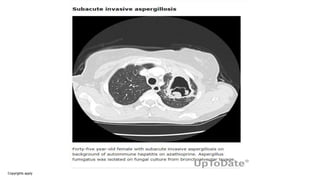
Subacute invasive aspergillosis (SAIA)
• Subacute invasive aspergillosis (SAIA) was previously termed
chronic necrotising or semi-invasive pulmonary aspergillosis. SAIA
occurs in mildly immunocompromised or very debilitated patients
and has similar clinical and radiological features to CCPA but is more
rapid in progression.
• SAIA typically occurs in patients with diabetes mellitus, malnutrition,
alcoholism, advanced age, prolonged low-dose corticosteroid
therapy [eg,< equivalent of prednisone 0.3 mg/kg/day for >3 weeks
or other modest immunocompromising agents, chronic obstructive
lung disease, connective tissue disorders, radiation therapy, non-
tuberculous mycobacterial (NTM) infection or HIV infection.
• Patients are more likely to have detectable Aspergillus antigen in
blood, and will show hyphae invading lung parenchyma, if a biopsy is
done.
• Radiographic findings may include infiltrates, nodules, and
consolidation with or without cavitation; the most common
finding is a single area of consolidation. Unlike other forms of
CPA, pre-existing structural lung disease or cavitation is not
necessary for the development of SAIA.
• Patients with more severe underlying immunosuppression (eg,
neutropenia, prolonged high-dose corticosteroid therapy)
typically have Invasive Aspergillosis as opposed to SAIA.
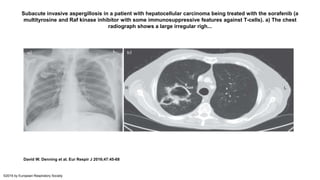
Subacute invasive aspergillosis in a patient with hepatocellular carcinoma being treated with the sorafenib (a
multityrosine and Raf kinase inhibitor with some immunosuppressive features against T-cells). a) The chest
radiograph shows a large irregular righ...
David W. Denning et al. Eur Respir J 2016;47:45-68
©2016 by European Respiratory Society
Copyrights apply
Laboratory findings
• Routine laboratory tests in patients with CPA often reflect the
presence of chronic inflammation, with anemia of chronic
disease, lymphopenia, hypoalbuminemia, elevated
inflammatory markers (erythrocyte sedimentation rate [ESR]
and C-reactive protein), and polyclonal
hypergammaglobulinemia.
• Laboratory findings are usually normal in patients with simple
aspergillomas or Aspergillus nodules.
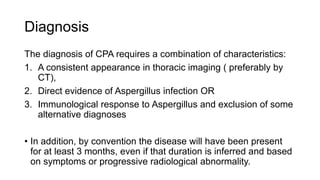
Diagnosis
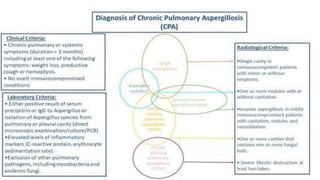
The diagnosis of CPA requires a combination of characteristics:
1. A consistent appearance in thoracic imaging ( preferably by
CT),
2. Direct evidence of Aspergillus infection OR
3. Immunological response to Aspergillus and exclusion of some
alternative diagnoses
• In addition, by convention the disease will have been present
for at least 3 months, even if that duration is inferred and based
on symptoms or progressive radiological abnormality.
• If a fungal ball is observed, then confirmation that Aspergillus is
responsible requires only an Aspergillus IgG or precipitins test
to be positive, which it will be in >90% of cases. If antibody
testing is not positive then other evidence of Aspergillus
infection is required.
• Patients may have both CPA and other infections that occur
concurrently.
In patients with one or more cavities consistent with CPA then
any of the following can be used to confirm the diagnosis, if other
diagnoses have been excluded:
1. Aspergillus IgG or precipitins positive.
2. Strongly Positive Aspergillus Antigen or DNA in respiratory
fluids.
3. Percutaneous or excision biopsy showing fungal hyphae on
microscopy or growing Aspergillus from a cavity.
• If hyphae are seen to be invading lung parenchyma, the
diagnosis is acute or subacute invasive aspergillosis.
• Respiratory samples showing hyphae consistent with
Aspergillus and/or growing Aspergillus and/or with a positive
Aspergillus PCR assay support the diagnosis, but are not
enough alone for a confirmed diagnosis of CPA as numerous
other conditions can yield Aspergillus in the airways.
• SAIA should be diagnosed according to established definitions
of invasive aspergillosis in immunocompromised patients (or
highly debilitated patients), with a slower course than acute
invasive aspergillosis (1–3 months), and commonly with both
detectable Aspergillus antibody and antigen in the serum.
• Histological confirmation derives from seeing hyphae invading
lung parenchyma. Depending on geographical location and
travel history there are three fungal conditions that are similar in
presentation:
1. Chronic cavitary pulmonary histoplasmosis,
2. Paracoccidioidomycosis
3. Coccidioidomycosis.
Antibody/antigen detection and respiratory cultures will usually
allow for the distinction to be made.
• Mycobacterial infection is the usual differential diagnosis for
CPA and either pulmonary TB or NTM infection may precede,
follow or occasionally occur at the same time with CPA.
• Pulmonary samples for smear, mycobacterial nucleic acid
amplification and culture are important components of the
differential work up of possible CPA.
• Diagnosing a mycobacterial infection does not exclude CPA.
• Other differential diagnoses include necrotising lung cancer,
pulmonary infarction, vasculitides and rheumatoid nodule.
• Persistent cavities in the lung, as found in CPA, may be infected
with conventional bacteria such as Streptococcus pneumoniae,
Haemophilus influenzae, Staphylococcus aureus,
Pseudomonas aeruginosa and anaerobic bacteria. Almost all
require treatment, but do not negate a diagnosis of CPA
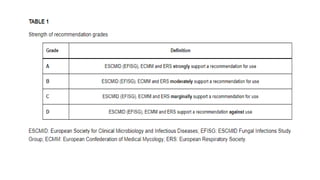
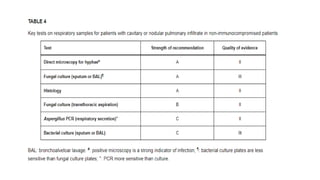
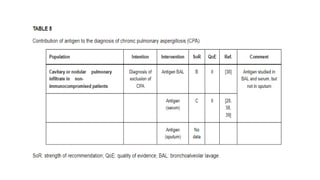
Contribution of histology, microscopy, culture and PCR
on respiratory samples to the diagnosis of CPA
• The presence of Aspergillus fumigatus in sputum is not diagnostic because of
the ubiquitous nature of the fungus and the different pathologies attributable to
the fungus.
• However, the presence of A. fumigatus in a bronchoscopic specimen is far more
common in infection compared to colonisation and is consistent with infection,
including CPA.
• Respiratory samples cultured on media specific for fungi have a higher yield than
bacterial culture plates.
• Culture of multiple samples increases yield in those with allergic
bronchopulmonary aspergillosis, which is probably true for all forms of pulmonary
aspergillosis.
• Molecular detection methods, such as PCR, are more sensitive than culture
• Strong PCR signals detected during antifungal therapy is most consistent with
antifungal resistance and direct detection of key resistance mutations is
technically possible.
• Biopsy or resection of lesions allows definitive distinction
between subacute invasive aspergillosis and CCPA and better
definition of the tissue response to Aspergillus infection.
• Septate hyphae may be found in a resected cavity, sometimes
filling and obliterating it, with a chronic inflammatory reaction.
Occasionally a granuloma is found and there may be fibrosis
surrounding or mixed with an inflammatory infiltrate.
• In contrast, histology in SAIA shows hyphae present in lung
parenchyma, with an acute inflammatory or necrotic tissue
response.
Contribution of galactomannan antigen to the
diagnosis of CPA
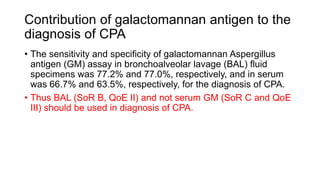
• The sensitivity and specificity of galactomannan Aspergillus
antigen (GM) assay in bronchoalveolar lavage (BAL) fluid
specimens was 77.2% and 77.0%, respectively, and in serum
was 66.7% and 63.5%, respectively, for the diagnosis of CPA.
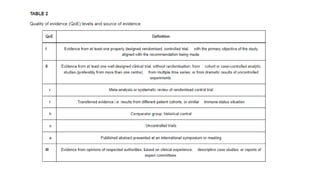
• Thus BAL (SoR B, QoE II) and not serum GM (SoR C and QoE
III) should be used in diagnosis of CPA.
Antibody diagnosis of CPA
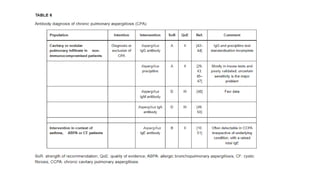
• Detection of Aspergillus antibodies is a key diagnostic feature of CPA.
• The presence of anti-Aspergillus antibodies differentiates between infected and
colonised patients with a positive predictive value of 100% for detecting infection.
• All patients suspected of having chronic or subacute invasive aspergillosis should
be tested for A. fumigatus IgG antibody or precipitins (SoR A and QoE II).
• The antibody titre bears little relationship to the extent or severity of disease,
although very high antibody titres are more common in those with aspergilloma.
• Antibody titres generally slowly fall with successful therapy, but rarely become
undetectable, unless continuous therapy has been given for years.
• A sharply rising antibody titre is usually a sign of therapeutic failure or relapse,
but should be repeated before initiating a change in therapy in case of laboratory
error.
Radiological diagnosis and follow-up of
CPA
• Chest radiographs remain the first imaging modality for the
suspicion and diagnosis of CPA.
• CT of the thorax offers much additional value, as it provides
better definition and location of imaging abnormalities as well as
their distribution and extent.
• Intravenous contrast administration (CT-angiography) is
required at least for the baseline CT scan, prior to therapy.
• CT angiography may also be useful to evaluate new
haemoptysis, and in case of possible failure of therapy.
• Positron emission tomography (PET) doesn’t appear to be
useful.
Imaging findings
• The imaging features of CPA result from a combination of the findings related to
underlying lung disorders and changes secondary to Aspergillus infection itself, reflecting
the chronic inflammatory and immune response to Aspergillus spp.
• CPA most commonly develops in a pre-existent bronchopulmonary or, less usually, pleural
cavity, but also directly causes the formation and expansion of new cavities or nodules
and rarely alveolar consolidation.
• Changes secondary to the Aspergillus infection itself range from the typical appearance of
a fungus ball within a lung cavity (single or simple aspergilloma) to complex
pleuroparenchymal features that are related to a progressive destructive cavitary disease.
• The distinctive hallmarks of CPA are new and/or expanding cavities of variable wall
thickness in the setting of chronic lung disease with or without intracavitary fungal ball
formation, often with pleural thickening and marked parenchymal destruction and/ or
fibrosis. Aspergillus empyema may be seen.
• Associated enlargement of bronchial or non-bronchial systemic arteries and, less
frequently, pseudo-aneurysms may lead to sometimes fatal haemoptysis.
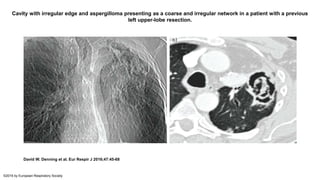
• Prior to aspergilloma formation, a mat of fungal growth on the
interior surface of the cavity is common, with a distinctive
appearance of a bumpy or irregular interior cavity appearance.
Cavity with irregular edge and aspergilloma presenting as a coarse and irregular network in a patient with a previous
left upper-lobe resection.
David W. Denning et al. Eur Respir J 2016;47:45-68
©2016 by European Respiratory Society
• An aspergilloma typically starts as a surface infection following
colonisation in a lung cavity or a bronchiectasis. Aspergilloma is
a late manifestation of CPA.
• Aspergilloma typically presents as an upper-lobe, solid, round
or oval intracavitary mass, partially surrounded by a crescent of
air, the “air-crescent” sign, mobile on prone position.
• Fungus balls do not enhance after i.v. injection of contrast
media.
Treatment and follow-up
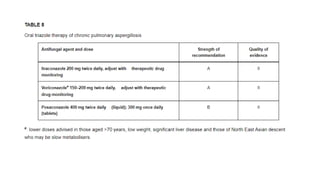
Oral triazole therapy of CPA:
• The decision to treat CPA with oral triazole therapy depends on patient’s type of disease
or clinical phenotype and eligibility for surgical treatment.
• As a general recommendation, outpatient oral triazole therapy likely provides some
therapeutic benefit in cases of progressive and/or symptomatic CPA.
• Oral itraconazole therapy may be useful in preventing or treating life-threatening
haemoptysis.
• Oral itraconazole treatment was superior to conservative treatment in stabilising the
clinical and radiological manifestations in patients with CCPA, with comparatively minimal
risk in terms of tolerance.
• Oral triazole therapy for CCPA is now considered the standard of care.
• CFPA is generally the end result of untreated CCPA associated with subsequent
development of extensive pulmonary fibrosis. Long-term treatment with itraconazole may
be beneficial in stabilising patients’ general condition, with limited impact on
breathlessness.
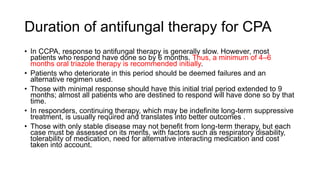
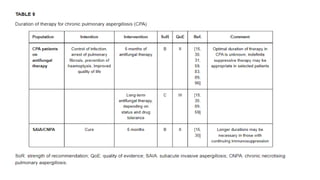
Duration of antifungal therapy for CPA
• In CCPA, response to antifungal therapy is generally slow. However, most
patients who respond have done so by 6 months. Thus, a minimum of 4–6
months oral triazole therapy is recommended initially.
• Patients who deteriorate in this period should be deemed failures and an
alternative regimen used.
• Those with minimal response should have this initial trial period extended to 9
months; almost all patients who are destined to respond will have done so by that
time.
• In responders, continuing therapy, which may be indefinite long-term suppressive
treatment, is usually required and translates into better outcomes .
• Those with only stable disease may not benefit from long-term therapy, but each
case must be assessed on its merits, with factors such as respiratory disability,
tolerability of medication, need for alternative interacting medication and cost
taken into account.
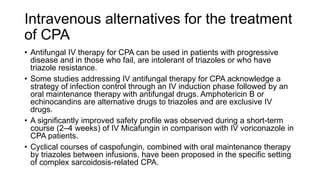
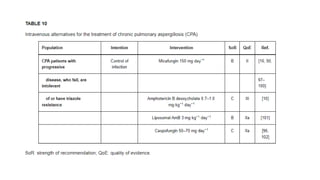
Intravenous alternatives for the treatment
of CPA
• Antifungal IV therapy for CPA can be used in patients with progressive
disease and in those who fail, are intolerant of triazoles or who have
triazole resistance.
• Some studies addressing IV antifungal therapy for CPA acknowledge a
strategy of infection control through an IV induction phase followed by an
oral maintenance therapy with antifungal drugs. Amphotericin B or
echinocandins are alternative drugs to triazoles and are exclusive IV
drugs.
• A significantly improved safety profile was observed during a short-term
course (2–4 weeks) of IV Micafungin in comparison with IV voriconazole in
CPA patients.
• Cyclical courses of caspofungin, combined with oral maintenance therapy
by triazoles between infusions, have been proposed in the specific setting
of complex sarcoidosis-related CPA.
Local cavity therapy for CPA
• If surgical resection is not a treatment option to control recurrent haemoptysis, instillation
of antifungal agents in an aspergilloma cavity could be considered, in those without a
haemorrhagic diathesis.
• Several clinical reports have described the resolution of aspergilloma through the
instillation of antifungal agents into pulmonary cavities, when systemic use of antifungals
is ineffective or prevented by adverse events.
• Instillation of antifungal agents may be delivered through an endobronchial catheter under
bronchoscopic guidance, via a percutaneous transthoracic needle or catheter placed into
the aspergilloma cavity.
• The antifungals used for instillation include amphotericin B (as paste or solution), azoles
(miconazole, itraconazole), sodium iodide and nystatin (as paste with amphotericin B).
• Amphotericin B is the drug of choice (50 mg in 20 mL 5% dextrose solution) and the
instilled amount depends on cavity space available.
• Complications include cough, chest pain, pneumothorax or endobronchial reflux, which is
problematic in those with poor respiratory reserve.
Follow-up
• Follow-up imaging is one means of assessing progress of CPA. The
chest radiograph and CT give complementary information.
• Reduced dose CT is optimally used for follow-up CT.
• Follow-up imaging, which is recommended every 3–6 months after
beginning antifungal treatment and then less often, or with any major
change of clinical status.
• Radiological change is slow and very little change is visible in
<3 months on CT scans or chest radiographs.
• Signs of improvement are reduced pleural thickening, less material
or fluid in a cavity, a smoother interior cavity wall, and a smaller
nodule or area of pericavitary consolidation.
• Features of failure include:
1. An expanding cavity, new cavities, or coalescing cavities.
2. Formation of an aspergilloma
3. Increased consolidation adjacent to a cavity.
• Key judgments on the efficacy of treatment include:
1. Assessing the extent of consolidation
2. Cavity wall thickness and size
3. Fungus ball(s) and pleural thickening
By comparing exact equivalent anatomical lesions. Volumetric
quantification of the lesions with software is also feasible.
Corticosteroid therapy and CPA
• Inhaled or systemic treatment with corticosteroids is one of the major
risk factors for CPA, posing significant progression or dissemination
risk.
• Without adequate antifungal therapy, corticosteroid therapy
accelerates disease progression.
• Patients with underlying diseases such as sarcoidosis, rheumatoid
arthritis, COPD, ABPA or asthma may, however, be dependent on
immunosuppressive therapy including corticosteroids.
• Prednisolone 5–30 mg/day or other immunosuppressive therapy
may carefully be considered for symptom control only if patients are
adequately treated with antifungals.
Interferon-γ immunotherapy for CPA
• Many, often subtle, immune defects are noticed in CPA, but
interferon (IFN)-γ deficiency is the only one that can be substituted.
• A study involving 30 CPA patients showed impaired production of
IFN-γ and interleukin (IL)-12, though normal response pathways
were seen in stimulated blood tests. Two patients with progressive
CPA showed impaired IFN-γ response despite antifungal treatment,
suggesting potential benefits of IFN-γ substitution.
• Adjunctive IFN-γ therapy led to clinical improvement in two cases
and stable or improved disease in three other patients. However, due
to the limited number of cases and lack of controlled studies, no
formal recommendation can be made.
Therapies for haemoptysis in CPA
• CCPA and simple aspergilloma may be complicated by mild (common), moderate or life-threatening
haemoptysis.
• Mild and moderate haemoptysis usually responds to tranexamic acid (typically 500 mg three times
daily), although not licensed for this indication.
• In patients with moderate or severe haemoptysis, embolisation may be necessary, either as a
temporising measure before surgery, or as a definitive treatment.
• In CPA, bleeding is from an abnormal and novel vascular nexus of small vessels derived from the
systemic circulation, in proximity to the affected area(s). Vessels are usually derived from the
bronchial circulation but may come from other arteries; intercostal, subclavian, or internal mammary.
It is common for multiple abnormal connections to be present.
• Bronchial artery embolisation is a difficult procedure requiring a skilled interventional radiologist.
50–90% of embolisation procedures are successful, depending in part on the radiologist.
• Recurrent haemoptysis occurs in 30–50% of patients over 3 years and it is likely that relapse can be
minimised with successful long-term antifungal therapy.
• If IV Amphotericin B is being administered, doses should be withheld for 24–48 h after bronchial
artery embolisation, to avoid additive nephrotoxicity
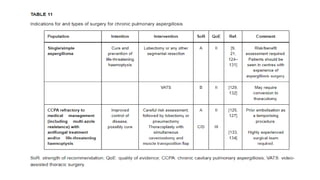
Indications for surgery in CPA
• Surgical resection of aspergilloma is a definitive treatment option for patients with adequate pulmonary function.
• Success of the procedure depends on the ability to fully resect the aspergilloma without spillage of fungal elements into
the pleural space.
• As such, recurrence of disease and haemoptysis are rare in simple aspergilloma while CCPA carries a lower success
rate.
• Surgery should be considered in all patients with severe haemoptysis.
• Prior to possible elective surgery, careful patient selection [125] is warranted as many patients are physically debilitated
contributing to a higher risk of death and peri- and post-operative complications. In this regard special emphasis should
be given to cardiopulmonary function.
• Malnourished patients should have supplemental feeding to improve nutritional status before surgery, including the use
of nasogastric or percutaneous endoscopic gastrostomy feeding if oral supplementation is inadequate.
• In patients not deemed candidates for surgery because of a high risk profile, bronchoscopic removal of the aspergilloma
should be considered.
• Risk of peri- or post-operative complications and mortality are significantly higher in patients with multi-cavity disease
(CCPA) compared with simple aspergilloma.
• Procedures include bullectomy, segmentectomy, sublobar resection, wedge resection, lobectomy, pleurectomy,
pneumonectomy. Video-assisted thoracic surgery (VATS) may reduce the number of complications and length of
hospitalisation and has been suggested as an alternative procedure to open surgery for the resection of simple
aspergilloma and multicavity disease without infiltration of the hilum
• Antifungal therapy can be administered to prevent Aspergillus
empyema or to avoid recurrence of disease when complete
resection is not possible, but there is no evidence to support
this role of adjuvant triazole antifungal therapy following
definitive surgical removal of a single aspergilloma
• Fungal cultures should be taken intra-operatively and part of the
aspergilloma or cavity submitted for culture, especially if the
patient has had prior antifungal therapy.
• In case of peri-operative spillage, the pleural space can be
washed out with either amphotericin B deoxycholate or
taurolidine.
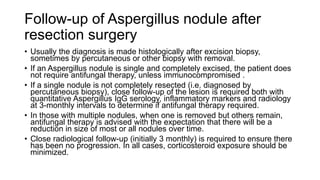
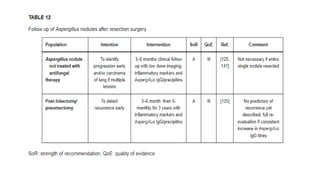
Follow-up of Aspergillus nodule after
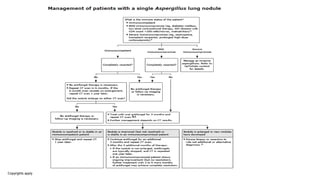
resection surgery
• Usually the diagnosis is made histologically after excision biopsy,
sometimes by percutaneous or other biopsy with removal.
• If an Aspergillus nodule is single and completely excised, the patient does
not require antifungal therapy, unless immunocompromised .
• If a single nodule is not completely resected (i.e. diagnosed by
percutaneous biopsy), close follow-up of the lesion is required both with
quantitative Aspergillus IgG serology, inflammatory markers and radiology
at 3-monthly intervals to determine if antifungal therapy required.
• In those with multiple nodules, when one is removed but others remain,
antifungal therapy is advised with the expectation that there will be a
reduction in size of most or all nodules over time.
• Close radiological follow-up (initially 3 monthly) is required to ensure there
has been no progression. In all cases, corticosteroid exposure should be
minimized.
Copyrights apply
Copyrights apply
Thank you

Presentation on Chronic Pulmonary Aspergillosis

  • 1.
  • 2.
    • Chronic PulmonaryAspergillosis (CPA) is a long- term Aspergillus infection of the lung, usually but not exclusively caused by Aspergillus fumigatus. • Unlike acute forms of aspergillosis, CPA affects immunocompetent people for reasons that are not yet fully understood, and fungal growth is consequently slow.
  • 3.
    • All patientswith CPA have a history of structural lung disease, often with residual cavities, bullae, or scarring. Specific risk factors include the following: • Pulmonary TB – Worldwide, previously treated pulmonary TB is the most important risk factor. Approximately 20 to 35 percent of patients with resolved TB have residual pulmonary cavities that predispose to CPA, and the overall risk of developing an aspergilloma in a pulmonary cavity of over 2 cm in diameter has been estimated at 15 to 20 percent. • Chronic obstructive pulmonary disease (COPD), especially bullous disease. • Allergic bronchopulmonary aspergillosis (ABPA) • History of thoracic surgery, especially for lung cancer. • Sarcoidosis.
  • 4.
    • Mild tomoderate immunocompromise (eg, low-dose corticosteroids [eg, < equivalent of prednisone 0.3 mg/kg/day for >3 weeks]) predisposes to a specific form of CPA called subacute invasive aspergillosis (SAIA). • Other conditions, including bronchiectasis, prior pneumothorax, COVID-19 infection, prior severe pneumonia, pneumoconiosis, silicosis, rheumatoid arthritis, ankylosing spondylitis, granulomatosis with polyangiitis, previous pulmonary embolism, and hydatid disease. • Aspergillus fumigatus (A. fumigatus) is the most common cause of CPA, although A. flavus, A. niger, A. terreus, and A. nidulans have also been implicated.
  • 5.
    • Current knowledgeof the pathology of CPA comes from case series of surgically resected or post-mortem lesions, usually well-formed aspergillomas. • The primary driver of disease in patients with CPA is the local immune response to Aspergillus colonization of previously damaged lung tissue. Invasion of tissue by the fungus itself is not a major contributor to CPA in immunocompetent individuals. • In patients with CPA, the interplay between the fungal organisms and the patient's immune response determines the clinical and pathological presentation. Variable presentations have led to categorization of CPA into different syndromes.
  • 6.
    • Two CPAsyndromes (aspergillomas and Aspergillus nodules) are due to localized noninvasive proliferation of Aspergillus that do not elicit an extensive inflammatory response: 1. Aspergillomas 2. Aspergillus nodules
  • 7.
    • Two additionalforms of CPA are due to extensive tissue inflammation in response to Aspergillus colonization of previously damaged lungs. Actual fungal organisms are uncommonly found in affected lung tissue: 1. Chronic cavitary pulmonary aspergillosis (CCPA) [Most common type] 2. Chronic fibrosing pulmonary aspergillosis (CFPA) • Subacute invasive aspergillosis (SAIA)
  • 8.
    Aspergilloma • This isthe morphological appearance of a fungal ball, consisting almost entirely of fungal hyphae and extracellular matrix. • It is the most characteristic imaging feature of CPA and usually visualized on computed tomography (CT) scanning of the thorax, in a pulmonary or pleural cavity or an ectatic bronchus. • It may be found in all forms of CPA except Aspergillus nodule.
  • 9.
    • Aspergillomas areformed when colonizing fungal organisms lining the inner surface of a pre-existing lung cavity spread into the cavity itself; the fungi proliferate in the form of a fungus ball inside the cavity. Microscopically, aspergillomas are composed of fungal hyphae, mucus, and cellular debris. Inflammation, if present, typically does not extend beyond the cavity wall. They are late manifestations of pre-existing persistent cavitary lung lesions. • It is exceptionally unusual for a fungal ball to be caused by any other fungus. • The term “air crescent” has also been noted in invasive pulmonary aspergillosis (IPA), when the material seen in the cavity is infarcted lung containing Aspergillus (or another fungus). This latter entity is best referred to as a “mycotic lung sequestrum”, and is seen in immunocompromised patients.
  • 10.
    • An aspergillomasometimes has air pockets or calcification inside it, and it may be surrounded by air, have pockets or a crescent of air between them and the cavity wall, or have no surrounding air. • An aspergilloma may be gravity dependent (ie, moves as the patient changes position) or immobile with strands connecting it to the wall of the cavity. • Images obtained weeks to months prior to the discovery of an aspergilloma may reveal intracavitary fronds attached to the wall and extending into the cavity; subsequent imaging typically reveals that the fronds have coalesced and detached to form an aspergilloma.
  • 11.
    Single (simple) pulmonaryaspergilloma • Single (simple) pulmonary aspergilloma is a single fungal ball in a single pulmonary cavity. • There is no progression over months of observation and very few, if any pulmonary or systemic symptoms and serological or microbiological evidence implicating Aspergillus spp. • Patients with a simple aspergilloma usually present with an incidental finding on radiographic imaging that was performed for another reason or for investigation of hemoptysis. Patients typically have no symptoms or have symptoms that are difficult to distinguish from those of their underlying lung disease. The most common symptom is cough. Hemoptysis may occur, including massive hemoptysis in a small subset of patients. Systemic symptoms (eg, fever, weight loss) do not occur in this form of CPA. • On radiographic imaging, an aspergilloma appears as a round, well- formed mass inside a pre-existing cavity, and it is often termed a 'fungus ball' or 'mycetoma' by radiologists.
  • 13.
    Simple aspergilloma thatdeveloped within a post-tuberculous cicatricial atelectasis of the left upper lobe with saccular bronchiectasis. David W. Denning et al. Eur Respir J 2016;47:45-68 ©2016 by European Respiratory Society
  • 14.
    Chronic cavitary pulmonaryaspergillosis • CCPA, formerly called complex aspergilloma, usually shows multiple cavities, which may or may not contain an aspergilloma, in association with pulmonary and systemic symptoms and raised inflammatory markers, over at least 3 months of observation. • A principal feature of this syndrome is slow progression of both symptoms and radiographic findings over months to years. • Untreated, over years, these cavities enlarge and coalesce, developing pericavitary infiltrates or perforating into the pleura, and an aspergilloma may appear or disappear. Thus serological or microbiological evidence implicating Aspergillus is required for diagnosis.
  • 15.
    • Patients withCCPA present with symptoms of varying severity; some patients report minimal symptoms if identified early. • However, symptoms eventually manifest as the disease progresses. • Common symptoms include productive cough, hemoptysis, shortness of breath, chest pain, sweats, anorexia, weight loss, and fatigue; without treatment, weight loss and fatigue may be pronounced . Fever is uncommon, except during concurrent bacterial or viral infection. Hemoptysis can range from blood- streaked sputum to massive fatal hemoptysis.
  • 16.
    • Radiographic imagingreveals one or more thick- or thin-walled cavities that often have irregular walls and intracavitary material; aspergillomas may develop within the cavities as the disease progresses. The upper lobes are most commonly affected. As the disease progresses, new cavities develop or existing cavities expand, and they may coalesce or perforate into the pleural space. • Infiltrates are common surrounding the cavities. The thickness of cavity walls represents the inflammatory activity of the disease as well as possible adjacent fibrosis. For lesions close to the pleura, pleural thickening is very common. Concomitant findings include bronchiectasis, nodules, ground glass changes, tree-in-bud changes, and organizing pneumonia. • Pre-existing cavitary lung lesions are not necessary for the development of CCPA, but when present, these cavities can be the initial site of CCPA.
  • 17.
    Imaging showing chroniccavitary pulmonary aspergillosis showing an axial view with a) lung and b) mediastinal windows at the level of the right upper lobe. David W. Denning et al. Eur Respir J 2016;47:45-68 ©2016 by European Respiratory Society
  • 18.
  • 19.
  • 20.
  • 21.
    Chronic fibrosing pulmonaryaspergillosis • CFPA is often an end result from untreated CCPA. Extensive fibrosis with fibrotic destruction of at least two lobes of lung complicating CCPA, leading to a major loss of lung function. • Usually the fibrosis is solid in appearance, but large or small cavities with surrounding fibrosis may be seen. Serological or microbiological evidence implicating Aspergillus spp. is required for diagnosis. One or more aspergillomas may be present • The onset of CFPA is heralded by complaints of worsening shortness of breath, chest tightness, weight loss, and malnutrition. • Radiographic imaging typically reveals extensive pulmonary fibrosis in one or both upper lobes near the sites of known cavities and aspergillomas. In many cases, the fibrosis progresses to involve an entire lung, which can result in a 'white-out' of an entire lung or a 'destroyed lung' appearance
  • 22.
    Imaging of chronicfibrosing pulmonary aspergillosis complicating chronic cavitary pulmonary aspergillosis, which followed tuberculosis, with mild chronic obstructive pulmonary disease. David W. Denning et al. Eur Respir J 2016;47:45-68 ©2016 by European Respiratory Society
  • 23.
  • 24.
    Aspergillus nodule • Oneor more nodules (<3 cm), which do not usually cavitate, an unusual form of CPA. It may mimic carcinoma of the lung, metastases, cryptococcal nodule, coccidioidomycosis or other rare pathogens and can only be definitively diagnosed on histology. • Nodules in patients with rheumatoid arthritis may be pure rheumatoid nodules or contain Aspergillus. Tissue invasion is not demonstrated, although necrosis is frequent. Sometimes lesions larger than 3 cm in diameter are seen and may have a necrotic centre. These are not well described in the literature and are best described as “mass lesions caused by Aspergillus.
  • 25.
    • Patients withAspergillus nodules are typically asymptomatic and have undergone a percutaneous or excisional biopsy of a lung nodule to rule out malignancy. The diagnosis is made when the biopsied tissue reveals fungal hyphae consistent with Aspergillus on histology and no other etiology is identified. • The radiological appearance of an Aspergillus nodule cannot be reliably distinguished from nodules of other etiologies, including malignancy. • Patients may have single or multiple Aspergillus nodules.
  • 26.
    Successive axial viewswithin the lung window showing Aspergillus nodules, of variable size and borders, and a fungus ball filling a cavity with a wall of variable thickness in a patient with pre-existing bronchiectasis and cicatricial atelectasis of the mi... David W. Denning et al. Eur Respir J 2016;47:45-68 ©2016 by European Respiratory Society
  • 27.
  • 28.
    Subacute invasive aspergillosis(SAIA) • Subacute invasive aspergillosis (SAIA) was previously termed chronic necrotising or semi-invasive pulmonary aspergillosis. SAIA occurs in mildly immunocompromised or very debilitated patients and has similar clinical and radiological features to CCPA but is more rapid in progression. • SAIA typically occurs in patients with diabetes mellitus, malnutrition, alcoholism, advanced age, prolonged low-dose corticosteroid therapy [eg,< equivalent of prednisone 0.3 mg/kg/day for >3 weeks or other modest immunocompromising agents, chronic obstructive lung disease, connective tissue disorders, radiation therapy, non- tuberculous mycobacterial (NTM) infection or HIV infection. • Patients are more likely to have detectable Aspergillus antigen in blood, and will show hyphae invading lung parenchyma, if a biopsy is done.
  • 29.
    • Radiographic findingsmay include infiltrates, nodules, and consolidation with or without cavitation; the most common finding is a single area of consolidation. Unlike other forms of CPA, pre-existing structural lung disease or cavitation is not necessary for the development of SAIA. • Patients with more severe underlying immunosuppression (eg, neutropenia, prolonged high-dose corticosteroid therapy) typically have Invasive Aspergillosis as opposed to SAIA.
  • 30.
    Subacute invasive aspergillosisin a patient with hepatocellular carcinoma being treated with the sorafenib (a multityrosine and Raf kinase inhibitor with some immunosuppressive features against T-cells). a) The chest radiograph shows a large irregular righ... David W. Denning et al. Eur Respir J 2016;47:45-68 ©2016 by European Respiratory Society
  • 31.
  • 34.
    Laboratory findings • Routinelaboratory tests in patients with CPA often reflect the presence of chronic inflammation, with anemia of chronic disease, lymphopenia, hypoalbuminemia, elevated inflammatory markers (erythrocyte sedimentation rate [ESR] and C-reactive protein), and polyclonal hypergammaglobulinemia. • Laboratory findings are usually normal in patients with simple aspergillomas or Aspergillus nodules.
  • 35.
    Diagnosis The diagnosis ofCPA requires a combination of characteristics: 1. A consistent appearance in thoracic imaging ( preferably by CT), 2. Direct evidence of Aspergillus infection OR 3. Immunological response to Aspergillus and exclusion of some alternative diagnoses • In addition, by convention the disease will have been present for at least 3 months, even if that duration is inferred and based on symptoms or progressive radiological abnormality.
  • 36.
    • If afungal ball is observed, then confirmation that Aspergillus is responsible requires only an Aspergillus IgG or precipitins test to be positive, which it will be in >90% of cases. If antibody testing is not positive then other evidence of Aspergillus infection is required. • Patients may have both CPA and other infections that occur concurrently.
  • 37.
    In patients withone or more cavities consistent with CPA then any of the following can be used to confirm the diagnosis, if other diagnoses have been excluded: 1. Aspergillus IgG or precipitins positive. 2. Strongly Positive Aspergillus Antigen or DNA in respiratory fluids. 3. Percutaneous or excision biopsy showing fungal hyphae on microscopy or growing Aspergillus from a cavity.
  • 38.
    • If hyphaeare seen to be invading lung parenchyma, the diagnosis is acute or subacute invasive aspergillosis. • Respiratory samples showing hyphae consistent with Aspergillus and/or growing Aspergillus and/or with a positive Aspergillus PCR assay support the diagnosis, but are not enough alone for a confirmed diagnosis of CPA as numerous other conditions can yield Aspergillus in the airways.
  • 39.
    • SAIA shouldbe diagnosed according to established definitions of invasive aspergillosis in immunocompromised patients (or highly debilitated patients), with a slower course than acute invasive aspergillosis (1–3 months), and commonly with both detectable Aspergillus antibody and antigen in the serum.
  • 40.
    • Histological confirmationderives from seeing hyphae invading lung parenchyma. Depending on geographical location and travel history there are three fungal conditions that are similar in presentation: 1. Chronic cavitary pulmonary histoplasmosis, 2. Paracoccidioidomycosis 3. Coccidioidomycosis. Antibody/antigen detection and respiratory cultures will usually allow for the distinction to be made.
  • 41.
    • Mycobacterial infectionis the usual differential diagnosis for CPA and either pulmonary TB or NTM infection may precede, follow or occasionally occur at the same time with CPA. • Pulmonary samples for smear, mycobacterial nucleic acid amplification and culture are important components of the differential work up of possible CPA.
  • 42.
    • Diagnosing amycobacterial infection does not exclude CPA. • Other differential diagnoses include necrotising lung cancer, pulmonary infarction, vasculitides and rheumatoid nodule. • Persistent cavities in the lung, as found in CPA, may be infected with conventional bacteria such as Streptococcus pneumoniae, Haemophilus influenzae, Staphylococcus aureus, Pseudomonas aeruginosa and anaerobic bacteria. Almost all require treatment, but do not negate a diagnosis of CPA
  • 43.
    Contribution of histology,microscopy, culture and PCR on respiratory samples to the diagnosis of CPA • The presence of Aspergillus fumigatus in sputum is not diagnostic because of the ubiquitous nature of the fungus and the different pathologies attributable to the fungus. • However, the presence of A. fumigatus in a bronchoscopic specimen is far more common in infection compared to colonisation and is consistent with infection, including CPA. • Respiratory samples cultured on media specific for fungi have a higher yield than bacterial culture plates. • Culture of multiple samples increases yield in those with allergic bronchopulmonary aspergillosis, which is probably true for all forms of pulmonary aspergillosis. • Molecular detection methods, such as PCR, are more sensitive than culture • Strong PCR signals detected during antifungal therapy is most consistent with antifungal resistance and direct detection of key resistance mutations is technically possible.
  • 47.
    • Biopsy orresection of lesions allows definitive distinction between subacute invasive aspergillosis and CCPA and better definition of the tissue response to Aspergillus infection. • Septate hyphae may be found in a resected cavity, sometimes filling and obliterating it, with a chronic inflammatory reaction. Occasionally a granuloma is found and there may be fibrosis surrounding or mixed with an inflammatory infiltrate. • In contrast, histology in SAIA shows hyphae present in lung parenchyma, with an acute inflammatory or necrotic tissue response.
  • 49.
    Contribution of galactomannanantigen to the diagnosis of CPA • The sensitivity and specificity of galactomannan Aspergillus antigen (GM) assay in bronchoalveolar lavage (BAL) fluid specimens was 77.2% and 77.0%, respectively, and in serum was 66.7% and 63.5%, respectively, for the diagnosis of CPA. • Thus BAL (SoR B, QoE II) and not serum GM (SoR C and QoE III) should be used in diagnosis of CPA.
  • 50.
    Antibody diagnosis ofCPA • Detection of Aspergillus antibodies is a key diagnostic feature of CPA. • The presence of anti-Aspergillus antibodies differentiates between infected and colonised patients with a positive predictive value of 100% for detecting infection. • All patients suspected of having chronic or subacute invasive aspergillosis should be tested for A. fumigatus IgG antibody or precipitins (SoR A and QoE II). • The antibody titre bears little relationship to the extent or severity of disease, although very high antibody titres are more common in those with aspergilloma. • Antibody titres generally slowly fall with successful therapy, but rarely become undetectable, unless continuous therapy has been given for years. • A sharply rising antibody titre is usually a sign of therapeutic failure or relapse, but should be repeated before initiating a change in therapy in case of laboratory error.
  • 52.
    Radiological diagnosis andfollow-up of CPA • Chest radiographs remain the first imaging modality for the suspicion and diagnosis of CPA. • CT of the thorax offers much additional value, as it provides better definition and location of imaging abnormalities as well as their distribution and extent. • Intravenous contrast administration (CT-angiography) is required at least for the baseline CT scan, prior to therapy. • CT angiography may also be useful to evaluate new haemoptysis, and in case of possible failure of therapy. • Positron emission tomography (PET) doesn’t appear to be useful.
  • 54.
    Imaging findings • Theimaging features of CPA result from a combination of the findings related to underlying lung disorders and changes secondary to Aspergillus infection itself, reflecting the chronic inflammatory and immune response to Aspergillus spp. • CPA most commonly develops in a pre-existent bronchopulmonary or, less usually, pleural cavity, but also directly causes the formation and expansion of new cavities or nodules and rarely alveolar consolidation. • Changes secondary to the Aspergillus infection itself range from the typical appearance of a fungus ball within a lung cavity (single or simple aspergilloma) to complex pleuroparenchymal features that are related to a progressive destructive cavitary disease. • The distinctive hallmarks of CPA are new and/or expanding cavities of variable wall thickness in the setting of chronic lung disease with or without intracavitary fungal ball formation, often with pleural thickening and marked parenchymal destruction and/ or fibrosis. Aspergillus empyema may be seen. • Associated enlargement of bronchial or non-bronchial systemic arteries and, less frequently, pseudo-aneurysms may lead to sometimes fatal haemoptysis.
  • 55.
    • Prior toaspergilloma formation, a mat of fungal growth on the interior surface of the cavity is common, with a distinctive appearance of a bumpy or irregular interior cavity appearance.
  • 56.
    Cavity with irregularedge and aspergilloma presenting as a coarse and irregular network in a patient with a previous left upper-lobe resection. David W. Denning et al. Eur Respir J 2016;47:45-68 ©2016 by European Respiratory Society
  • 57.
    • An aspergillomatypically starts as a surface infection following colonisation in a lung cavity or a bronchiectasis. Aspergilloma is a late manifestation of CPA. • Aspergilloma typically presents as an upper-lobe, solid, round or oval intracavitary mass, partially surrounded by a crescent of air, the “air-crescent” sign, mobile on prone position. • Fungus balls do not enhance after i.v. injection of contrast media.
  • 59.
    Treatment and follow-up Oraltriazole therapy of CPA: • The decision to treat CPA with oral triazole therapy depends on patient’s type of disease or clinical phenotype and eligibility for surgical treatment. • As a general recommendation, outpatient oral triazole therapy likely provides some therapeutic benefit in cases of progressive and/or symptomatic CPA. • Oral itraconazole therapy may be useful in preventing or treating life-threatening haemoptysis. • Oral itraconazole treatment was superior to conservative treatment in stabilising the clinical and radiological manifestations in patients with CCPA, with comparatively minimal risk in terms of tolerance. • Oral triazole therapy for CCPA is now considered the standard of care. • CFPA is generally the end result of untreated CCPA associated with subsequent development of extensive pulmonary fibrosis. Long-term treatment with itraconazole may be beneficial in stabilising patients’ general condition, with limited impact on breathlessness.
  • 61.
    Duration of antifungaltherapy for CPA • In CCPA, response to antifungal therapy is generally slow. However, most patients who respond have done so by 6 months. Thus, a minimum of 4–6 months oral triazole therapy is recommended initially. • Patients who deteriorate in this period should be deemed failures and an alternative regimen used. • Those with minimal response should have this initial trial period extended to 9 months; almost all patients who are destined to respond will have done so by that time. • In responders, continuing therapy, which may be indefinite long-term suppressive treatment, is usually required and translates into better outcomes . • Those with only stable disease may not benefit from long-term therapy, but each case must be assessed on its merits, with factors such as respiratory disability, tolerability of medication, need for alternative interacting medication and cost taken into account.
  • 63.
    Intravenous alternatives forthe treatment of CPA • Antifungal IV therapy for CPA can be used in patients with progressive disease and in those who fail, are intolerant of triazoles or who have triazole resistance. • Some studies addressing IV antifungal therapy for CPA acknowledge a strategy of infection control through an IV induction phase followed by an oral maintenance therapy with antifungal drugs. Amphotericin B or echinocandins are alternative drugs to triazoles and are exclusive IV drugs. • A significantly improved safety profile was observed during a short-term course (2–4 weeks) of IV Micafungin in comparison with IV voriconazole in CPA patients. • Cyclical courses of caspofungin, combined with oral maintenance therapy by triazoles between infusions, have been proposed in the specific setting of complex sarcoidosis-related CPA.
  • 65.
    Local cavity therapyfor CPA • If surgical resection is not a treatment option to control recurrent haemoptysis, instillation of antifungal agents in an aspergilloma cavity could be considered, in those without a haemorrhagic diathesis. • Several clinical reports have described the resolution of aspergilloma through the instillation of antifungal agents into pulmonary cavities, when systemic use of antifungals is ineffective or prevented by adverse events. • Instillation of antifungal agents may be delivered through an endobronchial catheter under bronchoscopic guidance, via a percutaneous transthoracic needle or catheter placed into the aspergilloma cavity. • The antifungals used for instillation include amphotericin B (as paste or solution), azoles (miconazole, itraconazole), sodium iodide and nystatin (as paste with amphotericin B). • Amphotericin B is the drug of choice (50 mg in 20 mL 5% dextrose solution) and the instilled amount depends on cavity space available. • Complications include cough, chest pain, pneumothorax or endobronchial reflux, which is problematic in those with poor respiratory reserve.
  • 66.
    Follow-up • Follow-up imagingis one means of assessing progress of CPA. The chest radiograph and CT give complementary information. • Reduced dose CT is optimally used for follow-up CT. • Follow-up imaging, which is recommended every 3–6 months after beginning antifungal treatment and then less often, or with any major change of clinical status. • Radiological change is slow and very little change is visible in <3 months on CT scans or chest radiographs. • Signs of improvement are reduced pleural thickening, less material or fluid in a cavity, a smoother interior cavity wall, and a smaller nodule or area of pericavitary consolidation.
  • 67.
    • Features offailure include: 1. An expanding cavity, new cavities, or coalescing cavities. 2. Formation of an aspergilloma 3. Increased consolidation adjacent to a cavity.
  • 68.
    • Key judgmentson the efficacy of treatment include: 1. Assessing the extent of consolidation 2. Cavity wall thickness and size 3. Fungus ball(s) and pleural thickening By comparing exact equivalent anatomical lesions. Volumetric quantification of the lesions with software is also feasible.
  • 69.
    Corticosteroid therapy andCPA • Inhaled or systemic treatment with corticosteroids is one of the major risk factors for CPA, posing significant progression or dissemination risk. • Without adequate antifungal therapy, corticosteroid therapy accelerates disease progression. • Patients with underlying diseases such as sarcoidosis, rheumatoid arthritis, COPD, ABPA or asthma may, however, be dependent on immunosuppressive therapy including corticosteroids. • Prednisolone 5–30 mg/day or other immunosuppressive therapy may carefully be considered for symptom control only if patients are adequately treated with antifungals.
  • 70.
    Interferon-γ immunotherapy forCPA • Many, often subtle, immune defects are noticed in CPA, but interferon (IFN)-γ deficiency is the only one that can be substituted. • A study involving 30 CPA patients showed impaired production of IFN-γ and interleukin (IL)-12, though normal response pathways were seen in stimulated blood tests. Two patients with progressive CPA showed impaired IFN-γ response despite antifungal treatment, suggesting potential benefits of IFN-γ substitution. • Adjunctive IFN-γ therapy led to clinical improvement in two cases and stable or improved disease in three other patients. However, due to the limited number of cases and lack of controlled studies, no formal recommendation can be made.
  • 71.
    Therapies for haemoptysisin CPA • CCPA and simple aspergilloma may be complicated by mild (common), moderate or life-threatening haemoptysis. • Mild and moderate haemoptysis usually responds to tranexamic acid (typically 500 mg three times daily), although not licensed for this indication. • In patients with moderate or severe haemoptysis, embolisation may be necessary, either as a temporising measure before surgery, or as a definitive treatment. • In CPA, bleeding is from an abnormal and novel vascular nexus of small vessels derived from the systemic circulation, in proximity to the affected area(s). Vessels are usually derived from the bronchial circulation but may come from other arteries; intercostal, subclavian, or internal mammary. It is common for multiple abnormal connections to be present. • Bronchial artery embolisation is a difficult procedure requiring a skilled interventional radiologist. 50–90% of embolisation procedures are successful, depending in part on the radiologist. • Recurrent haemoptysis occurs in 30–50% of patients over 3 years and it is likely that relapse can be minimised with successful long-term antifungal therapy. • If IV Amphotericin B is being administered, doses should be withheld for 24–48 h after bronchial artery embolisation, to avoid additive nephrotoxicity
  • 72.
    Indications for surgeryin CPA • Surgical resection of aspergilloma is a definitive treatment option for patients with adequate pulmonary function. • Success of the procedure depends on the ability to fully resect the aspergilloma without spillage of fungal elements into the pleural space. • As such, recurrence of disease and haemoptysis are rare in simple aspergilloma while CCPA carries a lower success rate. • Surgery should be considered in all patients with severe haemoptysis. • Prior to possible elective surgery, careful patient selection [125] is warranted as many patients are physically debilitated contributing to a higher risk of death and peri- and post-operative complications. In this regard special emphasis should be given to cardiopulmonary function. • Malnourished patients should have supplemental feeding to improve nutritional status before surgery, including the use of nasogastric or percutaneous endoscopic gastrostomy feeding if oral supplementation is inadequate. • In patients not deemed candidates for surgery because of a high risk profile, bronchoscopic removal of the aspergilloma should be considered. • Risk of peri- or post-operative complications and mortality are significantly higher in patients with multi-cavity disease (CCPA) compared with simple aspergilloma. • Procedures include bullectomy, segmentectomy, sublobar resection, wedge resection, lobectomy, pleurectomy, pneumonectomy. Video-assisted thoracic surgery (VATS) may reduce the number of complications and length of hospitalisation and has been suggested as an alternative procedure to open surgery for the resection of simple aspergilloma and multicavity disease without infiltration of the hilum
  • 73.
    • Antifungal therapycan be administered to prevent Aspergillus empyema or to avoid recurrence of disease when complete resection is not possible, but there is no evidence to support this role of adjuvant triazole antifungal therapy following definitive surgical removal of a single aspergilloma • Fungal cultures should be taken intra-operatively and part of the aspergilloma or cavity submitted for culture, especially if the patient has had prior antifungal therapy. • In case of peri-operative spillage, the pleural space can be washed out with either amphotericin B deoxycholate or taurolidine.
  • 75.
    Follow-up of Aspergillusnodule after resection surgery • Usually the diagnosis is made histologically after excision biopsy, sometimes by percutaneous or other biopsy with removal. • If an Aspergillus nodule is single and completely excised, the patient does not require antifungal therapy, unless immunocompromised . • If a single nodule is not completely resected (i.e. diagnosed by percutaneous biopsy), close follow-up of the lesion is required both with quantitative Aspergillus IgG serology, inflammatory markers and radiology at 3-monthly intervals to determine if antifungal therapy required. • In those with multiple nodules, when one is removed but others remain, antifungal therapy is advised with the expectation that there will be a reduction in size of most or all nodules over time. • Close radiological follow-up (initially 3 monthly) is required to ensure there has been no progression. In all cases, corticosteroid exposure should be minimized.
  • 77.
  • 78.
  • 79.

Editor's Notes

  • #18 Imaging showing chronic cavitary pulmonary aspergillosis showing an axial view with a) lung and b) mediastinal windows at the level of the right upper lobe. Multiple cavities are visible with a fungus ball lying within the largest one. The wall of the cavities cannot be distinguished from the thickened pleura or the neighbouring alveolar consolidation. The extra pleural fat is hyperattenuated (white arrows). *: the dilated oesophagus should not be confused with a cavity.
  • #23 Imaging of chronic fibrosing pulmonary aspergillosis complicating chronic cavitary pulmonary aspergillosis, which followed tuberculosis, with mild chronic obstructive pulmonary disease. Complete opacification of the left hemi-thorax developed between February 1998, when a left upper lobe cavity with a fluid level was present, and May 1999. Multiple left lung autopsy percutaneous biopsies showed evidence of chronic inflammation, but no granulomas or fungal hyphae.
  • #27 Successive axial views within the lung window showing Aspergillus nodules, of variable size and borders, and a fungus ball filling a cavity with a wall of variable thickness in a patient with pre-existing bronchiectasis and cicatricial atelectasis of the middle lobe.
  • #31 Subacute invasive aspergillosis in a patient with hepatocellular carcinoma being treated with the sorafenib (a multityrosine and Raf kinase inhibitor with some immunosuppressive features against T-cells). a) The chest radiograph shows a large irregular right upper-lobe cavitary lesion that developed with multiple symptoms over 6 weeks during treatment with sorafenib. The patient presented with unresectable hepatocellular carcinoma. b) The computed tomography scan shows a dual cavity with moderately thick walls, an external irregular edge and some material within the cavity on an almost normal lung background. L: left side; R: right side.
  • #57 Cavity with irregular edge and aspergilloma presenting as a coarse and irregular network in a patient with a previous left upper-lobe resection. Note the apical pleural thickening bordering the cavity well seen on the topogram of the a) computed tomography scan. b) Axial view with lung window at the level of the left upper lobe.
  • #72 Tranexamic acid interferes with clot dissolution because it inhibits fibrinolysis and so increases infarction potential. A low rate of strokes has been reported after its use.