Downloaded 262 times









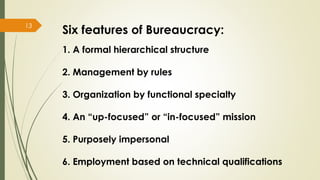
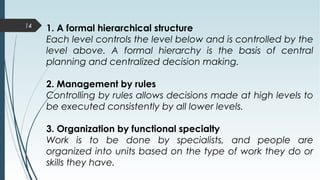
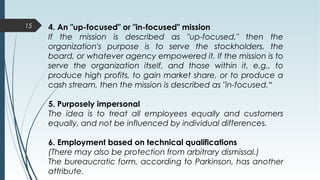





Max Weber is considered the father of modern sociology and first articulated the key features of bureaucracy. According to Weber, a bureaucracy is characterized by six main features: 1) a formal hierarchical structure, 2) management by rules, 3) organization by functional specialty, 4) an "up-focused" or "in-focused" mission, 5) being purposely impersonal, and 6) employment based on technical qualifications. Weber proposed these six principles of bureaucracy to establish a more stable and organized administrative structure and avoid the problems associated with bureaucracy. These principles then became widely adopted by both public and private sector organizations.


