Downloaded 748 times
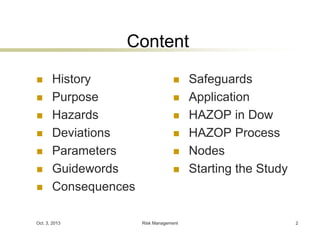


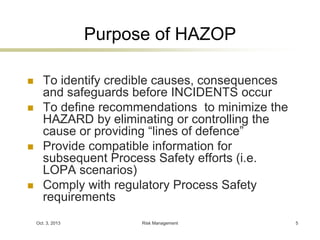
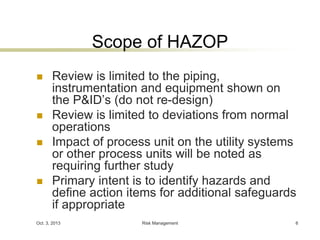







This document provides an overview of Hazard and Operability (HAZOP) studies, which are a technique used to identify potential hazards and operability problems in processes. It describes the origins, purpose, methodology, and typical components of a HAZOP study. Key aspects covered include identifying potential deviations from normal operating conditions using guidewords, determining causes and consequences of deviations, evaluating existing safeguards, and developing recommendations to address identified hazards. The document also outlines the HAZOP process, including defining nodes to segment the system, assigning a team to conduct the study, and systematically analyzing each node using guidewords across parameters.


