Posterising an Image
Lottie
Introduction
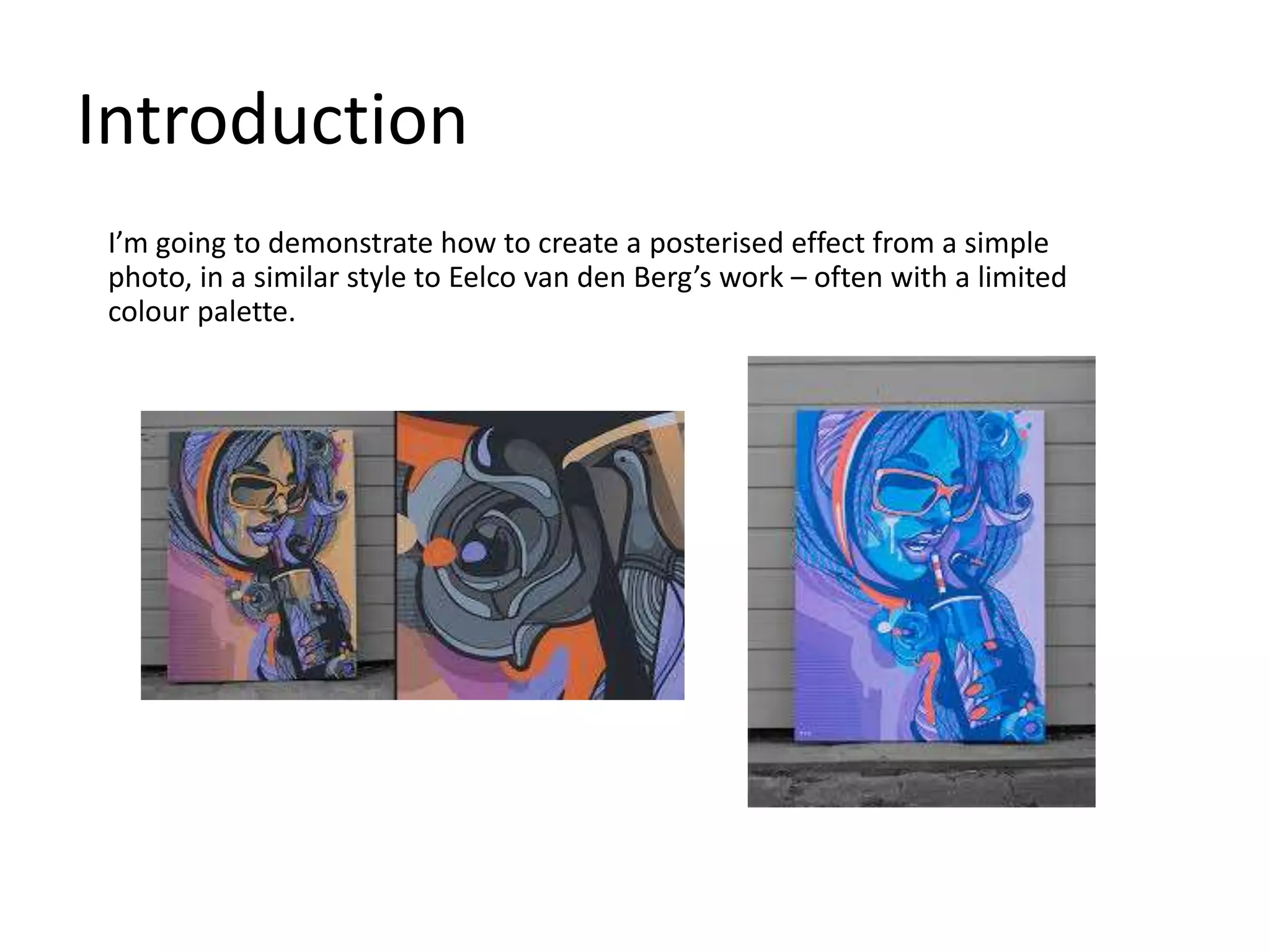
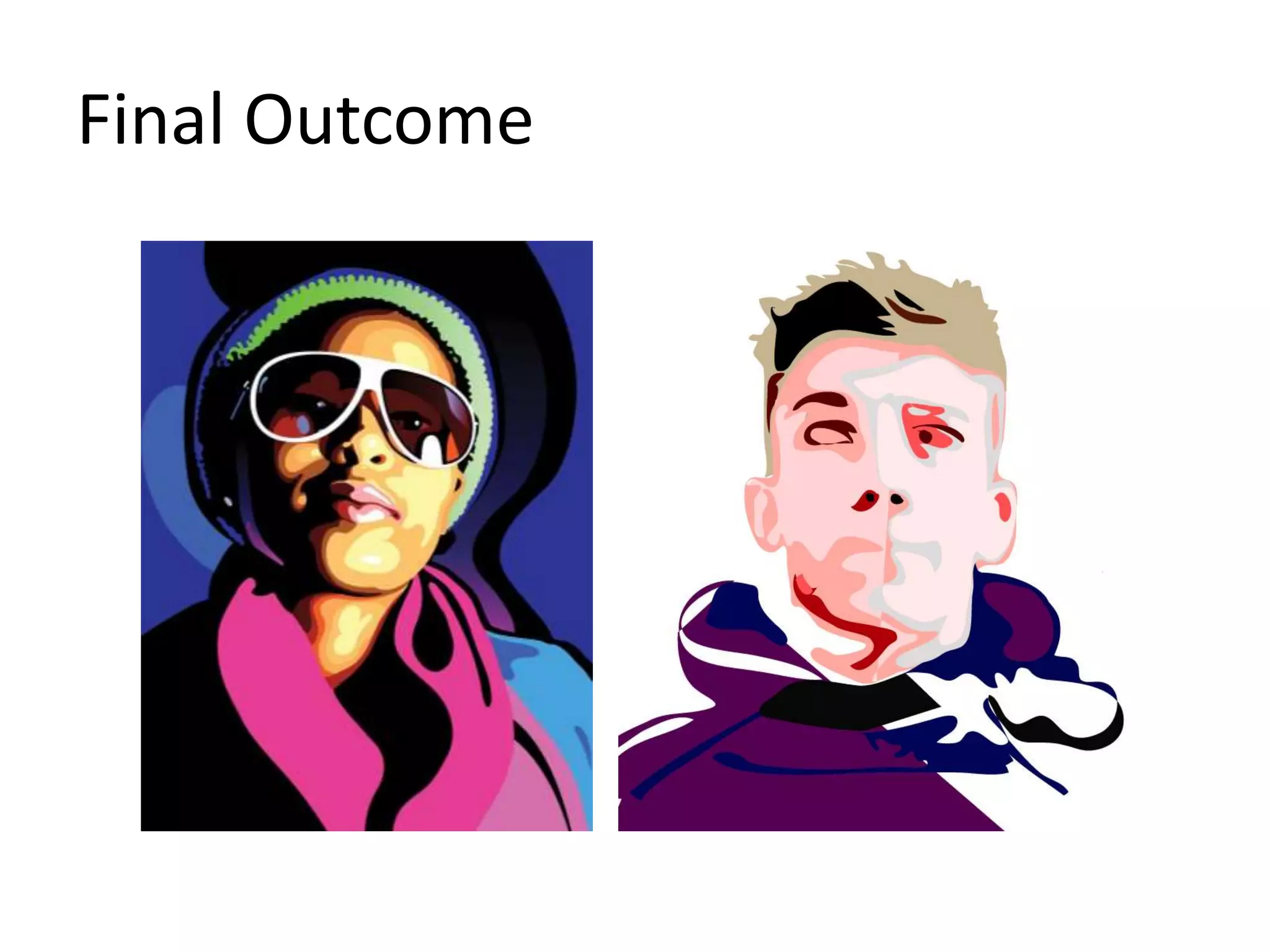
I’m going to demonstrate how to create a posterised effect from a simple
photo, in a similar style to Eelco van den Berg’s work – often with a limited
colour palette.
Step 1:
Open the photo you’d like to edit.
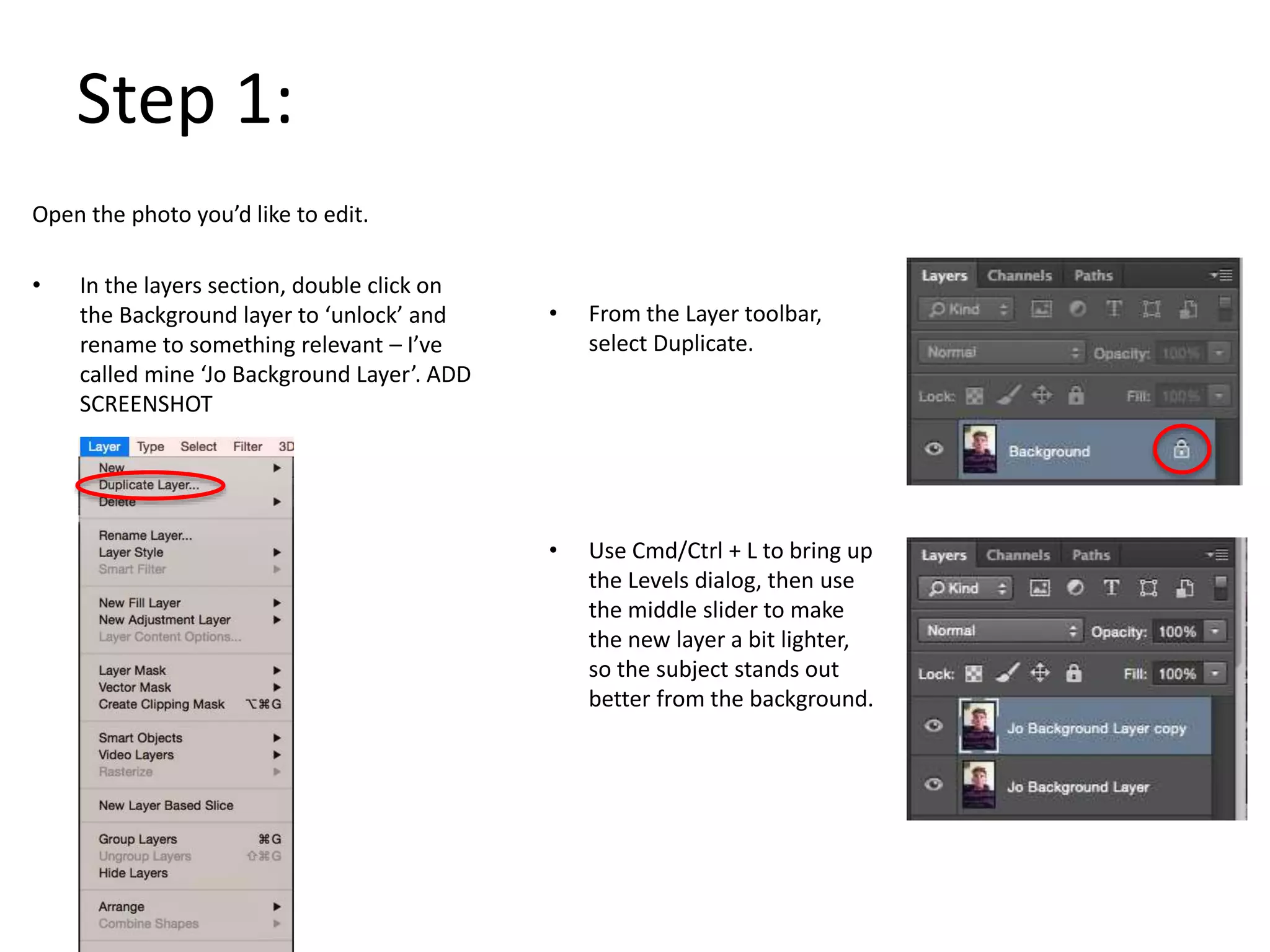
• In the layers section, double click on
the Background layer to ‘unlock’ and
rename to something relevant – I’ve
called mine ‘Jo Background Layer’. ADD
SCREENSHOT
• From the Layer toolbar,
select Duplicate.
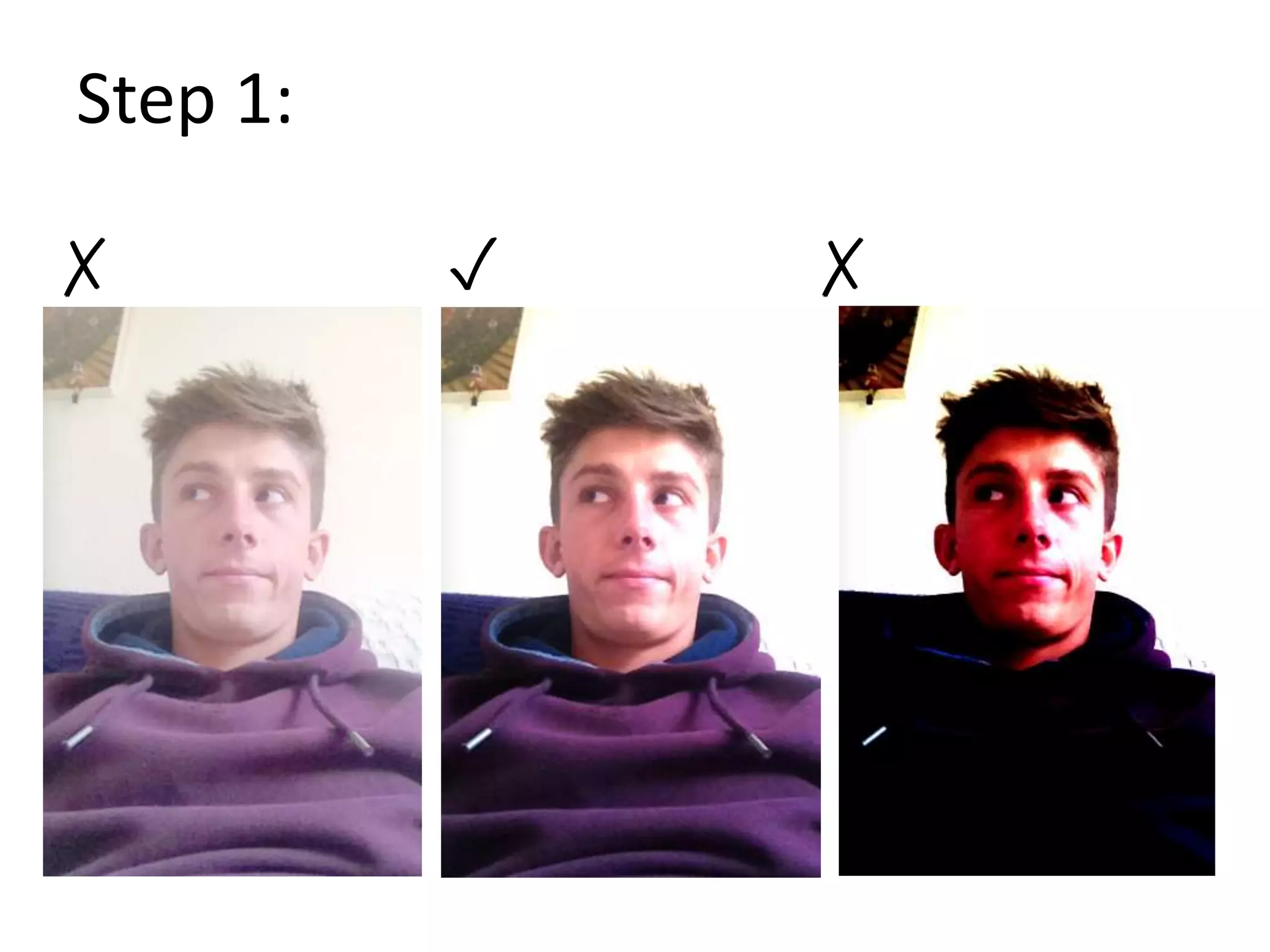
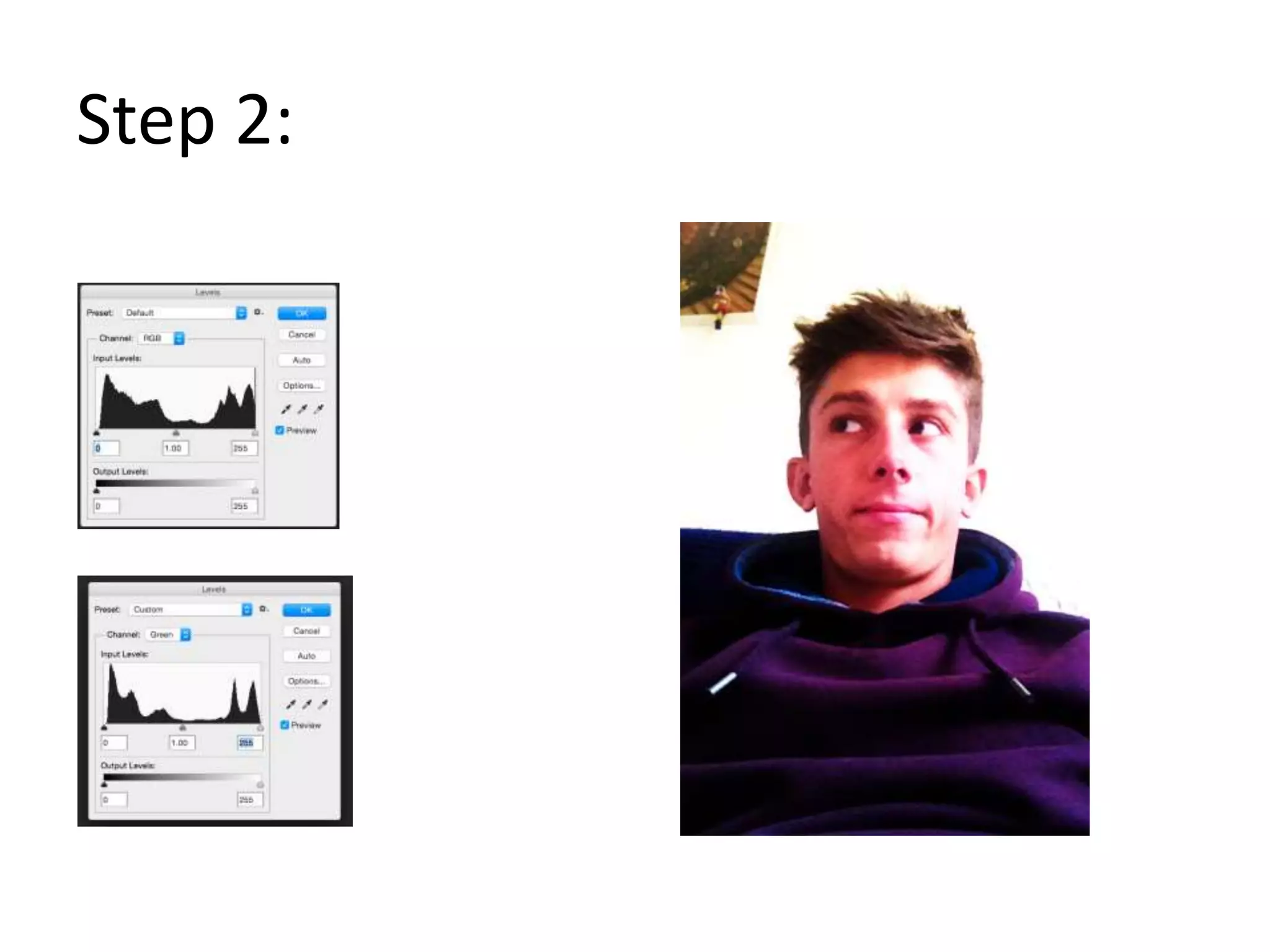
• Use Cmd/Ctrl + L to bring up
the Levels dialog, then use
the middle slider to make
the new layer a bit lighter,
so the subject stands out
better from the background.
✗ ✓ ✗
Step 1:
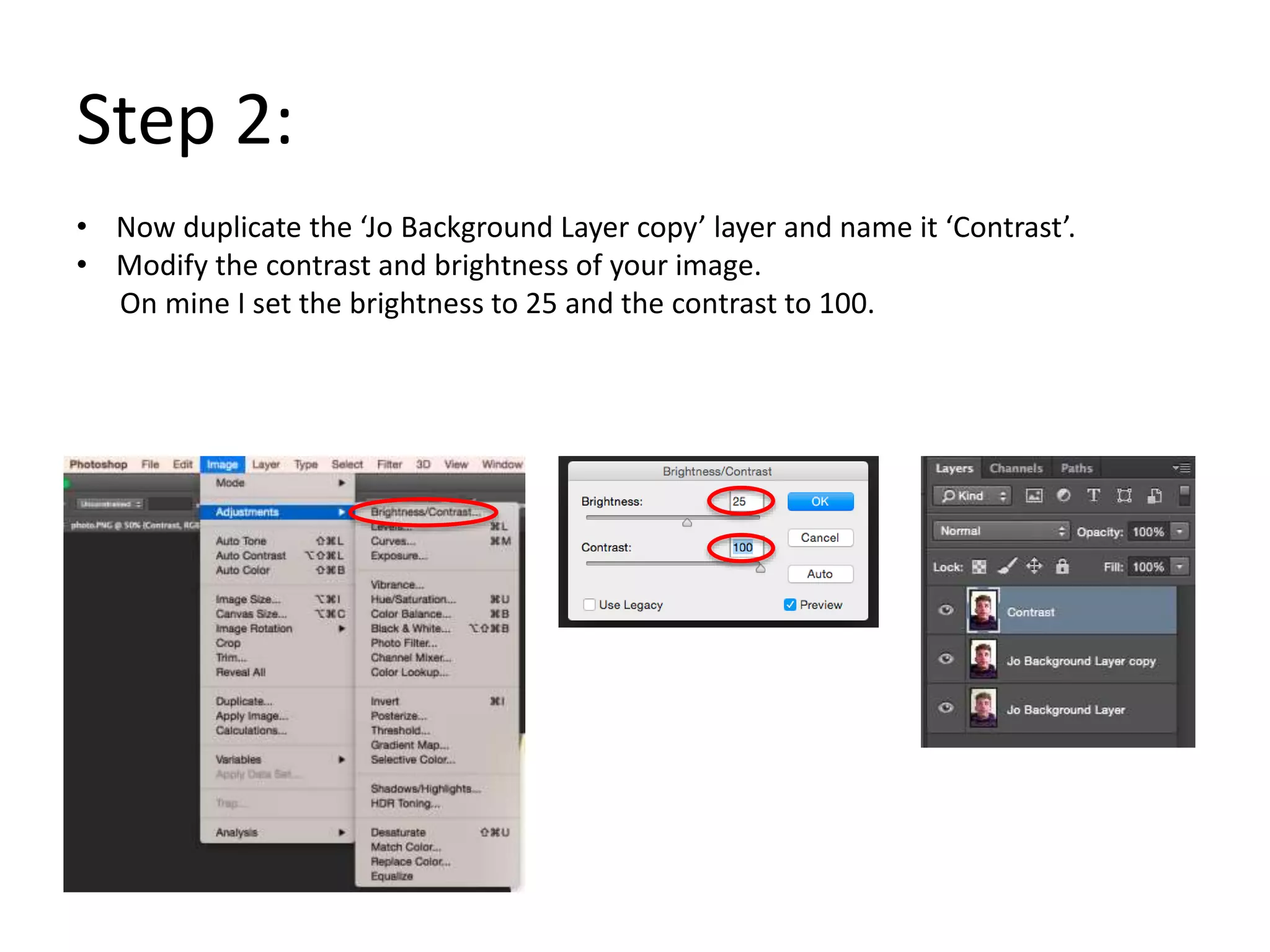
Step 2:
• Now duplicate the ‘Jo Background Layer copy’ layer and name it ‘Contrast’.
• Modify the contrast and brightness of your image.
On mine I set the brightness to 25 and the contrast to 100.
Step 2:
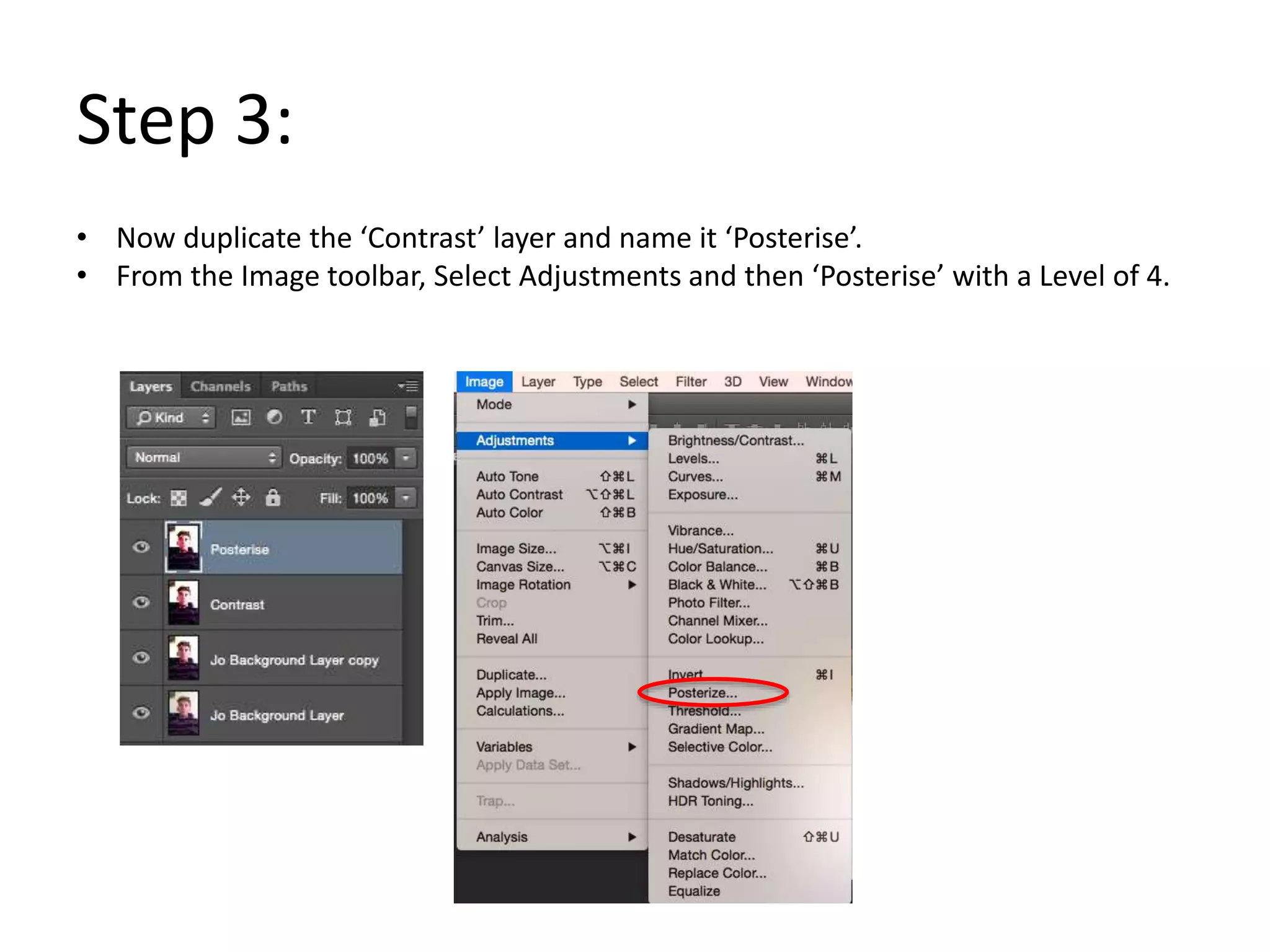
Step 3:
• Now duplicate the ‘Contrast’ layer and name it ‘Posterise’.
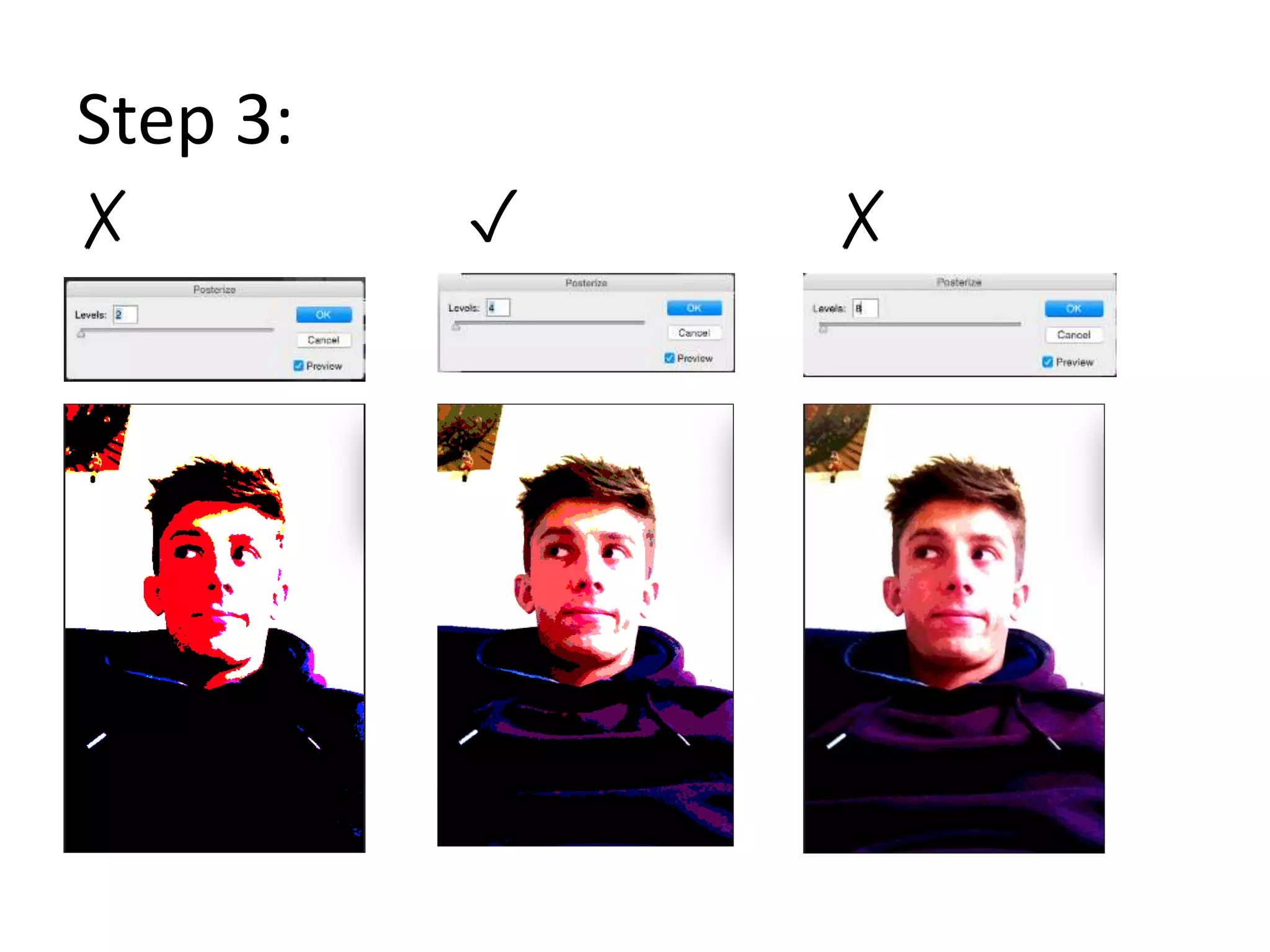
• From the Image toolbar, Select Adjustments and then ‘Posterise’ with a Level of 4.
Step 3:
✗ ✓ ✗
Step 4:
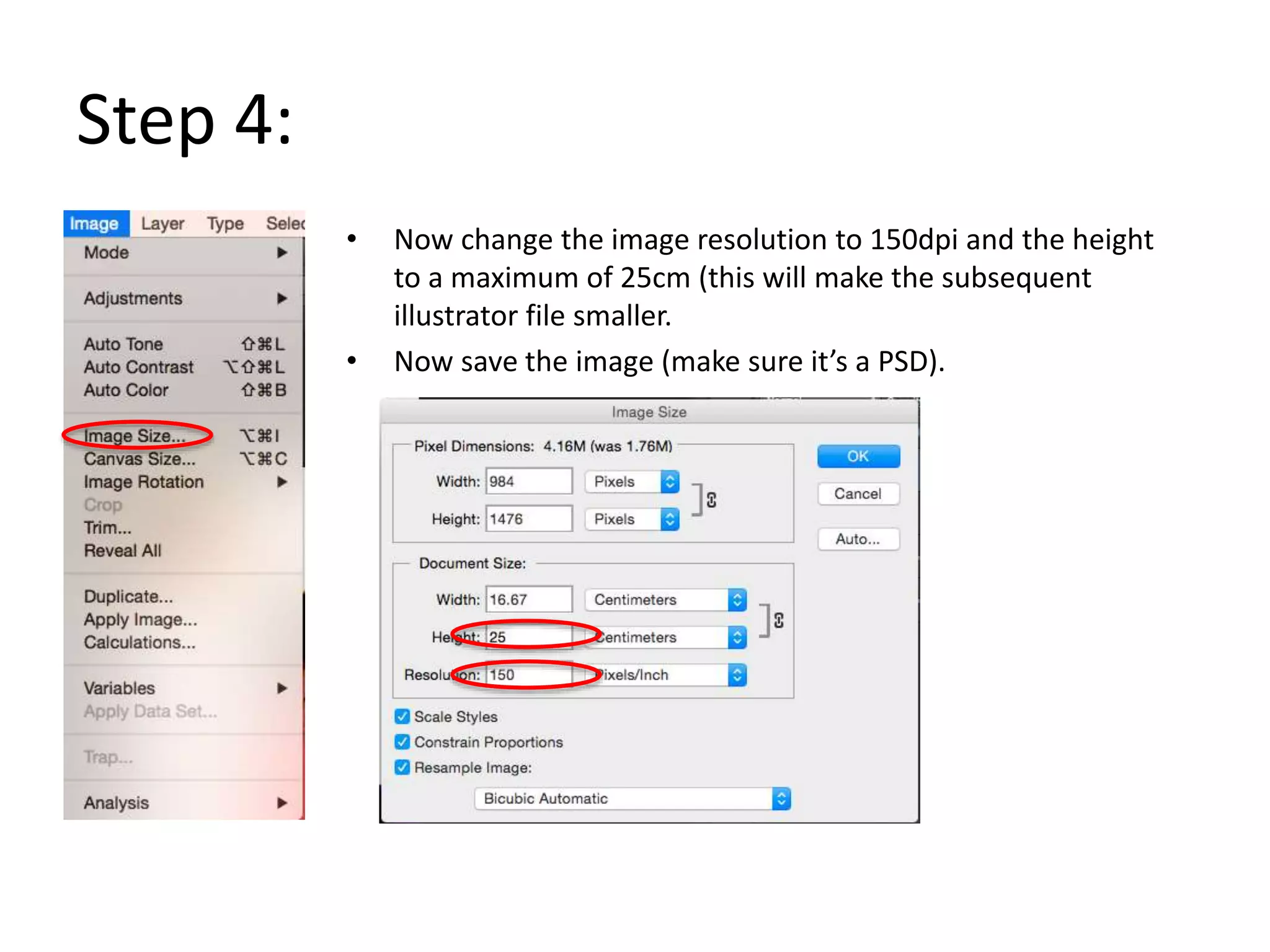
• Now change the image resolution to 150dpi and the height
to a maximum of 25cm (this will make the subsequent
illustrator file smaller.
• Now save the image (make sure it’s a PSD).
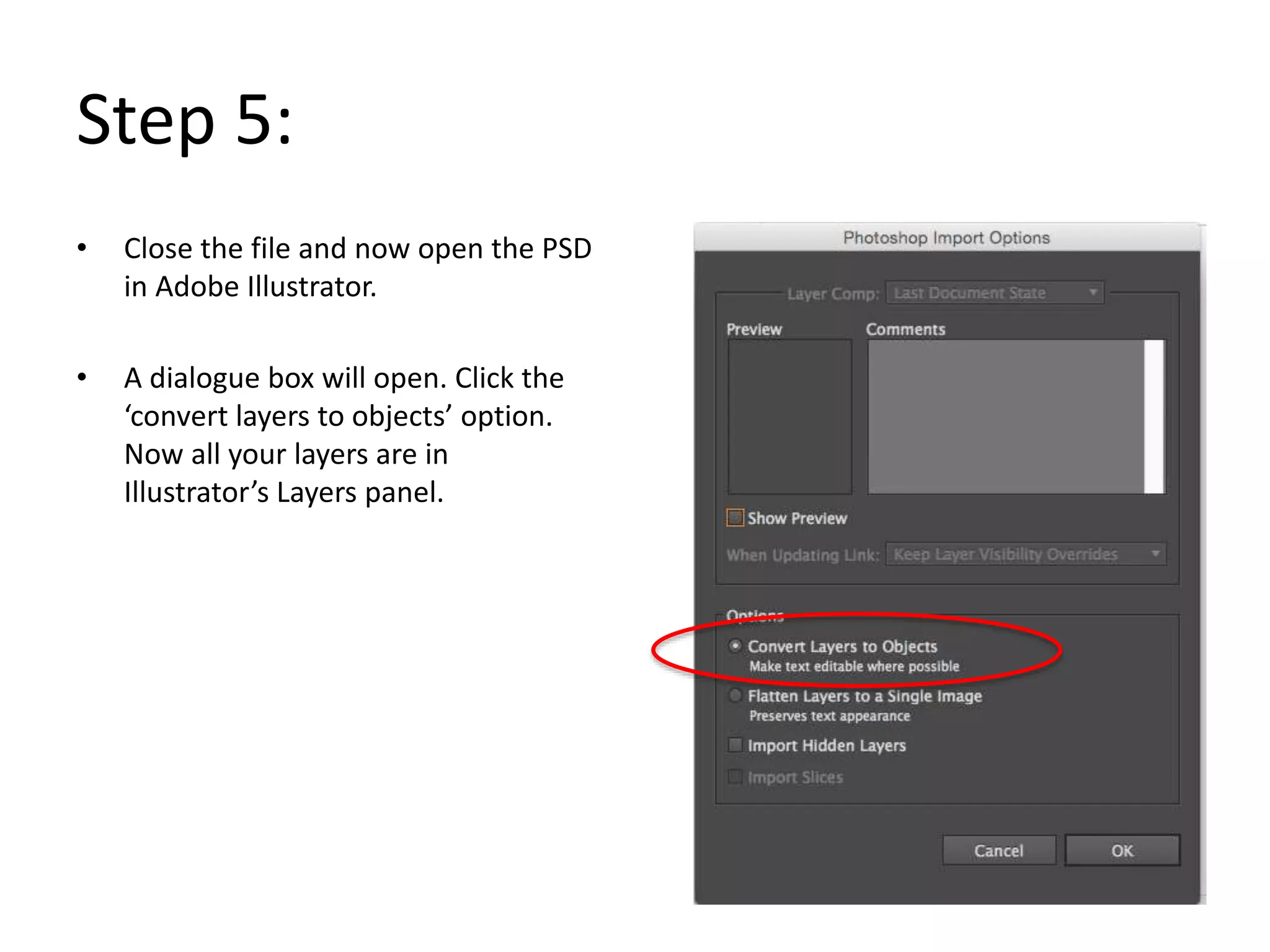
• Close the file and now open the PSD
in Adobe Illustrator.
• A dialogue box will open. Click the
‘convert layers to objects’ option.
Now all your layers are in
Illustrator’s Layers panel.
Step 5:
Step 6:
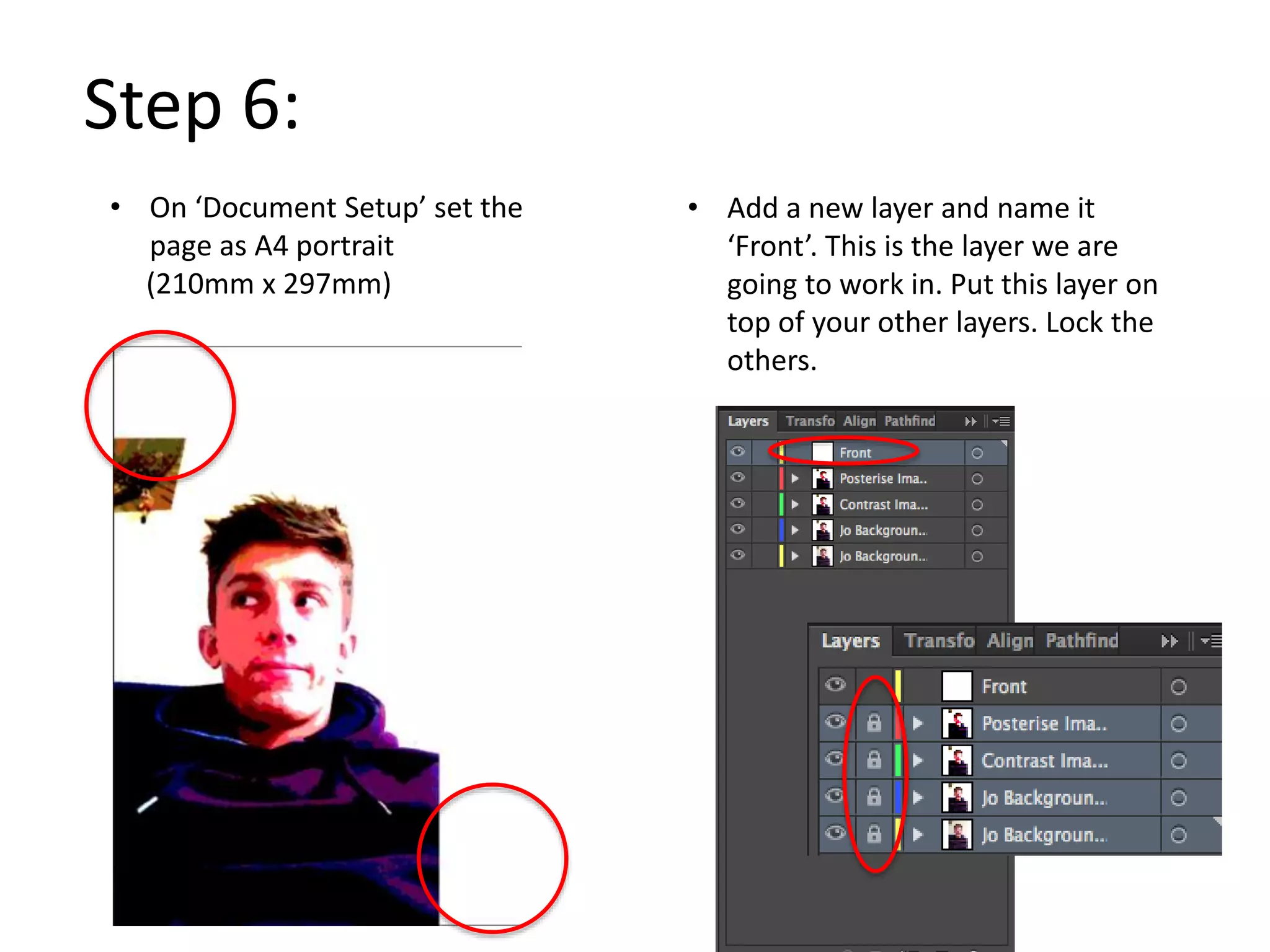
• On ‘Document Setup’ set the
page as A4 portrait
(210mm x 297mm)
• Add a new layer and name it
‘Front’. This is the layer we are
going to work in. Put this layer on
top of your other layers. Lock the
others.
Step 7:
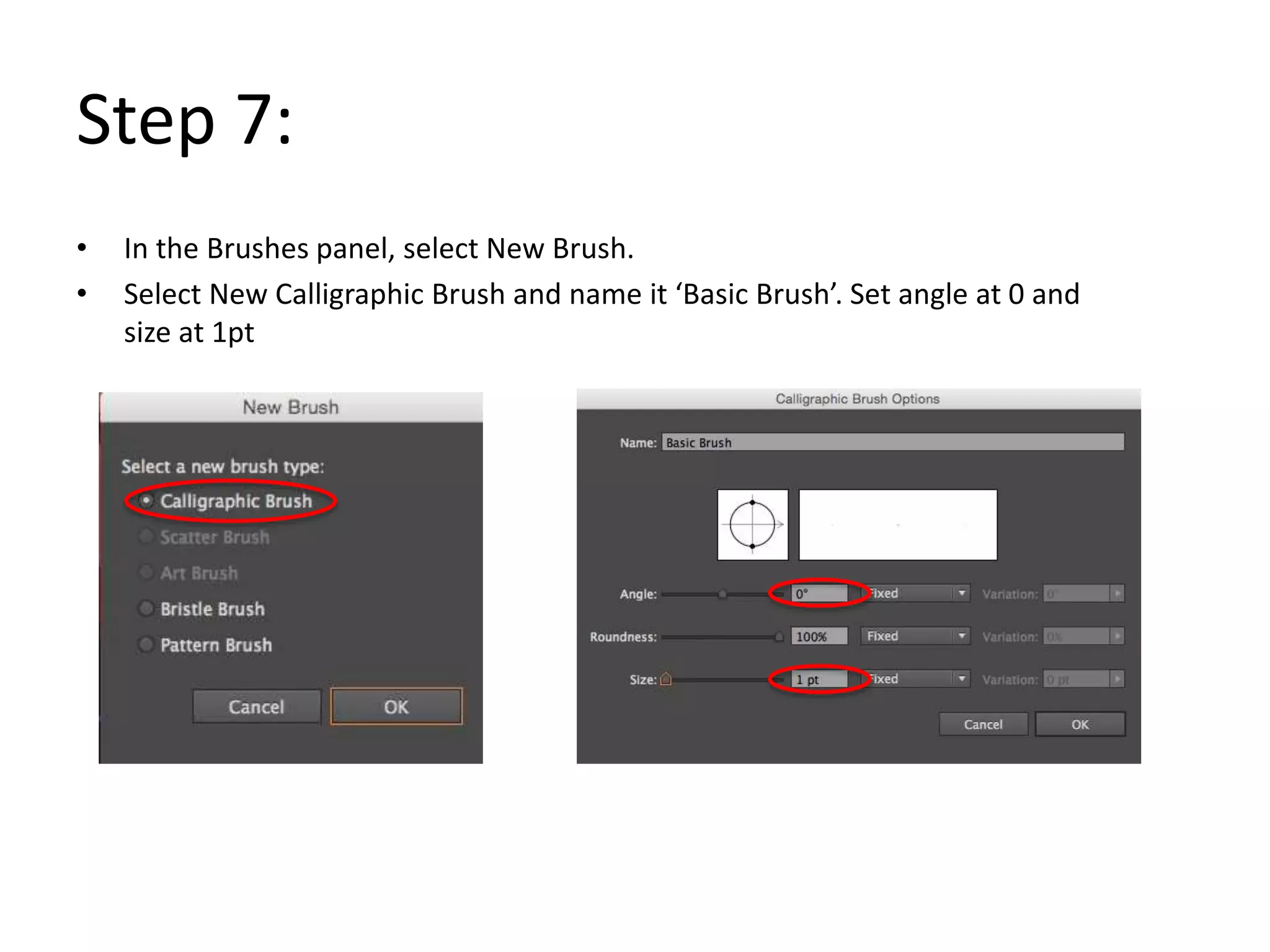
• In the Brushes panel, select New Brush.
• Select New Calligraphic Brush and name it ‘Basic Brush’. Set angle at 0 and
size at 1pt
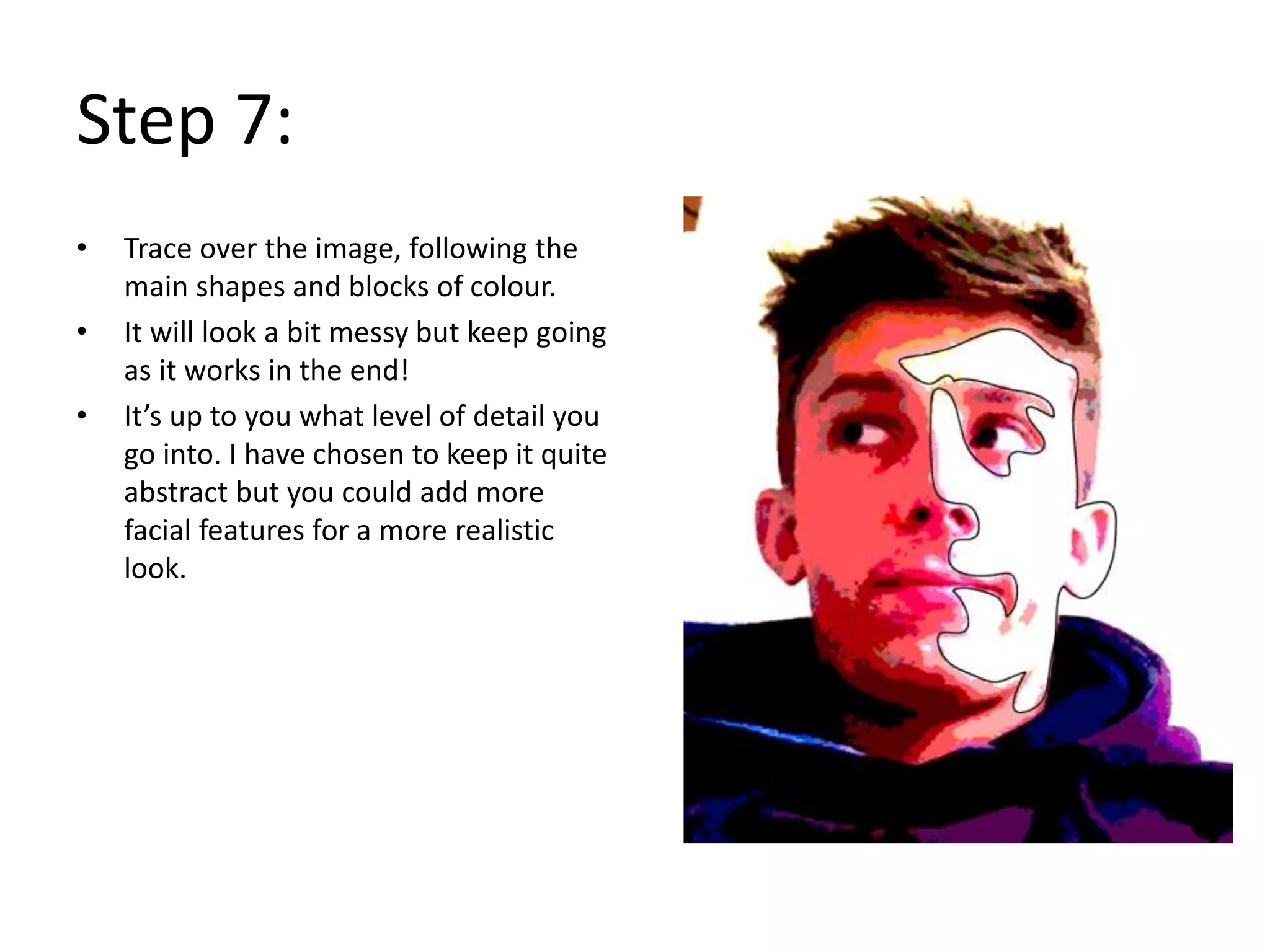
Step 7:
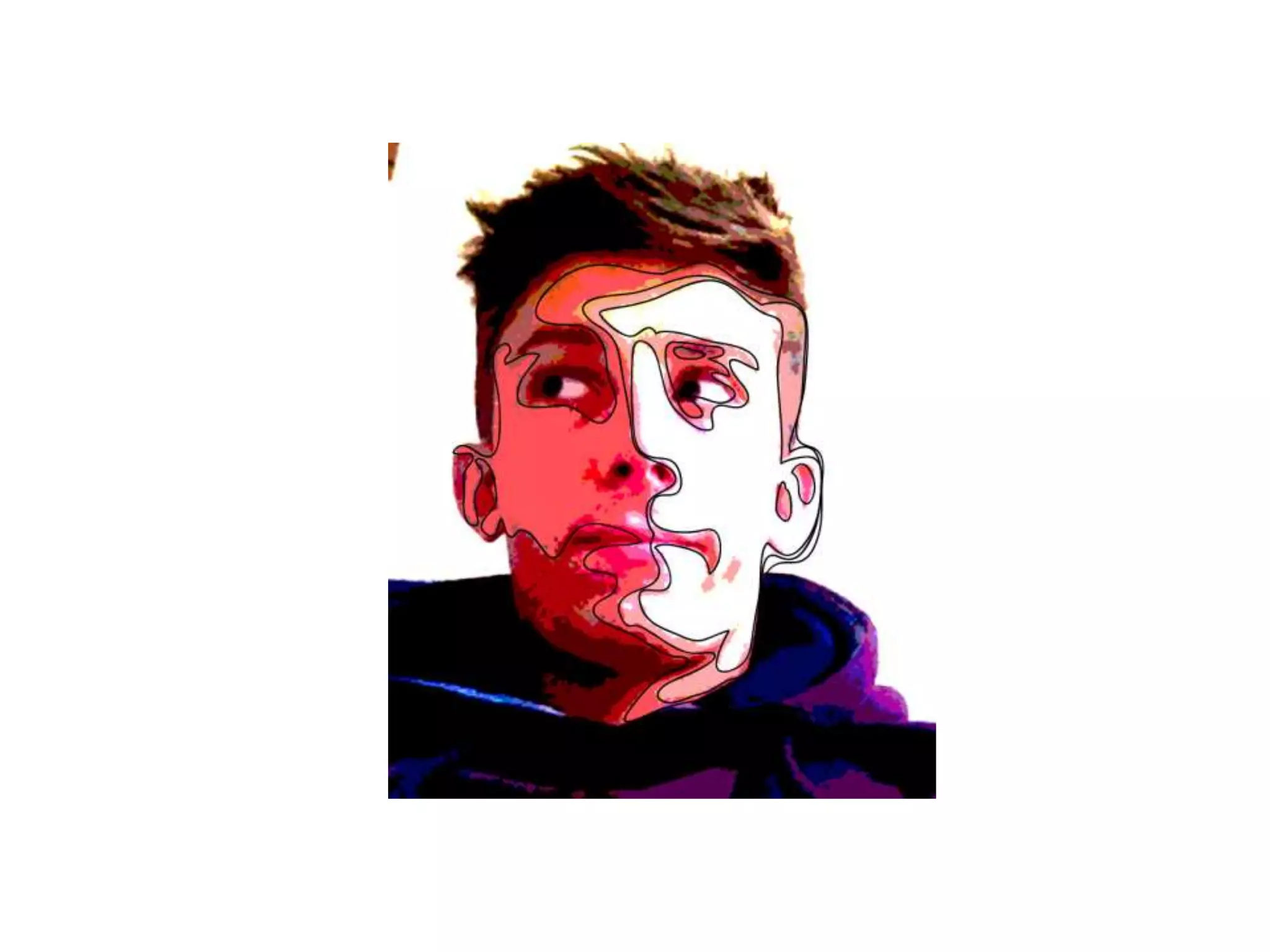
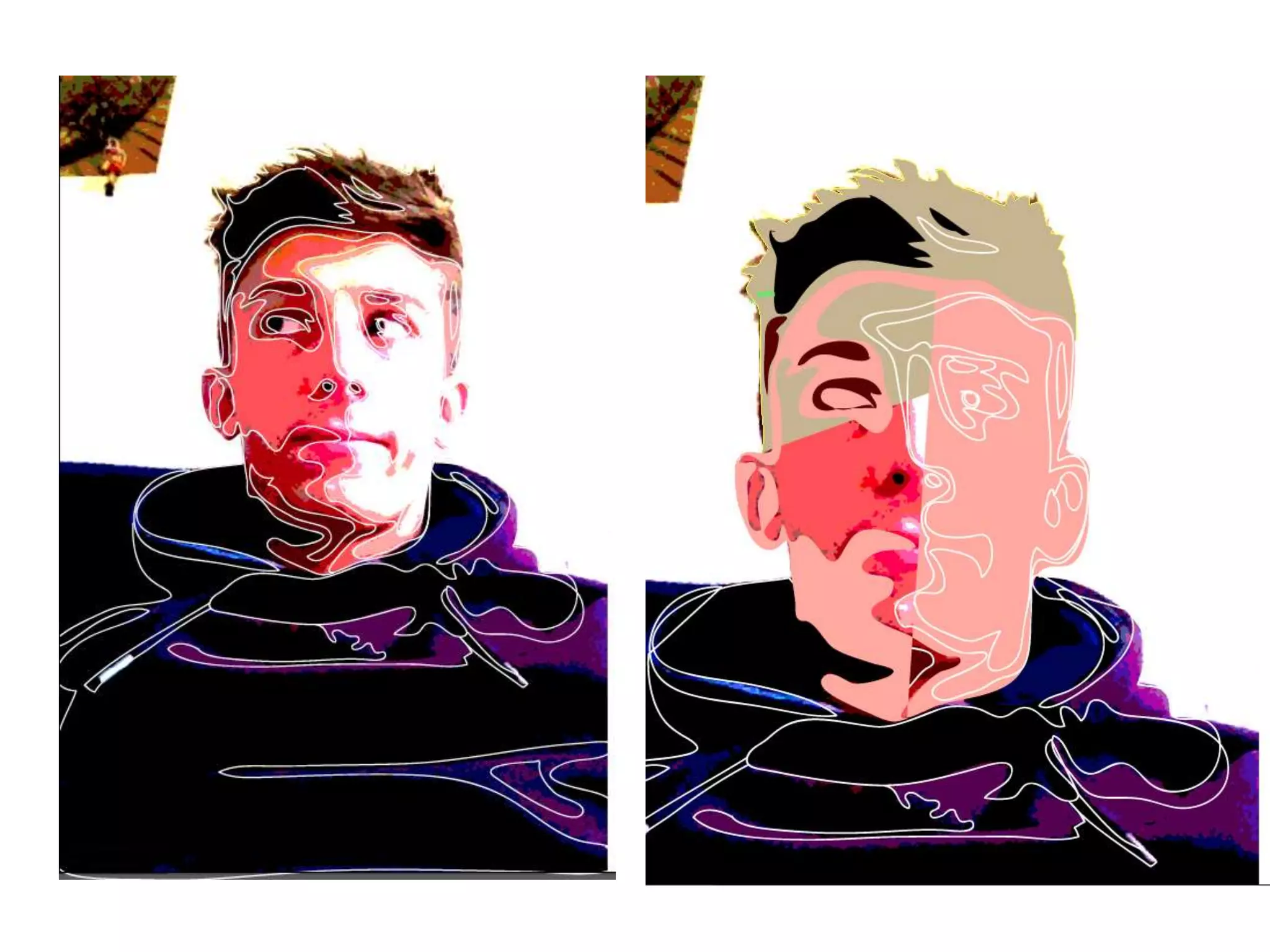
• Trace over the image, following the
main shapes and blocks of colour.
• It will look a bit messy but keep going
as it works in the end!
• It’s up to you what level of detail you
go into. I have chosen to keep it quite
abstract but you could add more
facial features for a more realistic
look.
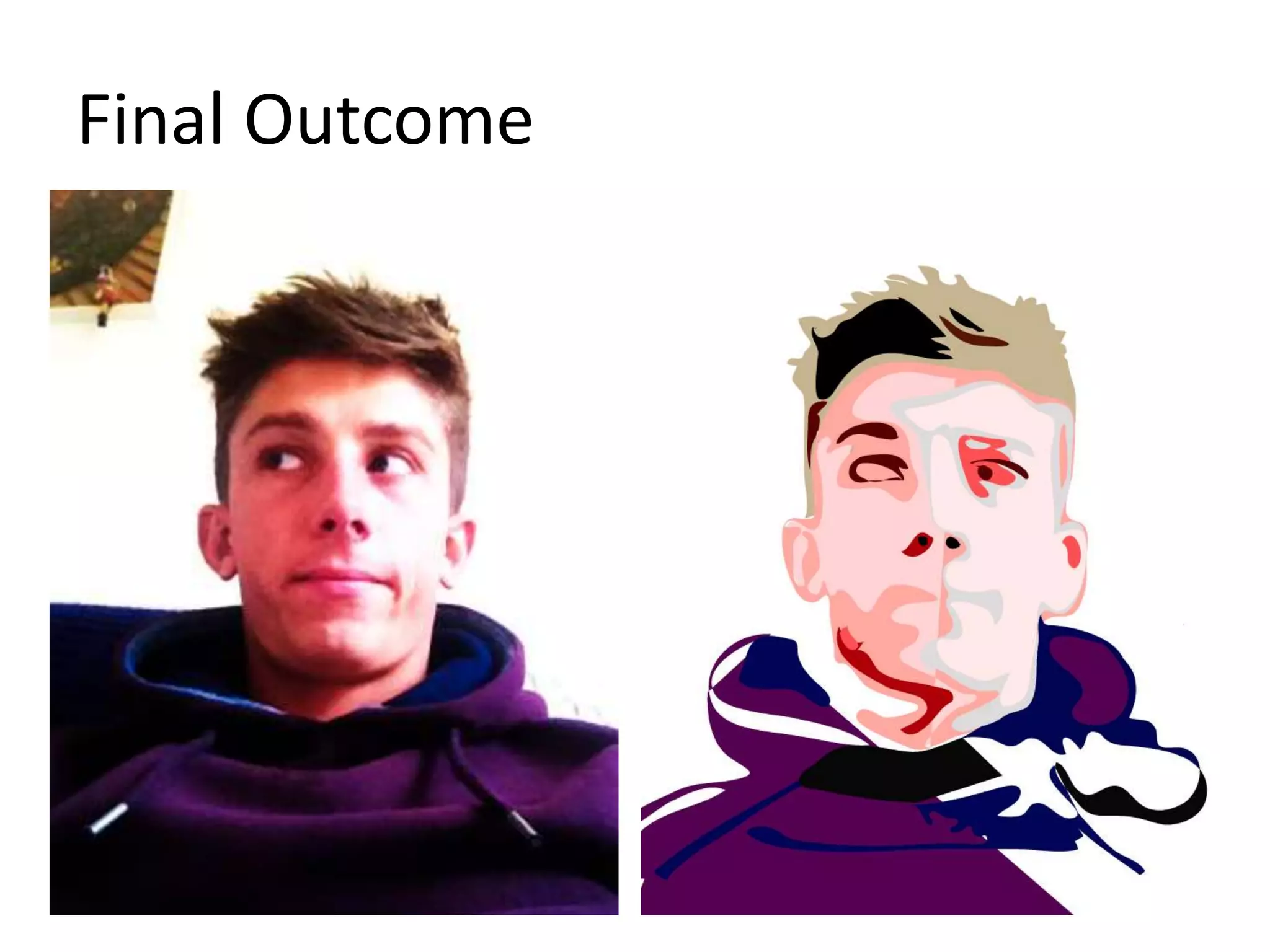
Final Outcome
Final Outcome
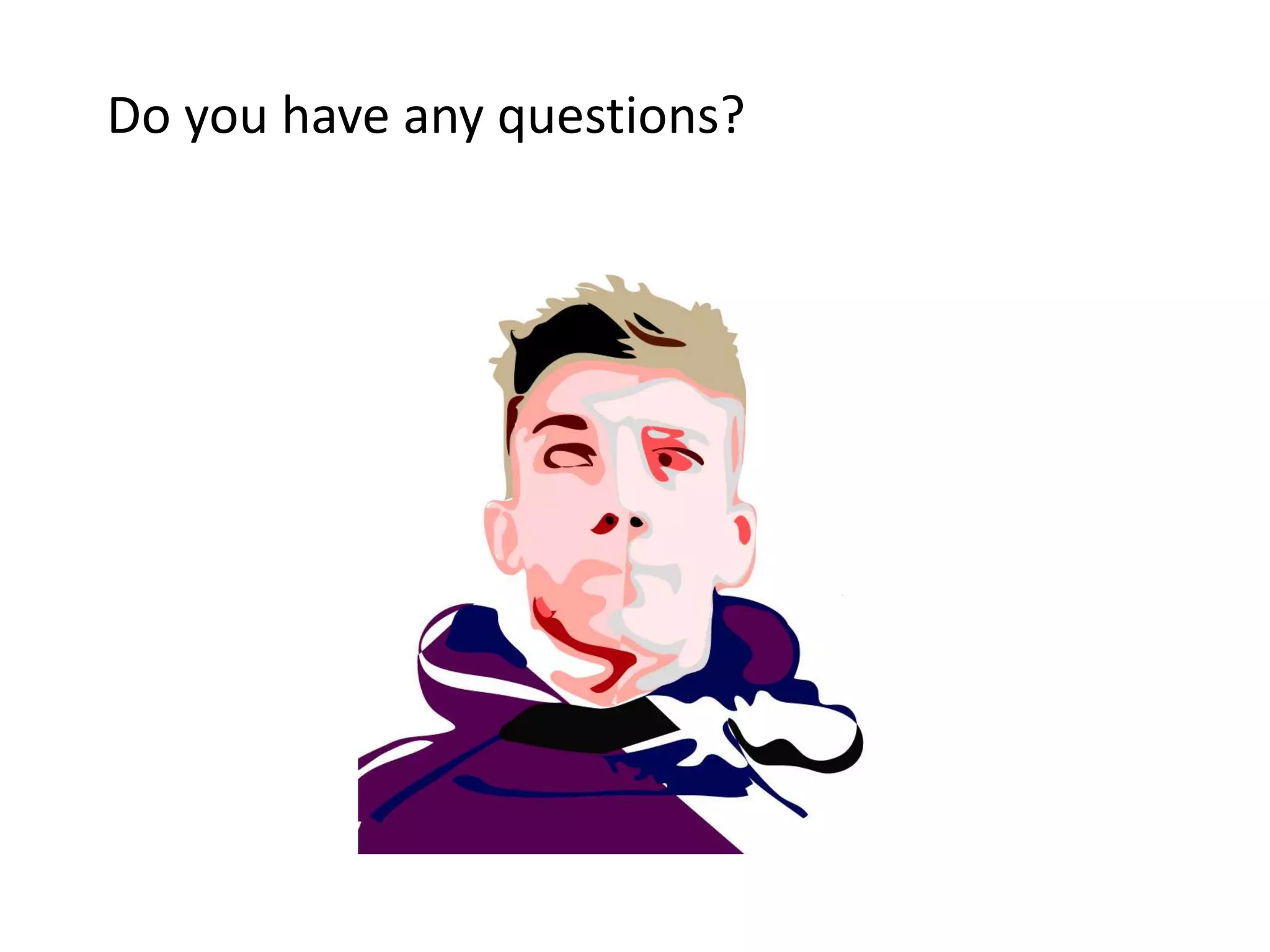
Do you have any questions?

Presentation for posterising technique

  • 1.
  • 2.
    Introduction I’m going todemonstrate how to create a posterised effect from a simple photo, in a similar style to Eelco van den Berg’s work – often with a limited colour palette.
  • 3.
    Step 1: Open thephoto you’d like to edit. • In the layers section, double click on the Background layer to ‘unlock’ and rename to something relevant – I’ve called mine ‘Jo Background Layer’. ADD SCREENSHOT • From the Layer toolbar, select Duplicate. • Use Cmd/Ctrl + L to bring up the Levels dialog, then use the middle slider to make the new layer a bit lighter, so the subject stands out better from the background.
  • 4.
  • 5.
    Step 2: • Nowduplicate the ‘Jo Background Layer copy’ layer and name it ‘Contrast’. • Modify the contrast and brightness of your image. On mine I set the brightness to 25 and the contrast to 100.
  • 6.
  • 7.
    Step 3: • Nowduplicate the ‘Contrast’ layer and name it ‘Posterise’. • From the Image toolbar, Select Adjustments and then ‘Posterise’ with a Level of 4.
  • 8.
  • 9.
    Step 4: • Nowchange the image resolution to 150dpi and the height to a maximum of 25cm (this will make the subsequent illustrator file smaller. • Now save the image (make sure it’s a PSD).
  • 10.
    • Close thefile and now open the PSD in Adobe Illustrator. • A dialogue box will open. Click the ‘convert layers to objects’ option. Now all your layers are in Illustrator’s Layers panel. Step 5:
  • 11.
    Step 6: • On‘Document Setup’ set the page as A4 portrait (210mm x 297mm) • Add a new layer and name it ‘Front’. This is the layer we are going to work in. Put this layer on top of your other layers. Lock the others.
  • 12.
    Step 7: • Inthe Brushes panel, select New Brush. • Select New Calligraphic Brush and name it ‘Basic Brush’. Set angle at 0 and size at 1pt
  • 13.
    Step 7: • Traceover the image, following the main shapes and blocks of colour. • It will look a bit messy but keep going as it works in the end! • It’s up to you what level of detail you go into. I have chosen to keep it quite abstract but you could add more facial features for a more realistic look.
  • 16.
  • 17.
  • 18.
    Do you haveany questions?