
PRESENTATION
Welcome to
What is CMMI ?
Capability Maturity Model Integration (CMMI) is a process improvement
training and appraisal program.
A CMMI model may also be used as a framework for appraising the process
maturity of the organization.
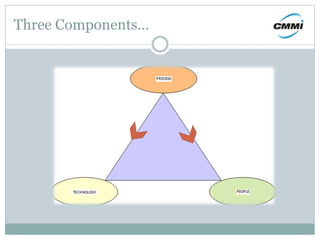
Three Components…
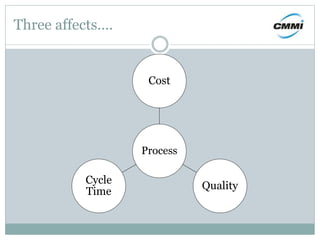
Three affects….
Process
Cost
Quality
Cycle
Time
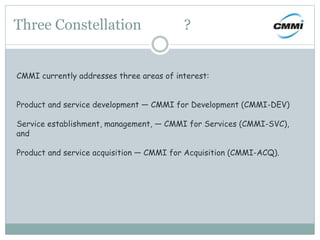
Three Constellation ?
CMMI currently addresses three areas of interest:
Product and service development — CMMI for Development (CMMI-DEV)
Service establishment, management, — CMMI for Services (CMMI-SVC),
and
Product and service acquisition — CMMI for Acquisition (CMMI-ACQ).
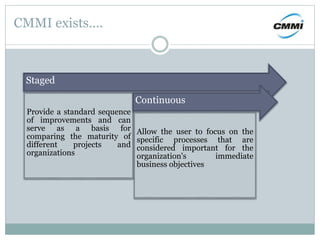
CMMI exists….
Staged
Provide a standard sequence
of improvements and can
serve as a basis for
comparing the maturity of
different projects and
organizations
Continuous
Allow the user to focus on the
specific processes that are
considered important for the
organization's immediate
business objectives
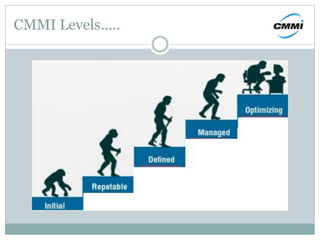
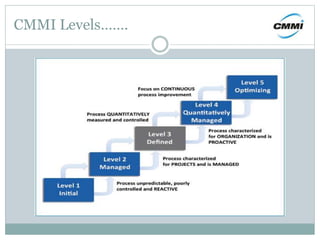
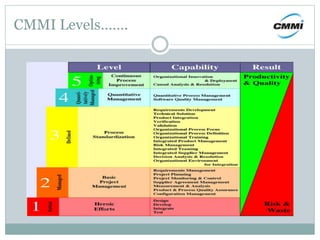
CMMI Levels…..
CMMI Levels…….
CMMI Levels…….
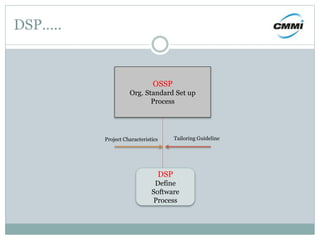
DSP…..
OSSP
Org. Standard Set up
Process
DSP
Define
Software
Process
Project Characteristics Tailoring Guideline
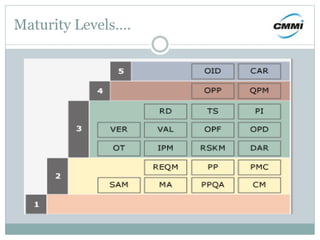
Maturity Levels….
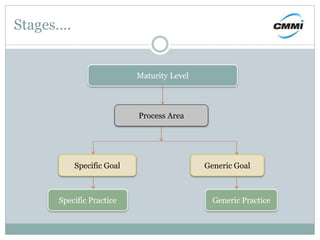
Stages….
Maturity Level
Process Area
Specific Goal Generic Goal
Specific Practice Generic Practice
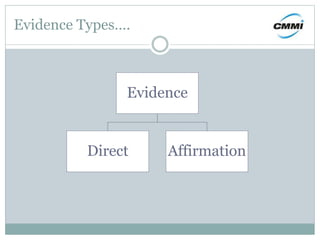
Evidence Types….
Evidence
Direct Affirmation
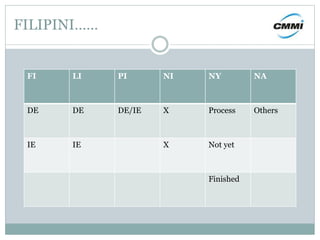
FILIPINI……
FI LI PI NI NY NA
DE DE DE/IE X Process Others
IE IE X Not yet
Finished
Maturity levels in CMMI for development
Maturity Level 2 - Managed
CM Configuration Management
MA Measurement and Analysis
PMC Project Monitoring and Control
PP Project Planning
PPQA Process and Product Quality Assurance
RM Requirements Management
SAM Supplier Agreement Management
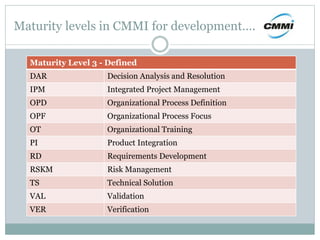
Maturity levels in CMMI for development….
Maturity Level 3 - Defined
DAR Decision Analysis and Resolution
IPM Integrated Project Management
OPD Organizational Process Definition
OPF Organizational Process Focus
OT Organizational Training
PI Product Integration
RD Requirements Development
RSKM Risk Management
TS Technical Solution
VAL Validation
VER Verification
Maturity levels in CMMI for development….
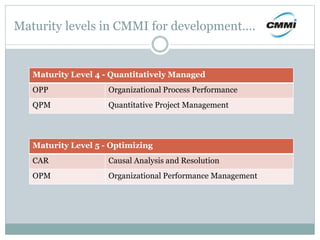
Maturity Level 4 - Quantitatively Managed
OPP Organizational Process Performance
QPM Quantitative Project Management
Maturity Level 5 - Optimizing
CAR Causal Analysis and Resolution
OPM Organizational Performance Management
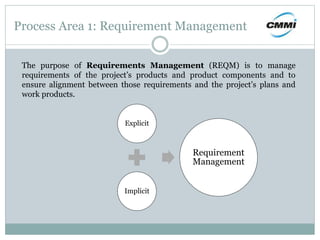
Process Area 1: Requirement Management
The purpose of Requirements Management (REQM) is to manage
requirements of the project’s products and product components and to
ensure alignment between those requirements and the project’s plans and
work products.
Explicit
Implicit
Requirement
Management
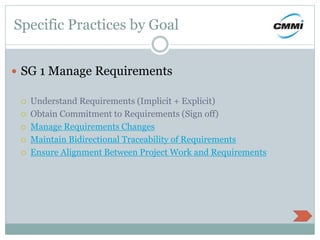
Specific Practices by Goal
 SG 1 Manage Requirements
 Understand Requirements (Implicit + Explicit)
 Obtain Commitment to Requirements (Sign off)
 Manage Requirements Changes
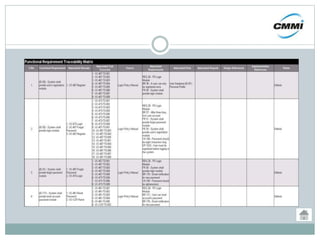
 Maintain Bidirectional Traceability of Requirements
 Ensure Alignment Between Project Work and Requirements
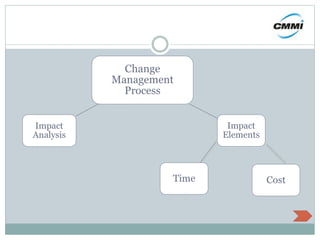
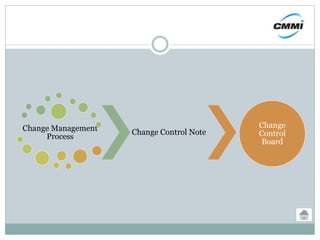
Change
Management
Process
Impact
Elements
Impact
Analysis
Time Cost
Change Management
Process
Change Control Note
Change
Control
Board
Presentation
Presentation

Presentation

  • 1.
  • 2.
    What is CMMI? Capability Maturity Model Integration (CMMI) is a process improvement training and appraisal program. A CMMI model may also be used as a framework for appraising the process maturity of the organization.
  • 3.
  • 4.
  • 5.
    Three Constellation ? CMMIcurrently addresses three areas of interest: Product and service development — CMMI for Development (CMMI-DEV) Service establishment, management, — CMMI for Services (CMMI-SVC), and Product and service acquisition — CMMI for Acquisition (CMMI-ACQ).
  • 6.
    CMMI exists…. Staged Provide astandard sequence of improvements and can serve as a basis for comparing the maturity of different projects and organizations Continuous Allow the user to focus on the specific processes that are considered important for the organization's immediate business objectives
  • 7.
  • 8.
  • 9.
  • 10.
    DSP….. OSSP Org. Standard Setup Process DSP Define Software Process Project Characteristics Tailoring Guideline
  • 11.
  • 12.
    Stages…. Maturity Level Process Area SpecificGoal Generic Goal Specific Practice Generic Practice
  • 13.
  • 14.
    FILIPINI…… FI LI PINI NY NA DE DE DE/IE X Process Others IE IE X Not yet Finished
  • 15.
    Maturity levels inCMMI for development Maturity Level 2 - Managed CM Configuration Management MA Measurement and Analysis PMC Project Monitoring and Control PP Project Planning PPQA Process and Product Quality Assurance RM Requirements Management SAM Supplier Agreement Management
  • 16.
    Maturity levels inCMMI for development…. Maturity Level 3 - Defined DAR Decision Analysis and Resolution IPM Integrated Project Management OPD Organizational Process Definition OPF Organizational Process Focus OT Organizational Training PI Product Integration RD Requirements Development RSKM Risk Management TS Technical Solution VAL Validation VER Verification
  • 17.
    Maturity levels inCMMI for development…. Maturity Level 4 - Quantitatively Managed OPP Organizational Process Performance QPM Quantitative Project Management Maturity Level 5 - Optimizing CAR Causal Analysis and Resolution OPM Organizational Performance Management
  • 18.
    Process Area 1:Requirement Management The purpose of Requirements Management (REQM) is to manage requirements of the project’s products and product components and to ensure alignment between those requirements and the project’s plans and work products. Explicit Implicit Requirement Management
  • 19.
    Specific Practices byGoal  SG 1 Manage Requirements  Understand Requirements (Implicit + Explicit)  Obtain Commitment to Requirements (Sign off)  Manage Requirements Changes  Maintain Bidirectional Traceability of Requirements  Ensure Alignment Between Project Work and Requirements
  • 20.
  • 21.