



+
BACTERIAS
INFECTION AND
IMMUNE
SYSTEM
RESPONSE
DIANA AGUDELO JARAMILLO
MEDICINE STUDENT
+

FOLDING
+

FOLDING
+
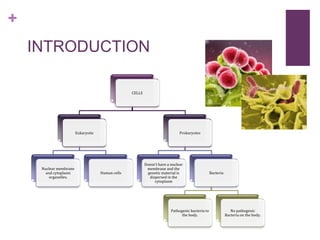
INTRODUCTION
CELLS

Eukaryotic

Nuclear membrane
and cytoplasm
organelles.

Prokaryotes

Human cells

Doesn’t have a nuclear
membrane and the
genetic material is
dispersed in the
cytoplasm

Pathogenic bacteria to
the body.

Bacteria

No pathogenic
Bacteria on the body.
+

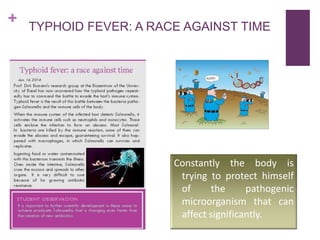
TYPHOID FEVER: A RACE AGAINST TIME

Constantly the body is
trying to protect himself
of
the
pathogenic
microorganism that can
affect significantly.
+
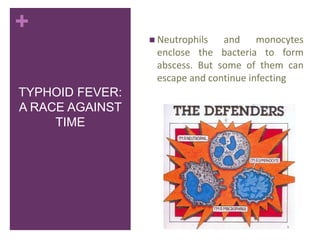
 Neutrophils

and monocytes
enclose the bacteria to form
abscess. But some of them can
escape and continue infecting

TYPHOID FEVER:
A RACE AGAINST
TIME
+

TYPHOID FEVER: A RACE
AGAINST TIME



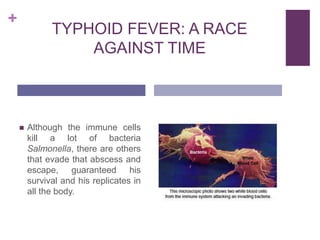
Although the immune cells
kill a lot of bacteria
Salmonella, there are others
that evade that abscess and
escape, guaranteed his
survival and his replicates in
all the body.
+
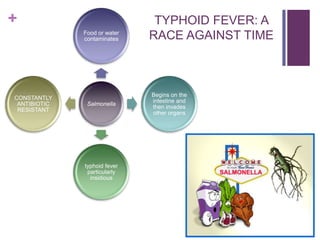
Food or water
contaminates

CONSTANTLY
ANTIBIOTIC
RESISTANT

Salmonella

typhoid fever
particularly
insidious

TYPHOID FEVER: A
RACE AGAINST TIME

Begins on the
intestine and
then invades
other organs
+
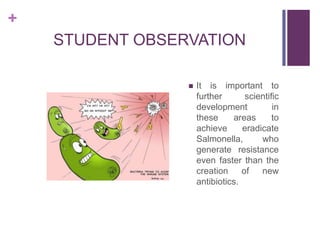
STUDENT OBSERVATION


It is important to
further
scientific
development
in
these
areas
to
achieve
eradicate
Salmonella,
who
generate resistance
even faster than the
creation
of
new
antibiotics.
+

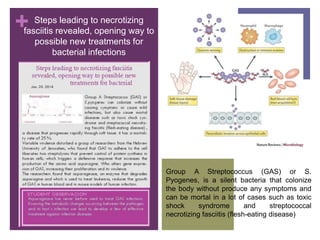
Steps leading to necrotizing
fasciitis revealed, opening way to
possible new treatments for
bacterial infections

Group A Streptococcus (GAS) or S.
Pyogenes, is a silent bacteria that colonize
the body without produce any symptoms and
can be mortal in a lot of cases such as toxic
shock
syndrome
and
streptococcal
necrotizing fasciitis (flesh-eating disease)
+

STEPS LEADING TO NECROTIZING
FASCIITIS REVEALED, OPENING WAY TO
POSSIBLE NEW TREATMENTS FOR
BACTERIAL INFECTIONS



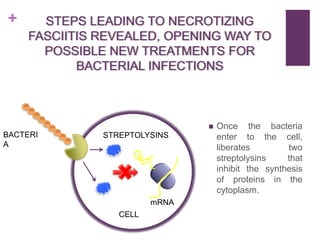
BACTERI
A

STREPTOLYSINS

mRNA
CELL

Once the bacteria
enter to the cell,
liberates
two
streptolysins
that
inhibit the synthesis
of proteins in the
cytoplasm.
+

STEPS LEADING TO NECROTIZING
FASCIITIS REVEALED, OPENING WAY TO
POSSIBLE NEW TREATMENTS FOR
BACTERIAL INFECTIONS
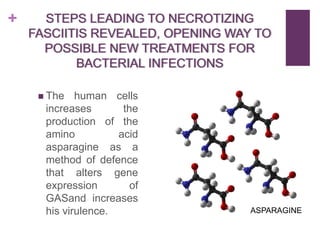
 The

human cells
increases
the
production of the
amino
acid
asparagine as a
method of defence
that alters gene
expression
of
GASand increases
his virulence.

ASPARAGINE
+

STEPS LEADING TO
NECROTIZING FASCIITIS
REVEALED, OPENING
WAY TO POSSIBLE NEW
TREATMENTS FOR
BACTERIAL INFECTIONS
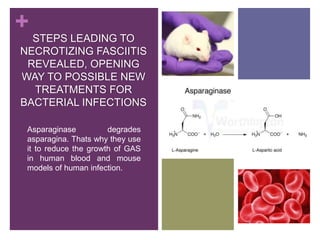
Asparaginase
degrades
asparagina. Thats why they use
it to reduce the growth of GAS
in human blood and mouse
models of human infection.
+

STUDENT OBSERVATION


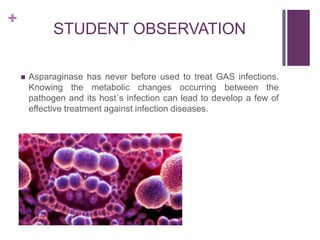
Asparaginase has never before used to treat GAS infections.
Knowing the metabolic changes occurring between the
pathogen and its host´s infection can lead to develop a few of
effective treatment against infection diseases.
+


MEDICAL UTILITY
The doctors, food distributors,
among many other companies,
are straining to maintain the
necessary hygiene for disease
control in clients, workers or
patients.
+

MEDICAL UTILITY



As health workers, we should
alert people about this kind of
diseases that are so contagious
and how they can prevent
them.
+



MEDICAL UTILITY

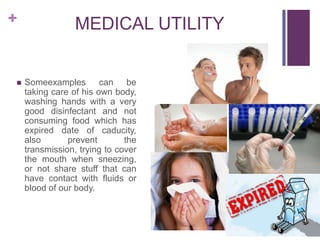
Someexamples can be
taking care of his own body,
washing hands with a very
good disinfectant and not
consuming food which has
expired date of caducity,
also
prevent
the
transmission, trying to cover
the mouth when sneezing,
or not share stuff that can
have contact with fluids or
blood of our body.
+



MEDICAL UTILITY
With the development of the studies about the virulence of
those bacterias and how can they affect us, we can investigate
more about a lot treatments that can helps to control the early
effects that cause a lot of damage even if we don't feel any
symptom, reducing the annual number of deaths.
+

REFERENCES
1.

1. MARTÍNEZ SANCHEZ, LinaMaría; et alt. Biología molecular. 7th ed.
Medellín, Col: Universidad PontificiaBolivariana; 2012.

2.

BROOKS, GF; CARROLL, KAREN; BUTEL, JANET; MORSE,
STEPHEN; MIETZNER, TIMOTHY. Jawetz, Melnick y Adelberg,
MicrobiologíaMédica. (2010). 25 Edición. Mc Graw Hill. Mexico, DF.
PP: 145,147,159,160.

3.

niversität Basel (2014, January 16). Typhoid fever: A race against
time. ScienceDaily. Retrieved January 25, 2014, from
http://www.sciencedaily.com-/releases/2014/01/140116085053.htm.

4.

The Hebrew University of Jerusalem. (2014, January 20). "Steps
leading to necrotizing fasciitis revealed, opening way to possible new
treatments for bacterial infections." Medical News Today. Retrieved
fromhttp://www.medicalnewstoday.com/releases/271385
+

“As we look higher, we get higher”

BACTERIAS INFECTION AND IMMUNE SYSTEM RESPONSE

  • 1.
  • 2.
  • 3.
  • 4.
    + INTRODUCTION CELLS Eukaryotic Nuclear membrane and cytoplasm organelles. Prokaryotes Humancells Doesn’t have a nuclear membrane and the genetic material is dispersed in the cytoplasm Pathogenic bacteria to the body. Bacteria No pathogenic Bacteria on the body.
  • 5.
    + TYPHOID FEVER: ARACE AGAINST TIME Constantly the body is trying to protect himself of the pathogenic microorganism that can affect significantly.
  • 6.
    +  Neutrophils and monocytes enclosethe bacteria to form abscess. But some of them can escape and continue infecting TYPHOID FEVER: A RACE AGAINST TIME
  • 7.
    + TYPHOID FEVER: ARACE AGAINST TIME  Although the immune cells kill a lot of bacteria Salmonella, there are others that evade that abscess and escape, guaranteed his survival and his replicates in all the body.
  • 8.
    + Food or water contaminates CONSTANTLY ANTIBIOTIC RESISTANT Salmonella typhoidfever particularly insidious TYPHOID FEVER: A RACE AGAINST TIME Begins on the intestine and then invades other organs
  • 9.
    + STUDENT OBSERVATION  It isimportant to further scientific development in these areas to achieve eradicate Salmonella, who generate resistance even faster than the creation of new antibiotics.
  • 10.
    + Steps leading tonecrotizing fasciitis revealed, opening way to possible new treatments for bacterial infections Group A Streptococcus (GAS) or S. Pyogenes, is a silent bacteria that colonize the body without produce any symptoms and can be mortal in a lot of cases such as toxic shock syndrome and streptococcal necrotizing fasciitis (flesh-eating disease)
  • 11.
    + STEPS LEADING TONECROTIZING FASCIITIS REVEALED, OPENING WAY TO POSSIBLE NEW TREATMENTS FOR BACTERIAL INFECTIONS  BACTERI A STREPTOLYSINS mRNA CELL Once the bacteria enter to the cell, liberates two streptolysins that inhibit the synthesis of proteins in the cytoplasm.
  • 12.
    + STEPS LEADING TONECROTIZING FASCIITIS REVEALED, OPENING WAY TO POSSIBLE NEW TREATMENTS FOR BACTERIAL INFECTIONS  The human cells increases the production of the amino acid asparagine as a method of defence that alters gene expression of GASand increases his virulence. ASPARAGINE
  • 13.
    + STEPS LEADING TO NECROTIZINGFASCIITIS REVEALED, OPENING WAY TO POSSIBLE NEW TREATMENTS FOR BACTERIAL INFECTIONS Asparaginase degrades asparagina. Thats why they use it to reduce the growth of GAS in human blood and mouse models of human infection.
  • 14.
    + STUDENT OBSERVATION  Asparaginase hasnever before used to treat GAS infections. Knowing the metabolic changes occurring between the pathogen and its host´s infection can lead to develop a few of effective treatment against infection diseases.
  • 15.
    +  MEDICAL UTILITY The doctors,food distributors, among many other companies, are straining to maintain the necessary hygiene for disease control in clients, workers or patients.
  • 16.
    + MEDICAL UTILITY  As healthworkers, we should alert people about this kind of diseases that are so contagious and how they can prevent them.
  • 17.
    +  MEDICAL UTILITY Someexamples canbe taking care of his own body, washing hands with a very good disinfectant and not consuming food which has expired date of caducity, also prevent the transmission, trying to cover the mouth when sneezing, or not share stuff that can have contact with fluids or blood of our body.
  • 18.
    +  MEDICAL UTILITY With thedevelopment of the studies about the virulence of those bacterias and how can they affect us, we can investigate more about a lot treatments that can helps to control the early effects that cause a lot of damage even if we don't feel any symptom, reducing the annual number of deaths.
  • 19.
    + REFERENCES 1. 1. MARTÍNEZ SANCHEZ,LinaMaría; et alt. Biología molecular. 7th ed. Medellín, Col: Universidad PontificiaBolivariana; 2012. 2. BROOKS, GF; CARROLL, KAREN; BUTEL, JANET; MORSE, STEPHEN; MIETZNER, TIMOTHY. Jawetz, Melnick y Adelberg, MicrobiologíaMédica. (2010). 25 Edición. Mc Graw Hill. Mexico, DF. PP: 145,147,159,160. 3. niversität Basel (2014, January 16). Typhoid fever: A race against time. ScienceDaily. Retrieved January 25, 2014, from http://www.sciencedaily.com-/releases/2014/01/140116085053.htm. 4. The Hebrew University of Jerusalem. (2014, January 20). "Steps leading to necrotizing fasciitis revealed, opening way to possible new treatments for bacterial infections." Medical News Today. Retrieved fromhttp://www.medicalnewstoday.com/releases/271385
  • 20.
    + “As we lookhigher, we get higher”