Cell Cycle &
Mitosis
Grade 10
Biology
Farah Nasr
Lesson objectives
Define cell
cycle
1
Describe the
phases of
the cell cycle
2
Define
mitosis and
its stages
3
Explain the
importance
of cell cycle
4
Question :
How do
organisms
grow?
What
happens
when cells
become old
or damaged?
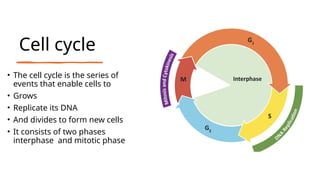
Cell cycle
• The cell cycle is the series of
events that enable cells to
• Grows
• Replicate its DNA
• And divides to form new cells
• It consists of two phases
interphase and mitotic phase
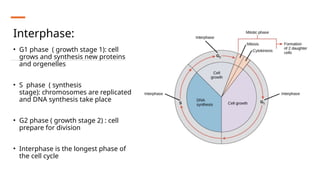
Interphase:
• G1 phase ( growth stage 1): cell
grows and synthesis new proteins
and orgenelles
• S phase ( synthesis
stage): chromosomes are replicated
and DNA synthesis take place
• G2 phase ( growth stage 2) : cell
prepare for division
• Interphase is the longest phase of
the cell cycle
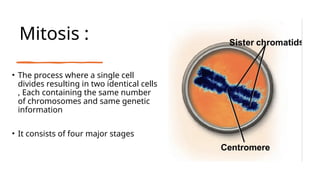
Mitosis :
• The process where a single cell
divides resulting in two identical cells
, Each containing the same number
of chromosomes and same genetic
information
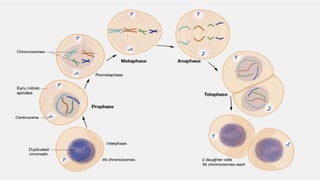
• It consists of four major stages
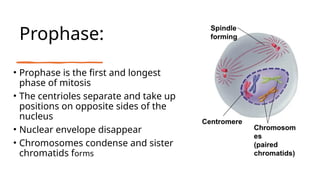
Prophase:
• Prophase is the first and longest
phase of mitosis
• The centrioles separate and take up
positions on opposite sides of the
nucleus
• Nuclear envelope disappear
• Chromosomes condense and sister
chromatids forms
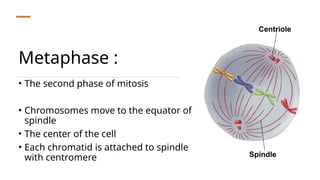
Metaphase :
• The second phase of mitosis
• Chromosomes move to the equator of
spindle
• The center of the cell
• Each chromatid is attached to spindle
with centromere
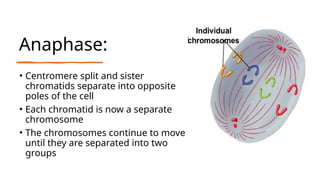
Anaphase:
• Centromere split and sister
chromatids separate into opposite
poles of the cell
• Each chromatid is now a separate
chromosome
• The chromosomes continue to move
until they are separated into two
groups
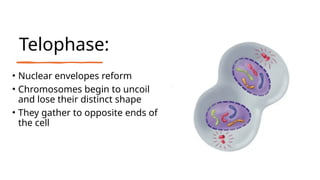
Telophase:
• Nuclear envelopes reform
• Chromosomes begin to uncoil
and lose their distinct shape
• They gather to opposite ends of
the cell
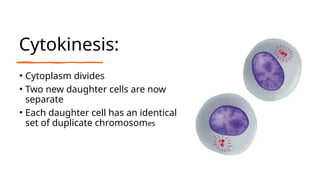
Cytokinesis:
• Cytoplasm divides
• Two new daughter cells are now
separate
• Each daughter cell has an identical
set of duplicate chromosomes
Why is the cell
cycle important ?
• This process replaces damaged
cells
• It repairs and maintains the
health of the cells
• It also aid in the survival and
growth of biological organisms
What happen in case
of mitosis failure?
• It can lead to cell death
and to permanent cell
cycle arrest
• And mutation which is the
proliferation of abnormal
cells with incorrect
number of chromosomes
Exit ticket :
Fill in the Blanks
• DNA replication occurs during the ______ phase.
• Chromosomes line up at the equator during ______.
• The division of cytoplasm is called ______.
Statement:
“During telophase, chromosomes line up at the equator
and spindle fibers pull them apart.”
Task:
• Identify two errors in the statement and correct them.
Thank you

Presentation (1).ppt Cell cycle and division

  • 1.
    Cell Cycle & Mitosis Grade10 Biology Farah Nasr
  • 2.
    Lesson objectives Define cell cycle 1 Describethe phases of the cell cycle 2 Define mitosis and its stages 3 Explain the importance of cell cycle 4
  • 3.
  • 4.
    Cell cycle • Thecell cycle is the series of events that enable cells to • Grows • Replicate its DNA • And divides to form new cells • It consists of two phases interphase and mitotic phase
  • 5.
    Interphase: • G1 phase( growth stage 1): cell grows and synthesis new proteins and orgenelles • S phase ( synthesis stage): chromosomes are replicated and DNA synthesis take place • G2 phase ( growth stage 2) : cell prepare for division • Interphase is the longest phase of the cell cycle
  • 6.
    Mitosis : • Theprocess where a single cell divides resulting in two identical cells , Each containing the same number of chromosomes and same genetic information • It consists of four major stages
  • 8.
    Prophase: • Prophase isthe first and longest phase of mitosis • The centrioles separate and take up positions on opposite sides of the nucleus • Nuclear envelope disappear • Chromosomes condense and sister chromatids forms
  • 9.
    Metaphase : • Thesecond phase of mitosis • Chromosomes move to the equator of spindle • The center of the cell • Each chromatid is attached to spindle with centromere
  • 10.
    Anaphase: • Centromere splitand sister chromatids separate into opposite poles of the cell • Each chromatid is now a separate chromosome • The chromosomes continue to move until they are separated into two groups
  • 11.
    Telophase: • Nuclear envelopesreform • Chromosomes begin to uncoil and lose their distinct shape • They gather to opposite ends of the cell
  • 12.
    Cytokinesis: • Cytoplasm divides •Two new daughter cells are now separate • Each daughter cell has an identical set of duplicate chromosomes
  • 13.
    Why is thecell cycle important ? • This process replaces damaged cells • It repairs and maintains the health of the cells • It also aid in the survival and growth of biological organisms
  • 14.
    What happen incase of mitosis failure? • It can lead to cell death and to permanent cell cycle arrest • And mutation which is the proliferation of abnormal cells with incorrect number of chromosomes
  • 15.
    Exit ticket : Fillin the Blanks • DNA replication occurs during the ______ phase. • Chromosomes line up at the equator during ______. • The division of cytoplasm is called ______. Statement: “During telophase, chromosomes line up at the equator and spindle fibers pull them apart.” Task: • Identify two errors in the statement and correct them.
  • 16.