There is (Hay) (Singular)
There is a robot at office.
There is not (there isn’t) a robot at office.
Is there a robot at office.?
There are (Hay) (Plural)
There are very good reasons why the built
world is made mainly out of steel and concrete.
There are not ( there aren´t) very good reasons why
the built world is made mainly out of steel and
concrete.
Are very good reasons why the built world is made
mainly out of steel and concrete?
THERE WAS (HUBO) THERE WAS AN ACCIDENT
THERE WERE (HUBO O
HABIA) THERE WERE MANY PATIENTS AT
THE OFFICE YESTERDAY
THERE WILL BE (HABRÁ)
There will be some dental seals tomorrow
There has been
There have been = Ha habido
There have been bricklaying robots.
Ha habido robots de albañilería
Intenciones en el futuro:
•I am going to: Voy a
•She is going to: Ella va a
•You are going to: Uds. van a
•We are going to: Vamos a
•They are going to: Ellos van a
EXAMPLES:
•He is going to do some english exercices
•Those lecturers are going to explain the new implant method.
• I am going to open the pulp chamber of the tooth to allow
infection to drain
PRESENT PERFECT TENSE / PRESENTE PERFECTO
Frase verbal
They have bought new tools.
(han comprado)
SUJETO
I
YOU
WE
THEY
Have + part.pasado
He-ha-has-han
Com-
plemento
PRESENT PERFECT TENSE / PRESENTE PERFECTO
Frase verbal
He has bought new tools.
That arquitecht has become very successful
(ha llegado a ser)
Frase verbal
Has + part.pasado
( Ha)
Com-
plemento
SUJETO
He
She
It
PAST PERFECT TENSE / PASADO PERFECTO
SUJETO
FRASEVERBAL
He had not taken the exam last year
I
HE
SHE
IT
YOU
WE
THEY
HAD +PART PASADO
(había) + (ido-ado)
Complemento
FUTURE PERFECT TENSE / FUTURO PERFECTO
I will have arrived at the office by 8.
Sujeto + verbo en presente perfecto + complemento
(HABRÉ, HABRÁS,
HABRÁ + Ido,ado)
SUJETO
• I
• HE
• SHE
• IT
• YOU
• WE
• THEY
FRASE
VERBAL
• COMPLEMENTWILL HAVE + VERBO
PARTICIPIO PASADO
1. The main causes of disputes in construction projects involve delay and failure
to complete the work.
2. The effect of cost overrun and schedule overrun do not only influence
the construction Industry.
3. The collected data, output charts and analyses spreadsheets have been used for
the development of computerized model built.
4. There are many sources of uncertainty in construction projects.
5. Strategies for threats are avoiding negative risks.
Delay: Demora
Schedule: Cronograma
Overrun: Rebasar
Chart: Gráfico
Output: Resultados
Spreadsheets: hojas de cálculo
Risk: Riesgo
Threat: Amenzar
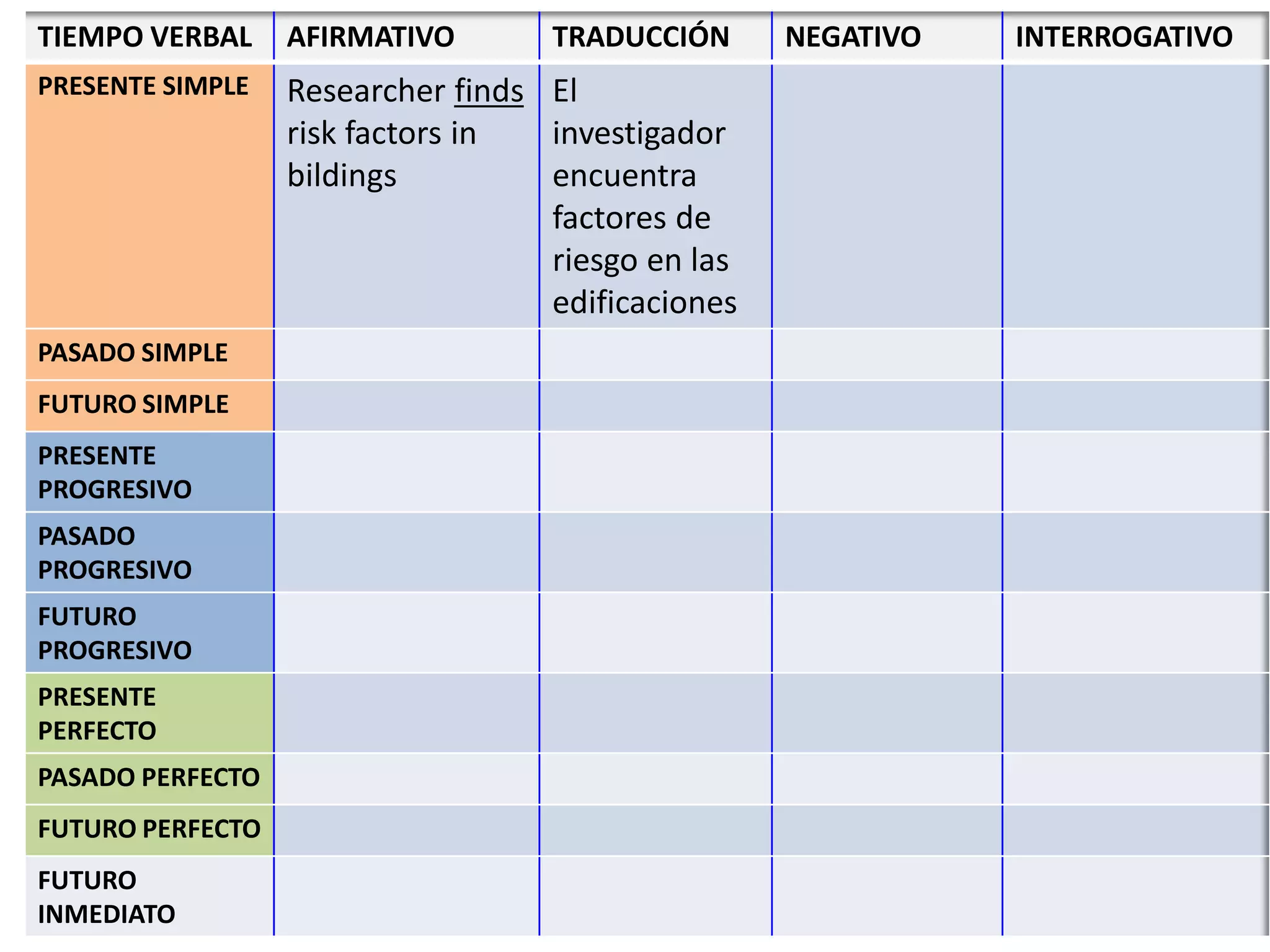
Practica: Reconoce las estructuras y tiempos verbales
TIEMPO VERBAL AFIRMATIVO TRADUCCIÓN NEGATIVO INTERROGATIVO
PRESENTE SIMPLE Researcher finds
risk factors in
bildings
El
investigador
encuentra
factores de
riesgo en las
edificaciones
PASADO SIMPLE
FUTURO SIMPLE
PRESENTE
PROGRESIVO
PASADO
PROGRESIVO
FUTURO
PROGRESIVO
PRESENTE
PERFECTO
PASADO PERFECTO
FUTURO PERFECTO
FUTURO
INMEDIATO

Present, past and future perfect

  • 2.
    There is (Hay)(Singular) There is a robot at office. There is not (there isn’t) a robot at office. Is there a robot at office.? There are (Hay) (Plural) There are very good reasons why the built world is made mainly out of steel and concrete. There are not ( there aren´t) very good reasons why the built world is made mainly out of steel and concrete. Are very good reasons why the built world is made mainly out of steel and concrete?
  • 3.
    THERE WAS (HUBO)THERE WAS AN ACCIDENT THERE WERE (HUBO O HABIA) THERE WERE MANY PATIENTS AT THE OFFICE YESTERDAY THERE WILL BE (HABRÁ) There will be some dental seals tomorrow
  • 4.
    There has been Therehave been = Ha habido There have been bricklaying robots. Ha habido robots de albañilería
  • 5.
    Intenciones en elfuturo: •I am going to: Voy a •She is going to: Ella va a •You are going to: Uds. van a •We are going to: Vamos a •They are going to: Ellos van a EXAMPLES: •He is going to do some english exercices •Those lecturers are going to explain the new implant method. • I am going to open the pulp chamber of the tooth to allow infection to drain
  • 6.
    PRESENT PERFECT TENSE/ PRESENTE PERFECTO Frase verbal They have bought new tools. (han comprado) SUJETO I YOU WE THEY Have + part.pasado He-ha-has-han Com- plemento
  • 7.
    PRESENT PERFECT TENSE/ PRESENTE PERFECTO Frase verbal He has bought new tools. That arquitecht has become very successful (ha llegado a ser) Frase verbal Has + part.pasado ( Ha) Com- plemento SUJETO He She It
  • 8.
    PAST PERFECT TENSE/ PASADO PERFECTO SUJETO FRASEVERBAL He had not taken the exam last year I HE SHE IT YOU WE THEY HAD +PART PASADO (había) + (ido-ado) Complemento
  • 9.
    FUTURE PERFECT TENSE/ FUTURO PERFECTO I will have arrived at the office by 8. Sujeto + verbo en presente perfecto + complemento (HABRÉ, HABRÁS, HABRÁ + Ido,ado) SUJETO • I • HE • SHE • IT • YOU • WE • THEY FRASE VERBAL • COMPLEMENTWILL HAVE + VERBO PARTICIPIO PASADO
  • 10.
    1. The maincauses of disputes in construction projects involve delay and failure to complete the work. 2. The effect of cost overrun and schedule overrun do not only influence the construction Industry. 3. The collected data, output charts and analyses spreadsheets have been used for the development of computerized model built. 4. There are many sources of uncertainty in construction projects. 5. Strategies for threats are avoiding negative risks. Delay: Demora Schedule: Cronograma Overrun: Rebasar Chart: Gráfico Output: Resultados Spreadsheets: hojas de cálculo Risk: Riesgo Threat: Amenzar Practica: Reconoce las estructuras y tiempos verbales
  • 11.
    TIEMPO VERBAL AFIRMATIVOTRADUCCIÓN NEGATIVO INTERROGATIVO PRESENTE SIMPLE Researcher finds risk factors in bildings El investigador encuentra factores de riesgo en las edificaciones PASADO SIMPLE FUTURO SIMPLE PRESENTE PROGRESIVO PASADO PROGRESIVO FUTURO PROGRESIVO PRESENTE PERFECTO PASADO PERFECTO FUTURO PERFECTO FUTURO INMEDIATO