República Bolivariana de Venezuela
Ministerio del Poder Popular para la Educación
U.E colegio “Francisco Lazo Martí”
Cabudare, Edo Lara.

Past – Present - Future
Continuous
Integrantes:
Álvarez Jhoanna
Escalona Cesar
Durán María
Gutiérrez Daifred
5 año “B”
Pasado Continuo – (Past
Continuous)
 El Pasado Continuo, es un tiempo

verbal que describe acciones que
estaban siendo realizadas en un
momento del pasado al que se
hace referencia y que luego
continuaron.
Oraciones Afirmativas
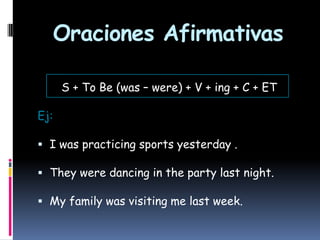
S + To Be (was – were) + V + ing + C + ET
Ej:
 I was practicing sports yesterday .
 They were dancing in the party last night.
 My family was visiting me last week.
Oraciones Negativas
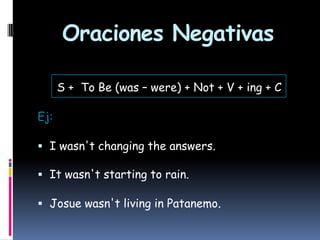
S + To Be (was – were) + Not + V + ing + C
Ej:
 I wasn't changing the answers.
 It wasn't starting to rain.
 Josue wasn't living in Patanemo.
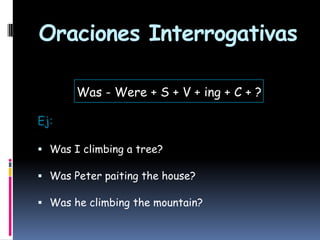
Oraciones Interrogativas
Was - Were + S + V + ing + C + ?
Ej:
 Was I climbing a tree?
 Was Peter paiting the house?
 Was he climbing the mountain?
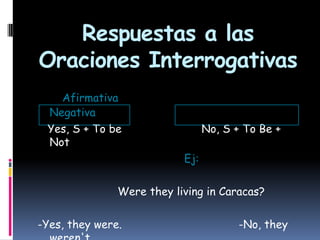
Respuestas a las
Oraciones Interrogativas
Afirmativa
Negativa
Yes, S + To be
Not

No, S + To Be +

Ej:
Were they living in Caracas?
-Yes, they were.

-No, they
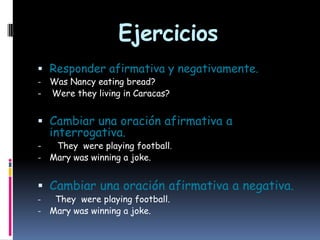
Ejercicios
 Responder afirmativa y negativamente.
Was Nancy eating bread?
- Were they living in Caracas?
-

 Cambiar una oración afirmativa a
-

interrogativa.

They were playing football.
- Mary was winning a joke.

 Cambiar una oración afirmativa a negativa.
They were playing football.
- Mary was winning a joke.
-
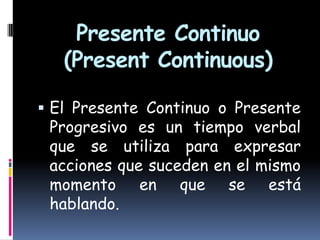
Presente Continuo
(Present Continuous)
 El Presente Continuo o Presente

Progresivo es un tiempo verbal
que se utiliza para expresar
acciones que suceden en el mismo
momento en que se está
hablando.
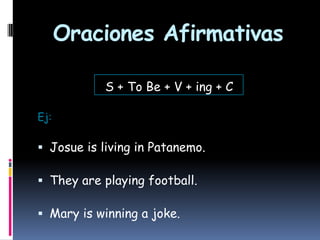
Oraciones Afirmativas
S + To Be + V + ing + C
Ej:

 Josue is living in Patanemo.
 They are playing football.

 Mary is winning a joke.
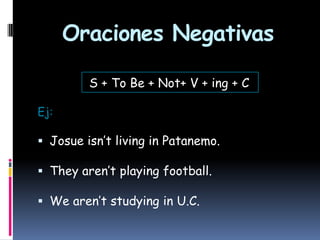
Oraciones Negativas
S + To Be + Not+ V + ing + C
Ej:

 Josue isn’t living in Patanemo.
 They aren’t playing football.
 We aren’t studying in U.C.
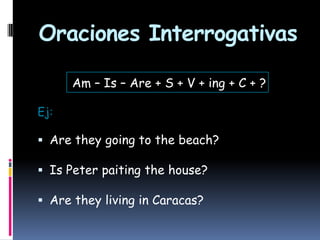
Oraciones Interrogativas
Am – Is – Are + S + V + ing + C + ?
Ej:

 Are they going to the beach?
 Is Peter paiting the house?
 Are they living in Caracas?
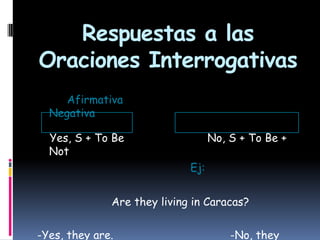
Respuestas a las
Oraciones Interrogativas
Afirmativa
Negativa
Yes, S + To Be
Not

No, S + To Be +
Ej:

Are they living in Caracas?

-Yes, they are.

-No, they
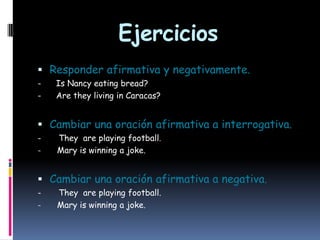
Ejercicios
 Responder afirmativa y negativamente.
-

Is Nancy eating bread?
Are they living in Caracas?

 Cambiar una oración afirmativa a interrogativa.
-

They are playing football.
Mary is winning a joke.

 Cambiar una oración afirmativa a negativa.
-

They are playing football.
Mary is winning a joke.
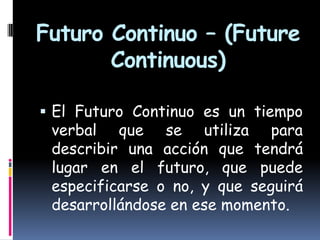
Futuro Continuo – (Future
Continuous)
 El Futuro Continuo es un tiempo

verbal que se utiliza para
describir una acción que tendrá
lugar en el futuro, que puede
especificarse o no, y que seguirá
desarrollándose en ese momento.
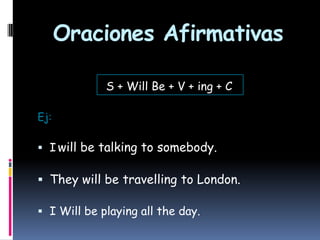
Oraciones Afirmativas
S + Will Be + V + ing + C
Ej:

 I will be talking to somebody.

 They will be travelling to London.
 I Will be playing all the day.
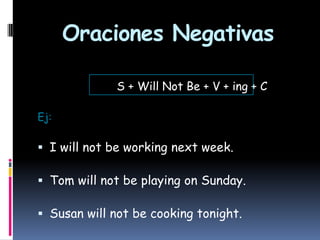
Oraciones Negativas
S + Will Not Be + V + ing + C
Ej:

 I will not be working next week.
 Tom will not be playing on Sunday.

 Susan will not be cooking tonight.
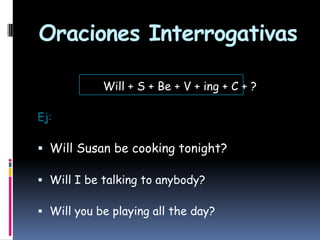
Oraciones Interrogativas
Will + S + Be + V + ing + C + ?
Ej:

 Will Susan be cooking tonight?
 Will I be talking to anybody?

 Will you be playing all the day?
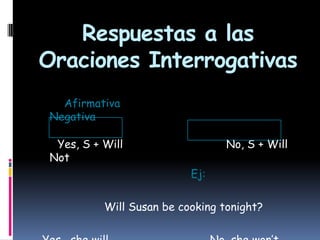
Respuestas a las
Oraciones Interrogativas
Afirmativa
Negativa
Yes, S + Will
Not

No, S + Will
Ej:

Will Susan be cooking tonight?
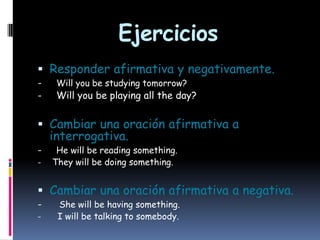
Ejercicios
 Responder afirmativa y negativamente.
-

Will you be studying tomorrow?

Will you be playing all the day?

 Cambiar una oración afirmativa a
interrogativa.
-

He will be reading something.
They will be doing something.

 Cambiar una oración afirmativa a negativa.
-

She will be having something.
I will be talking to somebody.

Pasado, presente, futuro continuos.

  • 1.
    República Bolivariana deVenezuela Ministerio del Poder Popular para la Educación U.E colegio “Francisco Lazo Martí” Cabudare, Edo Lara. Past – Present - Future Continuous Integrantes: Álvarez Jhoanna Escalona Cesar Durán María Gutiérrez Daifred 5 año “B”
  • 2.
    Pasado Continuo –(Past Continuous)  El Pasado Continuo, es un tiempo verbal que describe acciones que estaban siendo realizadas en un momento del pasado al que se hace referencia y que luego continuaron.
  • 3.
    Oraciones Afirmativas S +To Be (was – were) + V + ing + C + ET Ej:  I was practicing sports yesterday .  They were dancing in the party last night.  My family was visiting me last week.
  • 4.
    Oraciones Negativas S +To Be (was – were) + Not + V + ing + C Ej:  I wasn't changing the answers.  It wasn't starting to rain.  Josue wasn't living in Patanemo.
  • 5.
    Oraciones Interrogativas Was -Were + S + V + ing + C + ? Ej:  Was I climbing a tree?  Was Peter paiting the house?  Was he climbing the mountain?
  • 6.
    Respuestas a las OracionesInterrogativas Afirmativa Negativa Yes, S + To be Not No, S + To Be + Ej: Were they living in Caracas? -Yes, they were. -No, they
  • 7.
    Ejercicios  Responder afirmativay negativamente. Was Nancy eating bread? - Were they living in Caracas? -  Cambiar una oración afirmativa a - interrogativa. They were playing football. - Mary was winning a joke.  Cambiar una oración afirmativa a negativa. They were playing football. - Mary was winning a joke. -
  • 8.
    Presente Continuo (Present Continuous) El Presente Continuo o Presente Progresivo es un tiempo verbal que se utiliza para expresar acciones que suceden en el mismo momento en que se está hablando.
  • 9.
    Oraciones Afirmativas S +To Be + V + ing + C Ej:  Josue is living in Patanemo.  They are playing football.  Mary is winning a joke.
  • 10.
    Oraciones Negativas S +To Be + Not+ V + ing + C Ej:  Josue isn’t living in Patanemo.  They aren’t playing football.  We aren’t studying in U.C.
  • 11.
    Oraciones Interrogativas Am –Is – Are + S + V + ing + C + ? Ej:  Are they going to the beach?  Is Peter paiting the house?  Are they living in Caracas?
  • 12.
    Respuestas a las OracionesInterrogativas Afirmativa Negativa Yes, S + To Be Not No, S + To Be + Ej: Are they living in Caracas? -Yes, they are. -No, they
  • 13.
    Ejercicios  Responder afirmativay negativamente. - Is Nancy eating bread? Are they living in Caracas?  Cambiar una oración afirmativa a interrogativa. - They are playing football. Mary is winning a joke.  Cambiar una oración afirmativa a negativa. - They are playing football. Mary is winning a joke.
  • 14.
    Futuro Continuo –(Future Continuous)  El Futuro Continuo es un tiempo verbal que se utiliza para describir una acción que tendrá lugar en el futuro, que puede especificarse o no, y que seguirá desarrollándose en ese momento.
  • 15.
    Oraciones Afirmativas S +Will Be + V + ing + C Ej:  I will be talking to somebody.  They will be travelling to London.  I Will be playing all the day.
  • 16.
    Oraciones Negativas S +Will Not Be + V + ing + C Ej:  I will not be working next week.  Tom will not be playing on Sunday.  Susan will not be cooking tonight.
  • 17.
    Oraciones Interrogativas Will +S + Be + V + ing + C + ? Ej:  Will Susan be cooking tonight?  Will I be talking to anybody?  Will you be playing all the day?
  • 18.
    Respuestas a las OracionesInterrogativas Afirmativa Negativa Yes, S + Will Not No, S + Will Ej: Will Susan be cooking tonight?
  • 19.
    Ejercicios  Responder afirmativay negativamente. - Will you be studying tomorrow? Will you be playing all the day?  Cambiar una oración afirmativa a interrogativa. - He will be reading something. They will be doing something.  Cambiar una oración afirmativa a negativa. - She will be having something. I will be talking to somebody.