Predictive Analytics for
Personalized Health Care
Zhaohui (John) Cai, MD, PhD
Biomedical Informatics Director, AstraZeneca
Big Data and Analytics for Pharma
Philadelphia, PA
June 12, 2013
Disclaimer

This presentation represents my personal
views of how predictive analytics can help with
personalized health care. It does not constitute
any positions of AstraZeneca or any other
organizations
Presentation Outline
• Introduction
- Personalized Health Care (PHC) and Personalized Medicine (PM)
- Comparative Effectiveness Research (CER) and PHC

• Big data and analytics for PHC
• Predictive learning for PHC in drug development – an
internal approach and example
• Proposed personalized CER – challenges of big data
and analytics

3

Author | 00 Month Year

Set area descriptor | Sub level 1
Personalized Medicine or Personalized
Healthcare
Personalized Medicine
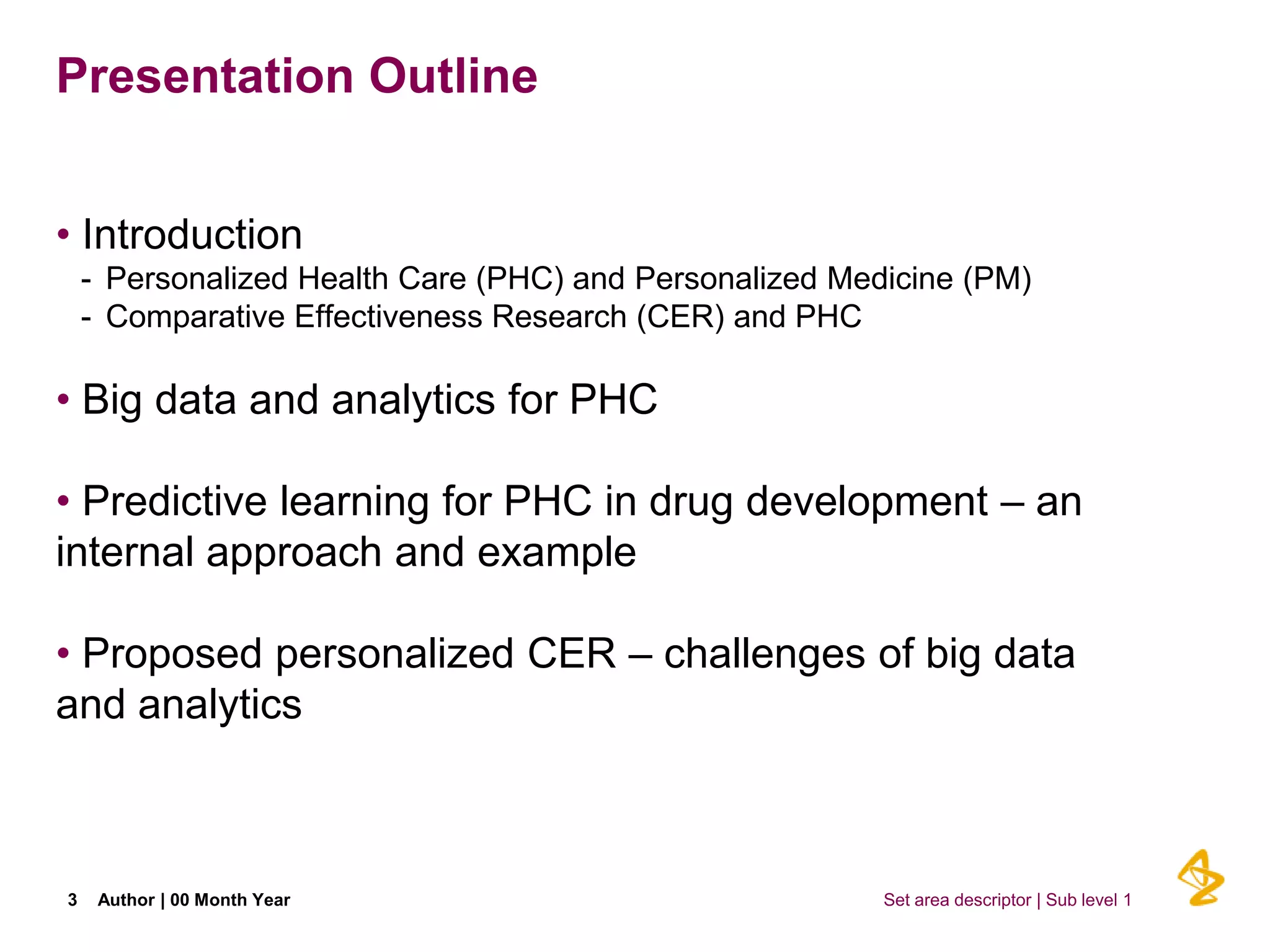
• Based on the recognition that unprecedented types of
information will be obtainable from
genetic, genomic, proteomic, imaging technologies, etc, which
will help us further refine known diseases into new categories
• Managing a patient's health based on the individual patient's
specific characteristics (usually a new molecular diagnostic
test) vs. “standards of care”

Personalized Healthcare (PHC)
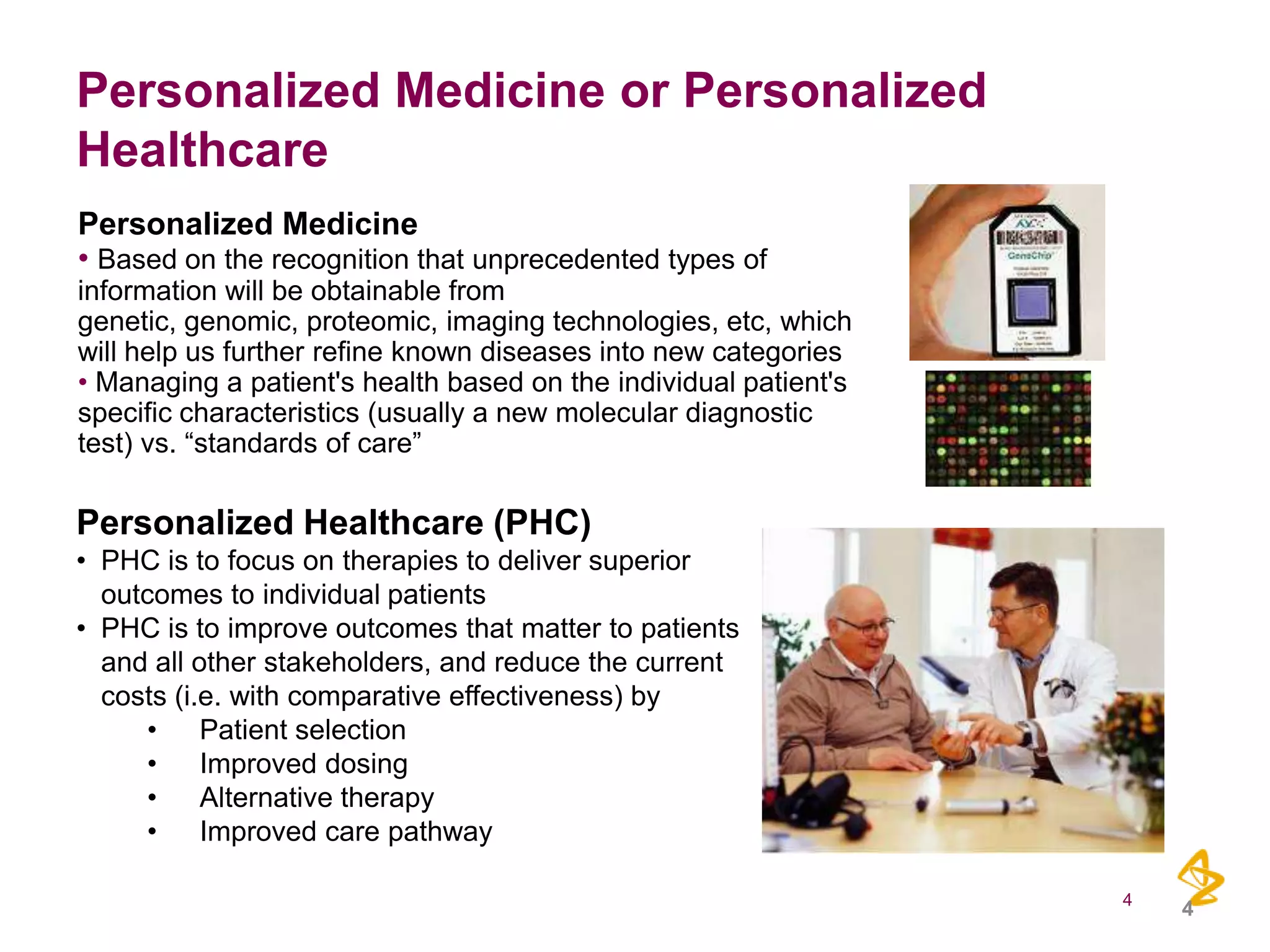
• PHC is to focus on therapies to deliver superior
outcomes to individual patients
• PHC is to improve outcomes that matter to patients
and all other stakeholders, and reduce the current
costs (i.e. with comparative effectiveness) by
•
Patient selection
•
Improved dosing
•
Alternative therapy
•
Improved care pathway
4

4
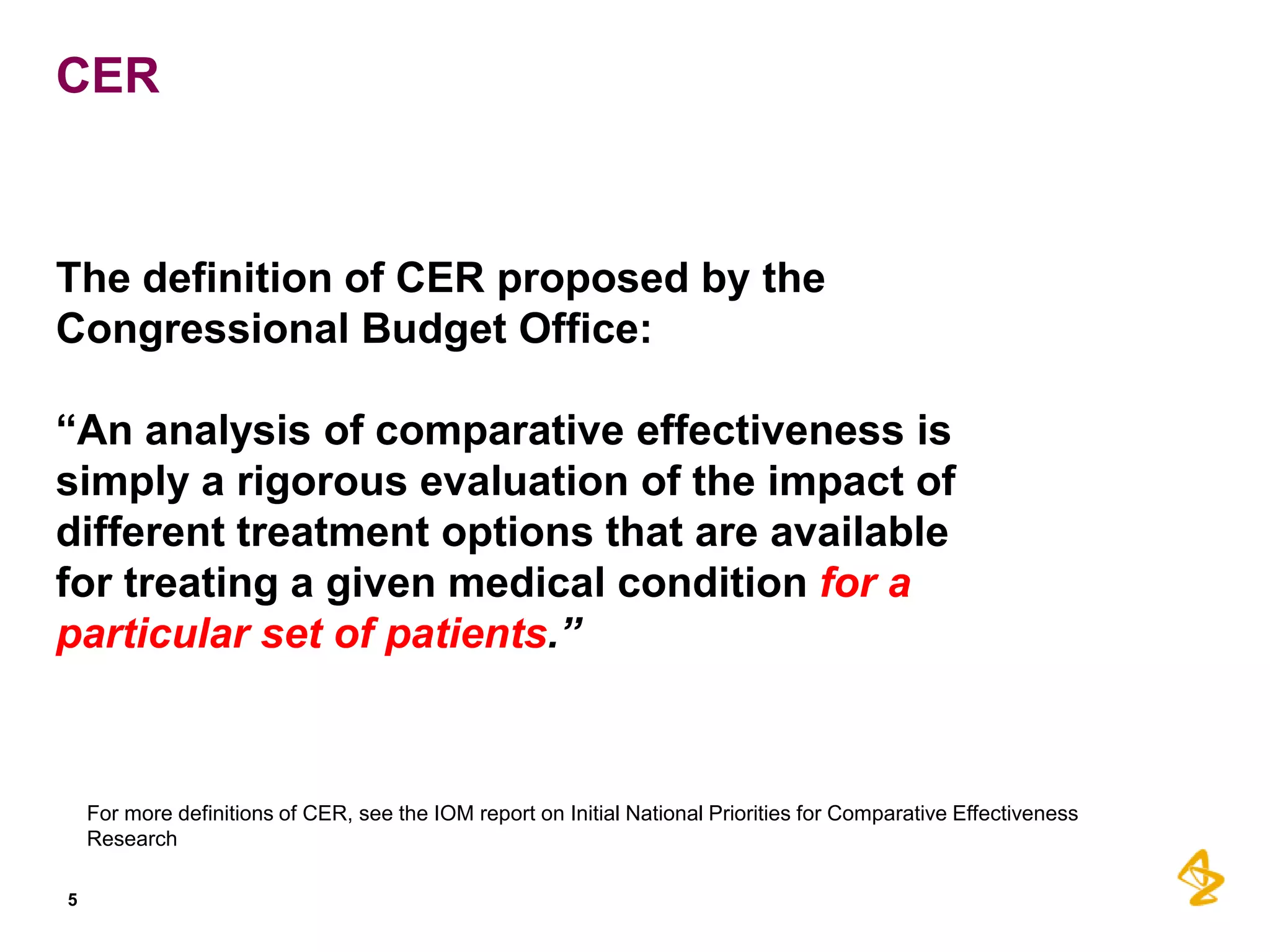
CER

The definition of CER proposed by the
Congressional Budget Office:

“An analysis of comparative effectiveness is
simply a rigorous evaluation of the impact of
different treatment options that are available
for treating a given medical condition for a
particular set of patients.”

For more definitions of CER, see the IOM report on Initial National Priorities for Comparative Effectiveness
Research
5
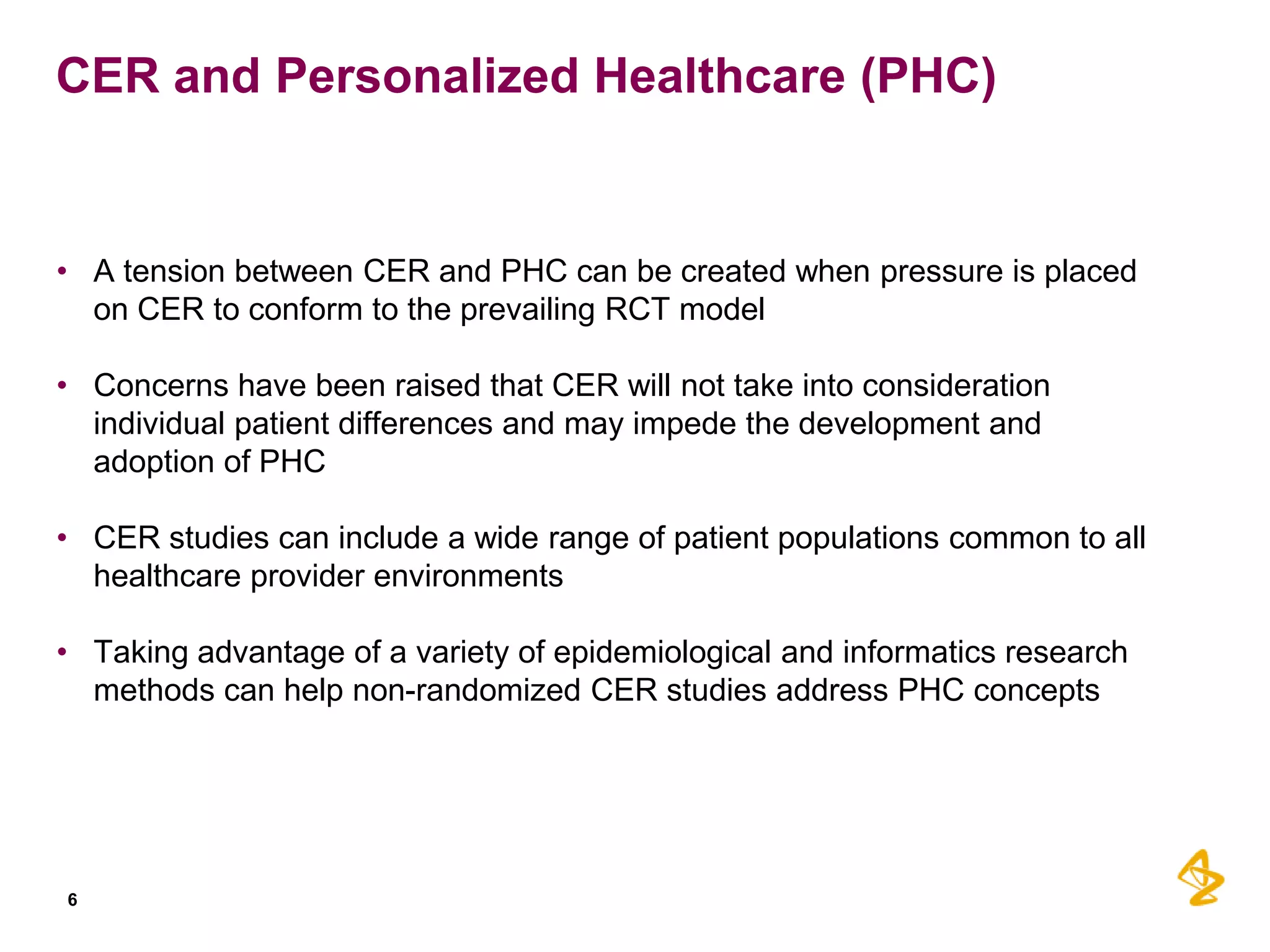
CER and Personalized Healthcare (PHC)

• A tension between CER and PHC can be created when pressure is placed
on CER to conform to the prevailing RCT model
• Concerns have been raised that CER will not take into consideration
individual patient differences and may impede the development and
adoption of PHC

• CER studies can include a wide range of patient populations common to all
healthcare provider environments
• Taking advantage of a variety of epidemiological and informatics research
methods can help non-randomized CER studies address PHC concepts

6
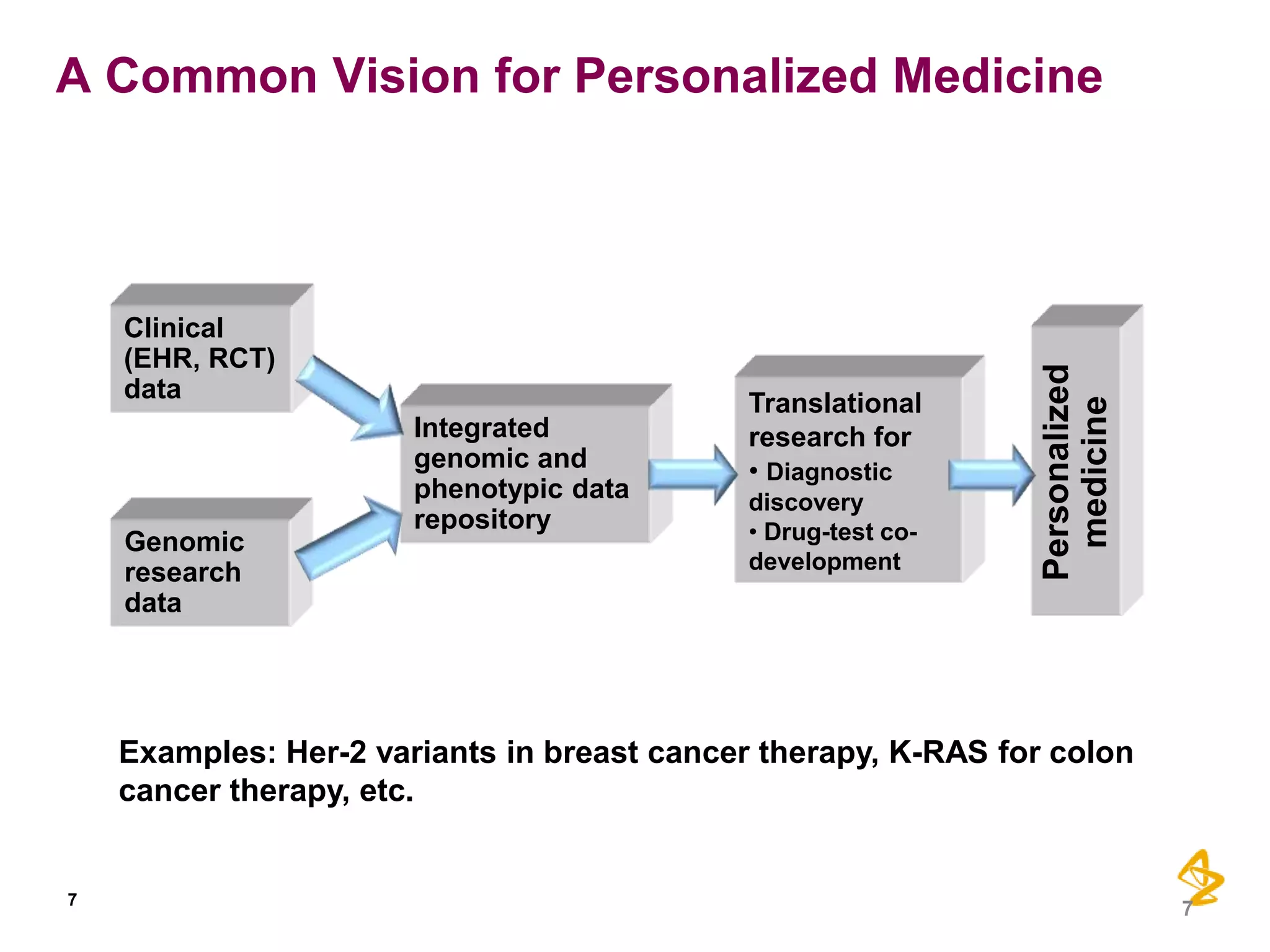
Clinical
(EHR, RCT)
data

Genomic
research
data

Integrated
genomic and
phenotypic data
repository

Translational
research for
• Diagnostic
discovery
• Drug-test codevelopment

Personalized
medicine

A Common Vision for Personalized Medicine

Examples: Her-2 variants in breast cancer therapy, K-RAS for colon
cancer therapy, etc.

7

7
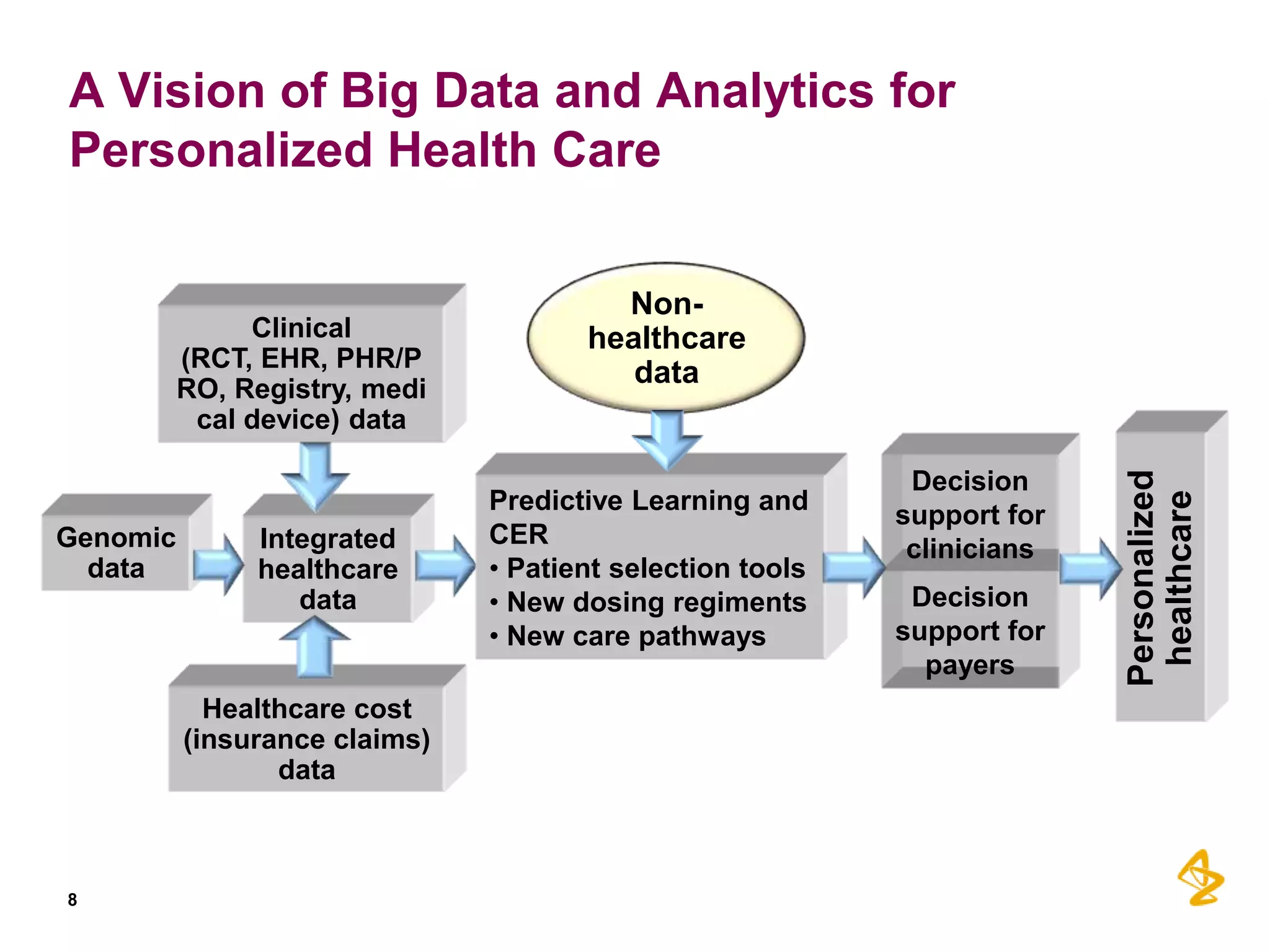
A Vision of Big Data and Analytics for
Personalized Health Care

Genomic
data

Integrated
healthcare
data

Healthcare cost
(insurance claims)
data

8

Nonhealthcare
data

Predictive Learning and
CER
• Patient selection tools
• New dosing regiments
• New care pathways

Decision
support for
clinicians

Decision
support for
payers

Personalized
healthcare

Clinical
(RCT, EHR, PHR/P
RO, Registry, medi
cal device) data
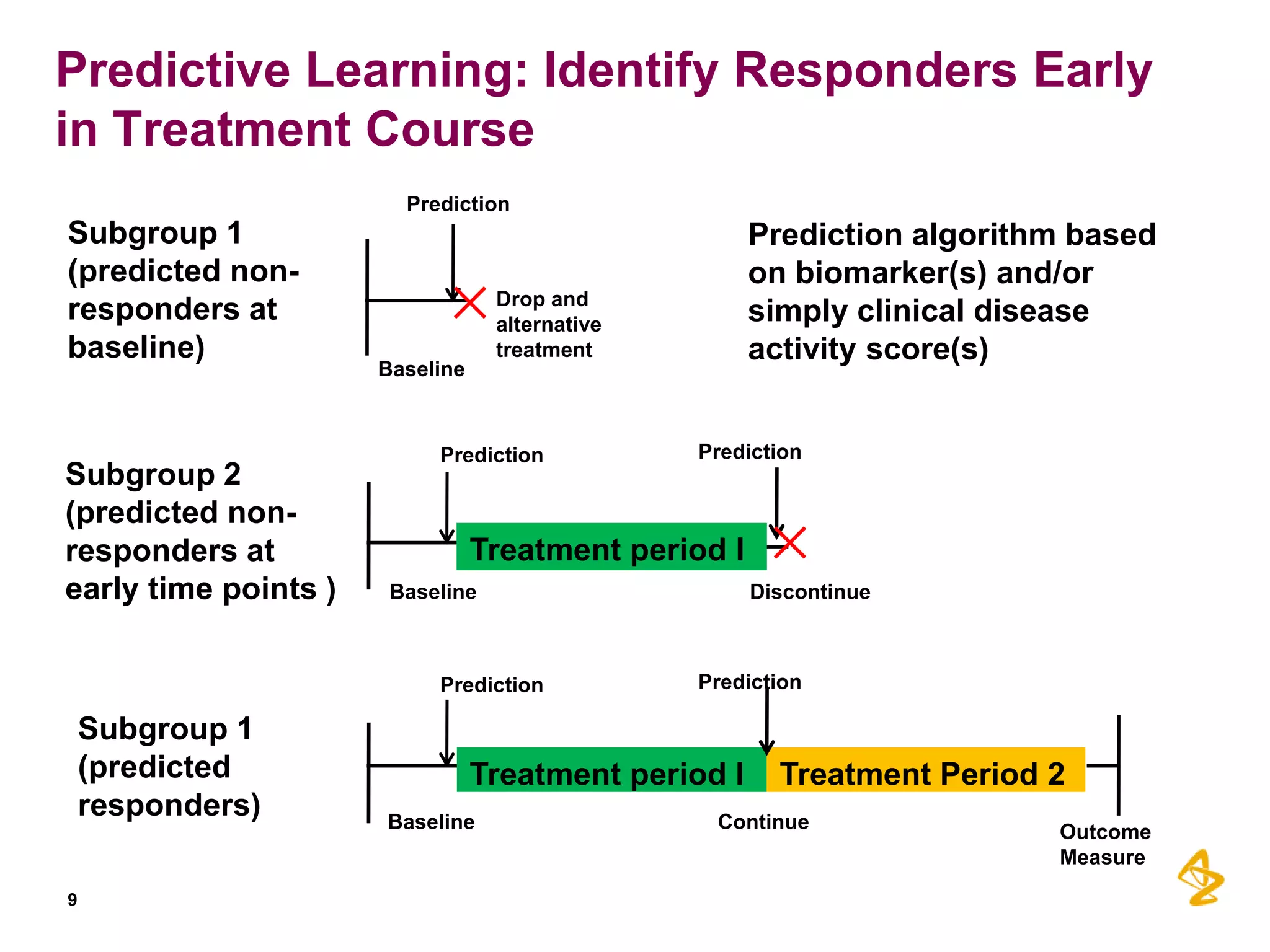
Predictive Learning: Identify Responders Early
in Treatment Course
Prediction

Subgroup 1
(predicted nonresponders at
baseline)

Subgroup 2
(predicted nonresponders at
early time points )

Drop and
alternative
treatment

Baseline

Prediction

9

Prediction

Treatment period I
Baseline

Prediction

Subgroup 1
(predicted
responders)

Prediction algorithm based
on biomarker(s) and/or
simply clinical disease
activity score(s)

Discontinue

Prediction

Treatment period I
Baseline

Treatment Period 2

Continue

Outcome
Measure
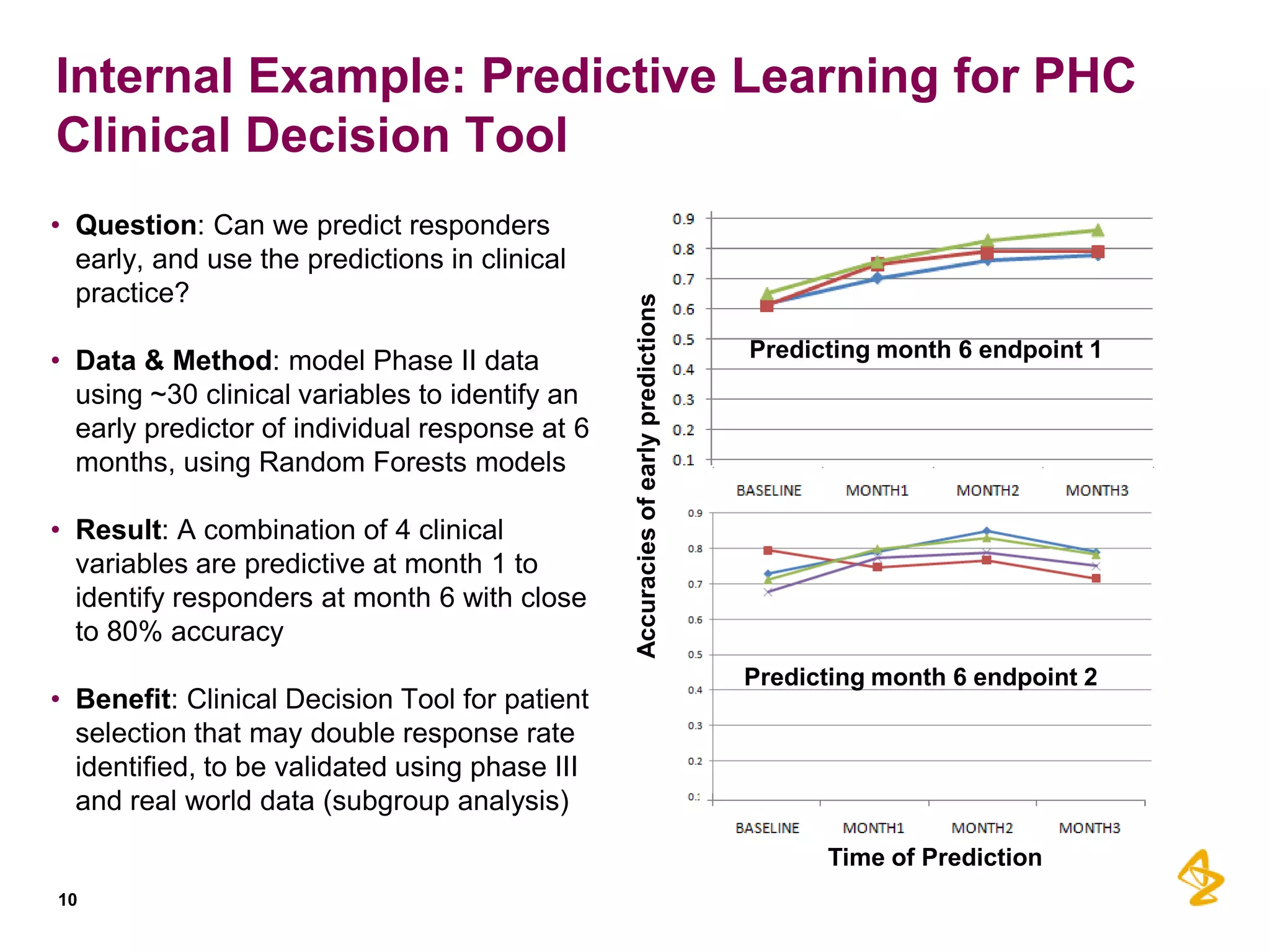
• Question: Can we predict responders
early, and use the predictions in clinical
practice?
• Data & Method: model Phase II data
using ~30 clinical variables to identify an
early predictor of individual response at 6
months, using Random Forests models
• Result: A combination of 4 clinical
variables are predictive at month 1 to
identify responders at month 6 with close
to 80% accuracy

• Benefit: Clinical Decision Tool for patient
selection that may double response rate
identified, to be validated using phase III
and real world data (subgroup analysis)

Accuracies of early predictions

Internal Example: Predictive Learning for PHC
Clinical Decision Tool

Predicting month 6 endpoint 1

Predicting month 6 endpoint 2

Time of Prediction
10
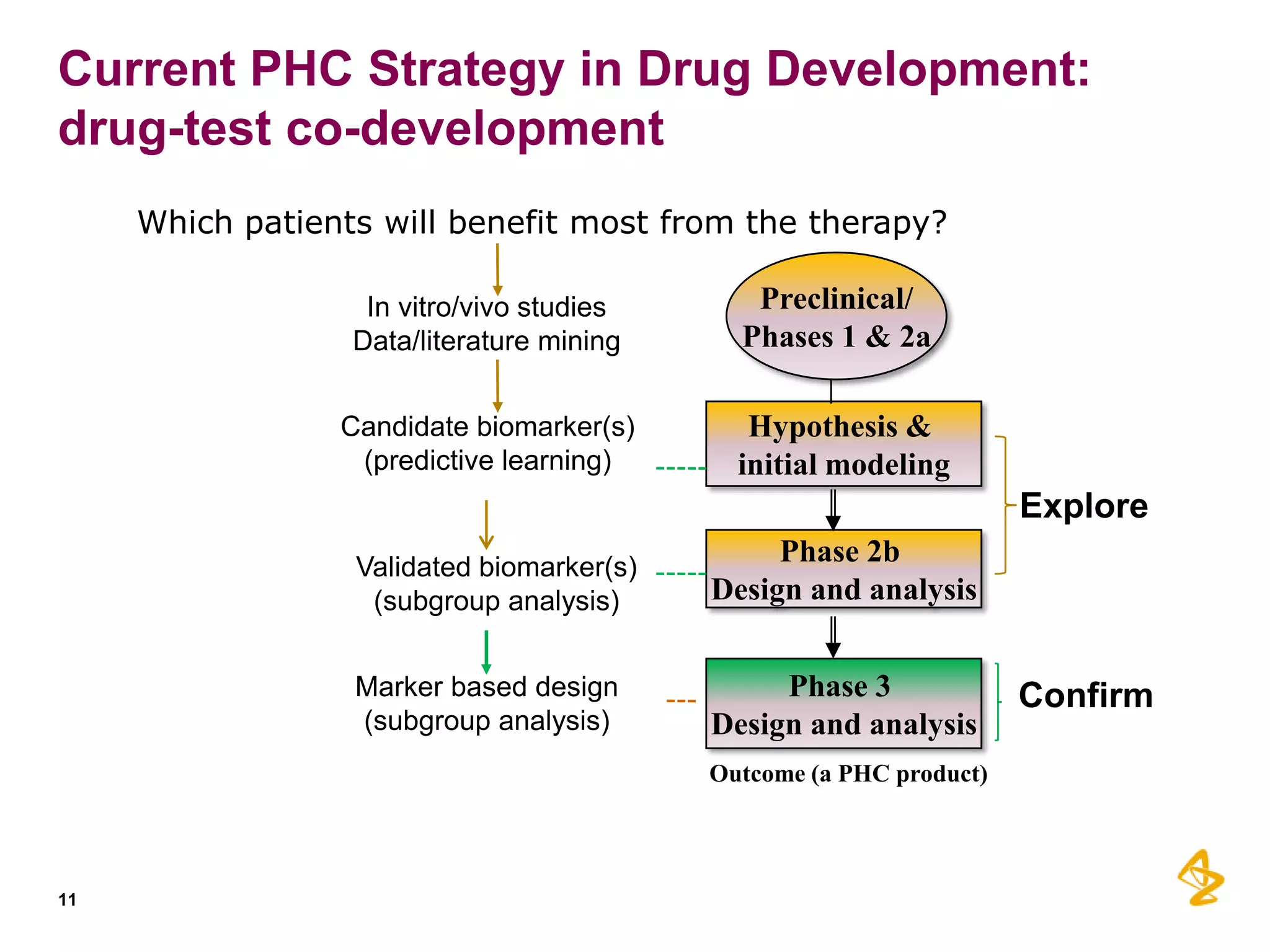
Current PHC Strategy in Drug Development:
drug-test co-development
Which patients will benefit most from the therapy?
In vitro/vivo studies
Data/literature mining

Preclinical/
Phases 1 & 2a

Candidate biomarker(s)
(predictive learning)

Hypothesis &
initial modeling

Explore
Validated biomarker(s)
(subgroup analysis)

Phase 2b
Design and analysis

Marker based design
(subgroup analysis)

Phase 3
Design and analysis
Outcome (a PHC product)

11

Confirm
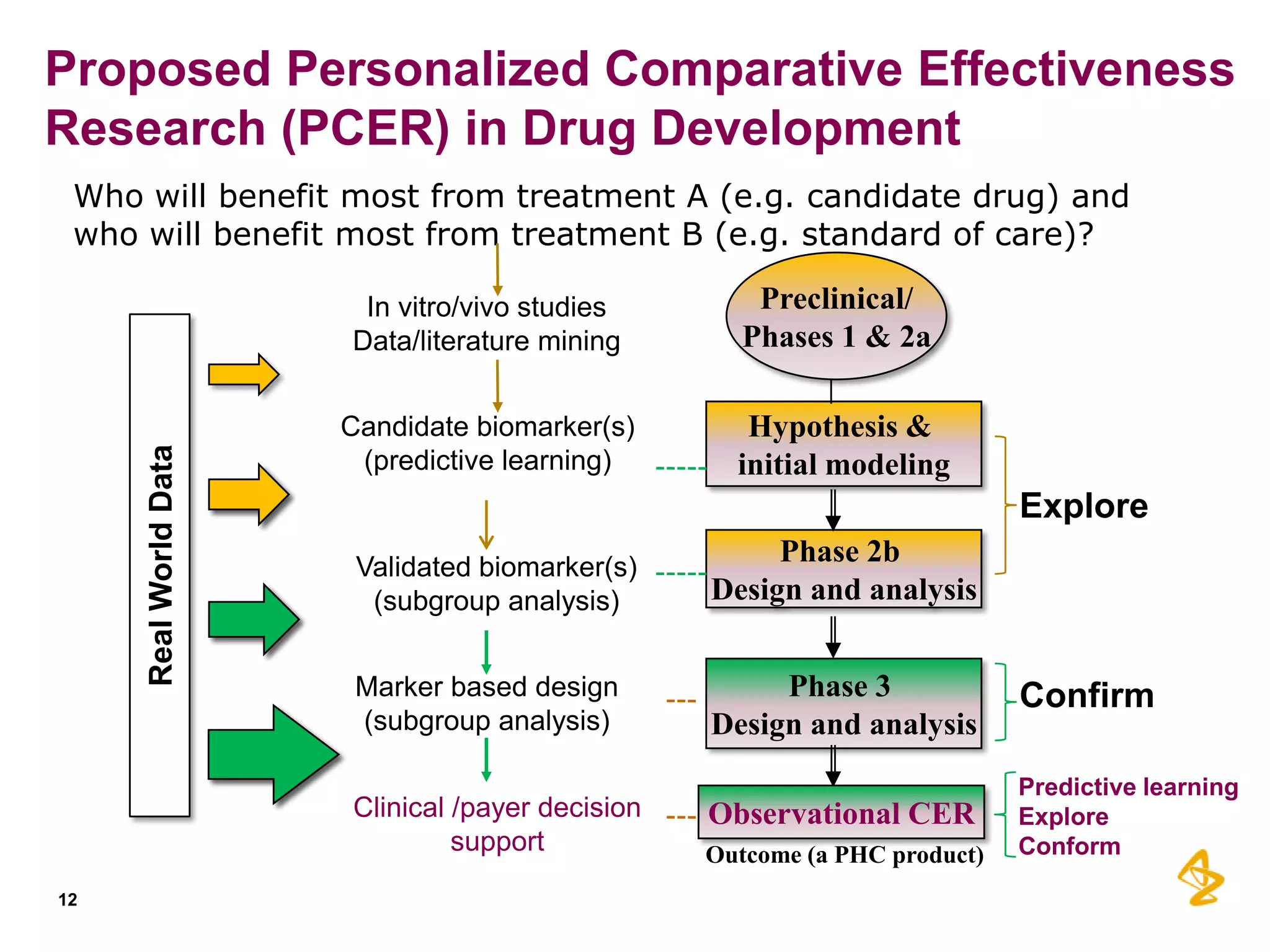
Proposed Personalized Comparative Effectiveness
Research (PCER) in Drug Development
Who will benefit most from treatment A (e.g. candidate drug) and
who will benefit most from treatment B (e.g. standard of care)?

Real World Data

In vitro/vivo studies
Data/literature mining

Preclinical/
Phases 1 & 2a

Candidate biomarker(s)
(predictive learning)

Hypothesis &
initial modeling

Explore
Validated biomarker(s)
(subgroup analysis)

Phase 2b
Design and analysis

Marker based design
(subgroup analysis)

Phase 3
Design and analysis

Confirm

Observational CER

Predictive learning
Explore
Conform

Clinical /payer decision
support
12

Outcome (a PHC product)
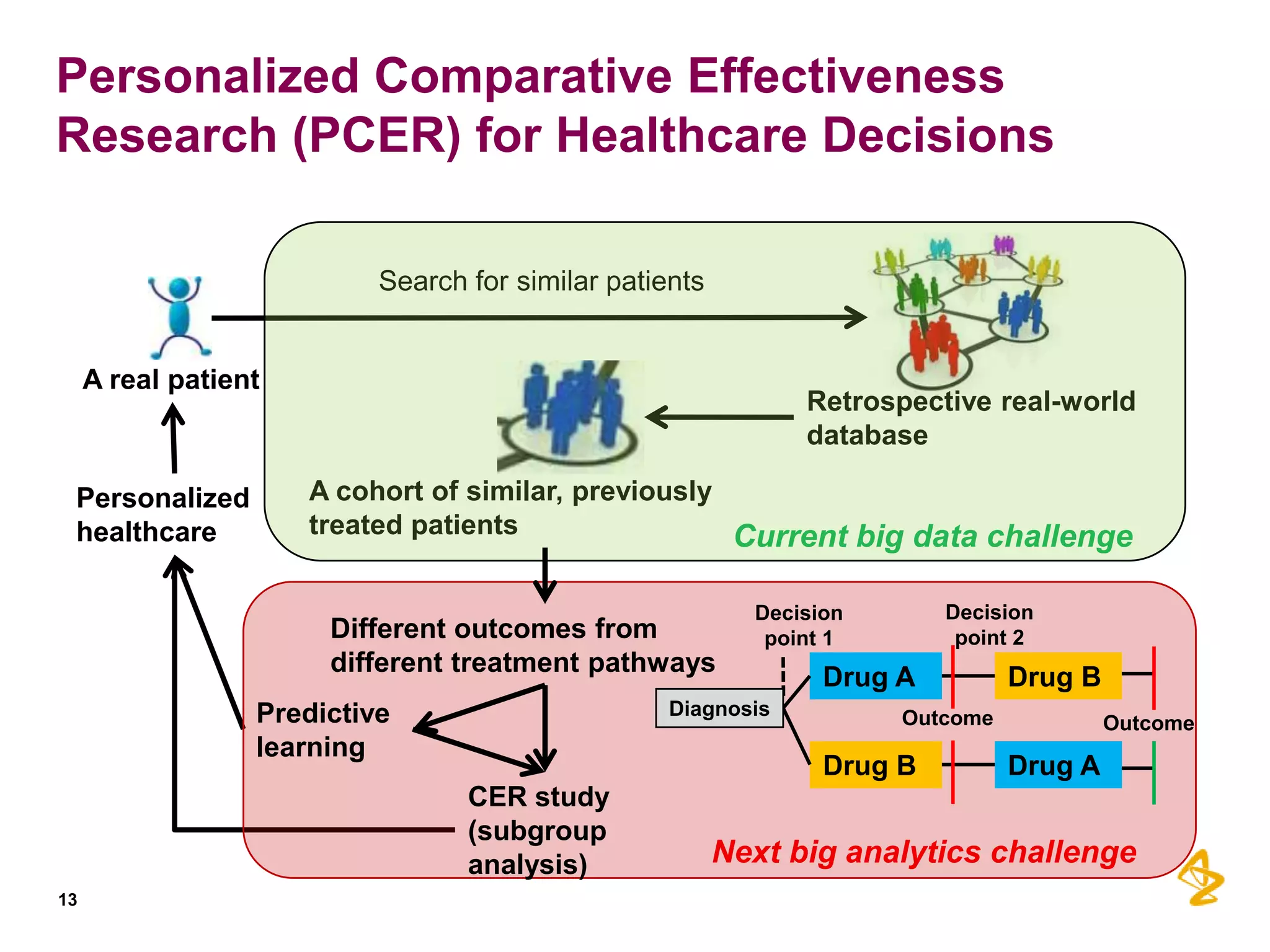
Personalized Comparative Effectiveness
Research (PCER) for Healthcare Decisions
Search for similar patients

A real patient

Personalized
healthcare

Retrospective real-world
database
A cohort of similar, previously
treated patients
Current big data challenge

Different outcomes from
different treatment pathways

Diagnosis

Predictive
learning

Drug A

Drug B

Outcome

Drug B
CER study
(subgroup
analysis)

13

Decision
point 2

Decision
point 1

Outcome

Drug A

Next big analytics challenge
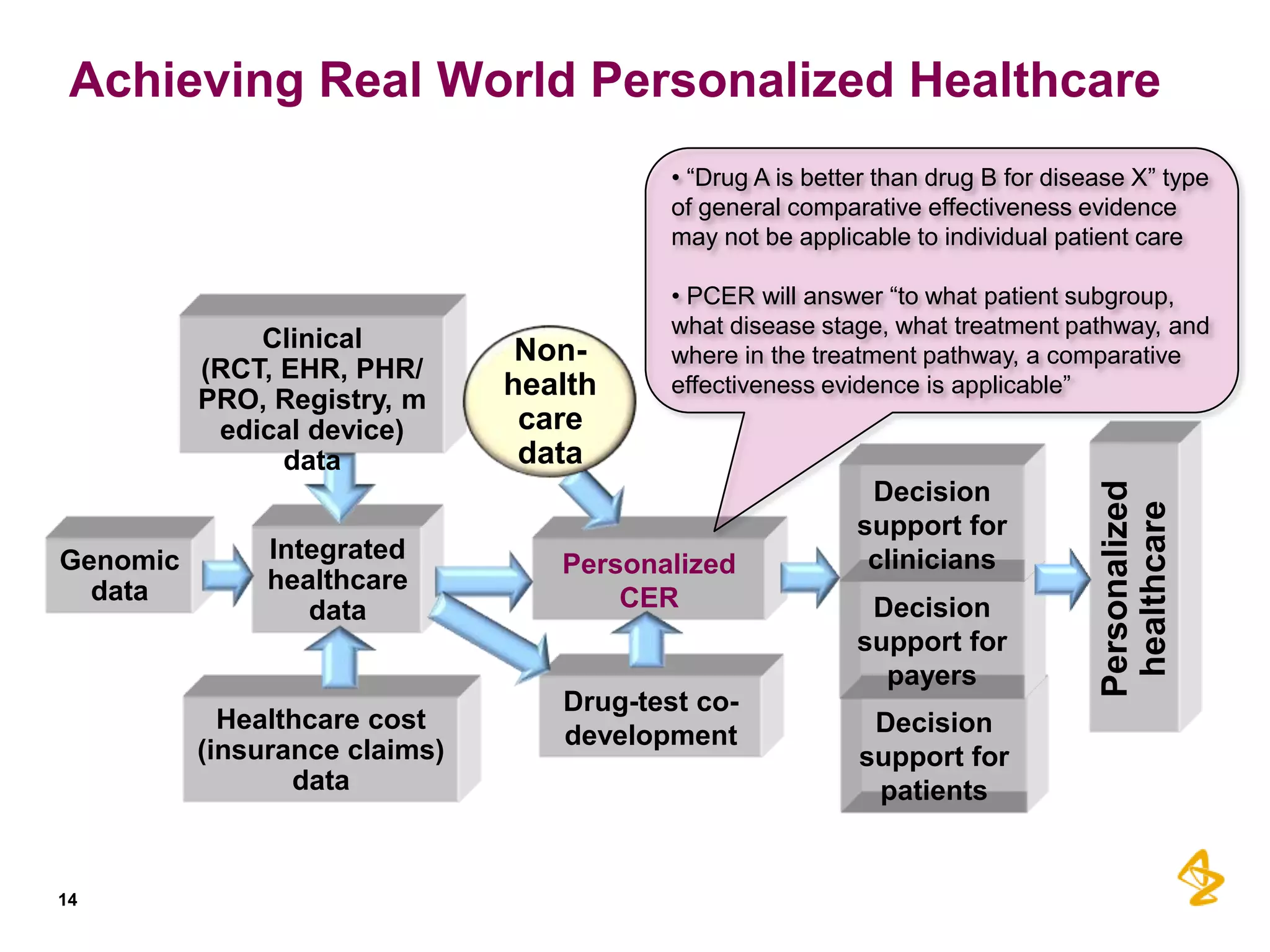
Achieving Real World Personalized Healthcare
• “Drug A is better than drug B for disease X” type
of general comparative effectiveness evidence
may not be applicable to individual patient care

Genomic
data

Integrated
healthcare
data

Healthcare cost
(insurance claims)
data

14

Nonhealth
care
data

Personalized
CER

Drug-test codevelopment

Decision
support for
clinicians
Decision
support for
payers
Decision
support for
patients

Personalized
healthcare

Clinical
(RCT, EHR, PHR/
PRO, Registry, m
edical device)
data

• PCER will answer “to what patient subgroup,
what disease stage, what treatment pathway, and
where in the treatment pathway, a comparative
effectiveness evidence is applicable”
Thank you
&
Questions?

15

Predictive analytics for personalized healthcare

  • 1.
    Predictive Analytics for PersonalizedHealth Care Zhaohui (John) Cai, MD, PhD Biomedical Informatics Director, AstraZeneca Big Data and Analytics for Pharma Philadelphia, PA June 12, 2013
  • 2.
    Disclaimer This presentation representsmy personal views of how predictive analytics can help with personalized health care. It does not constitute any positions of AstraZeneca or any other organizations
  • 3.
    Presentation Outline • Introduction -Personalized Health Care (PHC) and Personalized Medicine (PM) - Comparative Effectiveness Research (CER) and PHC • Big data and analytics for PHC • Predictive learning for PHC in drug development – an internal approach and example • Proposed personalized CER – challenges of big data and analytics 3 Author | 00 Month Year Set area descriptor | Sub level 1
  • 4.
    Personalized Medicine orPersonalized Healthcare Personalized Medicine • Based on the recognition that unprecedented types of information will be obtainable from genetic, genomic, proteomic, imaging technologies, etc, which will help us further refine known diseases into new categories • Managing a patient's health based on the individual patient's specific characteristics (usually a new molecular diagnostic test) vs. “standards of care” Personalized Healthcare (PHC) • PHC is to focus on therapies to deliver superior outcomes to individual patients • PHC is to improve outcomes that matter to patients and all other stakeholders, and reduce the current costs (i.e. with comparative effectiveness) by • Patient selection • Improved dosing • Alternative therapy • Improved care pathway 4 4
  • 5.
    CER The definition ofCER proposed by the Congressional Budget Office: “An analysis of comparative effectiveness is simply a rigorous evaluation of the impact of different treatment options that are available for treating a given medical condition for a particular set of patients.” For more definitions of CER, see the IOM report on Initial National Priorities for Comparative Effectiveness Research 5
  • 6.
    CER and PersonalizedHealthcare (PHC) • A tension between CER and PHC can be created when pressure is placed on CER to conform to the prevailing RCT model • Concerns have been raised that CER will not take into consideration individual patient differences and may impede the development and adoption of PHC • CER studies can include a wide range of patient populations common to all healthcare provider environments • Taking advantage of a variety of epidemiological and informatics research methods can help non-randomized CER studies address PHC concepts 6
  • 7.
    Clinical (EHR, RCT) data Genomic research data Integrated genomic and phenotypicdata repository Translational research for • Diagnostic discovery • Drug-test codevelopment Personalized medicine A Common Vision for Personalized Medicine Examples: Her-2 variants in breast cancer therapy, K-RAS for colon cancer therapy, etc. 7 7
  • 8.
    A Vision ofBig Data and Analytics for Personalized Health Care Genomic data Integrated healthcare data Healthcare cost (insurance claims) data 8 Nonhealthcare data Predictive Learning and CER • Patient selection tools • New dosing regiments • New care pathways Decision support for clinicians Decision support for payers Personalized healthcare Clinical (RCT, EHR, PHR/P RO, Registry, medi cal device) data
  • 9.
    Predictive Learning: IdentifyResponders Early in Treatment Course Prediction Subgroup 1 (predicted nonresponders at baseline) Subgroup 2 (predicted nonresponders at early time points ) Drop and alternative treatment Baseline Prediction 9 Prediction Treatment period I Baseline Prediction Subgroup 1 (predicted responders) Prediction algorithm based on biomarker(s) and/or simply clinical disease activity score(s) Discontinue Prediction Treatment period I Baseline Treatment Period 2 Continue Outcome Measure
  • 10.
    • Question: Canwe predict responders early, and use the predictions in clinical practice? • Data & Method: model Phase II data using ~30 clinical variables to identify an early predictor of individual response at 6 months, using Random Forests models • Result: A combination of 4 clinical variables are predictive at month 1 to identify responders at month 6 with close to 80% accuracy • Benefit: Clinical Decision Tool for patient selection that may double response rate identified, to be validated using phase III and real world data (subgroup analysis) Accuracies of early predictions Internal Example: Predictive Learning for PHC Clinical Decision Tool Predicting month 6 endpoint 1 Predicting month 6 endpoint 2 Time of Prediction 10
  • 11.
    Current PHC Strategyin Drug Development: drug-test co-development Which patients will benefit most from the therapy? In vitro/vivo studies Data/literature mining Preclinical/ Phases 1 & 2a Candidate biomarker(s) (predictive learning) Hypothesis & initial modeling Explore Validated biomarker(s) (subgroup analysis) Phase 2b Design and analysis Marker based design (subgroup analysis) Phase 3 Design and analysis Outcome (a PHC product) 11 Confirm
  • 12.
    Proposed Personalized ComparativeEffectiveness Research (PCER) in Drug Development Who will benefit most from treatment A (e.g. candidate drug) and who will benefit most from treatment B (e.g. standard of care)? Real World Data In vitro/vivo studies Data/literature mining Preclinical/ Phases 1 & 2a Candidate biomarker(s) (predictive learning) Hypothesis & initial modeling Explore Validated biomarker(s) (subgroup analysis) Phase 2b Design and analysis Marker based design (subgroup analysis) Phase 3 Design and analysis Confirm Observational CER Predictive learning Explore Conform Clinical /payer decision support 12 Outcome (a PHC product)
  • 13.
    Personalized Comparative Effectiveness Research(PCER) for Healthcare Decisions Search for similar patients A real patient Personalized healthcare Retrospective real-world database A cohort of similar, previously treated patients Current big data challenge Different outcomes from different treatment pathways Diagnosis Predictive learning Drug A Drug B Outcome Drug B CER study (subgroup analysis) 13 Decision point 2 Decision point 1 Outcome Drug A Next big analytics challenge
  • 14.
    Achieving Real WorldPersonalized Healthcare • “Drug A is better than drug B for disease X” type of general comparative effectiveness evidence may not be applicable to individual patient care Genomic data Integrated healthcare data Healthcare cost (insurance claims) data 14 Nonhealth care data Personalized CER Drug-test codevelopment Decision support for clinicians Decision support for payers Decision support for patients Personalized healthcare Clinical (RCT, EHR, PHR/ PRO, Registry, m edical device) data • PCER will answer “to what patient subgroup, what disease stage, what treatment pathway, and where in the treatment pathway, a comparative effectiveness evidence is applicable”
  • 15.

Editor's Notes

  • #14 Treatment pathways for T2DM:Lifestyle change + initial drug monotherapy (Metformin)  did not achieve HbA1C target in 3 months2-drug combinations (Meftformin + SU/TZD (pioglitazone)/DDP-4 inhibitor (sitagliptin, vildagliptin)/GLP-1 RA/insulin)  did not achieve HbA1C target in 3 months 3-drug combinations Consider substituting a DPP-4 inhibitor (sitagliptin, vildagliptin) for sulfonylurea if there is significant risk of hypoglycaemia (or its consequences) or a sulfonylurea is contraindicated or not tolerated.Consider substituting a thiazolidinedione (pioglitazone) for sulfonylurea if there is significant risk of hypoglycaemia (or its consequences) or a sulfonylurea is contraindicated or not tolerated.