

Blue Cross Blue Shield of Michigan and Blue Care Network of Michigan are nonprofit corporations and independent licensees of the Blue Cross Blue Shield Association.
Consumer Centric Healthcare
Choice, Engagement, Experience
Leo Barella
Blue Cross Blue Shield of Michigan
2
It’s a matter of choice….
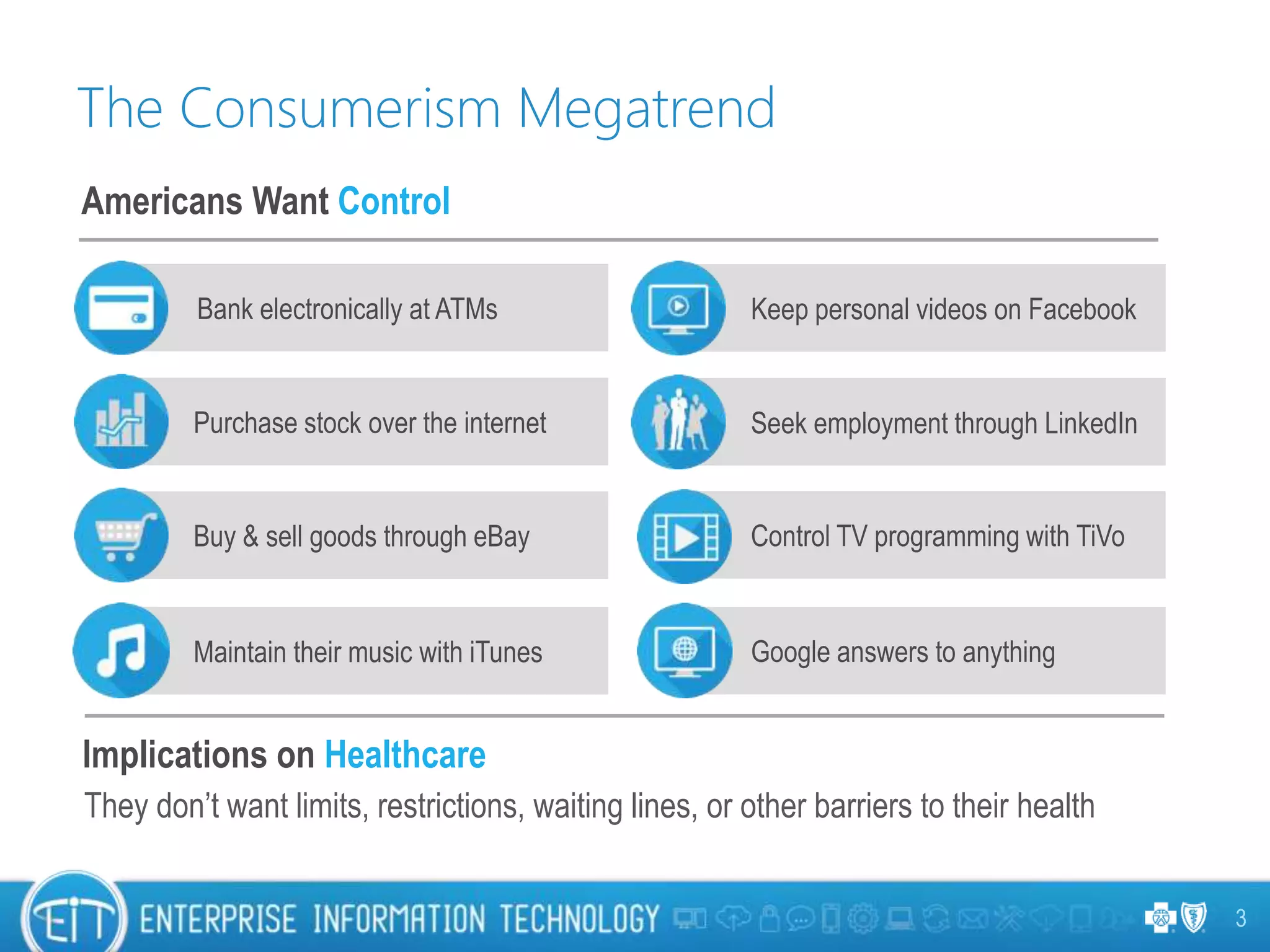
Google answers to anything
The Consumerism Megatrend
3
Implications on Healthcare
Americans Want Control
Control TV programming with TiVo
Seek employment through LinkedIn
Keep personal videos on Facebook
Maintain their music with iTunes
Buy & sell goods through eBay
Purchase stock over the internet
Bank electronically at ATMs
They don’t want limits, restrictions, waiting lines, or other barriers to their health
4
5
6
The Old Paradigm: Treatment of Disease
7
Time
DiseaseSeverity
Reactive Medial Care
Diagnose Disease: Treat Symptoms; Costly, Trial and Error Treatment
Diagnosis
Select Drug
Switch Drug
Switch Drug Again
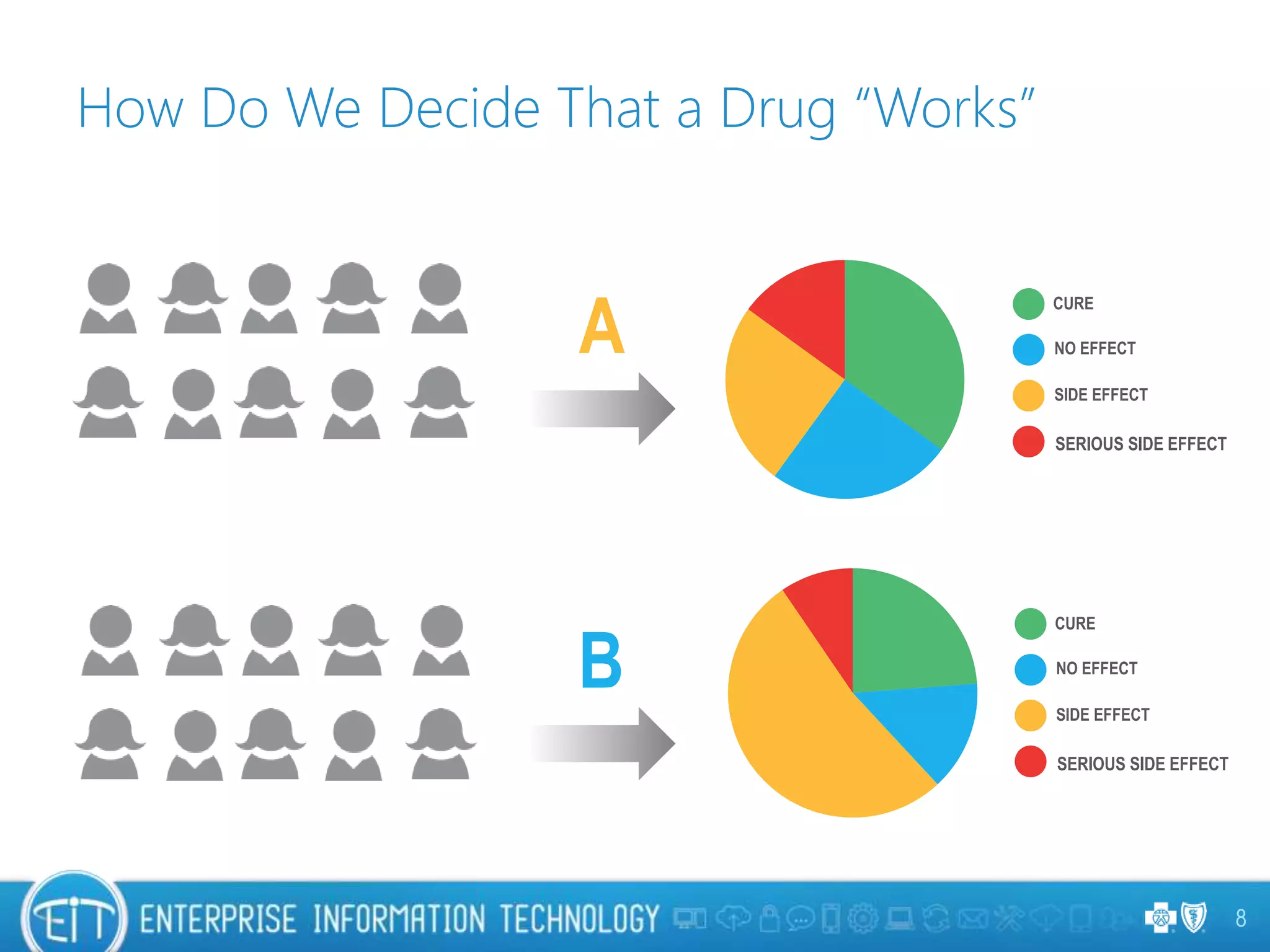
How Do We Decide That a Drug “Works”
8
CURE
NO EFFECT
SIDE EFFECT
SERIOUS SIDE EFFECT
CURE
NO EFFECT
SIDE EFFECT
SERIOUS SIDE EFFECT
A
B
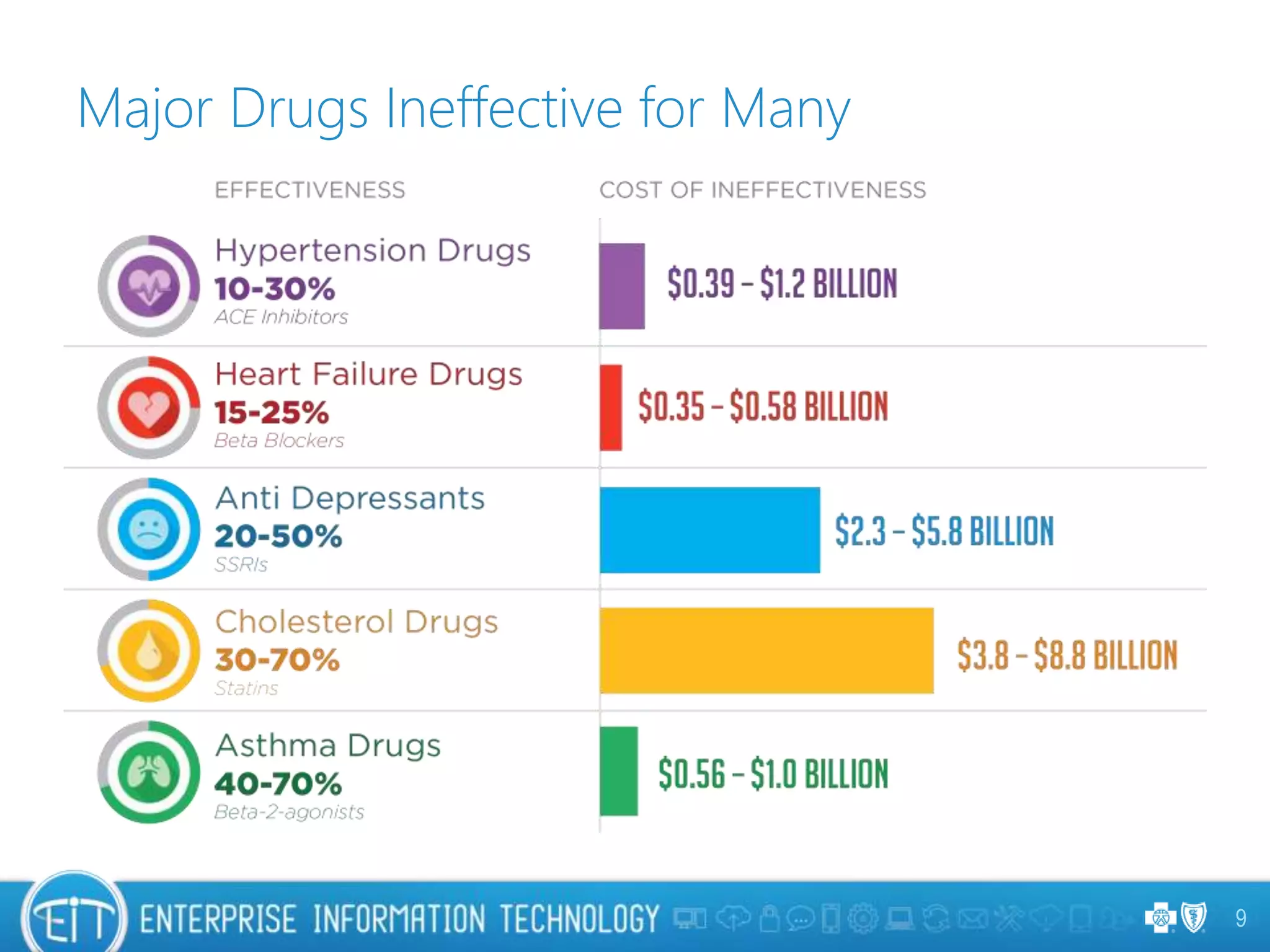
Major Drugs Ineffective for Many
9
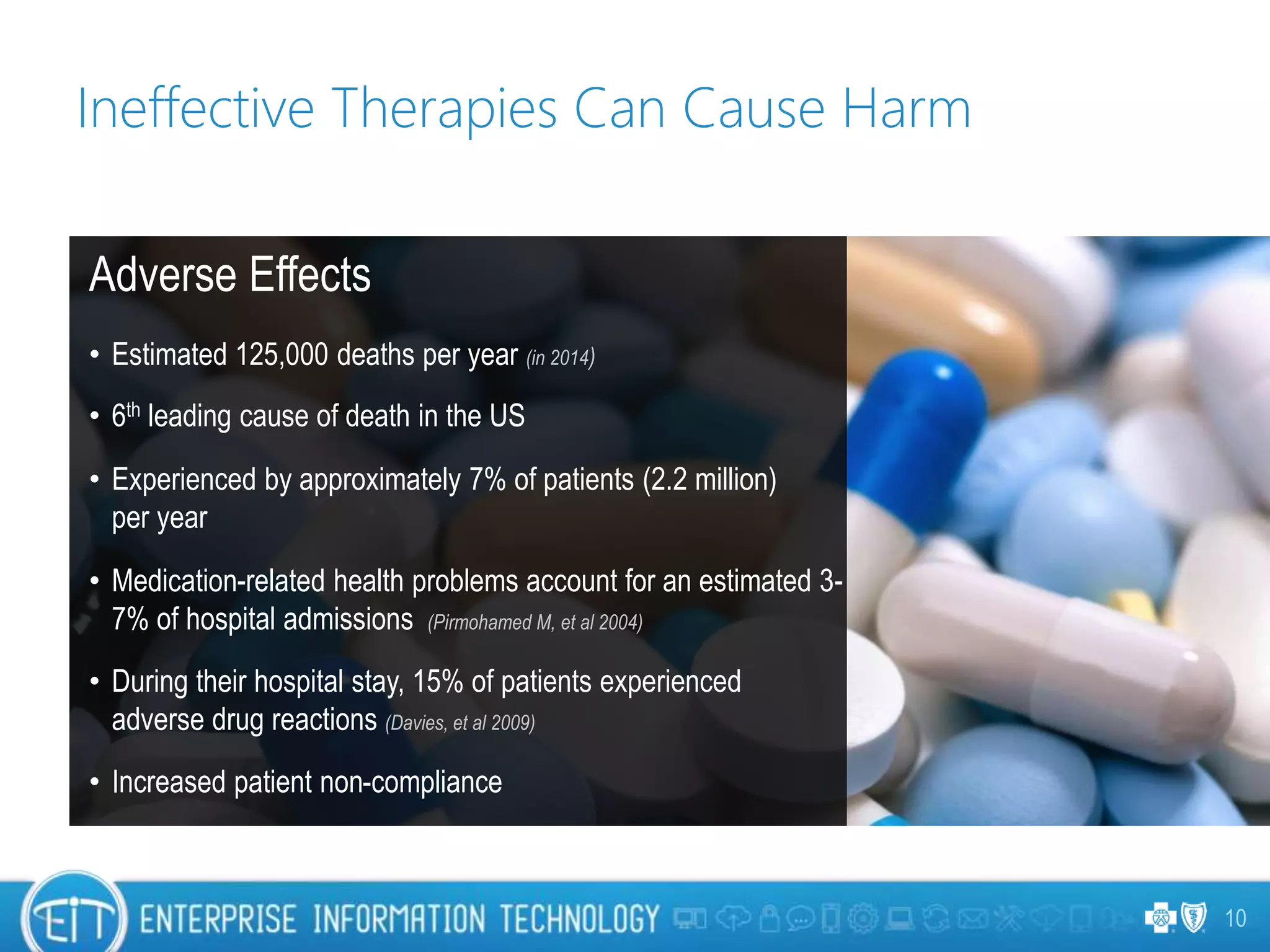
Ineffective Therapies Can Cause Harm
10
Adverse Effects
• Estimated 125,000 deaths per year (in 2014)
• 6th leading cause of death in the US
• Experienced by approximately 7% of patients (2.2 million)
per year
• Medication-related health problems account for an estimated 3-
7% of hospital admissions (Pirmohamed M, et al 2004)
• During their hospital stay, 15% of patients experienced
adverse drug reactions (Davies, et al 2009)
• Increased patient non-compliance
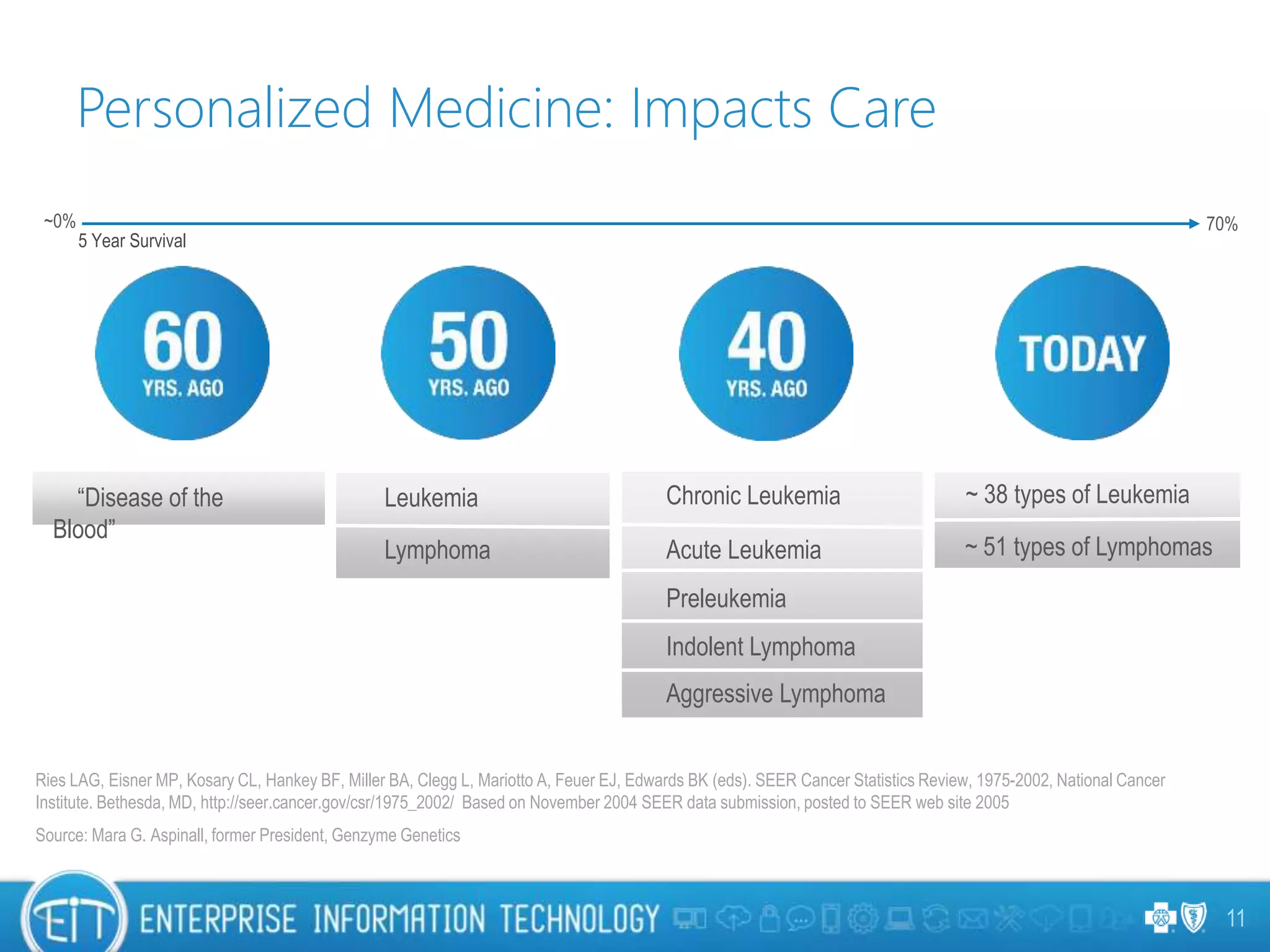
Personalized Medicine: Impacts Care
11
~ 38 types of Leukemia
~ 51 types of Lymphomas
“Disease of the
Blood”
Lymphoma
Leukemia
Aggressive Lymphoma
Indolent Lymphoma
Chronic Leukemia
Acute Leukemia
Preleukemia
5 Year Survival
~0% 70%
Ries LAG, Eisner MP, Kosary CL, Hankey BF, Miller BA, Clegg L, Mariotto A, Feuer EJ, Edwards BK (eds). SEER Cancer Statistics Review, 1975-2002, National Cancer
Institute. Bethesda, MD, http://seer.cancer.gov/csr/1975_2002/ Based on November 2004 SEER data submission, posted to SEER web site 2005
Source: Mara G. Aspinall, former President, Genzyme Genetics
12
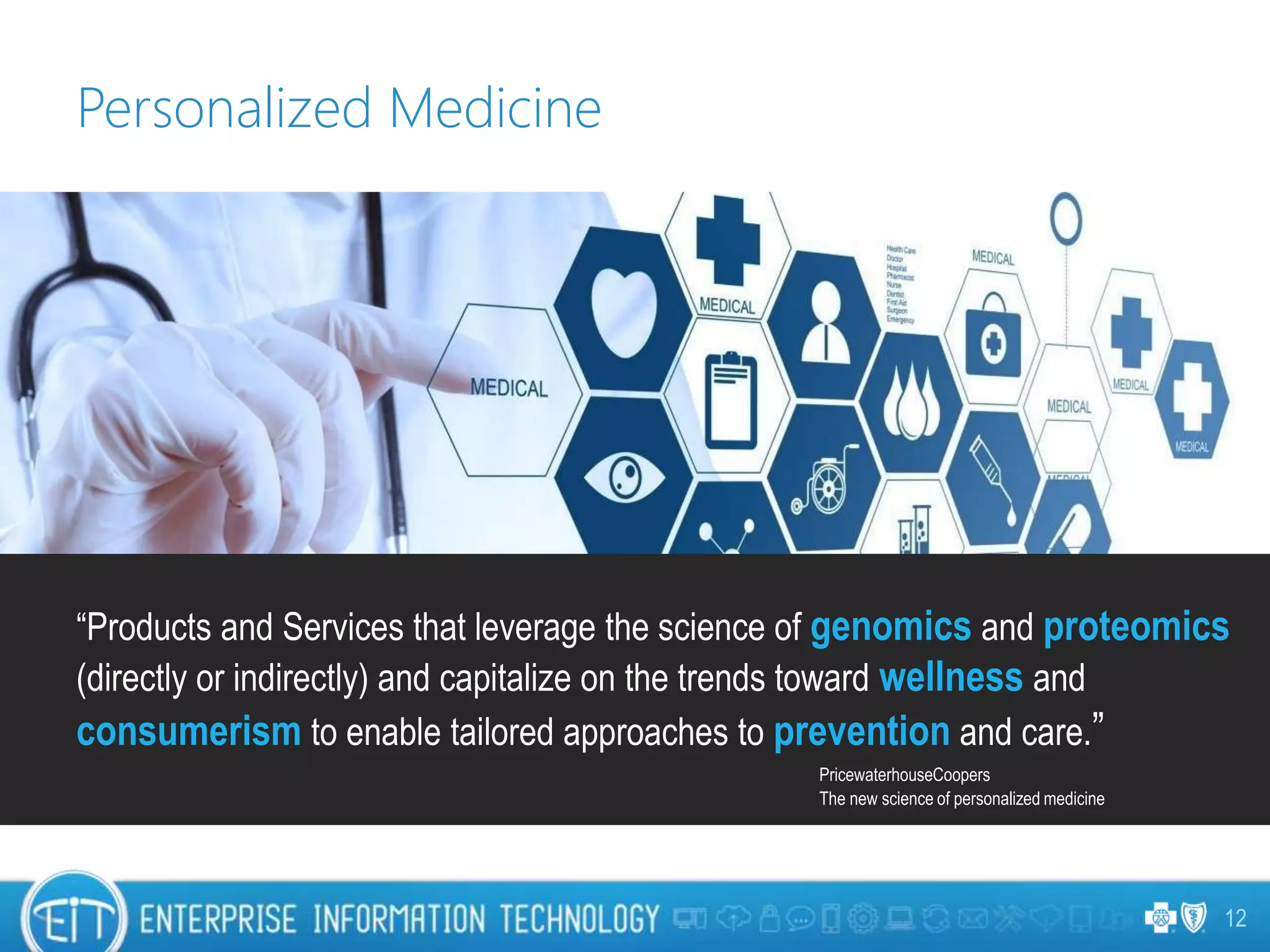
Personalized Medicine
“Products and Services that leverage the science of genomics and proteomics
(directly or indirectly) and capitalize on the trends toward wellness and
consumerism to enable tailored approaches to prevention and care.”
PricewaterhouseCoopers
The new science of personalized medicine
Cost Per Genome
13
14
15
BENCHTOP
GENOME CENTER
Effective, Efficient Health Management
16
Time
DiseaseSeverity
Predisposition Screening
Diagnosis/Prognosis
Right Drug Monitoring
Efficient Medial Care
Health Management; Molecular Screening, Early Detection; Rapid Effective Treatment; Improved Quality of Care
17
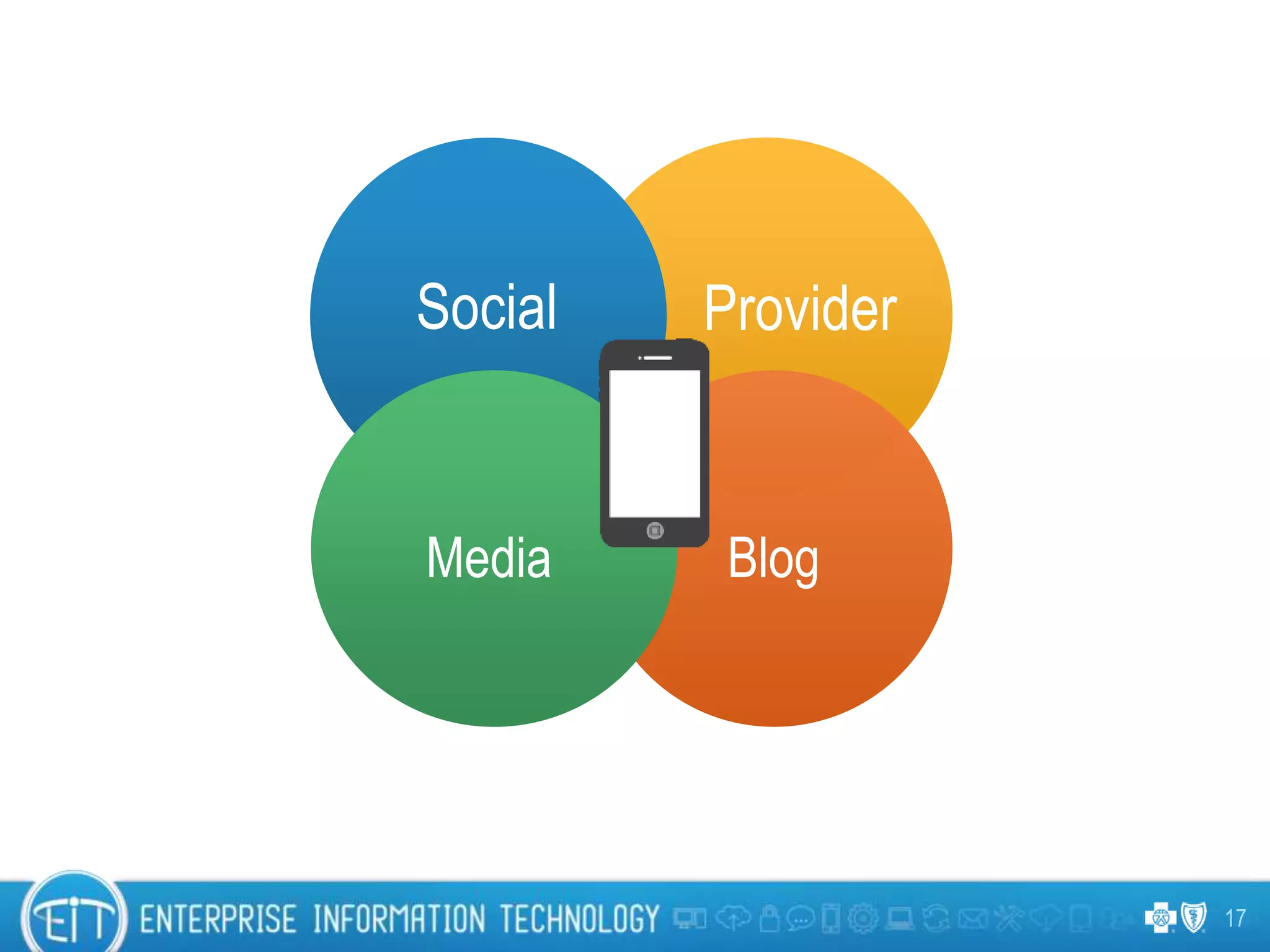
Social Provider
Media Blog
18
Social Provider
Media Blog
19
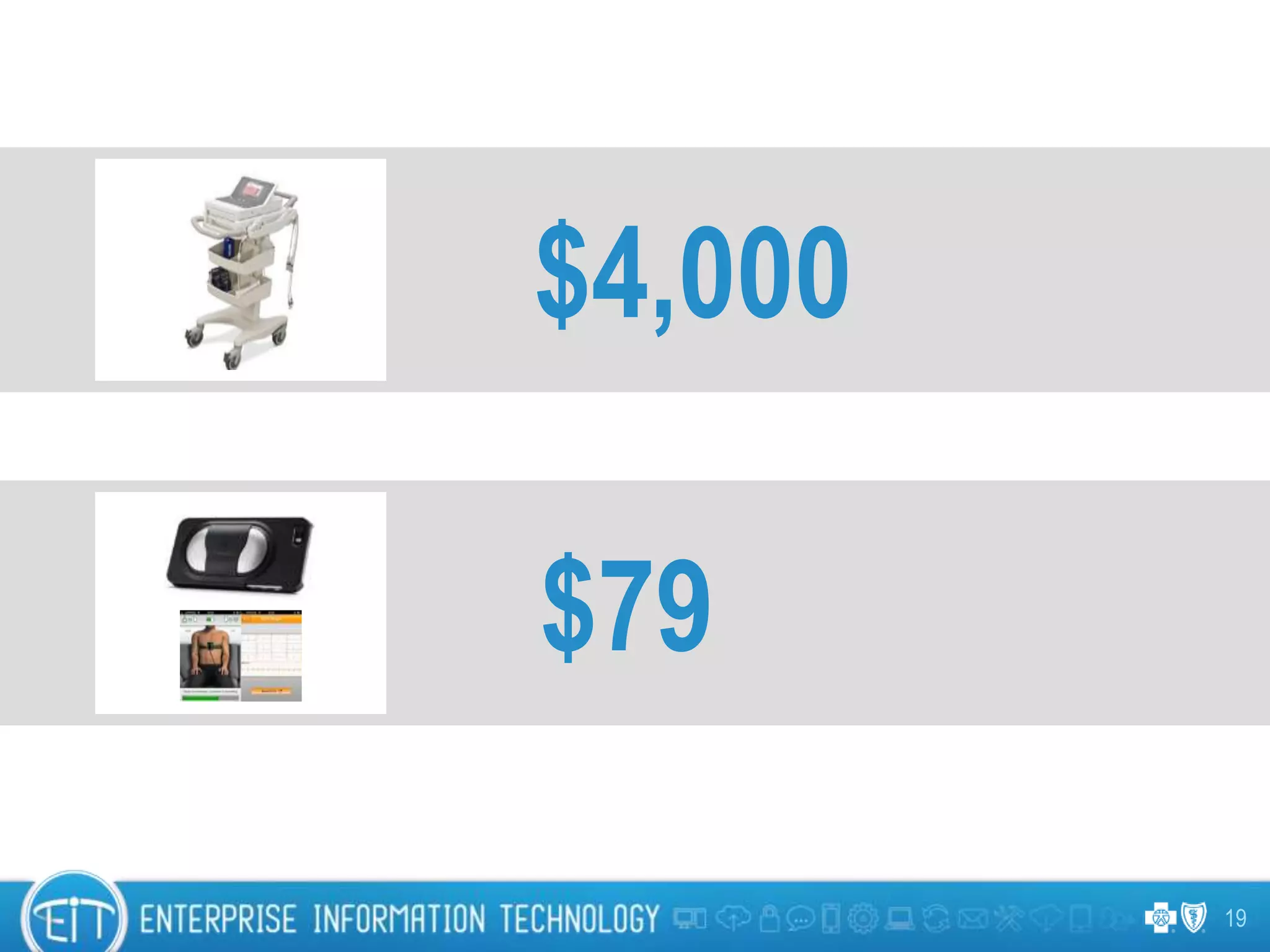
$4,000
$79
Kolibree
Smart toothbrush BlueAnatomy
Smart scale
TotalECG®
Wireless 12 Lead ECG System
ClearProbe
Connected Ultrasound Device
NICaS
Non-Invasive Cardiac System
SpiroPerfect
Connected Spirometer
& Pulmonary Function Test
AMD
Telehealth Examination cameras
3M Littman
Connected Electronic
Stethoscope
WallDoc
Connected Integrated
Examination Station
21
Massimo Radical 7
Handheld and portable pulse monitor
Kinsa
Smart thermometer
Withings
Smart blood pressure monitor
Luna
Bed sensor that tracks temperature and sleep
Mimo
Smart baby monitors
UP3, Basis & W/ME
General health trackers
Rejiva
Vital and bio snesor
CliniCloud
Smart home health kit including stethoscope,
thermometer and telemedicine
22
23
24
It Will Largely Fall Onto the Healthcare Industry to Recognize the Value
of Predictive Analytics and Implement Critical Use Cases
25
Beyond Regulation, the Biggest Risk to Predictive Analytics Being Used
in Healthcare is Adoption as Power Dynamics Shift
26
Our question: Can user experience and design influence decision making so deeply as to be regulated?
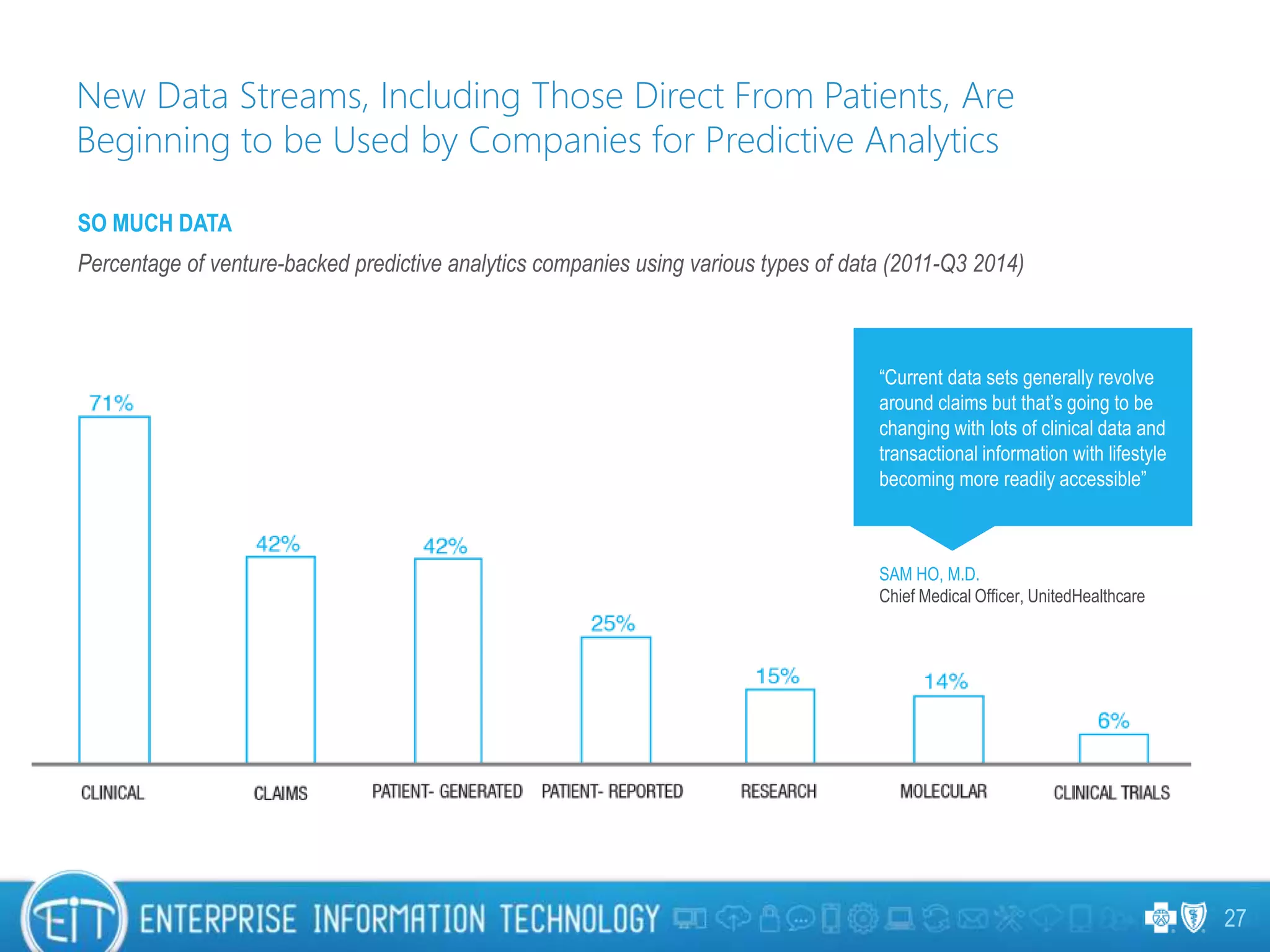
New Data Streams, Including Those Direct From Patients, Are
Beginning to be Used by Companies for Predictive Analytics
27
SO MUCH DATA
Percentage of venture-backed predictive analytics companies using various types of data (2011-Q3 2014)
SAM HO, M.D.
Chief Medical Officer, UnitedHealthcare
“Current data sets generally revolve
around claims but that’s going to be
changing with lots of clinical data and
transactional information with lifestyle
becoming more readily accessible”
Personalizing Care Through Predictive Analytics Represents a Significant
Opportunity to Reduce Costs in the Healthcare System
28
$192B
OVERTREATMENT
• Eliminating care that cannot help
patients – care that outmoded,
supply-drive, and eschews science
• Restricting treatment and intervention
to the patients who will benefit based
on the individual and the context
$128B
FAILURES OF CARE DELIVERY
• Continuously studying care to identify
what works for whom and in what context
• Scaling best practices including preventive
care and early warning systems that
demonstrate effectiveness
$35B
LACK OF CARE COORDINATION
• Ensuring those at the highest risk of
costly medical episodes are identified,
monitored, and cared for between visits
and following hospitalization
Actionable lifestyle prescription for reducing risk of disease
Greater control & patient-centered access to medical records
Treatment decisions will be improved by patient education
Greater knowledge of one’s genetic risks
Changing Role of the Consumer (Patient)
29
New ethical & legal issues/quandaries
Greater reliance on HIT for decision support
Improved care through use of aggregate patient data
Highly networked, team based care
Physician as manager, rather than repository of medical knowledge
Changing Role of the Health Care Provider
30
Regulatory mandates could disrupt development budgets & market plans
“Personalization” of drugs will require partnering with diagnostics companies
Uncertain economics of drug development & commercialization
New Business Strategies for Pharma
31
Increased need to demonstrate cost efficiencies
Proactive strategies to limit reimbursement
Increased pressure to change paradigm towards preventive medicine
Greater emphasis on clinical validity & utility of diagnostic tests
New Demands On and From Payers
32
33
Consumer centric healthcare workshop

Consumer centric healthcare workshop

  • 1.
    Blue Cross BlueShield of Michigan and Blue Care Network of Michigan are nonprofit corporations and independent licensees of the Blue Cross Blue Shield Association. Consumer Centric Healthcare Choice, Engagement, Experience Leo Barella Blue Cross Blue Shield of Michigan
  • 2.
    2 It’s a matterof choice….
  • 3.
    Google answers toanything The Consumerism Megatrend 3 Implications on Healthcare Americans Want Control Control TV programming with TiVo Seek employment through LinkedIn Keep personal videos on Facebook Maintain their music with iTunes Buy & sell goods through eBay Purchase stock over the internet Bank electronically at ATMs They don’t want limits, restrictions, waiting lines, or other barriers to their health
  • 4.
  • 5.
  • 6.
  • 7.
    The Old Paradigm:Treatment of Disease 7 Time DiseaseSeverity Reactive Medial Care Diagnose Disease: Treat Symptoms; Costly, Trial and Error Treatment Diagnosis Select Drug Switch Drug Switch Drug Again
  • 8.
    How Do WeDecide That a Drug “Works” 8 CURE NO EFFECT SIDE EFFECT SERIOUS SIDE EFFECT CURE NO EFFECT SIDE EFFECT SERIOUS SIDE EFFECT A B
  • 9.
  • 10.
    Ineffective Therapies CanCause Harm 10 Adverse Effects • Estimated 125,000 deaths per year (in 2014) • 6th leading cause of death in the US • Experienced by approximately 7% of patients (2.2 million) per year • Medication-related health problems account for an estimated 3- 7% of hospital admissions (Pirmohamed M, et al 2004) • During their hospital stay, 15% of patients experienced adverse drug reactions (Davies, et al 2009) • Increased patient non-compliance
  • 11.
    Personalized Medicine: ImpactsCare 11 ~ 38 types of Leukemia ~ 51 types of Lymphomas “Disease of the Blood” Lymphoma Leukemia Aggressive Lymphoma Indolent Lymphoma Chronic Leukemia Acute Leukemia Preleukemia 5 Year Survival ~0% 70% Ries LAG, Eisner MP, Kosary CL, Hankey BF, Miller BA, Clegg L, Mariotto A, Feuer EJ, Edwards BK (eds). SEER Cancer Statistics Review, 1975-2002, National Cancer Institute. Bethesda, MD, http://seer.cancer.gov/csr/1975_2002/ Based on November 2004 SEER data submission, posted to SEER web site 2005 Source: Mara G. Aspinall, former President, Genzyme Genetics
  • 12.
    12 Personalized Medicine “Products andServices that leverage the science of genomics and proteomics (directly or indirectly) and capitalize on the trends toward wellness and consumerism to enable tailored approaches to prevention and care.” PricewaterhouseCoopers The new science of personalized medicine
  • 13.
  • 14.
  • 15.
  • 16.
    Effective, Efficient HealthManagement 16 Time DiseaseSeverity Predisposition Screening Diagnosis/Prognosis Right Drug Monitoring Efficient Medial Care Health Management; Molecular Screening, Early Detection; Rapid Effective Treatment; Improved Quality of Care
  • 17.
  • 18.
  • 19.
  • 20.
    Kolibree Smart toothbrush BlueAnatomy Smartscale TotalECG® Wireless 12 Lead ECG System ClearProbe Connected Ultrasound Device NICaS Non-Invasive Cardiac System SpiroPerfect Connected Spirometer & Pulmonary Function Test AMD Telehealth Examination cameras 3M Littman Connected Electronic Stethoscope WallDoc Connected Integrated Examination Station
  • 21.
    21 Massimo Radical 7 Handheldand portable pulse monitor Kinsa Smart thermometer Withings Smart blood pressure monitor Luna Bed sensor that tracks temperature and sleep Mimo Smart baby monitors UP3, Basis & W/ME General health trackers Rejiva Vital and bio snesor CliniCloud Smart home health kit including stethoscope, thermometer and telemedicine
  • 22.
  • 23.
  • 24.
  • 25.
    It Will LargelyFall Onto the Healthcare Industry to Recognize the Value of Predictive Analytics and Implement Critical Use Cases 25
  • 26.
    Beyond Regulation, theBiggest Risk to Predictive Analytics Being Used in Healthcare is Adoption as Power Dynamics Shift 26 Our question: Can user experience and design influence decision making so deeply as to be regulated?
  • 27.
    New Data Streams,Including Those Direct From Patients, Are Beginning to be Used by Companies for Predictive Analytics 27 SO MUCH DATA Percentage of venture-backed predictive analytics companies using various types of data (2011-Q3 2014) SAM HO, M.D. Chief Medical Officer, UnitedHealthcare “Current data sets generally revolve around claims but that’s going to be changing with lots of clinical data and transactional information with lifestyle becoming more readily accessible”
  • 28.
    Personalizing Care ThroughPredictive Analytics Represents a Significant Opportunity to Reduce Costs in the Healthcare System 28 $192B OVERTREATMENT • Eliminating care that cannot help patients – care that outmoded, supply-drive, and eschews science • Restricting treatment and intervention to the patients who will benefit based on the individual and the context $128B FAILURES OF CARE DELIVERY • Continuously studying care to identify what works for whom and in what context • Scaling best practices including preventive care and early warning systems that demonstrate effectiveness $35B LACK OF CARE COORDINATION • Ensuring those at the highest risk of costly medical episodes are identified, monitored, and cared for between visits and following hospitalization
  • 29.
    Actionable lifestyle prescriptionfor reducing risk of disease Greater control & patient-centered access to medical records Treatment decisions will be improved by patient education Greater knowledge of one’s genetic risks Changing Role of the Consumer (Patient) 29
  • 30.
    New ethical &legal issues/quandaries Greater reliance on HIT for decision support Improved care through use of aggregate patient data Highly networked, team based care Physician as manager, rather than repository of medical knowledge Changing Role of the Health Care Provider 30
  • 31.
    Regulatory mandates coulddisrupt development budgets & market plans “Personalization” of drugs will require partnering with diagnostics companies Uncertain economics of drug development & commercialization New Business Strategies for Pharma 31
  • 32.
    Increased need todemonstrate cost efficiencies Proactive strategies to limit reimbursement Increased pressure to change paradigm towards preventive medicine Greater emphasis on clinical validity & utility of diagnostic tests New Demands On and From Payers 32
  • 33.