BY :- PRATIK KADAM
 What is Kernel?
 What kernel do?
 Kernel is responsible for.
 Types of kernel.
 A kernel is the core component of an operating system. Using interprocess
communication and system calls, it acts as a bridge between applications
and the data processing performed at the hardware level.
 When an operating system is loaded into memory, the kernel loads first
and remains in memory until the operating system is shut down again. The
kernel is responsible for low-level tasks such as disk management, task
management and memory management.
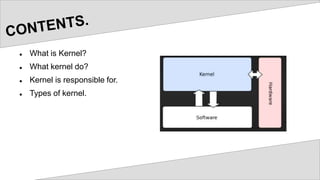
 A computer kernel interfaces between the three major computer hardware
components, providing services between the application/user interface and
the CPU, memory and other hardware I/O devices.
 The kernel provides and manages computer resources, allowing other
programs to run and use these resources. The kernel also sets up memory
address space for applications, loads files with application code into
memory, sets up the execution stack for programs and branches out to
particular locations inside programs for execution.
 Process management for application execution
 Memory management, allocation and I/O
 Device management through the use of device drivers
 System call control, which is essential for the execution of kernel
services
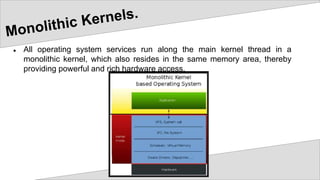
 All operating system services run along the main kernel thread in a
monolithic kernel, which also resides in the same memory area, thereby
providing powerful and rich hardware access.
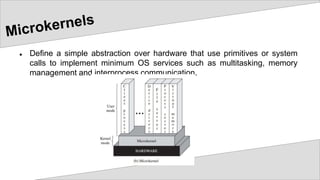
 Define a simple abstraction over hardware that use primitives or system
calls to implement minimum OS services such as multitasking, memory
management and interprocess communication.
 Hybrid Kernels: Run a few services in the kernel space to reduce the
performance overhead of traditional microkernels where the kernel code is
still run as a server in the user space.
Some extra version of Kernels.
 Nano Kernels: Simplify the memory requirement by delegating services,
including the basic ones like interrupt controllers or timers to device
drivers.
 Exo Kernels: Allocate physical hardware resources such as processor time
and disk block to other programs, which can link to library operating
systems that use the kernel to simulate operating system abstractions
Thank you

Kernel. Operating System

  • 2.
  • 3.
     What isKernel?  What kernel do?  Kernel is responsible for.  Types of kernel.
  • 4.
     A kernelis the core component of an operating system. Using interprocess communication and system calls, it acts as a bridge between applications and the data processing performed at the hardware level.  When an operating system is loaded into memory, the kernel loads first and remains in memory until the operating system is shut down again. The kernel is responsible for low-level tasks such as disk management, task management and memory management.
  • 5.
     A computerkernel interfaces between the three major computer hardware components, providing services between the application/user interface and the CPU, memory and other hardware I/O devices.  The kernel provides and manages computer resources, allowing other programs to run and use these resources. The kernel also sets up memory address space for applications, loads files with application code into memory, sets up the execution stack for programs and branches out to particular locations inside programs for execution.
  • 6.
     Process managementfor application execution  Memory management, allocation and I/O  Device management through the use of device drivers  System call control, which is essential for the execution of kernel services
  • 8.
     All operatingsystem services run along the main kernel thread in a monolithic kernel, which also resides in the same memory area, thereby providing powerful and rich hardware access.
  • 9.
     Define asimple abstraction over hardware that use primitives or system calls to implement minimum OS services such as multitasking, memory management and interprocess communication.
  • 10.
     Hybrid Kernels:Run a few services in the kernel space to reduce the performance overhead of traditional microkernels where the kernel code is still run as a server in the user space.
  • 11.
    Some extra versionof Kernels.  Nano Kernels: Simplify the memory requirement by delegating services, including the basic ones like interrupt controllers or timers to device drivers.  Exo Kernels: Allocate physical hardware resources such as processor time and disk block to other programs, which can link to library operating systems that use the kernel to simulate operating system abstractions
  • 12.