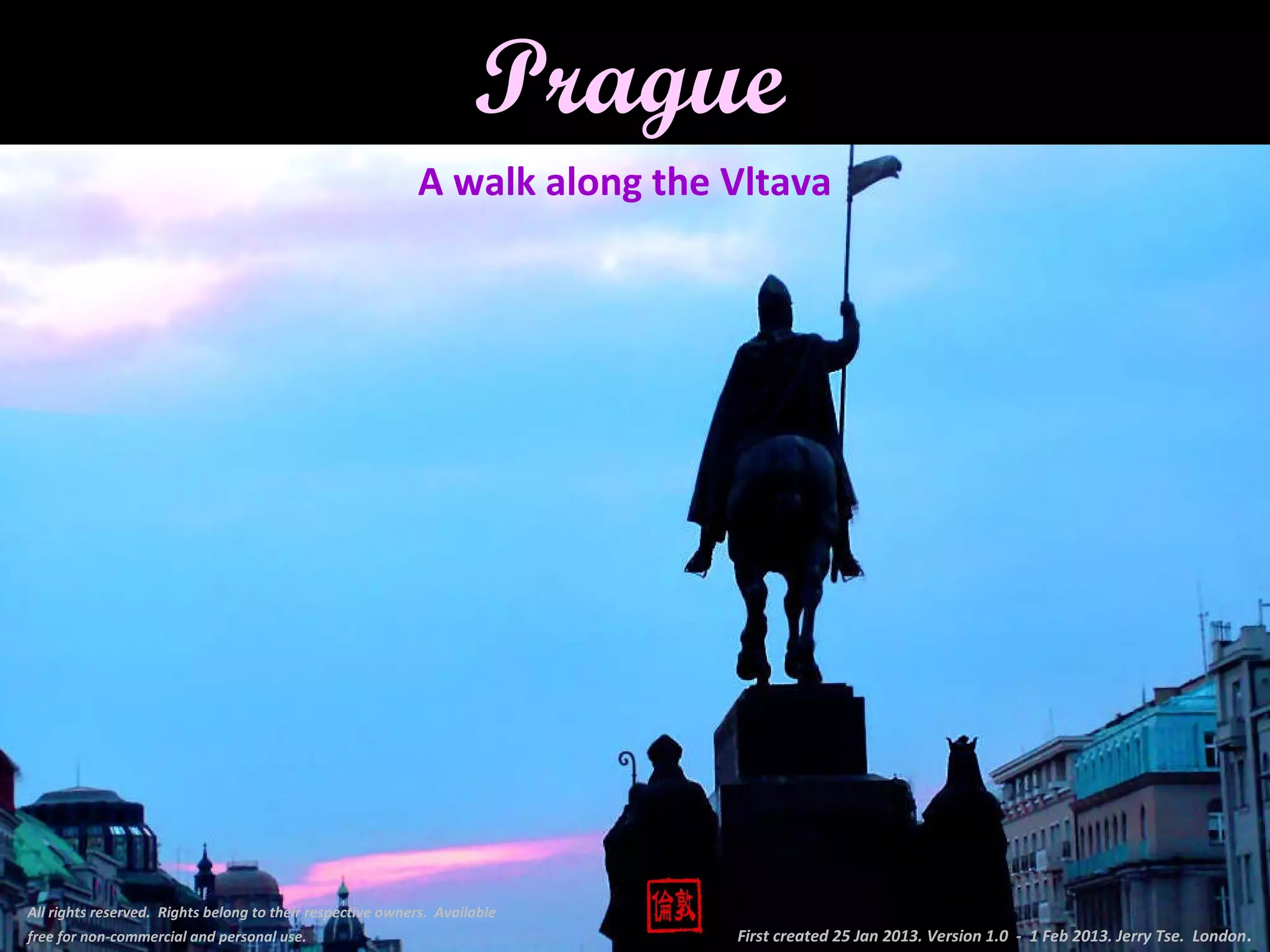
Prague
                                                           A walk along the Vltava


All rights reserved. Rights belong to their respective owners. Available
free for non-commercial and personal use.                                   First created 25 Jan 2013. Version 1.0 - 1 Feb 2013. Jerry Tse. London .
Beginning of a nation


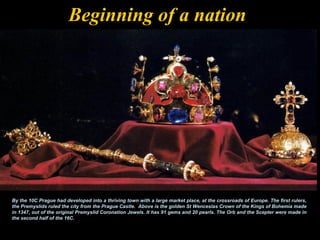
By the 10C Prague had developed into a thriving town with a large market place, at the crossroads of Europe. The first rulers,
the Premyslids ruled the city from the Prague Castle. Above is the golden St Wenceslas Crown of the Kings of Bohemia made
in 1347, out of the original Premyslid Coronation Jewels. It has 91 gems and 20 pearls. The Orb and the Scepter were made in
the second half of the 16C.
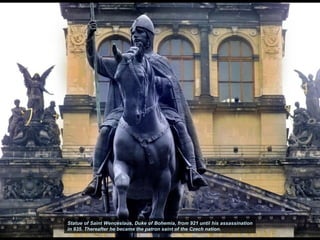
Statue of Saint Wenceslaus, Duke of Bohemia, from 921 until his assassination
in 935. Thereafter he became the patron saint of the Czech nation.
Gothic Prague


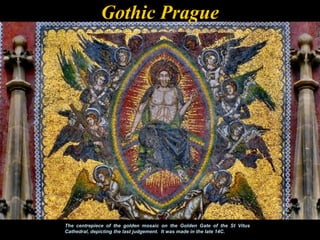
The centrepiece of the golden mosaic on the Golden Gate of the St Vitus
Cathedral, depicting the last judgement. It was made in the late 14C.
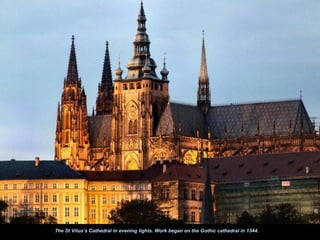
The St Vitus’s Cathedral in evening lights. Work began on the Gothic cathedral in 1344.
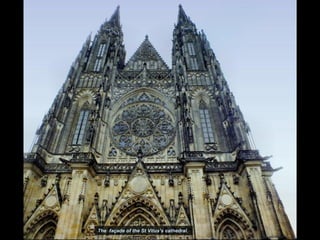
The façade of the St Vitus’s cathedral.
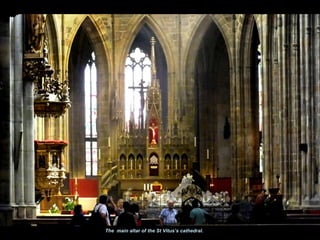
The main altar of the St Vitus’s cathedral.
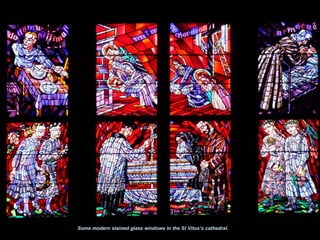
Some modern stained glass windows in the St Vitus’s cathedral.
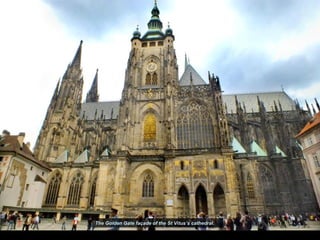
The Golden Gate façade of the St Vitus’s cathedral.
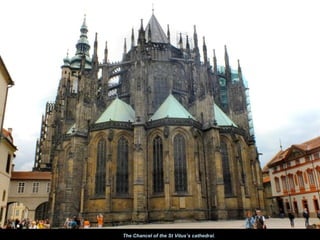
The Chancel of the St Vitus’s cathedral.
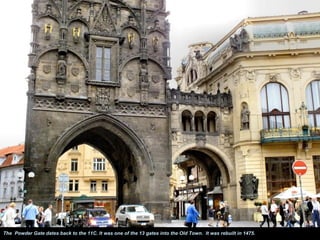
The Powder Gate dates back to the 11C. It was one of the 13 gates into the Old Town. It was rebuilt in 1475.
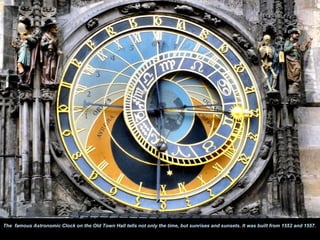
The famous Astronomic Clock on the Old Town Hall tells not only the time, but sunrises and sunsets. It was built from 1552 and 1557.
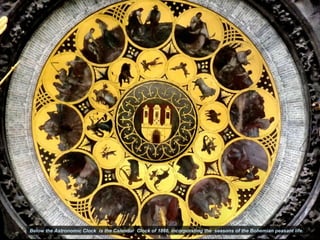
Below the Astronomic Clock is the Calendar Clock of 1866, incorporating the seasons of the Bohemian peasant life.
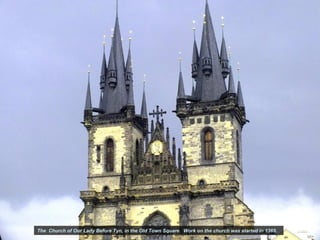
The Church of Our Lady Before Tyn, in the Old Town Square. Work on the church was started in 1365.
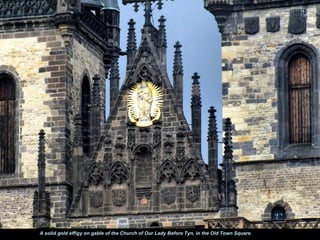
A solid gold effigy on gable of the Church of Our Lady Before Tyn, in the Old Town Square.
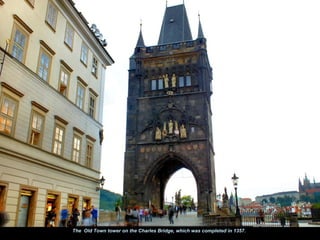
The Old Town tower on the Charles Bridge, which was completed in 1357.
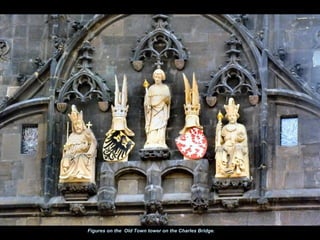
Figures on the Old Town tower on the Charles Bridge.
Renaissance Prague


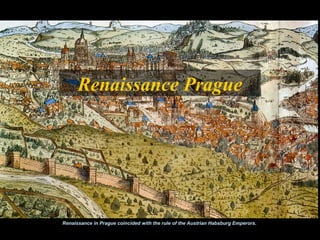
Renaissance in Prague coincided with the rule of the Austrian Habsburg Emperors.
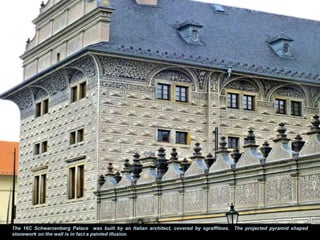
The 16C Schwarzenberg Palace was built by an Italian architect, covered by sgraffitoes. The projected pyramid shaped
stonework on the wall is in fact a painted illusion.
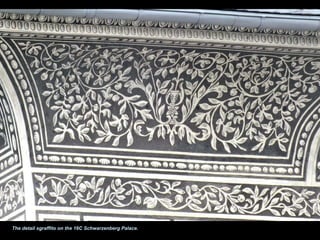
The detail sgraffito on the 16C Schwarzenberg Palace.
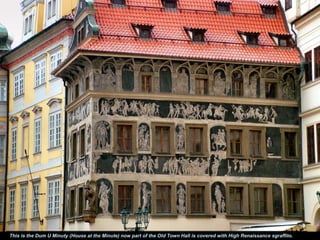
This is the Dum U Minuty (House at the Minute) now part of the Old Town Hall is covered with High Renaissance sgraffito.
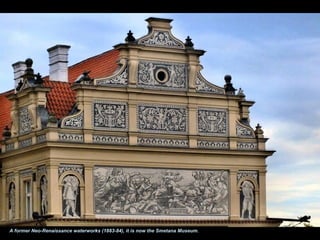
A former Neo-Renaissance waterworks (1883-84), it is now the Smetana Museum.
Jewish Quarter


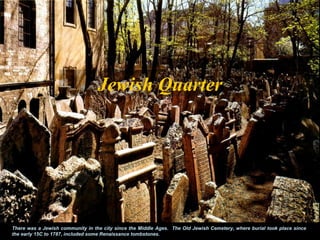
There was a Jewish community in the city since the Middle Ages. The Old Jewish Cemetery, where burial took place since
the early 15C to 1787, included some Renaissance tombstones.
Jewish Quarter


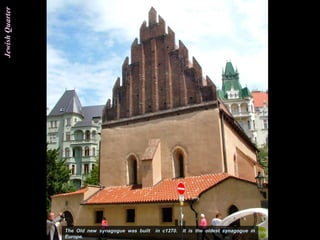
                 The Old new synagogue was built   in c1270.   It is the oldest synagogue in
                 Europe.
Jewish Quarter


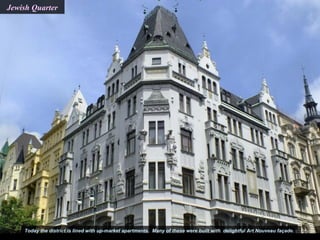
    Today the district is lined with up-market apartments. Many of these were built with delightful Art Nouveau façade.
Jewish Quarter


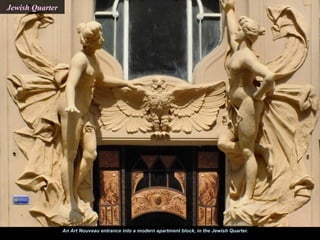
                 An Art Nouveau entrance into a modern apartment block, in the Jewish Quarter.
Baroque Prague


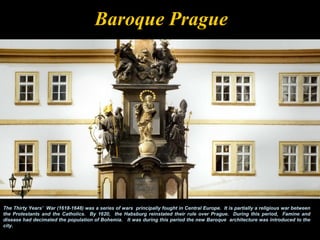
The Thirty Years’ War (1618-1648) was a series of wars principally fought in Central Europe. It is partially a religious war between
the Protestants and the Catholics. By 1620, the Habsburg reinstated their rule over Prague. During this period, Famine and
disease had decimated the population of Bohemia. It was during this period the new Baroque architecture was introduced to the
city.
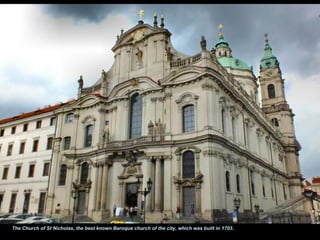
The Church of St Nicholas, the best known Baroque church of the city, which was built in 1703.
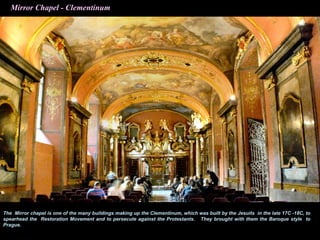
Mirror Chapel - Clementinum


The Mirror chapel is one of the many buildings making up the Clementinum, which was built by the Jesuits in the late 17C -18C, to
spearhead the Restoration Movement and to persecute against the Protestants. They brought with them the Baroque style to
Prague.
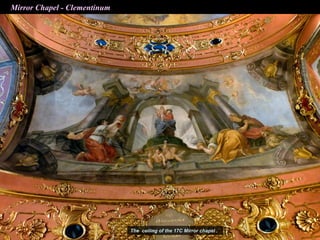
Mirror Chapel - Clementinum


                              The ceiling of the 17C Mirror chapel .
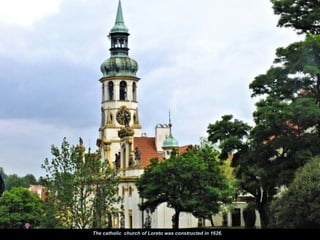
The catholic church of Loreto was constructed in 1626.
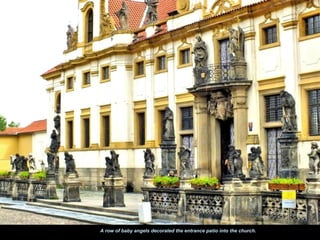
A row of baby angels decorated the entrance patio into the church.
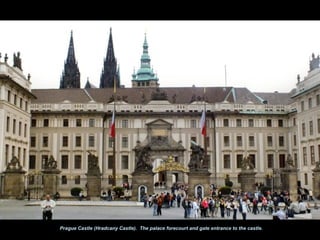
Prague Castle (Hradcany Castle). The palace forecourt and gate entrance to the castle.
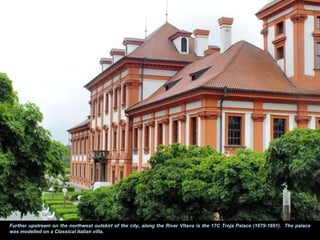
Further upstream on the northwest outskirt of the city, along the River Vltava is the 17C Troja Palace (1679-1691). The palace
was modelled on a Classical Italian villa.
Neo-Classical Prague


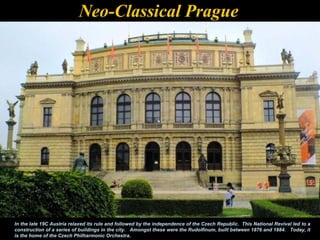
In the late 19C Austria relaxed its rule and followed by the independence of the Czech Republic. This National Revival led to a
construction of a series of buildings in the city. Amongst these were the Rudolfinum, built between 1876 and 1884. Today, it
is the home of the Czech Philharmonic Orchestra.
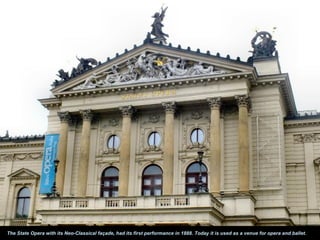
The State Opera with its Neo-Classical façade, had its first performance in 1888. Today it is used as a venue for opera and ballet.
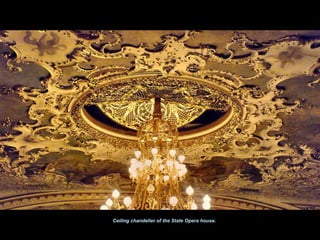
Ceiling chandelier of the State Opera house.
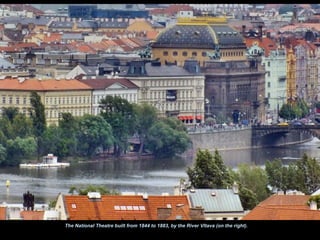
The National Theatre built from 1844 to 1883, by the River Vltava (on the right).
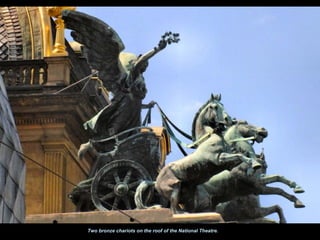
Two bronze chariots on the roof of the National Theatre.
Art Nouveau Prague


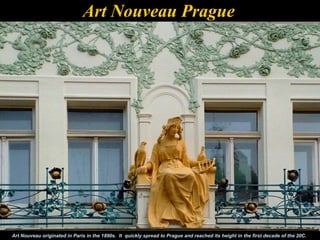
Art Nouveau originated in Paris in the 1890s. It quickly spread to Prague and reached its height in the first decade of the 20C.
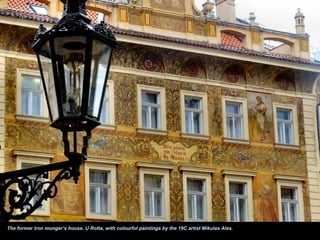
The former iron monger’s house. U Rotta, with colourful paintings by the 19C artist Mikulas Ales.
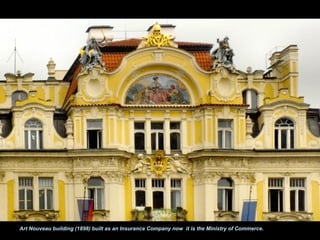
Art Nouveau building (1898) built as an Insurance Company now it is the Ministry of Commerce.
Prague Today


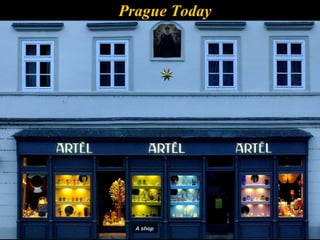
  A shop
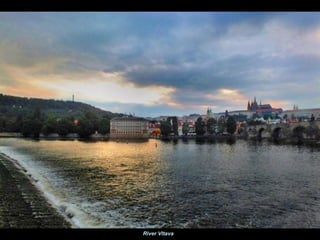
River Vltava
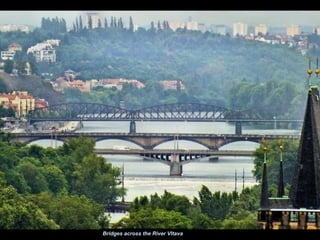
Bridges across the River Vltava
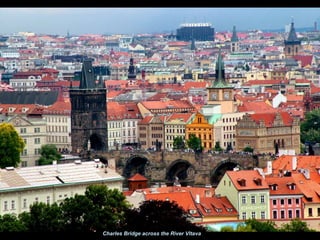
Charles Bridge across the River Vltava
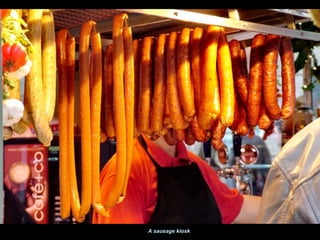
A sausage kiosk
The End


All rights reserved. Rights belong to their respective   Music – Vltava composed by Smetana, who wrote six
owners. Available free for non-commercial and personal
                                                         symphonic pieces about his Czech homeland (1874-79).
use.

Prague - A Walk Along the Vltava

  • 1.
    Prague A walk along the Vltava All rights reserved. Rights belong to their respective owners. Available free for non-commercial and personal use. First created 25 Jan 2013. Version 1.0 - 1 Feb 2013. Jerry Tse. London .
  • 2.
    Beginning of anation By the 10C Prague had developed into a thriving town with a large market place, at the crossroads of Europe. The first rulers, the Premyslids ruled the city from the Prague Castle. Above is the golden St Wenceslas Crown of the Kings of Bohemia made in 1347, out of the original Premyslid Coronation Jewels. It has 91 gems and 20 pearls. The Orb and the Scepter were made in the second half of the 16C.
  • 3.
    Statue of SaintWenceslaus, Duke of Bohemia, from 921 until his assassination in 935. Thereafter he became the patron saint of the Czech nation.
  • 4.
    Gothic Prague The centrepieceof the golden mosaic on the Golden Gate of the St Vitus Cathedral, depicting the last judgement. It was made in the late 14C.
  • 5.
    The St Vitus’sCathedral in evening lights. Work began on the Gothic cathedral in 1344.
  • 6.
    The façade ofthe St Vitus’s cathedral.
  • 7.
    The main altarof the St Vitus’s cathedral.
  • 8.
    Some modern stainedglass windows in the St Vitus’s cathedral.
  • 9.
    The Golden Gatefaçade of the St Vitus’s cathedral.
  • 10.
    The Chancel ofthe St Vitus’s cathedral.
  • 11.
    The Powder Gatedates back to the 11C. It was one of the 13 gates into the Old Town. It was rebuilt in 1475.
  • 12.
    The famous AstronomicClock on the Old Town Hall tells not only the time, but sunrises and sunsets. It was built from 1552 and 1557.
  • 13.
    Below the AstronomicClock is the Calendar Clock of 1866, incorporating the seasons of the Bohemian peasant life.
  • 14.
    The Church ofOur Lady Before Tyn, in the Old Town Square. Work on the church was started in 1365.
  • 15.
    A solid goldeffigy on gable of the Church of Our Lady Before Tyn, in the Old Town Square.
  • 16.
    The Old Towntower on the Charles Bridge, which was completed in 1357.
  • 17.
    Figures on theOld Town tower on the Charles Bridge.
  • 18.
    Renaissance Prague Renaissance inPrague coincided with the rule of the Austrian Habsburg Emperors.
  • 19.
    The 16C SchwarzenbergPalace was built by an Italian architect, covered by sgraffitoes. The projected pyramid shaped stonework on the wall is in fact a painted illusion.
  • 20.
    The detail sgraffitoon the 16C Schwarzenberg Palace.
  • 21.
    This is theDum U Minuty (House at the Minute) now part of the Old Town Hall is covered with High Renaissance sgraffito.
  • 22.
    A former Neo-Renaissancewaterworks (1883-84), it is now the Smetana Museum.
  • 23.
    Jewish Quarter There wasa Jewish community in the city since the Middle Ages. The Old Jewish Cemetery, where burial took place since the early 15C to 1787, included some Renaissance tombstones.
  • 24.
    Jewish Quarter The Old new synagogue was built in c1270. It is the oldest synagogue in Europe.
  • 25.
    Jewish Quarter Today the district is lined with up-market apartments. Many of these were built with delightful Art Nouveau façade.
  • 26.
    Jewish Quarter An Art Nouveau entrance into a modern apartment block, in the Jewish Quarter.
  • 27.
    Baroque Prague The ThirtyYears’ War (1618-1648) was a series of wars principally fought in Central Europe. It is partially a religious war between the Protestants and the Catholics. By 1620, the Habsburg reinstated their rule over Prague. During this period, Famine and disease had decimated the population of Bohemia. It was during this period the new Baroque architecture was introduced to the city.
  • 28.
    The Church ofSt Nicholas, the best known Baroque church of the city, which was built in 1703.
  • 29.
    Mirror Chapel -Clementinum The Mirror chapel is one of the many buildings making up the Clementinum, which was built by the Jesuits in the late 17C -18C, to spearhead the Restoration Movement and to persecute against the Protestants. They brought with them the Baroque style to Prague.
  • 30.
    Mirror Chapel -Clementinum The ceiling of the 17C Mirror chapel .
  • 31.
    The catholic churchof Loreto was constructed in 1626.
  • 32.
    A row ofbaby angels decorated the entrance patio into the church.
  • 33.
    Prague Castle (HradcanyCastle). The palace forecourt and gate entrance to the castle.
  • 34.
    Further upstream onthe northwest outskirt of the city, along the River Vltava is the 17C Troja Palace (1679-1691). The palace was modelled on a Classical Italian villa.
  • 35.
    Neo-Classical Prague In thelate 19C Austria relaxed its rule and followed by the independence of the Czech Republic. This National Revival led to a construction of a series of buildings in the city. Amongst these were the Rudolfinum, built between 1876 and 1884. Today, it is the home of the Czech Philharmonic Orchestra.
  • 36.
    The State Operawith its Neo-Classical façade, had its first performance in 1888. Today it is used as a venue for opera and ballet.
  • 37.
    Ceiling chandelier ofthe State Opera house.
  • 38.
    The National Theatrebuilt from 1844 to 1883, by the River Vltava (on the right).
  • 39.
    Two bronze chariotson the roof of the National Theatre.
  • 40.
    Art Nouveau Prague ArtNouveau originated in Paris in the 1890s. It quickly spread to Prague and reached its height in the first decade of the 20C.
  • 41.
    The former ironmonger’s house. U Rotta, with colourful paintings by the 19C artist Mikulas Ales.
  • 42.
    Art Nouveau building(1898) built as an Insurance Company now it is the Ministry of Commerce.
  • 43.
  • 44.
  • 45.
    Bridges across theRiver Vltava
  • 46.
    Charles Bridge acrossthe River Vltava
  • 47.
  • 48.
    The End All rightsreserved. Rights belong to their respective Music – Vltava composed by Smetana, who wrote six owners. Available free for non-commercial and personal symphonic pieces about his Czech homeland (1874-79). use.

Editor's Notes

  • #2 Prague is the capital of the Czech Republic and the historical capital of the Kingdom of Bohemia. It was also the capital of two Holy Roman Emperors. Being in the heart of Europe, it is also a cultural centres of Europe. On visit to the city, one is overwhelmed by cultural events on offered. Street artists and performers are frequently seen. The city is remarkably well preserved. Its streets are some of the best preserved historical townscape of Europe, with ensemble of outstanding period buildings of the Gothic, Renaissance, Baroque, Neo-Classical and Art Nouveau period. An example of this are the numerous medieval house signs still survived on houses today. There was no street numbers in historical times and individual house was identified by a pictorial sign on its wall e.g. the house of the Blue Fox etc. Historically, the nation has suffered from the dominance of its bigger neighbours. Today it is an independent country. The city is a UNESCO World Heritage site.