Prague
The capital city of the Czech
          Republic
Vladislav Hall, Old Royal
              Palace
   the largest medieval castle in Europe
   the seat of the President of the Czech
    Republic
   the most remarkable room in the Royal
    Palace is the majestic Vladislav Hall - more
    than 16 meters wide and more than 14
    meters high. (52ft / 46 ft)
St. Vitus cathedral
   Charles IV acquired the bones of St. Vitus,
    a popular fourth-century martyr, and
    brought them to Prague
   In 1344 Charles IV started with its
    construction
   Mathieu d'Arras and Peter Parler
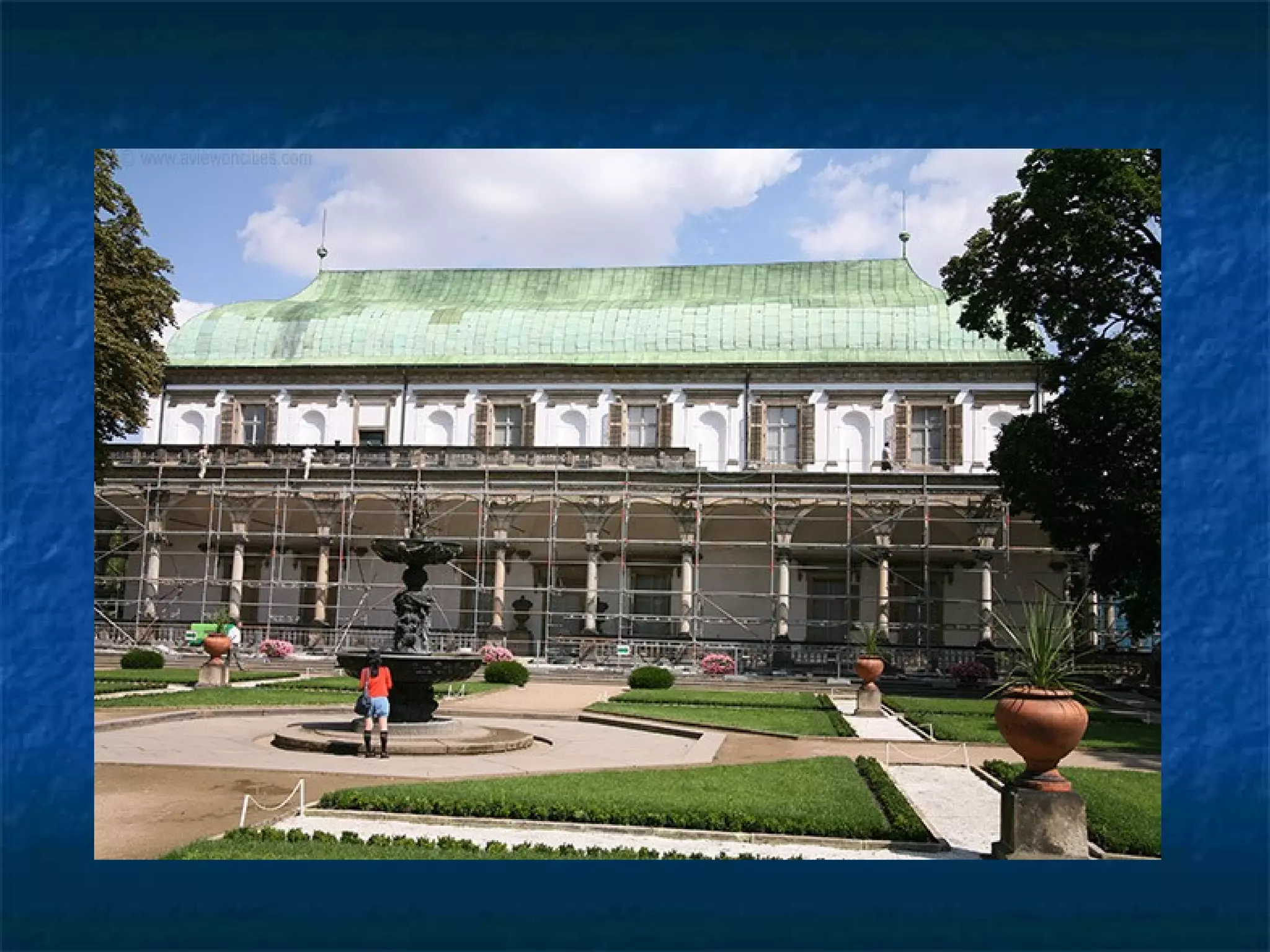
Belvedere, Royal Garden
   The Royal Garden was created in the 16th
    century for the exclusive use of the royal
    court.
   Belvedere - also known as the Queen
    Anne's residence or Royal Summer
    Residence (constructed between 1535 and
    1563)
   Singing fountain
Daliborka Tower
   built in the 15th century as part of the
    fortifications
   used as a dungeon and is named after its
    first inmate, Dalibor of Kozojedy.
   accessible to visitors and can be reached via
    the Golden Lane
Charles Bridge
   the Charles Bridge connects the Old Town
    with Lesser Town.
   The Charles Bridge, named after King
    Charles, was 502 meters long. Resting on
    16 arches it was wide enough for 4
    carriages to cross.
   about 30 sculptures
   Bridge Towers
Old Town Square
   Old Town Hall - built in 1364
   astronomical clock, built in 1410 - the
    oldest such clock in Europe
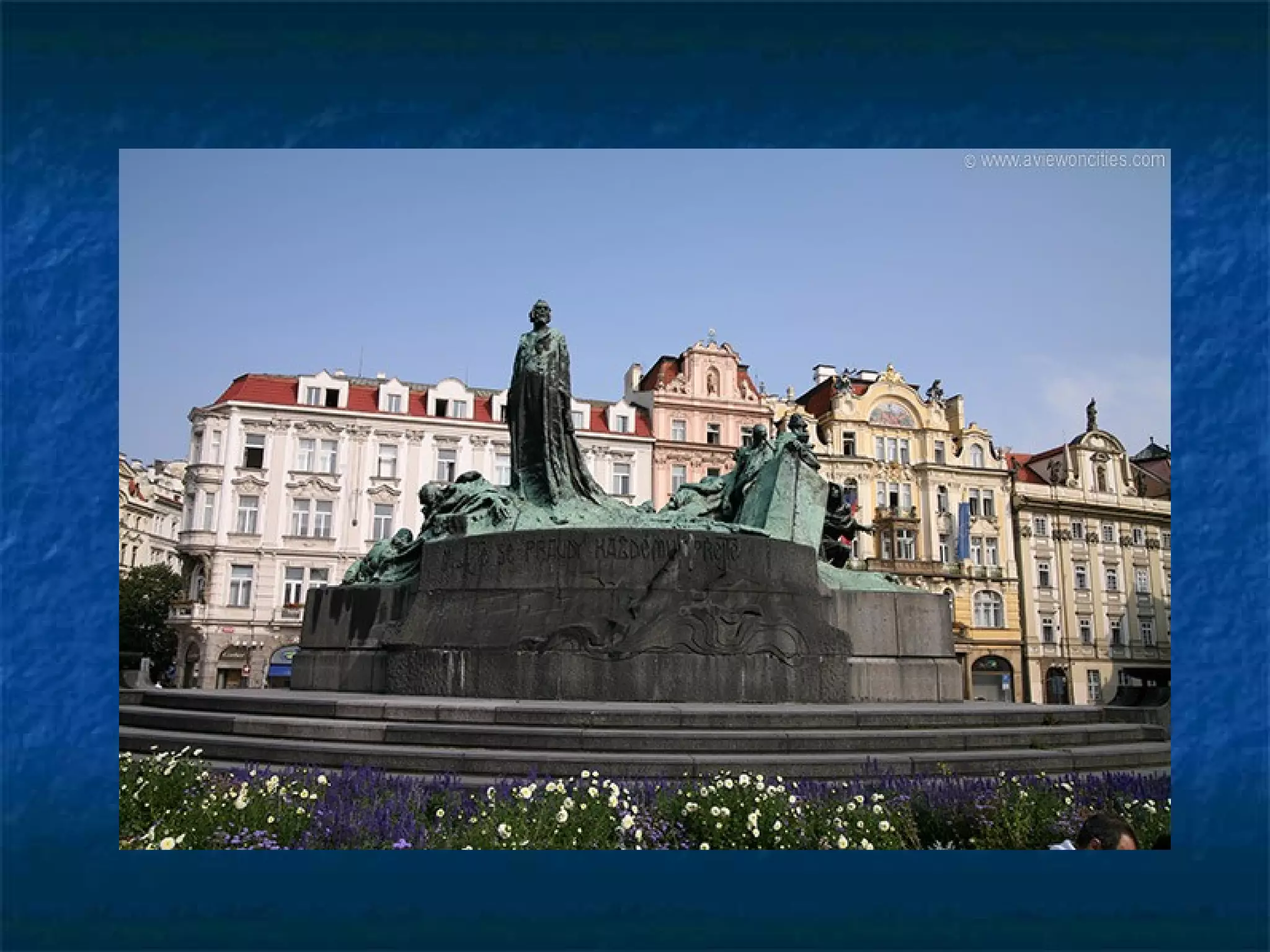
   Statue of Jan Hus
Týn Church
   Construction of the gothic church started
    in the 14th century, but the spires were
    only finished in 1511
Wenceslas Square
   Place of many of the important historical
    events in Prague's recent history
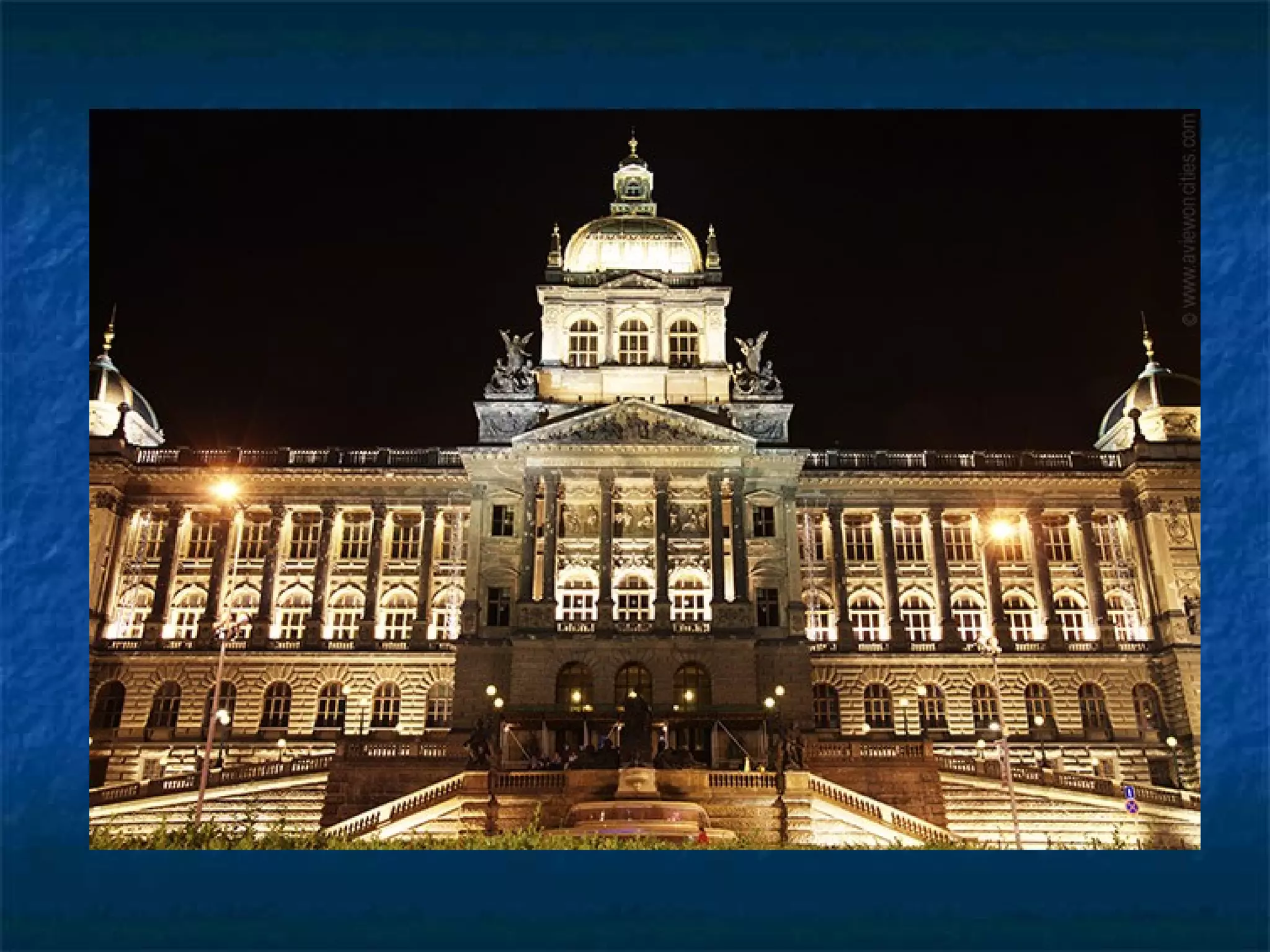
   National Museum - a neo renaissance
    building constructed in 1890, soon
    became a symbol of national identity.
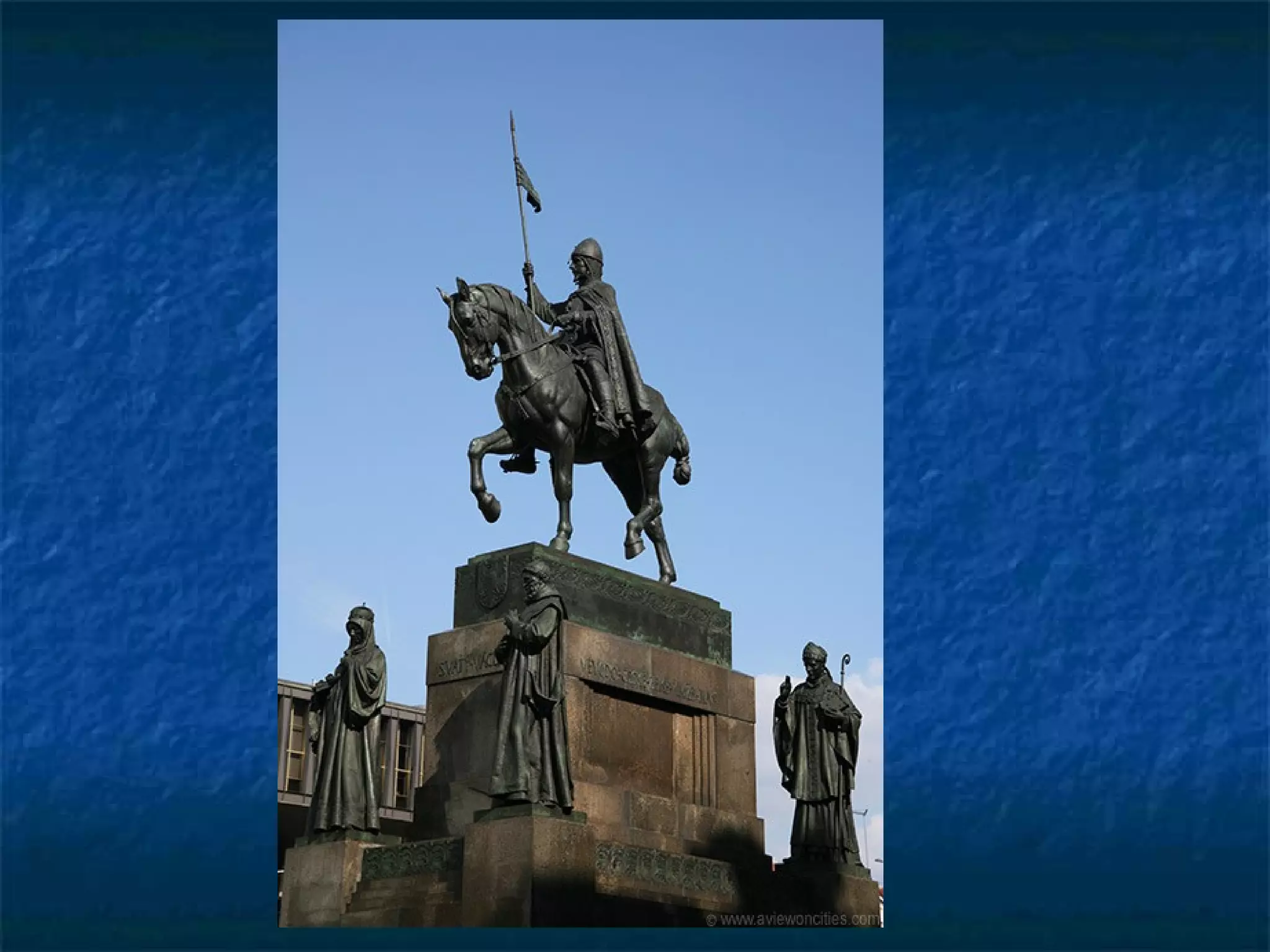
   St. Wenceslas Statue - a bronze statue of
    St. Wenceslas, ‚the good king‘‚ a
    Bohemian Duke spreading
    Christianity,murdered in 929 by his
    brother
National Theater
   The National Theatre, a neorenaissance structure
    built at the end of the 19th century, seen as a
    symbol of Czech culture and independence.
   1881 destroyed by fire
   1883 finally opened
   In 1977 closed for renovation
   A modern glass addition was built as an annex to
    the historical theatre.
   Reopened in 1983 with Smetana's Libuše a
    hundred years after the original opening.
Petřín Tower
   Outlook tower - 60 metre high steel
    framework tower
   Funicular (railway) - originally opened in
    1891, with a length of 383 metres
   House of mirrors
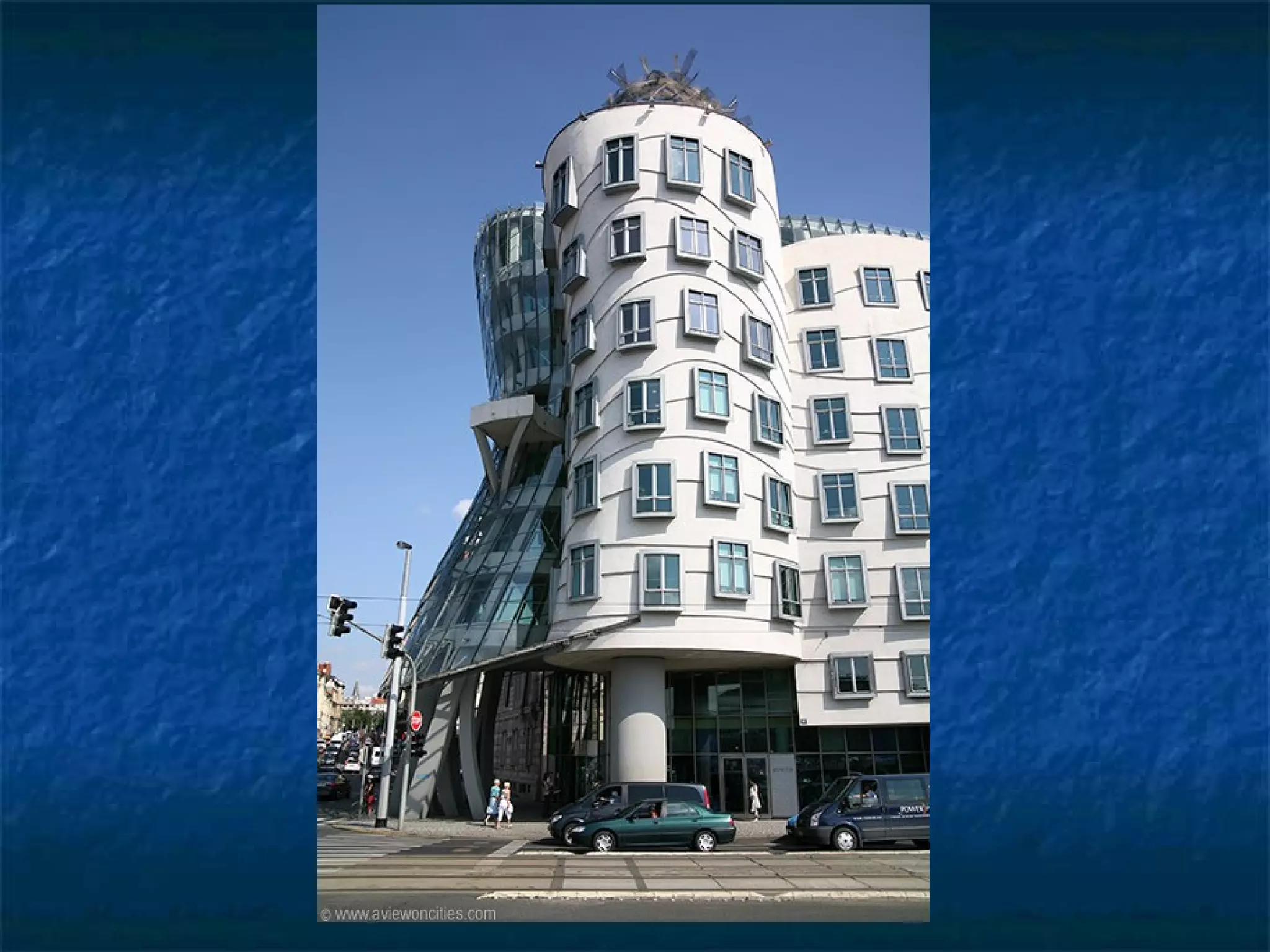
Dancing House
   a modern building designed in
    deconstructionist style by Vlado Milunic
    and Frank O Gehry. (The building portrays
    two people dancing - Fred and Ginger)
   The city's most famous modern building.

Prague

  • 1.
    Prague The capital cityof the Czech Republic
  • 4.
    Vladislav Hall, OldRoyal Palace  the largest medieval castle in Europe  the seat of the President of the Czech Republic  the most remarkable room in the Royal Palace is the majestic Vladislav Hall - more than 16 meters wide and more than 14 meters high. (52ft / 46 ft)
  • 7.
    St. Vitus cathedral  Charles IV acquired the bones of St. Vitus, a popular fourth-century martyr, and brought them to Prague  In 1344 Charles IV started with its construction  Mathieu d'Arras and Peter Parler
  • 9.
    Belvedere, Royal Garden  The Royal Garden was created in the 16th century for the exclusive use of the royal court.  Belvedere - also known as the Queen Anne's residence or Royal Summer Residence (constructed between 1535 and 1563)  Singing fountain
  • 11.
    Daliborka Tower  built in the 15th century as part of the fortifications  used as a dungeon and is named after its first inmate, Dalibor of Kozojedy.  accessible to visitors and can be reached via the Golden Lane
  • 14.
    Charles Bridge  the Charles Bridge connects the Old Town with Lesser Town.  The Charles Bridge, named after King Charles, was 502 meters long. Resting on 16 arches it was wide enough for 4 carriages to cross.  about 30 sculptures  Bridge Towers
  • 18.
    Old Town Square  Old Town Hall - built in 1364  astronomical clock, built in 1410 - the oldest such clock in Europe  Statue of Jan Hus
  • 20.
    Týn Church  Construction of the gothic church started in the 14th century, but the spires were only finished in 1511
  • 23.
    Wenceslas Square  Place of many of the important historical events in Prague's recent history  National Museum - a neo renaissance building constructed in 1890, soon became a symbol of national identity.  St. Wenceslas Statue - a bronze statue of St. Wenceslas, ‚the good king‘‚ a Bohemian Duke spreading Christianity,murdered in 929 by his brother
  • 25.
    National Theater  The National Theatre, a neorenaissance structure built at the end of the 19th century, seen as a symbol of Czech culture and independence.  1881 destroyed by fire  1883 finally opened  In 1977 closed for renovation  A modern glass addition was built as an annex to the historical theatre.  Reopened in 1983 with Smetana's Libuše a hundred years after the original opening.
  • 27.
    Petřín Tower  Outlook tower - 60 metre high steel framework tower  Funicular (railway) - originally opened in 1891, with a length of 383 metres  House of mirrors
  • 29.
    Dancing House  a modern building designed in deconstructionist style by Vlado Milunic and Frank O Gehry. (The building portrays two people dancing - Fred and Ginger)  The city's most famous modern building.