Evan Spurlock
       &
Cheyenne Shuler
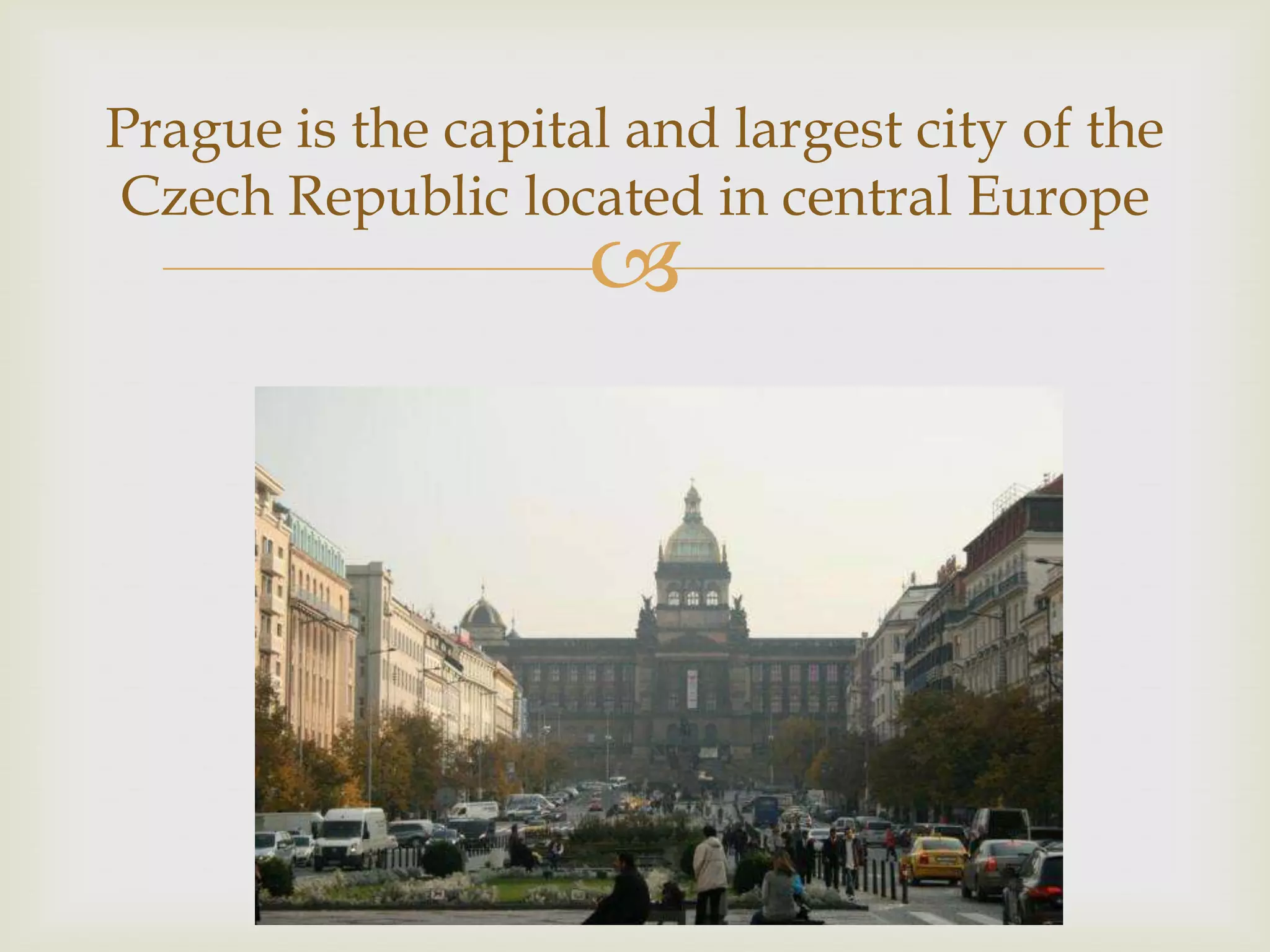
Prague is the capital and largest city of the
Czech Republic located in central Europe
                    
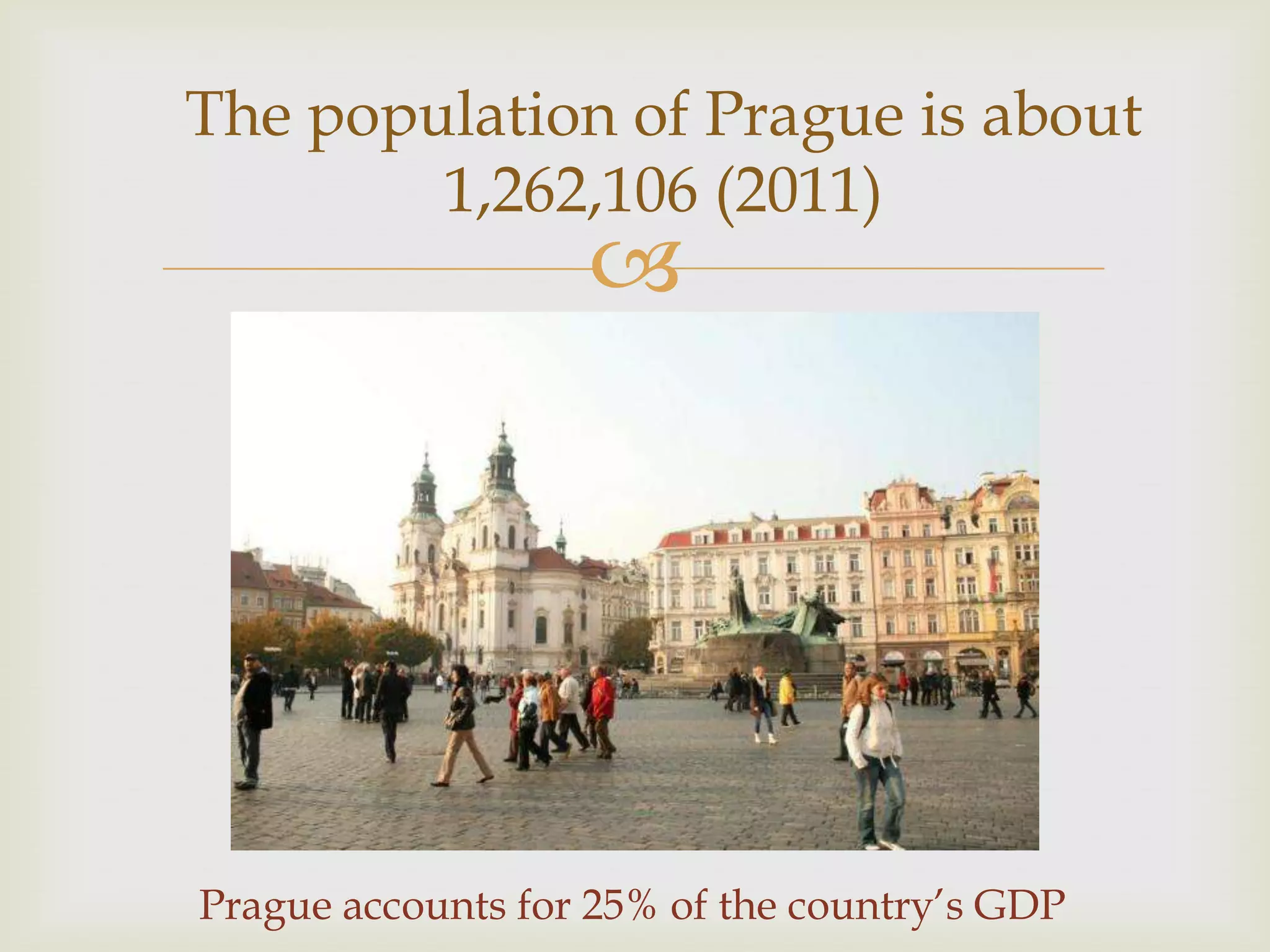
The population of Prague is about
        1,262,106 (2011)
                   


Prague accounts for 25% of the country’s GDP
The Government
             
Politically, the Czech Republic is a multi-
party parliamentary representative democratic
republic. According to the Constitution of the
Czech Republic, the President is the head of
state while the Prime Minister is the head of
government, exercising supreme executive
power. The Legislature is bicameral, with the
Chamber of Deputies and the Senate.
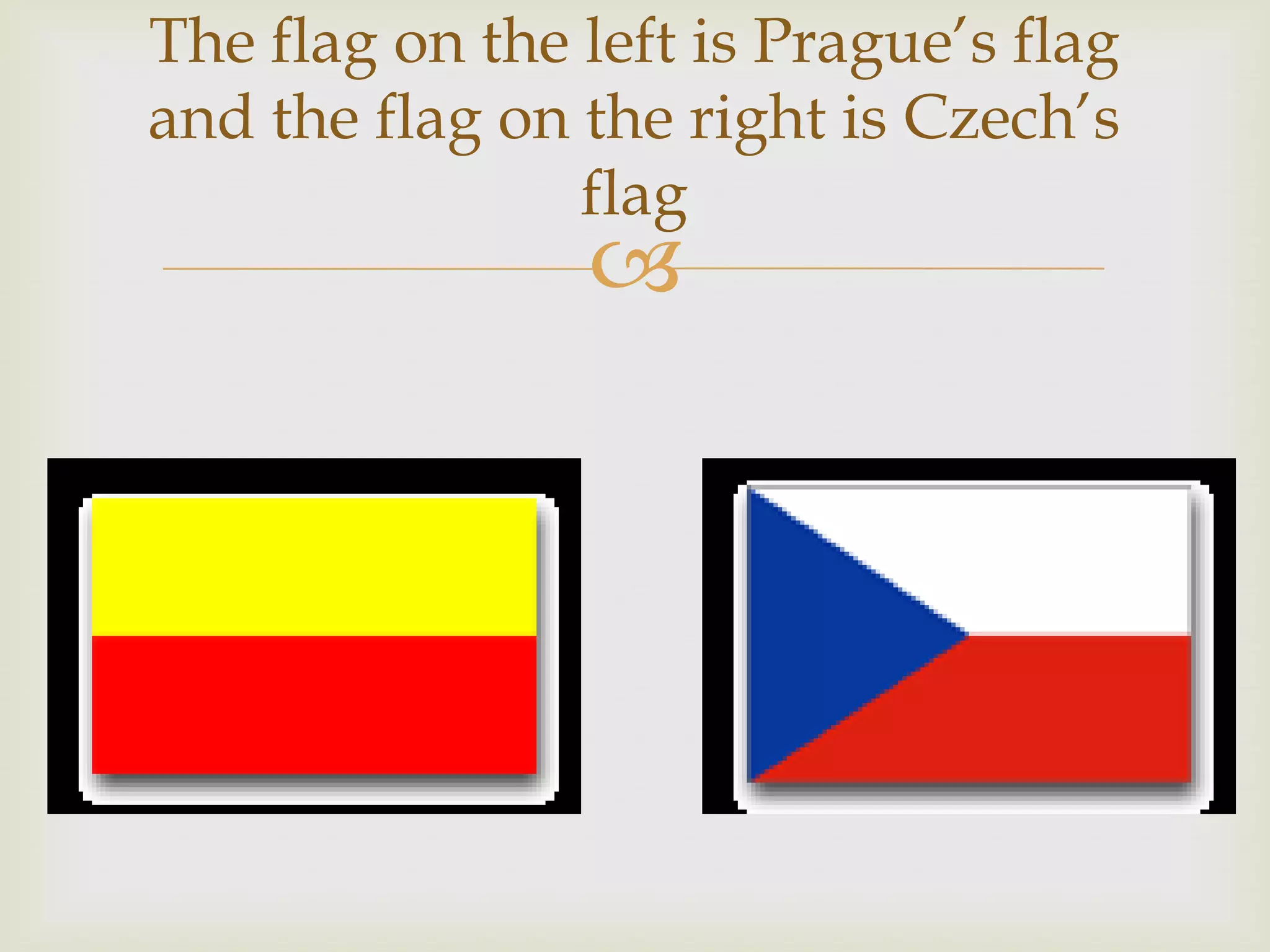
The flag on the left is Prague’s flag
and the flag on the right is Czech’s
                flag
                
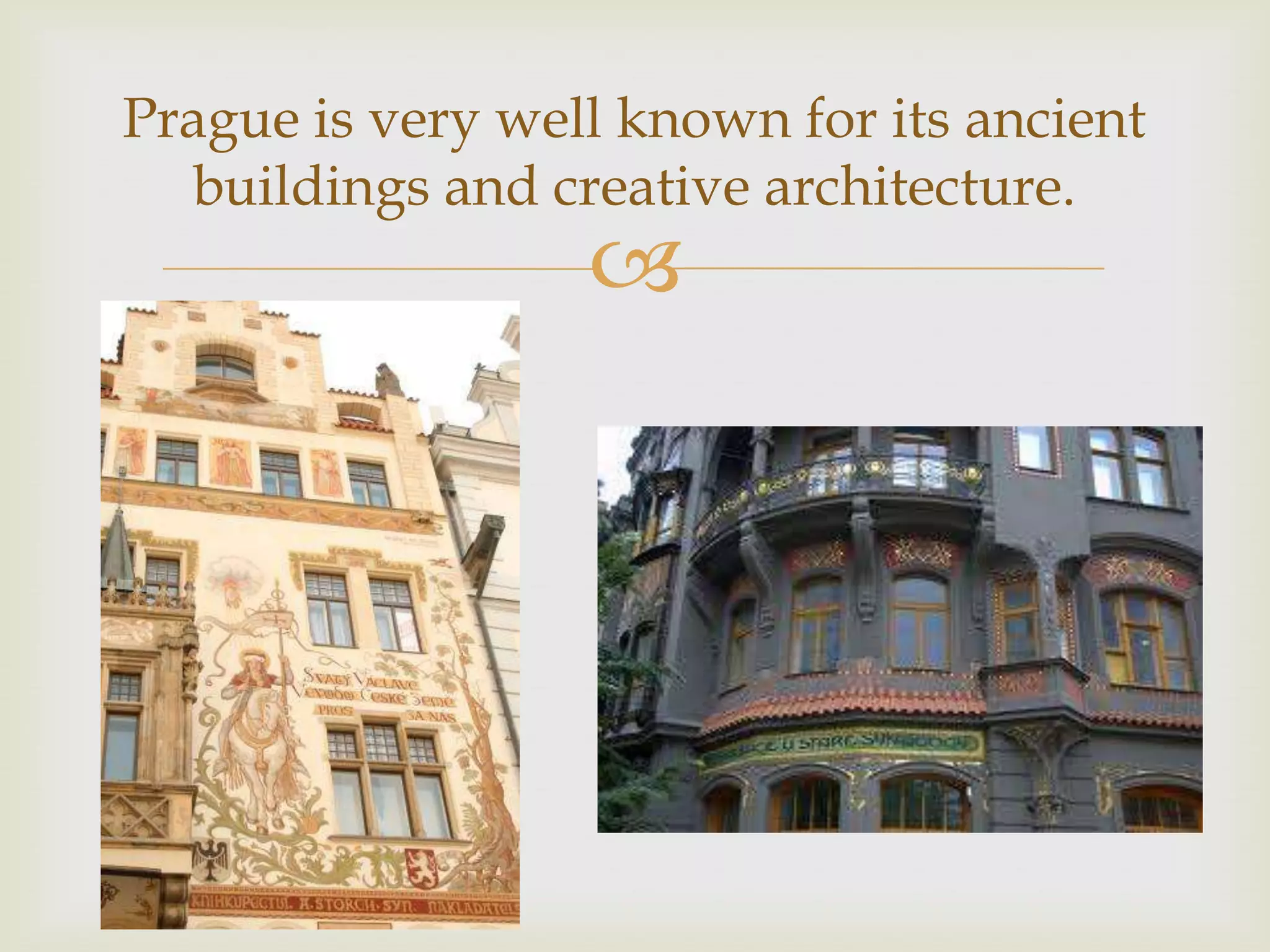
Prague is very well known for its ancient
  buildings and creative architecture.
                  
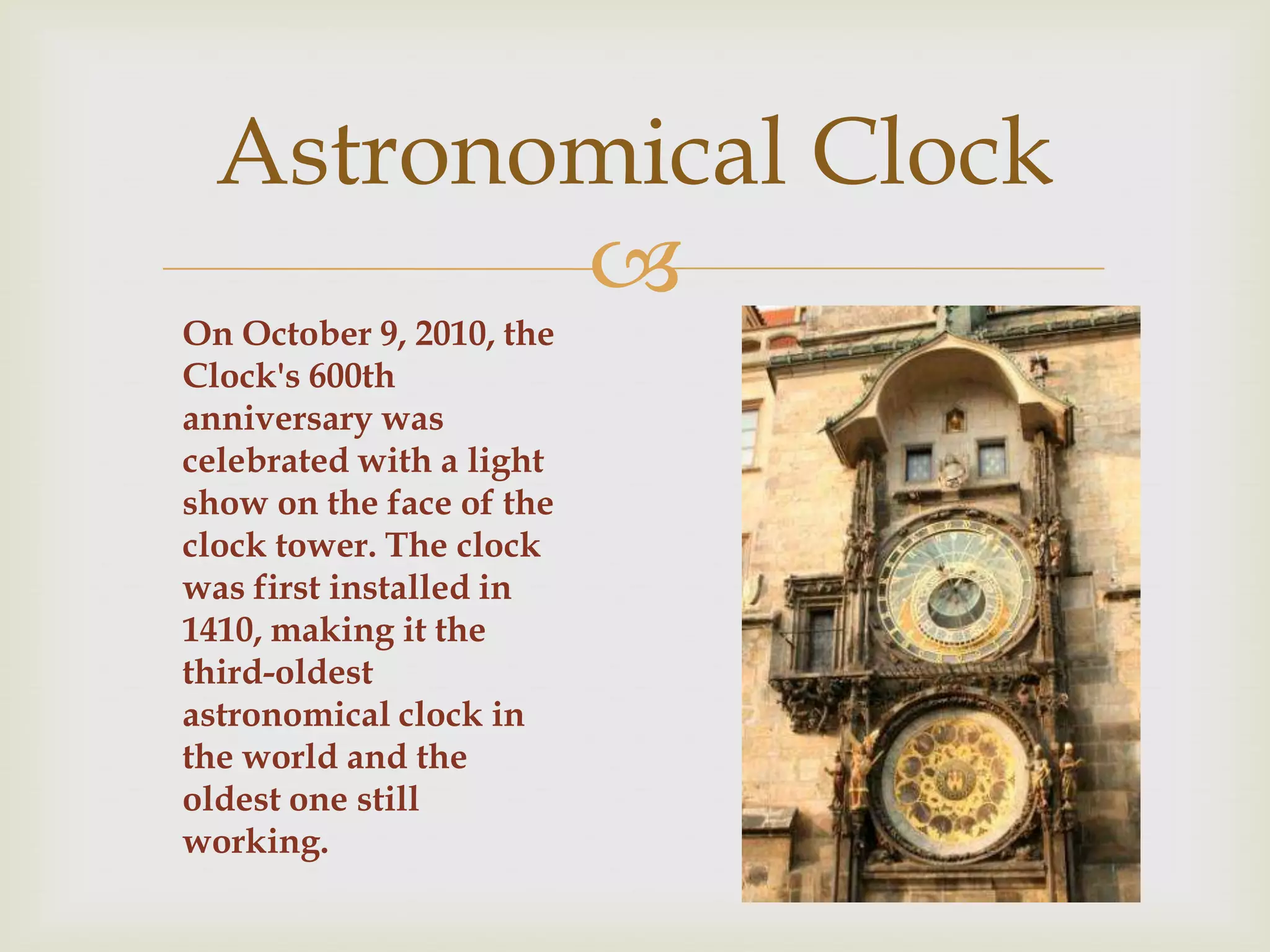
Astronomical Clock
         
On October 9, 2010, the
Clock's 600th
anniversary was
celebrated with a light
show on the face of the
clock tower. The clock
was first installed in
1410, making it the
third-oldest
astronomical clock in
the world and the
oldest one still
working.
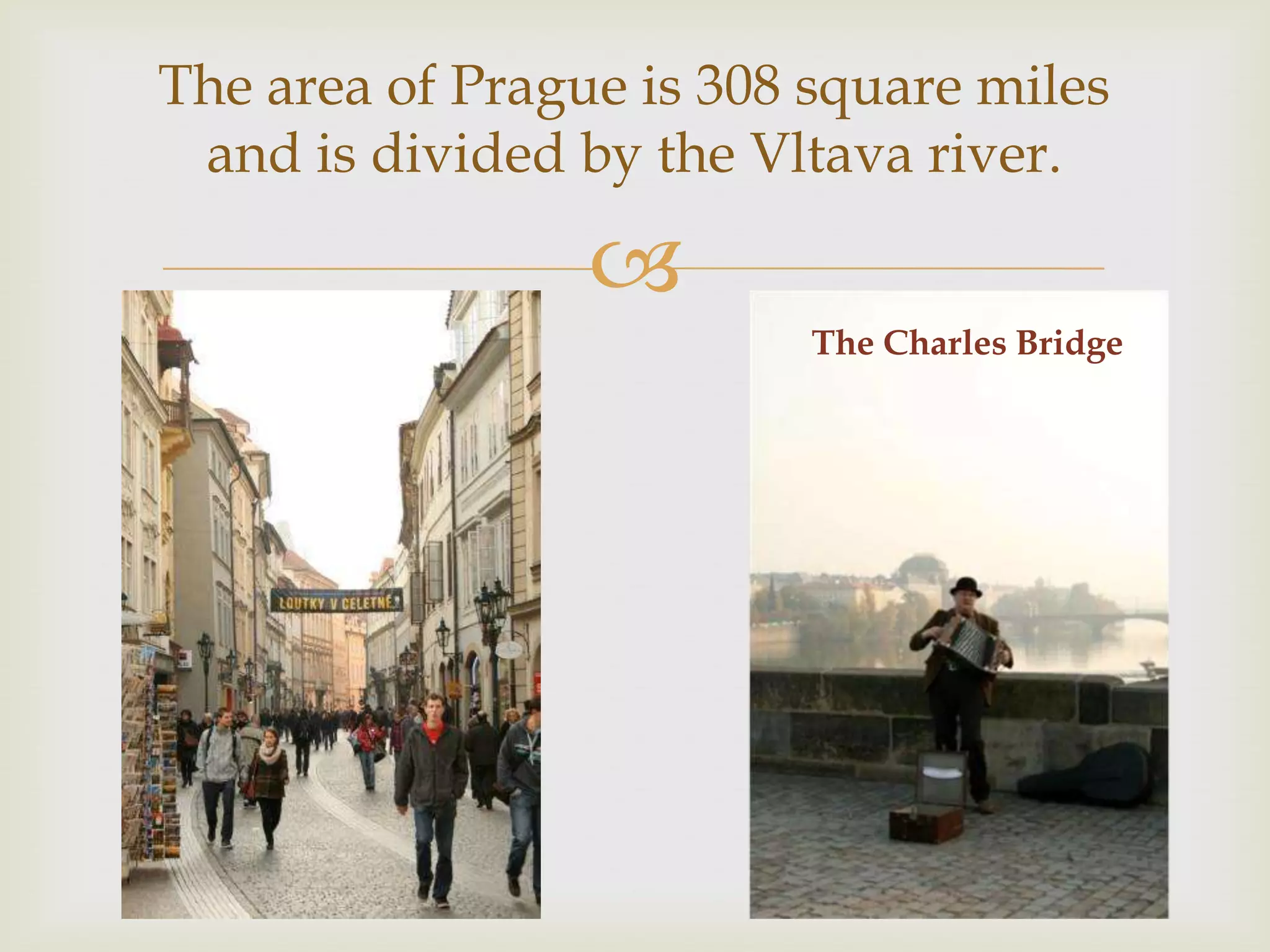
The area of Prague is 308 square miles
 and is divided by the Vltava river.

                 
                          The Charles Bridge
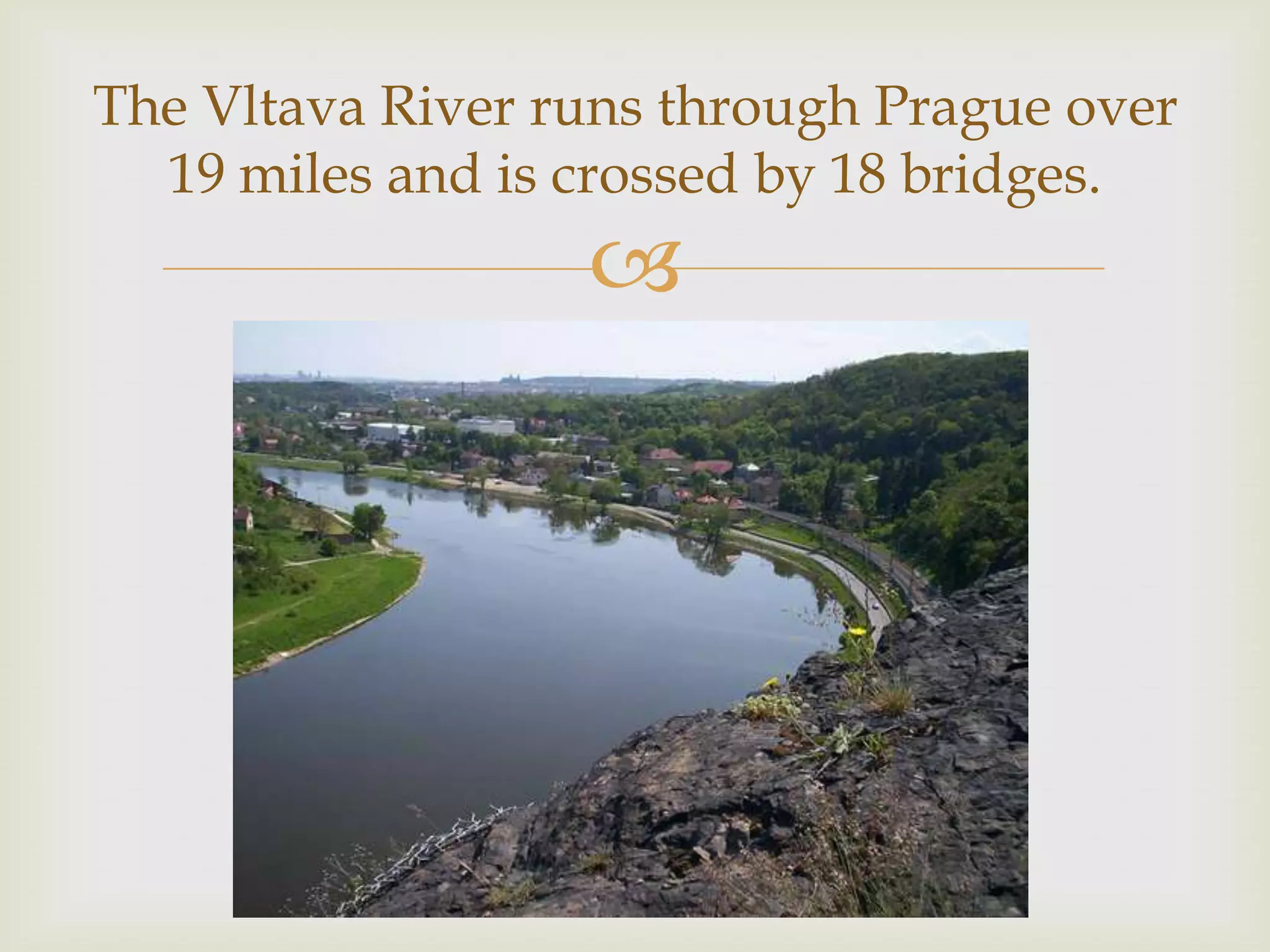
The Vltava River runs through Prague over
  19 miles and is crossed by 18 bridges.
                  
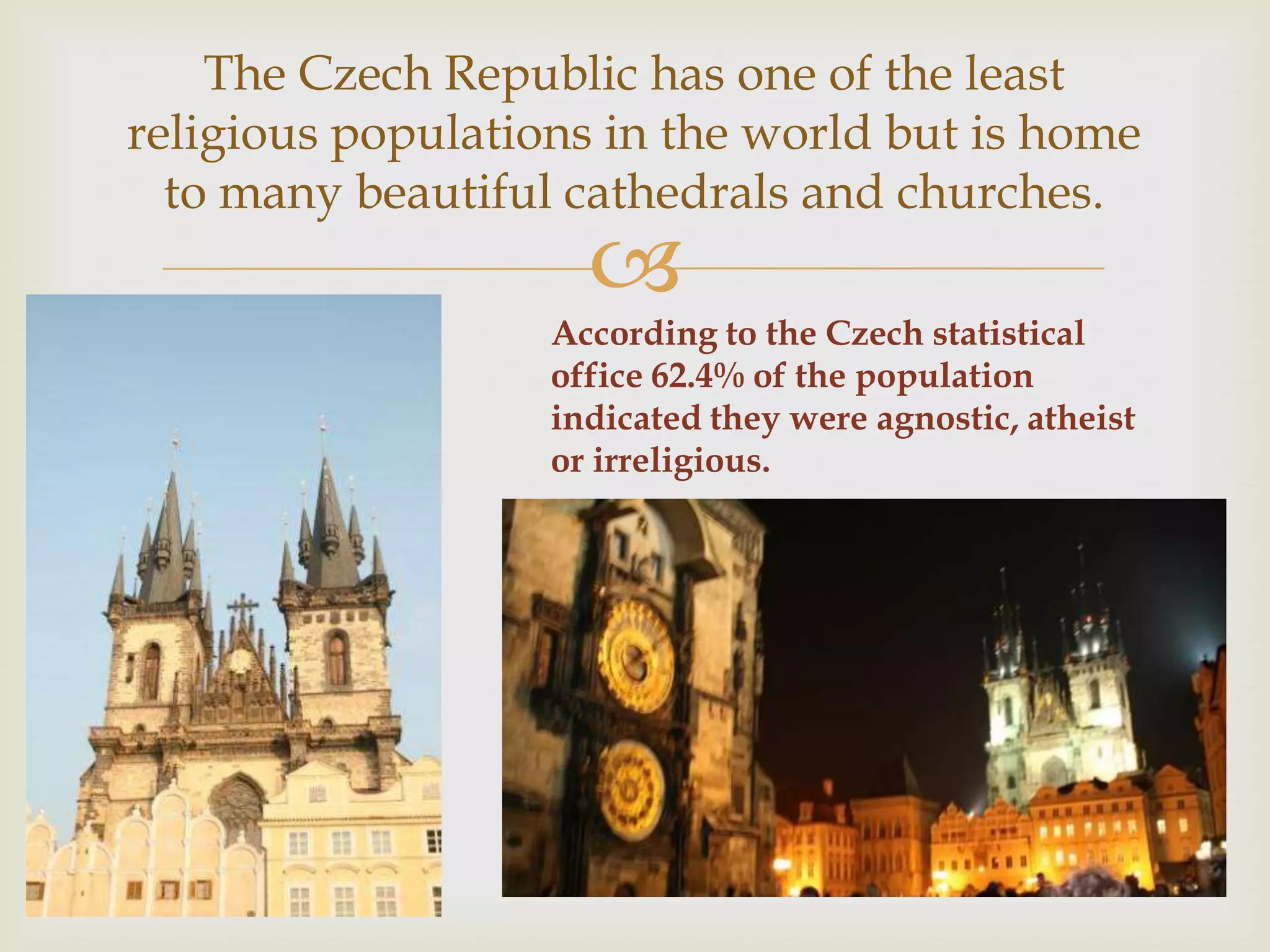
The Czech Republic has one of the least
religious populations in the world but is home
  to many beautiful cathedrals and churches.
                     
                   According to the Czech statistical
                   office 62.4% of the population
                   indicated they were agnostic, atheist
                   or irreligious.
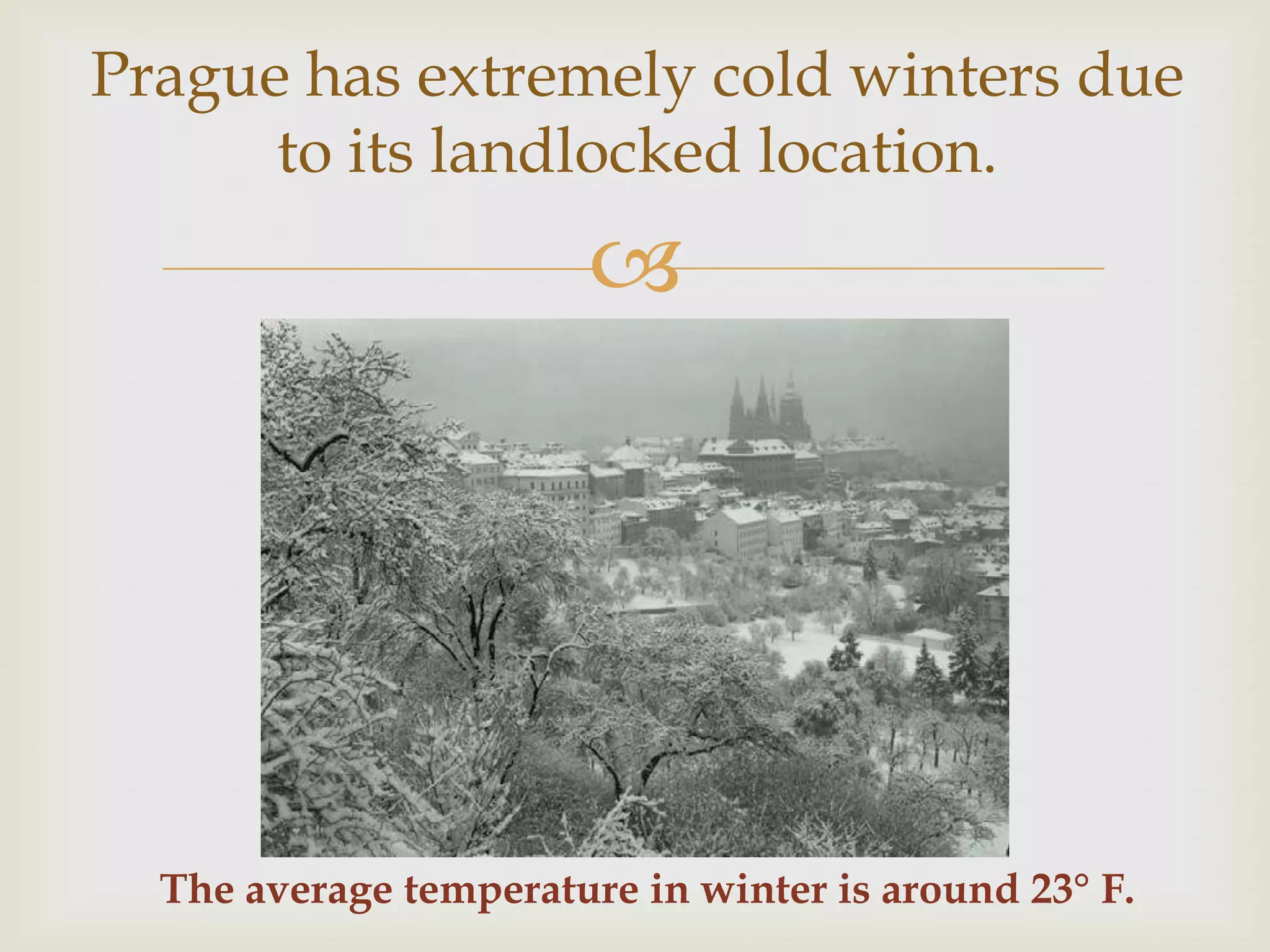
Prague has extremely cold winters due
      to its landlocked location.
                        


  The average temperature in winter is around 23° F.
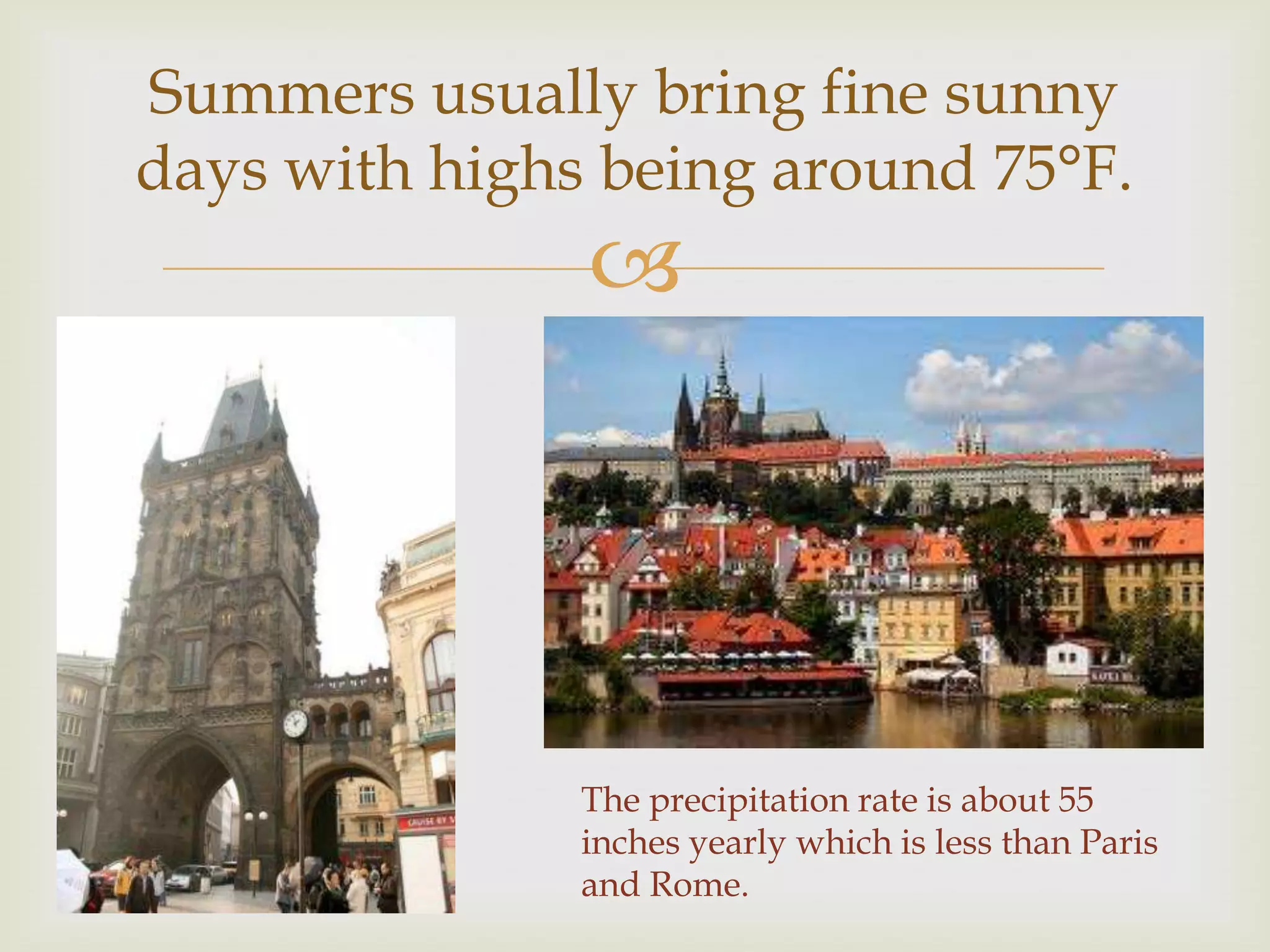
Summers usually bring fine sunny
days with highs being around 75°F.
               


               The precipitation rate is about 55
               inches yearly which is less than Paris
               and Rome.
How Prague became what it is
            today
                       
Prague suffered in much the same way as the rest
of the country during harsh Soviet-imposed
Communist rule, and it was here that the Velvet
Revolution was born and completed in 1989.
Today, Prague is indisputably a modern European
city and is becoming the capital of Central Europe.
Many large companies have their regional
headquarters here and the city is an enticing
investment location, despite being more wealthy
(and therefore expensive) than many Western
counterparts.
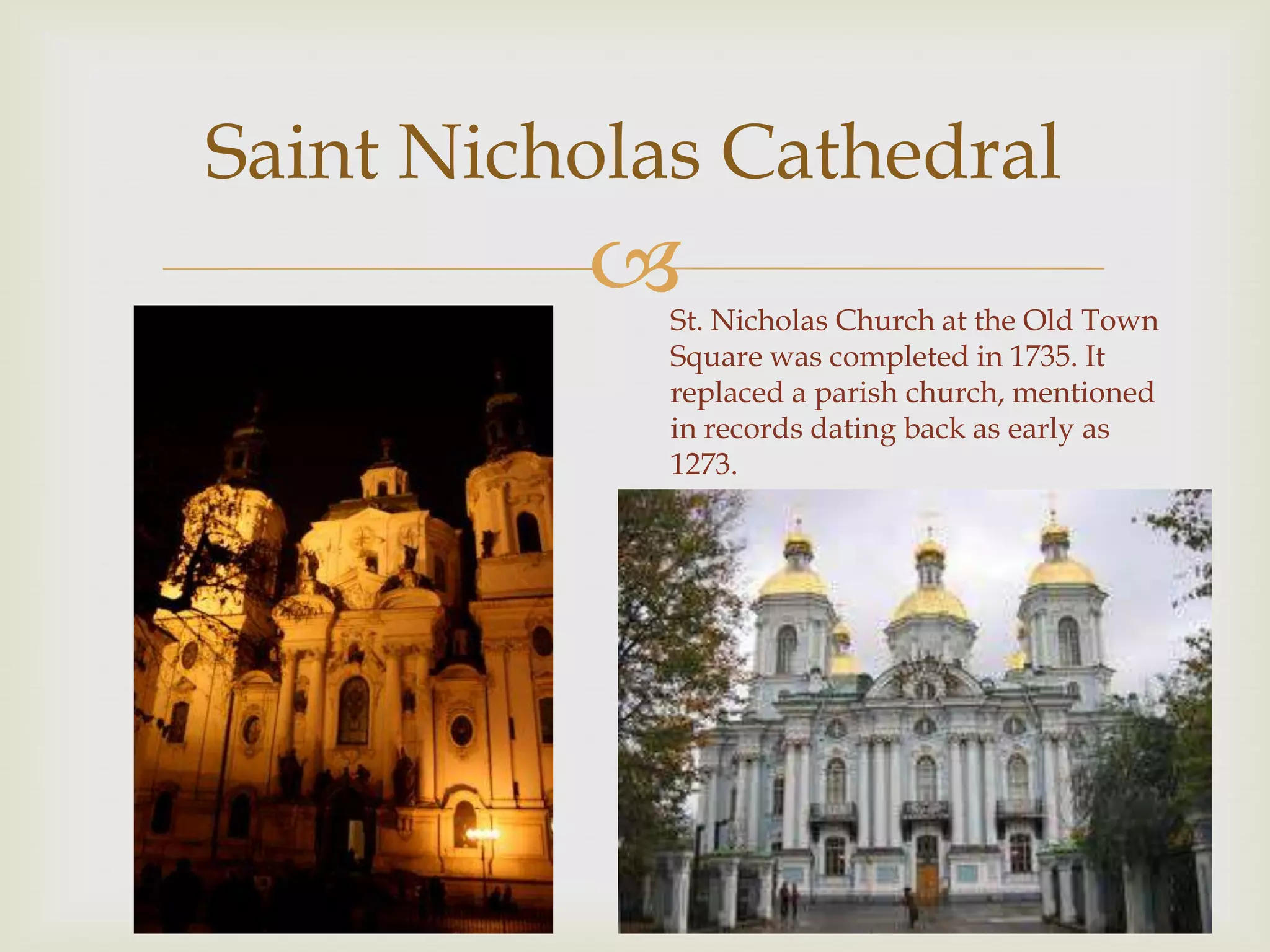
Saint Nicholas Cathedral
            St. Nicholas Church at the Old Town
             Square was completed in 1735. It
             replaced a parish church, mentioned
             in records dating back as early as
             1273.
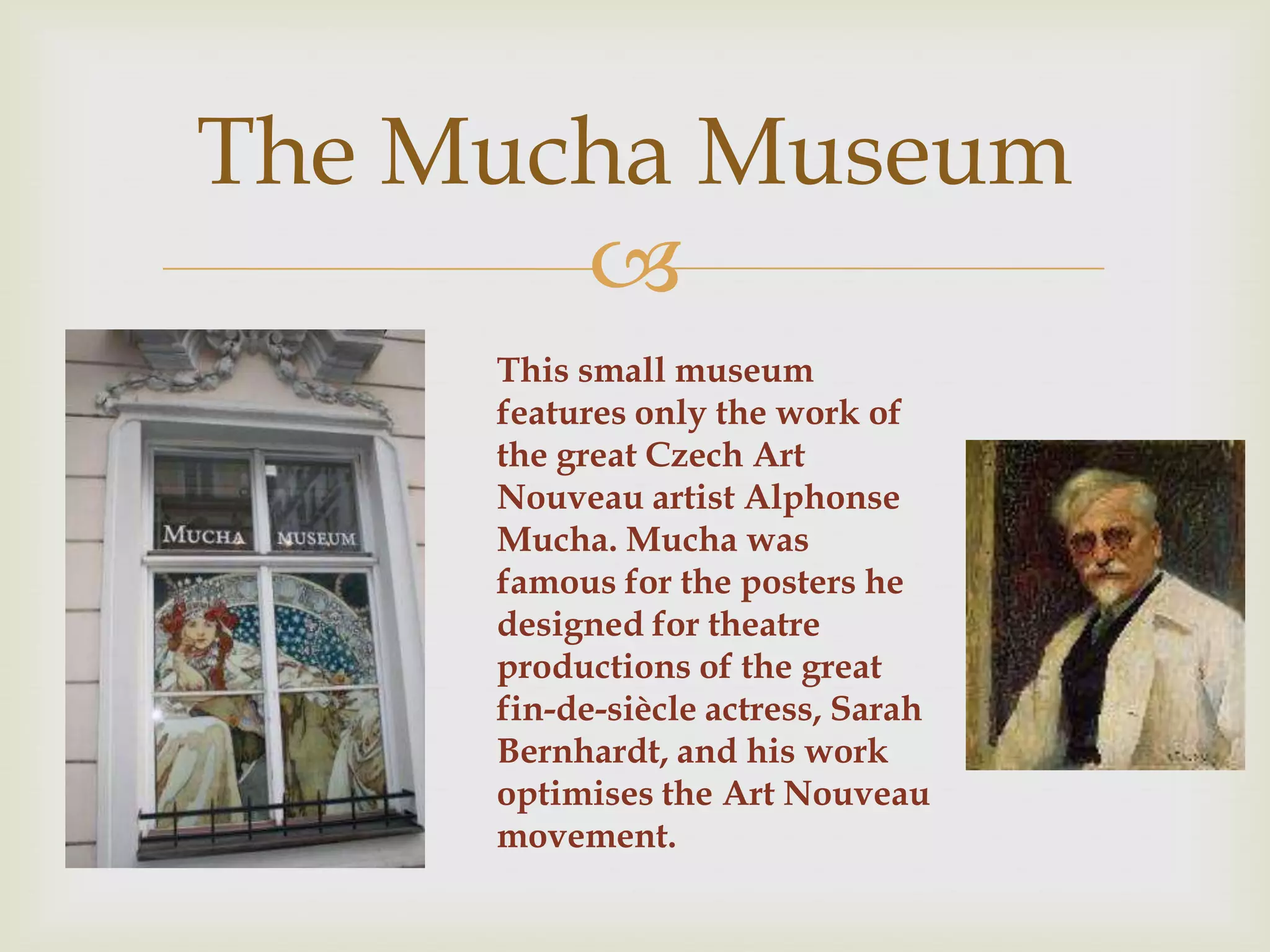
The Mucha Museum
       
     This small museum
     features only the work of
     the great Czech Art
     Nouveau artist Alphonse
     Mucha. Mucha was
     famous for the posters he
     designed for theatre
     productions of the great
     fin-de-siècle actress, Sarah
     Bernhardt, and his work
     optimises the Art Nouveau
     movement.
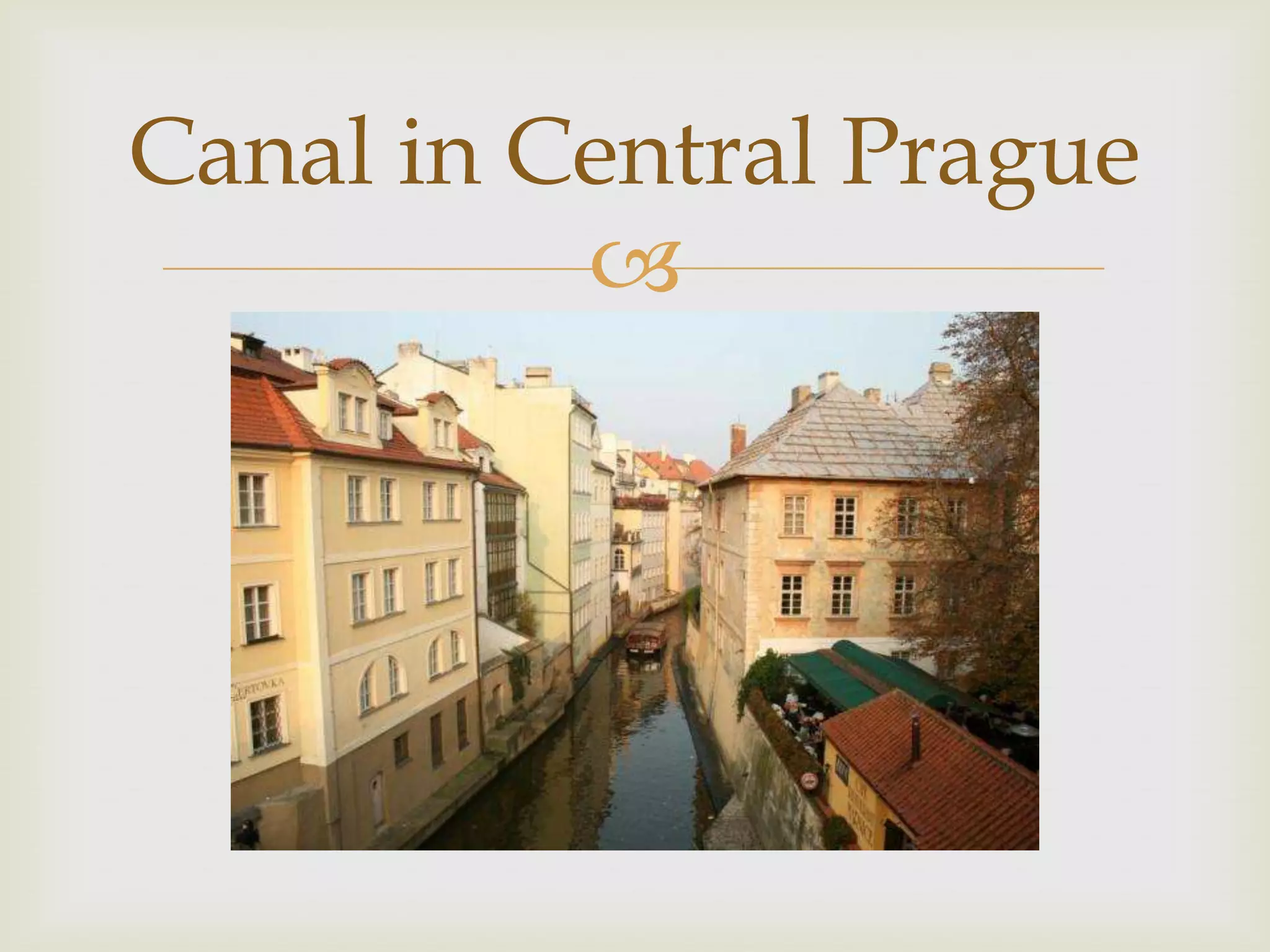
Canal in Central Prague
          
There are low rates of violent crimes,
 but high rates of pickpocketing and
               car theft
                 


       Dude, where’s my car???
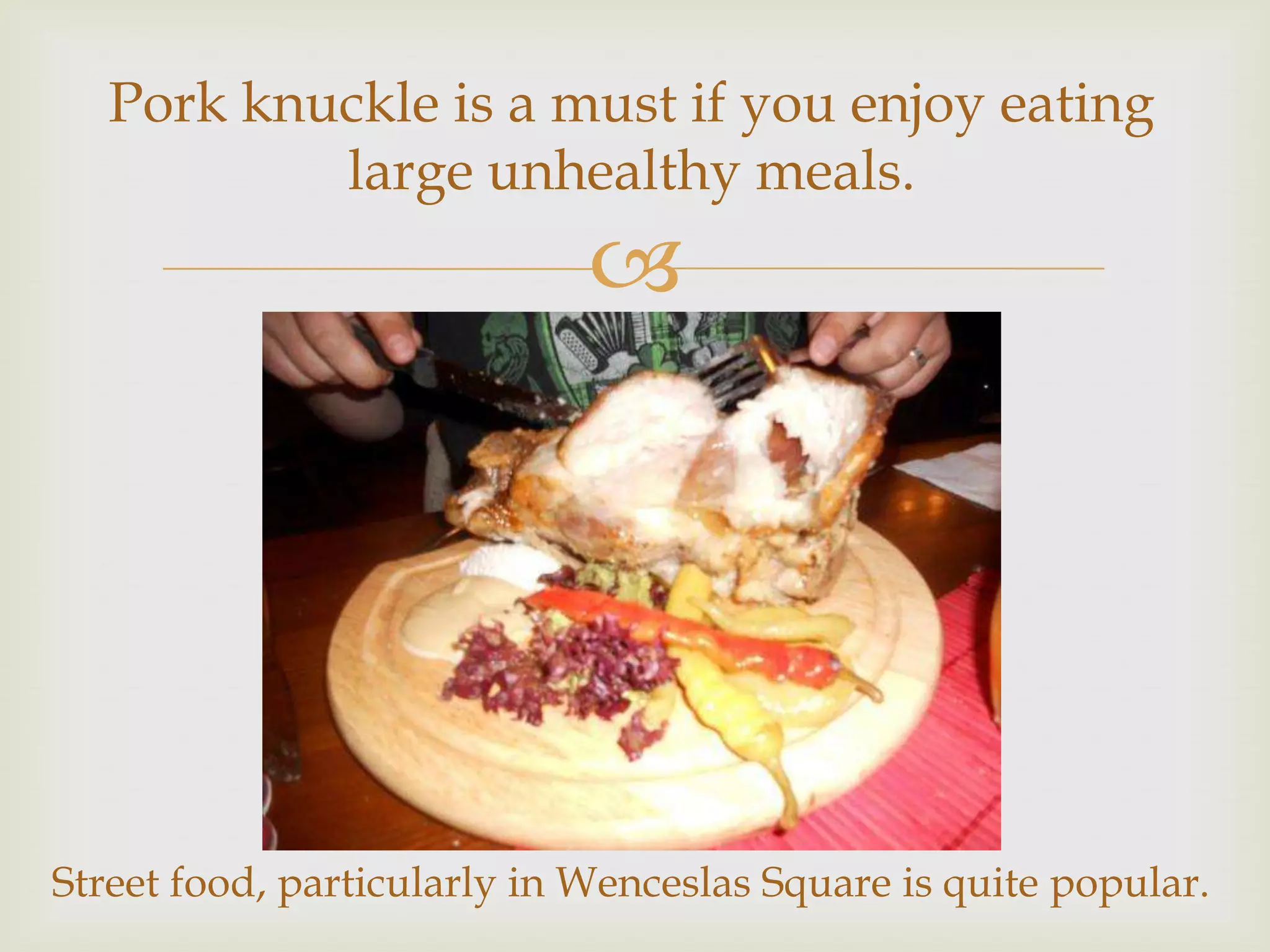
Pork knuckle is a must if you enjoy eating
           large unhealthy meals.
                             


Street food, particularly in Wenceslas Square is quite popular.
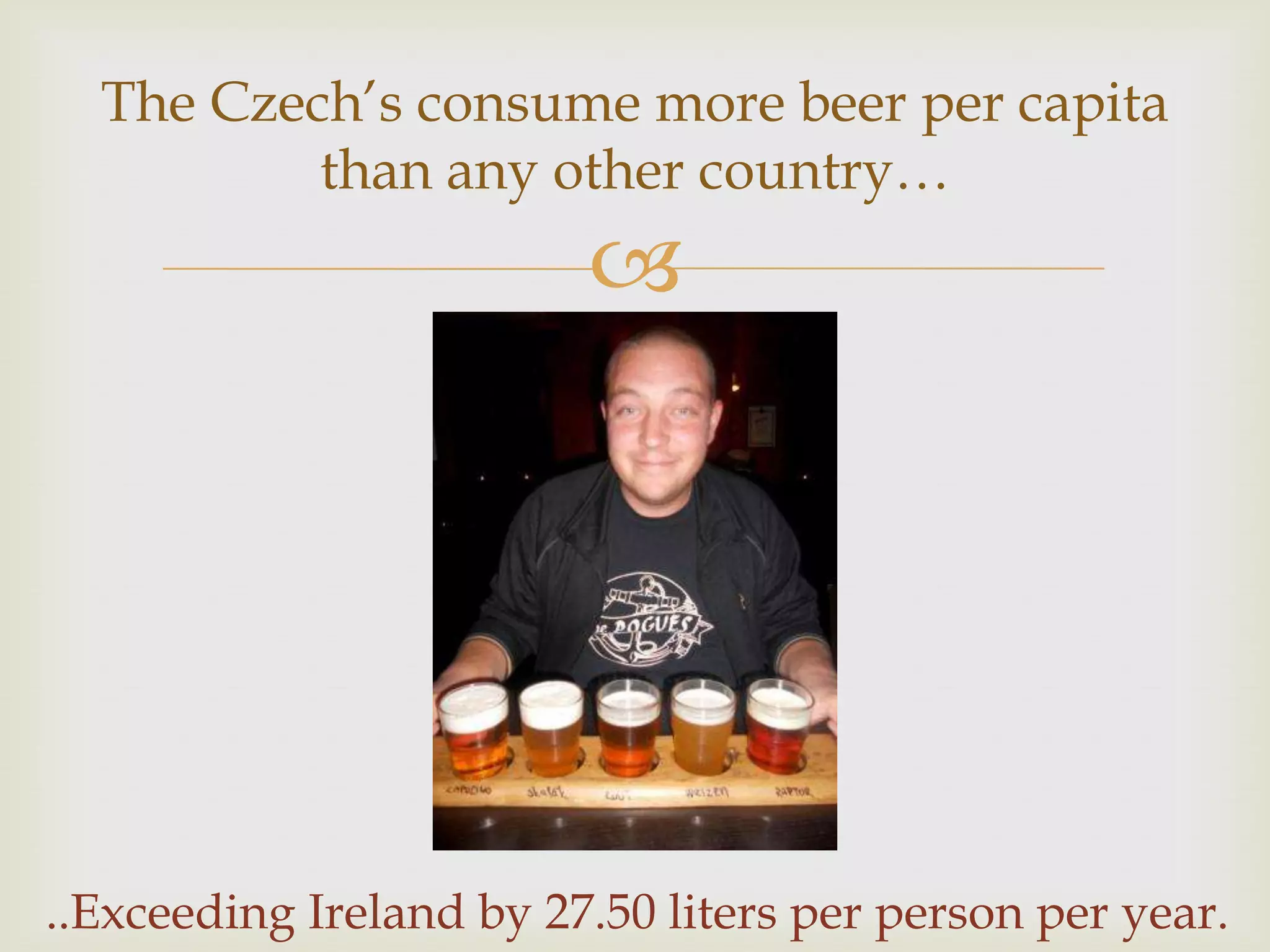
The Czech’s consume more beer per capita
          than any other country…
                         


..Exceeding Ireland by 27.50 liters per person per year.
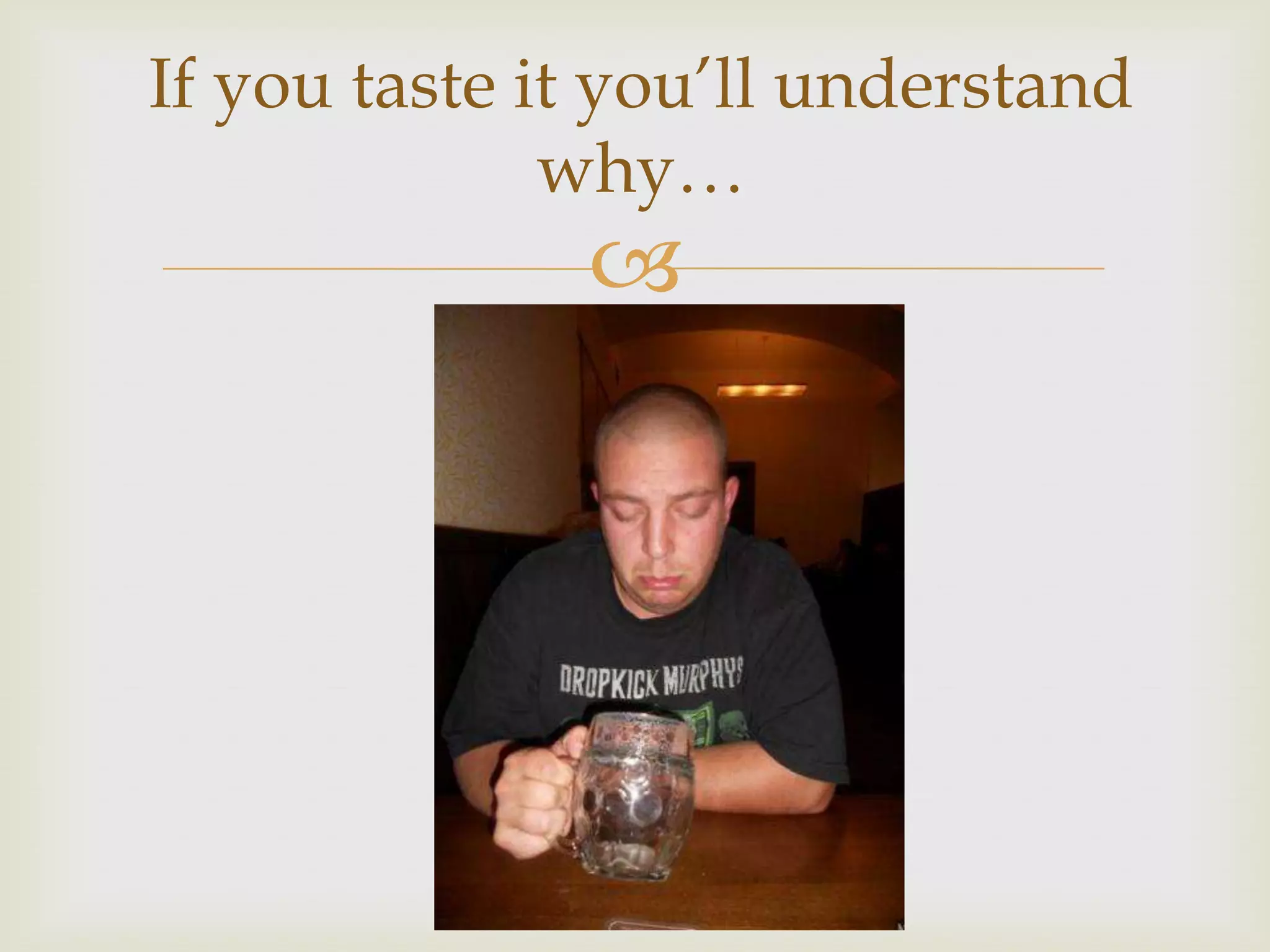
If you taste it you’ll understand
              why…
              
Work Cited
                
 http://www.aviewoncities.com/prague/pragueattr
  actions.htm
 http://en.wikipedia.org/wiki/Prague#Culture
 http://en.wikipedia.org/wiki/Government_of_the_
  Czech_Republic
 http://www.prague-life.com/info/info.php
 http://www.praguewelcome.cz/en/

Prague slide

  • 1.
    Evan Spurlock & Cheyenne Shuler
  • 2.
    Prague is thecapital and largest city of the Czech Republic located in central Europe 
  • 3.
    The population ofPrague is about 1,262,106 (2011)  Prague accounts for 25% of the country’s GDP
  • 4.
    The Government  Politically, the Czech Republic is a multi- party parliamentary representative democratic republic. According to the Constitution of the Czech Republic, the President is the head of state while the Prime Minister is the head of government, exercising supreme executive power. The Legislature is bicameral, with the Chamber of Deputies and the Senate.
  • 5.
    The flag onthe left is Prague’s flag and the flag on the right is Czech’s flag 
  • 6.
    Prague is verywell known for its ancient buildings and creative architecture. 
  • 7.
    Astronomical Clock  On October 9, 2010, the Clock's 600th anniversary was celebrated with a light show on the face of the clock tower. The clock was first installed in 1410, making it the third-oldest astronomical clock in the world and the oldest one still working.
  • 8.
    The area ofPrague is 308 square miles and is divided by the Vltava river.  The Charles Bridge
  • 9.
    The Vltava Riverruns through Prague over 19 miles and is crossed by 18 bridges. 
  • 10.
    The Czech Republichas one of the least religious populations in the world but is home to many beautiful cathedrals and churches.  According to the Czech statistical office 62.4% of the population indicated they were agnostic, atheist or irreligious.
  • 11.
    Prague has extremelycold winters due to its landlocked location.  The average temperature in winter is around 23° F.
  • 12.
    Summers usually bringfine sunny days with highs being around 75°F.  The precipitation rate is about 55 inches yearly which is less than Paris and Rome.
  • 13.
    How Prague becamewhat it is today  Prague suffered in much the same way as the rest of the country during harsh Soviet-imposed Communist rule, and it was here that the Velvet Revolution was born and completed in 1989. Today, Prague is indisputably a modern European city and is becoming the capital of Central Europe. Many large companies have their regional headquarters here and the city is an enticing investment location, despite being more wealthy (and therefore expensive) than many Western counterparts.
  • 14.
    Saint Nicholas Cathedral  St. Nicholas Church at the Old Town Square was completed in 1735. It replaced a parish church, mentioned in records dating back as early as 1273.
  • 15.
    The Mucha Museum  This small museum features only the work of the great Czech Art Nouveau artist Alphonse Mucha. Mucha was famous for the posters he designed for theatre productions of the great fin-de-siècle actress, Sarah Bernhardt, and his work optimises the Art Nouveau movement.
  • 16.
    Canal in CentralPrague 
  • 17.
    There are lowrates of violent crimes, but high rates of pickpocketing and car theft  Dude, where’s my car???
  • 18.
    Pork knuckle isa must if you enjoy eating large unhealthy meals.  Street food, particularly in Wenceslas Square is quite popular.
  • 19.
    The Czech’s consumemore beer per capita than any other country…  ..Exceeding Ireland by 27.50 liters per person per year.
  • 20.
    If you tasteit you’ll understand why… 
  • 21.
    Work Cited   http://www.aviewoncities.com/prague/pragueattr actions.htm  http://en.wikipedia.org/wiki/Prague#Culture  http://en.wikipedia.org/wiki/Government_of_the_ Czech_Republic  http://www.prague-life.com/info/info.php  http://www.praguewelcome.cz/en/