The Spirals: Architecture of                	Imperial Russia 1700-1800
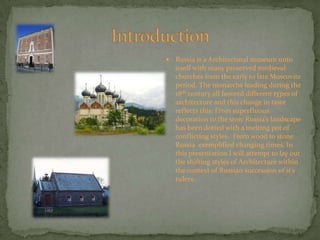
IntroductionRussia is a Architectural museum unto itself with many preserved medieval churches from the early to late Muscovite period. The monarchs leading during the 18th century all favored different types of architecture and this change in taste reflects this. From superfluous decoration to the stoic Russia’s landscape has been dotted with a melting pot of conflicting styles.  From wood to stone Russia exemplified changing times. In this presentation I will attempt to lay out the shifting styles of Architecture within the context of Russian succession of it's rulers.
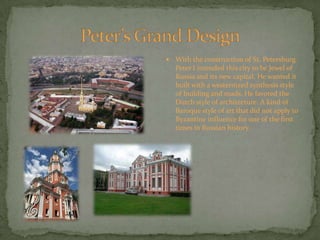
Peter’s Grand DesignWith the construction of St. Petersburg Peter I intended this city to be Jewel of Russia and its new capital. He wanted it built with a westernized synthesis style of building and roads. He favored the Dutch style of architecture. A kind of Baroque style of art that did not apply to Byzantine influence for one of the first times in Russian history.
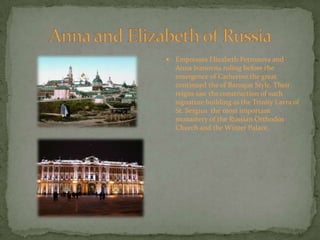
Anna and Elizabeth of RussiaEmpresses Elizabeth Petronova and Anna Ivanovna ruling before the emergence of Catherine the great continued the of Baroque Style. Their reigns saw the construction of such signature building as the Trinity Lavra of St. Sergius  the most important monastery of the Russian Orthodox Church and the Winter Palace.
Catherine Time In Architecture Catherine disliked Baroque style and instead preferred Neo Classical. She invited foreign architects from Italy and Scotland who specialized in the style. Among the most signature the Alexander Palace intended for her favorite Nephew Alexander I. During her time in power a revival of Russian gothic style emerged again.
Alexander I: EmpireAlexander I preferred the style of Empire a kind of Romanesque style of Architecture with many columns along its fronts of buildings. It was on this style alone that influenced most architects during his Alexander's rule especially after the fire in Moscow in 1812 many of those building were rebuilt in Empire style, among the more famous structures built were the Kazan Cathedral and the Bolshi Theatre.
Nicholas I; All Chips InNicholas I eased regulations on what style of building could be built public building were built with a Renaissance flavor such as the Kremlin Palace
Alexander II Alexander III Byzantine Comeback	In Architecture both rulers promoted the return of Byzantium style in civil construction and in Church construction. The building at left is one of the many examples to come about during this revival the State Historical Museum.
Melting Pot Of ImperialismRussia in terms of Architecture really showed signs of escapism, beauty and proactive nature during the imperial dogmas of Russia. True this was due to the sponsorship of the Imperial elite yet their changing tastes created a land that was ripe for construction of new an better creations of age old forms of Architecture it was good time for the construction industry.

The Spirals Imperial

  • 1.
    The Spirals: Architecture of Imperial Russia 1700-1800
  • 2.
    IntroductionRussia is aArchitectural museum unto itself with many preserved medieval churches from the early to late Muscovite period. The monarchs leading during the 18th century all favored different types of architecture and this change in taste reflects this. From superfluous decoration to the stoic Russia’s landscape has been dotted with a melting pot of conflicting styles. From wood to stone Russia exemplified changing times. In this presentation I will attempt to lay out the shifting styles of Architecture within the context of Russian succession of it's rulers.
  • 3.
    Peter’s Grand DesignWiththe construction of St. Petersburg Peter I intended this city to be Jewel of Russia and its new capital. He wanted it built with a westernized synthesis style of building and roads. He favored the Dutch style of architecture. A kind of Baroque style of art that did not apply to Byzantine influence for one of the first times in Russian history.
  • 4.
    Anna and Elizabethof RussiaEmpresses Elizabeth Petronova and Anna Ivanovna ruling before the emergence of Catherine the great continued the of Baroque Style. Their reigns saw the construction of such signature building as the Trinity Lavra of St. Sergius the most important monastery of the Russian Orthodox Church and the Winter Palace.
  • 5.
    Catherine Time InArchitecture Catherine disliked Baroque style and instead preferred Neo Classical. She invited foreign architects from Italy and Scotland who specialized in the style. Among the most signature the Alexander Palace intended for her favorite Nephew Alexander I. During her time in power a revival of Russian gothic style emerged again.
  • 6.
    Alexander I: EmpireAlexanderI preferred the style of Empire a kind of Romanesque style of Architecture with many columns along its fronts of buildings. It was on this style alone that influenced most architects during his Alexander's rule especially after the fire in Moscow in 1812 many of those building were rebuilt in Empire style, among the more famous structures built were the Kazan Cathedral and the Bolshi Theatre.
  • 7.
    Nicholas I; AllChips InNicholas I eased regulations on what style of building could be built public building were built with a Renaissance flavor such as the Kremlin Palace
  • 8.
    Alexander II AlexanderIII Byzantine Comeback In Architecture both rulers promoted the return of Byzantium style in civil construction and in Church construction. The building at left is one of the many examples to come about during this revival the State Historical Museum.
  • 9.
    Melting Pot OfImperialismRussia in terms of Architecture really showed signs of escapism, beauty and proactive nature during the imperial dogmas of Russia. True this was due to the sponsorship of the Imperial elite yet their changing tastes created a land that was ripe for construction of new an better creations of age old forms of Architecture it was good time for the construction industry.