Practical Empathy
em·pa·thy
ˈempəTHē/
noun
the ability to understand and share the feelings of another.
Functional Empathy
Empathy is not specific information, nor a type of information.
Instead, it is a channel of information.
It both holds and transmits information, but the main distinction of
“empathy” is that it attributes relevance to the information.
As seen by one party, the relevance is about understanding how
experience is interpreted by the other party.
The understanding must be current. However, current does NOT mean
based in the real-time of direct interaction. Instead, it means up-to-
date.
rep·re·sent
reprəˈzent/
verb
1. be entitled or appointed to act or speak for (someone),
2. to serve to express, designate, stand for, or denote
Practical Empathy
Empathy, by definition, always presumes to respect the other party’s
autonomy.
Along with that, there is a goal of having fidelity to the other party’s sense of
self.
But the value of empathy is not in some special enhanced truthfulness of
information.
Instead, it is in how reliable its information is as representation.
A fundamental of the “practice” of empathy is to apply the interpretive
method used by the other party, for the same reason that they do, to the
same circumstantial stimuli.
This application may or may not be through direct engagement with the
other party. But the outcome is a re-presentation of their experience.
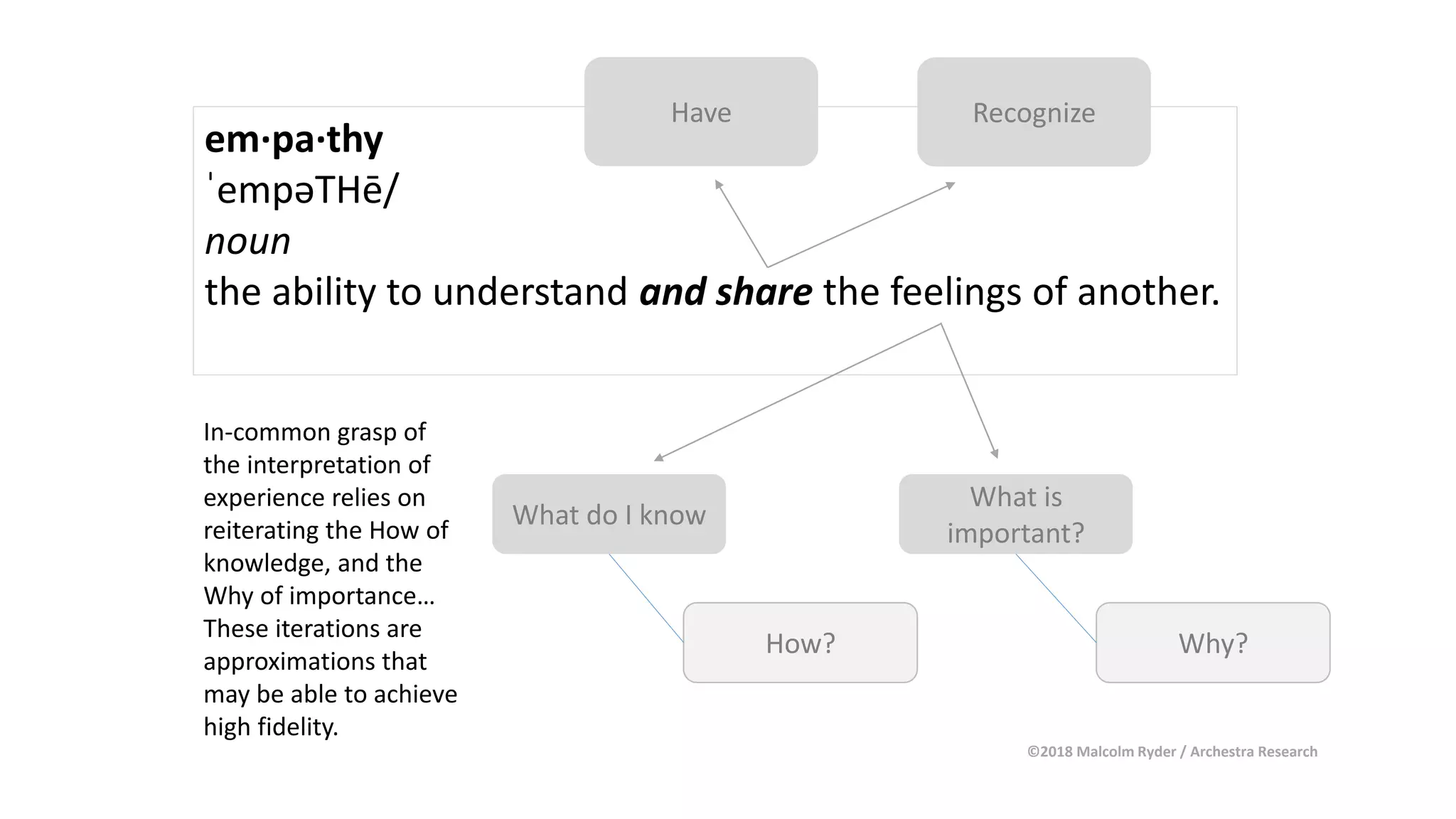
em·pa·thy
ˈempəTHē/
noun
the ability to understand and share the feelings of another.
What is
important?
Why?
What do I know
How?
RecognizeHave
In-common grasp of
the interpretation of
experience relies on
reiterating the How of
knowledge, and the
Why of importance…
These iterations are
approximations that
may be able to achieve
high fidelity.
©2018 Malcolm Ryder / Archestra Research
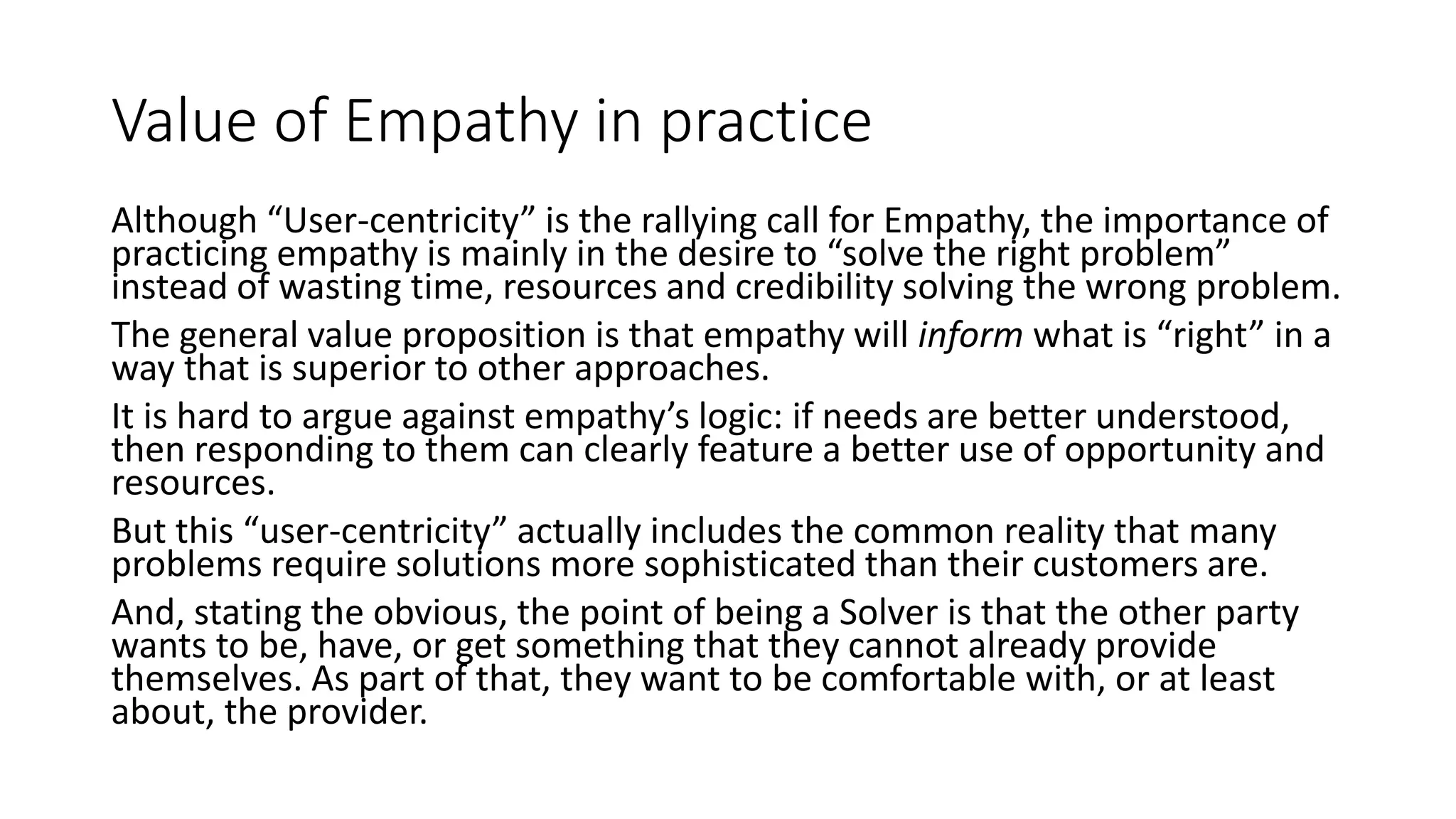
Value of Empathy in practice
Although “User-centricity” is the rallying call for Empathy, the importance of
practicing empathy is mainly in the desire to “solve the right problem”
instead of wasting time, resources and credibility solving the wrong problem.
The general value proposition is that empathy will inform what is “right” in a
way that is superior to other approaches.
It is hard to argue against empathy’s logic: if needs are better understood,
then responding to them can clearly feature a better use of opportunity and
resources.
But this “user-centricity” actually includes the common reality that many
problems require solutions more sophisticated than their customers are.
And, stating the obvious, the point of being a Solver is that the other party
wants to be, have, or get something that they cannot already provide
themselves. As part of that, they want to be comfortable with, or at least
about, the provider.
com·pat·i·ble
kəmˈpadəb(ə)l/
adjective
1. (of two things) able to exist or occur together without conflict.
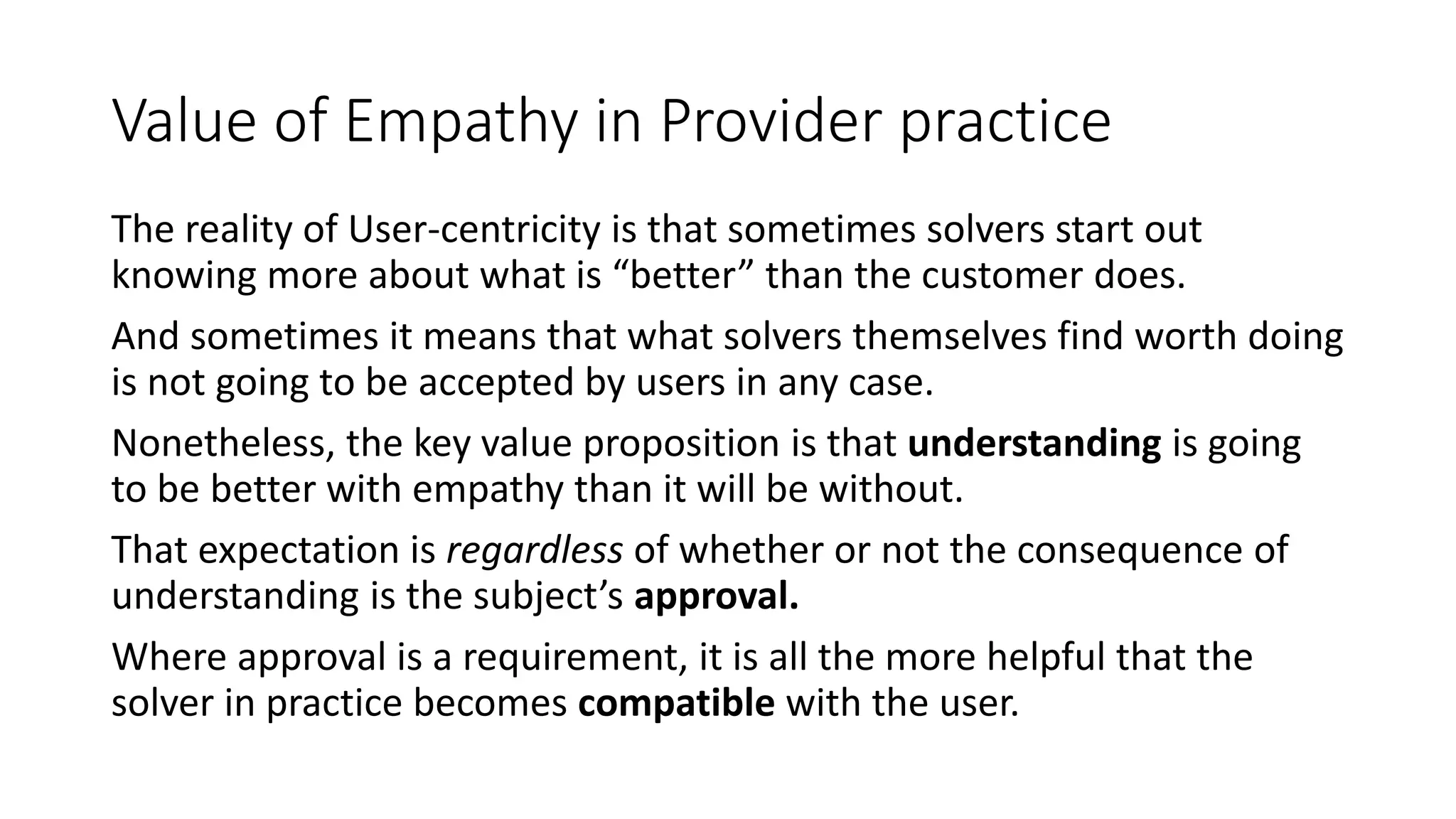
Value of Empathy in Provider practice
The reality of User-centricity is that sometimes solvers start out
knowing more about what is “better” than the customer does.
And sometimes it means that what solvers themselves find worth doing
is not going to be accepted by users in any case.
Nonetheless, the key value proposition is that understanding is going
to be better with empathy than it will be without.
That expectation is regardless of whether or not the consequence of
understanding is the subject’s approval.
Where approval is a requirement, it is all the more helpful that the
solver in practice becomes compatible with the user.
di·ag·nose
dīəɡˈnōs/
verb
1. identify the nature of (a problem) by examination of the symptoms.
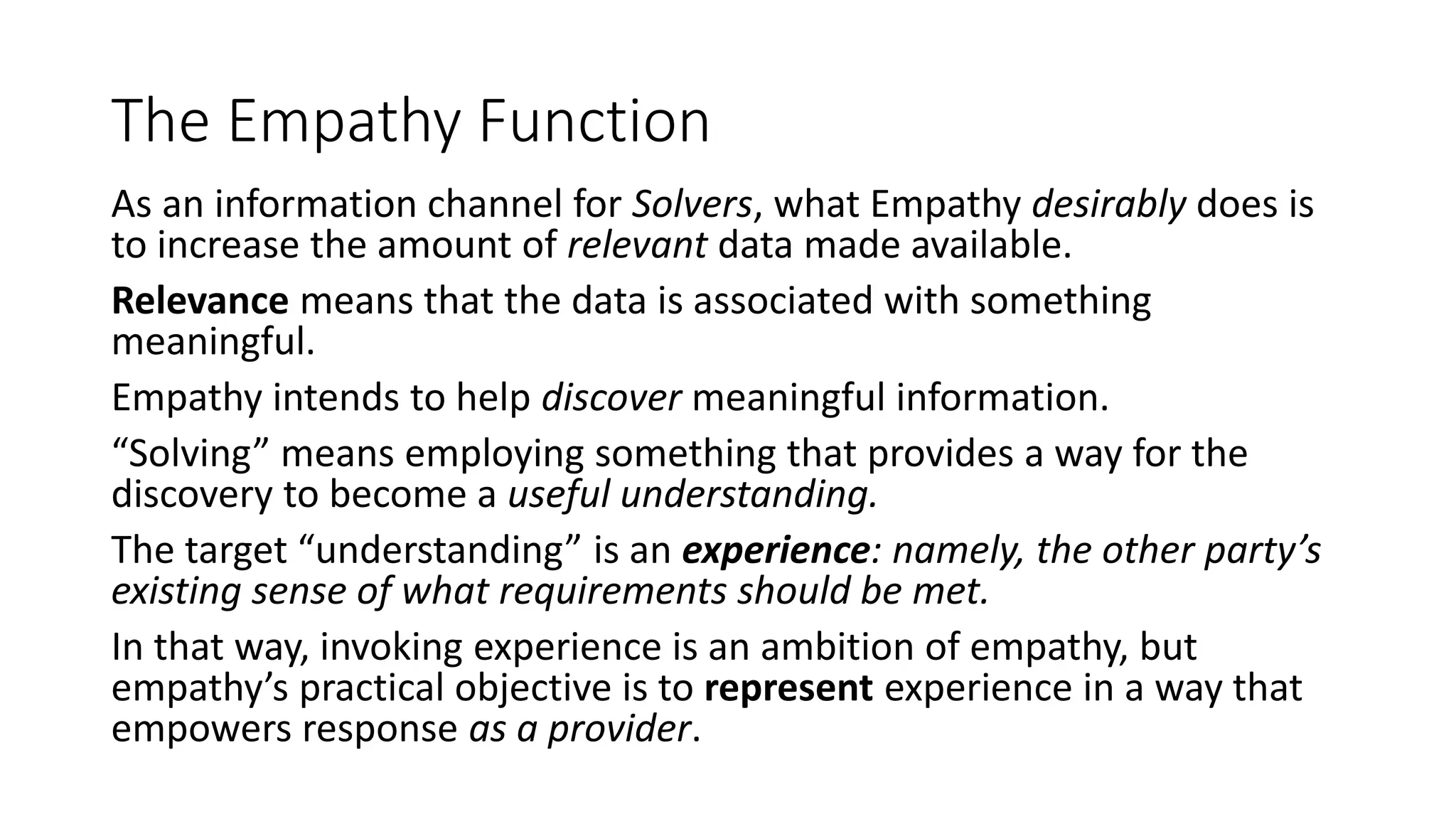
The Empathy Function
As an information channel for Solvers, what Empathy desirably does is
to increase the amount of relevant data made available.
Relevance means that the data is associated with something
meaningful.
Empathy intends to help discover meaningful information.
“Solving” means employing something that provides a way for the
discovery to become a useful understanding.
The target “understanding” is an experience: namely, the other party’s
existing sense of what requirements should be met.
In that way, invoking experience is an ambition of empathy, but
empathy’s practical objective is to represent experience in a way that
empowers response as a provider.
e·lab·o·rate
verb
əˈlabəˌrāt/
1. develop or present (a theory, policy, or system) in detail.
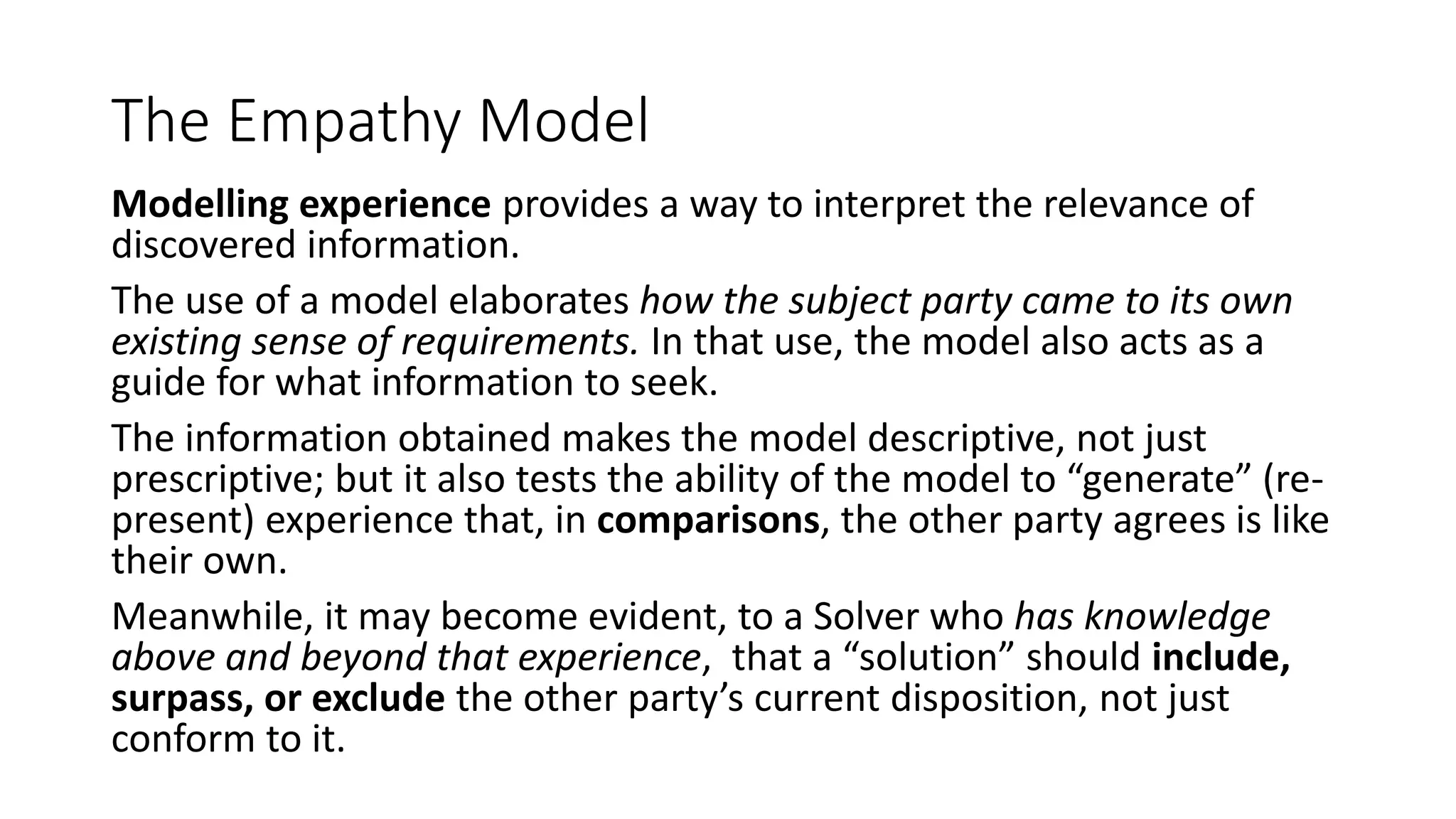
The Empathy Model
Modelling experience provides a way to interpret the relevance of
discovered information.
The use of a model elaborates how the subject party came to its own
existing sense of requirements. In that use, the model also acts as a
guide for what information to seek.
The information obtained makes the model descriptive, not just
prescriptive; but it also tests the ability of the model to “generate” (re-
present) experience that, in comparisons, the other party agrees is like
their own.
Meanwhile, it may become evident, to a Solver who has knowledge
above and beyond that experience, that a “solution” should include,
surpass, or exclude the other party’s current disposition, not just
conform to it.
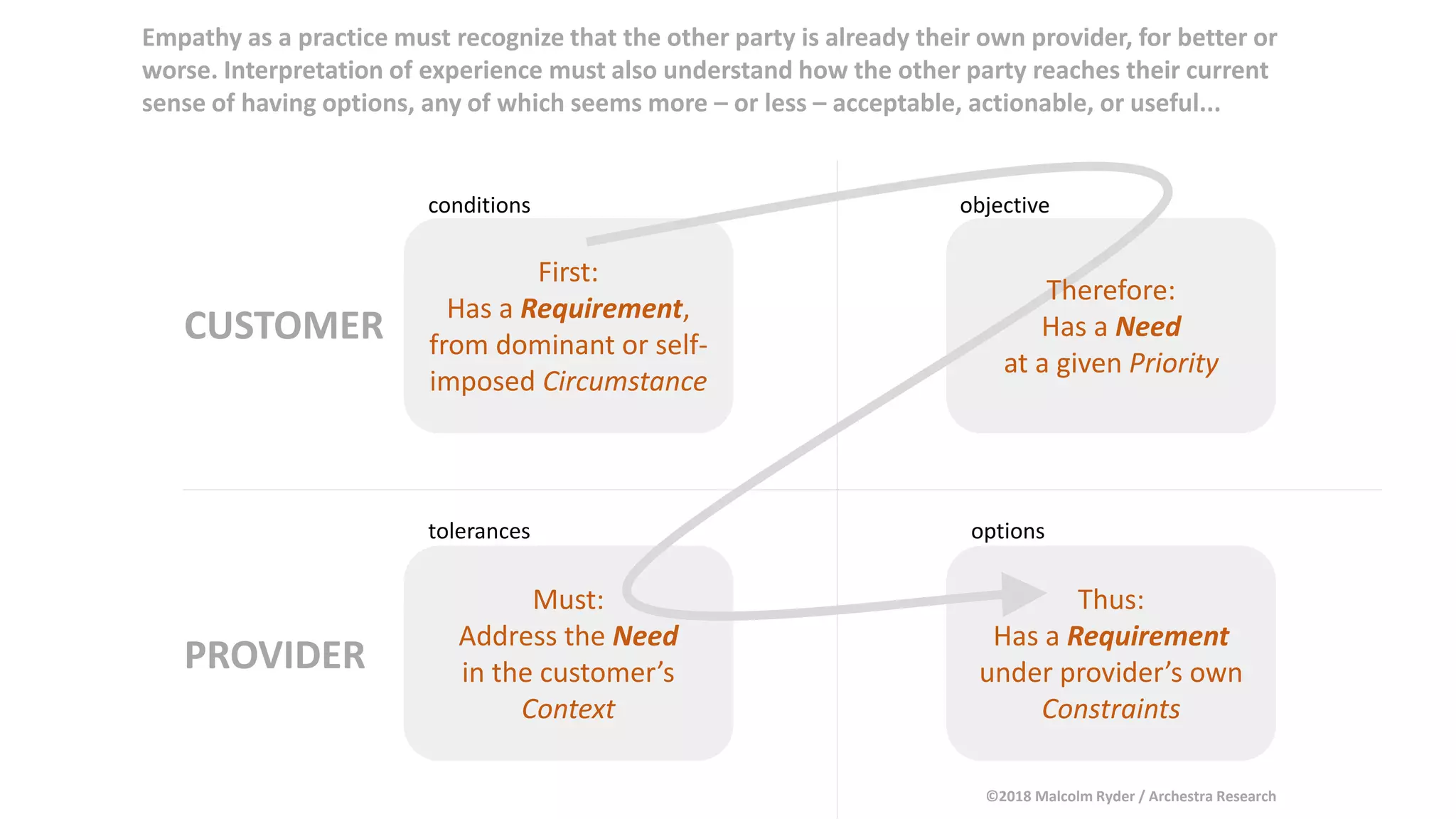
CUSTOMER
First:
Has a Requirement,
from dominant or self-
imposed Circumstance
Therefore:
Has a Need
at a given Priority
Must:
Address the Need
in the customer’s
Context
Thus:
Has a Requirement
under provider’s own
Constraints
PROVIDER
Empathy as a practice must recognize that the other party is already their own provider, for better or
worse. Interpretation of experience must also understand how the other party reaches their current
sense of having options, any of which seems more – or less – acceptable, actionable, or useful...
conditions
optionstolerances
objective
©2018 Malcolm Ryder / Archestra Research
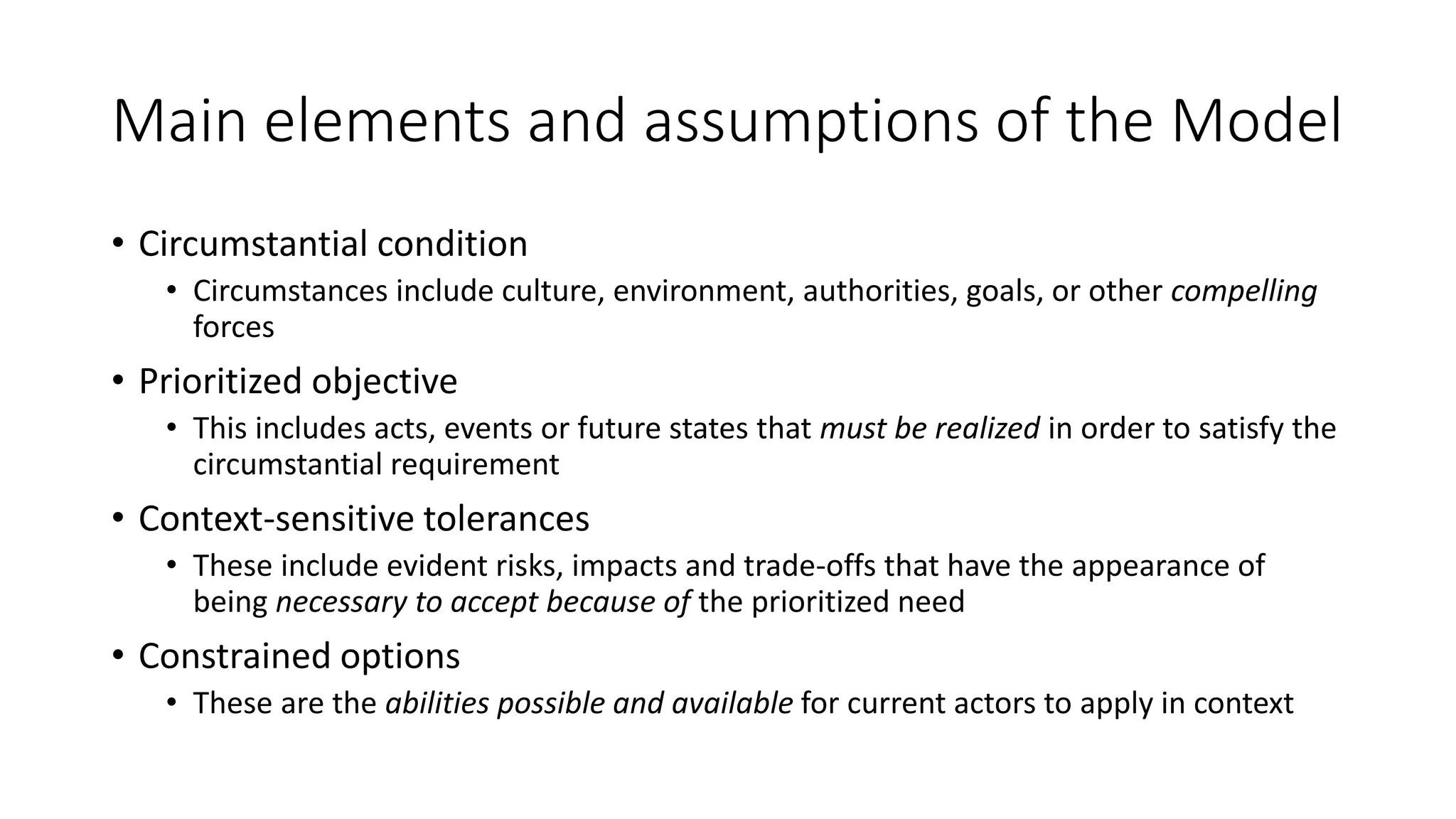
Main elements and assumptions of the Model
• Circumstantial condition
• Circumstances include culture, environment, authorities, goals, or other compelling
forces
• Prioritized objective
• This includes acts, events or future states that must be realized in order to satisfy the
circumstantial requirement
• Context-sensitive tolerances
• These include evident risks, impacts and trade-offs that have the appearance of
being necessary to accept because of the prioritized need
• Constrained options
• These are the abilities possible and available for current actors to apply in context
com·ple·ment
verb
ˈkämpləˌment/
1. add to (something) in a way that enhances or improves it.
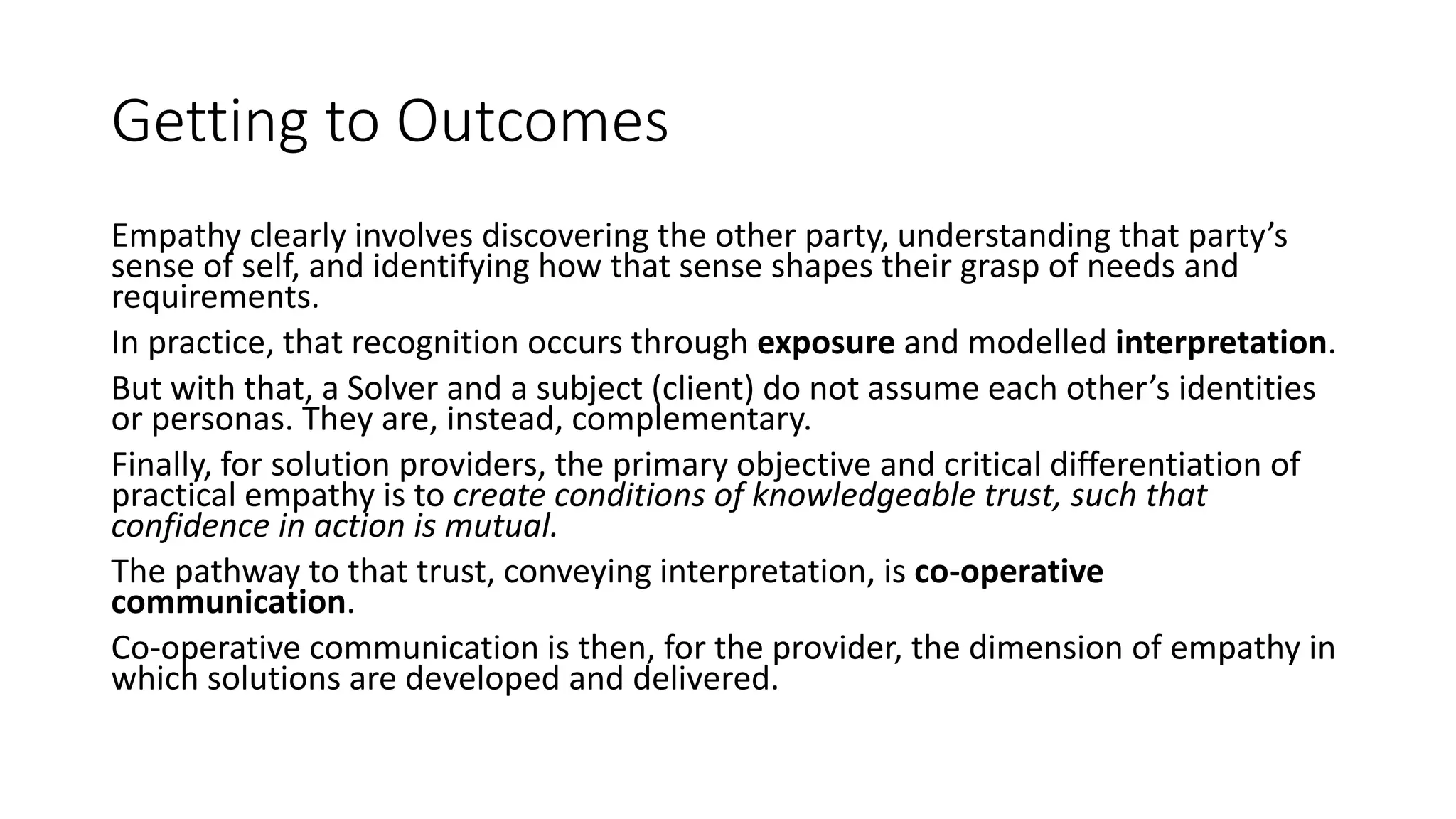
Getting to Outcomes
Empathy clearly involves discovering the other party, understanding that party’s
sense of self, and identifying how that sense shapes their grasp of needs and
requirements.
In practice, that recognition occurs through exposure and modelled interpretation.
But with that, a Solver and a subject (client) do not assume each other’s identities
or personas. They are, instead, complementary.
Finally, for solution providers, the primary objective and critical differentiation of
practical empathy is to create conditions of knowledgeable trust, such that
confidence in action is mutual.
The pathway to that trust, conveying interpretation, is co-operative
communication.
Co-operative communication is then, for the provider, the dimension of empathy in
which solutions are developed and delivered.
Archestra notebooks compile and organize decades of in-the-field and ongoing empirical findings.
All presented findings are derived exclusively from original research.
Archestra notebooks carry no prescriptive warranty.
As ongoing research, all notebooks are subject to change at any time.
©2018 Malcolm Ryder / Archestra Research
www.archestra.com
mryder@archestra.com
Archestra research is done from the perspective of strategy and architecture.
With all subject matter and topics, the purpose of the notes is analytic, primarily to:
* explore, expose and model why things are
included, excluded, or can happen
in given ways and/or to certain effects.
* comment on, and navigate between,
motives and potentials that predetermine
Decisions about, and shapings of, the observed activity.

Practical Empathy

  • 1.
  • 2.
    em·pa·thy ˈempəTHē/ noun the ability tounderstand and share the feelings of another.
  • 3.
    Functional Empathy Empathy isnot specific information, nor a type of information. Instead, it is a channel of information. It both holds and transmits information, but the main distinction of “empathy” is that it attributes relevance to the information. As seen by one party, the relevance is about understanding how experience is interpreted by the other party. The understanding must be current. However, current does NOT mean based in the real-time of direct interaction. Instead, it means up-to- date.
  • 4.
    rep·re·sent reprəˈzent/ verb 1. be entitledor appointed to act or speak for (someone), 2. to serve to express, designate, stand for, or denote
  • 5.
    Practical Empathy Empathy, bydefinition, always presumes to respect the other party’s autonomy. Along with that, there is a goal of having fidelity to the other party’s sense of self. But the value of empathy is not in some special enhanced truthfulness of information. Instead, it is in how reliable its information is as representation. A fundamental of the “practice” of empathy is to apply the interpretive method used by the other party, for the same reason that they do, to the same circumstantial stimuli. This application may or may not be through direct engagement with the other party. But the outcome is a re-presentation of their experience.
  • 6.
    em·pa·thy ˈempəTHē/ noun the ability tounderstand and share the feelings of another. What is important? Why? What do I know How? RecognizeHave In-common grasp of the interpretation of experience relies on reiterating the How of knowledge, and the Why of importance… These iterations are approximations that may be able to achieve high fidelity. ©2018 Malcolm Ryder / Archestra Research
  • 7.
    Value of Empathyin practice Although “User-centricity” is the rallying call for Empathy, the importance of practicing empathy is mainly in the desire to “solve the right problem” instead of wasting time, resources and credibility solving the wrong problem. The general value proposition is that empathy will inform what is “right” in a way that is superior to other approaches. It is hard to argue against empathy’s logic: if needs are better understood, then responding to them can clearly feature a better use of opportunity and resources. But this “user-centricity” actually includes the common reality that many problems require solutions more sophisticated than their customers are. And, stating the obvious, the point of being a Solver is that the other party wants to be, have, or get something that they cannot already provide themselves. As part of that, they want to be comfortable with, or at least about, the provider.
  • 8.
    com·pat·i·ble kəmˈpadəb(ə)l/ adjective 1. (of twothings) able to exist or occur together without conflict.
  • 9.
    Value of Empathyin Provider practice The reality of User-centricity is that sometimes solvers start out knowing more about what is “better” than the customer does. And sometimes it means that what solvers themselves find worth doing is not going to be accepted by users in any case. Nonetheless, the key value proposition is that understanding is going to be better with empathy than it will be without. That expectation is regardless of whether or not the consequence of understanding is the subject’s approval. Where approval is a requirement, it is all the more helpful that the solver in practice becomes compatible with the user.
  • 10.
    di·ag·nose dīəɡˈnōs/ verb 1. identify thenature of (a problem) by examination of the symptoms.
  • 11.
    The Empathy Function Asan information channel for Solvers, what Empathy desirably does is to increase the amount of relevant data made available. Relevance means that the data is associated with something meaningful. Empathy intends to help discover meaningful information. “Solving” means employing something that provides a way for the discovery to become a useful understanding. The target “understanding” is an experience: namely, the other party’s existing sense of what requirements should be met. In that way, invoking experience is an ambition of empathy, but empathy’s practical objective is to represent experience in a way that empowers response as a provider.
  • 12.
    e·lab·o·rate verb əˈlabəˌrāt/ 1. develop orpresent (a theory, policy, or system) in detail.
  • 13.
    The Empathy Model Modellingexperience provides a way to interpret the relevance of discovered information. The use of a model elaborates how the subject party came to its own existing sense of requirements. In that use, the model also acts as a guide for what information to seek. The information obtained makes the model descriptive, not just prescriptive; but it also tests the ability of the model to “generate” (re- present) experience that, in comparisons, the other party agrees is like their own. Meanwhile, it may become evident, to a Solver who has knowledge above and beyond that experience, that a “solution” should include, surpass, or exclude the other party’s current disposition, not just conform to it.
  • 14.
    CUSTOMER First: Has a Requirement, fromdominant or self- imposed Circumstance Therefore: Has a Need at a given Priority Must: Address the Need in the customer’s Context Thus: Has a Requirement under provider’s own Constraints PROVIDER Empathy as a practice must recognize that the other party is already their own provider, for better or worse. Interpretation of experience must also understand how the other party reaches their current sense of having options, any of which seems more – or less – acceptable, actionable, or useful... conditions optionstolerances objective ©2018 Malcolm Ryder / Archestra Research
  • 15.
    Main elements andassumptions of the Model • Circumstantial condition • Circumstances include culture, environment, authorities, goals, or other compelling forces • Prioritized objective • This includes acts, events or future states that must be realized in order to satisfy the circumstantial requirement • Context-sensitive tolerances • These include evident risks, impacts and trade-offs that have the appearance of being necessary to accept because of the prioritized need • Constrained options • These are the abilities possible and available for current actors to apply in context
  • 16.
    com·ple·ment verb ˈkämpləˌment/ 1. add to(something) in a way that enhances or improves it.
  • 17.
    Getting to Outcomes Empathyclearly involves discovering the other party, understanding that party’s sense of self, and identifying how that sense shapes their grasp of needs and requirements. In practice, that recognition occurs through exposure and modelled interpretation. But with that, a Solver and a subject (client) do not assume each other’s identities or personas. They are, instead, complementary. Finally, for solution providers, the primary objective and critical differentiation of practical empathy is to create conditions of knowledgeable trust, such that confidence in action is mutual. The pathway to that trust, conveying interpretation, is co-operative communication. Co-operative communication is then, for the provider, the dimension of empathy in which solutions are developed and delivered.
  • 18.
    Archestra notebooks compileand organize decades of in-the-field and ongoing empirical findings. All presented findings are derived exclusively from original research. Archestra notebooks carry no prescriptive warranty. As ongoing research, all notebooks are subject to change at any time. ©2018 Malcolm Ryder / Archestra Research www.archestra.com mryder@archestra.com Archestra research is done from the perspective of strategy and architecture. With all subject matter and topics, the purpose of the notes is analytic, primarily to: * explore, expose and model why things are included, excluded, or can happen in given ways and/or to certain effects. * comment on, and navigate between, motives and potentials that predetermine Decisions about, and shapings of, the observed activity.