INTESTINAL
PARASITES
UNIT 5: Digestive system
The Digestive system
– Majority of worms are found in the small intestines, where
they mature into adult worms
– In children, worms absorb up to 30% of nutrients taken in
from their food.
Common intestinal parasites
– are Ascaris lumbricoides (roundworm)
– Trichuris trichiura (whipworm)
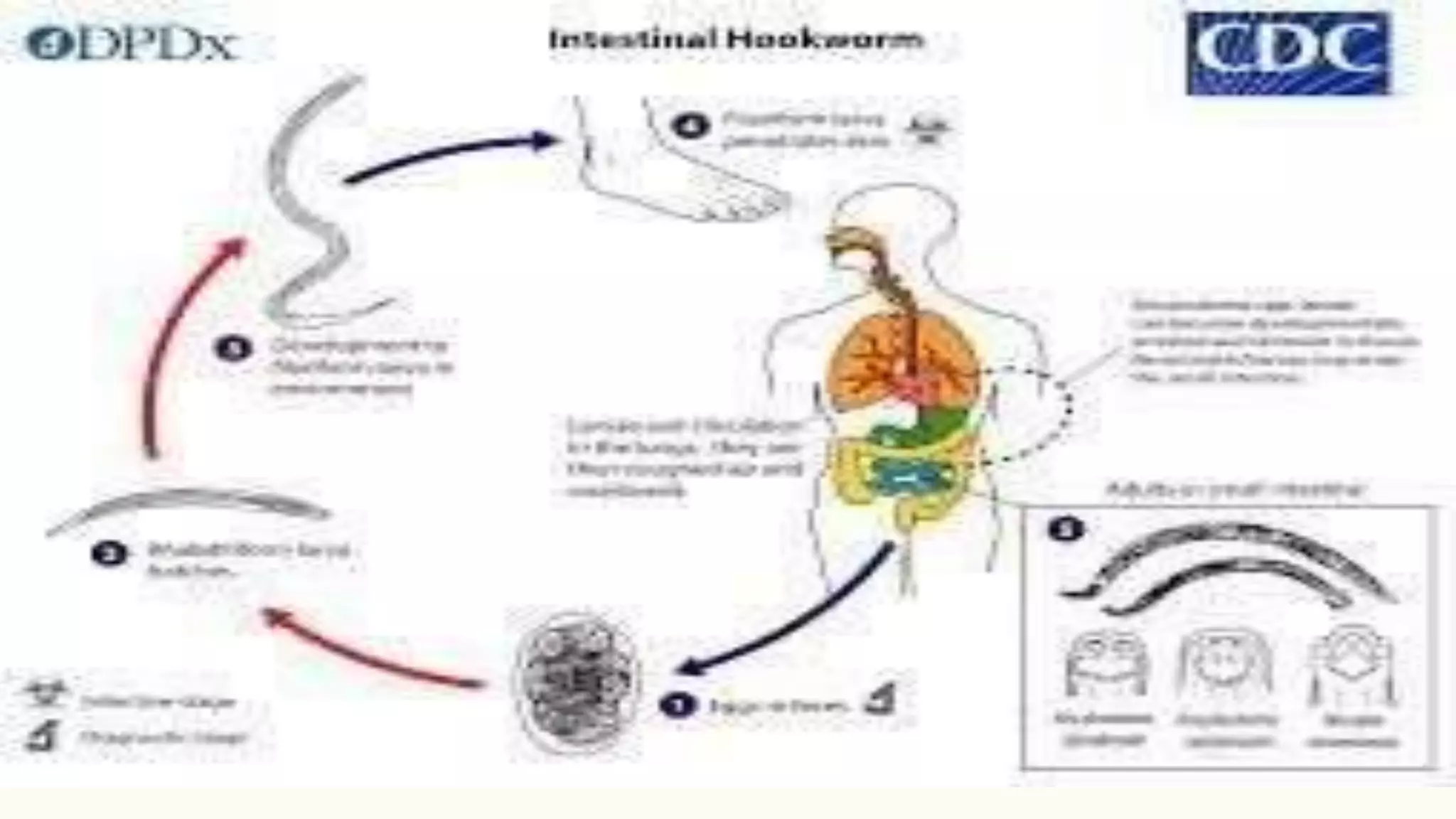
– Necator americanus (hookworm).
– Tapeworm
– pinworm
Main cases
– Ingestion of undercooked foods
– Drinking infected water
– And skin absorption
General sigs/
symptoms
– Abdominal pain
– Diarrhea
– Nausea and vomiting
Gas or bloating
– Dramatic weight loss
– Feeling tired
– Passing worms in their stool
– Immune supression
Are Ascaris lumbricoides
(roundworm)
– The larva mature in the lungs.
– The adult worms produce eggs which are shed in the feces.
– Most infections produce no symptoms.
– They penetrate the intestinal wall and travel through the
blood and lymphatic system to the lungs.
– They then ascend the bronchial tree and are swallowed.
Once in the small intestine, they mature into adult worms
– Heavy infection can lead to nutritional deficiency or
intestinal obstruction.
Trichuris trichiura (whipworm)
– Shaped like a whip, the thin end is embedded in the
mucosa while the thin end extends into the bowel lumen.
– Colitis, dysentery and rectal prolapsed may occur in those
with heavy infection.
– Eggs are shed into the stool.
– Colitis- inflammation of the colon
– Dysentry- inflammation of intestines that leads to the
passing of mucus and blood in one’s stool; damages the
body’s immune cells and leads to muscle spasms of the
intestinal muscles
Necator americanus
(hookworm).
– The worms are about 1/2 inch long.
– Produces anemia
– treatment consists of iron replacement
– Adults, especially agricultural workers, are at
equal or higher risk of exposure than children
– Flesh eating staph infection
Tapeworm
– Caused by eating raw or undercooked meat of
animals infected with tapeworms
– Grow in the intestines
– Segmented
– Eggs also be spread by infected individuals with
poor hygiene
– No major symptoms, but abdominal pain may
occur.
– Can be diagnosed by passing segments through
stool
Pinworm
– Very small
– The most common intestinal worm infection
– Most common in school-age children
– Spread by direct contact
– Symptoms: 1.intense itching 2. difficulty sleeping
– Treatment:
– antivirus medication
– intense cleaning to kill eggs
– They can also be spread by touching bedding, food, or
other items contaminated with the eggs.
Effects on health
– Malnutrition
– Impaired Growth
– Mental Retardation
– Death
Treatment
– Fiber-rich Ingredients
– TakingAntibiotics
– Daily multivitamins
– Albendazole ( what we prescribe at clinics)
Prevention Techniques
– Wash all fruits and vegetables in clean water before eating
– Wear shoes or slippers
– Water from septic tanks or other potentially contaminated sources should not be used for watering
vegetables.
– Using a latrine, rather than in the bush or around the home or school.
– Young children should be taught to use chamber pots, which can then be emptied into a latrine.
– Children should be taught to wash their hands after using the latrine, after playing in dirty soil, after
farming or gardening and before preparing or eating food.
THANK YOU

PPT_Instestinal parasites_reb.pptx

  • 1.
  • 2.
    The Digestive system –Majority of worms are found in the small intestines, where they mature into adult worms – In children, worms absorb up to 30% of nutrients taken in from their food.
  • 3.
    Common intestinal parasites –are Ascaris lumbricoides (roundworm) – Trichuris trichiura (whipworm) – Necator americanus (hookworm). – Tapeworm – pinworm
  • 4.
    Main cases – Ingestionof undercooked foods – Drinking infected water – And skin absorption
  • 5.
    General sigs/ symptoms – Abdominalpain – Diarrhea – Nausea and vomiting Gas or bloating – Dramatic weight loss – Feeling tired – Passing worms in their stool – Immune supression
  • 6.
    Are Ascaris lumbricoides (roundworm) –The larva mature in the lungs. – The adult worms produce eggs which are shed in the feces. – Most infections produce no symptoms. – They penetrate the intestinal wall and travel through the blood and lymphatic system to the lungs. – They then ascend the bronchial tree and are swallowed. Once in the small intestine, they mature into adult worms – Heavy infection can lead to nutritional deficiency or intestinal obstruction.
  • 8.
    Trichuris trichiura (whipworm) –Shaped like a whip, the thin end is embedded in the mucosa while the thin end extends into the bowel lumen. – Colitis, dysentery and rectal prolapsed may occur in those with heavy infection. – Eggs are shed into the stool. – Colitis- inflammation of the colon – Dysentry- inflammation of intestines that leads to the passing of mucus and blood in one’s stool; damages the body’s immune cells and leads to muscle spasms of the intestinal muscles
  • 10.
    Necator americanus (hookworm). – Theworms are about 1/2 inch long. – Produces anemia – treatment consists of iron replacement – Adults, especially agricultural workers, are at equal or higher risk of exposure than children – Flesh eating staph infection
  • 12.
    Tapeworm – Caused byeating raw or undercooked meat of animals infected with tapeworms – Grow in the intestines – Segmented – Eggs also be spread by infected individuals with poor hygiene – No major symptoms, but abdominal pain may occur. – Can be diagnosed by passing segments through stool
  • 14.
    Pinworm – Very small –The most common intestinal worm infection – Most common in school-age children – Spread by direct contact – Symptoms: 1.intense itching 2. difficulty sleeping – Treatment: – antivirus medication – intense cleaning to kill eggs – They can also be spread by touching bedding, food, or other items contaminated with the eggs.
  • 16.
    Effects on health –Malnutrition – Impaired Growth – Mental Retardation – Death
  • 17.
    Treatment – Fiber-rich Ingredients –TakingAntibiotics – Daily multivitamins – Albendazole ( what we prescribe at clinics)
  • 18.
    Prevention Techniques – Washall fruits and vegetables in clean water before eating – Wear shoes or slippers – Water from septic tanks or other potentially contaminated sources should not be used for watering vegetables. – Using a latrine, rather than in the bush or around the home or school. – Young children should be taught to use chamber pots, which can then be emptied into a latrine. – Children should be taught to wash their hands after using the latrine, after playing in dirty soil, after farming or gardening and before preparing or eating food.
  • 19.