MANAGEMENT OF NORMAL
LABOUR AND DELIVERY
Dr Nabeel Bondagji
Consultant Perinatologist
KAUH&KFSH
LECTURE OVERVIEW
• Definitions
• Anatomy of the fetal head and maternal
pelvis
• Management of 1st, 2nd and 3rd stages of
normal labour
– monitoring of maternal well being
– monitoring of fetal well-being
– monitoring progress of labour
NORMAL LABOUR: Definitions
Onset of regular involuntary coordinated,
painful uterine contractions associated with
cervical effacement and dilatation
• Delivery is the expulsion of the product of
the conception after fetal viability.
TRUE LABOURVX FALES
LABOUR
• Regular contractions
• Increase in frequency
and intensity
• Cervix dilate
• No relive with
sedation
• Abd and back pain
• Irregular
• Remain the same
• Unchanged
• relive
• Lower abd
STAGES OF LABOUR 4
• First stage cervical dilatation and
effacement
• Second stage is the expulsion of the fetus
• Third stage is the delivery of the placenta
• Fourth stage is the early recovery
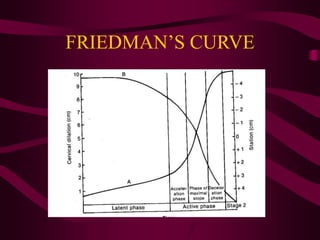
FRIEDMAN’S CURVE
Management of Normal Labour
• Monitor maternal well-being
• Monitor fetal well-being
• Monitor the progress of labour
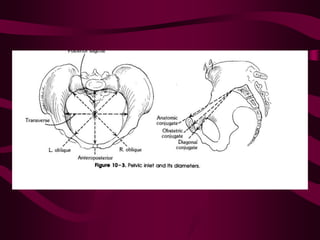
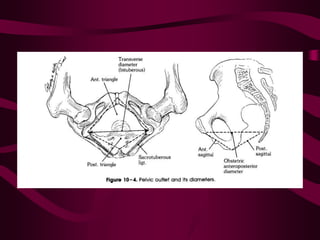
HOW DOES THE HEAD
NEGOTIATE THE PELVIS?
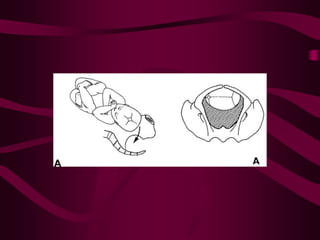
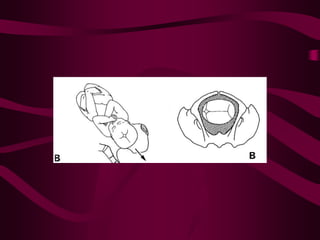
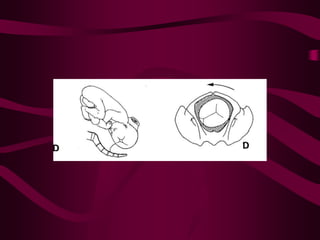
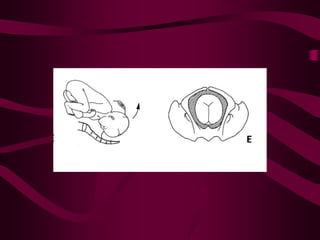
(1) change it’s shape and size (moulding)
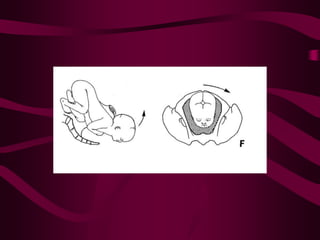
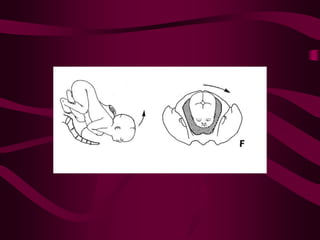
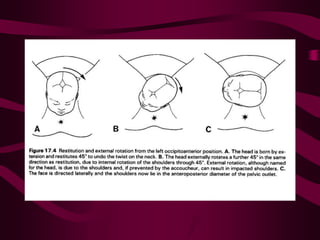
(2) change it’s position (flexion and rotation)
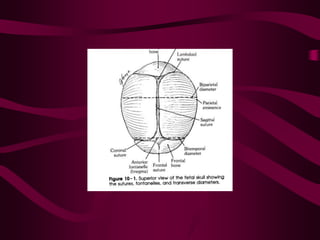
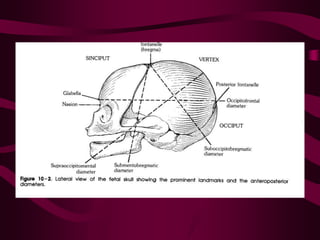
ANATOMY OF THE FETAL HEAD
• Largest and least compressible part of the fetus
– therefore the most important obstetrically
• Comprises of
– (1) base of skull (ossified, non compressible, protecting brain
stem)
– (2) cranium
• (a) bones: occipital, 2 parietal, 2 frontal and 2 temporal
interconnected with membrane; therefore compressible
• (b) sutures (where the bones meet): saggital, lambdoid, coronal
• © fontanelles (where the sutures meet): ant and post
• The compressibility of the fetal skull means the bones can overlap
(moulding) in order for the skull to change shape negotiating the
maternal pelvis
ppt on  normal labour and its management

ppt on normal labour and its management

  • 1.
    MANAGEMENT OF NORMAL LABOURAND DELIVERY Dr Nabeel Bondagji Consultant Perinatologist KAUH&KFSH
  • 2.
    LECTURE OVERVIEW • Definitions •Anatomy of the fetal head and maternal pelvis • Management of 1st, 2nd and 3rd stages of normal labour – monitoring of maternal well being – monitoring of fetal well-being – monitoring progress of labour
  • 3.
    NORMAL LABOUR: Definitions Onsetof regular involuntary coordinated, painful uterine contractions associated with cervical effacement and dilatation • Delivery is the expulsion of the product of the conception after fetal viability.
  • 4.
    TRUE LABOURVX FALES LABOUR •Regular contractions • Increase in frequency and intensity • Cervix dilate • No relive with sedation • Abd and back pain • Irregular • Remain the same • Unchanged • relive • Lower abd
  • 5.
    STAGES OF LABOUR4 • First stage cervical dilatation and effacement • Second stage is the expulsion of the fetus • Third stage is the delivery of the placenta • Fourth stage is the early recovery
  • 6.
  • 7.
    Management of NormalLabour • Monitor maternal well-being • Monitor fetal well-being • Monitor the progress of labour
  • 8.
    HOW DOES THEHEAD NEGOTIATE THE PELVIS? (1) change it’s shape and size (moulding) (2) change it’s position (flexion and rotation)
  • 9.
    ANATOMY OF THEFETAL HEAD • Largest and least compressible part of the fetus – therefore the most important obstetrically • Comprises of – (1) base of skull (ossified, non compressible, protecting brain stem) – (2) cranium • (a) bones: occipital, 2 parietal, 2 frontal and 2 temporal interconnected with membrane; therefore compressible • (b) sutures (where the bones meet): saggital, lambdoid, coronal • © fontanelles (where the sutures meet): ant and post • The compressibility of the fetal skull means the bones can overlap (moulding) in order for the skull to change shape negotiating the maternal pelvis